All of the advertising for and critical response to Chloé Zhao’s prestige-season adaptationof Hamnet will lead you to expect a much shallower film than what it actually is. Having not read the novel myself, I’ve so far only understood Hamnet to be the weepie version of Shakespeare in Love: an Oscar-bait Hollywood drama about the death of William Shakespeare’s young child, Hamnet, the tragedy that inspired him to write the near-eponymous play. The loudest critical responses to the film adaptation have either been in praise of or in resistance to the ways that actors Paul Mescal and Jessie Buckley perform that parental grief as Shakespeare and his wife, Agnes Hathaway, respectively. I’m enough of a sucker for period-piece melodramas that I would’ve been onboard for that relatively small story about one historically famous couple’s version of art therapy, but the film turned out to be much grander & fuller in scope than that. It hits on much broader themes about how we’ve all lost a genuine, Pagan relationship with the natural world and how making art can be a form of witchcraft that brings us back to it. And it only manages to do so by primarily functioning as Agnes’s story, not William’s.
We meet Agnes & William as young no-namers who are violently in love but haven’t yet fully established their place in the world. As much as they adore each other, their individual natures pull them in separate directions. William’s theatrical ambitions draw him to a busy life in The Big City, while Agnes thrives in the country woods as far away from London as she can get. The central conflict is not so much the grief that couple suffers when they suddenly lose their child to illness, but the dissonance in how they personally process that grief after the fact. A falconer & herbalist who’s viciously rumored to be “the daughter of a forest witch,” Agnes is in tune with the natural flow of life & death, but that flow is frequently disrupted by civilized townsfolk who drag her out of the woods and into the unnatural rituals of Christian society. She’s neither allowed to give birth in the way that feels natural to her (alone, standing in the woods) nor grieve familial loss in her own way (directly, without averting her eyes). When her young son dies and her husband fucks off to the city to continue his work in the theatre, she perceives the abandonment as his own close-hearted rejection of life & nature, lumping him in with the phonies who won’t let her simply be herself in the woods because it’s not Proper Behavior. It isn’t until she sees the resulting play William names after their son that she understands that he can only grieve through his art, and that his act of creation on the stage is its own form of witchcraft — however foreign to hers.
The final act of Hamnet—when Agnes is reunited with and says goodbye to her dead son’s spirit through her husband’s art—is powerful stuff. It cuts right through the knee-jerk cynicism that usually prompts me to dismiss the Oscar-hopeful studio dramas that flood the release calendar this time of year. In particular, I was moved by a shot of Agnes looking up to the stage at her son’s dramatic ghost that mirrors earlier sequences of her looking up to the flying spirit of a deceased pet hawk, illustrating in a small gesture the separate but parallel magics she & her husband practice. It’s that tension between the old & modern ways that makes Zhao such a strong fit for the material. Her docudrama filmmaking style is incongruous with the costume drama genre, but her security-camera modernity clashes with the Old World natural setting in a way that echoes the spiritual divide between Agnes & William’s respective worldviews. The only times the movie loses its way, really, are the brief moments when Zhao strays from Agnes’s POV to catch up with how William is getting along in the city. There’s an especially corny reading of the “To be or not to be” soliloquy that temporarily breaks the movie’s spell as William works out his feelings on his own, but that’s less the fault of Paul Mescal’s performance than it is a misstep in intellectual rigor behind the camera. Hamnetis only truly about Hamletin the final minutes when Agnes engages with that work from the audience pit, armed with Jessie Buckley’s trademark combative smirk. When it sticks with her, it soars. Thankfully, that accounts for most of the runtime.
Tony Ganz & Rhody Streeter only made films together over a couple of years in the early 1970s. A few of their documentary shorts aired on the syndicated PBS series The Great American Dream Machine, which was simpatico with their collaborations’ wryly humorous portrait of the nation. Otherwise, their catalog of shorts remained unseen by a wide public audience until their recent exhibitions in New York City, now collected under the anthology title America: Everything You’ve Ever Dreamed Of. Because of that spotty history of distribution & scholarship, there wasn’t much context for what Gap Tooth‘s weekly repertory audience would be seeing when the collection premiered in New Orleans last week, besides the films being rare. It was a packed room anyway. The ten Ganz & Streeter shorts that make up America: Everything You’ve Ever Dreamed Of were met with shocks of laughter and stretches of stunned silence, depending on the mood of the moment. The individual films weren’t produced with a unifying theme or intent in mind, but since they were made with such a small, consistent crew in such a short period of time, they end up forming a singular mosaic picture of 1970s America — especially the white parts, the very white parts.
America: Everything You’ve Ever Dreamed Of is at its strongest when its shorts are hitting on a common theme, illustrating a postcard advertisement for The American Dream as a prepackaged plastic commodity. The opening short “The Best of Your Life (a.k.a. Sun City)” plays like an early prototype for the recent surreal retirement community doc Some Kind of Heaven, inviting the audience into a 3D brochure to gawk at all the uncanny weirdos who reside within. The other standout shorts in the set also work as ironic advertisements for the kitschiest corners of American monoculture: a novelty sex resort in “Honeymoon Hotel,” a Christian Nationalist death cult in “Risen Indeed (a.k.a. Campus Crusade for Christ)”, an elevator music studio in “A Better Day in Every Way (a.k.a. Muzak)”, a finishing school for adults in “Woman Unlimited”, and a billboard advertisement painters’ studio in “Sign Painters (a.k.a. Signs)”. It’s in these ironic snapshots of microwave-dinner America that Ganz & Streeter land their biggest laughs, likening retirees’ synchronized workout routines to soldiers Sieg Heiling their Fuhrer and infiltrating anti-hippie Christian activist circles who believe Communists to be Satanists engaged in a literal holy war. At the same time, they find a way to mock institutions instead of laughing at individual interview subjects. Later documentaries like Grey Gardens & Gates of Heaven would soon take on a similar project to much wider attention & acclaim: recording sweetly humanist interviews with ordinary, everyday weirdos like you & me, who happened to have gotten wrapped up in fascinatingly unreal scenarios.
Any one of those on-topic shorts could land as someone’s personal favorite in the collection. Personally, I laughed the hardest at the robotic corporate speak of the “Muzak” and “Sign Painters” docs, as straightlaced business suits passionlessly explained how they’ve turned once artistic mediums into uniform, sellable products. The candy-colored splendor of the “Sun City” retirement home tour and the women’s-mag “Honeymoon Hotel” ad is also undeniably enticing, making for the most visually striking and spatially disorienting selections in the bunch. It’s the other, “off-topic” shorts in the collection that really make those works stand out, though. You don’t get a full sense of just how uncanny & inhuman the collection’s portrait of American culture is until they cut away from the Norman Rockwell postcards to black & white snapshots of real people struggling with real problems in real environments. In “Help-Line” & “Y.E.S.,” desperately lonely people on the verge of making life-ending decisions re-establish tenuous human connections via phone call. In “Bowery Men’s Shelter,” New York City alcoholics and discharged mental patients find a temporary place to sleep between psychotic episodes & binges, barely limping along to the next day. The furthest-afield inclusion is “Hoi: Village Life in Tonga,” which leaves America entirely for a quiet anthropological study of indigenous Tongan social life. It was the very first film that Ganz & Streeter shot together and, while it doesn’t fit in tonally or thematically with the other shorts in the collection, it does help contextualize their countercultural-outsider approach to American anthropology in the more idiosyncratic shorts. Not for nothing, but “Hoi” & “Bowery Men’s Shelter” are also the only films in the collection in which non-white subjects are interviewed, making for some politically productive tension in their contrast with other subjects, like the prayer-warrior fascists of “Campus Crusade for Christ”.
If there’s anything especially remarkable that Ganz & Streeter achieved with these short-form American anthropologies (besides conveying a clever editorial eye for selecting environments & industries worth documenting in the first place), it’s in their avoidance of outright condescension. The uncanny, hyper-American scenarios they captured on film range from conceptually funny to outright evil, but the people who are trapped within them are consistently charming regardless of their participation. The nation’s cultureless rituals have made fools of us all, and so we can only feel warm comradery with our fellow fools who’ve fallen into its strangest crevices. That warm humanism is especially apparent in the closing short, “A Trip Through the Brooks Home,” which expands on an interview with a married couple who live in the Sun City retirement community profiled in “The Best of Your Life.” It’s very simply a guided home tour, but there’s a pervasively sweet awkwardness to the husband & wife at the center of it, recalling the Mitch & Micky folk singer duo of Christopher Guest’s A Mighty Wind. It’s that generosity towards its subjects that makes America: Everything You’ve Ever Dreamed Of such great theatrical programming, as you can hear individual members of the audience being delighted by one isolated character quirk at a time. Hopefully, it’ll be more widely available soon, both in theaters and at home, since it’s both a useful historical document of vintage American kitsch (especially when juxtaposed with genuine American suffering) and a godsend for cult cinema freaks who’ve already rewatched similar human-interest docs like American Movie, Vernon, Florida, and Heavy Metal Parking Lot too many times to count.
Welcome to Episode #253 of The Swampflix Podcast. For this episode, Brandon & Boomer catch up with older movies from some of this year’s best directors, starting with Park Chan-wook’s infamous gross-out revenge thriller Oldboy(2003).
Is cinema dying? I don’t think so. Between local festivals, streaming premieres, awards screeners, and routine trips to my neighborhood theater, I watch about a hundred or so new releases every year, and there’s always plenty of daring, imaginative art out there worthy of being championed. Of course, there’s far more disposable garbage than there is buried treasure, but that doesn’t mean it’s not worth digging. The allure of watching nothing but already-canonized classics from decades in the past and dismissing the cinema of the moment is that the digging has already been done for you. It’s easy to flippantly say that cinema is dead or complain that they don’t make ’em like they used to while sticking to long-beloved titles from the past, ignoring the blander, shittier movies from earlier eras that have been forgotten to time. The ratio of good-to-bad art has remained fairly consistent. Sure, comparing the dishwater-dull screengrabs from Wicked: For Good against the Technicolor fantasia of the classic MGM Wizard of Oz is dispiriting, but there are hundreds of forgotten Westerns, melodramas, and gorilla-suited monster movies from 1930s Hollywood that are just as artistically bankrupt as Jon Chu’s recent CG babysitters. Meanwhile, there’s ecstatically great work being made & distributed right now, seen only by those curious enough to go looking for it outside the Wicked-overrun multiplexes. So, I found myself feeling a little conflicted while watching a recent double feature of art films about the slow, ongoing death of art films. Both Bi Gan’s Resurrection and Radu Jude’s Dracula grimly declare cinema to be dead, looking in the temporal rearview for signs of life & art in a supposedly decaying medium (starting with parodies of F.W. Murnau’s Nosferatu in both cases, weirdly enough). The argument is somewhat self-defeating, though, since both films present newly mutated cinematic forms & iterations by poking at the century-old artform’s still-bleeding corpse. They offer an arthouse equivalent of the rapidly alternating “It’s so over”/”We’re so back” cycles of social media commentary on cinema’s constant death & rebirth in a single self-conflicting message, prompting me to switch between nodding along and shaking my head until I felt dizzy.
If either of these sprawling cinematic eulogies express any hope for the future of the artform, it’s Bi Gan’s film. An abstract sci-fi fantasy parable, Resurrection personifies dream-logic Cinema so it can watch it evolve over a century of increasingly narrowed formal refinements & constraints. It’s set in a loosely defined future where humanity has discovered that the key to avoiding death is to stop dreaming, creating an underground class of dissidents called Deliriants who continue to dream despite the new norm. The Deliriant of this particular story is the shared, personified dream of Cinema: a Nosferatu-styled monster whose beating heart is a film projector. He starts his journey in a German Expressionist dollhouse, peering out of warped Dr. Caligari windows in an early-20th Century opium den before his corporeal form expires in the vibrant poppy fields outside of Oz. His spirit lives on in other Deliriant forms throughout the decades, though, re-emerging in an amnesiac noir realm, a Buddhist temple ghost story, a card-trick conman hustling saga, and a vampiric Y2K gangster picture (each life representing one of the five senses, for reasons I cannot confidently explain). Unfortunately, charting the gradual mutations of the artform in this way means what starts as total lucid-dreaming freedom in the Silent Cinema era gradually becomes grounded & rigid in its thinking, with Bi Gan’s declared aesthetic influences abruptly stopping in the late 1990s; even the noir segment feels closer to Alex Proyas’s Dark City than anything recognizable from the 1940s (give or take an homage to the hall-of-mirrors shootout in The Lady from Shanghai). The most overt acknowledgement Bi Gan makes to the cinema of the now is in the gangster-vampire segment’s extensive long-take “oner,” a digital-era stylistic flex he became synonymous with in his 2018 breakout A Long Day’s Journey into Night. According to Resurrection, cinema started as freeform poetry that was slowly pinned down and strangled to death by the restrictions of real-world logic. By the end, Bi Gan is begging the world to start dreaming in the old ways again, so the medium can find new life in a better future. That might be a little dismissive to the cinema of the now, but it’s at least willing to believe the corpse can be revived.
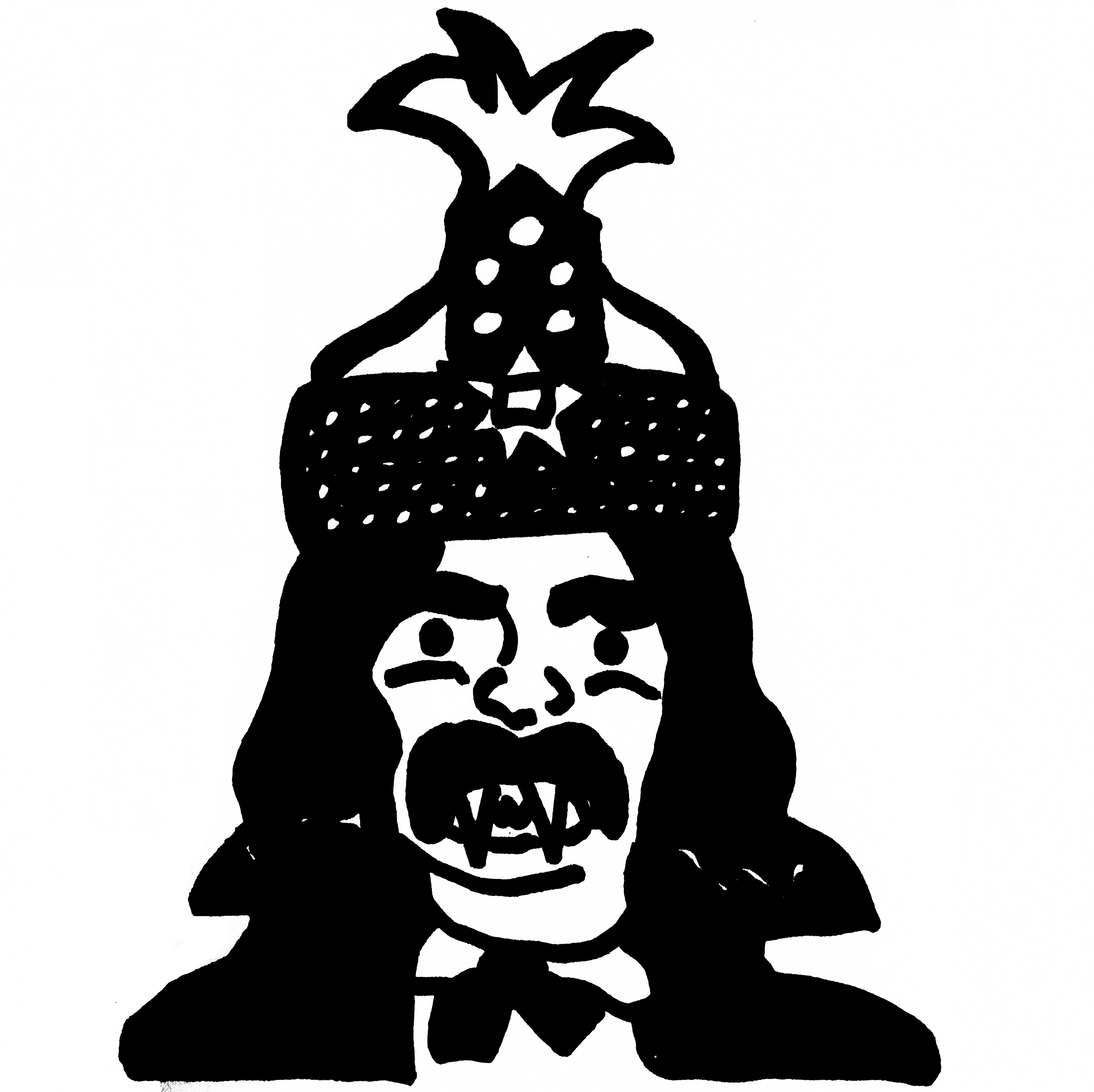
Radu Jude is not so hopeful. The Romanian prankster’s death-of-cinema comedy Dracula only arrives at the scene of cinema’s death to playfully piss on the corpse, like a Calvin & Hobbs bumper sticker. Jude reportedly pitched his take on Dracula as an off-hand joke while struggling to secure funding for projects he actually cared about, and the resulting 3-hour sketch comedy revue largely plays as a punishment for everyone who encouraged him to paint himself into that corner. His onscreen avatar is a huckster with tireless Roberto Benigni energy (Adonis Tanta) who has been hired to direct a modern interpretation of Dracula but has no ideas on what to shoot. Having just barely put in an effort to change out of his pajamas, he fires off several prompts to a generative A.I. program that helpfully “writes” different Dracula scenarios for him, which are individually acted out in commercial grade digi-cam vignettes. The actual scripts for those varying skits were obviously written by Jude, not A.I., as he takes wild potshots at previous Dracula adaptations from the likes of F.W. Murnau, Francis Ford Coppola and, most recently, Robert Eggers. The vignettes are frequently interrupted and derailed by generative A.I. animation in order to supplement their budget, however, assaulting the audience with digital slop we usually only see by accident when clicking down the wrong Facebook rabbit hole. Jude conveys some muted respect for Dracula cinema of the past here, but he mostly demonstrates a combative relationship with the subject. The film opens with repeated A.I. line readings of the phrase, “I am Vlad the Impaler Dracula, and you can all suck my cock,” which are later rebutted by modern-day Romanians shouting their own expletives in return, like “Lick my pussy, Dracula!” and “Suck Popeye the Sailor’s dick.” Beneath all of the crass humor, there’s some genuine political anger at the heart of the project, just as there was in the Andrew Tate-spoofing segments of Jude’s Do Not Expect Too Much from the End of the World. He takes the time to illustrate how Vlad the Impaler, Dracula exploited & terrorized the Romanian people, how Romanian people are still being exploited & terrorized by the political powers of today, and how their exploitation & terror has now been commodified by an entire century’s worth of post-Nosferatu Dracula cinema. He’s not only declaring cinema dead, stomped into the dirt by generative A.I.; he’s also saying good riddance to bad rubbish.
If either of these films are actively aware of & engaged with current cinema, it’s Dracula. Radu Jude’s hijacking of Bram Stoker’s cinematic legacy is not so much the movie of the year as it is the movie of the moment: an AI-generated shitpost dispatched from the still-settling rubble of pop culture proper. It just sees nothing inventive or exciting about the modern art of the moving image except maybe in the exterior shots of Roku City or in pop up ads for boner pills. In contrast, Resurrection‘s reverence for the cinema of the distant past is less dismissive of the current moment as hopelessly dead than it is instructive on how it can be rejuvenated. I was in total awe for the first couple segments of the interlocking anthology film as it integrated the visual trickery of cinema’s early days among the likes of Murnau, Méliès, and Lang with a more modern approach to the craft. That spell was broken as its stylistic markers drifted closer to the current moment, though, especially by the time I realized it was going to declare cinema’s time of death as occurring just before the 21st Century began. Again, I feel compelled to contend that there are still daring, worthwhile works being made to this day, and that the artform is still very much alive. Cases in point: Bi Gan’s Resurrection & Radu Jude’s Dracula, no matter what they’d tell you themselves.
Angel’s Egg, a 1985 film from director Mamoru Oshii of Ghost in the Shell fame, is currently screening in limited runs with a 4K remaster, and I was lucky enough to catch it at my local arthouse. It’s stunning. A beautifully rendered monochrome world with only two living beings within it, the film is one that resists most attempts to interpret its metaphors, with Oshii himself admitting that there are parts of it that he does not understand. As such, it feels like a long, strange dream, full of images that feel pregnant with symbolism but too ephemeral to achieve any truly coherent exegesis.
In a waterlogged and abandoned city, an unnamed girl protects a large egg, while she forages for canned food and collects jugs of water. A giant machine rolls through the town, and an unnamed man bearing a cross-shaped weapon clambers down from it. They resemble one another, both being porcelain pale with platinum hair, but the girl flees from the man initially, and when he asks her for her name, it’s unclear if she fears him, can’t remember her name, or if she perhaps never even had one in the first place. The man briefly steals the egg and then returns it to her, retelling the story of Noah’s Ark but changing the ending so that the dove never returned, and that everyone on the ark simply forgot about their pasts. This leads the girl to take the man to a sort of sanctuary where she has been bringing her collected jugs of water, numbering in the thousands, and placed them all around the fossilized skeleton of an angel. The man, who has said that the only way to know what is inside of an egg is to break it, does so one night while the girl sleeps, and her screams the following morning when she discovers the bits of shell are heartbreaking. She runs and falls into the churning sea, where she drowns.
That’s a very rough sketch of what barely constitutes the “plot” of the film. This isn’t a story so much as it is a series of surreal images strung together as flimsily as the sluggish narrative of a dream in which you’re exploring a seemingly endless, empty city beneath a gray sky. (These are positive qualities that the film possesses despite “flimsy” and “sluggish” having derogatory connotations.) None of it really seems to mean much of anything. My favorite images from the film are completely tertiary to the above synopsis. The city seems to be filled with statues of fishermen, which the girl is startled by and avoids the presence of. Later, the city suddenly becomes filled with shadows of giant fish, silhouettes cast upon the streets and the sides of buildings, and the fishermen spring into action in an attempt to catch them, firing harpoons into the road and through streetlamps and into windows and empty houses. When I was still trying to understand the film and not simply experience it, I thought of them as automatons from the derelict city’s ancient past, left running in order to catch fish which had been hunted to death. That didn’t at all explain where the shadows came from, and now I see the sequence as two different kinds of ghosts, memories of two extinct parties that are both now long gone, physical husks that hunt long-dead prey, and the shadows of the flesh long since transcended. Is that accurate? Does any of it mean anything? I’m not sure, but it definitely doesn’t really matter.
Angel’s Egg is filled with Biblical imagery, with occasional glimpses of what appears to be the (or an) actual ark, sitting on a cliff as rain falls. Noah’s Ark is thematically central, and the film’s final image implies that all of what we have seen transpire occurred on the upturned hull of a giant ark-style vessel. The man’s use of a weapon in the shape of a cross is likewise open to many interpretations, but I remain convinced that attempting to puzzle all of that out is utterly the wrong way to engage with the film. There’s a giant mechanical sun that’s also an eyeball, and it’s covered in statues. What does it mean? Who cares? Enjoy the ride.
“No other choice,” the new, American corporate overlords of Solar Paper say to Yoo Man-su (Lee Byung-hun) when he attempts to confront them about their mass lay-offs at the company where he has worked for decades. “No other choice,” Goo Beom-mo (Lee Sung-min) says to his wife when she asks why he can’t get a job in another industry; “Paper has fed me for 25 years, honey. It’s how I’m meant to be.” “No other choice,” say Man Su’s interviewers at Moon Paper as they describe their company’s movement to more automation and the removal of all human labor from their process. “No other choice,” Man Su murmurs to himself over and over again, taking the mantra-repeating practice taught in his lay-off exit group counseling session and applying it not to positive affirmations but to reassurances that his increasingly violent actions are justifiable. It’s the refrain of the past as it overshadows the present, a soundbite of self-flagellation about the impossibility of changing the future while actively creating that future in the same moment.
If you’ve seen the trailers for No Other Choice, then you probably think you know what the film will be about, and to an extent, you’re going to get some of what you’re expecting. That’s the Park Chan-Wook special! I’ve still never seen Oldboy, the film he’s probably best known for, but I have seen (and loved) The Handmaiden, Lady Vengeance, Decision to Leave, and Stoker, and No Other Choice can now be added to that list of Park’s great achievements. If you’ve seen any of those films, you’ll also likely remember that they all feature a major upheaval right around the middle of the runtime to the expectations regarding all the ways that the plot could branch and pivot, based on what you’ve become accustomed to from other films in the same genre. No Other Choice presents itself as a film about a man who loses his job and, desperate to cling to the status and lifestyle that his former position offered, turns to murderous ends to eliminate his competitors for a position with a paper company that has “cracked the Japanese market.” That’s true, but in classic Park style, the director manages to take unexpected but plausible turns, with that mid-film sharp turn taking things in entirely unexpected directions.
In narratives of this type, the protagonist’s family is often left on the margins of the story, treated as merely branches upon which some extensions of the male lead’s drama can hang. Most often, the wife leaves, taking the kids with her, if there are any. Sometimes, she leaves with blackmail material so that her husband must keep his distance. Other films that have a superficially happy ending, as this one does, see the family shunted to the side until the final moments reunite them before the credits roll. Man Su, his wife, stepson, and daughter are all once again ensconced in their home again at the end of the film, but the victory feels temporary. For one, Man Su’s wife Miri (Son Ye-Jin) doesn’t know the width and breadth of her husband’s activities, but she knows enough to know that he’s killed, and she not only keeps this secret, but also lies to her son about her husband’s nocturnal adventures to cover for him, so as to prevent him from fearing Man Su. For the rest of her life (or at least the rest of her marriage), she will be forced to maintain a facade of normalcy while compartmentalizing her deception of her son and of her husband, from whom she keeps the knowledge that she had seen one of the bodies he buried. Miri and Man Su have also kept the fact that their boy is not his son, acknowledging between themselves that they promised to tell him once he was old enough to shave, but they decide to maintain that lie as well. For Man Su, it’s also clear to the audience that although he may have wormed his way back into the world of paper manufacturing, this position is even less solid than the one he had before, and it’s likely only a matter of time before he’s laid off again, and then this whole violent cycle may begin anew.
If I had to treat this review like a middle school book report and identify its theme, I would highlight that this film is about the fickle nature of independence. Man Su and Miri’s daughter is a nonverbal cello prodigy who refuses to play for the family, and even when the characters forego a lot of their costlier possessions—selling both of the family’s luxury cars and consolidating to a singular utilitarian sedan, giving their beloved dogs to Miri’s parents to care for, cancelling their tennis lessons and Netflix subscriptions, and even slowly selling off their furniture and electronics—the one thing that they ensure continues to be paid for are her cello lessons. When she reaches a point when her tutor is no longer able to teach her anything and refers the family to a music professor, the parents replay a conversation that they had earlier in which they talked about how the most important thing that they could do for their daughter would be to ensure that she is able to be independent, which they only see being possible if she becomes a musician. Their son also attempts to attain his own minor financial independence, in a poorly thought out cell phone reselling scheme that almost ends in tragedy, but offers Man Su the opportunity to show off his new, tough attitude in front of Miri when facing off against the owner of the shop, whose son is their son’s best friend and co-conspirator.
Independence is good for one but not the other, and it’s unclear where Miri lies in all of this. Strangely, almost all of the wives of the four men in competition with one another are unemployed women of leisure; Miri’s life consists of ferrying her children about between their academic and extracurricular activities between tennis bouts, Beom-mo’s wife is an actress who can’t seem to get a part and has so much free time she still manages to carry on an affair in a house with a laid-off husband, second victim Ko Si-jo (Cha Seung-won)’s wife is unmentioned, and his final victim Choi Seon-chul (Park Hee-soon) is recently divorced and seems to still be supporting his ex. All of them are literally dependent, and what independence they do achieve undermines their respective husbands’ masculinity, through adultery, the perception of infidelity, or something completely different. Man Su’s suspicions about his wife are unfounded, with his overall hypocrisy highlighted by the fact that what he’s done is much, much worse than being unfaithful. Every man here tells himself that he has no other choice, and they’re all wrong, to their respective downfalls.
This is a beautifully shot film, with fantastic and imaginative use of color. That’s never been something that Park has been afraid of, but it makes this combination of his uniquely unforgiving style and a (new to me) almost slapstick sense of comedy synthesize into something unique, and the almost Technicolor landscape makes it all the more special. The film is also full of seeming mundanities that might be metaphors for us to puzzle out over multiple viewings. A great deal is made out of Man Su’s tooth pain, as he has a molar that’s rotting away but he can’t do anything about it, until he finally pries the thing out in a primal rage in the film’s final half hour. There’s also time spent on the backstory of the house, that it was the house he grew up in and it stood on the edge of his father’s pig farm, but the farm went bust when a couple hundred pigs had to be put down due to a disease and were buried in a mass grave that still exists under part of the property. It’s grim stuff, and I’m looking forward to reading other critics’ analyses and interpretations in the coming months just as much as I’m looking forward to a rewatch.
“His flock has not only begun to shrink, but to calcify,” Bishop Langstron (Jeffrey Wright) warns young Reverend Jud Duplenticy (Josh O’Connor) about his reassignment to serve under Monsignor Jefferson Wicks (Josh Brolin) at Our Lady of Perpetual Fortitude in upstate New York. Jud has just faced a committee of three upper-level members of the church for punching a fellow priest in the face, and he recounts the story of his turn to Christ, one of redemption not achieved but ongoing. Jud was a boxer in his youth before he found salvation, and for large parts of the film, the driving conflict is between Jud’s willingness to sacrifice, his sincere desire to bring others closer to Christ, and his testament to Christ’s love, versus Wicks’s egotistical self-martyrdom, his drive to consolidate his power at the expense of eroding his flock’s faith, and his heretical performance of his own prejudices as if they were God’s words. If Glass Onion could be (rightly) criticized for being a little too on-the-nose with its depiction of an Elon Musk-like richer-than-sin weenie loser villain, Wake Up Dead Man instead goes for a less specific target with the same ostentation by taking on all of the sins of modern right wing nationalism that cloak their evil under a banner of faith, and those who put darkness for light. Like me, director Rian Johnson had a profoundly religious upbringing, and although we both have left the churches in which we were raised, this film demonstrates a deep and abiding admiration for and fondness of true believers who practice God’s love, and I both respect and was moved by the approach. Johnson may have, intentionally or unintentionally, created one of the best pieces of Christian propaganda since Chronicles of Narnia or “Sinners in the Hands of an Angry God,” and he did it showing the apotheosis of contemporary American Christian Nationalism tending to a church that was literally without Christ.
When I was young, one of the oft-repeated sermons that I witnessed (through countless Thursday chapel sessions at the fundamentalist Christian school that I attended, Sunday School sermons, Children’s Church ministries, and Wednesday Youth Pastor recitations) was one about the Christ-shaped hole in everyone’s being. Sometimes the hole was in your soul, and sometimes it was in your heart; if it was in your latter, they would occasionally use a piece of wood cut into a heart, with a lower-case-t-shaped void in the middle, into which a conveniently sized cross could slot as a visual representation. (Presumably, the more ambiguous nature of the soul prevented it from being carved out of scrap wood for these performances). I get the feeling that Johnson likely sat through some of these same services, and he transposes that metaphor in this film to a literal void in the shape of a crucifix on the walls of Our Lady of Perpetual Fortitude. We learn the reason for this in a story related by Martha Delacroix (Glenn Close), who witnessed the destruction of the temple as a child; the monsignor’s grandfather Prentice was a widower with a daughter, Grace, when he became the shepherd of the town’s flock, and the daughter was a girl of “loose morals” who ended up a pregnant teen. Prentice promised her his fortune if she remained under his roof and didn’t embarrass him by going into the town, and she honored her end of the bargain until his dying day, watching as Prentice poisoned her own son against her and groomed him into becoming the next in a line of men who disguise their hatred behind their vestments. She found his bank accounts empty, and destroyed much of the church, supposedly out of rage, before dying while pounding on the outside of his “Lazarus tomb,” which can only be opened from the outside by construction equipment but which can be opened from within with only a light push. Ever since, Grace has been characterized as “The Harlot Whore,” and has become a key figure in Monsignor Jefferson’s fiery sermons.
It’s to this lost flock, not only shrinking but calcifying, that Jud arrives. That sounds like a coldly analytical way to describe it, but it’s with that same clinicality that Jud diagnoses the rot at the heart of Perpetual Fortitude, metaphorically calling it a cancer that must be cut out. This raises suspicions, of course, when Jefferson Wicks dies, seemingly impossibly. He entered a small cubby near the pulpit with no apparent exit, in full view of all witnesses, and collapsed before a knife was found in his back. Those in attendance that day other than Jud were a select few extremely devoted followers, who form our cast of suspects and witnesses. Martha was there, as was her husband Samson (Thomas Haden Church), the church groundskeeper who has found the strength to maintain his own sobriety because of his respect for the Monsignor’s own dubious overcoming of his addictions. Town doctor Nat Sharp (Jeremy Renner), whose wife recently left him for someone she met on a Phish message board and took the kids with him, is present, as is concert cellist Simone Vivane (Cailee Spaeny), who is currently funneling all of her savings into Perpetual Fortitude in the hopes that the Monsignor will be able to cure her of her painful, disabling neuropathy. The town has also become home to Lee Ross (Andrew Scott), a former pulp sci-fi novelist of some (niche) renown whose pivot into libertarianism has made him an outcast in the elite literary circles he envies and left him with only a small but devoted fandom of survivalists who, in his words, “all look like John Goodman in The Big Lebowski.” Ross hopes to make his way back into polite society by publishing a book of Wicks’s sermons and his own accompanying essays and commentary, and as such is one of the Monsignor’s sycophants. Rounding out the group is Vera Draven (Kerry Washington), who is carrying on the family tradition of acting as the Wicks family’s lawyer, following in her father’s footsteps, as well as Cy (Daryl McCormack), the son her father forced her to adopt when she was still a student and the boy was already old enough to be in school. Cy has returned to Perpetual Fortitude, tail between his legs, after a failed attempt at breaking into politics.
Most of the film’s political satire revolves around Cy. I mentioned before that the satire in this one is less about mocking a specific individual than about painting a broader picture, but Cy seems like a deliberate invocation of Christian Walker, at least if I’m reading Cy as being as closeted (which I am). When Cy complains to Jud that he failed to make his political ambitions come true, it was in spite of the fact that he hit every single right-wing talking point, listing them one by one in a screed that lasts for over a minute of the film’s runtime. He describes his playbook as, to paraphrase, “making people think about something that they hate and then make them afraid it will take away something that they love,” which is an encapsulation of the go-to method of reactionary appeals to perceived attacks on normalcy. Wicks is clearly not a technically adept person, a member of an older generation, but Cy’s incessant need to constantly curate his existence for his online following means that Wicks’s ideas work their way out to Cy’s followers, a genealogy of intolerance. It works thematically while also justifying why there’s footage of a very important meeting that reveals every participant’s motivation.
We’ve gotten pretty far into this without ever mentioning Benoit Blanc (Daniel Craig), the gentleman detective who is ostensibly the star of this series. He enters the film fairly late as well, but it’s a damned good entrance, as he finds himself inside Perpetual Fortitude and face to face with Jud, who has provided the narration to this point, and finds it difficult to find something nice to say about the church and can only bring himself to compliment the architecture. Blanc has been brought in by the local sheriff (Mila Kunis), and he’s fascinated by the opportunity to solve what is, despite the lack of a door, a locked-room mystery. It turns out that the church reading group has all read multiple examples of the genre, including The Murder of Roger Ackroyd and The Hollow Man, which means that any one of them could have drawn inspiration from them. It was here that I first suspected that we were being led to the inevitable conclusion that Jud had committed the crime and was merely an unreliable narrator, as is the case in Roger Ackroyd (um, spoiler alert for a book that turns one hundred next year, I suppose); after all, his name sounds like someone trying to say the word “duplicity” after too many drinks. As it turns out, the presence of Roger Ackroydis a clue, but not the one that I thought.
Blanc, despite a slightly smaller presence here, is nonetheless excellent when he’s on screen. As with the previous two installments in this series, there’s much to laugh at and be puzzled by here, and the audience for my screening had a delightful time. You will too.
Every FYC awards screener mailed to critics this time of year includes severe legal verbiage about how they are to be viewed, warning against obvious transgressions like online piracy and more grey-area faux pas like watching soon-to-be-distributed titles in the presence of family & friends. Given that these screeners tend to flood critics’ inboxes in the holiday stretch between Thanksgiving & Christmas, it’s safe to assume that second warning is widely ignored. Critics, film journalists, and awards pundits often travel home with armfuls of FYC DVDs and e-mail inboxes overflowing with screener links that they’re supposed to review at the exact moment that they’re also supposed to be spending time with family. There’s going to be some unavoidable bleedover there. While more harrowing titles like Mary Bronstein’s If I Had Legs I’d Kick You & Lynne Ramsay’s Die My Love might be saved for a late-night laptop watch once the house has gone quiet, it’s inevitable that softer, more amiable fare like Mike Flanagan’s Life of Chuck or Celine Song’s Materialists will make its way to the living room TV at one point or another while the family is enjoying being cozy in each other’s presence. I do wonder how that home-with-the-family programming narrows down what critics & awards voters make time for during the annual holiday-season screener push. It’s gotta be easier, for instance, to sneak in a viewing of the latest Rian Johnson murder mystery, Wake Up Dead Man, in a shared living space than, say, Radu Jude’s 3-hour, semi-pornographic A.I. shitpost Dracula. Cozy living room viewing isn’t necessarily the enemy of art, though, and there are plenty of worthwhile new releases that won’t alienate or horrify onlooking relatives who are just trying to enjoy some Thanksgiving leftovers without being psychologically scarred. I even found myself drifting toward the cozier end of the screener pile over this past holiday week, saving the freakier, more esoteric stuff for when my family was napping in the other room.
Without question, the coziest option from this year’s holiday screener deluge was Downton Abbey: The Grand Finale — a movie so pleasant & unchallenging that it’s functionally an episode of television. Workman costume drama director Simon Curtis goes overboard mimicking crane shots with drone cameras in every exterior scene to convince the audience that we’re watching a real movie and not a TV special, but anyone who’s still keeping up with this series knows why we’re here. The only reason to watch The Grand Finale is to catch up with old friends from Downton Abbey‘s heyday, checking in on beloved characters like kitchen-comrade Daisy, surprise power-player Edith, and village moron Mr. Moseley for what the title promises will be the final time. Showrunner & screenwriter Julian Fellowes is shamelessly working on autopilot here, borrowing the A-plot conflict (in which longtime Downton queenpin Lady Mary struggles to maintain her social status after the public shame of becoming a divorcee) from the second season of his more current project, The Gilded Age. Both that A-plot conflict and the B-plot villain (an obvious confidence man who is emptying the pockets of the Granthams’ American cousin, played by an overqualified Paul Giamatti) are brushed aside with about 40 minutes of runtime left to go, so that the movie can get down to its real business: saying goodbye . . . for now. I have a hard time believing The Grand Finale will prove to be all that final in the years to come, as it’s likely Fellowes & company will find other ways to squeeze a few more dollars out of the Downton Abbey brand now that its theatrical-film cycle has officially run its course. To my discredit, I’ll also keep watching these addendum episodes to the show for as long as he keeps making them, since I’ve spent enough time with these characters by now that they’re starting to feel like actual family, especially now that they’re no longer in danger of anything permanently damaging ever happening to them again. All the big shocks & deaths are behind us; the future is looking purely, unashamedly cozy.
Besides low-stakes costume dramas, the epitome of cozy movie programming is Studio Ghibli animation: My Neighbor Totoro, Spirited Away, Kiki’s Delivery Service, the classics. There weren’t any cozy anime titles left on my to-watch pile this year (although I will continue to sing the praises of Naoko Yamada’s rock ‘n’ roll sleeper The Colors Within to anyone who’ll listen), but thankfully French animators came through with a close-enough equivalent in the children’s sci-fi fantasy adventure Arco. Hayao Miyazaki’s career-long fascination with pastoral nature and the miraculous mechanics of flight are echoed in this story of a future society that supplements their cloud-city farm work with time travel technology that requires them to fly in rainbow arcs. The youngest member of that family, Arco, gets stranded alone in the past, where he meets a girl his age who’s living a similarly restricted, overparented domestic life. They go on their first truly independent adventure together, ultimately at the expense of losing time with their family. The animation is consistently cute, and the dual-timeline sci-fi worldbuilding opens the otherwise small story up to moments of grand-scale wonder. Between this, Sirocco and the Kingdom of the Winds, and Mars Express, it’s starting to feel like there’s a nice little new wave of sci-fi/fantasy films forming in French animation studios right now. Mars Express is a little more Blade Runner than Arco or Sirocco, which skew a little more Ghibli (making them less distinct in the process) but they’re all pleasant & enchanting enough in their own way. The semi-retired Miyazaki can’t issue a new Boy and the Heron dispatch from the back of his chain-smoking brain every year, so we’re going to have to settle for his closest equivalents if we don’t want to end up rewatching Kiki’s Delivery Service every time we get cozy under a blanket. Arco ably does its job in that respect, helping keep traditional animation alive in our own CG Disney dystopia.
It’s possible that Arco might earn an Oscars nomination for Best Animated Feature and the latest Downton Abbey episode might score a stray Best Costume Design nod elsewhere, but it’s difficult to imagine that either awards campaign will result in any statues. To find a genuine awards contender in the FYC screener pile, you do have to go a little dark & serious, which can be challenging if you’re trying to keep things cozy around your family. Joachim Trier’s Sentimental Value was already automatically going to be in awards consideration after the previous attention earned by his breakout hit The Worst Person in the World, but it’s got an especially good chance given how eager it is to please instead of alienate. At times, Sentimental Value is very simply a nice movie about a nice house. At other times, it is simply a sad movie about making a sad movie. It’s the perfect programming selection for the holiday season if you’ve got a few adult members of the family who need a break from the kids’ incessant rewatches of KPop Demon Hunters & Minecraft Movie, especially if they have the luxury of time to visit an actual brick-and-mortar theater outside of the house. Reinate “Worst Person” Reinsve returns as Trier’s muse, playing another thirtysomething who can’t quite get her shit together. This time, she’s a Norwegian stage actress on the verge whose touchy relationship with her estranged film-director father (Stellan Skarsgård) comes to a head when he writes a screenplay for her to star in. When she firmly declines, an in-over-her-head American movie star (Elle Fanning) takes the part instead, inadvertently stirring up decades’ worth of familial tragedies & betrayals. The movie is largely told from the POV of the family home, where the autofictional meta drama is going to be filmed, which opens the story up to a larger family history than the simple father-daughter conflict that I’m describing. It’s all very warm, solemn, and sophisticated in the exact way you expect an awards-season drama to be, and I’m sure its demonstrative good tastes & behavior will be rewarded in the months to come.
Being cozy isn’t everything; it’s not going to earn Downton Abbey: The Grand Finale any statues. It might help Sentimental Value‘s awards-season chances, though, especially when its closest new-release equivalent on the scene right now is a gut-wrenching drama about grieving the death of William Shakespeare’s young child. You’re a lot less likely to put your family through Hamnet than taking them to see a movie about a modern-day father & daughter repairing their relationship through some light art therapy, which helps attract awards-voter eyes to the screen.
Even more so than fellow bloviators Luca Guadagnino and Guillermo del Toro, Quentin Tarantino is mostly in the business of pitching movies these days, as opposed to actually making them. There have been so many Deadline press releases covering Tarantino’s unrealized projects over the years that they’ve justified their own Wikipedia page, ranging from recent hits like his hyper-violent Star Trek reboot and his “retirement” film about a vintage porno critic to his more classic threats to update titles like Halloween, Westworld, The Man from U.N.CL.E., Lucio Fulci’s The Psychic, and Russ Meyer’s Faster, Pussycat! Kill! Kill!. One of the more promising projects in that pile of discarded drafts was Tarantino’s urge to direct the 2006 adaptation of Casino Royale, returning the pop culture image of James Bond to his 1960s roots. The project obviously went in another direction, hiring Daniel Craig to play the famous spy in a self-serious series of grim, grey thrillers set in the modern day. It’s easy to imagine the Tarantino spin on the franchise, though, with a new found extremity of violence in Bond’s international espionage, peppered with brighter colors & snappier dialogue in the stretches between world-saving kills. And thanks to the new straight-to-Shudder thriller Reflection in a Dead Diamond, it’s even easier to imagine than ever before.
Reflection in a Dead Diamond approximates what the Tarantino version of a James Bond film would’ve been like, except it’s much less talky and even more absurdly, stylishly violent than what you’re picturing. One of the details from Tarantino’s Bond pitch was that he wanted to bring back Pierce Brosnan as an older, more grizzled version of the character than the typical suave playboy type. Similarly, Reflection in a Dead Diamond is as reflective as its title suggests, casting giallo veteran Fabio Testi as an octogenarian spy who’s struggling to enjoy his retirement, since a neighboring guest at his luxury hotel on the French Riviera has triggered memories of his more exciting past. The more typically Bond-like Yannick Renier appears as the younger version of the international superspy John Diman, as memories of a violent past and the calmer facts of the present mix in what plays like Alzheimer’s induced hallucinations. The movie alternates between the two timelines at a dizzying rhythm, with Diman reliving his sado-masochistic battle with a femme fatale diamond smuggler with such urgency & ferocity that the audience quickly loses track of what’s real and what’s imagined. And that’s before we’re introduced to another past, faceless enemy who kills his targets by tricking them to believe they’re living in a genre film, executing them with the calling-card appearance of the word “Fin” — bringing in another note of Tarantino-style meta theatrics.
I do not mean to insult the creative voices of directors Hélène Cattet & Bruno Forzani by focusing so much on Tarantino here. Cattet & Forzani are formidable genre remixers in their own right, having kicked off the neo-giallo revival of recent years in early titles like Amer & The Strange Colour of Your Body’s Tears long before lesser filmmakers got there (and having moved on to reinvigorating the spaghetti Western in Let the Corpses Tan after the rest of the industry caught up to them). There’s a delirious maximalism to the couple’s filmmaking style that cannot be mistaken for anyone else’s work, even if their imagery exclusively traffics in the vintage genre ephemera of old. There have been dozens of proper James Bond films produced over the past 60 years (among other schlocky Eurospy knockoffs, some even starring Testi), and not a single one can claim to be half as visually stylish as what’s accomplished here. The screen-print silhouettes of classic Bond intros are animated in sadomasochistic fights to the death where diamonds serve as substitutes for both blood and ejaculate. Comic book panels, split-screen framing, and film projector layering rush to fill the screen with the coolest imagery possible every single moment. The blazing sun reflects off a nipple ring with the dizzying brightness of the lethal boat trip in Purple Noon. Black-leather ninja vamps extend razor-sharp claws through the fingertips of their motorcycle gloves to slash the faces of the goons who get in their way. Fragments of the classic Mission: Impossible clone masks wash up on the beach like a Dalí painting in motion. The femme fatale diamond thief announces her victim’s death by promising that, “Humanity will be rid of your fetid odor.” Cattet & Forzani may have a style of their own entirely separate from Tarantino’s, but as a trio they share a common goal: reviving abandoned genre filmmaking traditions by turning up the volume on every reachable knob until the audience begs for mercy.
The biggest hurdle for getting into Cattet & Forzani’s work is learning to let go of linear narrative logic and just enjoy their surface pleasures for what they are: cool as fuck. Personally, that loose grip on plot worked best for me in the giallo-nostalgic free-for-all of The Strange Colour of Your Body’s Tears, since they were working within a genre that’s always cared more about style than story. The Bond-era superspy picture is a little more rigid in its thriller plotting than the Italo murder mysteries they’ve previously pulled from, but they break away from that restriction by introducing a supervillain who tricks John Diman into believing he is starring in a film within the film, titled Mission Serpentik. That choice frees the movie up to hallucinate whatever hip spycraft imagery it pleases from moment to moment, including absurdly silly details like a disco-mirror paillettes dress that doubles as a wearable camera or a foosball table that doubles as an instrument of death (after its handles are likened to the throttle on a motorcycle). If there’s any one piece of filmmaking Reflection in a Dead Diamond‘s storytelling structure reminded me of, it’s John Cena’s “Firefly Fun House Match” with Bray Wyatt at WrestleMania 36, in which Cena wrestled for the purity of his own soul within the liminal psychic space of his subconscious, untethered from the wrestling ring. Once you accept that John Diman is mostly thwarting enemies within his own mind, Cattet & Bruno are free to take the imagery wherever they please, following whatever whims a post-modern Eurospy picture might inspire. Even twenty years ago, the Tarantino version of a James Bond spy thriller likely would’ve been more grounded to the confines of reality than that, but I have a feeling he would’ve been drawn to very similar high-style, high-artifice imagery. It’s exactly the movie a modern fan of its genre’s retro glory days would want to see come to bloody life.