The Not-So-New 52: Batman — Under the Red Hood (2010)

Welcome to The Not-So-New 52, your digital Swampflix comic book (adaptation) newsstand! Starting in 2007, DC Comics and Warner Premiere entered the direct-to-home-video market with animated features, mostly in the form of adaptations of well-received event comics or notable arcs. This Swampflix feature takes its name from the 2011 DC relaunch event “The New 52,” and since there are (roughly) fifty-two of these animated features as of the start of 2024, Boomer is watching them in order from the beginning with weekly reviews of each. So, get out your longboxes and mylar sleeves and get ready for weekly doses of grousing, praise, befuddlement, recommendations, and occasional onomatopoeia as we get animated for over fifteen years of not-so-new comic cartoons. 

I wasn’t totally sure that I would have something new to say about this movie. Of all of the movies in this project, this is the one that I’ve seen the most (I think; Crisis on Two Earths is another that I watched over and over again during a time when I didn’t have the internet at home), and we’ve already discussed it here on Swampflix as a Movie of the Month, alllll the way back in May of 2018. What I said in my intro there, that this is my favorite Batman movie—not just in animation, but in general—remains true. There’s nothing quite like it, and although there was a very brief moment when I considered skipping over this one since it had already been a subject here, I immediately realized that I would be depriving myself of a reason to watch one of my favorites again, so I dove right in. 

In case you don’t care to read our MotM about it (how dare you), the plot is this: after the bloody death of Jason Todd (Jensen Ackles), the second boy to wear the Robin costume, the lives of everyone involved are forever changed. Joker (John DiMaggio), who delivered the beating that clipped the Boy Wonder’s wings, is in jail; Batman (Bruce Greenwood) has taken on no new proteges and is even averse to teaming up with the first Robin, Dick Grayson, who now works on his own as the hero Nightwing (Neil Patrick Harris); and Ra’s al Ghul (Jason Isaacs), who initially teamed with the Joker so that the clown would distract Batman while he went about his world-changing shenanigans, was so disgusted by the sheer brutality of what happened that he has stopped minding the Caped Crusader’s business altogether, and attempted to make things right in a way that only served to make things worse. It’s now been several years, and a mysterious new vigilante has appeared in Gotham City, one who—unlike Batman—has no rule against killing his enemies and is more than willing to become a de facto crime boss in his pursuit of toppling the criminal empire of Black Mask (Wade Williams). Who is this new player, the Red Hood, and what does he want? 

There have been so many attempts to make comic book movies that are “darker,” or “edgier,” or “grittier,” but they almost universally go about this in ways that are aimed at seeming more dark to a certain demographic. Perhaps the most well known example of this was in one of the earliest trailers for the 2018 DC series Titans, which featured God’s prettiest angel Brenton Thwaites as Dick “Robin” Grayson growling “fuck Batman” (it’s at 0:55, if you’re interested), which immediately became the subject of much mockery online; for my money, it’s not nearly as cringe-inducing as every single thing about Jared Leto’s Joker, but that’s neither here nor there. Under the Red Hood manages to be the more adult story that people are always saying that they want, not through sheer violence (although there definitely is that) or nonsensical swearing (there’s nothing more blue than the occasional “damn” here), but just by honestly and earnestly portraying the loneliness and grief of loss and the resistance to accepting that someone you loved could return to you, transmogrified into a monster that you don’t recognize. This isn’t a story about a Batman who, at his core, is a scared little boy lashing out at the darkness that took his family from him; this is a story about a Batman who was a father, who saw that there was darkness in his son and tried to encourage him to refocus that energy into something that could affect positive change and then losing that son, twice. 

There’s a moment in this where Batman delivers one, six word line that floats to the top of my mind every time I think about this movie. It comes at the end of an exchange that Bruce has with Alfred over the radio:

Alfred: Sir, please take this to heart. Who Jason was before, how we lost him, and this dark miracle or curse that has brought about his return… it is not your fault. l know you view his death as your greatest failure but–

Bruce: His life and his death are my greatest failure. Do you remember how he was when I found him?

Alfred: Of course, sir.

Bruce: Fearless, arrogant, brash and gifted. Different [from] Dick in so many ways, but still so full of potential and power.But I knew, even from the beginning, he was dangerous. lf I hadn’t made him into Robin, he would have grown to do wrong. Then I got him killed.

And then—

Bruce: My partner. My soldier. My fault.

There’s no one who can hold a candle to Kevin Conroy when it comes to portrayals of Batman, but Greenwood comes very close here, infusing those simple words with meaning that far exceed the silliness of this whole animated endeavor. Greenwood’s Bruce is carrying the weight of the world in a way that only someone who recognizes the extent of the devastation that he has wrought can convey, the gravitas that can only be mustered by someone who suddenly finds themselves at the gates of Hell only to look back and see how much of highway they’ve paved with their good intentions. It’s stunning; I would honestly pay good money to watch ten seconds of footage of Bruce Greenwood delivering this brief monologue. He’s haunted, quite literally—at its core, this is a ghost story. Everywhere he goes, Bruce sees the echoes of the past, his occasional moments of joy but most often his failures and regrets: the flashback to the night that the Joker was born, a shadowplay of the day that he first met Jason as a street kid in the process of trying to boost the tires off of the Batmobile, a recollection of one of the many fights in which Jason’s aggression ran counter to their mission and which, in retrospect, question whether Jason’s fall to the dark side was inevitable. 

Of course Red Hood is Jason—who else could he be? No DC property treats this like a spoiler anymore; when the aforementioned Titans did a variation on the Red Hood plot in its third season, the fact that Jason was under the helmet was a kind of internal reveal, but wasn’t played for shock for the audience, and now that the character has appeared in video games without any attempts to keep his identity a secret. I’m not even sure that this film intends to obscure this fact, given that the law of conservation of detail means that anyone who’s ever seen a movie before has already done the math long before Bruce figures it out. Reading the film this way, the lengths that Bruce goes to in order to try and convince himself that his adopted son can’t possibly be the murdering psychopath stalking the streets are all the more heartbreaking. He knows that Red Hood is Jason the moment that he hears Jason’s voice saying his name, but he still has to try and disprove it, even going so far as to dig up the boy’s (supposed) grave, all while we all already know the truth. He’s already lost Jason once, and now he has to grieve for him again, not because his son is dead, but because he’s too far gone to be saved. The hits don’t stop coming even when the two are face to face, when Jason tells Bruce that he doesn’t blame the older man for failing to save him, but he can’t stand living with the fact that Bruce let Joker live afterward. And why? “Because he took me away from you,” Jason says, softly. At the core of his grief, and his rage, is the belief that his father didn’t love him enough to avenge him. It’s devastating. 

Even though I like the brows on my culture to be both high and low in equal measure, I would never pretend that anything I’ve watched so far in this project would be adequately described as “cinema” even when the elements themselves can be cinematic (I’m still thinking about Anne Heche’s performance in Doomsday, even all these weeks later), but this one is really a cut above. If you were to watch only one of these movies, this is the one.

-Mark “Boomer” Redmond

Podcast #206: Anguish (1987) & Total Momsters

Welcome to Episode #206 of The Swampflix Podcast. For this episode, Britnee, James, Brandon, and Hanna discuss four cult classics about monstrously mean but lovingly devoted moms, starting with the Zelda Rubinstein horror vehicle Anguish (1987).

00:00 Welcome

03:20 Cat Person (2023)
12:03 Après Vous (2003)
15:28 Breaking the Waves (1996)
20:07 Husbands (1970)
23:59 Soft & Quiet (2023)
29:48 Heavy Petting (1989)

36:04 Anguish (1987)
53:23 Serial Mom (1994)
1:13:00 Mom (1990)
1:24:09 Hush (1998)

You can stay up to date with our podcast through SoundCloud, Spotify, iTunes, TuneIn, or by following the links on this page.

– The Podcast Crew

Fish & Cat (2013)

The great benefit of genre filmmaking is the plug-and-play structure & context it provides artists, the same way poets find readymade structure & context in sonnets or haikus.  The deliberately meandering, repetitive Iranian film Fish & Cat would never have found an audience outside its initial festival run without the tropes & traditions of horror cinema illuminating its path.  In the abstract, it’s an easy sell as an all-in-one-shot campsite slasher, but in practice it constantly bends space & time to the point where it plays more like experimental theatre than SOV horror.  It might have gotten by okay as a slow-cinema critical darling if it were a straight drama about college-age twentysomethings roughing it for the night & flying kites, but a lot of its dramatic tension and, frankly, its marketability would have been lost.  Fish & Cat dodges all expectations set by its genre(s), but it also relies on those expectations to lead the audience along like a breadcrumb trail, so that we don’t lose our way in the woods.

The film opens with a Texas Chainsaw-style news item about a rural restaurant that was caught butchering & serving human meat instead of more traditional cattle, way back in the distant, grimy days of 1998.  When we meet those cannibal restaurateurs, they’re sizing up a carful of lost, urban college kids who’ve driven down an unmarked dirt road to immediate peril, purposefully giving them confusing directions so they find their way onto the menu.  After a tense exchange that notes the “rancid meat” stench wafting from the restaurant, we then follow the two terrifying men into the woods, carrying a mysterious bloody sack, possibly for burial.  The horror tropes & tones shift from there when the camera pans over to reveal the cannibal butchers are not alone in the woods, just as they start debating the existence of ghosts.  The other figures in the woods are not ghosts, though; they’re college students who’ve arrived to stage an annual kite flying festival (and to be periodically tormented by the elder creeps who occasionally drift into their camp).

Instead of showing off complex camera choreography like most gimmicky single-shotters, Fish & Cat instead uses the format to disorient, often through loopy repetition. Its events do not occur in real time, but instead weave themselves into the near future and near past in a slow, dreamlike rhythm.  It’s an approach that allows writer-director Shahram Mokri & cinematographer Mahmoud Kalari to make great use of the woods as a liminal space where anything goes at any time, depending on the momentary, recursive whims of the story.  There’s nothing explicitly supernatural about the environment or events surrounding the collegiate kite festival, just as there is no on-screen payoff to the violence teased by the Texas Chainsaw intro.  The cosmic déjà vu, precognitive dreams, and impending Armageddon discussed by the characters in casual conversation while they’re waiting for nightfall provide all of the film’s pure-mood scares, backed up by the metal-scraping & inverted music soundtrack cues.  Otherwise, all of the implied violence is described in deadpan narration, which switches perspectives as the camera decides to trail a new potential victim every few minutes.

I’d be lying if I said this wasn’t a real patience-tester, especially as home-viewing, but the struggle was very much worth it.  There were obvious cultural & political themes that soared over my head in some of the lengthier conversations that break up the scares, but there was enough tension between hopeful youth innocently flying kites while menacing old men lurk around them to infer the sources of tension.  I most appreciated the experimental form of its drama, which simulates the “Haven’t I passed this tree before?” feeling of getting lost in the woods, except in this instance the tree is an entire conversation between two strangers.  The result is the exact kind of D.I.Y. production that inspires poor, naive teenagers to fall into lifelong debt by enrolling in film school.  And maybe those teens would be better served by finding inspiration in its structural use of genre tropes than in the less attainable, communicable merits of the French New Wave, mumblecore, and Dogme 95 festival darlings of the past.  If you’re going to impress an audience and pay your rent, you would do well emulating genre titles like Primer, Resolution, Willow Creek, Thou Wast Mild and Lovely, and Fish & Cat.

-Brandon Ledet

Sometimes Aunt Martha Does Dreadful Things (1971)

Usually, when I don’t fully know what to make of a movie, I turn to the Bonus Material footnotes of physical media to search for context.  It turns out some movies cannot be helped.  The regional horror oddity Sometimes Aunt Martha Does Dreadful Things sets itself up to be the Floridian take on Psycho, but instead delivers a domestic melodrama where everyone’s love language is belligerent screaming.  It’s an obvious work of transgression, but also a mystery as to what, exactly, it aims to transgress – recalling other schlock bin headscratchers like Something Weird, The Astrologer, Bat Pussy, and Fleshpot on 42nd Street.  Is it a seedy, Honeymoon Killers-style thriller about two sexual degenerates on the run, or a Sirkian melodrama about a gay couple who’ve been shamed by society into fugitive status, one hiding in drag for cover?  Who’s to say?  All I can report is that David DeCoteau’s commentary track on my outdated DVD copy from Vinegar Syndrome told me more about David DeCoteau than it told me about the movie he was contextualizing.

Sometimes Aunt Martha Does Dreadful Things is like a hagsploitation version of Psycho where Norman Bates never fully gets out of hag drag, stealing a good job away from aging stars like Crawford & Davis.  Or maybe it’s more the hippiesploitation version of Psycho where Norman’s personae are split into two separate bodies: a drugged-out free lover who becomes murderously violent whenever he gets in bed with women, and his fellow fugitive sex partner who poses in drag as the hippie’s aunt to avoid neighborhood suspicion of their sordid romance.  Aunt Martha claims to despise the Mrs. Doubtfire scenario he’s trapped himself in, but when in private never fully undresses into boymode – often taking obvious, lingering pleasure in the feeling of silk & stockings on his balding, hairy body.  When he has to “clean up” the messes (i.e., kill the sexual partners) of his younger, sexually confused lover, the violence only flashes in quick jabs of psychedelic screen-prints & film-negatives.  Mostly, we just spend time pondering what’s the deal shared between the two violent, oddly intimate men at the film’s center, a question one-time director Thomas Casey has never satisfyingly answered.

Despite being an expert in the field of low-budget queer transgression himself, David DeCoteau doesn’t have many answers either.  He spends most of his commentary-track conversation with Mondo-Digital’s Nathaniel Thompson expressing the same exasperation with what Thomas Casey was going for with this confusing provocation, often sidetracking into rapid-fire lists of other low-budget, transgressive queer ephemera from the 1970s that might help make sense of it in context.  It’s a great listen if you’d like to hear about David DeCoteau’s childhood memories about watching The Boys in the Band on TV, or if you’re looking to pad out your Letterboxd watchlist with genre obscurities Sins of Rachel, Widow Blue, and The Name of the Game is Kill. Unfortunately, it also features a lot of DeCoteau complaining that “It’s hard to be politically correct in genre filmmaking” (which is probably true) while casually indulging in some good, old-fashioned transphobic slurs and reminiscing over which trans characters in film have fooled him before their gender situation was revealed vs. which were immediately clockable.  In short, it’s a mixed bag, but it says more about DeCoteau than it says about Aunt Martha.

To Vinegar Syndrome’s credit, they’ve since updated that 2015 release with a Blu-ray edition that replaces DeCoteau’s commentary with a new track by Ask Any Buddy‘s Elizabeth Purchell, a trans film historian with extensive knowledge about Floridasploitation schlock.  If I get any more curious about how to fully make sense of Aunt Martha, I’ll have to upgrade my copy to hear that alternate perspective.  I have no regrets getting to know David DeCoteau better in the version I already own, though, since it’s always been hard to tell exactly how passionate & knowledgeable he is about outsider-art filmmaking in his own work, which can be a little . . . pragmatic, depending on who’s signing the checks.  Besides, it might be for the best that I can’t fully make sense of this one-off novelty from a mystery filmmaker.  As much as I love the rituals & minor variations of genre filmmaking, it’s probably for the best that not every low-budget provocation can be neatly categorized, or even understood.

-Brandon Ledet

Joe’s Apartment (1996)

Ari Aster’s sprawling nightmare comedy Beau is Afraid earned a lot of automatic comparisons to the insular storytelling style of Charlie Kaufman last year, since Kaufman’s signature works like Being John Malkovich and Synecdoche, New York tend to follow a lonely man’s journey into his own mind similar to the one Joaquin Phoenix takes in Beau.  Looking back, maybe the works of undersung auteur John Payson should’ve been cited in those discussions as well, since the grotesque caricature of New York City that Phoenix navigates in Beau is Afraid is much more similar to the crime-ridden, roach-infested NYC that Jerry O’Connell navigates in Payson’s sole directorial feature Joe’s Apartment.  O’Connell begins his journey as a fresh bus station arrival who’s mugged by three separate, sequential assailants as soon as he steps off his Greyhound chariot.  Outside the bus depot, he is horrified by the discovery of a bloodied corpse on the sidewalk that his fellow, jaded New Yorkers ignore as they scurry about from one hostile confrontation to another.  His walk-and-talks down city streets are frequently interrupted by deadly shootouts between generic, nameless cops & robbers.  Once he lands a place to live, he is tormented by two crooked, roided-out landlords who spend their entire day trying to lethally “evict” him so they can spike the rent.  And, of course, his apartment is filled to the brim with billions upon billions of cockroaches, as every NYC apartment is.  It’s the same paranoid, misanthropic view of Big City urban living that plagues the perpetually afraid Beau of Aster’s film, which equates picking up anxiety meds from the pharmacy across the street to walking through a warzone.  I can’t recall ever seeing anything that explosively chaotic in a Charlie Kaufman picture, since those tend to be controlled & self-serious to the point of stuffiness.

There are a couple very good reasons you won’t often see John Payson’s magnum opus cited alongside the works of Charlie Kaufman, no matter how applicable.  For one, not many people bothered to watch Joe’s Apartment upon its initial release in 1996, when it only earned $4 million box office off of a $13 million budget.  Moreover, it’s also just a deeply silly film, and I’m mostly just goofing off by bringing it up.  I have not yet mentioned that the cockroaches that flood the titular apartment are self-aware beings who sing & dance their way through this roach-themed comedy musical, chirping life advice at O’Connell’s Joe in sped-up Alvin & The Chipmunks speak.  This is the kind of movie that earns a “Roach Songs By” credit in the opening scroll, effectively parodying the nice-guy-in-the-big-mean-city narrative tropes that link it to Beau.  It’s less akin to the headier comedy of a Charlie Kaufman or an Ari Aster than it is a Minions prototype for people who are intimately familiar with the taste of bongwater.  And yet, by the time one of the roaches is introduced as a “cousin from Texas” who lassos and rides a housecat out of the apartment like a rodeo cowboy, I found myself having a great time with it.  Despite all of the slime & grime that coats every surface of Joe’s Apartment, it’s a weirdly wholesome film.  Forever in hiding because humans tend to “smush first and ask questions later”, the roaches decide to reveal their ability to converse with Joe because they love how naturally gross he is.  They feel affinity with the slovenly behavior of the standard-issue Straight Boy slacker, who leaves half-emptied food containers out for the little pests as he sleeps away the daylight fully clothed – body unbathed, clothes unwashed.  When he’s understandably freaked out by their decision to speak to him, they attempt to win him over with song & dance.  It’s cute.  Absolutely fucking disgusting, but cute.

For what Payson may lack in maturity of subject, he more than makes up for in attention to craft.  At the time of release, the big deal about Joe’s Apartment was its innovative use of CGI, which allowed the cockroaches to sing & dance in surprisingly convincing close-ups (an effect created by the animation studio Blue Sky in their first feature film, pre-Ice Age).  The computer-animated shots only account for a small portion of the film’s multi-media approach, though, and more traditional modes of cockroach animation are just as frequently deployed: stop-motion, collage, puppetry, time-elapse photography, etc.  Joe’s Apartment started as a short-film visual experiment in MTV’s psychedelic Liquid Television program.  When it was later developed into a feature film, it was released as the very first project under the MTV Films brand, predating even Beavis & Butthead Do America.  As a result, the movie includes constant cultural markers to posit Joe as a hip, aspirational slacker for a young audience to look up to – having him read Love & Rockets comics when he should be job hunting, decorating his apartment with Sonic Youth posters, and overstuffing the soundtrack with wall-to-wall needle drops to sell tie-in CDs at the shopping mall outside your local multiplex.  The thing is that Payson’s style is inherently cool, though, as long as you have the stomach for it.  When Joe is mugged at the Greyhound station, the camera takes the first-person-POV of the criminals’ fists as they repeatedly pound into his face.  Later, presumably to save money on costly CGI shots, the roaches puppeteer random objects in his apartment to give the production a grimy Pee-wee’s Playhouse effect. I begged my parents to take me to Joe’s Apartment when it first came out because it looked so cool, but they said I was too young to see it.  In retrospect, I realize they just didn’t want to sit through the CGI cockroach musical, which is fair, but I feel like they (and most of America) really missed out on a Gen-X comedy gem.

-Brandon Ledet

Lagniappe Podcast: Tightrope (1984)

For this lagniappe episode of The Swampflix Podcast, Boomer, Brandon, and Alli discuss the New Orleans-set Clint Eastwood thriller Tightrope (1984).

00:00 Welcome

01:15 Columbo (1971 – 2003)
03:45 The Not-So-New 52
07:22 American Fiction (2023)
13:20 Stalker (1979)
24:45 Party Girl (1958)
29:55 White Heat (1949)

35:45 Tightrope (1984)

You can stay up to date with our podcast through SoundCloud, Spotify, iTunes, TuneIn, or by following the links on this page.

– The Podcast Crew

The Not-So-New 52: Justice League — Crisis on Two Earths (2010)

Welcome to The Not-So-New 52, your digital Swampflix comic book (adaptation) newsstand! Starting in 2007, DC Comics and Warner Premiere entered the direct-to-home-video market with animated features, mostly in the form of adaptations of well-received event comics or notable arcs. This Swampflix feature takes its name from the 2011 DC relaunch event “The New 52,” and since there are (roughly) fifty-two of these animated features as of the start of 2024, Boomer is watching them in order from the beginning with weekly reviews of each. So, get out your longboxes and mylar sleeves and get ready for weekly doses of grousing, praise, befuddlement, recommendations, and occasional onomatopoeia as we get animated for over fifteen years of not-so-new comic cartoons. 

After the personal disappointment that was Superman/Batman: Public Enemies, I was pleasantly surprised to see that not only was the next movie on the docket one that I had seen before, but that it was one that I unabashedly love: Crisis on Two Earths. This one and the film that follows, Under the Red Hood (which I love so much it was the Movie of the Month for May 2018), are back-to-back great films, and the perfect way to wash out the lingering bad taste of Wonder Woman and Public Enemies. An interesting bit of trivia is that this narrative was originally supposed to be produced years earlier as a film that would bridge the gap between Justice League and its follow-up/continuation Justice League Unlimited, both of which I’m fond of. At the end of the former, longtime teammate Hawkgirl was revealed to be a mole for an invasion of Earth by her people, the Thanagarians, before she ultimately chooses to side with the people she was sent to spy upon, and the final arc saw the destruction of the JL’s “Watchtower” headquarters. At the beginning of the latter, the titular team of titans have a newly expanded roster (hence the “unlimited” moniker) and a new Watchtower base, the design of which is the same as the one that appears under construction at the end of this film. From this and other details, it’s easy to see where this would slot in between those TV seasons, but there’s enough that’s different that the viewer is still in for some surprises. 

Our film opens with two men we know as villains, Lex Luthor and the Joker (here known as The Jester) breaking into a facility and stealing a small piece of equipment, pursued by two shadowy figures. The Jester sacrifices himself to give Luthor time to escape, giving himself up to two silhouetted figures who appear to be Hawkgirl and Martian Manhunter, but who are revealed as twisted versions of the same. Luthor then transports himself to “our” world, where he immediately turns himself over to the police and demands to speak to Superman. We quickly learn that this version of Luthor comes from a world where the characters we know as heroes are instead replaced by villainous versions: in place of Superman (Mark Harmon), Ultraman (Brian Bloom) runs the Crime Syndicate, an organized crime outfit that he leads with Owlman (James Woods) as his lieutenant instead of Batman (William Baldwin) alongside Superwoman (Gina Torres) rather than Wonder Woman (Vanessa Marshall), Johnny Quick (James Patrick Stuart) in place of the Flash (Josh Keaton), and Power Ring instead of Green Lantern (both Nolan North). Luthor (Chris Noth) has come to beg for the help of the Justice League in order to defeat their evil counterparts and save his world. When they do join him in his crusade, they find themselves in conflict with that world’s U.S. president, a non-evil version of Wade “Deathstroke” Wilson (Bruce Davison), and Martian Manhunter (Jonathan Adams) finds himself falling in love with the president’s daughter, Rose (Freddi Rogers). 

This one is a lot of fun, and one of my top favorites of this franchise, even before beginning this watch project. One of the most compelling elements is the relationship between Owlman and Superwoman, who is not a version of Wonder Woman in this world but is instead a twisted mirror of longtime character Mary Marvel, as evidenced by the fact that her crew of “made men” consists of other Shazam-related characters. James Woods may be a name we only speak in soft whispers now in order to avoid catching his attention like the Eye of Sauron now that he’s gone completely fascist, but he gives a great vocal performance as a soft-spoken nihilist in comparison to the normal gruff brusqueness that we have come to expect from the Caped Crusader, and he becomes the true villain of this piece when his philosophy leads to him attempting to wipe out all Earths in every dimension. Convinced that all decisions are meaningless due to the fact that every choice made everywhere creates a new parallel dimension, leading to an exponentially large number of worlds, the number of which is so vast it is indistinguishable from infinity, he decides that the only “true” decision anyone can make is to destroy all of them. For her part, Superwoman, who is at first motivated solely by the desire to conquer and accumulate wealth, is completely on board with this idea once he explains it to her, and Gina Torres sells her ruthless fanaticism beautifully. The fact that she is, in reality, a teenage girl who has simply chosen to live as her adult superhero alter ego at all times makes the whole thing that much creepier and more fun to watch. 

The action scenes in this one are very exciting too, in a way that hasn’t been as memorable for me in several of these movies. The level of destruction wrought in Superman: Doomsday was impressive, but it was ultimately a lot of punching back and forth. Wonder Woman had the action as one of its high points, between the monsters vs. Amazons fight at the beginning and the rematch at the end (which included the raising of the dead and forcing the Amazons to fight the corpses of their own reanimated sisters), but this one is chock full, and some of the moments are fascinating in just how small they actually are. Batman, who initially stays behind when the rest of the League goes to the Crime Syndicate dimension as he thinks it falls outside of their purview and that they need to get their own house in order first, ends up facing off against the evil Marvel family on his own, and it’s just our luck as viewers that they appear on the Watchtower at a time when he’s in an Aliens-esque power loader, which makes the fight dynamic more interesting. Once it’s down to just him and Superwoman, he attempts to throw a punch while she has him pinned down, and she calmly tells him that this move will cost him a rib, and she casually breaks one of his by simply applying a tiny bit of pressure with her thumb. It’s deeply unsettling, and I love it. 

If there is one plot element that I’m not fully sold on, it’s the relationship between Martian Manhunter and Rose Wilson. There’s something to be said for Rose’s character’s refusal to lie down and roll over for the Crime Syndicate the same way that her father has, at the threat of great danger to her life. That Martian Manhunter conceals himself among her secret service detail and is forced to reveal himself in order to prevent her from assassination at the hands of that world’s evil version of Green Arrow is a fine narrative choice, but the romance that blossoms between them feels a bit tacked-on, even if its presence is supposed to serve as a reflection of what a love based on mutual admiration and fondness looks like, in contrast to the “love” between Owlman and Superwoman. I don’t love that Martian Manhunter mind melds with her after a single kiss (she tells him that this is how they show affection on Earth, and he demonstrates that on Mars they do the same through telepathic contact) and they share all of their thoughts with one another. It’s not merely that he doesn’t really explain this to her before doing so — and, in so doing, gives her a lifetime of his memories and gets all of hers, which makes it feel … less than consensual, especially since she now has firsthand memories of the genocide of the Martians from the point of view of their last survivor. It’s also that his memories include the death of what appears to be his wife and child, which makes the age gap between them feel weirder. I’m not really interested in weighing in on the current obsession with age gap discourse (other than to say that anyone who doesn’t see that the malicious adoption of this discussion by bad faith actors is a ploy to eventually move from “Eighteen-year-old women’s brains are still developing!” to “A woman can’t make rational decisions until she’s 25!” with the ultimate goal of getting to “Women shouldn’t be allowed to make their own decisions!” is a fool, and the insufficiently critical young leftists who are participating in this campaign are doing damage that will take decades to undo), but it does feel a little gross, given that we never really know how old Rose is supposed to be. 

I really want to call out Lauren Montgomery here, who shares directing credit with Sam Liu. Montgomery helmed Doomsday, Wonder Woman, and Green Lantern: First Flight, and she’s doing excellent work here as well. Liu’s previous work in this particular franchise was on Public Enemies, which also was nothing to scoff at, especially since I don’t blame him for that film’s egregious art style, any more than I blame Montgomery for the sexist elements of 2009’s Wonder Woman. This one is the best looking of all of them, with the tightest storytelling and the most interesting premise, which manages to feel fully realized despite this film having the same 75-ish minute runtime as all of the other movies so far. In some cases, that’s been the sole positive selling point for these movies, that with their minimal time investment, there’s no reason not to give it a shot. This one feels complete and unrushed in that time while still telling a full and compelling story, and I love that about it. This one gets the biggest recommendation from me yet. 

-Mark “Boomer” Redmond

Krewe Divine 2024

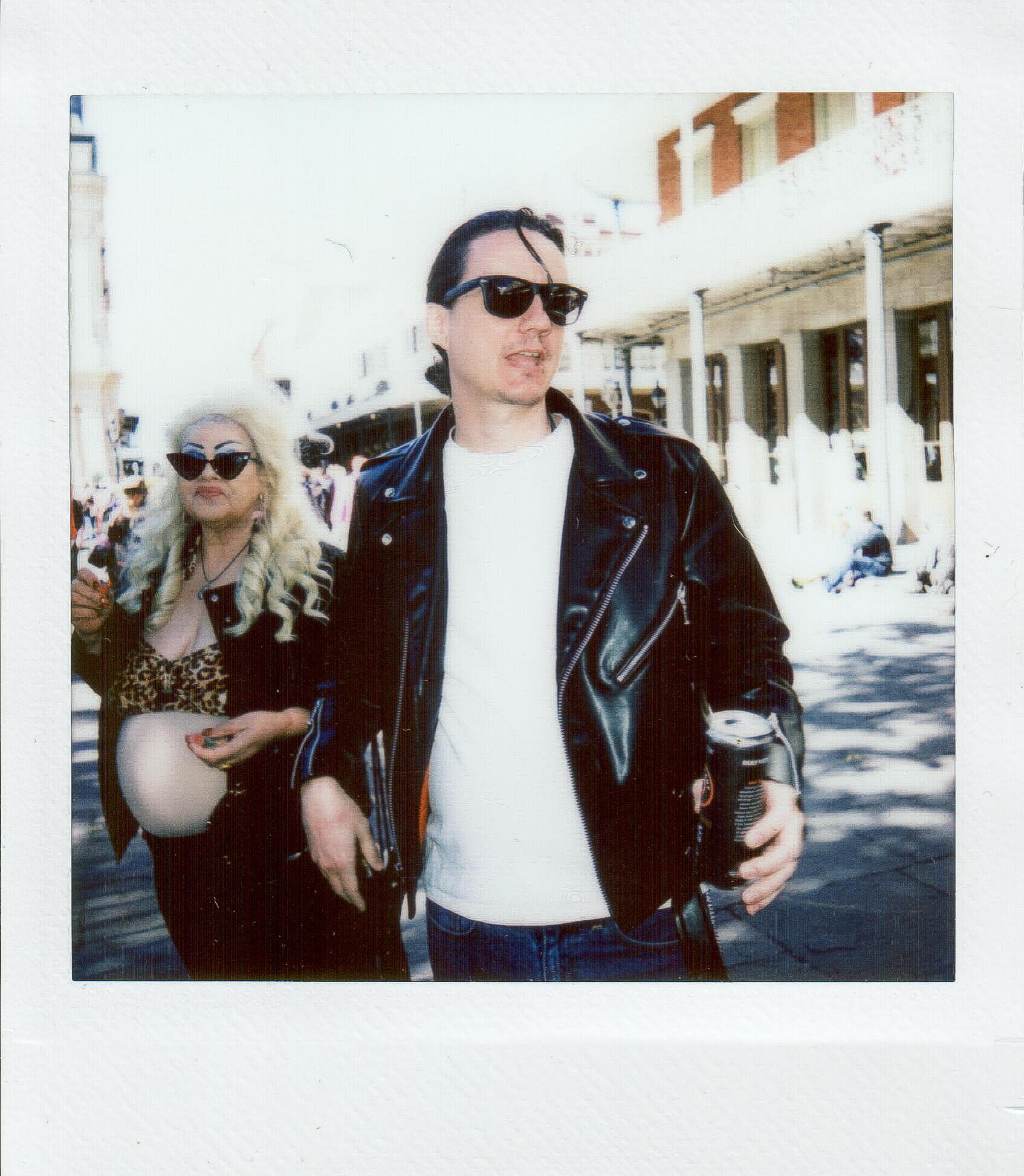
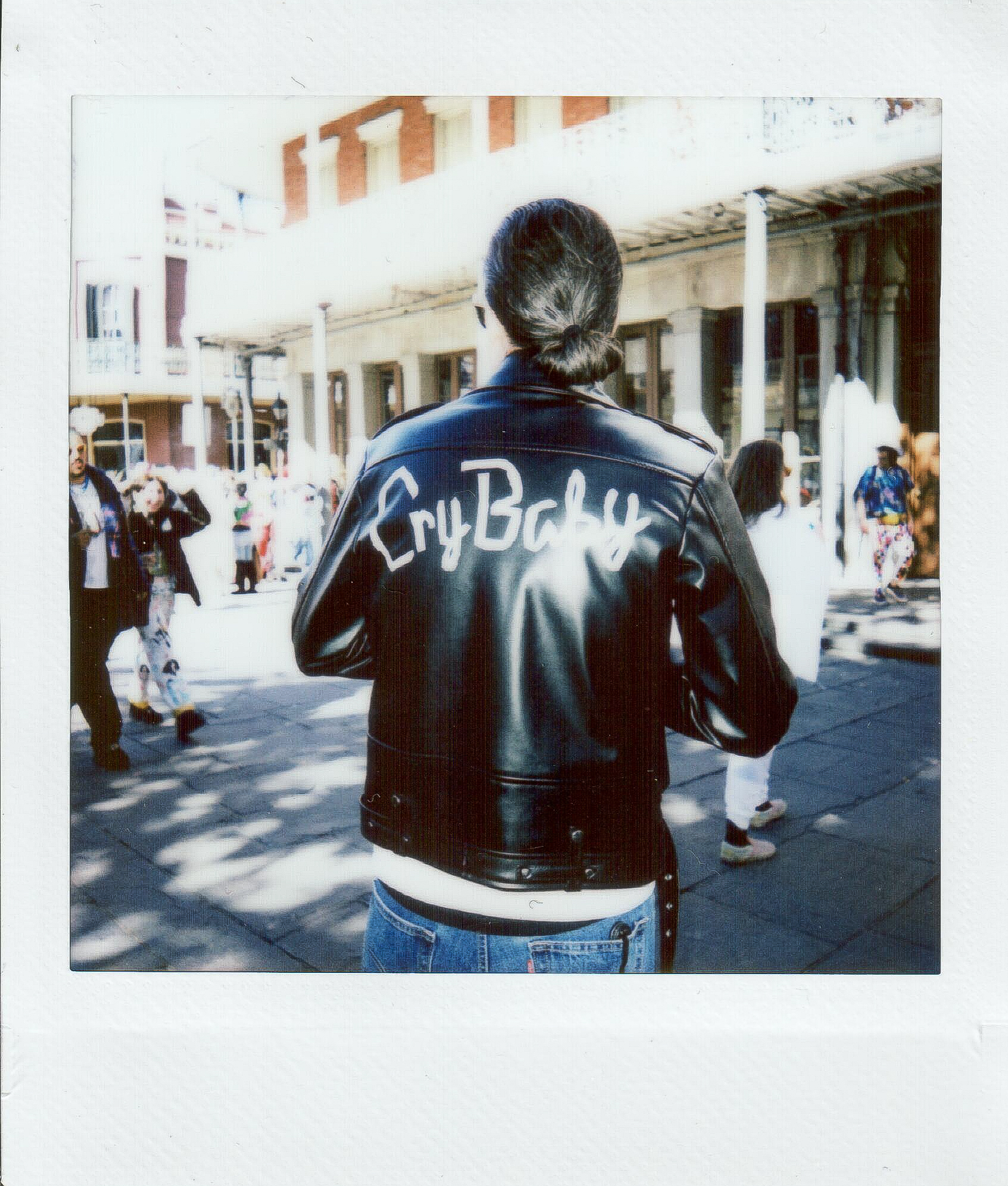
For Carnival 2017, a few members of the Swampflix crew joined forces to pray at the altar of the almighty Divine. The greatest drag queen of all time, Divine was the frequent collaborator & long-time muse of our favorite filmmaker, John Waters. Her influence on the pop culture landscape extends far beyond the Pope of Trash’s Dreamlanders era, however, emanating to as far-reaching places as the San Franciscan performers The Cockettes, the punkification of disco, and Disney’s The Little Mermaid. Our intent was to honor the Queen of Filth in all her fabulously fucked-up glory by maintaining a new Mardi Gras tradition in Krewe Divine, a costuming krewe meant to masquerade in the French Quarter on every Fat Tuesday into perpetuity.

There’s no telling how Krewe Divine will expand or evolve from here as we do our best to honor the Queen of Filth in the future, but for now, enjoy some pictures from our 2024 excursion, our sixth outing as Swampflix’s official Mardi Gras krewe:

Eat Shit!

❤ Krewe Divine ❤

Below the Belt (1980)

There are plenty of legitimate things to complain about in the modern streaming era, from the exorbitant cost of subscribing to multiple services to the illusion of availability, which obscures the fact that most movies from before the 1990s are not currently available on any of those platforms.  Those complaints do not apply to The People’s Streaming Service™, though.  Tubi is the one beacon of hope in our streaming-era dystopia, offering a library of titles deep enough to rival cinema freaks’ fondly remembered video store days at the universally affordable price point of Free.  All you have to put up with to access that library is frequent ad breaks, which can be jarring when watching high-brow classics like Un Chien Andalou but feels warmly familiar when watching the kind of schlock that pad out the late-night schedules of broadcast TV.  For instance, I have a distinct memory of catching the final half-hour of the forgotten pro wrestling drama Below the Belt on a broadcast channel like MeTV after working a graveyard shift at a pub kitchen.  I had no idea what I was watching or how I would ever get to see the rest of the picture, so I stayed awake through a few commercial breaks to soak up whatever scraps I could.  About a decade later, Below the Belt is just sitting there on Tubi, out in the open, with fewer commercials and the same lack of fanfare.  I can watch it start to end at any time.  Our new streaming paradigm might be discouraging for people who grew up in households that could afford cable, but for those of us raised on service industry tips and antenna rods, there are some ways in which things have clearly gotten better.

It turns out watching Below the Belt in out-of-context scraps on broadcast TV was surprisingly true to how the movie plays in full.  Filmed in 1974 but delayed for release until 1980, it has a similar troubled production history as the punk road trip drama Ladies and Gentlemen, The Fabulous Stains, which was also mostly remembered & rediscovered as a staple of late-night TV broadcasts.  The same way The Fabulous Stains was shelved until it could be retooled for a post-MTV cash-in, Below the Belt was shelved until it could be marketed as a pro-wrestling knockoff of the massively popular Rocky series.  It’s likely no coincidence that these two specific films were treated as low priorities for distributing & marketing, since they’re both women’s underdog stories set in creative industries run by men.  The Fabulous Stains is about an all-girl punk band; Below the Belt is about women wrestlers working the regional circuit in the American South.  The difference is that The Fabulous Stains‘ compromised form only becomes apparent in a last-second time jump that was clearly tacked on to cash-in on the rise of MTV.  Below the Belt is an absolute mess throughout.  This rise-to-regional-fame pro wrestling story has a convincing flair for low-budget melodrama, but it suffers from a crippling addiction to plot-summarizing montages that betrays its scrappy production history.  There are tons of great raw footage & isolated scenes to work with (and many years of stagnation to work with them), but it still feels like the product of a panicked editing room.  It’s as if they had a week to edit after five years of forgetting what they shot.

Actor-turned-psychologist Regina Baff stars as an unlikely recruit for the wrasslin’ business.  She starts the film as a scrawny NYC diner waitress drowning under a mop of red curls, but she’s quickly scouted for her talent for brutality when she knees a coworker in the balls for sexually harassing her mid-shift. In the erotic thriller curio White Palace, that take-no-shit diner waitress scrappiness is rewarded with a months-long fuckfest with James Spader.  In Below the Belt, it’s rewarded with a road trip to the American South, where she learns “the ropes” of the wrestling trade with a collection of jaded colleagues who’ve already seen it all.  The story was “suggested by” the novel To Smithereens by Rosalyn Drexler who, appropriately enough, went on to write the novelization of Rocky under the pseudonym Julia Sorel.  To Smithereens is a personal account of Drexler’s brief career as a wrestler in the 1950s, which helps explain the movie’s episodic, disconnected assemblage of wrasslin’ anecdotes.  It’s not a story so much as it’s a collection of interesting characters, some of whom are played by real-life wrestlers, and the most memorable of whom is played by cult-cinema legend Shirley Stoler.  Stoler only has a minor part as a road-weary wrassler with a handgun fetish, but she makes the most of it, screeching “Give me my gun back, you bitch!” in perfect camp pitch.  The other MVP on the crew is R&B musician Billy Preston, whose increasingly loopy lyrics in his constant musical montage narration makes the whole movie feel maddeningly incomplete . . . in a mostly endearing way.

By the time the dozenth montage masks unintelligible wide-shot dialogue with song lyrics about “alligators in the chitlin trees,” “burly Birmingbama ham,” “taking baths in the sweet magnolia blossoms with the possums,” or whatever other Southern cliches Preston cooked up in a half-hour of studio time, it’s clear that Below the Belt was a compromised production.  By the time the decreasingly credible, increasingly repetitive stock footage of the wrasslin’ crowds starts looking like it was shot on handheld super-8 cameras instead of professional equipment, the illusion of competence is fully broken.  I was just as fascinated by the film in its full, fractured form as I was catching parts of it out of context on TV broadcast, though, simply because the retro fashions, characters, and mise-en-scène were so specific to a bygone era of regional professional wrestling.  In that way, Below the Belt is more satisfying as a makeshift documentary than it is as a scene-to-scene drama, which means that I should make reading Drexler’s To Smithereens memoir a high priority this year.  It’s perfect Tubi programming in either context, though, since the intrusion of commercial breaks can’t disrupt what’s already a chaotic narrative flow, and since the film is such an obscure curio that you’re grateful someone cared to host it in the first place (in HD, no less). 

-Brandon Ledet