The shot-on-video punk scene relic Twisted Issues is difficult to categorize with a solid, workable genre definition. The project started as a no-budget documentary about the local punk scene in Gainesville, Florida, and scraps of that initial idea make it to the screen in-tact, detectable in lengthy scenes of D.I.Y. punk showcases in dive bars & living rooms and in montages of kids lazily pushing their skateboards down endless suburban pavement. However, sometime during production, someone decided to actually make money off of this endeavor, and the project deviated into the most viable option for low-budget, low-talent backyard filmmakers to earn a spot on video store shelves: it became a horror film. One of the skateboarding slackers became a monstrous horror icon who could hunt & kill his buddies in standalone vignettes, fleshing out the monotonous punk-show footage with the kinds of goof-off gore gags that could later be strung together in the edit to tell a somewhat linear story. It’s in that post-production edit where director Charles Pinion mutated the project a second time into something much stranger and less definable than either its documentary or creature feature versions could’ve achieved on their own. He transformed it into an oddly surreal piece of outsider art, constantly teetering between happenstantial genius and total incoherence.
True to its initial pitch, a large portion of Twisted Issues illustrates songs from local punk acts like The Smegmas, Hellwitch, and Mutley Chix with ironic news footage clips, unrelated skateboarding footage, and staged acts of violence that match the images suggested by their lyrics. The non-music video portions of the film follow one skateboarder in particular, who’s murdered in a hit & run by car-driving bullies straight out of The Toxic Avenger, then resurrected by a Dr. Frankenstein-style mad scientist to avenge his own death. The undead skater picks up a sword, hides his disfigured face behind a fencing mask, and screws his foot to a wheel-less skateboard that gives him a classic Frankenstein limp. Once loose on the streets of Gainesville, he kills his former bullies one at a time in standalone scenes that could be assembled in any order of Charles Pinion’s choosing without affecting “the plot.” The most curious decision Pinion makes, then, is including himself onscreen as a godlike figure who watches all of this gory violence and punk scene tomfoolery on his living room television. His character is clearly part of the scene, as he sometimes shares dead-eyed interactions with buddies who he later watches get killed on the TV as if he were tuning into late-night cable creature features or the local news. He’s also clearly in control of the film’s reality in some loosely defined way, as if everything we’re watching is only happening because he’s observing it through the screen. Is Pinion the punk rock Schrödinger? If a skater falls off his board and no one’s around to watch it, did he really scrape his knee? Could God videotape a gore gag so gnarly that even He couldn’t stomach it? The omniscient television set is the only element of the film’s narrative that can’t be fully defined or understood and, thus, it’s the one that elevates the picture from cute to compelling.
Twisted Issues grinds its metaphorical skateboard straight down the border between sloppily incoherent slacker art and sublimely surreal video art. Given the means and circumstances of its production, that TV-static-fuzzed incoherence was likely the only honest way for these kids to make movies, considering that every single suburban experience in that era was mediated through beer cans & TV screens. The filmmaking is, to put it kindly, unrefined. Every dialogue exchange is dragged out by awkward pauses that double their length. Each vignette is harshly separated by a cut-to-black transition. When it comes time for an original score to fill in the gaps between local punk acts, sequences are set to the most pained, aimless guitar solos to ever assault the human ear. The undead skateboarder’s accoutrements and the weapons used to fight back against him are all props that appear to have been collected from the local nerdy Sword Guy’s bedroom (credited to Hawk, who plays a nerdy Sword Guy mystic in-film to maintain verisimilitude). The whole thing is very obviously a document of friends goofing around on the weekends between punk gigs & service industry jobs, which in a roundabout way fulfills its initial mission. The way Pinion pieces everything together through the all-seeing eye of his bedroom TV set is impressively surreal, though, and it abstracts the entire picture into something that can’t be outright dismissed as home movies of local punk mischief. He mixes his friends’ goof-off hangouts with war atrocity footage recorded off TV news broadcasts. He matches local bands’ lyrics to scripted scenes of violence to the point of verging on making an SOV movie musical. Most significantly, he likens the act of shooting, editing, and watching all of this footage to a kind of godlike omnipotence that underlines the plasticity of reality in all media. He made art out of scraps.
Usually, when cult sitcoms get a “The Movie” treatment I’m already a fan of the show. By the time televised series like The Simpsons, Beavis & Butt-Head, Strangers with Candy, Trailer Park Boys, Aqua Teen Hunger Force, and Reno 911! mutated into their “The Movie” forms for the big screen, I was already multiple seasons deep into their respective runs, pre-amused with each character’s respective faults & follies. It’s always been frustrating, then, that part of getting a “The Movie” version of a TV show has meant having to dial the clock back to the very beginning, re-explaining the series’ basic premise to a wider audience who might not already be in the know. So, it was kinda nice to finally watch one where I actually did need that labored reintroduction, instead of being impatient to get past it. It also helps that this particular Sitcom: The Movie adaptation makes the act of dialing the clock back to its origin point a major aspect of its plot, instead of pretending that the intervening seasons didn’t happen so latecomers like me don’t feel left behind.
Nirvanna the Band the Show started as a web series in the mid-aughts, later graduated to a cable-broadcast sitcom, and has since been pulled from distribution so that there’s currently no legal way to catch up on it if you’re not already a savvy fan. You don’t need to have seen Nirvanna the Band the Show to appreciate Nirvanna the Band the Show the Movie, though, since it is so deliberately recursive in its themes & plotting that it functions as both an escalation and a recap. The film opens with series co-creator Matt Johnson rushing down the stairs of his Toronto apartment to manically accost his in-universe roommate (and show co-creator) Jay McCarrol with an elaborate scheme on how to book their band a gig at local music club The Rivoli. You quickly get the sense that the plan to get the gig is more thought out than the gig itself, since their copyright-skirting rock group Nirvana The Band doesn’t seem to have any completed original songs beyond some opening stage choreography. It’s also quickly assumable that each episode of the show is another failed plan to book a show at The Rivoli in particular, which after nearly a decade of elaborate coups they likely could’ve accomplished by rehearsing instead of scheming. So, the movie itself functions as a two-parter episode of the original show, escalated in scope to match the grander scale of its canvas — a classic TV-to-big-screen adaptation formula.
In the first half of this escalated two-parter, Matt & Jay illegally skydive off the observation deck of the CN Tower (Toronto’s version of Seattle’s Space Needle) in a botched attempt to promote their hypothetical Rivoli gig on the baseball field below. In the second episode, they improbably travel back in time to 2008 via a magical RV camper (powered by a long-discontinued soda called Orbitz) to re-manipulate their earliest attempts to book The Rivoli from a new vantage point. Matt keeps pushing the plans to further, more ridiculous extremes while Jay keeps trying to find a safe exit to this vicious cycle, only to be pulled back in by the magnetic allure of lifelong friendship with his favorite tragic idiot. There are three major stunts that make this particular double-episode feel worthy of its “The Movie” designation: its non-permitted stolen footage pranks at the top of the CN Tower, its seamless reintegration of aughts-era footage with the modern-aged Matt & Jay, and the constant copyright-skirting references to Back to the Futures I & II (continuing the show’s legally iffy association with the actual band Nirvana). Otherwise, it’s the story of two small, pathetic people reliving the same ruts & routines they’ve always been stuck in, which is exactly what you want out of a long-running sitcom.
Obviously, the other thing you want out of a long-running sitcom is for the joke to still be funny, which is a bar Nirvanna the Band the Show the Movie clears effortlessly. One of its funniest sources of humor is in taking stock of how much pop culture has changed since the show started, with the clearest indicators that our two pet bozos have returned to 2008 being a wide cultural acceptance of pop icons who are now social pariahs: Bill Cosby, Jared Fogle, the playfully homophobic bros of The Hangover series, and so on. It’s a running gag that plays on the fact that culture has progressed more than we think in the past couple decades, even if Matt & Jay personally haven’t. The only thing the passage of time has done for their own internal dynamic is added a layer of sweetness to their routine buffoonery. When they revisit their earliest domestic scenes together as middle-aged men who are still go-nowhere slacker roommates, it plays like a bickering married couple who rediscover their love for one another by recreating their first date. Only, being stuck in their ways is part of what makes their friendship so hilariously tense in the first place, so their relationship is ultimately more co-dependent and mutually destructive than it is healthy or cute. It’s important that they don’t grow as people so their dynamic can stay as funny as possible, which is something that modern post-Good Place sitcoms tend to forget. I hope to watch them not learn or grow in past episodes once the show is back in full public view.
Wuthering Heights is one of my all-time favorite works of art. Emily Brontë’s 19th Century novel is a shockingly horrific read for anyone who’s ever been assigned it in a high school or college-level literature course, expecting it to be a melodramatic romance (matched only in its homework-assignment shock value by her sister’s novel Jane Eyre). Wuthering Heights is not a traditionally tragic love affair; it imagines romantic attraction as a form of life-destroying doom that compels all involved to viciously tear each other apart out of the insatiable hunger of yearning, never to be satisfied through physical touch. It should be no surprise, then, that the latest, loudest adaptation of that novel would receive equally loud criticism for the ways it reduces its source text to a more familiar, better-behaved romance, as if it were a dime store paperback instead of a great work of Gothic lit. Personally, I can’t conjure the energy to care. To my knowledge, no movie version of Wuthering Heights to date has approached anything near faithful adaptation. They tend to leave the business of adapting the novel’s second half—in which a second generation of interfamilial combatants continue the first half’s vicious games of yearning & revenge—to be retold only via BBC miniseries, which are too tonally genteel to convey the full, feral nature of the source text. So far, what we’ve seen is a story dutifully half-told, with no real personal imposition on the text by the filmmakers behind the camera (besides maybe Andrea Arnold’s race-conscious adaptation from the 2010s, which gets specific in conveying the novel’s themes of “otherness,” usually left more vaguely defined). They tend to be more transcriptive than interpretive. So, I find myself in the embarrassing position of being impressed by the crassly unfaithful adaptation of one my favorite novels for at least engaging with the material in a transformative way, even if it’s more deimagined than reimagined. “Death of the author” means allowing our sacred texts to become entirely new beasts in afterlife.
Despite all the prepackaged backlash, “Wuthering Heights” proved to be another erratically entertaining piece of lurid pop art from Emerald Fennell, whose previous works Saltburn & Promising Young Woman were also loudly scrutinized in their own time for their thematic carelessness. Fennell appears eager to get ahead of the criticism in this case, adding the titular scare quotes in an effort to defuse any expectations that she might be sincerely adapting Brontë’s novel. Every image is prefaced with a wink, signaling to the audience that it’s okay to have fun this time instead of getting too hung up on Heathcliff & Cathy’s recursively lethal, semi-incestuous attraction to each other. It’s not so much an adaptation of Wuthering Heights as it is an adaptation of the horned-up dreams a teenager might have while reading Wuthering Heights — often illustrated in fancam-style montages that insert bodice-ripping sex scenes into a story that used to be about the destructive nature of unconsummated lust. Jacob Elordi & Margot Robbie are cast more for their paperback-romance cover art appeal than their appropriateness for the source material. Charli XCX is employed to soundtrack the music video rhythms of the edit to rush the story along before the discomfort of any one cruel moment has time to fully sink in. Even when destroying other women’s lives in order to get Cathy’s attention, Heathcliff seeks enthusiastic consent, turning what used to be domestic abuse into a kind of elaborate BDSM game. It’s all in good fun (give or take the obligatory tragic ending), staged entirely for the purpose of hiring movie stars to play dress-up and dry hump, supplementing the wet sounds of actual sex with bizarrely chosen surrogates like fish heads, snail slime, egg yolks, and raw dough. As goofy & half-considered as it is, it’s also Emerald Fennell’s best work to date. She continues to improve as a populist entertainer with every picture, but she has also suffered the great misfortune of being immediately successful, so everything she does is met with obnoxiously loud scrutiny. Hopefully all of her generational wealth serves as a small comfort in this difficult time.
The same week that Wuthering Heights topped the US box office (proving yet again that online backlash has no tangible effect outside your Twitter feed), I saw another domestic release of an unfaithful literary mutation. The new anime film Scarlet restages Hamlet as a sword-and-sorcery fantasy epic in a Hell-adjacent afterlife, seemingly combining the characters of Hamlet & Ophelia into one newly imagined, feminist action hero. I’m no Shakespeare scholar but, like Wuthering Heights, Hamlet does fall into the category of great literary works I was assigned to read multiple times throughout high school & college, and I don’t remember the bard describing the young Dane being groped by countless hands of the undead under a sky of black ocean waves in his stage directions. By the time Scarlet interjects a title card that drags the story back to 16th Century Denmark, I couldn’t help but treat it as a visual gag. I laughed, but I was the only one laughing in that theater, because I was the only one in the theater at all. Director Mamoru Hosoda is relatively well known among anime nerds for earlier works like Summer Wars, Wolf Children, and The Girl Who Leapt Through Time, but recently he’s been on a kick where he reinterprets literary classics as high-fantasy adventure films featuring heroic warrior princesses. With Belle, he relocated characters from Beauty and the Beast to a Virtual Reality other-realm where violence & power is wielded through pop songstress supremacy and it online follower counts. With Scarlet, he reinterprets Hamlet as a warrior princess saga about the value of forgiving yourself instead of seeking revenge, set in a timeless afterlife where the souls of 16th Century nobility can fall in love with 21st Century hunks who have working-class jobs but angelically noble hearts. Unlike with “Wuthering Heights”, no one appears to be especially angry about these far-out reinterpretations of their source texts, likely for two very obvious reasons: 1. Hamlet & La Belle et La Bête have already enjoyed multiple faithful movie adaptations while Brontë’s novel hasn’t and, more importantly, 2. Way fewer people are watching them.
As of this posting, roughly 9,000 people have logged Hosoda’s unfaithful Hamlet mutation on Letterboxd, compared to the 570,000 who have logged Fennell’s unfaithful mutation of Wuthering Heights. That’s an imperfect metric when measuring these two films’ audience reach (not least of all because “Wuthering Heights” has been review-bombed by angry social media addicts who haven’t yet seen the film themselves), but those two numbers are extremely disparate enough to mean something. Some people are mad at Emerald Fennell for not adhering to one specific interpretation of Brontë’s book as if it is the only objectively correct one (i.e., the Arnold-friendly interpretation in which Heathcliff’s otherness is based more in race than class). Others are mad at her for having no interpretation at all, using a half-remembered impression of what the book is kinda-sorta like as an excuse to stage a series of images that make her horny. I find both criticisms to be misguided. No movie owes fealty to it literary source text; all that matters is the distinctness of the vision that literature inspired. For all of her consistently reckless flippancy, Fennell’s vision gets increasingly distinct every picture. We’re also getting a clearer picture of what she personally finds erotic, which I’d argue is one of the best uses of the cinematic artform any director can pursue. Forget using the art of moviemaking as a machine that generates empathy; it’s much more useful as a window into the unresolved psychosexual issues of artists who don’t know how to effectively express themselves through any other medium. In Fennell’s case, that window appears to be attached to a candy-coated dollhouse with an immature brat trapped inside, which she expresses here by re-working Catherine Earnshaw into an indecisive woman-child who suffers through attempts to have her cake and eat it too. She even employed the official mascot of Brat culture to sing on the soundtrack, continuously underlining the point. While prettier to look at and grander in scale, I don’t know that Hosoda’s films are useful as a window into anything especially personal about his hang-ups or worldview. The images are more pleasant and the ideas are more carefully thought out, but to what end? Maybe the other obvious reason that fewer people are talking about them is because there’s just not as much to say.
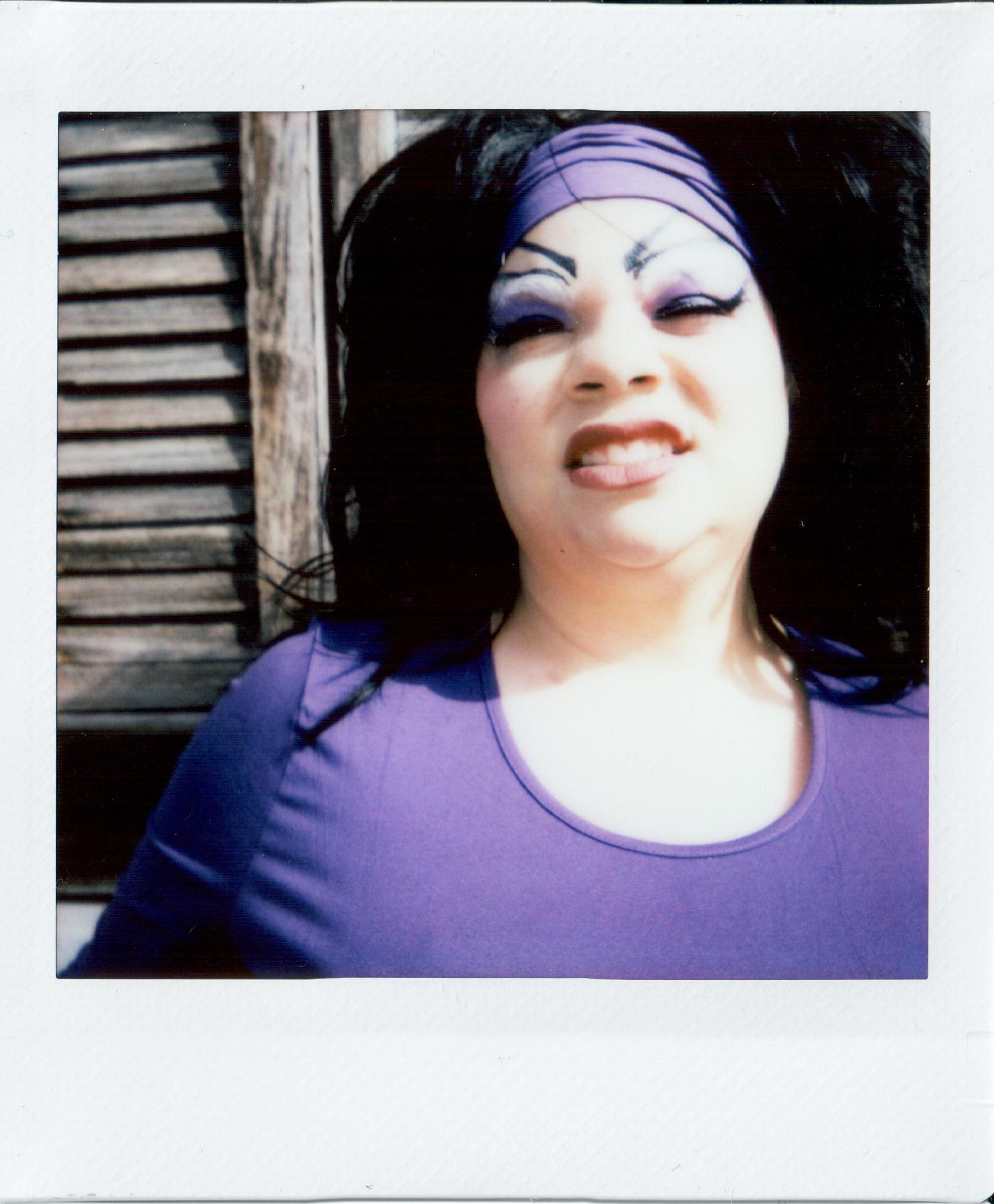
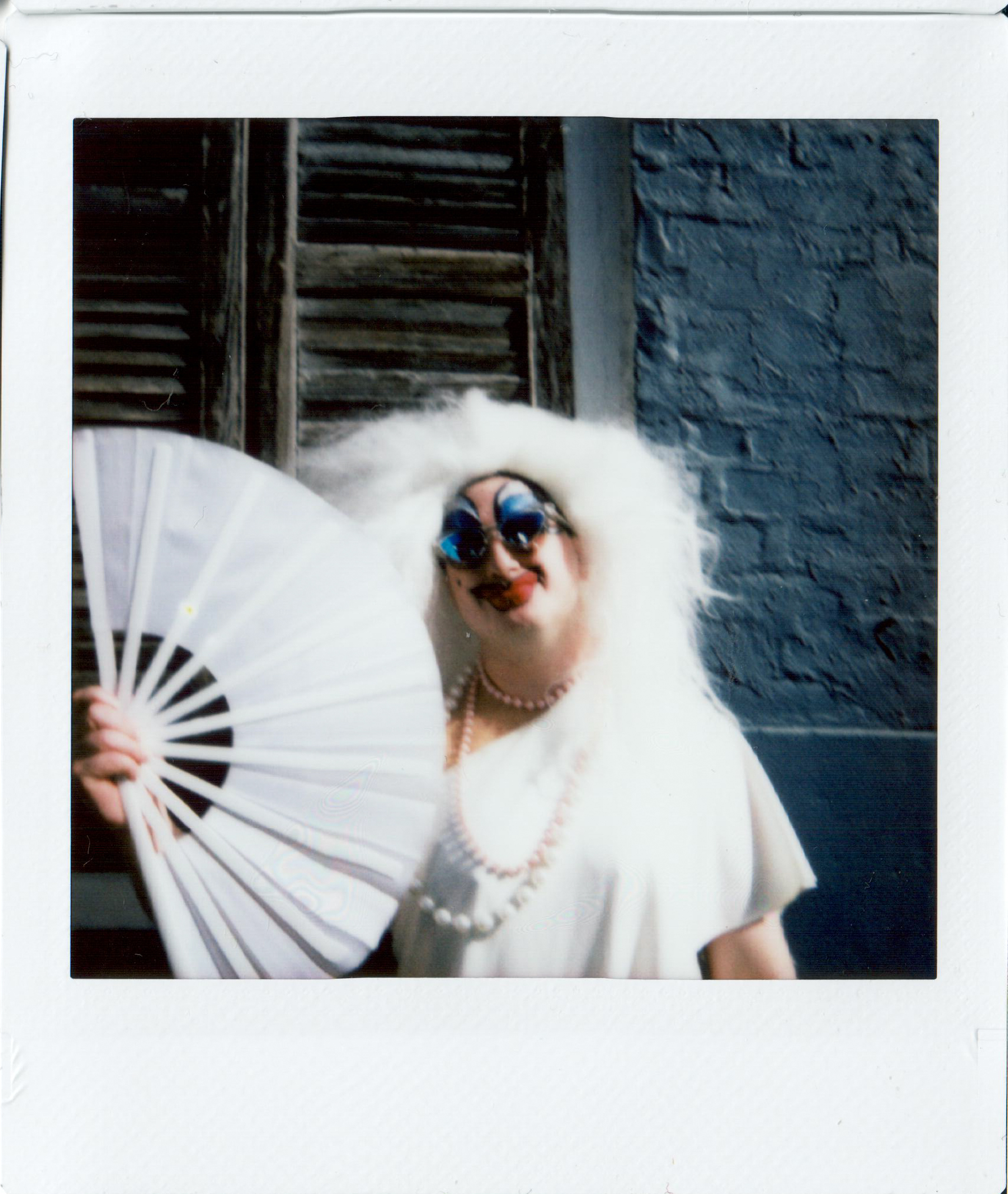
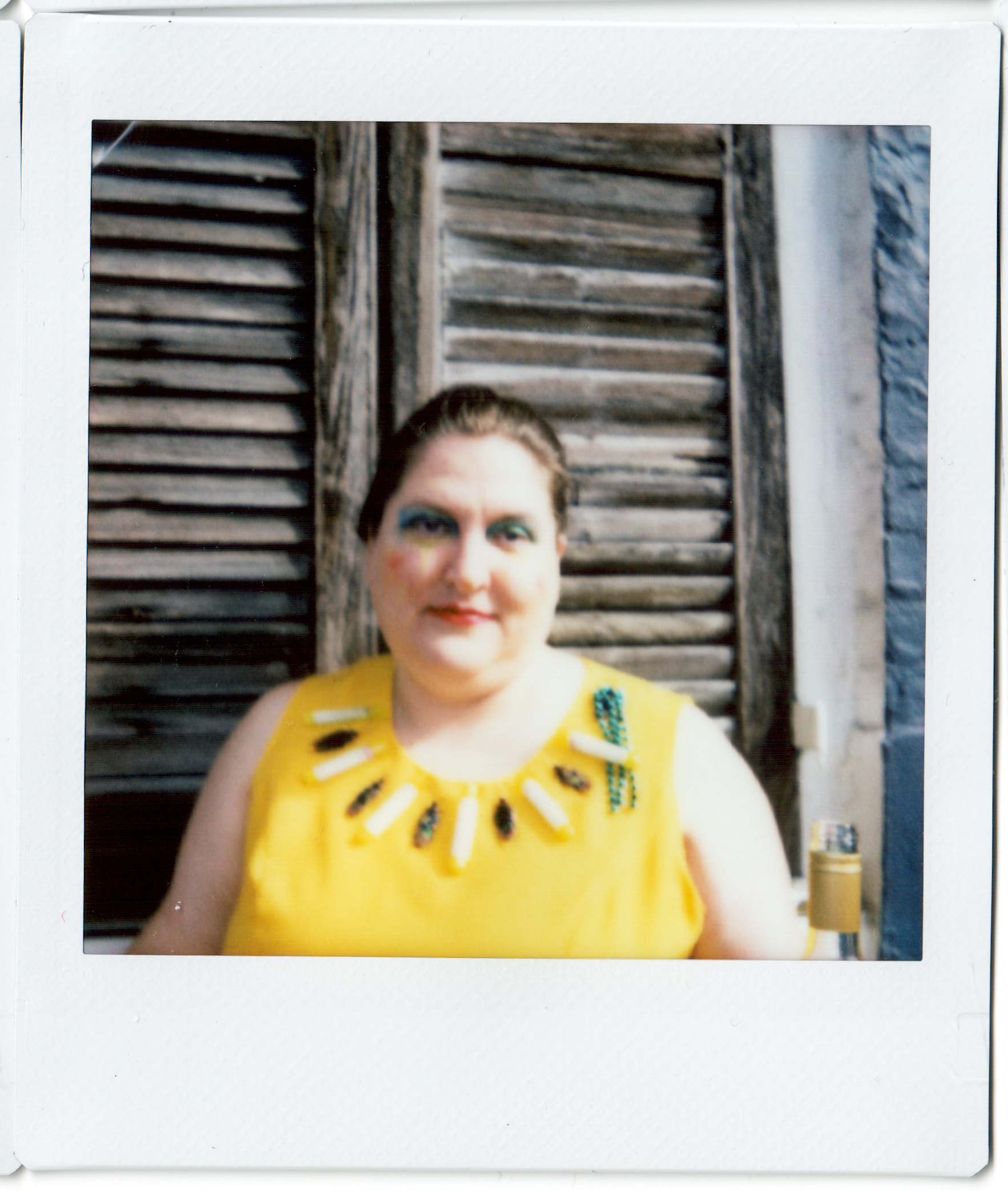
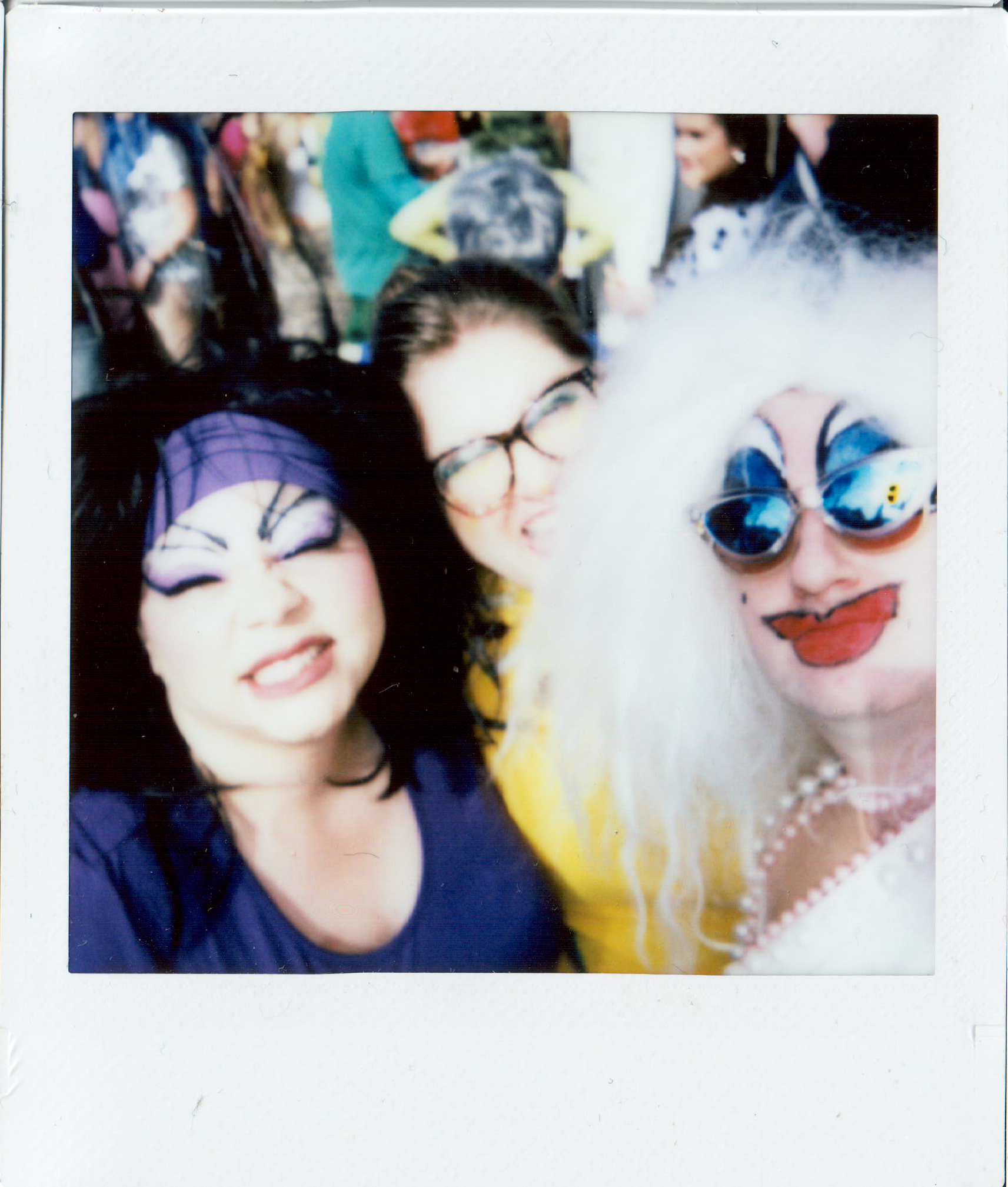
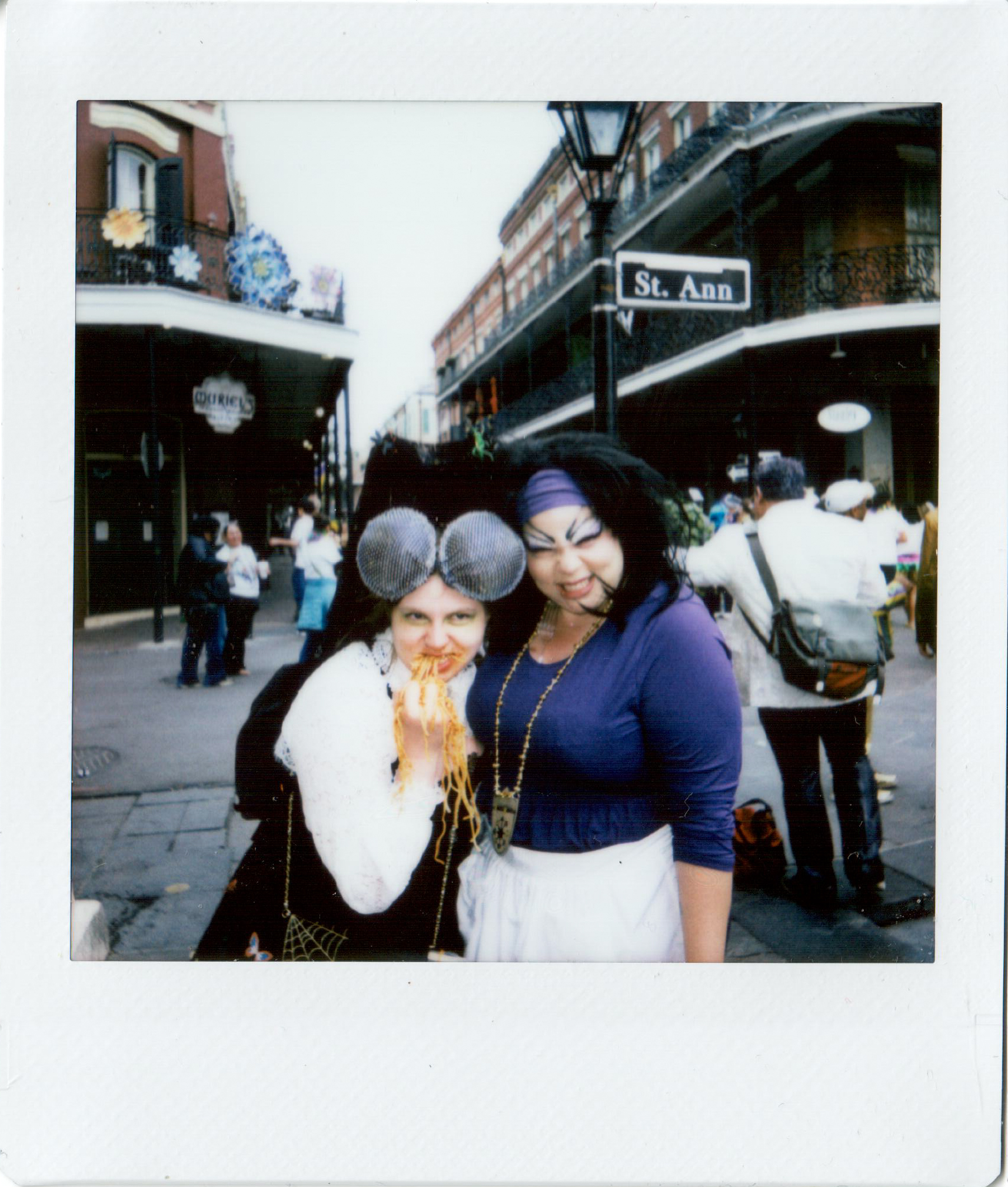
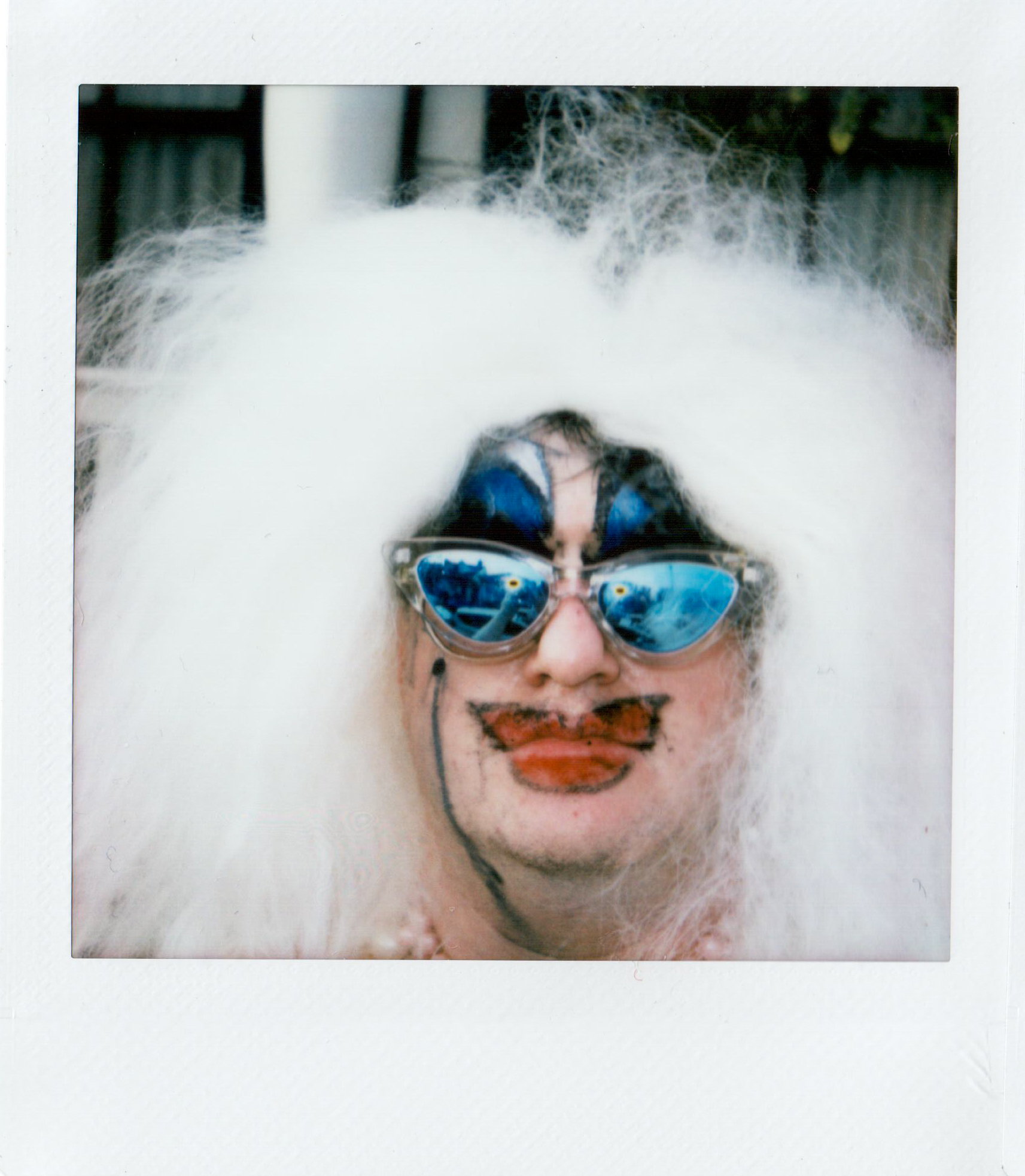
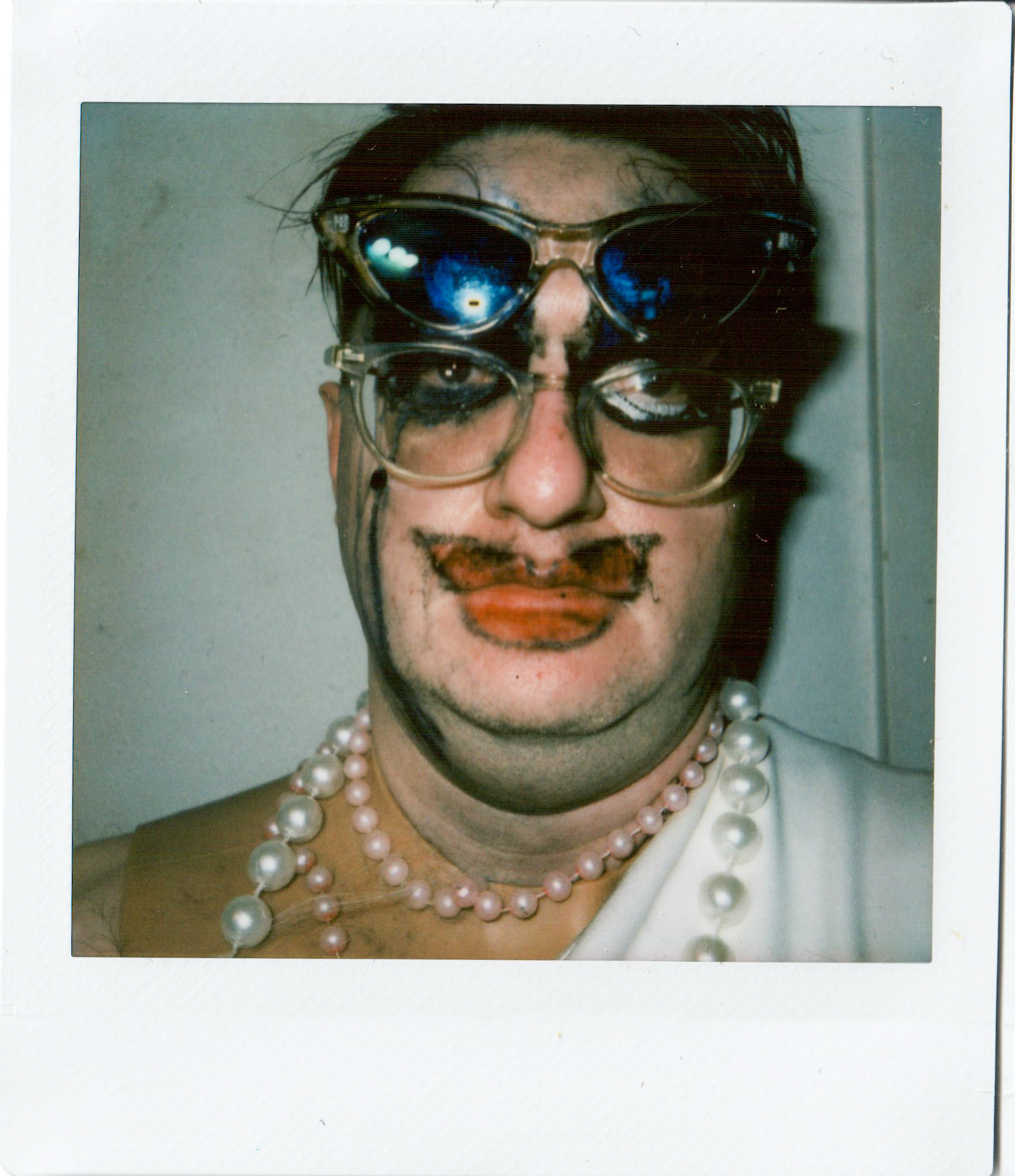
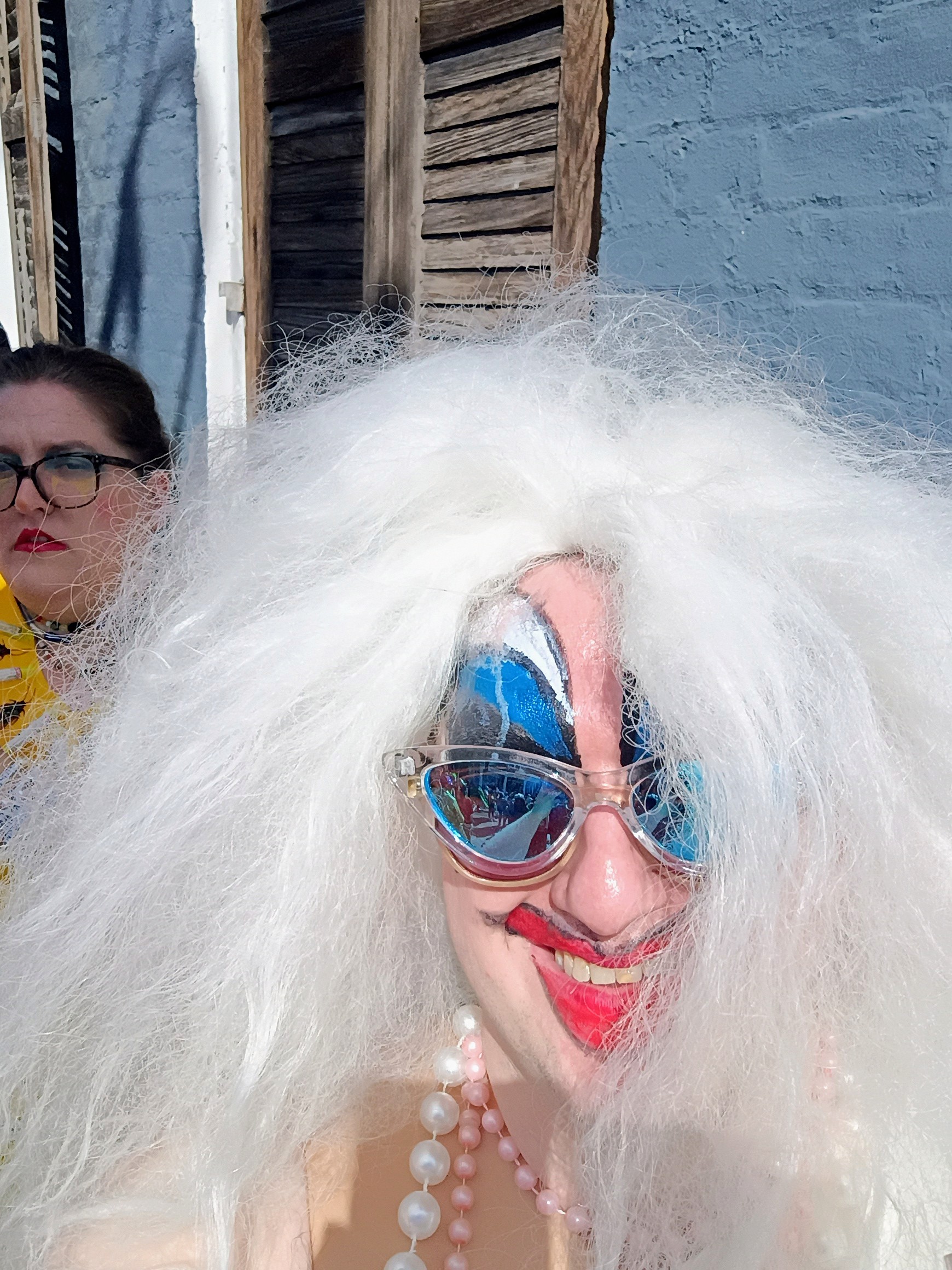
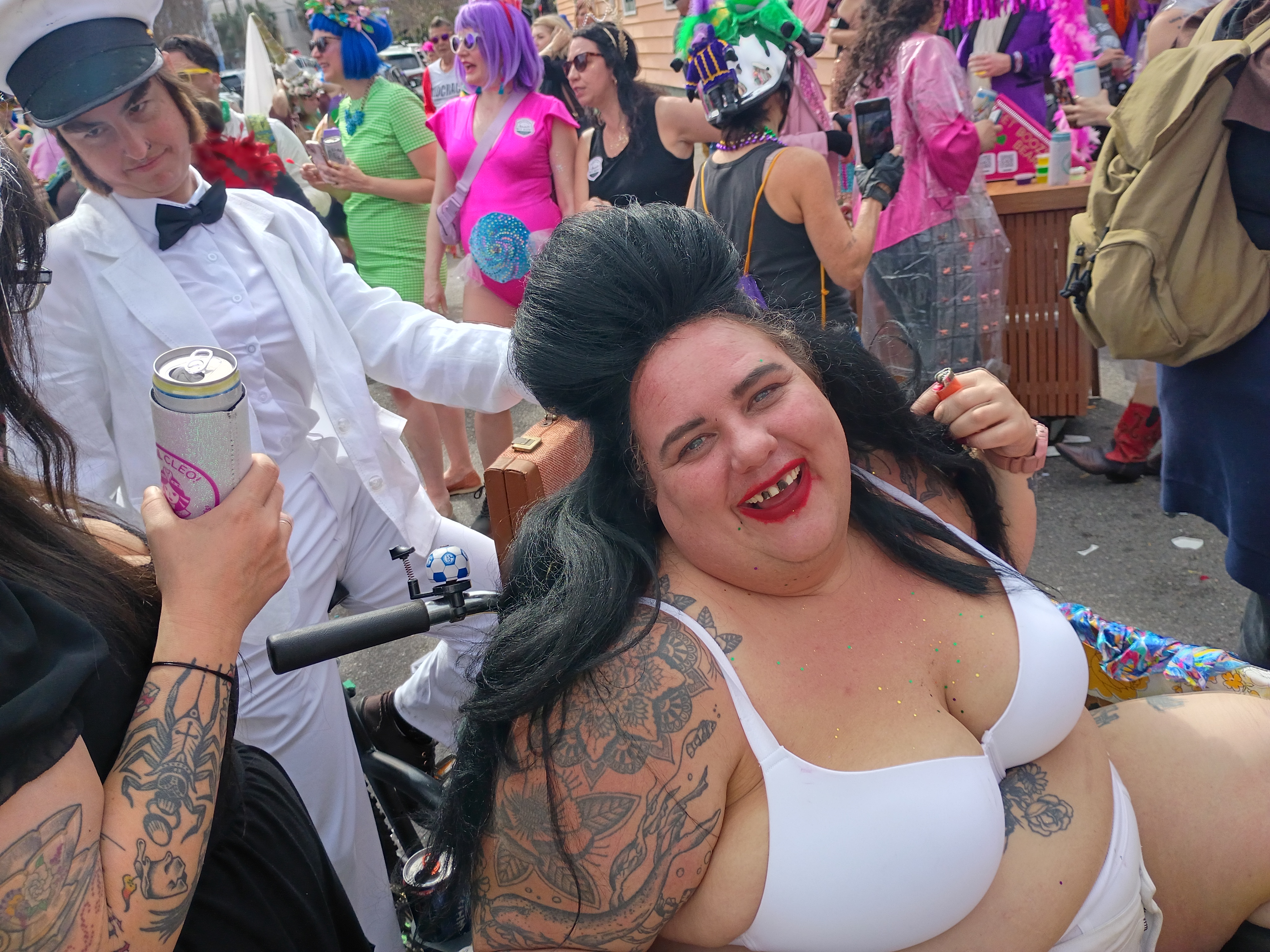
For Carnival 2017, a few members of the Swampflix crew joined forces to pray at the altar of the almighty Divine. The greatest drag queen of all time, Divine was the frequent collaborator & long-time muse of our favorite filmmaker, John Waters. Her influence on the pop culture landscape extends far beyond the Pope of Trash’s Dreamlanders era, however, emanating to as far-reaching places as the San Franciscan performers The Cockettes, the punkification of disco, and Disney’s The Little Mermaid. Our intent was to honor the Queen of Filth in all her fabulously fucked-up glory by maintaining a new Mardi Gras tradition in Krewe Divine, a costuming krewe meant to masquerade in the French Quarter on every Fat Tuesday into perpetuity.
There’s no telling how Krewe Divine will expand or evolve from here as we do our best to honor the Queen of Filth in the future, but for now, enjoy some pictures from our 2026 excursion, our seventh outing as Swampflix’s official Mardi Gras krewe:
Welcome to Episode #254 of The Swampflix Podcast. For this episode, Brandon is joined by Aaron & Peter of the We Love to Watch podcast to discuss the analog sci-fi horrors of Joe Meredith’s YouTube channel, starting with his true-crime creature feature Harvest Brood (2025).
It feels trite to say this right now, given that America is currently squirming under the boot of an openly fascist presidential regime, but the escalating omnipresence of corporate advertising in every aspect of daily life is starting to feel outright apocalyptic. It was already demoralizing enough when corporations convinced us to advertise brand names on our clothes, so that we’re paying to display billboard space on our own bodies, but once they caught up with the fact that we spend most of our time looking at each other through screens instead of in person, things have only gotten worse. Yes, the internet is a convenient access point to a wider world of art and social interaction, but it’s also an easy access point to funnel nonstop advertisement into our eyeballs. Every streaming service is just a variation of the Tubi model now, inserting commercial breaks into shows & movies we’re already paying to watch. Those old-guard artforms are also gradually being replaced with social-media microcelebrities, who skip the middleman and deliver shameless sponcon as the main source of entertainment instead of an occasional annoyance. Credit card companies control what we can do & see online via what kinds of content they allow to be monetized, stepping in as the internet equivalent of the MPAA to determine what does and does not qualify as pornography, and what forms of pornography are “allowed”. I could go on, but you have a phone, so you’re already well aware of mainstream culture’s slow-motion landslide into a corporate-sponsored Hell pit. It’s a pervasive menace that darkens & distorts every aspect of modern human life, and it’s willing to choke what’s left of that life out of us as long as it can also squeeze out our last few pennies with it, as indicated by the current advertising push for the resource-draining evils of generative A.I. So, I was pleased to discover two new movies in theaters right now that treat the exponential relentlessness of corporate advertising as the existential threat that it truly is — both of which were packaged with trailers advertising other new movies to check out while they’re in theaters, of course.
In her self-satirizing mockumentary The Moment, pop singer Charli XCX treats corporate advertising as an existential threat to art. Set during her Big Moment following the blow-up of her album Brat last summer, The Moment imagines what would happen if Charli made the same corporate business deals that took other pop stars like Taylor Swift, Katy Perry, and Justin Bieber to “the next level” during their own respective Big Moments. Her in-film record label scores two major (fictional) deals on her behalf: a credit card marketed exclusively to queer clientele and a production of a Disney+ style concert film documenting the Brat world tour. The Brat credit card deal makes for an easy, funny punchline mocking the crass commodification of identity politics and is deployed in the film as a form of recurring prop comedy. The production of the Brat concert film is a more nuanced debacle, with Alexander Skarsgård stepping in as a corporate-stooge movie director determined to sand off all of Charli’s roughest edges so she can be marketable to a more Family Friendly audience. Instead of sticking around to fight the good fight with her longtime creative director Celeste (Hailey Benton Gates), Charli folds under the pressure and allows Skarsgård to take over, turning the coked-out club classics nightlife vibe of the Brat album into a cigarette-themed version of The Eras Tour. It’s an oddly vulnerable PR move, in that it can be read as Charli satirizing herself as indecisive to the point of having no artistic convictions at all, portraying her as being personally incapable of maintaining a clear creative ethos once corporations step in to promote her art to a wider audience. The more generous reading, of course, is that she’s saying that no one can stand up to that kind of corporate pressure, and that’s why all corporate-sponsored art sucks. Whether she’s the butt of her own joke or she’s throwing punches at peers, it’s at least clear that the real villains are the credit card companies and the assembly-line hack directors who are willing to sacrifice art to the almighty altar of Advertising.
In the new sci-fi comedy Good Luck, Have Fun, Don’t Die, director Gore Verbinski (along with screenwriter Matthew Robsinson) treats corporate advertising as an existential threat to human dignity. Sam Rockwell stars as a time-traveler from a near-future dystopia that has been overrun by A.I. In order to stop his grim timeline from coming to pass, he must quickly recruit random customers from a Los Angeles diner to put a stop to that A.I.’s creation over one long, zany night before it’s too late. This A-plot premise is broadly generic in both its LOL So Random style of humor (think “hotdog fingers” and you get the gist) and in its observations on smartphone addiction, in which all teenagers are portrayed as George Romero zombies who aimlessly wander through the city while staring at their screens. There is some biting satire scattered throughout the film’s Black Mirror-inspired vignettes, however, once the focus shifts away from Rockwell’s all-in-one-night mission to profile the daily lives of the diners he takes hostage. Juno Temple’s screentime as a single mom who loses her teenage son to a school shooting is especially fruitful, both in how it portrays America’s treatment of those shootings as being as unavoidable of a natural occurrence as bad weather, and in how the tragedy invites advertising into her family home. After her son is killed, the grieving mother is sold on purchasing a cloned version of him, but she can’t afford the luxury model, so her subscription comes with ads. A corporation has smoothed out all of the details of her son’s personality until he is a generic non-entity, and they’ve doubled that indignity by making him a mouthpiece for IRL sponcon, spouted as if it were casual conversation. Likewise, the Romero zombie teens elsewhere in the film speak entirely in ad placements when not staring blankly at their screens, satirizing the ways in which modern online discourse has turned us all into uncompensated employees of marketing companies. With or without an inevitable A.I. takeover, we are already doomed.
Unfortunately, Good Luck, Have Fun, Don’t Die far exceeds its LOL So Random allowance by the end, and it’s ultimately just not very good. Gore Verbinski has made exactly one fully satisfying film to date (Mouse Hunt, duh), and ever since then he can only manage to stage extravagant disappointments that almost kinda-sorta work if you squint at them from the right angle, among which Good Luck is no exception. He has a very Baz Luhrmann-coded career in that way (Strictly Ballroom, duh). Charli XCX’s movie is much less ambitious and, thus, has a much easier path to success. One of The Moment‘s more reliably successful gags is the way luxury brands, hotel chains, and sponsorship deals are announced in the strobe-lit block text that has accompanied all of Charli’s recent concert performances, very directly using her art to advertise corporate products. Most of the film is shot in the grainy, low-lighting texture of modern fly-on-the-wall documentaries, and most of the humor registers as similarly low-key. That makes for a much less ambitious source of comedy than the anything-can-happen-at-any-moment zaniness of Good Luck, which works up an excess of flop sweat while scrambling across Los Angeles in search of the next randomized Mad Libs punchline. For all of the ways Verbinksi’s latest might disappoint as a comedy, however, it’s easy enough to get behind its resentful messaging about how our culture-wide smartphone addiction has “robbed us all of our dignity and turned us into children.” Despite all of its cutesy visual gags, dirt-cheap guitar riffs, and Deadpool-level ultra sarcasm, it’s at least pointing its finger at the right cultural boogeyman. Corporate advertising is going to kill us all, and we’re inviting more of it into our brains every second we spend looking at our phones. Now excuse me while I check every local cinema’s website to plan what showtimes I will purchase tickets for next.
2004’s Kill Bill: Vol. 1 was the first—and to this day—only movie I’ve ever watched on a bootlegged camrip. I was a senior in high school at the time, and there was something still novel about torrenting a movie online before it was officially released in theaters, no matter the quality. A friend smuggled a copy of the movie on two CD-Rs into our high school art class, where we cheered & squealed over Quentin Tarantino’s newly achieved levels of cartoonish bloodshed & overwritten dialogue. I’m sure I also saw the movie in theaters that same week, but I don’t remember that experience. I do remember Kill Bill: Volumes 1 & 2 being in constant rotation as second-hand Blockbuster liquidation DVDs during my college years though, casually thrown on the living room TV when no one’s sure what to watch (the same way Boomers in no particular mood end up listening to the Beatles as an automatic default). Vol. 1 was always The Fun One, Vol. 2 was always The Boring One, and they were always buried behind a layer of standard-definition fuzz and only half-paid attention to, like animated dorm room wallpaper. So, twenty years later, I might have just experienced The Kill Bill Saga the way it was meant to be seen for the very first time, despite having been in the same room with “Tarantino’s 4th Film” untold dozens of times. Only, not exactly.
The Whole Bloody Affair is a new, seemingly finalized edit of the two Kill Bill movies, now smashed together to create one monstrously ginormous butt-number. Tarantino has been casually playing around with this project since 2006, undoing the Weinsteins’ work of splitting his mid-career epic into two separate parts by occasionally trotting out this one-long-cut version into prestigious venues like the Cannes Film Festival and his own vanity movie theater The New Beverly Cinema. The original uptown location of The Prytania recently secured a 70mm print of the film and has been running it on loop for the past few weeks, giving its local New Orleans rollout a prestigious feel it wasn’t afforded when DCPs were screening out at the Metairie AMC Palaces last December. So, it’s funny that I still left the theater feeling like I’ve only seen Kill Bill in a compromised, mucked up form. It seems that in Tarantino’s current, meaningless pursuit to land the “Perfect Ten” filmography, he’s gotten distracted by some George Lucas-style tinkering with the original texts. I’m willing to forgive the new silly title cards underlining that both halves of this picture technically count as “The 4th Film” in the Tarantino oeuvre, since the original project was split into two parts by meddling producers. Still, though, I’m skeptical that his original intention was to make a 5-hour movie with a Fortnite cutscene epilogue (“Yuki’s Revenge”), which is what The Whole Bloody Affair ultimately amounts to. I’m also unsure why he felt the need to extend the original films’ anime segment with newly commissioned footage, other than that no one is around to tell him “No” anymore because his most looming collaborator is currently, rightfully imprisoned. All of the newly printed material inserted into the Kill Bills of old are a waste of time & resources, but if putting up with those distractions is what it takes to revisit these films on celluloid with a savvy crowd I’m willing to go along with this fussy nerd’s legacy-curation bullshit just a little bit. At least he didn’t retroactively add a CGI Bruce Lee into the picture, Jabba the Hutt style.
Just as Kill Bill has changed over the years (through newly added animation, alternate takes, and a self-imposed intermission), so have I. It’s difficult to say anything about how this project’s place in the larger cultural zeitgeist has shifted, since it’s been so long since I’ve engaged with it and, more importantly, I’m no longer a teenager. I hadn’t personally seen much anime, wuxia, or kung-fu cinema when Kill Bill first came out, so the film’s stylistic flourishes are no longer as impressive to me now having seen The Original Texts like Lady Snowblood or The 36th Chamber of Shaolin. Like all Tarantino pictures to date, there’s nothing in Kill Bill that represents the best of any genre he liberally borrows from, but he has admittedly remixed them all into something undeniably entertaining & cool — like a video store DJ. Allow me, then, to play overly-opinionated video store clerk for a moment myself and talk about where this outing ranks in Tarantino’s filmography. Kill Bill: Vol. 1 has always been Jackie Brown‘s strongest competition for the best of his best, and the newly restored cartoonish violence of the Crazy 88s fight sequence (previously censored for MPAA approval) only strengthens that case. It succeeds through the same method that Jackie Brown does, by employing real-life participants from the vintage genres he’s riffing on: Blaxploitation superstar Pam Grier & Hong Kong fight choreographer Yuen Woo-ping, respectively. If The Whole Bloody Affair does Kill Bill any favors in the greater Tarantino rankings, it does so by elevating Vol. II, integrating it more smoothly with its better half by dropping the “Until next time …” teaser that once divided them. And yet, the newly, needlessly extended anime sequence drags the first half down a little, so who knows (or cares). Everything else that’s changed about these movies is a jumbled mix of passing time and personal maturity. The choppy bangs, flip phones, and low-rise jeans scattered throughout the revenge epic have marked the passing of time since it first premiered in the early aughts, when all those props & fashion accessories felt as natural as oxygen. I’ve also found a new appreciation for Lucy Liu’s performance as the unlikely assassin turned yakuza figurehead O-Ren Ishii, with her Big Speech about her gender & heritage bringing unexpected tears to my eyes through sheer fierceness. I’m sure that in 2004 I was just happy to watch her decapitate an underling in the following seconds. It was a simpler time; I was a simpler man.
You will find no plot summary here, as I’m already embarrassed to have added this much text to the server space reserved for discussing Tarantino’s filmography. All I can muster the energy for is observations about how the passage of time can dull or distort a movie that means a lot to you when you’re a teenager. For instance, it’s much easier to be dazzled by a live-action Hollywood film indulging a brief diversion into anime when you’re not as hyper aware that there’s much better anime out there; extending that sequence with five additional minutes of footage doesn’t help either. It’s also much easier to enjoy Tarantino’s work in a vacuum without decades of hearing him say things that range from idiotically petty (taking out-of-nowhere potshots at Paul Dano as “the worst actor in SAG”) to outright evil (showing support to IDF soldiers during the ongoing genocide in Gaza). Even if you want to engage with the movies themselves and ignore the man behind them, he’s now stuck in a navel-gazing thought loop that makes the task impossible. Tarantino is currently terrified of directing another feature film because he might mess up his self-assigned “Perfect Ten” filmography, so he’s turned himself into a lowly film podcaster instead, and his niche topic of discussion is his own work. It’s shameful. There are two unqualified positive things I can say about Kill Bill: The Whole Bloody Affair: 1. Its theatrical release is the only good thing to have come out of Tarantino’s current self-analysis era, and 2. It was smart of him to bury his newly commissioned Fortnite animation sequence after the 20 minutes of end credits, where few people are likely to see it. Otherwise, everything that I like about The Whole Bloody Affair I already liked about Kill Bill Vol. 1 and Kill Bill Vol. 2: two solidly, separately entertaining pieces of post-modern pop art from one of Hollywood’s sweatiest loudmouth bozos.
The easiest way for a low-budget horror movie to become a perennial classic is to stake its claim on a specific calendar date, so it has an annually recurring slot for ritual rewatches. This has been common knowledge since at least as far back as the first-wave slashers of the 1970s, with Black Christmas, Friday the 13th, and Halloween guaranteeing annual royalty checks from subsequent years’ cable TV broadcasts. Christmas & Halloween have proven to be popular seasonal settings in that scramble to claim a ritual calendar date, while other titles like April Fool’s Day, New Year’s Evil, and Mardi Gras Massacre have found much less competition in more casually celebrated holidays. 1981’s My Bloody Valentine staked its claim on Valentine’s Day relatively early, and has only been challenged by the occasional novelty like last year’s Heart Eyes or 2001’s Valentine in the decades since. It’s proven to be a difficult film to top for Valentine’s Day horror supremacy, since its killer’s method of ripping out victims’ hearts to stuff into heart-shaped Valentine chocolate boxes is the perfect balance of novelty & brutality needed to leave a mark on the genre. It also arrived early enough in the slasher cycle to participate in this Holiday Horror tradition with full sincerity, avoiding the Scream–era meta irony that ruins a good, silly scare with the distraction of self-awareness. If you want to celebrate Valentine’s Day with a classic horror title set on that holiday, there’s still really only one viable choice (give or take its relatively well-respected 2009 remake).
That’s what makes it so funny that My Bloody Valentine is a hat-on-a-hat situation. It would’ve been more than enough for it to stand out as a novelty slasher by delivering a killer who’s improbably activated by his home town’s Valentine’s Day celebrations. Instead, it adds the extra detail that its masked killer moonlights as a coalminer, inviting mine-specific tools & settings into each staged kill that have no direct association with the holiday in question. Yes, he uses his mining gear every kill, and yes, those kills are inspired by how much he hates his town’s annual Valentine’s Day dance. He’s a complicated guy with a lot going on. The more generic version of this slasher template can be found in the previous year’s Prom Night, in which a tragic childhood accident is avenged once those responsible are old enough to attend their senior prom. Shot in Canada but set in Anywhere, Small Town America, there’s nothing specific about the background details of Prom Night‘s setting — deliberately so. My Bloody Valentine was also shot in Canada (as frequently confirmed by the Canadian pronunciation of “sorry”), but you are unlikely to mistake it for the town you live in unless you happen to live in a cloistered coalmining community where every male person in your life has spent some time working in the mines. The inciting tragedy in this case was an accidental explosion that happened while the rest of the town was enjoying the local Valentine’s Day dance, carelessly leaving five workers to perish in the mines below. So, whenever the town decides it’s time to move on with their lives and bring back their Valentine’s Day traditions, masked killer Harry Warden returns to avenge his fallen coworkers (whom he unfortunately had to cannibalize to stay alive in the maddening days leading up to his own rescue). It’s two seemingly unrelated things—Valentine’s & coalmining—forever welded together in a single ludicrous screenplay.
My Bloody Valentine attempts to smooth over the discordance between its two competing novelty settings by focusing on the kind of love-triangle romance that typically springs up when you live in a small town where everyone knows each other from cradle to grave. You see, local golden boy T.J. (Paul Kelman) tried to leave small-town life behind by moving away to Los Angeles, but he quickly crashed & burned and shamefully found himself back in the mines. While T.J. was gone, his golden-haired girlfriend Sarah (Lori Hallier) started up a new relationship with his former bestie Axel (Neil Affleck), but now that he’s back in town he wants to default to their previous relationship. Will Sarah choose to reignite her white-hot passion for T.J., or will she stick with the stabler, nobler partnership she’s since built with Axel? Who gives a shit? The romantic melodrama at play here is necessary to justify the holiday setting, but it’s difficult to pay too close attention to its stakes when there’s also a crazed killer in town ripping out the trio’s friends’ hearts and plopping them into the hotdog waters, beer coolers, and chocolate boxes at their unsanctioned Valentine’s party, thrown behind the sheriff’s back. All that really matters is that the kills are consistently brutal and consistently afforded a mining-town specificity in the killer’s mask, weapons, and venues of attack. Shooting the majority of those kills down in the mines may darken the screen a little too much to reward modern home viewing, but they look great on the big screen, especially in the pop iconography of the opening scene, when a buxom blonde strokes the phallic hose of the killer’s mask mid-hookup before she’s penetrated with his pickaxe. Gnarly.
Speaking of horror-movie calendar watching, this year is especially apt for a My Bloody Valentine screening (an opportunity pounced upon by ScreamFest NOLA at The Broad earlier this week). That’s because Valentine’s Day happens to fall on a Saturday this year, the day after Friday the 13th. That’s also the case in the film itself, which we’re informed via title cards announcing both dates: Friday the 13th, then Saturday the 14th. It’s highly likely that My Bloody Valentine was greenlit as an attempt to capitalize on that calendrical coincidence in 1981, hoping to make Harry Warden as much of a household name as Jason Voorhees. The film did not succeed there, but it’s still the first title that comes to mind when someone thinks of Valentine’s Day horror and coalmining horror, which is an impressive double-dip success in its own right.
In Albert Birney’s debut feature The Beast Pageant, a lonely man who gets all of his social interaction through the machines in his job & home is shaken out of his daily routine and forced to go on a supernatural adventure in a Natural world that looks suspiciously like rural upstate New York (where Birney was living at the time). In Birney’s breakout collaboration with Kentucker Audley, Strawberry Mansion, a lonely man who gets all of his social interaction through the machines on his jobsite visits to strangers’ homes is shaken out of his daily routine and forced to dream of a supernatural adventure in a Natural world that looks suspiciously like rural Maryland (where Birney has been living since). In his most recent directorial outing, OBEX, Albert Birney himself appears onscreen as a lonely man who . . . you get the picture. Birney has six feature films to his name, and the three I’ve happened to have seen all follow the same basic narrative structure, the same way that all Neil Gaiman stories I’ve read happen to rely on the same Alice-down-the-rabbit-hole plot device. The only thing that’s changed between these career checkpoints, really, is the nature of the sad-sack protagonist’s job, the types of machines that distract him from his mind-numbing daily labor, and the type of fantasy adventure that breaks him out of the routine. If you’ve already seen The Beast Pageant or Strawberry Mansion, you’re already familiar with the general vibe & shape of OBEX but, thankfully, Birney still finds plenty room for variation & novelty when coloring within those rigid lines.
In this iteration, Birney plays a 1980s computer whiz & agoraphobe who never steps outside his modest Baltimore apartment. His only true friend is a geriatric lapdog named Sandy that randomly wandered into his yard and has been spoiled like a baby ever since. Birney’s sad-sack loner makes a living by “drawing” computerized portraits of strangers on commission, recreating family photos with carefully arranged keystrokes on commercial-grade printer paper. When it’s time to relax, he entertains himself with the other screens arranged throughout his house, most notably a tower of cathode-ray TVs stacked in his living room as a kind of unintentional video art instillation. He often runs three different programs out-of-sync on this TV tower like a televised-media DJ, cuddling up with Sandy on the couch and cranking up the volume to drown out the roar of cicadas outside of the house. Things go awry when he purchases a PC computer game through mail catalog that promises to bring great adventure into his life — a promise made literal when the game invites a demon named Ixaroth to invade his home through the screen, directly importing Sandy into the game. To rescue Sandy, he must then go on a harrowing adventure outside of his apartment by willingly entering the game himself, represented as a live-action roleplay version of 8-bit era Zelda puzzle games. The story is not unfamiliar (especially not if you’ve seen Riddle of Fire in addition to Birney’s prior work), but its familiarity is ultimately, warmly sweet.
The most notable shift in craft here is Birney’s newfound interest in horror genre tropes, which is usually where most low-budget directors start. Some of his best couch time with Sandy in the first act is spent recording the entirety of A Nightmare on Elm Street Film from TV broadcast to VHS tape, so they can rewatch it together later, anytime they want. This allusion opens the film up to a wide range of surrealistic horror touches, including dozens of rubber-masked cicada mutants straight out of 1950s creature features, a couple Harryhausen-style skeleton soldiers and, most improbably, some spooky late-night drives inspired by Lynch’s Lost Highway. The treacherous demon Ixaroth obviously adds to the film’s horror bona-fides as well, represented onscreen as a beast made entirely out of TV static, with a tangible taxidermy skull. It’s an image that pairs well with Birney’s return to the Game Boy Camera-style black & white cinematography of The Beast Pageant, but more importantly it’s one that signals the themes he’s getting at with this latest stylistic experiment. The evil entity is composed of the glowing-screen filler that keeps his protagonist from venturing outside his apartment, making the film out to be a dire warning about the price of staring at screens all day instead of living a real life. Sure, you get some mind-melting psychedelic video art out of it, but at what cost? In comparison, I’m not sure that The Beast Pageant had a similar underlying message other than that having a job sucks. Maybe OBEX is Birney admitting that making & looking at niche art all day sucks too, especially if that’s the only thing you do.











 Swampflix