


-Brandon Ledet
-Brandon Ledet

There’s been a lot of recent online conjecture & debate about the future of Tubi. Following the streamer’s rebrand with a uglier, bubblier logo, rumors spread that Tubi has been requesting that distributors upload censored versions of their films, with all graphic depictions of sex & violence obscured from public view. It’s unclear whether this is true for the entirety of Tubi’s streaming library—which is miles deeper than any of its fellow competitors’—or if it’s just true for the movies that play on its “Live TV” channels that simulate pre-streaming movie broadcasts. Or maybe it isn’t true at all. There’s more speculation than evidence out there so far, so the only thing that’s really resulted from this scrutiny over Tubi’s supposed swerve into puritanism has been the constant reminder of who owns the company: the same Murdoch family who owns Fox News. It’s not out of the question, then, that Tubi might go squeaky clean in the near future, which makes it my solemn duty as a film journalist to watch the most degenerate smut I can find on the platform just to keep an eye on the evolving facts of the situation.
You have to search for 1967’s Blood of the Virgins by its original Spanish-language title “Sangre de Virgenes” for it to populate on Tubi, but I can confirm that it has not yet been censored or removed. The dream is still alive; tits & gore are still welcome on The People’s Streaming Service. This apparently includes movies where tits & gore are the only thing on the filmmakers’ minds, as is the case with this sub-Jesús Franco vampire smut – a genre the poster specifies as “Erotomania”. Blood of the Virgins is an oddball novelty even within the context of dirt-cheap, horned-up vampire schlock. If nothing else, I’ve never seen a vampire movie try to pass off stock footage of seagulls as if they were its vampires’ bat form, aided only by a red color filter and some unconvincing squeaks on the soundtrack. I’ve also never seen a vampire movie produced in Argentina, an unusual cultural perspective that shows in the film’s vintage telenovela blocking & scoring and in its central location of a vampire-infested log cabin instead of a vampire-infested Gothic castle. Of course, these cultural & aesthetic details are all secondary to the film’s main goal: dousing beautiful naked bodies in artificial stage blood.
If you cannot tell from its listed 72-minute runtime, Blood of the Virgins was designed to pad out a double feature for drive-in make-out sessions, not to scare. It’s closer to softcore pornography than it is to horror, especially in its best, earliest stretch where it chronicles a Swinging 60s ski cabin trip taken by its doomed hippie victims, who eventually break into the wrong cabin to their own peril. After a period-piece vignette establishes the existence of vampires in centuries past, the audience is bombarded with an energetic Russ Meyer-style nudie cutie montage in which hippie freaks indulge in dive-bar go-go dancing between bouts of road trip heavy petting and wholesome downhill skiing. It’s an invigorating, titillating start to what’s ultimately a low-energy Hammer Horror knockoff. Once the vampires isolate & drain those hippies (who, I must note, are very much not virgins), the movie slows way down and loses both its momentum and its overall sense of purpose. By then, it has outlived its function as background noise for drive-in canoodling, and it’s really your fault if you’re still paying attention to see how the story plays out.
There are a lot of fun little touches to this Argentinian oddity for anyone familiar with this genre. Its hand-drawn credits, its soap opera zoom-ins, its seagull shaped “bats”, and its main vampire’s predilections as more of a titty sucker than a neck biter all make it an amusing novelty for anyone who can stay awake long enough to gawk at those details. Blood of the Virgins is just slightly off in its bargain-bin approximation of Jesús Franco vampire erotica, making it a fascinating outlier for anyone who knows how these things are supposed to play out. For instance, it’s weirdly sheepish about depicting lesbian acts between the hippies & vampires, but eager to gesture at male-hippie-on-female-vampire cunnilingus, which is a much rarer treat. The Russ Meyer-style hippie montage at the beginning is also remarkably energetic for a genre that’s usually so sluggish & unrushed, and this might have been a bonafide cult classic if had sustained that rhythm throughout. As is, it’s still great fun and great confirmation that you can still find boobies on Tubi despite recent reports otherwise.
-Brandon Ledet

Sometime during my bus trip from watching the 4-hour French culinary documentary Menus-Plaisirs at The Prytania to immediately follow it with the 3-hour Polish sci-fi epic On the Silver Globe at The Broad, it hit me. If I lived in a bigger city with a full, robust repertory scene, I would have a weekly meltdown. Thankfully, New Orleans is relatively laidback in its repertory programming, with most of the heavy lifting done by The Prytania’s Sunday-morning Classic Movies series and now Wildwood‘s Wednesday-night screenings at The Broad. There’s usually only one or two now-or-never selections in any given month here, which is much more manageable than the nonstop deluge of rare 35mm prints that flood cities like Chicago & NYC. Having a large portion of those screenings recently relocate to The Broad has made it even more manageable for me personally, since it’s the theater closest to my home. So, I’ve been spending a lot of time watching older releases at my neighborhood cinema, but not too much time. Except for the rare occasions when I have to choose between two once-in-a-lifetime screenings on opposite sides of town, I’m mostly unbothered, moisturized, happy, in my lane, focused, flourishing.
As a result, I’ve racked up a few short-form reviews of older movies I happened to catch at The Broad in recent weeks. All three movies happen to be about rebellious young women’s lives as social outcasts, which likely says less about the kinds of films being programmed around town than it says about the kinds of films that motivate me to leave the couch. Here they are in all their grimy, leather-jacketed glory (listed in the order that I watched them).

Vagabond (1985)

Second only to Alfred Hitchcock’s routine appearances in Prytania’s Classic Movies program, Agnès Varda has got to be the most frequently programmed director in town (or at least has been for as long as I’ve been paying attention to such things). Since 2018, I’ve seen Le Bonheur, Faces Places, The Gleaners & I, and Cléo from 5 to 7 at local specialty screenings, and I even missed one of Jane B. It’s an incredible string of luck that’s made me reluctant to catch up with Varda’s most iconic titles at home, with the assumption that they’ll eventually play in a proper theater if I’m patient enough to wait. That spoiled brat entitlement recently paid off when Wildwood screened the 1985 drama Vagabond, one of Varda’s most celebrated post-Cléo triumphs. I immediately understood its reputation as one of her best, since it works equally well as a prequel to her dumpster-diving documentary The Gleaners & I (my personal favorite Varda) and as a crust-punk take on Citizen Kane (many serious critics’ personal favorite by anyone).
Sandrine Bonnaire stars as a transient young woman named Mona, hitchhiking her way across France with no particular purpose or destination. Mona loves smoking weed, listening to generic pop radio, and not being hassled to do much else. We’re introduced to her as a corpse, frozen in a ditch without anyone looking for her or even really knowing who she is. We get to know her through the posthumous testimonials of people whose lives she drifted through, her aimless story playing out in fractured flashback. Everyone projects their own dreams, regrets, uses, and prejudices onto her but she was never vulnerable enough with any stranger ever to fully reveal herself, making her just as impossible to pin down in testimonial as Charles Foster Kane. Only, Kane was defined by the crushing weight of his own ambition, while Mona is defined by her total lack of it. As she camps on isolated roadsides and squats in abandoned estates, the people around her attempt to parse out the romance of her wandering vs the self-destructive impulse of her “withering.” It’s essentially unacceptable for her to merely exist, and the world inevitably punishes her for it by abandoning her body in a ditch.
One of the reasons I put off watching this particular Varda film for so long is that its premise sounds so unrelentingly grim. In truth, Vagabond strikes the same real-life balance between joy & misery that most of Varda’s films achieve; it just starts with tragedy instead of saving it for a last-minute shock. Even Mona’s death has an absurdist humor to it in the end, as it results from the joyous carnival celebrations of a local community who isn’t aware how vulnerable she is to their drunken shenanigans. As doomed as she is from the start and as unknowable as she remains to everyone she meets, Mona is a loveable, recognizable kind of rebel. Varda might mock the people who project their own psychological hangups onto the character’s blank canvas, but she includes herself and her audience in that indictment. By the end you really feel like you know Mona, especially if you’ve ever smelled the particular sweet-yeast/old-mold stench crusties tend to cultivate in their unwashed denim. You don’t know her, though. No one possibly could.
Rebel Dykes (2021)
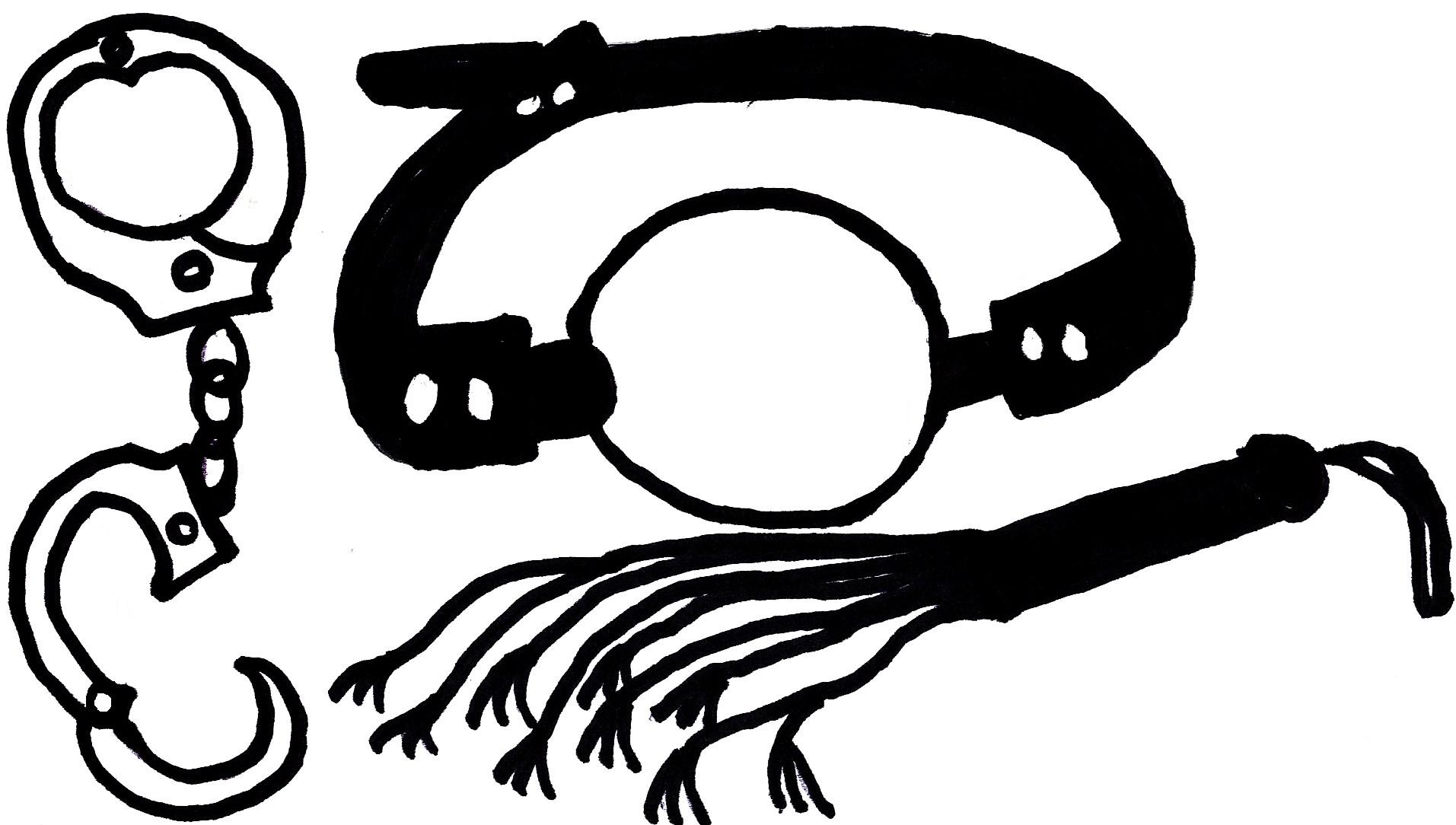
I don’t know that Patois Film Fest‘s screening of the 2021 documentary Rebel Dykes technically counts as repertory, since it might very well have been the film’s local premiere. I’ve been waiting to see this low-budget, D.I.Y. punk doc for years, but it seemingly never landed official distribution outside its initial festival run. It was a perfect fit for Patois programmers’ focus on political activism, though, since it’s specifically about the anti-assimilationist queer politics of post-punk lesbian leather bars in 1980s London. Ostracized both by internal debates over whether S&M & pornography were acceptable feminist practices and by external governmental oppression in Thatcher’s UK, the heavy-leather lesbians of the era formed a tight community initially mobilized by lust but eventually galvanized into political fury – mostly by necessity. A lot of them are still around to tell the tale, too (a rare luxury for 1980s urban queer communities), including producer Siobhan Fahey, who’s interviewed among her friends as a first-hand witness to the scene.
Rebel Dykes has all the hallmarks of a self-indulgent documentary in which talking heads wax nostalgic about the “You had to be there” glory days, but it’s thankfully working with a deep archive of vintage material from the era that helps illustrate the scene’s historical importance. That archive is especially helped by its subjects recalling a time when home video camcorders were first becoming affordable, giving a lot of the vintage footage the feel of grimy video art and, more practically, homemade pornography. The animated interstitials that stitch those clips together are a lot less visually impressive, but there is a kind of homemade charm to them as well, as if a bored teenage punk made their own Flash Animation versions of Love & Rockets comic book covers. Mostly, though, Rebel Dykes‘s nostalgia is sidestepped through its usefulness as a modern political motivator. It was a perfect selection for the activism angle of the Patois program, as it got a rowdy crowd amped up to either throw some bricks through some government windows or to throw some BDSM sex parties with their friends – whichever is more politically expedient.

Out of the Blue (1980)

Appropriately enough, Wildwood also recently screened Dennis Hopper’s teen-punk precursor to Vagabond—1980’s Out of the Blue—which likewise features an aimless, denim & leather-clad rebel whose most prized possession is her portable radio. Linda Manz stars as an Elvis & punk obsessed brat who rebels against her eternal car-crash homelife by running away from home and mimicking the destructive, hedonistic behaviors of the drug-addict grownups around her. Meanwhile, Hopper rebels with equal gusto against every studio exec who ever gave him a chance, combining the ecstatic antisocial freedoms of Easy Rider with the ecstatic career-torching incoherence of The Last Movie to deliver the least commercial project of his notoriously chaotic stint as a New Hollywood auteur. Belligerent, sloppy, brilliant – Out of the Blue had me laughing and holding back tears throughout, often simultaneously.
Almost all of the credit for the movie’s power belongs to Manz, of course, whose lead performance anchors Hopper’s messy narrative style in the exact way her voiceover narration anchored Malick’s in Days of Heaven. Her thick New Yawka felt out of place in that Americana period piece, but it’s perfectly suited to her character here, since she’s essentially auditioning to become the fifth Ramone. Manz’s dialogue mostly consists of provocative catchphrases like “Elvis!”, “Punk rock!”, “Kill hippies!”, “Subvert normality!” and “I hate men!”, all of which she either delivers in confrontational shouts at the dysfunctional adults around her or in mumbled private reassurances to herself. She’s a teenage thumbsucker who loves her teddy bear, but she’s eager to break out of her addiction-rotted home to live the full Fabulous Stains punk rock fantasy on the road, a volatile combo of innocence & bravado. The result of that combination is inevitably bleak, but she’s explosively entertaining & surprisingly funny on her journey to self-destruction.
Out of the Blue is the total Rebel Girl package. It’s got the oddly joyful nihilism of Vagabond, the take-no-shit toughness of Rebel Dykes, and a special one-of-a-kind teen rebel quality that’s only ever been credibly brought to the screen by Linda Manz (give or take a Natasha Lyonne, who is partially credited for fostering the film’s recent digital restoration). It’s also got one of hell of a theme song in that titular Neil Young track, which helps add instant emotional impact to Hopper’s aggressively abject, abrasive imagery.
-Brandon Ledet

It’s not something that comes up here a lot, but I go to a lot of live music shows. Although I’m reaching a point in my life where I’m often a decade or so older than the mode, I’ve never really found myself feeling like I had impostor syndrome until a couple of months ago, when I was at a show where a young woman was singing, accompanied solely by a male guitarist. This isn’t a statement about either’s talent—both were great—but there came a moment of intense realization on my part that I had heard all of the sentiments that were being laid before me before, and that I had in fact heard them many, many times. There’s nothing wrong with that; there’s room enough in the world for an infinite number of songs that feel like vulnerable diary entries and which rhyme “make-up” with “break up” with “wake up,” as long as there’s at least one person on the receiving end with whom the song connects, sonically and/or lyrically, and/or any other way that people connect with the art that they love. But I did realize that, perhaps, the time when that sung journal could connect with an older man like me had passed, no matter how much I was enjoying the show, when I was capable of wondering “Am I too old to be here?”
I was a bit worried about this, heading into Gasoline Rainbow. The film’s blurb read “With high school in the rearview, five teenagers from small-town Oregon decide to embark on one last adventure. Piling into a van with a busted taillight, their mission is to make it to a place they’ve never been—the Pacific coast.” I was intrigued, not least of all because the film is the first fully narrative feature directed by the Ross brothers, Bill (IV) and Turner, who had previously helmed Bloody Nose, Empty Pockets, but was worried that I might be too old to connect with the characters of Rainbow. Those fears were only further agitated when I saw the (at time of writing) only review on IMDb, which called the film “pretentious” and stated the “entire movies [sic] dialog [sic] between characters consists only of drunk teenagers talking.” Luckily, I needn’t have been concerned.
The above-cited synopsis is pretty clear. Five teenagers, recently graduated from high school in fictional Wiley, Oregon, set out to have one last big adventure together before adult life pulls them in different directions. Stealing the family’s dilapidated van in the middle of the night, Nichole Dukes picks up the rest of the crew: Tony Abuerto, Micah Bunch, Nathaly Garcia, and Makai Garza. After a tense moment when the van’s engine dies beneath the slow-blinking yellow light of an isolated intersection and it seems unlikely to restart, they are on their way. Unlike a lot of movies of this type, they have a destination: the coast. From there, the film falls neatly into a series of vignettes characterized by the people that they meet. The first is a woman working at a gas station; the quintet asks her if she knows of anywhere cool nearby that they can visit, and she hops into the van with them and directs them to an otherworldly place in the Alvord Desert, an eighty-four square mile barren in southeast Oregon. Afterward, when returning their guide back to where she lives now, they ask if she’s interested in joining them for the rest of the way. She talks about the traveling that she used to do when she was younger, though she doesn’t look much older than they do, and although she’s clearly tempted, she begs off and wishes them well on their way. The next person that they encounter is a guy walking a dark road at night, who emerges from the darkness into the lamp of their headlights like a ghost from the mist; he invites them to join him and some friends for some good old-fashioned countryside drinking by a fire, and they accept.
This turns into a fun time, and Makai in particular hits it off with a girl named Dallas, who ends up giving him a bracelet and telling him to meet her in a few days at “The End of the World,” a party happening near the coast so that he can return it to her there. After a night of drinking, smoking, and partying, the group wakes up in the field to find all other participants long gone, and when they climb back up to the road, they discover that the van has been stripped. They spend the next day on foot before arriving in another small town, where they are able to get some food and befriend a few locals and shoot some pool. They also meet two crust punks who teach them how to freight hop, and they make it all the way into Portland this way. While there, they meet and connect with a skateboarder, Micah’s cousin, and a couple of middle-aged fantasy-loving metalheads, all of whom function to allow the kids to reveal something of themselves, and to possibly reflect the kind of people that they could become.
This is a beautifully photographed movie of deep feeling that avoids the traps of treacly sentiment. It’s rare to see a movie that so accurately reflects that cold, bright, fried lung morning after feeling, and this one certainly does. It’s also one with that particular verisimilitude that runs bone-deep in fiction film that’s made by filmmakers who cut their teeth in documentary work. A lot of how much you’ll enjoy this film will depend on what your tolerance level is for hearing teenagers talk about themselves amongst themselves, and although I understand that can be a barrier for others, I feel that the unscripted, adlibbed feeling of the dialogue covers a lot of irritation. That negative review I quoted earlier isn’t wrong, per se, in the sense that I’ve met plenty of people who, when presented with this text, would interpret it the same way. I don’t think that the film wants us in the audience to think that these kids are having life-changing realizations about themselves that are supposed to blow the minds of viewers; this is a character study of five kids who have never seen what’s over the horizon. Even if their revelations about what’s outside of their bubble may seem shallow to us, it’s so that we can reevaluate what we take for granted through their eyes, not so that we are moved by their philosophical insight. And, for what it’s worth, they also learn that the world over the horizon isn’t always what it cracks up to be either; one of my favorite jokes in the movie is that the kids learn why everything smells like shit in Portland—because that’s just how cities smell.
The characters sell this one, honestly. That this is a story about misfits is an obvious statement; the gang even learns to trust their first friend on the road because she shows them her tattoo of the Misfits skull, which is almost too on the nose. One of the film’s major strengths is the way that it parses out little pieces of character that are revealed through dialogue. In a film that foregoes narrative devices like flashbacks in favor of a feeling of documentary realism, there’s no other way to get backstory, but it’s very well done here. Nathaly confides in another local girl that they meet in the town about her father’s recent deportation and not being sure what will happen to her now. Micah is caretaker to both of his younger siblings since his parents are both in rehab. Tony is directionless and feels that he has no other choice but to pursue a career in armed forces, which is the plight of a lot of Americans. As Makai tells the skateboarder (I want to say his name is Bernard, but I can’t find a single press kit that names anyone other than the kids), he was the only Black kid in the entire town. The film is also smart to let us know that there is conflict in the group, but to underplay it so that we don’t devote too much screen time to it and to underline the familial connection between them; for instance, the two girls are at one point pissed at Tony about something that he says offscreen, and the other two boys are hands-off. We never learn what it was that Tony said, and the only narrative contribution is that we see him looking over his shoulder at the girls as they shoot pool in the next scene, and by the next day, no one cares to bring it up again. It makes the road trip nature of the narrative have room to breathe.
Gasoline Rainbow is a picaresque, and we get a lot of pictures of life along the way, treated respectfully at all levels, which is also a nice touch. Each of the people that we meet along the way are people that you’ve probably met. My personal favorite is the Portlandian man living on the river with whom the group stays on the last night before The End of the World. He and every one of the friends that we meet wears a black metal band tee; he used to have hair down to his waist but keeps his head shaved after an accident with a piece of industrial machinery; his walls are adorned with Game of Thrones house banners; he makes breakfast to “The Shire” from the Lord of the Rings soundtrack; and he’s nothing but joyful that he gets to, in his own words, be their Tom Bombadil. I’ve known so many different variations on this guy that I couldn’t fully shake the feeling that I had met him before, too. I liked all of the people that we met along the way, in truth, even the crust punks, and appreciated the balance between them providing some genuinely good advice while encouraging the kids to just keep going without ever making them feel like they should turn back.
Taken on its own terms, this is a beauty, and a rare high-quality treat in its genre of contemporary coming-of-agers. There are a couple of moments where it gets a little hammy; the invocation of the word “family” in one of the kids’ voiceovers feels a bit heavy-handed, and I’m still conflicted about the film ending on seconds-long staring-to-camera close-ups of each character (its film-schooliness is apparent but it’s also very effective). If you get the chance to see this one in your market, I recommend it.
-Mark “Boomer” Redmond


Welcome to The Not-So-New 52, your digital Swampflix comic book (adaptation) newsstand! Starting in 2007, DC Comics and Warner Premiere entered the direct-to-home-video market with animated features, mostly in the form of adaptations of well-received event comics or notable arcs. This Swampflix feature takes its name from the 2011 DC relaunch event “The New 52,” and since there are (roughly) fifty-two of these animated features as of the start of 2024, Boomer is watching them in order from the beginning with weekly reviews of each. So, get out your longboxes and mylar sleeves and get ready for weekly doses of grousing, praise, befuddlement, recommendations, and occasional onomatopoeia as we get animated for over fifteen years of not-so-new comic cartoons.
This one … it’s fine. Ok? It’s fine. This is an anthology film that centers around the first days of training of the Green Lantern Corps’ newest recruit, Arisia Rrab (Elisabeth Moss), with her induction into the group coinciding with a major crisis—naturally—that threatens the Corps’ founders, the Guardians, and the planet on which the organization is based, Oa. Things start out easy enough, as she meets her mentor Hal Jordan (Nathan Fillion, in the first of many portrayals of the character), learns about some of the Corps’ most legendary heroes of past and present, and ultimately proves her mettle by figuring out how to defeat the wraparound story’s big bad. And it’s fine!
The meat of the story lies in its vignettes, which are perfectly suitable. Together, both we and Arisia learn about the origins of the Green Lanterns, the forging of their rings and those rings’ selection of the first four bearers, including one unlikely candidate in the form of the Guardians’ scribe, who—naturally—winds up defying all expectations. When Arisia worries about how her boot camp with the hulking Kilowog (Henry Rollins) will go, Hal recounts Kilowog’s own brutal training under a previous veteran, who came to see the potential in his pupil when the younger man demonstrated exceptional heroism. When Hal and Arisia encounter Laira (Kelly Hu) and she delivers a prophecy to them, we learn about Laira’s backstory as a princess whose father was saved from death at the hands of an army by the sacrifice of their area’s Green Lantern, and how his ring chose Laira as his successor; years later, she is forced to intervene when her father seeks revenge against his previous oppressors. The following recitation is the best of the bunch, which is fitting, as it’s an adaptation of one of the best stories in the extended GL universe, “Mogo Doesn’t Socialize,” and although it’s a pretty famous one, I won’t spoil it here on the off chance that you’d have any interest in this movie without already having read it. Finally, the still-a-Green-Lantern Sinestro (Jason Isaacs) reveals that his late friend Abin Sur (Arnold Vosloo) was a great believer in fate, unlike Sinestro, until he learned of a prophecy that Sinestro would fall to the dark side and create a Corps that was powered by fear, and rejected the concept of destiny. All that having been wrapped up, the framing device gets wrapped up when the combined might of the Green Lanterns are able to enact Arisia’s crazy/inspired plan and defeat the film’s villain, and a new era dawns.
This movie is fine. It’s a little thin, which is ironic considering that this one is actually the longest of these films to date, clocking in at 83 minutes; the franchise wouldn’t break the 80 minute mark again for six years, and that’s not even taking into consideration that the title sequence for Emerald Knights is the shortest of them so far as well, not counting Wonder Woman, which consisted solely of a title card. Public Enemies, for example, had a 2:10 title sequence, First Flight’s was two minutes long, and Doomsday clocked in with a whopping three minutes, which is a lot of screen time for something that’s barely more than 75 minutes long. This one is more packed with story than any of the others have been, but that’s not a huge mark in its favor. Although every single one of these things is a corporate product, this one feels the most like it was made with its brand name in mind. This came out the same year as the ill-fated live action Green Lantern starring Ryan Reynolds, and Emerald Knights positively smacks of an attempt to coax some easy money out of a gullible public through synergistic marketing. It’s not badly made—Lauren Montgomery and the other directors on the project are doing good work—but none of these segments are better than the stories from which they’re adapted. Only the first vignette (and the wraparound) is new material, and while it’s fine, that’s all that it is. That same sense of corporate oversight and aftertaste is present in how this film mostly pulls its punches. Compare any of the scenes of action in this one to, for instance, the casual cruelty of Sinestro and the brutal violence of Boodikka’s death in First Flight, or the Amazon battles of Wonder Woman, or even the threat of death by immolation at the hands of the Joker in Under the Red Hood, and this one has more of a Saturday morning feel. It has to if we’re going to be able to package it in a multi-disc set alongside the surefire hit live action feature in time for Christmas! Except it didn’t happen that way, and this film suffers for having been destined (haha) to not only be forgotten because of that movie, but worse because of it, too.
In its defense, none of these are bad stories. They’re just not as interesting here as they are in the comics, and none of them stands out as an adaptation that improves upon the original text. I can see David Gibbons’s art for “Mogo Doesn’t Socialize” so clearly in my mind (and, at least at the time of writing, you can find it here in its entirety), and although this film does dabble in different art styles for each segment like Gotham Knight, the differences between vignettes is not as extreme, so this one isn’t as exciting as the original comic story. As an intro to the greater Green Lantern mythos for newbies, this one might be perfectly suitable, but it’s very middle of the road for this direct-to-video project, and a little too much of a Green Lantern-shaped corporate project to really lose oneself in.
-Mark “Boomer” Redmond

For this lagniappe episode of The Swampflix Podcast, Boomer, Brandon, and Alli discuss the erotic Greek sci-fi thriller Blind Date (1984).
00:00 Oscars
04:45 Hundreds of Beavers (2024)
08:10 Eye of the Cat (1969)
11:42 Mamma Roma (1962)
16:16 Raising Arizona (1987)
19:20 Drive-Away Dolls (2024)
24:40 Dick (1999)
27:53 The Ritz (1976)
33:30 Gasoline Rainbow (2024)
39:03 Sleater-Kinney
41:05 Rebel Dykes (2021)
46:25 How to Have Sex (2024)
51:43 Blood of the Virgins (1967)
55:05 Blind Date (1984)
You can stay up to date with our podcast through SoundCloud, Spotify, iTunes, TuneIn, or by following the links on this page.
– The Podcast Crew

In the somber Brits-on-holiday drama How to Have Sex, a trio of teen besties spend a week getting wasted drunk at a Greek resort built to house teens getting wasted drunk. If they were teen boys in the early aughts, this would be a boneheaded boner comedy about virginal losers’ bumbling attempts to get laid for the first time among the Girls Gone Wild college crowd. Since they’re teen girls in a modern drama, that same mission to ditch their virginal status before the return flight home plays like a horror film. How to Have Sex dredged up some deeply unpleasant memories of my first couple years on my own at a binge-drinking “party college”, as well as more recent memories of being dragged out of the house by friends for a nightmarish stroll down Bourbon Street. It’s just as terrifying onscreen as it is in person, especially the longer you sit with how realistic it is to a lot of people’s first sexual experiences inside those neon-lit Hell pits. This is not just a film about the way alcohol violently fuels the flames of social pressure; it’s also a film about rape, even though everyone shows up eager to get each other in bed.
Mia McKenna-Bruce stars as our POV character, Taz, who travels to a MTV Spring Break-style hedonist resort with the sole intention of getting drunk and shedding her virginity. The resort comes with its own pre-planned parties & mating rituals designed to make that dream come true, mostly by getting the already horny hordes of kids so blotto on grain alcohol that they can’t remember whether or not they’ve actually, finally done it. There’s no room for authentic connection or intimate interaction within the cacophony of that DJ dance party dystopia, in which all the world’s a 24-hour nightclub. It would be easy, then, to script a physically violent rape between strangers there, but first time writer-director Molly Manning Walker instead scripts a more common, less sensational kind of sexual trauma. This is a story about the gradual erosion of consent by someone Taz knows. She vulnerably puts herself out there for consensual sex but is rejected; then she is isolated, pressured to consent to acts she’s uncomfortable with, and then physically overpowered by her abuser once her will is fully worn down. It’s tough to watch, mostly because it’s true to life.
In terms of recent erosion-of-consent stories about the gender politics of sexual assault, How to Have Sex is not nearly as feverishly overcharged as the service-industry thriller The Royal Hotel, nor as politically didactic as the porno-industry exposé Pleasure. It deliberately avoids glamorizing the allure of the nonstop nightclub atmosphere, sticking to the grating, real-world details of teens sloppily gobbling cheese fries & screeching karaoke instead of depicting the fantasy of the fabulous night they’re having in their heads. It might reframe the debaucherous mise-en-scène of a vintage Skins episode through clear-eyed sobriety of docu-fiction, but what it lacks in ecstatic cinematic style it more than makes up for in depth of character. Taz is a real person to us, not just a symbolic victim or a political mechanism. After her assault, she continues to think, feel, act, and react in ways that are authentic to real-life human behavior, which only amplifies the sinister inauthenticity of the world around her. McKenna-Bruce plays the part with heartbreaking sweetness & insecurity, while Walker surrounds her with just enough sense-memory detail to put the audience right back in her ankle-breaking heels. It’s a scarily vulnerable feeling.
-Brandon Ledet


We’re coming up on nearly two years since I first started my “Summer of the Coen Brothers” marathon, where I intended to watch every one of the familial pair’s films over the course of Summer 2022. And to be fair, I almost made it! Starting with Blood Simple in May and going in mostly chronological order until I skipped over The Big Lebowski (on account of having seen it at least a hundred times already – although I circled back, don’t worry), I was moving at a pretty good clip. Then we skipped over a rewatch of No Country for Old Men to accommodate one of my friends’ schedules, and other than that one, we finished up in December of 2022, with the only outstanding unseen film in their oeuvre being 2021’s Tragedy of Macbeth. “But wait!” I hear you say. “That was a solo project for Joel! That doesn’t count!” And you might be right, but with my screening of that one still pending, I can’t speak for how much of the Coens-ness of the duo is present in it. I can say that it’s present in Ethan’s new project Drive-Away Dolls, although there is an air of … incompleteness about it.
It’s 1999, almost 2000, and you can tell by the fact that lesbian bars still exist. Our two leads are Texas gal Jamie (Margaret Qualley) and her friend Marian (Geraldine Viswanathan), both of whom are of the sapphic persuasion. Like most classic Coen-penned duos, they are a study in reflections and symmetries; Jamie is the drawling, energetic, oversexed libertine to Marian’s frumpily-dressed, hasn’t-been-laid-in-years bookworm. When Jamie gets kicked out for cheating by her girlfriend Sukie (Beanie Feldstein), Marian puts her up, but only briefly, as she herself is traveling to Florida to visit an elderly relative and do some birding. Jamie convinces Marian to let her come along, noting that they can get a free car via a “drive away” service. I’ve never heard of this, but it apparently involves delivering an assigned vehicle to an assigned destination. I’m not sure if this service still exists or if it ever did; it’s hard to believe it would, but I imagine people who only know AirBnB learning about Couchsurfing would be similarly incredulous, so I’ll keep an open mind. Unbeknownst to them, as a result of a mix-up at the office of a surly man named Curlie (Bill Camp), the car that they are selected to transport was supposed to deliver certain extralegal goods. And, since duos are a Coen specialty, we get another one whose role is to pursue the other: two “heavies,” one a brutish, monosyllabic goon named Flint (C.J. Wilson) and the other a self-assured wannabe smooth-talker called Arliss (Joey Slotnick). They report up to a man known only as “The Chief” (Colman Domingo), who finds himself in deep trouble with a disembodied voice demanding better from the other end of the phone.
I didn’t love this one, I’m afraid. I liked it; I liked it plenty, in fact. But there is something that’s just not quite whole about it. There are a lot of images and concepts that line up in an unexpected way at the end, which I always enjoy in a Coen production, the way the puzzle falls into place perfectly. For instance, there are several faux-80mm “groovy” psychedelic sequences that initially seem to serve as out-of-place scene transitions, but which ultimately relate to the overall plot since (spoilers), the Macguffin that the women are carrying turns out to be a case full of dildos molded by a hippie woman named Tiffany Plastercaster (Miley Cyrus) from her lovers, several of which have risen to positions of prominence and power in the intervening time. My favorite of these moments, however, comes in the form of a few dreams Marian has about her childhood, in which she had a crush on the woman next door who sunbathed in the nude, and the focus that her memories have on the neighbor’s footwear: cowboy boots, like Jamie’s. This folding back upon itself that the film does, which creates a new interpretation of what we’ve already seen and functionally bookends the plot, is complete in itself as a sum of its parts, but is still somehow lacking in transcending that arithmetic.
I enjoyed the many references to Henry James. Throughout, Marian is seen reading The Europeans, which leads into a discussion between her and Jamie about The Portrait of a Lady, which Jamie cites as the English class assignment that turned her off of reading forever. Still later, The Chief is also reading a James novel (although I missed which one it was), and the film reveals its true title, Henry James’s Drive-Away Dykes, right before the end credits. In truth, however, the author that I couldn’t stop thinking about was Tom Robbins. There’s a real kinetic energy to Dolls at certain points, verging on the positively zany. A similar zaniness is a recurring element in Robbins’s work, and there’s just something about lesbian cowboys in the 1970s that makes it almost entirely impossible to put up a barrier in your mind between this work and Even Cowgirls Get the Blues.
“But wait!” I hear you say—how do you keep doing that?—“But wait, did you say ‘1970s?’ I thought you said it was 1999.” And you’re right! I did say that! But the overall aesthetic of Dolls is very aligned with the 70s, and it’s apparent that the film would be set in that decade were it not for the need for our very out, very lesbian leads to be able to walk around with almost no overt bigotry (they deal with less than they would have in the real world in 1999, or now, for that matter), and because the film wants to take a few namby-pamby, weak-fisted potshots at “traditionalist” reactionaries. Jamie looks like she stepped out of the past, while Marian’s work outfit features the kind of ribbon tie you see in office photos of yesteryear. When the two of them go to a “basement party” with a team of lesbian college athletes, their group rotating makeout session is not only timed out based on the A- and B-sides of a vinyl record, but the album in question is Linda Ronstadt’s Hasten Down the Wind, released in 1976. I think this movie would be more fun if it ripped off the band-aid and went full 1970s period piece. Although that wouldn’t line up with the timeline of the film’s villain having his dick duplicated during the lava lamp days, I don’t think that’s what really stopped them.
It’s mostly a set-up so that the film can end with a newspaper headline that reveals that a Republican senator was shot outside of a lesbian bar carrying a suitcase full of dildos—haw haw—more than it is any kind of insightful or thoughtful satire. The scene in the trailer in which Marian and Jamie are asked what kind of people they are and proudly respond “We’re Democrats!” is just as awkward in the film proper. That neoliberal wishy-washiness is what makes Dolls feel like an artifact of the past, more than the near-Y2K setting, the 1970s aesthetic, or anything else. There are moments when the cartooniness works, like when Jamie and Marian start screaming when Flint and Arliss finally catch up to them, complete with zooms around the room that call to mind Raising Arizona and Crimewave, but then there are nearly as many others where that tone feels awkward and out of date. For instance, the scene where Sukie is tearfully struggling with an electric screwdriver while attempting to unmount a wall-mounted dildo, so sloppily that it’s stripping the screws, flip-flopping between rage and regret? Funny. Her punching Jamie in the face in front of a bar full of people the first time that she sees her after finding out she cheated? Not funny, and it’s made even less so by the fact that Sukie is a cop, one we’re supposed to find funny for abusing her power (a scene in which she “comedically” refuses to let an inmate see his lawyer is particularly unamusing), and whose trigger-happiness saves the day at the end. Some of it is as funny as it possibly can be, with her easy handling of Arliss and Flint when they come to her place looking for Jamie being a real standout of physical comedy, but that’s on Feldstein and her performance, and not the character as written on the page. In contrast, the character of Curlie is perfectly funny all the way through, from his insistence that Jamie not call him by his name because it’s “too familiar” to the scene where he is unable to call for help and muses aloud, “Who will save Curlie?” He’s used just enough to not become tiresome, and is a real example of the kind of richly funny “regular fellers” that permeate the landscape of the Coen tapestry, and is one of the characters that the movie is doing just right.
The others, however, often feel flat, and there’s a real “Democrats-kneeling-in-kente-cloth / Ruthkanda forever” energy to it that undercuts what could otherwise be a more radical piece of queer art. Like Desert Hearts, it’s unusually satisfying to see WLW sexual activity as both (a) fun and (b) not for the straight male gaze. However, I’m torn about the treatment of the “Black church lady in a big hat” archetype at the end, as we finally meet Mairan’s aunt and Jamie gloats to her that the two of them are going to Massachusetts because women can get married there. On the one hand, in part, liberation means not having to pussyfoot (sorry) around one’s sexuality and identity to appease another person’s bigotry; on the other, that the filmmakers chose to end the movie on this scene specifically so we can all (presumably) laugh at a white lesbian woman making an older Black church lady uncomfortable is a choice that calls to mind the poor handling of race in The Ladykillers. I’m less torn about the scene in which the soccer team sends Flint and Arliss on a wild goose chase that ends with them in an Alabama juke joint, where the joke of the scene is that the two goons are unable to interpret the supposedly unintelligible dialogue of an older Black man. It’s got a real Trump-era SNL liberalism to it, is what I’m saying, and it clearly wants to be more radical than it is but is hampered by—to put it frankly—an older generation’s idea of liberation, and that seventeen-year idea-to-release window certainly isn’t doing it any favors. There’s a lot to enjoy and enough laughs to make it worthwhile, but it won’t be anybody’s favorite Coen project, as it feels primed to age like mayo in the sun.
-Mark “Boomer” Redmond

There are 38 feature films nominated for the 2024 Academy Awards ceremony. We here at Swampflix have reviewed exactly half of the films nominated (so far!), which isn’t nearly a high enough ratio to comment on the quality of the overall selection with any authority. We’re still happy to see movies we enjoyed listed among the nominees, though, including two major titles from our own Top 10 Films of 2023 list. The Academy rarely gets these things right when actually choosing the winners, but from what we’ve seen this year’s list is a decent sample of what 2023 cinema had to offer.
Listed below are the 18 Oscar-Nominated films from 2023 that we covered for the site, ranked from best to . . . least-best, based on our star ratings and internal voting. Each entry is accompanied by a blurb, a link to our corresponding review, and a mention of the awards the films were nominated for.

Barbie, nominated for Best Picture, Best Actor in a Supporting Role (Ryan Gosling), Best Actress in a Supporting Role (America Ferrera), Best Adapted Screenplay, Best Costume Design, Best Production Design, Best Original Song (“What Was I Made For?”), and Best Original Song (“I’m Just Ken”)
“Greta Gerwig’s hot-pink meta daydream combines the bubbly pop feminism of Legally Blonde with the movie-magic artifice of The Wizard of Oz to craft the modern ideal of wide-appeal Hollywood filmmaking. It’s fantastic, an instant classic.”

Poor Things, nominated for Best Picture, Best Director (Yorgos Lanthimos), Best Actress in a Leading Role (Emma Stone), Best Actor in a Supporting Role (Mark Ruffalo), Best Adapted Screenplay, Best Cinematography, Best Costume Design, Best Editing, Best Makeup and Hairstyling, Best Production Design, and Best Original Score
“Yorgos Lanthimos has always poked at assumed social norms as if they were a corpse he found in the woods. That naive interrogation has never been as scientifically thorough nor as wickedly fun as it is here, though, to the point where he’s articulated the entire human experience through repurposed dead flesh. We love everything about this perverse Frankenstein story: every outrageous set & costume design, every grotesque CG creature that toddles in the background, every one of Mark Ruffalo’s man-baby tantrums and, of course, every moment of Emma Stone’s central performance as an unhinged goblin child.”

Past Lives, nominated for Best Picture and Best Original Screenplay
“Past Lives is truly a perfect title. Each time that the two meet, so much about themselves has changed, to the point that they don’t perceive themselves as the same people. This is textual; at one point, Nora draws a distinction between her adult self and the child Na Young that Hae Sung used to know. Hae Sung, however, still sees Na Young inside of Nora, and she does the same for him; they may not be literally reincarnated, but they are different people with something innate and unchanging inside that they recognize in one another. This cycle is reinforced in the way that Nora and Hae Sung see each other only every twelve years, like clockwork. Even the location choices reiterate the cyclical nature of the two’s relationship: on the day that they reunite in their thirties, the two are framed against Jane’s Carousel, and they later also take the ferry tour around the Statue of Liberty. Both are rides that ultimately end in the same place that they begin and then cycle again, in a lovely metaphor.”

Anatomy of a Fall, nominated for Best Picture, Best Director (Justine Triet), Best Actress in a Leading Role (Sandra Hüller), Best Original Screenplay, and Best Film Editing
“Sandra Hüller is captivating in Anatomie d’une chute (Anatomy of a Fall) as a woman who must stand trial for the murder of her husband, all while we in the audience never learn whether his death was an accident, suicide, or murder. That absence of information is a shadowy void in the center of this film, a known unknown whose invisibility means that, just as in life, all we have to go on are people’s imperfect memories, their self-serving rationalizations, and the presumption of honesty. One of the most mature movies for adults of recent years and the one with the most enduring appeal of 2023.”

The Holdovers, nominated for Best Picture, Best Actor in a Leading Roll (Paul Giamatti), Best Actress in a Supporting Role (Da’Vine Joy Randolph), Best Original Screenplay, and Best Editing
“Is there a way to describe something that’s almost the platonic ideal of an indie darling? Like, something that could accurately be said to be simply a rebundling of cliches but which is also somehow entirely new? That’s what Christmas sleeper hit The Holdovers is—to be honest, there may not be an entirely original idea anywhere in here, but that doesn’t make it any less affecting, emotional, or funny. Alexander Payne masterfully molds together a film that made me ache for every person on screen, a story I’d seen before but nonetheless brand new.”

Godzilla Minus One, nominated for Best Visual Effects
“It was a great year for nostalgic throwbacks to vintage tokusatsu (see also: Shin Ultraman, Shin Kamen Rider, Smoking Causes Coughing), but this is the only title in that crop to hit the notes of deep communal hurt from the original 1954 Godzilla film that started it all. That sincerity is incredibly rewarding, if not only because it’s the only Godzilla movie I can remember making me cry.”

The Boy and the Heron, nominated for Best Animated Feature
“A coming-of-age story that incorporates many of the best parts of children’s fantasy that came before it, from The Chronicles of Narnia to The Wonderful Wizard of Oz to Alice’s Adventures in Wonderland and more, The Boy and the Heron sees these familiar narrative devices through the lens of a childhood haunted by grief and as imagined by the most talented living animation director, Hayao Miyazaki. A movie that can be frustrating to an audience that is unwilling to float along with its dream logic or to those viewers who are uncomfortable with ambiguity, it’s hard to imagine that something this stuffed with the fantastic could be said to leave a lot to the imagination, but it does. Most recommended movie of the year for bird people.”

Guardians of the Galaxy Vol. 3, nominated for Best Visual Effects
“There were moments that made me think of Basket Case 2, of all things, which is a strange thing to say about a movie in this larger franchise, owned and operated by a monopolistic media empire.”

May December, nominated for Best Original Screenplay
“Netflix is kind of the perfect home for this, since it’s playing with TV Movie aesthetics anyway. Usually when great directors’ work gets sidelined there it’s disappointing; this time it’s darkly funny.”

Mission: Impossible – Dead Reckoning Part One, nominated for Best Sound and Best Visual Effects
“By some miracle nearly matches both the absurdly convoluted humanity-vs-AI combat of Mrs. Davis and the absurdly over-the-top espionage action spectacle of Pathaan, making it one of the most entertaining American blockbusters of the year by default. Unfortunately, like a lot of other American blockbusters this year, it’s also only half a movie.”

Spider-Man: Across the Spider-Verse, nominated for Best Animated Feature
“A weird thing happens to me when I watch these movies where I’m not especially invested in the story but I still well up with emotion because of how beautiful everything is visually. The art of the moving image and such.”

The Zone of Interest, nominated for Best Picture, Best Director (Jonathan Glazer), Best Adapted Screenplay, Best International Feature (United Kingdom), Best Sound
“I don’t know that further into ice-cold Haneke cruelty was the direction I wanted Glazer’s career to go, but he at least makes the misery worthwhile. The rare war atrocity movie that doesn’t let you off the hook for not being as bad as a literal Nazi, but instead prompts you to dwell on the ways all modern life & labor parallels that specific moment in normalized Evil.”

Killers of the Flower Moon, nominated for Best Picture, Best Director (Martin Scorsese), Best Actress in a Leading Role (Lily Gladstone), Best Actor in a Supporting Role (Robert De Niro), Best Cinematography, Best Costume Design, Best Film Editing, Best Production Design, Best Original Score, and Best Original Song (“Wahzhazhe – A Song for My People”)
“Feels more like Scorsese in Boardwalk Empire mode than Scorsese in Goodfellas mode (more dramatic than cinematic), save for a few stylistic jolts in the final hour. Still, it’s a quintessentially American story told by a quintessential American storyteller, and there are far less noble things he could be doing with $treaming $ervice money than turbocharging Lily Gladstone’s career.”

American Fiction, nominated for Best Picture, Best Actor in a Leading Role (Jeffrey Wright), Best Actor in a Supporting Role (Sterling K. Brown), Best Adapted Screenplay, and Best Original Score
“A delightfully cynical skewering of NPR liberalism, even if it often feels like the call is coming from inside the house.”

Indiana Jones and the Dial of Destiny, nominated for Best Original Score
“If there are any complaints, it’s that the film runs a little long. Every chase scene is, frankly, excellent, with the only real set-piece that felt like ‘too much’ being the swarm of eels that Indie must face while diving for a map on the floor of the Aegean Sea, and even that is, at the very least, visually distinctive from any other action sequence seen before in this franchise. It feels true to the spirit of the franchise and the character in a way that Crystal Skull barely attempts; one would expect there to be more fanservice-y elements present, but all the nostalgia factor was largely used up in the last movie, meaning that this one had to do some real lifting, and it does. The CGI on Ford’s face is apparent, but all of the other sequences feel real and practical (other than the horse chase through the subway, admittedly). The sins of Crystal Skull may never be fully painted over, but this one does a pretty good job, and even has a truly ludicrous final action sequence that strides up to the line of cartoonish but falls back at the perfect second, which is a lot of fun.”

Robot Dreams, nominated for Best Animated Feature
“The jokes are more cute than hilarious. The animation is more tidy than expressive. It’s like reading the Sunday funnies on a week when the cartoonists are feeling especially sentimental.”

Oppenheimer, nominated for Best Picture, Best Director (Christopher Nolan), Best Actor in a Leading Role (Cillian Murphy), Best Actor in a Sup. Role (Robert Downey Jr.), Best Actress in a Supporting Role (Emily Blunt), Best Adapted Screenplay, Best Cinematography, Best Costume Design, Best Film Editing, Best Makeup and Hairstyling, Best Production Design, Best Original Score, and Best Sound
“Strives to overcome its limitations as a legal testimony drama by drawing immense energy from a three-hour crosscutting montage and relentless repetition of its own title at a Gabbo! Gabbo! Gabbo! rhythm. It mostly succeeds, but at what cost??”

Flamin’ Hot, nominated for Best Original Song (“The Fire Inside”)
“Maybe the most egregious of the infinite PR movies in this Year of the Brands; corporate bullshit of the lowest order.”
-The Swampflix Crew

Welcome to Episode #207 of The Swampflix Podcast. For this episode, Brandon, James, Britnee, and Hanna discuss the earlier works of this year’s Best Director Oscar nominees, starting with Christopher Nolan’s backwards-explosions sci-fi action thriller Tenet (2020). Enjoy!
00:00 Welcome
01:33 Harakiri (1962)
06:50 King of the Gypsies (1978)
10:24 Obsessed (2009)
15:35 New Orleans French Film Fest 2024
19:00 Our Body (2024)
24:06 Tenet (2020)
44:47 The Lobster (2015)
1:02:15 Birth (2004)
1:22:49 After Hours (1984)
1:39:47 Sibyl (2019)
You can stay up to date with our podcast through SoundCloud, Spotify, iTunes, TuneIn, or by following the links on this page.
– The Podcast Crew
 Swampflix