Leonor Will Never Die (2023)

While doing some preparatory reading for our podcast discussion of Delirious, I stumbled across several reviews for Filipino comedy-drama Ang Pagbabalik ng Kwago (literally translated as “Return of the Owl,” which is a few levels deep into the film’s ouroboros of references; we’ll circle back), released in the west as Leonor Will Never Die. Like Delirious, the film centers around a character who slips into a fictional world of their own creation as the result of head trauma, but the two movies are very different from that divergent point. In the 1980s John Candy vehicle, the narrative stays with Candy’s character inside of his fictional world the whole time, while here the world continues to march on while Leonor is trapped in her fantasy narrative and the film constantly cuts back and forth between her two realities, but I’m getting ahead of myself.

Leonor Reyes (Sheila Francisco) is a former action movie director who now lives a very humble life with her son Rudie (Bong Cabrera). It’s been a long time since Leonor’s heyday, but her work remains well-beloved enough that invoking her name is enough for Rudie to buy one more day to pay the electric bill, even if Leonor still forgets to pay the following day. For her part, Leonor seems to mostly live in the world of her imagination, spending her days buying comics from a child street peddler and thanking him for his movie recommendations and, later, zoning out so completely that she comes out of a reverie on the bus with some confusion as to how she got there. Leonor’s former partner Valentin (Allan Bautista) is a former action star now running for local office, and even though he and Leonor are no longer together, he assuages his son’s concerns about Leonor being taken care of if Rudie moves out. The viewer, however, knows that there’s more going on with Leonor than meets the eye, as we bear witness to her holding long conversations with the spectral form of her other son, Ronwaldo (Anthony Falcon), who’s been dead for years. This comes to a head when Leonor reads about an open call for script pitches and she dusts off an old manuscript entitled Ang Pagbabalik ng Kwago

The “owl”/”kwago” of the title is a reference to the owl tattoo of the film’s lead, which we see play out in Leonor’s imagination as she reads, edits, and makes new choices about the script. The entire film, both in “reality” and in the world of Leonor’s movie, is shot in 4:3 aspect ratio, but it’s still clear which “world” we’re in at any given time, as the reality of the film is shot, developed, and edited to pay homage to Filipino action movies of the late seventies and early eighties. The film’s lead is also named Ronwaldo (Rocky Salumbides), and he lives out a pretty straightforward narrative as a well-beloved, handsome, fit construction worker who is involved with a project that, unbeknownst to him, is being overseen by the corrupt mayor (Dido Dela Paz). When Film!Ronwaldo’s brother is killed, he seeks to find the men responsible and get his vengeance. It’s right around this time that Leonor opts for a smoke break, steps away from the typewriter, and is conked on the head with a television that has been thrown out of the window of an upper floor. From here, she becomes a character in her own story, wandering around Film!Ronwaldo’s nayon and meeting the characters there, all of whom are her creations. 

Within Pagbabalik, Ronwaldo finds his way to a gentlemen’s club where Isabella (Rea Molina) is a dancer, although her jealous boyfriend Junior (John Paulo Rodriguez) makes the job a pain. Junior turns out to be involved in the death of Ronwaldo’s brother, leading to a bar brawl that ends with Rondwaldo escaping, Isabella on his arm, as they go into hiding accompanied by Leonor. In the real world, Rudie is told by Leonor’s doctor, Valdez (Tami Monsod), that the older woman is in a form of waking dream, leading him to try and convince his father to help him finish making Ang Pagbabalik ng Kwago in order to wake her up. This is where the film—the one we’re watching, I mean—really kicks into high gear. If you weren’t really sure if this was a magical realism narrative before this point, there’s no denying it now, as it turns out that Leonora is not the only person who sees the ghost of Real!Ronwaldo, as we see that his brother and Valentin also have conversations with his spirit, and by the end of the film, he even speaks directly to news cameras. 

There’s one particular part of the Pagbabalik script that we get to see four different versions of, and we don’t even really get the context until close to the end. When Rudie finds the script, he reads the lines from the page: “Just leave Isabella alone! You can’t force her to love a demon!” The scene then cuts to Rudie, in a presumed flashback in a well lit office environment, delivering those same lines.” Later in the film, when his father introduces him to a former associate of Leonor’s who is willing to make the film in order to help get her out of her waking dream state, the lines are read again, this time by an actor. Strangely, this reading adds the lines “Leonor, listen close! Go hide in the back, in the shed behind the garbage can. Block the gate, don’t leave that spot! I’ll take care of this.” Finally, we see this scene within the fantasy Pagbabalik world, spoken by Film!Ronwaldo, with the revelation that this line is being delivered while Leonor is present. It’s clearer, but still inexplicable; what Leonor does within Pagbabalik seems to affect her script in the outside world despite her inability to change that manuscript due to her coma-like state. Tracing that recursion further, the scene we saw of Rudie reading the script in flashback is actually Bong Cabrera auditioning for the role of Rudie Reyes. This isn’t just magical realism, it’s about the recursive relationship between fiction and reality, not just within the film, but within the rhetorical space that Leonor Will Never Die creates for the viewer. It’s mind-bending but also very, very fun. 

That malleable nature of film and fiction really starts to unravel (in a good way) toward the end. Transitions between “reality” and “fantasy” occasionally take the form of zooming in on a TV that’s being watched or ignored in the real world, which happens to be broadcasting the seventies-esque Ang Pagbabalik ng Kwago starring Leonor. There are no scenes in the “real world” wherein we see Leonor and Valentin interact, but after Leonor loses consciousness, there is a not-quite-real sequence that consists of a series of still images of the two on set that is edited together like a recreation of a  missing scene, with dialogue from the two of them. At one point, when Film!Ronwaldo is chasing after one of the mayor’s henchmen and Leonor runs out of inspiration regarding how to end the scene, he is left standing in the middle of the street with no direction, looking up into the distant camera situated above and away from the scene and asking what to do next before breaking into a little dance. In the real world, Leonor eventually physically disappears from the hospital, with only the non-verbal street peddler noticing her appear on television and trying to get someone to pay attention. There’s even a scene where the film’s writer-director Martika Ramirez Escobar, playing herself, discusses how to end the film with the movie’s editor, discussing what would happen if Ronwaldo suddenly appeared there with them. 

That’s not what my favorite thing about the movie is, however. The first ten minutes of this movie may turn some people off while they acclimate to the kind of movie it is, and I know that it can be a bit of a slog until you realize what kind of experience you’re in for. What keeps you engaged during that time and carries you all the way through is Leonor herself. Francisco is captivating and very easy to love from her earliest moments, and the way that the past events of her life are revealed to us over time are moving. When doing the standard post-watch discussion, I started to say to my viewing companion “My favorite scene was …” and he interjected “The one with the two moms? Yeah, me too.” The scene in question is one in which Leonor meets Film!Ronwaldo’s mother; the latter is the creation of the former and was clearly penned into “existence” during the time that Leonor was still actively mourning the death of Real!Ronwaldo and she wrote her grief into the loss of the latter’s other son. Film!Ronwaldo’s mother delivers a small monologue about the nature of her loss and her lamentations, and Leonor is clearly moved by this display, and then speaks about the loss of her own son. Not to get too pretentious about my own work here, but this was a very recognizable moment to me; all of your characters come from you, and there’s part of you in all of them, but they can sometimes still take you by surprise by saying something to you about yourself. It’s a small moment, but it’s powerful, and I was deeply moved. 

There are so many more layers to peel back about this movie, but I fear that saying more will spoil, or at least unduly influence, your viewing of the film, so I’ll stop here. Watch it as soon as you can. 

-Mark “Boomer” Redmond

The Hairy Bird (1998)

In 1998, Miramax swept one of its finest films under the rug, plopping it in theaters like an unwanted runny egg with no promotion, then shuffling it off to home video. Director Sarah Kernochan, who was one of the co-directors of Marjoe among many other accolades, has laid the blame for this at the feet of none other than infamous sex pest Harvey Weinstein. It appears that, although he promised her distribution to at least 2000 screens, Weinstein recanted when Kernochan refused to hand over editorial control so that he could turn the film into something less like The Trouble with Angels-meets-The Dangerous Lives of Altar Boys and more like a distaff Porky’s, with a broader appeal to a more mainstream (read: male) audience. As a result, a true classic has largely fallen through the cracks, not helped by the fact that it’s had three different titles: the original The Hairy Bird (which was rejected as it’s a slang reference to a phallus), then the generically nondescript All I Wanna Do for release in some regions, and the spoilery title Strike! in others. It’s out there, though, and if you can find it, it’s worth digging into. 

It’s 1963, and Odette “Odie” Sinclair (Gaby Hoffman) has been packed off to board at Miss Godard’s Preparatory School for Girls following her mother’s discovery of her diaphragm, to get her as far away from her boyfriend, Dennis (Matt Lawrence), as possible. Upon arrival, she is given a tour of the place by Abby Sawyer (Rachel Leigh Cook), an uptight legacy student who’s parlayed that status into a student leader position that allows her to act as militaristic hall monitor of other students. Odie is placed into a room with Verena von Stefan (Kirsten Dunst) and Tinka Parker (Monica Keena), the school’s foremost shit-stirrers who mockingly insert vulgarities into the school song as the students sing before dinner, smoke cigarettes on the school grounds, and (accurately) call Abby a fascist to her face. They induct Odie into their group, which also includes bulimic aspiring psychologist Tweety Goldberg (Heather Matarazzo) and science-inclined Maureen Haines (Merritt Weaver), and show her their secret hideout in a disused attic room that is accessible only through the ceiling of a linen closet. This secret clubhouse also allows them access to the school kitchen and its many canned goods, leading them to dub themselves the Daughters of the American Ravioli. Each is ambitious in her own way, declaring their intention to reject society’s intention to turn them into cookie-cutter wives and mothers with the motto “No more white gloves.” 

The first half of the film is largely made up of your standard mid-century boarding school hijinx. The girls sneak around and smoke, talk about their hopes and dreams, attempt to get a lecherous teacher fired through an elaborate hoax that involves a fake care package, and learn from each other. One of the major elevating factors in the movie is the presence of Lynn Redgrave in the role of headmistress Miss McVane. She’s amazing and powerful here as a stern but insightful and warm mentor figure who doles out advice to Odie when the girl first has friction with her roommates and peers. “Don’t reject them,” McVane tells her. “They’re not ‘just girls.’ They’re you. If you get to know them, you’ll be discovering yourself.” She’s right, too, and it’s amazing to watch just how much these characters bond, quickly but profoundly, with the distraction of boys completely removed from the equation, even if they’re never far from the girls’ minds (especially not Odie’s). The girls hatch a plan to get her off campus to one of their houses for a weekend so that she and Dennis can see each other, but when this plan is ruined, Odie ends up confined to campus for the remainder of the year. Discussion is made of finding a way to get Dennis on campus and into the attic room so that Odie can meet him there, but everything changes when Tweety overhears that the school is in such dire financial straits that the board is forcing the school to merge with nearby boys’ school St. Ambrose Academy. 

The girls’ fellowship is broken over different reactions to the news. Verena is incensed at the idea of losing what little space there is in the world that isn’t overrun by men and delivers a rampaging speech about how being forced to start worrying about primping and preening instead of studying and learning will have a net negative effect on all of them, and Maureen is distraught about how applying to MIT as one of eight students from St. Ambrose instead of as the only applicant from Miss Godard’s will dilute her chances of matriculating there, even before getting into how being absorbed by a school with a more middling academic reputation will bring down the perception of her education. The other girls, in particular the boy-crazy Tinka, are more excited by the prospect of going co-ed and the resultant opportunities for sexual gratification. Tensions run high following this schism, and they come to a head when a busload of St. Ambrose students arrive at Miss Godard’s for an introductory dance and choir concert. Verena and Maureen have a plan to make the students of St. Ambrose look bad, and the other girls realize Verena may be right when Tweety is taken advantage of by a boy who tricks her into exposing herself for a photograph. This puts Tinka on the warpath, and soon all of the girls are united in their effort to do anything they can to prevent the schools from merging. 

The resultant payoff to these plans is exactly the kind of thing that would, in any other movie, act as the climax of the film and save the school, but it’s not so simple. Although they are able to frame and/or expose (depending on the nature of the boy in question) the students of St. Ambrose as drunks and creeps, everything is covered up by the boards of both schools. Verena is expelled for her role in the plan, leading to the conversation in which she and the audience learn that she failed and that the school(s) will be going forward with co-education. As McVane explains it, it’s not “the first time women have had to marry for money,” delivering a wonderful speech about how the alumni have forsaken the school because they don’t see the use in investing in the futures of other women. “The men give generously to their schools. It’s a solid investment. They are ensuring that a steady supply of the nation’s leaders will be men.” She extols Verena, in a final impassioned plea to keep the faith: “After the men plant their flag in this school, they’ll bury us. It will be subtle and insidious, as in real life. Now, I may be at the end of the road here, but you’re young, you have the talent and power to lead; don’t stop the fight.” It may seem like it’s sitting there limply on the page, but this is powerful stuff in Redgrave’s hands, and she milks it for everything that it’s worth, and it is glorious.

The young cast is great as well. In addition to the above-mentioned students at Miss Godard’s, there’s a recurring character named Snake (Vincent Kartheiser) who leads a gang of local beatniks who are all named after common roadkill animals, and the St. Ambrose boy that Verena attempts to frame is played by Vincent Kartheiser, best known as Smalls from The Sandlot. Other boys from the academy include a pre-Animorphs Shawn Ashmore, a pre-Star Wars Hayden Christensen, and Robin Dunne, who you’re bound to recognize from something (and who has been in no fewer than nine movies with “Christmas” in the title). One of Snake’s hoodlums is also Zachary Bennett, the future star of Cube Zero, which may be of interest to longtime Swampflix fans. This is a stacked cast, and it’s a shame that dick-wagging has pushed it out of the public eye for so long. There’s not a bad performance in the bunch. It’s telling that, for all the clout that he amassed during his reign of terror, Weinstein couldn’t see what was so special about this movie and what quintessential magic that the film has would have been lost if he had gotten his way; he wanted to “sex up” the narrative, not realizing that this movie already is sexual, it simply handles its topic with great care. This is a movie about a group of young women who are fully in control of their sexuality. They’re not “desexualized,” but they don’t exist for the male gaze at all, and that’s likely why no one had any faith in it. Regardless, this is an undisputed classic in my opinion, and deserves to be tracked down. 

-Mark “Boomer” Redmond
Barbie (2023)

When we were talking about coverage and discussing the Barbenheimer phenomenon, Brandon generously offered me the opportunity to be the one who covered Barbie, after I declared in no uncertain terms that I had no interest in Oppenheimer (sorry, Cillian). I did my part, going to the movie on opening night, wearing the only garment I own with any pink in it—a mostly-blue luau shirt with flamingos nestled in the pattern—and having my picture taken in the doll box that was being hastily assembled in the lobby when I arrived. It’s looking like this one will end up being a favorite for a lot of the Swampflix crew, and I’m happy to report that I had a good time as well. 

Barbie (Margot Robbie) is the most popular resident of Barbieland, a pink utopia inhabited by a seemingly endless series of Barbies, including President Barbie (Issa Rae), Doctor Barbie (Hari Neff), Physicist Barbie (Emma Mackey), Journalist Barbie (Ritu Arya), and Author Barbie (Alexandra Schipp). There are also a multitude of Kens, including the “stereotypical” Ken (Ryan Gosling), whose job is “beach” and who is paired with likewise stereotypical Prime!Barbie. Also present is his primary rival Ken (Simu Liu), and several others (including Ncuti Gatwa), as well as one-offs like Ken’s friend Allan (Michael Cera) and poor pregnant Midge (Emerald Fennell). Every day is beautiful, as Barbie interacts with her dreamhouse, drinking imaginary milk from empty doll cups and bathing in a waterless shower, then goes about her adventures before retiring back to her home for a nightly dance party. Things couldn’t be more perfect, until one day Prime!Barbie asks the others if they ever think about dying, which brings the party to a screeching halt. The next day, nothing goes right; her shower is inexplicably cold, her imaginary milk is spoiled, her heart shaped waffles are burned and fail to land perfectly on her plate, and worst of all, she’s somehow become a flat-footed doll in a world of high heels. At the advice of her compatriots, she seeks guidance about her situation from “Weird” Barbie (Kate McKinnon), who was “played with too hard.” Weird Barbie sends Prime!Barbie on a quest to the real world to find the girl who’s playing with her so that she can cheer her back up so that her distinctly un-Barbie thoughts stop finding their way into Prime!Barbie’s head. 

In the real world, Gloria (America Ferrera) is the receptionist at Mattel, a company that, despite depending on the monetization of the fantasies of little girls, is run entirely by men in identical gray suits; she finds herself drawing concepts for new dolls that share/embody her personal ennui. When Barbie (with stowaway Ken) escapes the boundaries of Barbieland and enters California via a portal at Venice Beach, young Mattel employee Aaron (Connor Swindells, the third alum from Sex Education in the movie) is contacted by the FBI to warn the dollmakers about this breach, and he delivers the news directly to the CEO (Will Ferrell). Elsewhere, Barbie’s search for her doll seems to lead to a dead end as she finds Sasha (Ariana Greenblatt), her presumed dollplayer, only to find that the girl has become a tween edgelady who dresses down the cowboy-clad living doll for her ties to capitalism, neoliberal feminism, and body dysmorphia. While this is happening, Ken comes face-to-face with the omnipresent patriarchal nature of the real world, wholeheartedly buying into the ideals of male domination because of his own lack of fulfillment in his non-relationship with Barbie. Upon his return, he spreads this anti-gospel around to the other Kens, which leads to all of the Barbies losing the memories of their impressive accomplishments in lieu of becoming servile dolls to the Kens with whom they are paired. With help from Gloria and Sasha, who are mother and daughter, Prime!Barbie has to try and wrest control of Barbieland back before it becomes the Kendom forever. 

Early marketing for the movie featured that famous image of Margot Robbie, currently poised at the moment between memetic and iconic, with the tagline “Barbie is everything.” And not only is she, but Robbie is a star, baby. Although there may never come a day when society forgives Suicide Squad, it’s time for us to all try and forget it, because Robbie is really outdoing herself with each new project. As an actress, her absolute control over her every movement and facial muscle is astonishing. When confronted by a world in which she is frequently hated instead of universally beloved, it would be easy for this sort of narrative turn to feel like one of those “the regent learns their subjects hate them” plots, but because Robbie’s Barbie is kind, empathetic, fun-loving, and heretofore carefree, it’s emotionally devastating, and Robbie makes it work. That having been said, the beating emotional heart at the center of the film is America Ferrera, whose Gloria is the motivating factor behind all of the events of the film, and who gives a powerhouse monologue near the film’s climax that utterly steals the show. Kate McKinnon’s smaller part is also a delight, and the explanations of how she came to be the way that she is have a kind of quintessence of truth that I couldn’t help but laugh at. I was a bit disappointed upon the initial entrance into the real world with Gosling’s Ken instead of Liu’s, the latter of whom I found much more charming in their initial scenes, but given that specific Ken is called on to temporarily become the king of the jerks, literally and figuratively, I came to prefer that it was Gosling’s Ken who becomes the film’s antagonist for a bit. 

At the core of that antagonism is Ken’s deep and profound insecurity. Ken’s existence, his destiny, is to be “and Ken” to Prime!Barbie, secondary to her. Since Barbie—as the idealization of a certain idea of liberated womanhood—doesn’t need him the way that he needs her, he lives in a perpetual existential crisis in which he has no real job or purpose other than an  exaggeratedly asymmetrical relationship. It’s precisely this lack of security in his identity that leaves him open to being brain-poisoned by patriarchy, and he even ultimately admits that he got carried away and that what he really wanted to get into wasn’t phallocentric government so much as horses (it makes sense in context … sort of). There was no way that a movie like this one wasn’t going to end up on the radar of all the expected grifter outrage manufacturing machine mouthpieces, but the ones who can’t stop blathering on and on about film’s “woke” agenda with the fury of a man who’s mad that his wife put the cookies on a shelf he can’t reach; they’re really tattling on themselves with this outing, even more than usual. It takes a truly deep level of self-doubt and an utter dearth of self-reflection to take a look at this movie, which is about how sad, unfulfilled men unsuccessfully try to fill that void inside with toxic masculinity and be like “This is a movie that attacks me personally.” Do you not even see how much you’re showing your whole ass with that, bro? The Kens aren’t even doing the things that are violent, just the things that are annoying, like keeping a slovenly house, favoring patent leather couches, and mansplaining The Godfather. They’re not trying to entrap women through emotionally manipulative therapy lingo, or being shitty to their pregnant wife while she begs to be allowed to leave the house without administering veterinary medicine that she’s medically forbidden to handle, or isolating a woman with the intent to do harm. Don’t be like that. Just have a “brewski-beer” and teach yourself how to play a Matchbox Twenty song or two and let this one float past you in the stream, man. 

In this case, the MST3k mantra applies on a couple of levels. Remember, this is just a movie, and you should just relax, both in any attempts to make this light, effervescent, bubblegum movie into another wedge in the culture war, and in the more traditional sense of letting go of the urge to try to figure out the exact limits of the film’s internal logic. It’s not what anyone is here for. This is an aesthetic experience just as much as (if not more than) it is a narrative one, and that’s what art is, baby. Just have a good time. 

-Mark “Boomer” Redmond
Ziggy Stardust and the Spiders from Mars (1979)

The consensus opinion on 1979’s Ziggy Stardust and the Spiders from Mars is that it’s a mediocre document of a magnificent concert.  Even its recent re-release was timed to commemorate the 50th anniversary of the 1973 London concert captured on film by D.A. Pennebaker, not the anniversary of the documentary.  The newly expanded and remastered version of the film cleans up Pennebaker’s footage in digital 4K resolution and includes additional backstage & onstage tidbits “lost” in the original, 90min cut (including brief appearances from Jeff Beck and Ringo Starr).  It was alternately referred to as Bowie ’73 in its original theatrical run, again stressing the importance of the event filmed rather than the film itself.  By ’79, Bowie had evolved past the Ziggy Stardust glam rocker persona, moving onto more depressive, cerebral projects like his Low collaboration with Brian Eno and his Iggy Pop collab The Idiot.  The Ziggy Stardust project was already a satellite broadcast from a distant past, and this 1973 concert was billed as the farewell to the persona and to David Bowie as the public knew him, with announcements on the PA declaring “For the last time, David Bowie . . .”  So, the logic goes that it’s worth suffering through this shabby, low-lighting footage just so there was some remnant of the Ziggy Stardust band on the record before Bowie transformed into something else altogether. 

I personally found the film much more substantial than that, at least in its new theatrical presentation.  All of the imperfections audiences have cited over the years are still present—if not expanded—in this restoration.  The 4:3 framing is frustratingly tight for a performer known for his galactic-scale glamour.  The dim lighting of the venue makes the crowd shots borderline incompressible, which undercuts the pleasure of scanning the faces & fashions of the audience.  The camera swings wildly around the room, finding a point of interest halfway into a shot instead of starting with a detail worth documenting.  Some shots go entirely black, the audio reel continuing to record while the film cartridges are switched out.  Maybe it’s my decades of being brainwashed by D.I.Y. punk aesthetics, but I found those grimy human fingerprints on Bowie’s pristine visual art to be a feature, not a distraction.  Ziggy Stardust and the Spiders from Mars is a raw document of an immaculate art project, pulling great tension out of the disparate qualities of Bowie’s perfectionist songwriting and Pennebaker’s imperfect imagery.  The live arrangements of the Ziggy Stardust songbook work the same way, with guitarist Mick Ronson unraveling tight, familiar pop tunes into abstract, psychedelic noise.  The sweaty, sped-up performances of Bowie’s early bangers map out a solid bridge from glam to punk, which couldn’t be more direct by the time the band covers “White Light, White Heat” in raucous encore.

I suspect I had that rapturous, energizing experience with the Ziggy Stardust movie because of the newly restored sound mix.  Listening to a digitally cleaned-up, surround sound presentation of this concert in a modern movie theater is easily the best sound quality I’ve ever heard in a David Bowie recording, which certainly elevated the images captured by Pennebaker’s cameras.  This is the clearest case of “The work speaks for itself” that I can recall, given that a few minutes of Ziggy’s band performing “Moonage Daydream” in this shaky, cramped frame packs in more mystique & meaning than the entirety of the recent Brett Morgen documentary of the same name.  You do not need to dress Bowie up in iTunes visualizer kaleidoscopes to make his words & sounds intriguing to a modern audience.  He already dressed himself up in a slutty little kimono and put on a full show, so all Pennebaker had to do was show up with professional recording equipment, sit back, and gaze.  The low lighting of the venue and the chaotic movements of the camera evoke UFO conspiracy footage, desperate to catch a glimpse of this glam rock clown from outer space before he disappears back into the night sky.  Bowie often appears in orange monotone lighting against a black void, glowing as a strange visual object that just happens to produce beautiful music.  The sight of him is arresting, and so long-familiar tracks like “Changes” & “Space Oddity” are captivating in a way they haven’t been since I first heard their proper studio recordings on my sub-par headphones in high school.

My only lingering disappointment with this film is that I couldn’t get a better look at the crowd.  There’s enough strobe & disco ball lighting to catch glimpses of the queer nerds swooning in ecstasy over Bowie’s presence, but not enough to fully document their presence in the room.  Bowie’s sassy, talkative performances of “Changes” and “Oh, You Pretty Things” slow the momentum of Ronson’s guitar licks down to draw attention to the lyrics, which celebrate the eternal passion & progression of Youth Culture in a way I found genuinely touching.  So many of his early songs dwell on time, death, and impermanence that he comes across as a real Gloomy Gus, but he does take obvious solace in how those “changes” are a positive influence on the world from the perspective of youth.  So, I found myself scanning the youth in the crowd for their real-time reactions to his art – whether they were gently moshing to manic performances of “Hang Onto Yourself” & “Suffragette City” or they were awestruck by his genderless supermodel posing in various Space Age onesies.  It would’ve been nice to fully see those faces before the impermanence of time changed them into something unrecognizable, but there’s no way to fully go back and correct that mistake.  What this restoration was able to excavate & accentuate in Pennebaker’s documentary is well worth experiencing big & loud with an enthusiastic crowd of fellow Bowie obsessives.  Maybe the form doesn’t fully live up to the content, but in this case it’s difficult to imagine that any one movie ever could.

-Brandon Ledet

You Can’t Wake Up if You Don’t Fall Asleep

I am no longer a true believer in the oft-repeated Ebert quote, “The movies are like a machine that generates empathy.” Or, I at least no longer believe that empathy is the most interesting or noble thing the movies machine can generate.  The more I’ve succumbed to incurable cinephilia in recent years the less interested I’ve become in the movies’ ability to document or reflect objective reality back at the audience, as if we don’t get more than enough real-life tedium outside the theater walls.  Even if there’s value to learning and vicariously experiencing the intimate details of each other’s lives through cinema, reducing the artform to its ability to generate empathy feels small & unimaginative, especially if that’s the only thing on a movie’s mind.  Subtlety, restraint, and adherence to real-world logic are boring, self-imposed restrictions for a medium that’s so apt for dreams & poetry.  It’s just as much of a well-worn cliché, but I’ve come to the point where cinema’s function as a machine that generates shared, communal dreams is its primary cultural value to me.  Empathy is a useful byproduct of the movie dream machine, but it’s at best secondary to the way cinema can deeply submerge us in the subconscious id of the artists behind it.  If a filmmaker is using the art of the moving image to achieve anything other than full sensory intoxication or communal mesmerism, they might as well write prose or record a podcast instead.  There’s so much more to the medium than farming empathy in the documentation or dramatic retelling of each other’s daily drudgery.

At least, that’s what I was thinking about while watching a double feature of this summer’s most critically lauded works: Wes Anderson’s ensemble cast sci-fi comedy Asteroid City and Celine Song’s long-distance relationship breakdown Past Lives.  I likely shouldn’t have bothered seeing Past Lives at all, since subtle, tastefully underplayed dramas aren’t really my thing.  I do allow myself to get talked into seeing a few gloomy exercises in real-world restraint every year, though, if not just to see what everyone else is gushing about while I’m seeking out high-style histrionics & novelty.  I had about the same experience with Past Lives as I had with last year’s similarly lauded & restrained Aftersun: respect for its craft but bafflement over its ecstatic praise, since practically every film festival is overflowing with similarly subtle, underplayed titles just like it (most of which never land proper distribution).  In contrast, I watched Asteroid City for the second time in 24 hours on that double bill and found its dreamlike artifice much more emotionally rewarding than Past Lives‘s real-world resignation.  In The French Dispatch, Wes Anderson self-assessed how his fussy live-action New Yorker cartoons function as populist entertainment; in Asteroid City, the self-assessment peers inward, shifting to their function as emotional Trojan horses. I found the former funnier but the latter more affecting, sinking several layers of framing-devices deeper into his subconscious to pick at the same somber tones of yearning & heartbreak as Past Lives with less of a literal, straight-forward approach.  It likely says less about the merits of the movies than it says about my facilities as an audience that I needed to puzzle at the complex narrative structure & fussy visual craft of Asteroid City (a movie within a stage play within a television special) to enjoy its small, intimate character moments for their own pleasure, while Past Lives was willing to serve those pleasures to me directly. Apparently, to fully appreciate the small things I need them buried under a crushing excess of style & artifice; I need to feel like they came to me in a dream.

The pattern repeated with my library DVD haul that same week, which happened to include two coming-of-age stories about young women: the 70s-set Judy Blume adaptation Are You There God? It’s Me, Margaret and the French dirt-bike crime thriller Rodeo.  One was a critically-lauded empathy machine that documents and validates the awkwardness & inner turmoil of puberty in all young American girls who are impatient to become young American women.  The other alternates between the quiet restraint of a crime world docudrama and the sensory free-for-all of a legitimate art piece, submerging the audience in the dreams & volatile emotions of one particular teenage reprobate with an ecstatic passion for racing stolen dirt bikes.  You can likely guess which one I preferred.  Are You There God? It’s Me, Margaret is less extraordinary than it is warmly familiar.  It reminded me of a lot of classic comfort watches that I grew up with in the 1990s: Mermaids, My Girl, Now & Then, etc.  It’s a pleasant movie about pleasant people, one that directly asks you to empathize with common, everyday rites of passage.  Rodeo is a much thornier picture.  It documents the experiences of real-world dirt bike stunt racers by casting them as their own fictional avatars and—in the case of its disgruntled antiheroine—inviting you into their prophetic nightmares of self-destruction & immolation.  There’s no reason to contrast & compare the two movies other than that my public library requests for them happened to be fulfilled on the same day; they’re as structurally & aesthetically distinct from each other as the vintage postcard artifice of Asteroid City and the real-world melancholy of Past Lives.  The same questions of which film was making better, more purposeful use of their shared medium were rattling around in my empty skull, though, and I again came down in favor of the dream machine over the empathy machine.

I’ve been writing reviews for this humble movie blog for eight years now, which is a long enough duration that I can’t help but reflect on what I value in this artform I’ve spent so much time admiring & picking apart.  Wes Anderson’s spent at least three decades admiring & picking apart the artform himself, and Asteroid City appears to find him arriving at similar conclusions.  Throughout the film, performers within his multi-layered narrative break character to question the meaning behind their dialogue & actions as written, as well as their place within specific framing devices at specific times.  The Anderson avatar who wrote the piece they’re performing has no clear answers for the reasoning behind his words, only that they work to express subconscious emotion.  In a climactic scene that lovingly parodies The Twilight Zone, the performers stare at the camera directly and chant “You can’t wake up if you don’t fall asleep” in a rhythmic, zombified monotone, reinforcing that to experience & share in that subconscious emotion the audience must give into the artifice of the work and forget the reasoning behind it.  We have to dream.  As thoughtful & empathetic as they are, neither Past Lives nor Are You There God? ever fully fall asleep; they are awake to the logical restrictions of the real world.  Rodeo drifts along in that in-between state you feel just before you fall asleep, purposefully confusing a documentation of reality with the shared-dream intoxication of cinema, only fully letting go of the handlebars in its emotional climax.  Of this group, only Asteroid City fully falls asleep, and I found its emotional provocations the most effective among them because they were allowed to be as indirect and inexplicable as our own internal responses to the world outside our heads.  It would be foolish to expect every movie to interact with (or entirely ignore) reality in that way, but the ones that do so are the ones that are most fully engaging with the tools, methods, and uses of the artform.

-Brandon Ledet

Podcast #191: Mac and Me (1988) & Junk Food Ads

Welcome to Episode #191 of The Swampflix Podcast. For this episode, Britnee, James, Brandon, and Hanna discuss feature films that advertise junk food brands, starting with the McDonald’s-sponsored E.T. rip-off Mac and Me (1988).

00:00 Welcome

04:25 Dear Evan Hansen (2021)
06:25 Stutz (2022)
08:25 They Cloned Tyrone (2023)
11:25 Miracle Mile (1988)
14:37 Barbie (2023)
16:44 Last Action Hero (1993)
20:18 Mystery Men (1999)

26:06 Mac and Me (1988)
56:53 Teenage Mutant Ninja Turtles (1990)
1:22:07 Demolition Man (1993)
1:45:34 Flamin’ Hot (2023)

You can stay up to date with our podcast through SoundCloudSpotifyiTunesStitcherTuneIn, or by following the links on this page.

-The Podcast Crew

Who Killed Teddy Bear? (1965)

Who Killed Teddy Bear? is a 1965 neo-noir about a woman named Norah Dain who receives threatening phone calls from an unknown stalker, whose attentions escalate. You might not know that the identity of the stalker is meant to be unknown if you read virtually any synopsis, including the one that appears when you select the film on just about any streaming service where it is housed, or on the Google search results landing page. I’m telling you this now so you can avert your eyes as much as possible in navigating to watch this one, which I (mostly) recommend. 

Norah (Juliet Prowse, who was involved with both Elvis and Frank Sinatra at the same time in 1962!) has a small life, but it’s her own. She works at a discotheque as a DJ under the watchful eye of the world-weary but rapier-witted Marian (Elaine Stritch). It’s a job that occasionally means that drunken men try to get handsy with her, but it’s the kind of classy joint with not only waiters like Larry (Sal Mineo) but also hulking doormen like Carlo (Dan Travanty) to take care of men who get a little too familiar. On one such night, Carlo tosses a man into the alley, but gets slashed by the man when he turns his back, forcing Carlo, Marian, and Norah to go to the station to provide statements. There, Norah meets Lt. Dave Madden (Jan Murray), who appears to become interested when he overhears about the heavy-breather who keeps calling her at all hours. She continues to get these calls, and, until the midpoint, we are kept in suspense about who keeps making them. Could it be that the supposedly mute Carlo was being overprotective of Norah the night he was hurt, because he has his own interest? Could it be the slasher himself, who escaped into the night? Perhaps it’s soft-spoken Larry, who checks in on Norah whenever men pester her. It might even be Lt. Madden himself, who seems to become over-invested in Norah’s situation very quickly, and who is seen performing such odd behavior as listening to recordings of the calls. 

For the first half, the identity of the lecherous caller is hidden behind a series of interesting, noir visuals: a hand that seeks and finds a pack of cigarettes, only to find them empty and crush the package in a rage; gaussy shots of the man’s body as the camera’s focus renders his white-knuckle grip on the telephone in the foreground in stark relief; the corner of a mouth peeking around the jet black phone receiver, twisted in a leering grin. Although the implied sexual violence is palpable, there’s also something strangely erotic about the way that the film’s eye lingers on the killer’s muscular frame. Like a Grindr photo, he’s a torso without a face, and the way that he’s often almost-but-not-quite touching himself makes this feel like an under-the-radar muscleman flick. Both he and Norah are presented in states of undress, but in her case, the image is impersonal and detached, as we see her through Madden’s eyes as she changes, while the images of the killer’s body are intimate, almost first person, with no room for us to create a level of rhetorical distance between ourselves and the image. There’s something about it that reminds me of Dead Calm, where Billy Zane’s killer character is obviously dangerous and unstable, but also undeniably sexy, both in the text and the metatext. 

The film takes its title from a question asked by Larry’s sister Edie (Margot Bennett), a developmentally disabled young woman who he looks after. Her childlike innocence is framed as a foil to the worldly knowledge of Madden’s daughter, Pam (Diane Moore), who is younger but has learned too much about how the world and its dangers operate, both as the result of losing her mother to a random act of violence and from being too aware of her father’s work as he obsesses over criminal deviance. The men are likewise foils to one another, and although I won’t say who the killer is (or even if it’s one of these two), Madden is by far the more menacing to Norah. He’s hard-boiled and has a chip on his shoulder, and although that’s not an uncommon thing for a police character for this era and this genre, he’s boorish and pushy to the modern viewer. Despite the fact that his behavior ties this film to a certain place and time, there are many elements, especially in the cinematography, that feel very modern. There are multiple scenes in which Norah is followed around the city that are clearly shot from a moving car, which could easily be a normal tracking shot but because of its handheld-like camera movement, it creates a sense of unease as the audience is put in the point of view of her stalker, unless she isn’t being stalked at all. The scene in which the killer, in an attempt to purge himself of his sexual urges, wanders the streets of the city and stares into the windows of erotic bookstores is fantastic (as long as your brain hasn’t been completely broken by that Kath & Kim gay panic scene, which resembles this sequence). Where the film feels the most dated, however, is in its ending. Yes, Norah’s stalker does eventually get her alone and forces himself upon her, and it’s very distressing, before he meets his end at the hands of the police; this was, after all, the final year of the Hayes Code, so he must. But as a late-60s noir piece, there’s a lot to enjoy here, especially since this one often seems to end up on various free, ad-supported streaming services. It’s an oddball, but worth finding. 

-Mark “Boomer” Redmond

Dead Man on Campus (1998)

TW: Suicide, throughout

When recently writing about middling campus thriller The Curve, several people commented that they thought that film was called Dead Man on Campus; in fact, The Curve was previously titled Dead Man’s Curve and its title was changed to avoid just that confusion. Both came out in 1998, both feature a serious scholarship student paired with a perpetually manic roommate, and both feature plots that are predicated on the urban legend that the roommate(s) of any college student who commits suicide automatically passes their classes that semester. Whereas The Curve was rarely intentionally funny and attempted a kind of campus noir that fails to be compelling, Dead Man on Campus is an outright comedy, from the creative team that would four years later release a personal favorite, Pumpkin. Pumpkin director Anthony Abrams is on the writing side this time, co-penning this one with future Pumpkin co-writer Adam Larson Broder and Michael Traeger. This one errs a little broader than Pumpkin‘s melodrama satire but has a lot of the same semi-sequitur one-liners, slapstick treated with unblinking stoicism, and invoked tonal whiplash. 

Josh (Tom Everett Scott) is an incoming student attending a prestigious northeastern university on a scholarship, on a pre-med track with a heavy, difficult course load. In the dorms, he’s placed into a suite with non-stop party machine Cooper (Mark-Paul Gosselaar) and hair-trigger Catholic rage jock Kyle (Jason Segel). Kyle pairs off with a girl he meets at a party (Linda Cardellini) and moves in with her, leaving Josh and Cooper with a spare room. Josh loses some of his academic focus when Cooper introduces him to Rachel (Poppy Montgomery), a creative writing student with whom he hits it off, and Cooper’s lackadaisical attitude rubs off on Josh a little too hard. By midterms, both are failing, with doomed prospects on the horizon: Josh will lose his scholarship and drop out of school, and Cooper’s father will stop paying his tuition and force him to start at an entry level position in the family custodial business. Cooper, upon hearing the urban legend about automatic A grades for the roommates of students who take their own life, forces Josh to accompany him to break into the library and review the school charter to see if this rule actually exists, and, upon learning that it does, hatches a scheme to use Josh’s student job at the housing office to file paperwork to move a suicidal person into the vacant room and wait things out, possibly even pushing over a domino or two. Josh is initially horrified, but is ultimately convinced to join in, and they set their sights on a few prospects: untameable frat moron Cliff (Lochlyn Munro), paranoid Unabomber-esque Buckley (Randy Pearlstein), and depressed British goth rocker Matt (Corey Page). 

Like Pumpkin, Dead Man on Campus is a tasteless movie, but I have an appetite for tasteless movies, especially ones that are as willing to go all in like this one does. Through a modern lens, it’s insensitive (and may even have been so for the time), but its insensitivity reads more as irreverence than edginess, and at times it verges on prescience … for the most part. The film’s weakest link is the first contender that the boys select; he’s loud, brash, oversexed, dim-witted, and within the already wacky reality of the film, he stands out as a particularly poorly placed element, like he dropped in from National Lampoon’s Van Wilder. It’s a pretty small role, but Alyson Hannigan is here as one of Rachel’s roommates, and Cliff immediately asks “Which one is for [him]?” from among the women, getting so amped up to share a bong with her that he lights her hair on fire (Hannigan has her longer ‘do from Buffy seasons 1 and 2 here), and it feels like it’s presaging some of the indignities that she’ll experience over the course of the American Pie movies, but less funny (or that she’ll find herself in in Date Movie, but funnier). In a film that’s mostly raucous and only occasionally raunchy, Cliff’s scenes are the weakest. Gosselaar toes the line with Cooper; he’s also obnoxious, but it’s more moderate. It’s as if Gosselaar is aping the title character of Parker Lewis Can’t Lose but can’t quite break free from Saved by the Bell‘s Zack and ends up annoying, but there’s a certain Bugs Bunny-esque playfulness to his frenetic energy that keeps him from crossing the line into being too annoying. 

The second and third contenders that the boys select are much better suited to the film’s tone. Conspiracy theorist Buckley is a lot of fun, down to the choices in set dressing (his dorm room is adorned with black and white posters of … himself). Even though this film is from the pre-9/11 time when conspiracy theories were just some nonsense that your older stoner friend would prattle on about and not matters of legislation in a crumbling empire, Buckley manages to spout some ideas that wouldn’t be unreasonable to hear (from morons) in this day and age; notably, he believes that he is being stalked by Bill Gates, who wants to steal the rest of his brain (having already stolen half of it when Buckley fell asleep in a Gateway store). The way that Josh and Cooper convince him to move in with them, which includes Josh dressing up in a hazmat suit and spraying water on the plants outside of Buckley’s first dorm building, hits the right level of absurdity, and it’s a welcome change after suffering through the Cliff portions. All of the boys’ interactions with third contender Matt are even funnier once it’s revealed that his suicidal ideology is all an act to seem more mysterious as a tragic musician, and I don’t think I’ll ever get tired of making fun of self-flagellating college-aged artists. Some sample lyrics for Kiss My Ass, Matt’s band, include the utterly self-satisfied lines “My words are my sperm/Spewing forth my tragic germ/I’m dying to kiss you/I soil the tissue.” That’s art, baby. 

The movie is not without other weaknesses outside of Cliff. Things get a little saccharine at the climax, and it’s not handled as deftly as it would be later in Pumpkin; just compare any of the maudlin-to-the-point-of-ridicule scenes that make up that film’s finale with the mostly-played-straight conclusion to this one. The romance between Josh and Rachel also feels a bit tacked-on, and Poppy Montgomery is largely wasted in a shallow role. That Josh could fall into drinking and partying without the temptation to spend time with her makes it so that she could largely be excised from the plot, especially as her later actions—giving Josh a copy of her short story to read and then being disappointed that he didn’t—do nothing to put more pressure on Josh than he is already under. It’s ridiculous that she’s third billed and is less memorable than Hannigan, who at least has a later role in the film when she arrives at a party in a ridiculous wig. Still, if you saw The Curve and thought it would work better as an irreverent comedy, or if you’re itching for something in the vein of Pumpkin and are willing to accept the diet cola version, this one’s out there waiting for you. 

-Mark “Boomer” Redmond

Ranking the Mystery Men

As ubiquitous as superhero cinema has felt in the past couple decades, it’s worth remembering that we’ve been here before, even within my lifetime.  Tim Burton’s Batman series was a cultural behemoth when I was a kid and inspired a robust generation of comic book adaptations in the 1990s the same way the 2010s was overflowing with various studios’ desperate attempts to echo the box office success of the MCU.  In 1997 alone, there were over three dozen announcements of major-studio comic book movies in development, a few of which actually arrived on screens: X-Men, Blade, The Fantastic Four, Daredevil, etc.  One of those many rushed-to-market cash-ins on the Burton & Schumacher Batman series was a spinoff of the satirical Flaming Carrots comics, titled Mystery Men.  It’s a sarcastic Gen-X riff on that era’s superhero boom, stuck somewhere between the smarty-pants irony of the recent Deadpool comedies and the kid-friendly goofballery of the original Teenage Mutant Ninja Turtles movies, which were also adapted from superhero spoofs.  Even twenty years ago there was enough superhero media on the market that there was room for a movie making fun of the common tropes & trappings of superhero media; the only difference, really, is that studios used to produce other kinds of movies for adults at the same time.

There was something a little redundant about Mystery Men parodying the Batman series so soon after Schumacher already went full goofball cartoon in Batman & Robin a couple years earlier, the same way Scary Movie is redundant for parodying Scream.  Kinka Usher’s background directing the “Got Milk?” & Taco Bell Chihuahua ads made him a great fit for the material, though, balancing out the slacker irony of the comedians in the cast with sincere commercial-filmmaking aesthetics — complete with a tie-in Smash Mouth single.  I knew that Mystery Men was a comedy as a kid, but it didn’t feel out of step with Jim Carrey’s manic antics as the Riddler in Batman Forever or Arnold Schwarzenegger’s non-stop onslaught of cold weather puns in Batman & Robin.  I was tickled by Mystery Men‘s fart jokes & superloser anti-heroics in the theater, not quite old enough to see how it was spoofing the genre instead of genuinely participating in it.  As an adult who’s now lived through so many superhero action epics and their own subsequent waves of warped parodies (most recently in The Boys, Extra Ordinary, and Freaks vs The Reich), its jokes at comic book movies’ expense have somewhat dulled with time in a way Schumacher & Usher’s earnest breakfast cereal commercial energy haven’t, but there’s at least an interesting tension between those two sentiments in the production.

One thing that has unquestionably improved about Mystery Men in the two decades since I first saw it in the theater is my general fondness for the cast.  The screen was already overflowing with familiar faces in the 1990s, but twenty-plus years of pop media obsession has only made the crew assembled here even more incredible.  It’s the most shocked I’ve been by the talent assembled for a studio comedy since I revisited Galaxy Quest a few years ago; I’d even say it’s got Galaxy Quest beat, at least in terms of recognizable, always welcome faces.  And so, I feel the impulse to list the full cast of low-effort superheroes assembled on the titular Mystery Men team (not including other key contributors like Geoffrey Rush as the villainous Casanova Frankenstein, if not only to avoid copying & pasting the full IMDb cast list).  Here are the members of the Mystery Men, ranked by how important they are to the success of the film as a Gen-X comic book spoof, not how powerful they are as superpowered crimefighters — a nine-way tie for last.

1. Wes Studi as The Sphinx

Superpower: Cryptic doublespeak

Contribution: Wes Studi may be the least famous underpowered hero in the cast, but he’s a solid “That guy!” character actor who rarely gets to fire off as many punchlines as he’s armed with here.  The Sphinx arrives halfway into the film after the Mystery Men team is fully formed, stepping in as a Mister Miyagi-style philosophical trainer.  His pretzel-twisted wisdoms like “He who questions training only trains himself at asking questions” and “When you care what its outside, what is inside cares for you” are absurdly inane and consistently land the film’s biggest laughs.  His official superpower is the ability to cut firearms in half with his mind, but his real skill is in cutting apart the English language until it means nothing at all.

2. Greg Kinnear as Captain Amazing

Superpower: Inherited wealth

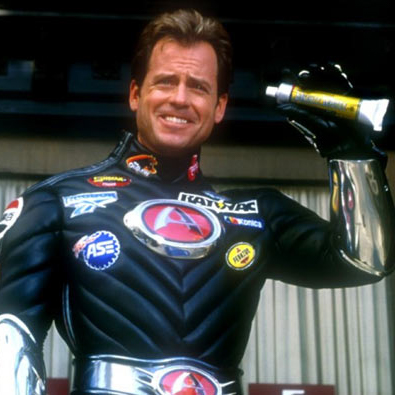
Contribution: Captain Amazing is even less of an official Mystery Men team member than group mentor The Sphinx, but he completes their missions and ungratefully takes advantage of their assistance often enough that I’m lumping him in with the crew.  A vague amalgamation of Batman & Superman (complete with Clark Kent’s magical glasses & Batman’s infinite funding), Captain Amazing is the perfect Handsome Chad counterbalance to official team’s bitterly inert slackerdom.  Greg Kinnear is perfectly cast for the role, weaponizing his generic good looks to play Amazing as a shameless fame chaser who’s more spon-con celebrity than genuine hero.  The visual gag of his superhero uniform being checkered with NASCAR-style sponsor patches feels ahead of its time, fully satirizing the property-protecting fascist leanings of all superheroism years before The Boys would make the same joke.

3. Janeane Garofalo as The Bowler

Superpower: Daddy issues

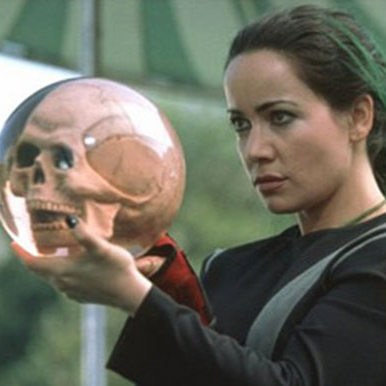
Contribution: The official spokesperson for detached Gen-X cool, Garofalo was the most aspirational character to me as a kid.  She carries around the film’s coolest prop—a sentient bowling ball that suspends her father’s telepathic, browbeating skull in clear resin—while glowering at the world through her trademark black eyeshadow.  She also carries the rest of the cast, establishing chemistry and cohesion among each of her fellow Mystery Men that would be totally absent without her.  Garofalo was reportedly an early believer in the project and put her legitimizing comedy-scene credibility behind Usher’s crassly commercial vision to bring the full production together.  Mystery Men wouldn’t be much of anything without Garofalo, which you could just as credibly say about 90s Gen-X comedy at large.

4. William H Macy as The Shoveler

Superpower: A strong work ethic

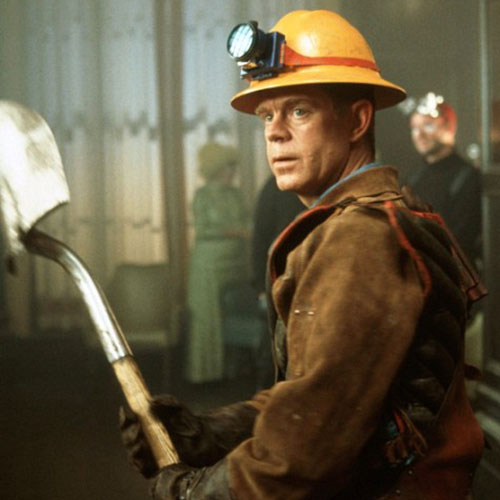
Contribution: In a film starring at least a dozen big-name comedians with selfish ambitions to steal the show, William H. Macy’s straight-man role is an essential tonal anchor, one that becomes its own metatextual punchline the more the film relies on him.  The Shoveler is a no-nonsense hard worker with a loving nuclear family waiting at home.  His supershovel is an off-the-rack “weapon” purchased from a hardware store, which he carries to work with quiet dignity as if her were punching the clock at a construction site.  An accomplished dramatic actor, Macy is overqualified for the role, which is partly why it’s so funny to watch him work alongside so many Looney Tunes lunatics.

5. Kel Mitchell as Invisible Boy

Superpower: Invisible invisibility

Contribution: Invisible Boy’s unconfirmable power to turn invisible only when no one is looking is a genius encapsulation of the Mystery Men’s team-wide ineffectiveness.  The plot’s machinations to engineer a situation where that power could be at all useful, even if only for a second, is also one of the film’s most inspired moments of comic book spoofery.  Most importantly, Kel Mitchell’s casting in the role was a smart marketing move in appealing to 90s kids, to whom All That & Good Burger were the absolute pinnacle of comedy as an artform.  At least that’s how I remember it.

6. Paul Ruebens as Spleen

Superpower: Hideous farts

Contribution: Likewise to Kel’s casting, you could not appeal to children’s comedic sensibilities in the 90s any more effectively than by casting Pee-wee Herman as a revolting superhero with rancid, long-range farts.  The only reason Spleen doesn’t rank higher here is that adults’ patience for his wet lisp & flatulence is stretched much thinner than their kids’, no matter how much of a cultural event it is to catch a glimpse of Ruebens outside his iconic grey suit.

7. Ben Stiller as Mister Furious

Superpower: Impotent white-boy rage

Contribution: Ben Stiller is ostensibly the star of the show, and his career-long rapport with fellow Ben Stiller Show alum Jeneane Garofalo affords Mystery Men a lot of its comedy-nerd street cred.  His heart just clearly isn’t in the project as much as Garofalo’s, and a lot of his stilted improv as an all-rage-and-no-skills Batman knockoff fails to land on any solid laughs.  The joke in the movie is that Mister Furious’s directionless, un-super anger isn’t especially useful to the team, and unfortunately the same is mostly true of Stiller’s chime-ins as the self-elected team leader.

8. Tom Waits as Doc Heller

Superpower: Tech savvy

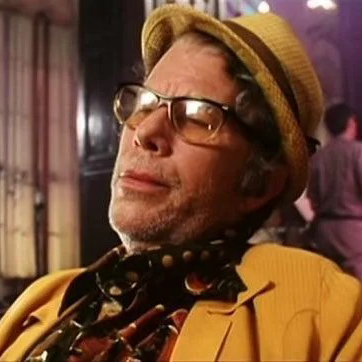
Contribution: Doc Heller is another unofficial member of the Mystery Men team, but since he supplies the super-underachievers with high-tech weaponry his contributions to their vigilante crimefighting are invaluable.  In entertainment terms, his non-lethal superweapons encourage Usher to indulge in as much 90s-era CGI spectacle as the budget allowed, which helps date the film in an increasingly charming way.  It also means that one of the most notable members of the cast—barstool crooner Tom Waits—is sidelined for most of the action, which is unfortunate, since any amount of his presence contributes to the film’s general Gen-X cool.

9. Hank Azaria as The Blue Raja

Superpower: Fork-throwing

Contribution: Unfortunately, Hank Azaria’s cultural-appropriating silverware tosser is a one-man catchall for all of Mystery Men‘s worst qualities: Stiller’s go-nowhere improv, Ruebens’s grating vocal choices, and the vague threat that the next incoming punchline is going to be an actual hate crime.  Azaria’s onscreen way too much for a performer bringing so little to the table, but thankfully he’s got a full team of much funnier contributors backing him up with much funnier bits.

-Brandon Ledet

Cutie Honey (2004)

I’ve been talking a lot of shit this year about the exhausting routine of superhero media.  It’s just been non-stop whining, to the point where I couldn’t even praise the ecstatic animation style of the universally beloved Across the Spider-Verse without also citing its narrative contributions to our growing, culture-wide superhero fatigue.  I should probably take time to note, then, that I am a total hypocrite on this exact subject.  While I’ve been mostly avoiding the ongoing deluge of major-studio superhero sequels (the new Guardians, the new Shazam, the new Justice League spinoff, etc.), two of my favorite trips to the theater so far this year were specialty screenings of two Japanese superhero films: Shin Ultraman & Shin Kamen Rider.  Hideaki Anno’s post-Evangelion career pivot to lovingly remaking the vintage tokusatsu media of his youth has been hugely rewarding lately, with the wholesome humanism of his Ultraman film and the earnest inner-turmoil of his take on Kamen Rider reviving the otherwise artistically dead medium of live-action superhero filmmaking.  It turns out there’s still plenty novelty & enthusiasm to be found in the tokusatsu end of superhero media, at least for Western audiences whose only major exposure to the subgenre was decades-old broadcasts of The Mighty Morphin’ Power Rangers.  So, even though I’m supposedly fatigued by the Hollywood assembly line of live-action comic book adaptations, I recently found myself looking back to the first time Anno dipped his toe in the genre two decades ago with his take on the bubbly kawaii superhero Cutie Honey.

Reviving source material originally published as manga and animated series in the 1970s, Anno’s live-action Cutie Honey film is the clear bridge between his early anime career and his recent swerve into retro live-action tokusatsu reboots.  All of the absurd, anime-style shot compositions of his recent “Shin” films were already part of his established visual style in 2004, complete with his needlessly stylistic depictions of bureaucratic desk work.  He even incorporates hand-drawn animated sequences into Cutie Honey‘s opening credits & action set pieces, both as a nod to the character’s comic book origins and as a shrewd cost-saving tactic.  For all of its stylistic connections to Anno’s other work, it’s the first time I’ve seen him participate in the “magical girl” anime trope, which helps separate the film’s familiar Anno-isms from the macho, Batman-style brooding of Shin Kamen Rider and the gee-willickers Space Age awe of Shin UltramanCutie Honey approximates what it might be like if Anno produced a Shin Sailor Moon movie next; or at least that’s what came to mind for an anime-newb like me who’s only been exposed to the medium’s most iconic “magical girl” titles. He does update the vintage anime’s visual sensibilities with a little ironic kitsch and mid-aughts fashion choices (including an amusing amount of attention to flip phone bling), but for the most part the highlights of his Cutie Honey film are in the same register as his recent Ultraman & Kamen Rider films.  He approaches this kind of material with the goofy exuberance of a Looney Tunes short or an episode of Adam West’s 1960s Batman series, except amped up with the psychedelic visuals & self-hating sleaze he made a name for himself with in Neon Genesis Evangelion.

The titular Cutie Honey is a cute, sweet-as-honey office worker who loves taking bubble baths and playing dress-up.  She’s also a cyborg superhero who can “transform” into any conceivable disguise by pressing the heart-shaped pendant on her magical choker and shouting “Honey flash!” into the cosmic void. Her disguises mostly amount to her playing Gene Parmesan style dress-up games to fool her enemies, but when the situation at hand calls for violence she does change into hot pink body armor, going full kawaii superhero.  Anno takes a lot of obvious delight in filming the Sailor Moon-style magical girl transformation sequences in those battle scenes, as well as staging her fights with legions of faceless goons that she kicks into the air like limp mannequins.  The details of Cutie Honey’s global espionage sidekicks or her gender-ambiguous arch-enemies—known collectively as Panther Claw—don’t matter as much as the sugary joy of her cutesy quips & superheroic costume changes.  The film is simultaneously goofier and sleazier than Anno’s recent “Shin” movies, constantly ogling its bouncy superhero in her underwear between costumes and trapping her in damsel-in-distress lesbian kink scenarios.  Despite all that old-man leering, it’s aggressively girly for a superhero film, which pushes it even further into a campy, gay sensibility than the Batman ’66 vibes of Anno’s recent works.  It’s especially amusing that Cutie Honey fuels up for her superhero transformations by eating ungodly piles of junk food, which makes her the perfect hero for little girls and overgrown gay stoners everywhere.

Although Cutie Honey is an early rough-draft sketch of what he would later achieve in his “Shin Japan Heroes Universe” projects, I don’t know that I would as readily recommend it to Hideaki Anno die-hards as I would to fans of Girl Power superhero media like Tank Girl, Birds of Prey, Josie and the Pussycats, and Spice World.  It neatly belongs in that hyperactive, hyperfemme superhero canon, even with the thick male-gaze lens strapped to Anno’s camera.  In either case, it’s refreshing in the context of our modern MCU/DCEU sponsored hellscape, which 2008’s Iron Man kicked off just a few years after this seemingly ancient early-aughts novelty.  I highly recommend checking it out while Anno’s perspective on the superhero genre still feels fresh & exciting, even though the legal means of doing so is a little shaky.  YouTube has it dubbed; Internet Archive has it subbed.  Neither transfer is in especially great shape but, hey, at least you won’t be watching Uncle Ben’s corpse or Mrs. Batman’s pearls hit the pavement for the thousandth time.

-Brandon Ledet