Welcome to Episode #250 of The Swampflix Podcast. For this episode, Brandon, James, Britnee, and Hanna discuss a grab bag of sci-fi horror relics inspired by the H.G. Wells novel The Invisible Man, starting with James Whale’s classic 1933 adaptation for Universal, starring Claude Rains.
33:22 The Invisible Man (1933) 47:31 Abbott and Costello Meet the Invisible Man (1951) 1:01:15 The Invisible Man vs The Human Fly (1957) 1:15:43 The Invisible Dr. Mabuse (1962)
It may just be a marketing term coined by fans, but the existence of Universal’s “Famous Monsters” brand suggests that there must also be a Famous Monsters B-List. Every celebrity industry has its own power-rankings hierarchy, with public-figure colleagues competing amongst themselves for job opportunities and name recognition. Within Universal’s early horror successes from the 1930s through the 1950s, the C-List is easy to define, as it’s mostly made up of semi-literary characters who get excluded from the nostalgic posters and action figures celebrating the brand: Mr. Hyde, The Phantom of the Opera, the bitchy little freaks Lugosi & Karloff play in The Black Cat, etc. Differentiating the B-List from the A-List is more of a case-by-case judgement call. To me, the official roster of Universal’s Famous Monsters can be cleanly split in half. The A-List celebrity monsters are Dracula, Frankenstein, and The Wolf Man. They’re the ones who most often cross-pollinate each other’s sequels, and they’re the ones whose likeness you’re most likely to see on generic Halloween decorations year after year. That leaves The Mummy, The Invisible Man, and The Creature from the Black Lagoon as B-List celebrity monsters, the ones whose numerous sequels and knockoff plastic masks collect dust on the shelf while the A-List monsters get to run wild in the streets every October into perpetuity.
The most curious case of B-List monster celebrity has got to be The Mummy, since his first appearance in the lineup immediately followed the success of Universal’s Frankenstein & Dracula, a decade before The Wolf Man. The problem is that the poor walking corpse spent his entire career following Frankenstein & Dracula’s heavy footsteps, never truly becoming his own thing. 1932’s The Mummy was penned by John L. Balderson, who is most famous for writing the 1924 stage play version of Dracula that starred Bela Lugosi and was eventually adapted to the screen by Tod Browning, kicking off the Universal Monsters brand. Balderson was seemingly going through the motions in his secondary contribution to the canon, writing yet another story of a foreign-born romantic ghoul who uses his evil powers of hypnosis to woo a young woman he believes to be the reincarnation of his one true love. Only, that archetype is instead played here by Lugosi’s career-long professional rival Boris Karloff, whose monstrous figure is most closely associated with Frankenstein’s monster, further minimizing The Mummy as a Famous Monsters footnote. Stuck between the lecherous behavior of one A-List Famous Monster and the walking-corpse physicality of another, The Mummy was destined to be relegated to the horror celebrity B-List, to the point where his initial onscreen outing is often confused for details from its various sequels & spoofs.
The Mummy pictured in the Universal Monsters branding never appears onscreen in 1932’s The Mummy; that’s a mummy of a different name. At the start of the picture, Karloff’s mummified Egyptian sorcerer Imhotep does appear wrinkled & bandaged as another monster creation from legendary make-up artist Jack Pierce, who also crafted the actor’s more famous look in Frankenstein. We just never see him moving outside the confines of his sarcophagus while wearing that get-up. After dismissing ancient curses warning against it as Egyptian “mumbo jumbo,” some naive archeologists invade Imhotep’s tomb to pilfer cultural artifacts for career-making museum exhibits, mistakenly activating the long-dormant loverboy’s corpse by reading the forbidden scrolls he was buried with aloud. Once awakened, Imhotep immediately leaves his tomb & rags behind to work on reclaiming his lost love through ancient magic spells, transforming from a dried up corpse to a mildly disconcerting gentleman with sun-damaged skin and glowing, hypnotic eyes. We never get to witness this bodily transformation, nor is there any shot of Karloff schlepping around in the famous mummy rags before putting on a more respectable fez-and-robe ensemble. The mummy’s walk out of his tomb is left mostly to the audience’s imagination, as the movie is more of a classy mood-setter than it is a proper creature feature. It leaves that cheap business to its many sequels, headlined by an entirely different mummy.
Although its many sequels frequently repurpose footage from the flashbacks to the undead Imhotep’s days as a living priest and self-proclaimed King of the Gods, they immediately swap him out for a new mummy named Kharis. Since the first of Universal’s Mummy films only has a couple shots of its titular monster in the iconic bandages, the sequels have to start over and dream up something more recognizable (i.e., more marketable) without relying on the familiarity of Boris Karloff’s mug. Weirdly, that leaves the 1940 follow-up The Mummy’s Hand both more archetypal and lesser seen than the original film it was tasked to rework. Getting ahead of the next decade’s trend of pairing Universal’s Famous Monsters with Abbott & Costello, The Mummy’s Hand already stars two over-their-heads Brooklyn goofballs who get into a scrape with the famous monster. The out-of-place American archeologists are desperate for a big score while shopping the markets of Egypt, where they again ignore locals’ warnings & curses and pry open the tomb of a long-dormant mummy, in this case Kharis. Again, that mummy is liberated from his sarcophagus and immediately seeks to reconnect with his supposedly reincarnated soul mate, but this time he never ditches the rags. This is where the image of The Mummy skulking around in full uniform is born, finally becoming his own thing (even if actor Tom Tyler plays him like Karloff’s Frankenstein with a bum leg).
Once Universal found a mummy they could market in Kharis, the rest of the sequels can only work to boost his stats to match the more formidable figures of Dracula, Frankenstein, and newcomer hotshot The Wolf Man. 1942’s The Mummy’s Tomb further legitimizes The Mummy by dressing up Lon Chaney, Jr. in the make-up for an otherwise pointless sequel, which is essential to the brand (see also: Son of Dracula, The Ghost of Frankenstein, and the many appearances of Lawrence Talbot, a.k.a. The Wolf Man). Then, it proceeds to delegitimize the Mummy by further developing him into a blurry photocopy of Frankenstein’s monster; Kharis giveth, Kharis taketh away. Not only does Kharis start to carry around his unconscious, reincarnated loves with the exact posture of Karloff’s Frankenstein, but he’s also brought to a fiery end by an angry mob at the film’s climax, directly alluding to James Whale’s visual iconography. 1944’s The Mummy’s Ghost continues that work by finally giving Kharis an official Bride of Mummy counterpart, complete with the white streaks of hair at the temples in the unmistakable style of Elsa Lanchester. At this point in the series, the perils of reckless archeology are no longer a concern. Once Kharis reaches American soil in Tomb & Ghost, the series fixates on red-blooded American men protecting their women from the corrupting forces of seductive foreigners. The most impressive thing about Ghost is that it commits to the bit in a shocker ending, finally allowing The Mummy to successfully steal away his reincarnated love, sinking into the swamp with her dangling in his arms as her body rapidly ages to close their centuries-scale age gap in mere seconds.
There’s some incredibly shameless runtime padding in The Mummy’s Tomb, starting off an hour-long sequel with over ten minutes of “Previously on . . .” recapping before setting The Mummy loose on American soil. It’s an instructive reminder that these sequels were produced before the invention of home video and, subsequently, VHS rental stores. Since audiences couldn’t easily rewatch a classic movie on a whim, the studios would just remake that same movie again and again to scratch that itch, as a matter of routine. The later Mummy sequels have no interest in being their own thing; they just take the same old Mummy out for a walk. Even the choice to relocate Kharis to Cajun swamp country in 1944’s The Mummy’s Curse affords the series little novelty outside the amusement of hearing Old Hollywood’s goofy misinterpretations of the Cajun-French accent. The Mummy started as Egyptian Dracula in his first outing. Then, he gradually, improbably became New England Frankenstein. For his last trick, he emerges as Cajun Swamp Thing. He’s a true international playboy, seducing a new woman at each stop along the way, including a choice to leave The Bride of Mummy behind here in favor of a new The Mummy’s Princess love interest (future Folgers Coffee spokeswoman Virginia Christie, who looks incredibly hip here with some Bettie Page bangs). Even the novelty of seeing The Mummy trudge along in a swampy locale isn’t especially distinct to this famous monster, though, considering that Lon Chaney, Jr. had already appeared there in the previous year’s Son of Dracula (under the hilarious pseudonym Count Alucard). That’s not even getting into the obvious concerns of what would happen if you dragged your dried-out mummy through a humid swamp. The whole enterprise is one big afterthought.
Of course, the final indignity for all of Universal’s Famous Monsters is to officially sanction Lou Costello’s buffoonery, which The Mummy was tasked to do in 1955’s Abbott and Costello Meet the Mummy. It’s here that the Mummy, forever following in Frankenstein & Dracula’s footsteps, has finally Made It. Even so, he’s way late to the party, taking his turn with the comedy duo after they already met Frankenstein, The Invisible Man, Dr. Jekyll & Mister Hyde, and “The Killer, Boris Karloff” in similarly titled comedies. Abbott and Costello Meet the Mummy was the very last of the comedians’ onscreen run-ins with Universal’s Famous Monsters, as it also marked the end of their overall contract with Universal Pictures. There are a few stray laughs scattered throughout the picture—mostly catering to fans of “mummy”/”mommy” puns—but the bit had very obviously been exhausted before The Mummy’s number was called, and it feels like just as much of a tired exercise as proper Mummy sequels like The Mummy’s Curse. None of the later Mummy films are especially great, but they are all mercifully short, and by the time you meet up with anyone for the sixth or seventh time they start to become your friend, so it’s fun to see him goof around in this final outing. It’s just that The Mummy is more like your work friend, whereas Frankenstein, Dracula, and The Wolf Man are true buds you look forward to seeing on the weekend.
Like most horror franchises that stumble past their obvious expiration date, The Mummy’s initial outing is a great film in its own right, and its numerous, goofy follow-ups are only made endearing by their familiarity and nostalgic value. There’s nothing iconic about The Mummy’s lore, really. His tana-leaves medicine regimen, crime-scene contaminating mold, and smoky flashback pool have all been forgotten to time, as opposed to other Universal-specific details like Dracula’s hypnotic hand gestures or the bolts on Frankenstein’s neck. The Famous Monsters roster would feel thin & incomplete without him, but he’s mostly a background player. The biggest claim to modern fame for The Mummy is that its 1999 remake is by far the most success Universal has had in its attempts to revitalize its Famous Monsters brand for new generations. It succeeded where fellow studio titles like Renfield, Van Helsing, and Dracula Untold have failed. Even so, that accomplishment only further cements the original Mummy in a B-List status. When someone references the movie The Mummy in conversation, most people immediately picture Brendan Fraser, not Boris Karloff. The audience who remembers any of the Kharis titles in the series—Hand, Tomb, Ghost, Curse—is shrinking every year, despite that version of the monster being the one that appears on all of the throwback posters & Funko Pop boxes. Meanwhile, cinematic references to Dracula, Frankenstein, and The Wolf Man immediately conjure the likeness of Bela Lugosi, Boris Karloff, and Lon Chaney, Jr., which is what makes them official Famous Monster A-Listers. Everyone else is just lucky to be on the guest list.
Roger Ebert Film School is a recurring feature in which Brandon attempts to watch & review all 200+ movies referenced in the print & film versions of Roger Ebert’s (auto)biography Life Itself.
Where Abbot and Costello Meet Frankenstein (1948) is referenced in Life Itself: On page 51 of the first edition hardback, Ebert reminisces about a theater called The Princess where he used to watch movies as a child. He describes tickets as costing 9¢, popcorn 5¢. Shows started at noon & lasted hours as newsreels, serials, and double features (often a pairing of a Western and a comedy) lit up the screen. One of the comedies mentioned in this anecdote is Abbot and Costello Meet Frankenstein.
What Ebert had to say in his review: Ebert never reviewed the film, but he did expand on his memories of The Princess, including the memory of watching this feature, in his essay “Hooray! Hooray! The First of May!“. Roger writes, “When Bud & Lou met Frankenstein, it scared the shit out of us.”
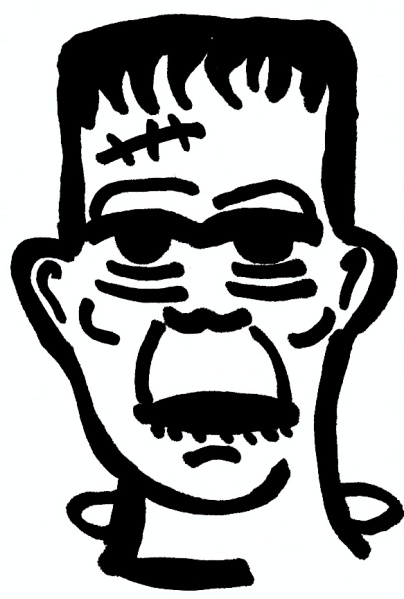
By the time Abbott and Costello Meet Frankenstein reached cinemas, Universal Studios had more or less discontinued their “Famous Monsters” brand & decided to retire the loose franchise on a remarkably silly note. Bela Lugosi returned to his role as Dracula for the second & final time in the film (though he would continuously play various other vampires throughout his career). Lon Chaney Jr. returned as the Wolf Man (despite being cured of his lycanthropy in The House of Dracula three years earlier). Sadly, Boris Karloff didn’t return as the Frankenstein monster (possibly due to his longtime rivalry with Lugosi), but Glenn Strange serves as a suitable replacement. All three actors had been sufficiently terrifying before in previous horror pictures, but that’s not their exact purpose here. Instead of scaring the audience, they’re meant to scare skittish funnyman Lou Costello, who delivers the film’s true bread & butter: broad, child-friendly yuck-em-ups. The film’s horror context is merely a backdrop, a stage for Costello to play on. Horror comedy is one of my all-time favorite movie genres, but I don’t think it’s a format that really came into its own until the 1980s. Old Hollywood horror comedies struggled to homogenize both of their respective formulas & the results often feel like a standard vaudeville routine that happens to feature scary monsters. Abbot and Costello Meet Frankenstein offers no exception.
In light of recently watching the Marx Brothers’ comedy A Day at the Races for this project, it’s difficult not to compare Abbott & Costello’s vaudevillian humor to that of the Marxs’. The comparison is not flattering. Bud Abbott is an uninteresting straight man archetype, which leaves Lou Costello to carry all of the film’s humor on his own two shoulders. His banter is never quite as impressively complex as Groucho’s. His physical humor never even approaches the high standard of Harpo’s. Lou Costello is, in essence, adequate as a comedic force in this picture. I can pick out a couple moments here or there when he got a really good laugh out of me: I particularly enjoyed the gag where he attempts to match the Wolf Man’s beastly howling over the telephone & the self-deprecating humor of him answering the suggestion “Go look at yourself in the mirror sometime” with the response “Why should I hurt my own feelings?”. For the most part, though, he’s entertaining, but far from the height of hilarity. It might be an issue of Costello himself not being especially into the production. Before filming, he was quoted as saying “No way I’ll do that crap. My little girl could write something better than this.” He eventually warmed up to the film & had fun during filming, but it’s not too much of a stretch to assume that his heart wasn’t fully into it.
The plot of Abbott and Costello Meet Frankenstein is fairly bare bones. The titular comedic duo are a pair of dock workers charged with delivering crates that contain the corpses of none other than Dracula & the Frankenstein monster (despite what the title implies, Dr. Frankenstein is not involved) to a sort of House of Horrors wax museum/cabinet of curiosities. The monsters come to life & scare Costello stupid. Laughs ensue. You get the picture. What really surprised me about this story line, though, was how familiar it felt. About halfway into Abbott and Costello Meet Frankenstein I had to ask myself whether or not my childhood favorites, The Monster Squad, was in fact a remake of the comedy classic, at least in terms of their shared central conflict. In both films Dracula serves as a criminal mastermind hell-bent on taking over the world by controlling the Frankenstein monster through a magical talisman. The only real difference is that in the Abbott & Costello version the Wolf Man is determined to stop the dastardly Dracula instead of blindly joining his ranks (and getting punched in “the nards” by young children). If you have any personal affection for The Monster Squad, I think Abbott and Costello Meet Frankenstein is worth a look as a possible starting point for its source material.
I’m slightly diminishing the significance of Abbott and Costello Meet Frankenstein here. The film is effortlessly charming as an old school horror comedy & has been deemed “culturally, historically, or aesthetically significant” enough to be selected for preservation by the US Library of Congress’s National Film Registry. I think the picture had a lot of significance among younger viewers who grew up to hold it in high regard. Just like my generation latched onto the similarly-minded The Monster Squad, Ebert’s generation connected with Abbott and Costello Meet Frankenstein on a personal level. Not only was the humor of both films skewered towards younger crowds, both Ebert & I most remember being scared by the relatively tame horror end of our respective childhood favorites. If nothing else, Abbott and Costello Meet Frankenstein captured the terrified imaginations of its pint-sized audiences during its theatrical release & also served as the final major studio production for future legend Bela Lugosi, who desperately needed the money. That’s all the significance a broad comedy really needs to justify its place in the world.




 Swampflix