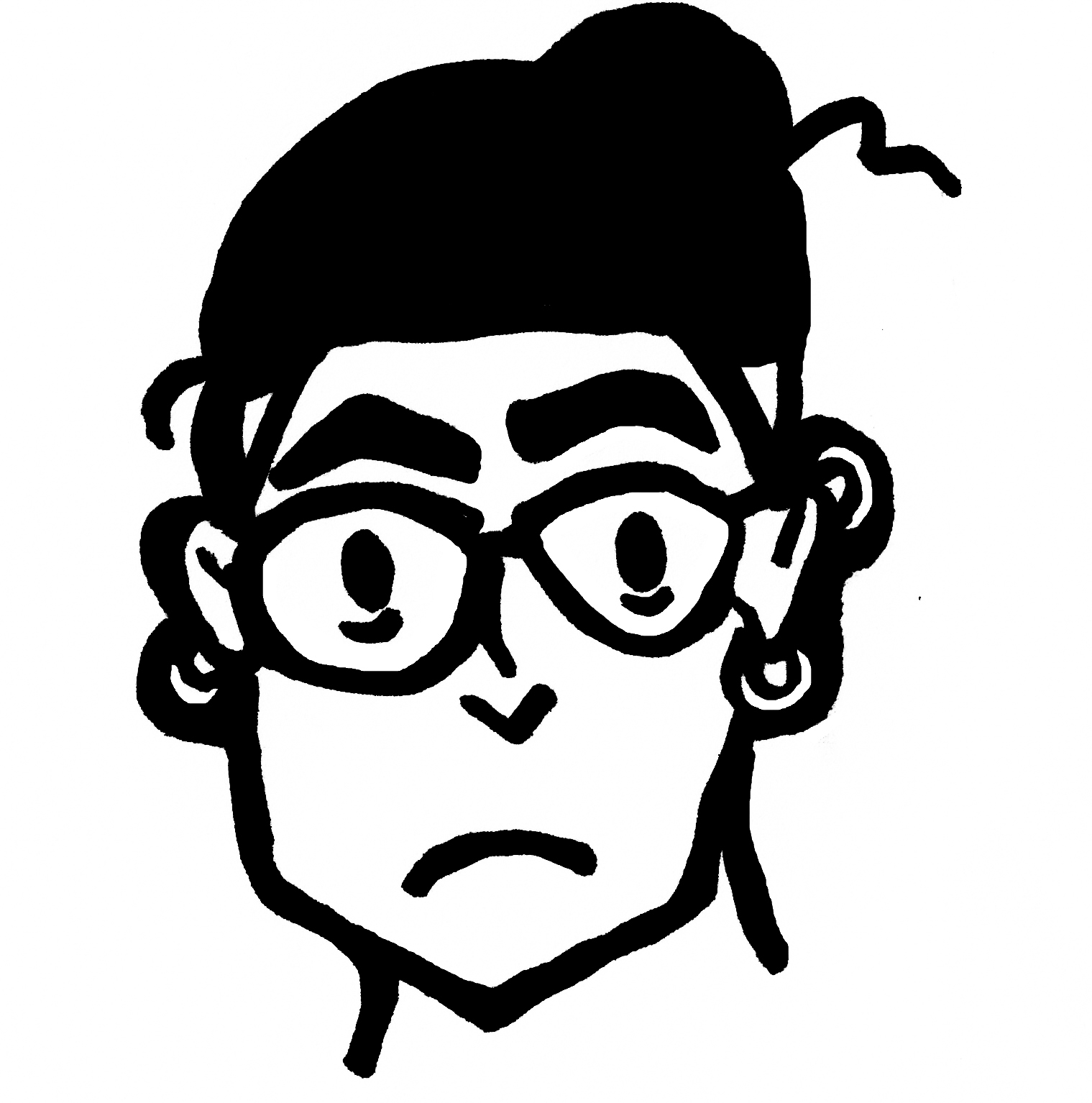

It’s hard to describe how utterly disinterested I was in the animated drama Tangles when it first appeared on my radar. The film’s summarization as being about a “headstrong young woman” returning to “her oddball family in the conservative small town she recently fled” to “become the daughter that they need” when her mother’s Alzheimer’s diagnosis “strip[s] away” her “vibrant personality” felt like a hurricane of cliches. Parental dementia heartstring-pluckers are low hanging fruit on the tree of sentiment, and I find that most films that go to that well are emotionally exploitative and cheap, but Tangles is aesthetically noteworthy beyond its well-worn, narrative familiarity.
Sarah (Abby Jacobson) is an illustrator working for Outspoken magazine in San Francisco, slowly rising through the ranks while trying to figure out if her relationship with Donimo (Samira Wiley) is going somewhere. She returns home to visit her family and becomes immediately aware that something is not right with her academian mother Midge (Julia Louis-Dreyfus)’s mental state, as she discovers an iron that the older woman left on even before she finds her in the garden, and Midge struggles to open the door to the house she’s lived in for decades because she seems to forget how the latch works. The rest of her family, perhaps having witnessed this slow decline from a closer vantage and thus having dealt with it incrementally, don’t recognize the severity of the change, and Sarah finds herself frustrated with their blase attitudes toward it. Her sister Hannah (Beanie Feldstein) is far more interested in spending time with her musician boyfriend Zach (Seth Rogen), and aunts Debbie (Pamela Adlon) & Sukey (Sarah Silverman) also seem completely self-absorbed. Sarah’s father Rob (Bryan Cranston) is aware that Midge is changing, but he’s dealing with his denial in a different way, by instead seeking out holistic treatments and taking Midge, Sarah, and Donimo to Mexico, where he remains for some time as part of his own academic pursuits. As her artistic career begins to take off, Sarah makes the difficult decision to return to her childhood home since she can draw from anywhere and take care of her mother in the way that the rest of her family seems incapable of doing.
Tangles is a frustrating film in the sense that the annoyance that Sarah has with her family’s treatment of her mother is palpable. You, too, will become as irritated with their apparent selfishness and disregard for Midge’s worsening condition as Sarah does, and I appreciate the clever way that the narrative manages to reverse our feelings about the characters and remind us that not everyone deals with grief in the same way and that the differences in how we handle those things does not mean that one way is morally or technically superior. It becomes clear that, although the aunts are flighty and somewhat self-absorbed, their apparently mellow acceptance of Midge’s decline is partially informed by their own sense that this could happen to them and also about remaining calm despite this because that’s what’s best for Midge. They probably should do something about Midge trying to make utensil soup, but sitting around and singing to and with their sister also helps ground her and keep her present. Hannah’s ostensible selfishness in maximizing the time she spends with Zach instead of their mother is because she’s speedrunning that relationship to get to marriage so that her mother can be present, physically and, as much as possible, mentally, on her wedding day. The film is very effective in taking you along on Sarah’s journey from judgmental frustration, which is partially rooted in her own selfishness, to not only accepting the rest of her family’s idiosyncratic methods of grieving but accepting them. It also helps that Sarah herself is obnoxiously narcissistic, which means that she and the rest of her family come by their self-absorption honestly.
Stylistically, the film is beautiful. Although animated, the palate is entirely monochromatic, aside from the very occasional pop of color to highlight something special and specific. The film is directed by Sarah Leavitt, who wrote and illustrated the original text on which this is based, but the animation style is very different (and much elevated) from her more simplistic graphic work. There are moments here where the animation positively sings. One of the great standout visuals occurs when Midge is separated from the family at a Day of the Dead festival while in Mexico and Rob betrays the real immediacy and danger of this situation to Donimo and Sarah for the first time, revealing that he’s been downplaying the rate of Midge’s decline for the sake of his daughters’ peace of mind. When they finally do find Midge, a street artist is painting her face to appear as a calavera, and for a moment, Sarah flashes between that and a more haunting, deathly skull. I foresee that some audiences will find the animation to be frustrating at times, especially given how often the frame is filled with darkness, but I appreciate the way that this contributes to the overall moods, both by echoing Sarah’s frustration early on and by dealing with the solemnity of the subject matter. As Sarah becomes less annoyed and more accepting of her family’s methods while also recognizing that the time she has left with her mother is a gift, and one that she can find delight in and not just sorrow, that darkness becomes less omnipresent, and it’s effective visual storytelling.
I particularly loved the recurring motif of music generally and The Pretenders’ “I’ll Stand By You” specifically as a reference to the way that music soothes Midge and as a pop cultural touchstone that has meaning across various different divides. When Zach is struggling to win Sarah over, he switches tactics and begins playing a Melissa Etheridge song, which is charming despite its microaggression. Later, at the wedding, he performs “I’ll Stand By You,” dedicated to Midge, and it’s remarkably lyrically appropriate, given that the singer promises to never love the object of affection less despite their imperfections, having “seen the dark side too,” coming along even if the path is wrong, and ensuring that they’re not on their own “when the night falls.” When Sarah returns to San Francisco and is reunited with Donimo, whom she previously left behind because her devotion to her mother’s end-of-life care meant that she couldn’t be fully present, a remix of the song is playing on the dance floor, and it’s rather sweet.
If you’re a bitter old hack like me, then you probably became aware of this film, saw what it was about, and turned your nose up at it. Autobiographical or not, this has to be cheap sentimentality, right? And if I’ve convinced you to give it a try with this review despite that, you might still feel that way at the end; I can’t make any predictions about how you’ll feel, other than to say, I was genuinely touched by this. There may have been moments when I was cynically rolling my eyes at what I knew was a treacly emotional moment, but that didn’t mean that there weren’t tears coming from them at the same time.
-Mark “Boomer” Redmond

