Destroy All Neighbors (2024)

I have developed parasocial relationships with several of the key collaborators behind the retro splatstick comedy Destroy All Neighbors, which has me rooting for its success.  I met one of the film’s writers, Charles Pieper, at a local horror festival a few years ago, and we established one of the most sacred bonds two people can share: social media mutuals.  The film’s score was also co-produced by Brett Morris, who produces and co-hosts several podcasts I’ve regularly listened to for over a decade now, which is arguably an even stronger (one-sided) bond.  Several of the central performers—including Jonah Ray, Alex Winter, Jon Daly, and Tom Lennon—have all maintained the kind of long-simmering, low-flame cultural longevity on the backburners of the pro media stovetop that also encourages that same kind of parasocial affection, the feeling of rooting for someone to continue to Make It just because knowing of their existence feels like being privy to a deep cut.  It seems appropriate, then, that the film is about the kind of long-term, stubborn hustle artists must maintain to complete any creative project in a town like Los Angeles, and how that LA Hustle mindset can also get in those poor souls’ own way.  There’s a tricky balance between the lonely self-determination of seeing a project through even though no one else fully believes in it and the simultaneous need to foster collaboration & community to achieve success.  The people who made Destroy All Neighbors appear to understand the difficulty of that balance down to their charred bones because they’re all struggling with it in real time; all the audience can do is cheer them on from the sidelines.

Jonah Ray stars as the avatar for that LA Hustle mindset: a prog rock musician who has been tinkering with the inconsequential details of his unfinished magnum opus album for years, with no sign that he’ll ever walk away from the project.  Like all frustrated creatives, he blames his creative block on the minor annoyances of anyone within earshot, from the untalented nepo-baby hacks who cash in on their industry connections for easy success to the mentally ill homeless man outside his jobsite who’s just angling for a free croissant.  Things escalate when he finally lashes out at one of these annoying distractions from his “work”, a cartoonishly grotesque neighbor with an addiction to wall-shaking EDM (played by Alex Winter under a mountain of prosthetic makeup and a Swedish Chef-style goofball accent).  What starts as a neighborly spat quickly snowballs into a full-blown killing spree, and the frustrated musician’s Nice Guy persona is challenged by his weakness for violent white-nerd outbursts.  His grip with reality becomes exponentially shaky as his body count rises, and the film slips into a Dead Alive style approach to comic chaos and goopy puppetry, regularly delivering the kinds of practical effects gore gags that earn “special makeup effects” credits in an opening scroll.  Does the troubled prog nerd finish his unlistenably complicated rock album before he’s brought to justice for his crimes? It doesn’t really matter.  What’s more important is that he learns how to get along with the people around him instead of lashing out while he’s trying to tinker with his art project in peace.  It’s just a shame that by the time he figures that out, most of the people around him are reanimated corpses and cops with their guns drawn.

In horror comedy terms, Destroy All Neighbors falls somewhere between the belligerent screaming of a Texas Chainsaw Massacre 2 and the nostalgic throwback to old-school splatstick of a Psycho Goreman.  If it does anything particularly new within the genre, it’s in its use of cursed guitar lesson YouTube clips instead of cursed camcorder found footage.  Jon Daly regularly appears on the prog nerd’s phone as the host of evil YouTube tutorials, filling his brain with poisonous ideas about how if people “get” or “enjoy” your music, you’re automatically a failure and a sellout.  He’s just one of many abrasive characters who live in the musician’s head rent-free, though, and to blame the murderous rampage on that one rotten influence would be to misinterpret the film’s overall push for communal art collaboration.  Otherwise, Destroy All Neighbors is just impressively gross in a warmly familiar way.  It’s playful in its willingness to distract itself from the main narrative just to have some fun with the tools & personnel on hand, exemplifying exactly what the nerd-rage prog boy needs to learn if he’s ever going to finish his magnum opus.  What’s amazing is that we’re still rooting for him to pull it off even after the liner notes for his unfinished album now include an “In Memoriam” section.  Regardless of whether you’ve ever tried to Make It in LA, anyone who’s ever worked on a noncommercial art project for a nonexistent audience should be able to relate (give or take a couple murder charges, depending on your personal circumstances).

-Brandon Ledet
Bill and Ted Face the Music (2020)

Bill & Ted Face the Music finds our lovable slacker buds, William S. Preston Esq. (Alex Winter) and Theodore Logan (Keanu Reeves), still at the great work that Rufus (the late George Carlin) foretold for them: the song that would unite the world. They’re also middle aged, with daughters of their own, named for the other: Wilhelmina “Billie” Logan (Brigette Lundy-Paine) is dark-haired, shy, and androgynous like Ted, while Theadora Preston (Samara Weaving) is blonde, confident, and hyperactive like Bill. The film opens on the wedding of Missy (Amy Stoch), who was once our hapless duo’s babysitter, then was Ted’s step-mother, then Bill’s step-mother, and is now marrying Ted’s younger brother Deacon (Beck Bennett, taking over for Frazier Bain). At the reception, Bill and Ted plan to perform the first three movements of their latest composition, entitled “That Which Binds Us Through Time: The Chemical, Physical, and Biological Nature of Love and the Exploration of the Meaning of Meaning — Part 1,” and it starts with throat-singing and theremin, so I’m on board, but it’s not a crowd pleaser. At the suggestion of their wives, the princesses (Erinn Hayes and Jayma Mays), Bill and Ted attend couple’s therapy with their respective spouse, as a quartet. 

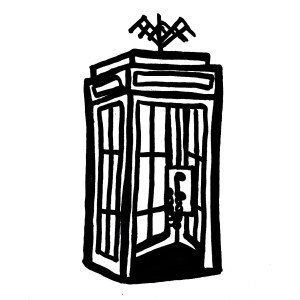
Meanwhile in the future, time and space are falling apart. Rufus’s daughter Kelly (Kristen Schaal) and widow The Great Leader (Holland Taylor) have different interpretations of the prophesied Wyld Stallyns song, with the latter believing in her father’s vision of universal unity through the power of music, and her mother hoping to put things back on track by reluctantly killing the Stallyns. To that end, she sends a time-traveling murderbot (Anthony Carrigan) to hunt them down across space and time. Learning about the dire situation, Bill and Ted steal their old phone booth time machine and move progressively forward in time along their own lifelines in an attempt to acquire the song from their future selves. Meanwhile, Billie and Thea travel through time to acquire various historical musicians (and Kid Cudi) in preparation for the performance. 

The sad thing about Face the Music is that, all too often, Bill and Ted are the least interesting things in it. This movie made me feel young, and then it made me feel old, and then it made me feel young again, but not in a way I was happy about. There’s just a little too much happening here, in a sequel to a movie that knew just how many juggling pins it could keep in the air at one time, and there are too many narrative threads. Offscreen, the princesses have been invited by future versions of themselves to see all of space and time and see if there’s any way they can actually be happy in their marriages to the men of the title (not to sound too much like the boys, but, like, that plot is majorly a downer). Meanwhile, the daughters are having their adventure, which is a mixed bag; Weaving and Lundy-Paine are both great here but are sometimes forced into delivering dialogue that hits the ear with neither subtlety or comedy. They have a kind of abridged version of Excellent Adventure as they collect Mozart, Hendrix, and Louis Armstrong (Daniel Dorr, DazMann Still, and Jeremiah Craft) and others, to form a supergroup rather than for a history project, but each encounter feels more expository than fun. They encounter one instance of resistance in their plot and overcome it almost immediately, then have nothing but easy success from there on out, which doesn’t make for a compelling watch. Conversely, each future version of the adult Bill and Ted is drunker and less helpful than the last, and these encounters go on for too long (especially in 2025), making the whole thing feel more like a labor than a good time. Then, as if that weren’t enough, we get a slight rehash of Bogus Journey with a trip to Hell, where the guys, their daughters, several time-displaced musicians, and Ted’s dad once again meet up with Death (William Sadler) to get back to the world of the living in time to perform the song and prevent the end of existence as we know it–because, if there’s one thing you have to remember, it’s this: the clock in San Dimas is always running. 

I didn’t even get into the plot that’s running concurrently in the future in which The Great Leader keeps getting summoned into the same amphitheater to look at the hologram of space and time (represented as the earth as a turntable, with a record deck at the equator like Saturn’s rings) to fret, which seems to happen nearly half a dozen times. In an overstuffed movie, it’s crammed in there too for some reason but there seems to be a disconcerting lack of a narrative purpose for us to keep going back there. Obviously one would want to get their money’s worth when hiring Holland Taylor, but from a story standpoint, there’s just no reason to keep doing this; a ninety-three minute movie shouldn’t have 125 minutes of plot crowding it up like the suitcase of a Looney Tunes character, as it leaves no breathing room and creates the situation mentioned earlier, in which character dialogue is rushed and overly expositional.  

I loved Bill & Ted in my youth, and no one wanted this movie to be better than I did. There are a few solid jokes here, but even some of the best are in service of generating a nostalgic feeling, which isn’t the wrong way to go with this particular franchise, but could have been scaled back by about 35% and had both more room to breathe and been just as effective. Lundy-Paine and Weaving are doing a lot of heavy lifting, and they’re up to most of it, but there are lines that they’re asked to sell that are simply impossible to pull off, and while Reeves has continued to carve out a niche for himself with John Wick and one-off minor roles in things like Neon Demon, Alex Winter has remained largely out of the public eye, mostly making documentaries. It’s great to see him here; he seems to be having the most fun of anyone, and it’s infectious, even when the film drags. It’s a less than delightful end(?) to a franchise that had a better ending in Bogus Journey.

-Mark “Boomer” Redmond

Freaked (1993)

When I revisited Tod Browning’s 1932 silent horror classic Freaks last October, I was struck by how the majority of the story it tells doesn’t play like a horror film at all. Before the titular circus “freaks” band together to avenge a bungled assassination attempt on one of their own, the movie mostly plays like a kind of hangout comedy, preaching an empathetic “We’re all human” message that’s later completely undone by its freaks-as-monsters horror conclusion. The 1993 horror comedy Freaked isn’t exactly a remake of Browning’s film, but it oddly mirrors that exact mix of tones. Continuing the inherent exploitative nature of sideshow freaks as a form of entertainment, Freaked is a morally grotesque work with a toxically shitty attitude towards physical deformity & abnormality, one very much steeped in Gen-X 90s ideological apathy. It’s also an affably goofy hangout comedy packed with a cast of vibrant, over the top characters. Freaked will leave you feeling just as icky as Freaks, although maybe not as intellectually stimulated, and I’m pretty sure that exact effect was entirely its intent.

Alex Winter (best known as Bill S. Preston, Esq.) directs and stars as an Ace Ventura-style ham and a Hollywood douche. It’s as if the evil versions of Bill & Ted from Bogus Journey were the protagonists of a horror comedy and you were supposed to find their Politically Incorrect hijinks hilarious instead of despicable. Along with a fellow wise-cracking asshole and a bleeding heart political protestor (picked up for her looks), Winter’s fictional movie star cad is lured to a crooked sideshow operated by a visibly drunk Randy Quaid. Quaid transforms these three unsavory souls into freaks for his sideshow against their will, where they join the ranks of fellow imprisoned performers in desperate need of a revolt: Bobcat Goldthwait as an anthropomorphic sock puppet, Mr. T as a bearded lady, John Hawkes as a literal cow-boy, Keanu Reeves as a humanoid dog/political revolutionary, etc. There’s also a side plot about an Evil Corporation dabbling in illegal chemical dumping, but Freaked is mostly a mix of special effects mayhem, Looney Tunes wise-cracking, and poorly aged indulgences in racial stereotypes, transphobia, and sexual assault humor.

Freaked is in a weird position as a cultural object. It’s shot like a breakfast cereal commercial and indulges in so much juvenile humor that its best chance for entirely pleasing a newfound audience would be reaching immature preteens with a taste for the macabre. I would never recommend this movie to an undiscerning youngster, though, since its sense of morality is deeply toxic in a 2010s context. (Big Top Pee-wee is both sweeter and somehow stranger, while essentially accomplishing the same tone.) Much like with Freaks, however, there’s plenty to enjoy here once you wince your way past the horrifically outdated social politics. Special effects & creature designs from frequent Brian Yuzna collaborator Screaming Mad George and a psych rock soundtrack from 90s pranksters The Butthole Surfers afford the film a raucous, punk energy. Meta humor about Hollywood as an cesspool teeming with sell-outs (especially in the jokes involving a fictional film series titled Ghost Dude) lands with full impact and colors the freak show plot in an interesting entertainment industry context. Mostly, though, Freaked is simply just gross, which can be a positive in its merits as a creature-driven horror comedy, but a huge setback in its merits as an expression of Gen-X moral apathy. I’m not sure how it’s possible, but it’s just as much of a marred-by-its-time mixed bag as the much more well-respected Tod Browning original.

-Brandon Ledet