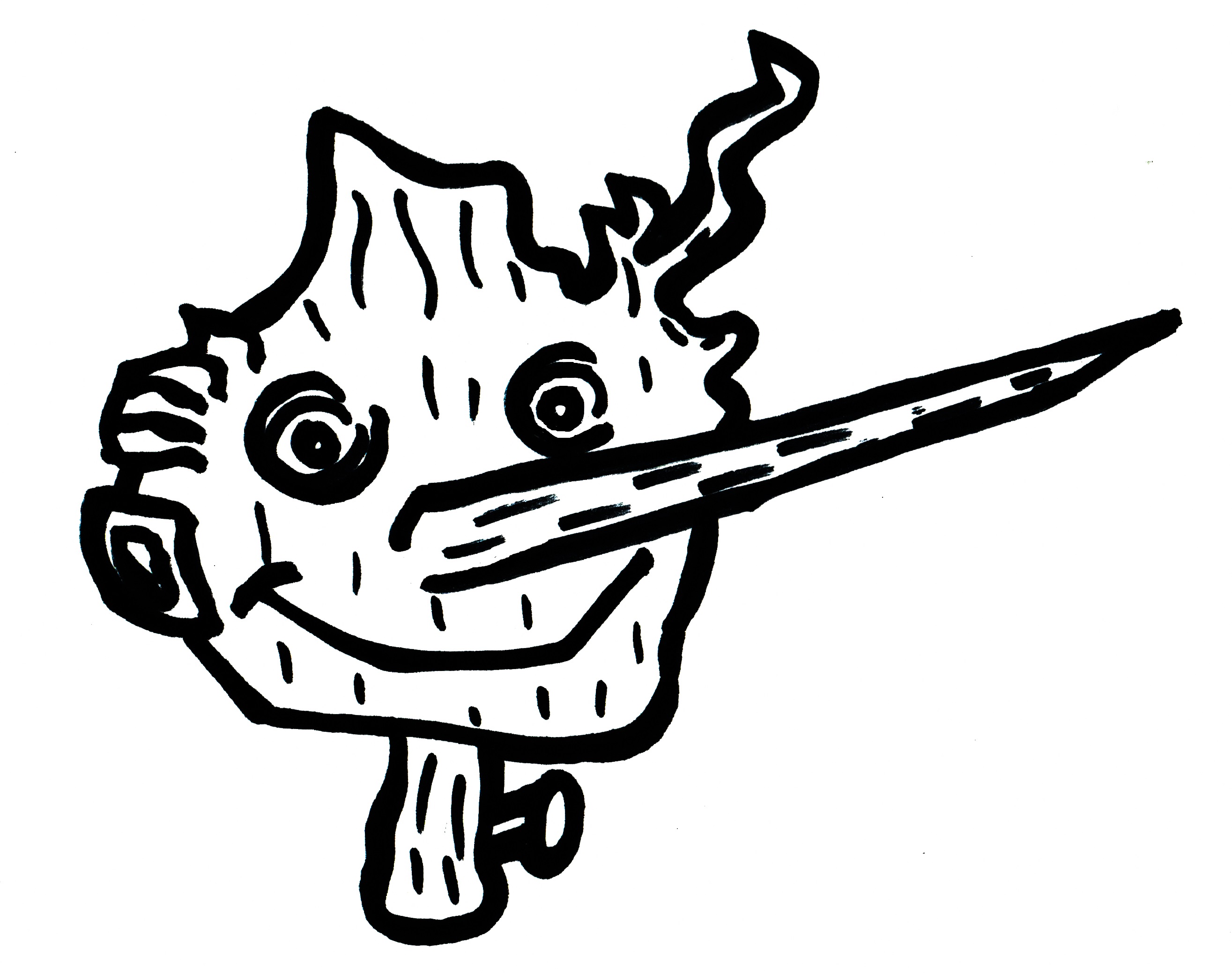

I suppose it’s remarkable that Guillermo del Toro has directed his first stop-motion animated film, and yet his Netflix-funded Pinocchio adaptation feels so comfortably at home with everything he’s made before it that it doesn’t even register as a new chapter in his career. Del Toro and Wes Anderson have got to be the two most stubbornly consistent auteurs working today, in that every new project they make is such an obvious, natural progression in their work that it feels as if it’s already come out years earlier – either to your boredom or delight, depending on how you feel about their individual quirks & kinks. It’s only fitting, then, that del Toro collaborated with animation director Mark Gustafson on his Pinocchio film, since Gustafson also worked on Fantastic Mr. Fox, Anderson’s own debut in the stop-motion medium. Del Toro also teamed with Fantastic Mr. Fox‘s composer Alexandre Desplat (a regular collaborator of Anderson’s and now, after this & Shape of Water, del Toro’s) and Over the Garden Wall creator Patrick McHale, stacking the bench with enough heavy hitters to ensure his first animated feature would be a winning success. Even with all those outside voices guiding the clay puppets through del Toro’s signature Gothic nightmare worlds, though, the stop-motion Pinocchio is unmistakably a stay-the-course continuation of what he’s already achieved as a household name auteur. It may not be the most surprising, inventive take on the material he could’ve conjured, but it easily earns his name’s prominent inclusion in the title.
Familiarity is certainly the tallest hurdle that Guillermo del Toro’s Pinocchio has to clear. That’s less of a symptom of del Toro’s own tried-and-true macabre formula than it is a symptom of a crowded market. This is at least the third major adaptation of the Pinocchio story in recent memory, starting with Mateo Garonne’s grotesque fairy tale version in 2020 and more recently counter-programmed by Disney’s “live-action” CG abomination unleashed this summer. By shoehorning the Pinocchio story into his own personal auteurist template, del Toro at least breathes some new life into the time-battered, tossed-around puppet. He envisions Pinocchio as one of the gentle, misunderstood monsters that always anchor his Gothic horror dramas. He also sets the story amidst the wartime brutality of Mussolini’s Italy, recalling the children-in-rubble peril of past works like Pan’s Labyrinth, The Devil’s Backbone and, hell, even his kaiju smash-‘em-up Pacific Rim. He also uses the opportunity to revisit the old-timey carnival setting that staged the best parts of Nightmare Alley, before that film is sidelined in Cate Blanchett’s ornate therapist office. I don’t know that del Toro brings anything especially unique to the medium of animation; if anything, the film’s best qualities are all excelled by their thunderous echoes in Laika’s Kubo and the Two Strings. I do think his insular, self-tropifying formula of repeated pet obsessions & spooky production designs brings a new perspective to the Pinocchio myth, though, if not only in highlighting how well it already fits into his milieu.
If there’s anything especially bold about del Toro’s Pinocchio take, it’s in his celebration of the titular wooden boy’s rebelliousness, which most versions of the tale feel compelled to condemn. Guillermo del Toro’s Pinocchio is essentially a stop-motion musical about how delightfully annoying & revolting children can be, and how their obnoxious misbehavior is a necessary joy in this rigid, fascist world. Pinocchio enters life as a hideous monster whose inhuman puppet-body contortions terrify the local Italian villagers. His childlike exuberance & wonder with every new discovery in this grim, grey world is played for shock value comedy; his broad, dumb smile never wavers as he rambunctiously destroys lives & homes. Gradually, Pinocchio learns about the full “terrible, terrible joy” of living, as his puppet body outlasts the mortal members of his family, but the bittersweetness of life (and death) does little to tamper his boyish enthusiasm. While most Pinocchio stories are cautionary tales about why you shouldn’t lie or act selfishly, del Toro openly encourages that behavior in his little wooden monster. Pinocchio saves the day by being a selfish, chaotic liar with a grotesque little puppet body; his eternal resistance to being governable is directly opposed to the militaristic fascism of Mussolini’s Italy. All Pinocchio movies find the puppet-boy’s misbehavior delightful (at least until they trip over themselves to condemn it), but del Toro’s is the only one I can name that celebrates it as a radical political ideology.
I enjoyed this movie a great deal, but I wish I liked it more. Since the Pinocchio story nests so comfortably in del Toro’s long-established worldview and since the director’s visual artistry translates so fluidly to the stop-motion medium, neither of those pop-culture mashups can land as a stunning surprise. It doesn’t help that there isn’t one catchy tune among its plentiful song-and-dance numbers, and that it dwells at least a half-hour longer than needs to get its point across. A middling del Toro picture is still a wonderful time at the movies, though, no matter the medium. Like all of his live-action pictures to date, Pinocchio is a heartwarming, gorgeous grotesquerie that feels intensely personal to the del Toro’s insular loves & obsessions; and that personal touch is exactly what distinguishes it from the thousand other Pinocchio adaptations it’s competing against for screen space.
-Brandon Ledet


 Swampflix