
Hope (2026)

Hope is the latest film from The Wailing director Na Hong-jin. Early reactions were fairly mixed, and now having seen the film myself, I can understand why. For much of its run, Hope is an exciting action thriller, with thrilling chase scenes, suspenseful sequences, and quiet moments of humanity. All of this works quite well, especially when we see less of the monster(s) that are running around and causing trouble, but once we do see them, it takes a downhill turn before ending on a truly bizarre note, one that comes after a film that’s a little too long for its own good.

Ko Bum-seok (Hwang Jung-min) is the police chief of Hope Harbor, a South Korean village that abuts the Demilitarized Zone, the population of which is made up largely of elderly people and supermodel-hot younger folks. He’s summoned by his cousin Ko Sung-ki (Zo In-sung) to the site of a mutilated cow that Sung-ki and his fellow hunters discovered in the middle of the road. The cow’s corpse shows evidence of being attacked by some large animal with razor-sharp claws, which the hunters convince Bum-seok a tiger must have been responsible for despite the unlikelihood that a large cat would have been able to cross the minefields that lie between them and the rest of the continent. Upon returning to town, Bum-seok learns that several other locals have been killed, and his attempts to call in additional manpower are rebuffed due to wildfires that are raging elsewhere, prompting him to ally with a retired colonel named Ahn Nak-yeon (Lee Sang-hee), whom he finds hiding in a culvert after his own encounter with the monster. Out of sight, the monster rages on, as it leaves a trail of broken bodies and buildings in its wake. After Bum-seok accidentally shoots and kills a local who was hiding from the monster, he ends up facing the creature itself and narrowly escapes only because of assistance from his rocket launcher-toting rookie, Im Sung-ae (Jung Ho-yeon). After a long and costly conflict, the monster is killed, and its body turned over to a local surgeon to perform an autopsy, although she’s not able to cut through the creature’s hide with anything less than a chainsaw. Sung-ae assists with triage in a makeshift hospital, where she learns from one of the locals that he had seen several of the creatures in the woods, indicating that the danger is far from over. Elsewhere, Sung-ki and his hunting buddies are still looking for the tiger that threatens the village when they stumble upon a crashed spaceship in the forest, one that has a control room that features seating and buttons for very, very large crewmembers.

The creatures here are the film’s weakest point, in multiple ways. The alien designs are unique, and it’s a mark in the film’s favor that they’re individually designed with distinctive textures and faces, but that does not necessarily mean that they’re good. Western actors like Michael Fassbender, Alicia Vikander, and Lost in Space’s Taylor Russell are credited here, and I suppose you can see the resemblance between them and the aliens that they voice (in an alien language) if you look hard enough, but I’m at a loss to understand what they bring to the film other than marquee appeal outside of Korea. The quality with which they are rendered on screen varies wildly from scene to scene, with some sequences looking like they were built for a PS2 game while others are smoother and more convincing. They’re a much more threatening presence when they’re not onscreen, when dismembered bodies are discovered in collapsing buildings or the only evidence of their presence is the far-off sounds of gunfire cut short by screaming. Characters can see over rooftops that cars are being thrown around like toys, and it’s quite effective.

I can concede that it’s likely that we’re meant to find the aliens uncannily human but off-putting considering the revelation that they are intelligent creatures seeking a lost child, who has already been killed by a hillbilly taxidermist named Yang-bae (Eum Moon-suk, a handsome former K-pop star who’s saddled with goofy teeth). The intention is to induce fear and then humanize them; I get that. I just don’t feel that it’s very successful, and it’s not all entirely down to the design. For one thing, this isn’t exactly new ground, given that the “man is the real monster” isn’t a novel monster-movie concept at this point, and the reason it’s so well-worn is because it forces the audience to look inward at their own prejudices. Here, however, the blame for the interspecies conflict falls solely in the lap of a trigger-happy bumpkin. No one is going to look at this man onscreen and see themselves, and it’s a change from the formula that demonstrates why the trope exists in the first place. There’s also a lot of sudden and unexpected lore that ends up being shoehorned in during the film’s final act, belabored exposition that largely comes via the form of not-very-interesting dialogue between Vikander and Fassbender (I mean, um … let me check my notes here … “J’aur” and “Ma’veyyo”). Some of it re-establishes what we’ve already gleaned from the scenes with our human characters, including their search for the missing alien child, but it also drops several extra-terrestrial proper nouns that are a lot to try and take in after two hours of runtime that was mostly a humans-versus-monsters movie. 

This is a film that feels incomplete, and it’s not just the cliffhanger ending that gives it that quality. Hope doesn’t feel like half of a narrative; it feels like a 95% complete monster film and a 35% complete sci-fi epic. That adds up to more than 100%, of course, which is reflected in the film’s whopping 156 minute runtime. That should be more than enough to tell a complete story, but it doesn’t. There are dangling plot threads on the human side that are left to be resolved in a sequel if one is made, most notably the fallout of Bum-seok’s shooting of a non-combatant, but it’s almost all the way there. The alien side of things is just getting started, with the sudden crashing of another, larger spaceship into a mountain on the horizon near the film’s conclusion, and all of the political machinations that are implied by the too-late info dump, which isn’t of interest to me in the slightest. Given that Na is known for releasing films at a glacial pace (the aforementioned The Wailing was his last picture, and it was released in 2016), it’s strange to me that he would create a film so open-ended and demanding of a sequel. Worse, Hope features such great action sequences that it demands to be seen on a big screen, but the ultimate experience is so taxing that it is a film that will work best when you’re at home and can take bathroom breaks, where the horseback battle with a galloping alien creature isn’t going to hit as hard. 

All of this sounds pretty negative, but I’m not trying to talk you out of experiencing the film. Reports that it is the best monster movie in years are no more an exaggeration than critical responses that the film is an overlong, narratively confused beast. Going in with that knowledge, I think you’ll still find plenty to enjoy; just caffeinate beforehand and feel free to run to the restroom when the aliens start talking to one another.

-Mark “Boomer” Redmond
The Green Knight (2021)

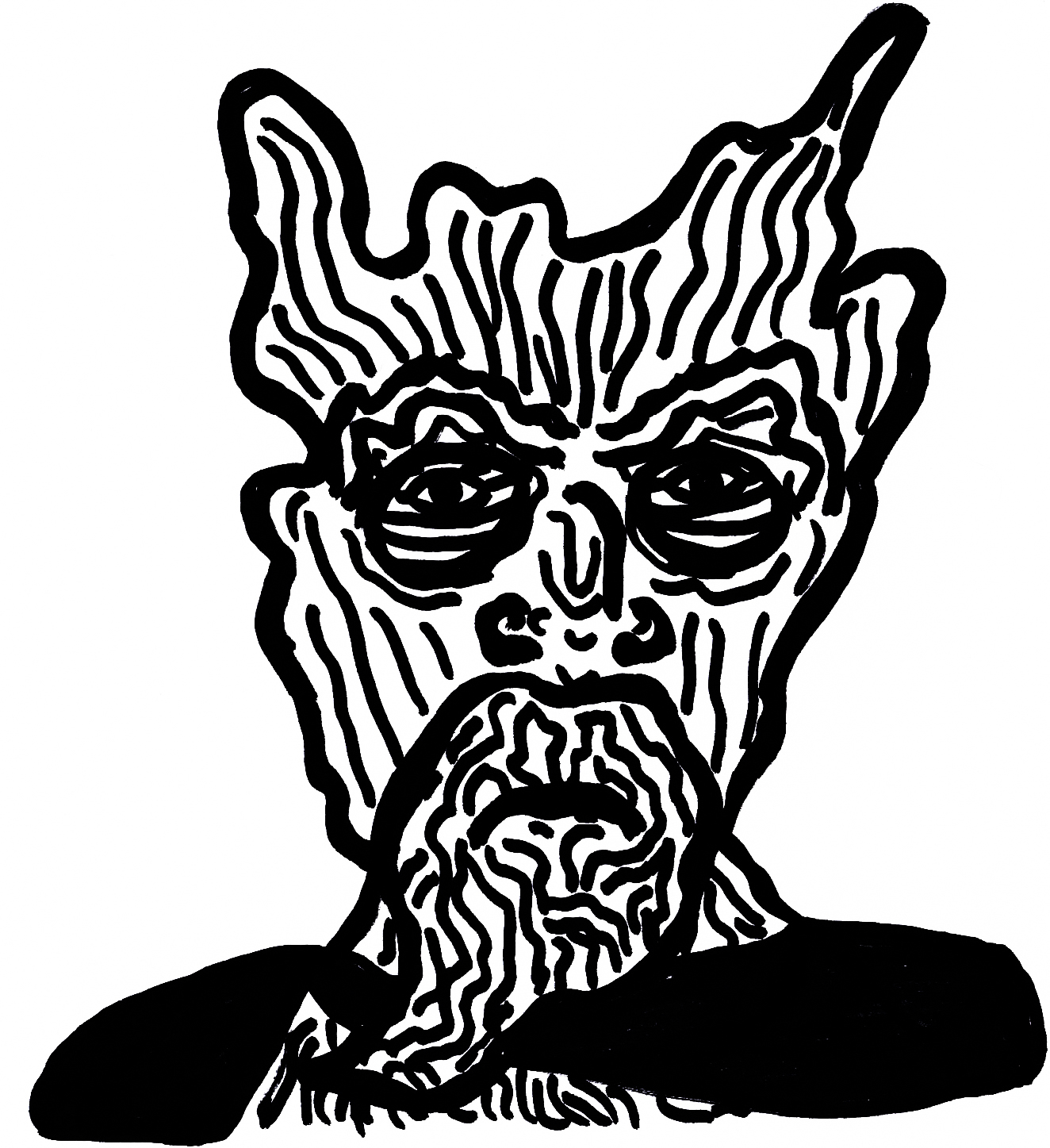
It’s Christmas in July! Or at least it was last weekend when I saw David Lowery’s latest, long-delayed, gorgeous bombast, The Green Knight. There have been multiple failed attempts at bringing Arthurian stories to the big screen in a meaningful way in my lifetime (although that 2004’s King Arthur, 2006’s Tristan and Isolde, and 2017’s King Arthur: Legend of the Sword all have exactly 31% on Rotten Tomatoes is impressive in its own strange way), with the most successful being the generally disappointing First Knight, which no one remembers. Fun fact: Ralph Ineson, who plays the titular pastoral paladin in this film, was in First Knight. Sorry to get into the trivia portion of this review so early, but I don’t really have a lot to say about this one. Shocking coming from an overtalker like myself, I know, but sometimes there are films that you don’t see so much as experience, and like Lowery’s A Ghost Story before it, The Green Knight is one such film. 

Which isn’t to say that there’s not a clear narrative here. There is, and it’s fairly easy to follow. Gawain (Dev Patel) is the nephew of King Arthur (Sean Harris) by way of his sister (Sarita Choudhury), who is traditionally Morgause but appears to be a combination of Morgause and Morgaine le Fay (also usually—but not always—Arthur’s step- or half-sister). On Christmas morning, he awakens beside his lover, the commoner Essel (Alicia Vikander) and makes his way back to the castle, where he washes up before appearing before Arthur, his queen (Kate Dickie), and the other knights of the realm. The elderly Arthur invites Gawain to sit beside him and tell him a story of himself, so that he may know his potential heir better, but the younger man admits that he has no great deeds of himself to share. “Yet,” Guinevere corrects him, “you have no stories to tell yet.” Elsewhere, Morgause/Morgaine and a few attendants perform a ceremony that appears to invoke or invite a large, green knight (Ineson, as noted) to appear in the great hall, riding a massive steed. He issues a challenge, asking only that one of Arthur’s fabled knights strike him a blow with the caveat that the following year Arthur’s champion goes to the “green chapel” and allow the knight to return the blow in kind. All refuse, and Merlin (Emmet O’Brien) shakes his head slightly when Arthur himself seems prepared to face the challenge. Gawain asks that he be allowed to do so, and is given Arthur’s own sword to face the knight. When the Green Knight offers his neck to the boy, he first laughs, then grows angry at the visitor for mocking him before lopping off the larger man’s head. Undeterred, the knight’s body retrieves his head, laughs, and says he’ll see Gawain the next Christmas. 

After a “too short year,” Gawain sets out on his journey to find the Green Chapel and the knight therein, with gifts like a shield which bears an image of the Virgin Mary and is anointed by a bishop and a green sash that his mother makes, and into which she inserts sigils. After departing Camelot, he first passes some older towers and buildings in decline, then through a section of deforested woods which are in the process of being cut down, and finally comes upon a field in which a battle has been fought and in which a few fires yet smolder. There he encounters a scavenger (Barry Keoghan) who points him in the right direction, but after he gives the poorer man a single coin, and even then only because he was guilted, Gawain finds himself the victim of two of the poor man’s fellow highwaymen. Now divested of his shield, horse, belt, and even the Green Knight’s axe, Gawain eventually frees himself, but is weakened. Eventually making his way to a seemingly deserted house, Gawain avails himself of the empty bed therein, only to be awoken in the night by the spirit of a woman named Winifred, who asks him to reunite her decapitated head with the rest of her body, which he does; once this task is complete, the Green Knight’s axe is mysteriously returned to him. He ventures further, facing starvation and madness, eventually meeting and becoming the traveling companion of a fox, and even encountering a group of mysterious giants as they wander in an apparent migratory pattern (this was my favorite part). 

Eventually, he comes to a castle occupied by a friendly noble lord (Joel Edgerton), his wife (Vikander again), and an unnamed, unremarked-upon sightless woman (Helena Browne). As in the poem, the Lord enters into an agreement with Gawain that would mean that anything given to Gawain in the Lord’s house would be given by Gawain in turn, and the Lady of the house tempts Gawain’s virtue. On his final day within the castle, the Lady returns Gawain’s green sash to him, claiming that she made it herself, and reiterating that it will keep him from harm; he accepts it, but not before finally giving in to her advances (albeit in more of a shortstop way, in that it’s between second and third base). Leaving the house, he encounters the Lord for the last time, but does not give him the sash (or the hand job) as their deal would require. Gawain reunites with the fox, who accompanies him all the way to a stream where a boat waits to take him to the Green Chapel, and the fox suddenly speaks, to give him one more warning to turn back and avoid his fate, but Gawain soldiers on. 

At long last, he meets the Knight, and after he flinches, the Green Knight teases him, and then Gawain flees. He returns to the place where the boat was left and finds his horse returned. He makes his way back to Camelot, where he is reunited with Essel (in the Biblical sense), knighted by a bedridden Arthur, and eventually becomes king. Essel gives birth to a son that Gawain takes to raise, leaving behind a few shekels on her bloody birthing bed; as time goes on, Camelot begins to degrade, perhaps because of her dishonored king, or simply because it is in the nature of “Camelot” to wane when Arthur is gone. Gawain marries a lady of proper aristocratic birth and she bears him a daughter, while his son dies in a battle in which Gawain himself does not participate. In all these moments, which play out with no dialogue, the sash is never removed. He becomes a pariah in his own kingdom, lacking the respect that the middling folk who adored his uncle. He finally faces his end as Camelot prepares to fall to marauders, and as he finds himself seated alone on the throne he does not deserve, he removes the sash at last, and his head falls to the ground … and then we return to the Green Chapel, and the realization that all of these moments are, to paraphrase Dickens, the shadows of things that May Be, not necessarily which Will Be. Realizing that he cannot flee from fulfilling his debt of honor, he once more submits to the Green Knight, who playfully traces his finger along the royal nephew’s throat. Credits!

That’s more of a summary than a review, but it was an exercise for myself as much as it is a recommendation for you, dear reader. When I walked out of the theater with my friends, none of us was completely certain what to make of it. When recording our recent Lagniappe episode about Stoker, Brandon referred to Nicole Kidman’s third act “I can’t wait to see the world break you down” speech as a “barn burner,” and this film has a monologue of the same caliber delivered with delicious righteousness by Vikander as the Lady; although, an equally apt comparison would be to call her speech this film’s version of “Rooney Mara eats a pie for 5 minutes,” as she describes all of the potentialities of what the color green could mean—nature, entropy, life, death, rebirth, sickness—in a way that becomes completely hypnotic. Is it “good”? I’m not sure, but it sure was huge. It’s so soporific that I’m not completely certain it even manages to tie into the film’s larger themes, but I certainly experienced something. 

This is a story about honor, and from whence it flows and how one can come to be anointed by it. Gawain, as a member of the aristocracy, fails to consider the small folk, which is traditionally the province in which Arthur succeeds, and from which his honor (and thus his power) flows. From the moment he first appears on screen, his casual disregard for those outside of the landed aristocracy is made apparent, as he ignores the burning of a commoner’s hut as he wends his way back to the castle proper. When he is followed into the plains by children who are entranced by the fledgling, yet-unbuilt legend of Gawain, he spares not a smile or a wave for them. When he meets the scavenger, he must be guilted into giving him a pittance, even though, as heir apparent to the king and a queen who has passed her child-bearing years, his funds are virtually limitless, and the man’s pitiable existence is explicitly the result of being a resident of the medieval equivalent of fly-over country during a skirmish fought in the name of kings he will never see or know. When asked by Winnifred to retrieve her head, he asks what his reward will be, and she’s shocked by his lack of chivalric benevolence. He even fails to uphold his end of the bargain he makes with the Lord in whose house he finds healing and comfort. 

Still, there is a seed of honor in Gawain which, if properly nurtured, could yet germinate and grow within him, just as the Green Knight is composed of the branches and trees which also make up the Green Chapel. After all, what is honor? What is courage? These things are not conferred upon a person by a higher power, or by that power’s earthly representative sprinkling holy water on a shield. They are not conferred upon a person by the stature of their lineage or through gifts from a progenitor, despite that this was the method by which power was transferred for much of human politik. They are not conferred by drawing a sword from a stone, or from the hand of the one who previously did so, nor are they conferred by regal clothing; although these things may stem from that which resides within, they are the noble flowering, not the source of the vine. Gawain may only complete his quest out of fear of the shame of returning home without having made good his word, but therein lies the nature of all courageousness: if we act with honor, even if it be for spite or in avoidance of shame, the performance of the thing becomes the thing itself, be it for the better and green in growth or for the worse and green in rot. Despite many opportunities to turn back and persistent discouragement from his pursuit, Gawain presses on, even passing what could be called his last temptation. He sees his life as it could be, and once more chooses to press on, and in so doing, becomes more than he had been. 

Lowery has said that, in his vision, Gawain does not survive this encounter. Which, first of all, how dare he? But secondly, this is your semi–annual reminder that, as for me and my house, we will follow Roland Barthes, so I reject that interpretation and substitute my own. I feel that, textually, we are seeing Morgause/Morgaine test her son, as the Green Knight is clearly summoned or even created by her magics, and Gawain is told explicitly that the Knight is someone he knows. Our very first image is of Gawain on Arthur’s throne and bearing his crown before he is, unflinching, covered in flame, as if all that was weak and chaff within him has been burned away. To see this purification trial to its end, in order to prevent her unready and unworthy son from pulling a total Mordred and ascending to the throne and hastening Camelot’s decline, she creates this series of tests that not only prove his mettle but create it. It’s worth mentioning, in case it’s been a long time since your last literature class, that Morgaine is revealed to be the blind woman in the house of Sir Bertilak (the rough equivalent of the unnamed Lord in the film), and that she was pulling the strings of the entire narrative all along. 

I have to admit that I was slightly disappointed that there was little exploration of the relationship between Albionian pre-Christian paganism and the rise of Arthurian Christendom. (Did I already give away that Mists of Avalon is my favorite Arthurian story by insistently calling her “Morgaine” and not “Morgan”? A pox on Marion Zimmer Bradley’s grave, though.) The very concept of “England” is thoroughly tied into the rise of Christianity as an influence on politics and world events, and the application of those motifs to Arthurian legend, which is thoroughly and inexplicably tied to pre-Christian magic, makes for a truly fascinating, if muddled, historiography. The way that Gawain was first girded by both his mother’s smoke-and-incense dark magic sash and the Marian image on his shield seemed to be setting up a narrative in that vein, but if that element was carried through in any way, it’s that religion, as a creation of man, is doomed to be destroyed and reclaimed, as demonstrated by the scavengers breaking his shield almost immediately, and the way in which the foliage of the Green Chapel is superimposed over and suffused through a Christian house of worship. 

I don’t know if you’ll like this. I don’t know if I liked it. But I did experience it, and I would again. After all this time being isolated, and with the possibility that we’ll have to do this all again on the horizon, if you need to be transported, take this journey.

-Mark “Boomer” Redmond

The Man from U.N.C.L.E. (2015)

EPSON MFP image

fourstar

I’m not sure exactly why Guy Ritchie’s latest foray into highly stylized action cinema, a big screen adaptation of the 1960s television show The Man from U.N.C.L.E., has more or less flopped at the box office. Personally, I might at least be able to attribute my own reluctance to catch up with the picture to a little bit of superspy fatigue. So far this year the cinemas have been bombarded from the superspy likes of Kingsman: Secret Service, Mission: Impossible – Rogue Nation, American Ultra, and a spoof of the genre simply called Spy. That’s not even taking into account the upcoming Stephen Spieldberg/Tom Hanks collab Bridge of Spies & the latest James Bond feature Spectre. If 2014 was the Year of the Doppelgänger, 2015 is certainly the Year of the Spy & The Man from U.N.C.L.E.‘s returns may have suffered somewhat from a crowded market. It’s by no means been a devastating financial blow like Ritchie’s disastrous Madonna vehicle Swept Away, but it has struggled to earn back its $75 million budget, earning less than half of that sum in its U.S. theater run. What’s even more difficult to account for, however, is it the film’s middling reviews. I’m no Guy Ritchie fanboy, having seen less than half of the films that he’s released, but U.N.C.L.E. was easily the most fun I’ve ever had with the director’s sleek action movie aesthetic, however delayed my trip to the theater may have been.

Opening with a traditional James Bond credits sequence populated with sultry soul music, harsh red hues, and Cold War/Atomic Age stock footage, The Man from U.N.C.L.E. maintains a distinct sense of 60s-tinged, smart mouthed swank throughout its entire runtime. Sometimes its modernizing of the 60s superspy genre feels true to its sources. CGI-aided car chases work similarly to the manually sped-up action scenes of yesteryear. The classy noir lighting of 60s fare is brought into the 2010s with rainbow-colored lens flairs. Throwaway lines about “Hitler’s favorite rocket scientist”, enriched uranium, and smuggled Nazi gold all feel native to the era it’s evoking. At other times this modernization can work a little too much like borrowed Tarantino cool, especially in small details like the yellow grindhouse subtitles and the pop music & whistling on the film’s soundtrack, but even Tarantino borrowed those elements from older sources, so the similarities are more than forgiveable. What most distinguishes The Man from U.N.C.L.E. from, say, an Inglourious Basterds, is its calmly restrained chase of a smarmy, handsome aesthetic instead of Tarantino’s cartoonishly over-the-top tendency towards excess (which, of course, has its own distinct set of charms).

Speaking of calm restraint, just as The Man from U.N.C.L.E. remains poised & smugly handsome throughout its runtime, its American spy lead Solo (expertly played by Henry “Man of Steel” Cavill) prides himself on never losing his cool. As the CIA operative/international playboy Solo butts heads with quick-tempered KGB agent Illya (Armie “Winklevoss Twins” Hammer) & sexy German mechanic Gaby (Alicia “Ex Machina” Vikander) on a multinational mission to prevent a Nuclear Holocaust, he tries his damnedest to remain as coolly suave as if he were simply enjoying cocktail hour. A lot of humor is derived from watching Solo & Illya try to out-macho each other in activities as disparate as fistfights in restrooms to arguing over women’s fashion. Most of the film’s comedy, however, is dependent upon the sexual tension between all three leads & their escaped Nazi enemies (including a young married couple who look like an evil combination of Jason Schwartzman & Freddie Mercury and a character Tilda Swinton could play in her sleep). There’s an onslaught of innuendo in the film’s script, like when the art thief Solo offers to “fill the gaps” in a woman’s collection or to “take bottom” when divvying up which locks he & Illya will pick. By the time characters are nonchalantly delivering lines like “Want to have a go?” & “I wish I could stay to finish you off myself” the film’s earned enough goodwill to evoke full belly laughs instead of the light chuckles the first couple sexual quips elicit. Armie Hammer also gets great comedic mileage from the KGB hothead Illya, especially in the way he sweetly refers to mechanic Gaby as his “little chop shop girl” & the comically American Solo as “cowboy.”

No matter what the reasons for The Man from U.N.C.L.E.‘s muted reception, I do feel the film has been a little shortchanged & I regret waiting so long to catch it in the theater. It has a distinct sense of smart, sexy glamour to it that suggests an alternate universe where Mad Men was an action-packed world of superspies instead of a slowburn of an existential crisis. The film’s sexual quips, use of wrestling as foreplay, gender reversal of the damsel in distress trope, and genre-faithful plot riddled with doublecrossings & double-doublecrossings all make for a fun, sleek picture that I’m sure will have a second life on Netflix & the like even if it’s not currently doing so hot in the theater. On top of these surface pleasures, Guy Ritchie makes some satisfyingly unique visual choices such as mounting cameras to the bows of boats, the fronts of safes, and car door mirrors for a effect that feels highly stylized, but genuinely earned. He’s also confident enough in his screenplay to imply offscreen action instead of showing every little explosive detail & to allow certain scenes to breathe for maximum effect, such as a particularly sublime moment when Solo is enjoying a picnic as his partner fends for his life in the background. As far as 60s throwback action & Nazi-killing revenge fantasies go, The Man from U.N.C.L.E. is about as handsome & as confident as they come. If you’re like me & have been putting it off due to superspy fatigue, I’d suggest giving it a shot somewhere down the road. It has enough universal appeal that you’re likely to enjoy yourself.

-Brandon Ledet
