
By Design (2026)

How do you feel about performance art? Interpretive dance? Experimental theatre? Poetry? If you walked into an art gallery and were confronted with a live performer pretending to inhabit the persona of a piece of furniture or an animal or an abstract concept, would you be repulsed or intrigued? Amanda Kramer does not make movies for audiences who recoil from earnest theatricality; she makes high-artifice headscratchers for the intrigued. Her latest stars Juliette Lewis as a tragically bored woman who inexplicably trades identities with a designer chair, leaving her human body behind as a lifeless piece of furniture. A large portion of By Design‘s audience will be immediately repulsed by its self-aware, mannered tone, which engages with big-picture abstract concepts through absurdist artifice and practiced affectation. Miranda July & Peter Strickland haters, stay away. Everyone else who can tune into its wavelength will find a wryly funny meditation on how we all socially function as objects, assessed & valued more as physical presences than as human beings.

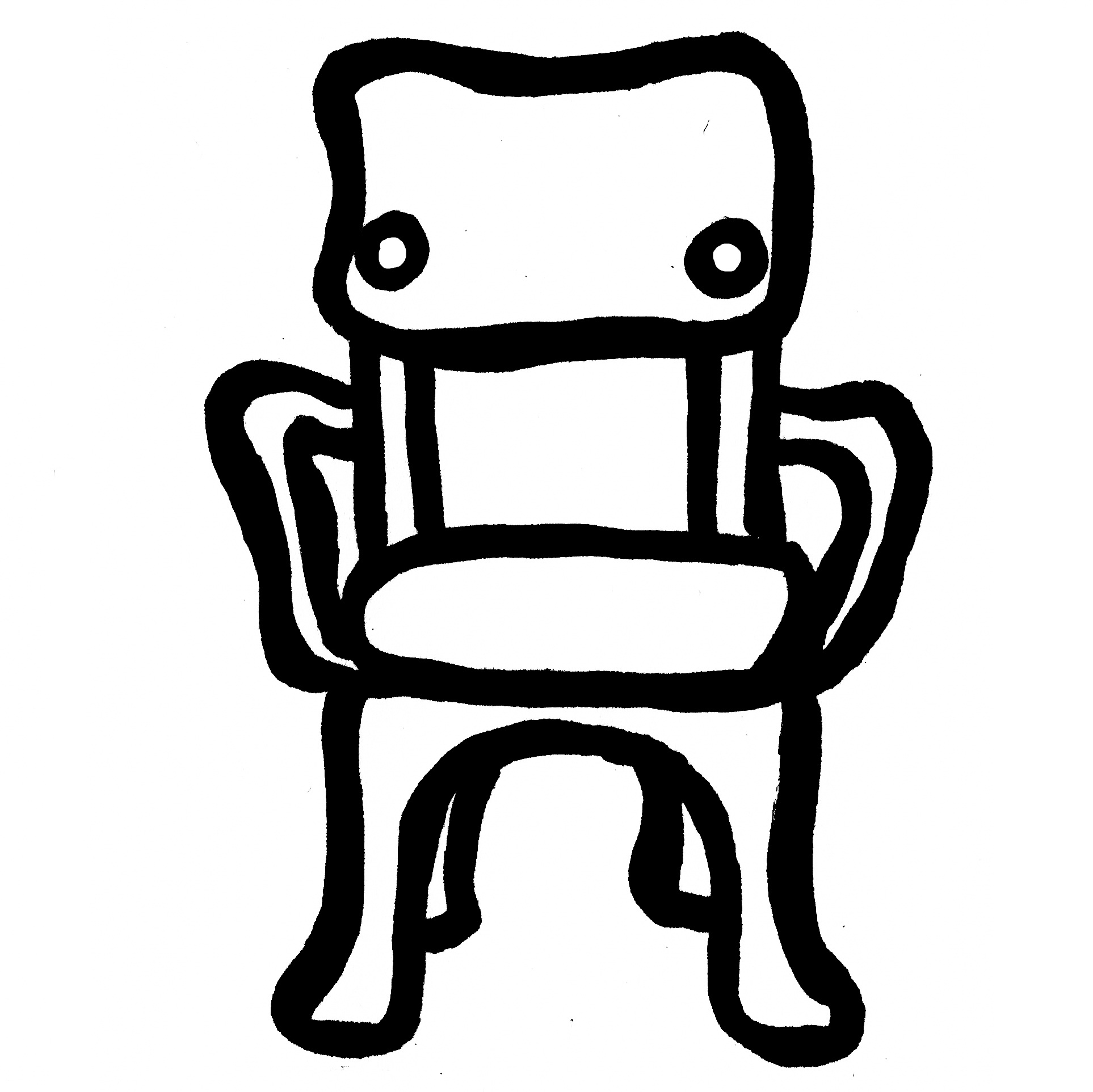
Camille (Juliette Lewis) trudges through punishingly boring, repetitive days shopping & brunching with her gal pals in a life “devoid of ideas” . . . until she finally discovers something that arouses true desire in her: the perfect designer chair. Only, by the time she gathers the money needed to make the “perfect purchase,” the chair has already been sold and gifted to a lonely man (Mamoudou Athie). The heartbreak of not being able to own this “object of desire” shatters Camille’s sense of self, so instead of parting ways with the chair she makes a desperate, magical wish to become it, to be the object that is desired. Her essence leaves her body behind for the new, curvaceous body of the chair, and her old body collapses onto the floor, catatonic. From there, she is split into two separate selves: Camille The Chair, who comfortably basks in her newfound sense of purpose & desirability, and Camille The Human, who continues to have an active social life even though she has effectively become an inanimate object. Her friends and family continue to interact with her as if she were alert & responsive while she remains motionless, painting all person-to-person social interaction as a kind of one-sided narcissism where the other participant is more of a sounding board then a fellow human being.

Lewis is one of several actresses in the cast whose careers peaked in the 1990s. Her small friend group is rounded out by Robin Tunney (Empire Records, The Craft) & Samantha Mathis (Little Women, Super Mario Bros.), and the trio’s petty conflicts are narrated by the honey-voiced Melanie Griffith, who lands most of the best laugh lines about how all women are already treated (and, eventually, discarded) like furniture — not just Camille. There’s such a stilted, dazed affect to each performance that any one of these women could’ve been substituted with Jennifer Coolidge without significantly changing the meaning or tone of the overall picture, but through them Kramer still manages to work out some sincerely heady ideas about gendered objectification and how women’s friendships are often corrupted by competition & envy. Maybe it’s all one big, elaborate “Women be shoppin'” joke, but it’s one that takes the existential crisis of its literal chairwoman seriously. Camille has been societally reduced to a physical, purchased product, and the abstract meaning of that is just as horrific as the physical mechanics of it are amusingly absurd.

Aesthetically, Kramer leaves behind the disco & leather-kink nightclub fantasia of Give Me Pity! & Please Baby Please for a more clinical, brighter-lit art gallery feel. The frame is sparsely decorated with individual, identifiable objects (both Camilles included) as if to leave space for blocks of ad copy in a designer furniture catalog. That stylistic choice is announced as early as the opening credits, which are designed to resemble a fussy luxury brand catalog, setting the mood for the film’s high-end, inhuman shopping trips. It’s a visual sparseness that echoes Camille’s feared life “devoid of ideas” without distracting from the icy, abstracted zingers in the script, like Griffith’s intonation of “Wherever she goes, there she is — a lifetime horror” or a character answering the question “Who doesn’t like women?” with “Most men, most women.” If you’re at all allergic to camp, whimsy, or art-gallery pretentiousness, you already knew this movie is not for you as soon as you read the logline “A woman swaps bodies with a char, and everyone likes her better as a chair,” no review needed. It’s an odd, thorny little delight for everyone else, as all of Kramer’s films to date have been.

-Brandon Ledet

Podcast #189: Give Me Pity! (2023) & New Releases

Welcome to Episode #189 of The Swampflix Podcast. For this episode, Britnee, James, Brandon, and Hanna discuss a grab bag of new releases from the first half of 2023, starting with Give Me Pity!, Amanda Kramer’s feature length spoof of one-woman TV specials in the disco era.

00:00 Mozzarella sticks

04:25 Past Lives (2023)
11:45 There’s Something Wrong with the Children (2023)
17:00 Blind Willow, Sleeping Woman (2023)
20:12 Stalking Laura (1993)

29:18 Give Me Pity! (2023)
51:00 Polite Society (2023)
1:03:25 How to Blow Up a Pipeline (2023)
1:19:40 Huesera: The Bone Woman (2023)

1:45:35 Best of 2023 so far

You can stay up to date with our podcast through SoundCloudSpotifyiTunesStitcherTuneIn, or by following the links on this page.

-The Podcast Crew

Gender Repeal Party

In the back of my mind, I’ve been saving a couple slots on my personal Best of 2022 list for two titles that never screened theatrically in New Orleans: Amanda Kramer’s Please Baby Please and Bertrand Mandico’s After Blue (Dirty Paradise).  Having now rented both films for an especially lurid double feature, it turns out those reserved parking spots were totally justified. Both films hammered the exact personal pleasure centers I’m always looking to hit when seeking out new releases, exactly as expected.  What I didn’t expect was that they would be so sympatico in their dreamlike deconstructions of gender, nor that they would be thematic mirror opposites of their respective directors’ previous works.  I was introduced to Kramer through her apocalyptic meditation on the vicious, combative impulses of femininity in Ladyworld; I was introduced to Mandico through his wet nightmare vision of the vicious, combative impulses of masculinity in The Wild Boys.  With their latest features, they’ve swapped topics (i.e., swapped genders), which makes After Blue & Please Baby Please a rewarding, fascinating double feature beyond their momentary value as last-minute best-of-the-year contenders.

In Ladyworld, Amanda Kramer immerses her audience in a never-ending Buñuelian house party where a group of young women eternally, ritualistically tear each other apart in the darkest corners of feminine bloodlust.  In Please Baby Please, she reflects on the performative brutality of masculinity instead, abstracting & eroticizing the violence of traditional machismo.  After a seemingly cis-hetero 1950s couple falls in lust with a gang of leather-clad ruffians (the wife out of gender envy, the husband out of closeted homosexuality), they separately explore their own relationships with masculinity as a social power & as a fetish aesthetic.  As the couple unravels & retangles, Kramer ponders the question “What is a man, anyway?” through lofty academic discussions of how masculinity is socially engineered and through kinky fetishization of 1950s kitsch. Andrea Riseborough gives the performance of the year as the beatnik housewife turned Tom of Finland brute, approximating what it would be like if an especially rabid Jerri Blank had a Marlon Brando drag-king impersonation act.  Harry Meulling’s crisis of masculinity is much more internal & philosophical, interrupting every friend group conversation with off-topic questions about why he must perform a gender at all, much less one arbitrarily assigned at birth. The film is overflowing with queer menace, artifice, and excellence, all achieved on a community theatre budget. 

Bertrand Mandico’s The Wild Boys is my favorite film released in my lifetime, a complete gender meltdown that erodes all of the traditional characteristics & boundaries of masculinity in its titular group of nihilist ruffians but does not reform their vicious misbehavior when they emerge as women on the other end.  Mandico’s second feature is just as gorgeous, grotesque, and wonderfully genderfucked as that debut, but goddamn that’s a tough act to follow.  After Blue (Dirty Paradise) starts with feminine violence as its thematic anchor, dreaming of a far-out lesbian orgy planet that cowers in fear of a demonic, almighty serial killer named Kate Bush.  As a disgraced hairdresser and her horndog daughter hunt down the elusive Kate Bush in the alien wilderness and fall in lust with other bizarre women they meet along the way, After Blue proves to be just as visually & thematically daring as The Wild Boys, just on the opposite end of the gender spectrum.  The hallmarks of its sci-fi acid Western subgenre weighs heavily on its momentum & pacing, but it also constantly fills the frame with the most exciting, glitter-slathered nightmare imagery you’re likely to see this year.  It plays like someone fed “James Bidgood’s Dune movie” into one of those AI art generators, and the results are intoxicating, even if a little exhausting.

Anyone who has already tasted “the rotten fruit of [Mandico’s] imagination” knows what to expect from After Blue, but that’s more of a sign of his out-the-gate fervor as a fully formed auteur than a sign that he’s repeating himself.  By contrast, Kramer’s ideas & imagery appear to vary more from film to film, aiming for a fluorescent-trash version of John Waters’s aesthetic in Please Baby Please that I don’t believe was present in her previous work.  As a pair, they’re among the most exciting artists currently working in the medium of queer filmmaking, not least of all because of their respective indulgences in over-the-top visual style and their shared philosophical hostility towards rigid gender boundaries.  I have no idea where their careers are going (especially Kramer’s), but I’m confident in saying they’re already making some of the best movies out there on the new release calendar, and it’s a shame these two titles aren’t being published on more critics’ Best of the Year lists.

-Brandon Ledet