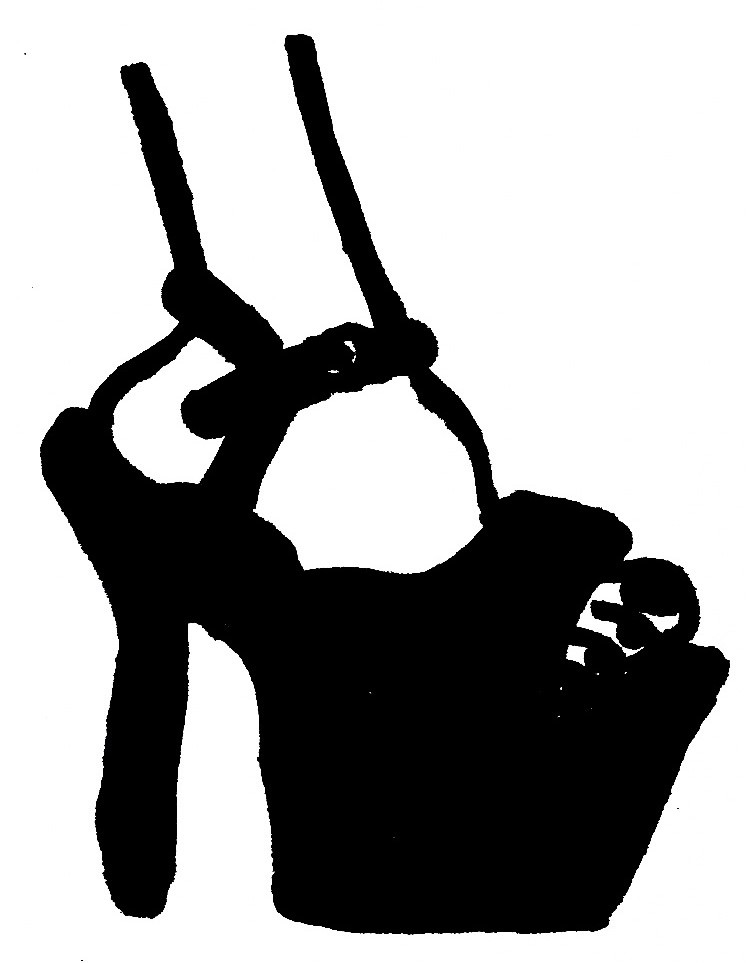
Bratty Woman

This year’s Best Picture winner at the Oscars was about a sex worker who foolishly allows herself to be swept off her feet by a fantasy romance proposal from a wealthy fuckboy client, clashing classic “Cinderella story” & “hooker with a heart of gold” tropes with the harsh, transactional realities of the modern world. There’s obviously a lot of Pretty Woman (1990) DNA running through Anora‘s veins, even if the older, schmaltzier film is distanced from its offspring by several decades and the entire length of the United States. As opposing coastal stories, both movies are appropriately anchored, with Anora playing the scrappy Brooklynite brat who throws stray punches at Pretty Woman‘s dream-factory Hollywood romance. They have too much in common to be purely read as polar opposites, though. Pretty Woman strut the Walk of Fame on Hollywood Boulevard so that Anora could clack its Lucite heels on NYC pavement. The former was rewarded with great box office returns & terrible reviews, while the latter is a niche art-circuit crowdpleaser that sneakily nabbed Cinema’s Top Prize despite a relatively meager scale & budget.

Julia Roberts sealed her status as a Hollywood A-lister by playing a fresh-faced streetwalker. She hooks a once-in-a-lifetime trick in the form of a sleepwalking Richard Gere, playing a slutty businessman who’s feeling numb & lonely after the recent loss of his father. Their single-night luxury hotel room tryst quickly escalates into a weeklong engagement for the lifechanging sum of $3,000 (a figure that provided the working title of the original screenplay) and then, eventually, a genuine proposal of marriage. In Anora, the modern fairy-tale romance of that premise unravels quickly & violently, leaving its titular sex worker scrambling to hold onto some compensation after blowing up her life for a dishonorable john. In Pretty Woman, the big-kiss acceptance of the proposal is the end-goal, a consummation of Roberts declaring she “wants the fairy tale” instead of being kept as an on-staff sex worker. The deal-sealing kiss is then punctuated by an unnamed observer on the street pontificating, “Welcome to Hollywood! What’s your dream? Everybody comes here. This is Hollywood, land of dreams. Some dreams come true, some don’t; but keep dreamin’. This is Hollywood.”

The original scripted ending of Pretty Woman had a distinctly Sean Baker touch, mirroring the end of The Florida Project with Roberts taking her fairy-tale romance to Disneyland. I doubt the toothless Gary Marshall’s version of that trip would’ve had the same dramatic or satirical impact as Baker’s, but they’re both consciously dealing in the same tropes & cliches. If anything, I don’t see Anora upending Pretty Woman‘s naive view of sex-worker-and-client romance; I just see it starting where Pretty Woman ends, logically teasing the story out past the rush of the first Big Kiss. Julia Roberts’s Vivian has plenty in common with Mikey Madison’s Ani throughout the movie. She’s just as defiantly bratty in the face of obscene wealth, and she’s just as friendly to fellow staff workers who serve the same clientele. Marshall mixes sex & slapstick in a way that recalls Baker’s sensibilities in Roberts’s first sexual act with Gere, having her initiate fellatio between giggling fits during an I Love Lucy rerun. I doubt even Baker would call Anora a refutation of Pretty Woman, given that Roberts’s declaration that her tryst with her new client is just like “Cinder-fuckin’-rella” might as well have been recited word-for-word in his version of the story.

Overall, Anora really is the better film. It’s got an anarchic energy that swings wildly from comedic confection to bitter drama within the span of a single scene, whereas Pretty Woman is almost pure confection. After Roberts’s & Gere’s first night together, they immediately slip into a comfortable, domestic dynamic, and most of their scene-to-scene interactions are genuinely romantic, like their Moonstruck trip to the opera or the john playing Vivian’s body like a grand piano. The darker notes of a rape attempt (from Gere’s sleazy lawyer, played by Jason Alexander) or a fellow sex worker’s body being discovered in a nearby dumpster are just illustrations of why the fairy-tale romance is necessary for Vivian, who will accept no less. Gary Marshall is working in tonal contrast there, while Baker lets opposing tones wrestle & tangle until they’re indistinguishable. The audience is scared for Ani in the same scene where we’re laughing at the bumbling incompetence of the male brutes keeping her in place. All we’re really allowed to feel for Vivian is pure adoration, only scared that Julia Roberts might hurt her back carrying the movie while Richard Gere shrugs & mumbles his way through the script. She does so ably, though, with a 3,000-watt smile.

-Brandon Ledet

Lagniappe Podcast: Conclave & SEFCA Awards 2024

For this lagniappe episode of the podcast, Brandon is joined by Moviegoing with Bill‘s Bill Arceneaux to discuss the Southeastern Film Critic Association’s awarded films of 2024, starting with Edward Berger’s papal voting-process thriller Conclave.

00:00 Moviegoing with Bill
22:15 Conclave (2024)
54:40 SEFCA’s Top 10 Films of 2024
1:29:19 Other SEFCA winners

You can stay up to date with our podcast through SoundCloudSpotifyiTunesTuneIn, or by following the links on this page.

– The Lagniappe Podcast Crew

Anora and Her Friends

Sean Baker’s time is here.  After nailing down his gig-labor docufiction style in the 2004 food-delivery tragedy Take Out and then applying it to a long string of sex-industry dramas in the couple decades since, Baker has finally earned his moment in the prestige-circuit spotlight.  Earlier breakthroughs like Tangerine & The Florida Project perfectly calibrated his caustically funny, soberingly traumatic storytelling style in his best work to date, but he emerged from those triumphs recognized as a name to watch rather than one of the modern greats.  He’s been recalibrating in the years since, going full heel in his deliberately unlovable black comedy Red Rocket before face-turning to the opposite extreme in his latest work, Anora.  Clearly, Baker has decided he wants audiences to love him again, and it’s impressive to see him swing so wildly in tone between his last two features without losing his voice.  Anora is the feel-good sweet counterbalance to the feel-bad sour Sean Baker of Red Rocket.  Both are equally funny & frantic, but only one is affable enough to set the filmmaker up for a Best-Picture Oscar run after taking home the top prize at Cannes.  It’s his time.

The surprising thing about Anora’s critical success is that it’s such a dutiful continuation of the work Baker’s already been doing for years – just with an extra dash of sugar to help sweeten the bitter.  Mikey Madison stars as the titular erotic dancer, another trapped-by-capitalism sex worker in a long tradition of Sean Baker anti-heroines dating at least as far back as 2012’s Starlet.  Anora is a thorny, chaotic, unfiltered baddie whom the audience instantly loves for her faults, because she’s fun to be around.  Like in Tangerine & The Florida Project, we meet her working customers in a high-stress but manageable profession, then follow her on an anarchic journey through her larger urban community, walking a tightrope between slapstick physical comedy & face-slap physical violence until she’s offered a moment of grace in the final beat.  As the editor, Baker has worked out a well-timed rhythm for this story template through its many repetitions in previous works.  He sweeps the audience up in the hedonistic romance of Anora’s Vegas-strip marriage to a big-spender Russian brat who offers a Cinderellic escape from the strip club circuit in exchange for helping secure a green card.  The quick-edit montage of that fantasy then slows down to linger on its real-world fallout, investing increasingly long, painful stretches of time on Russian gangsters’ retribution for the young couple generating tabloid headlines that embarrass the brat’s oligarch father.  The laughs continue to roll in, but the punchlines (and physical punches) get more brutal with each impact until it just isn’t fun anymore, as is the Sean Baker way.

There’s nothing especially revelatory about the Sean Baker formula in Anora.  In the context of his filmography, it’s just more of the same (of a very good thing).  However, the increased attention to his career-long project as an auteur has had its immediate benefits, not least of all in Baker’s collaboration with the local repertory series Gap Tooth Cinema (formerly known as Wildwood).  When asked to program a screening for Gap Tooth as a primer for what he was aiming to achieve in Anora, Baker offered three titles as options: Fellini’s Oscar-winning sex worker drama Nights of Cabiria, the fish-out-of-water Eddie Murphy comedy Coming to America, and a second Italian sex-work story in 1960’s Adua and Her Friends.  Gap Tooth ultimately selected Adua, the most obscure title of the trio and, more importantly, one of the very best titles they’ve screened to date.  I don’t know that Sean Baker’s name would have come to mind had I discovered Adua and Her Friends in a different context, since it’s a much more formally polished picture than the anarchic comedies he’s become known for since he filmed Tangerine on an iPhone.  The comparisons that more readily came to mind were Mildred Pierce, Volver, and The Best Little Whorehouse in Texas.  It’s a less recognizable title than any of those comparisons, but that’s the only way in which it’s lesser.  It’s an incredibly stylish, sexy, tragic, and cool story of self-reinvented sex workers making do in late-50s Italy, one that speaks well to Baker’s genuine interest in his characters’ inner lives beyond what they symbolize as society’s economic casualties.

Adua and Her Friends is a darkly comic drama about a small crew of sex workers who are forcibly retired by the Merlin Law of 1958, which ceased the legal operation of all Italian brothels.  Unsure how to get by without the only trade they have experience in, the women conspire to open a rural, roadside restaurant as a front for a new, illegal brothel they will run themselves.  Only, after a few successful months of food service—depicted as being equally difficult as prostitution—they decide they’d rather “go straight” in their new business than convert it into an underground brothel.  As you’d expect, the self-reinvented women’s lives as restaurateurs are upended by men from their past that refuse to let them start fresh, the same way Anora is blocked from upgrading her social position from escort to wife.  Where Adua excels is in taking the time to flesh out the inner lives & conflicts of each woman in its main cast.  Lolita is led astray by conmen who take advantage of her youthful naivete; Marilina struggles to reestablish a familial relationship with her estranged son; Milly hopes to leave her past behind and start over as a devoted housewife, Anora-style.  Adua (Oscar-winner Simone Signoret) gets the first & final word in her struggle to establish a new career before she ages out of her livelihood, but the movie is an ensemble-cast melodrama at heart, asking you to love, laugh with, and weep for every woman at the roadside restaurant (and to hiss at the cads who selfishly ruin it all).

Much like in Baker’s films, the majority of Adua and Her Friends is a surprisingly good time, with plenty slapstick gags & irreverently bawdy jokes undercutting the hooker-with-a-heart-of-gold tropes typical to this subject.  Like Anora, it’s a 2+ hour comedy with an emotionally devastating ending, one that carefully avoids making its titular sex worker a purely pitiable symbol of societal cruelty even while acknowledging that she’s backed into a pretty shitty corner.  Adua and Anora can be plenty cruel themselves when it helps their day-to-day survival.  That might be where the two films’ overlapping interests end, since Adua lounges in a much more relaxed hangout vibe than Anora, scored by repetitions of Santo & Johnny’s “Sleepwalk” rather than t.A.T.u.’s “All the Things She Said.”  Adua and her friends loiter around their Italian villa, fanning themselves in a deep-focus tableau, while Anora is dragged around Vegas & NYC by Russian mobsters who (for the most part) don’t see her as a human being.  There is one early sequence in Adua where a black-out drunken night is represented in choppy lost-time edits that may have been an influence on the rhythms of Anora’s first act, but otherwise I assume Baker was inspired less by the film’s formal style than he was by the characterizations of its main cast.  The frank, sincere, humanizing approach to sex-worker portraiture in Adua and Her Friends speaks well to Sean Baker’s continued interest in sex-work as a cinematic subject and, although both were great, I feel like I learned more about his work through its presentation than I did by watching his latest film.

 -Brandon Ledet