The Chucky Movies, Rated and Ranked

Child’s Play 2 (1990)

My favorite of the original Child’s Play trilogy, and thus my favorite Chucky movie overall. I love the way it trades in the grimy cruelty of the original for the visual sensibilities of a children’s film, from its exaggerated cartoon framing to its primary color palette to its bookend trips to the toy factory. Speaking of which, the climactic spectacle on the factory floor is some A+ mayhem, really leaning into the novelty of killer-doll gore at its purest. It’s one of those R-rated horrors that feels like it was specifically made for an audience of children sneaking the TV remote past their sleeping parents.

Child’s Play (1988)

The original Child’s Play hits all the exact story beats you’d expect from its Killer Doll: The Movie premise, but its in-the-moment execution is often exquisite.  The animatronic puppetry is mind-boggling, the patter of little doll feet in the Evil Dead POV shots is somehow genuinely chilling, and the gradual transformation of Chucky’s head from generic My Buddy Doll knockoff to Baby Brad Dourif really sells the dark Movie Magic of it all.  It’s also really funny to imagine the excruciating boredom a serial strangler would feel having to hang out with the world’s sweetest child until it’s time to smite his enemies; not to mention the frustration of having little plastic hands you can’t even properly wrap around a throat – horrifying.

Child’s Play (2019)

An in-name-only “remake” that exploits the Chucky name to make its own evil-doll horror comedy for the A.I. era, functioning more as a prototype for M3GAN than a direct mutation of the 1988 original. While a drastic deviation from the Original Flavor™ Child’s Play in terms of plot & tone, though, it does ultimately amount to a similar effect. It plays like the exact kind of nasty, ludicrous horror flicks kids fall in love with when they happen to catch them at too young of an age on cable. It’s too violent for children but far too silly for adults, the exact formula that made early Child’s Play movies cult classics in the first place.

Bride of Chucky (1998)

Chucky is resurrected for the post-Scream era, complete with a nü-metal soundtrack, mall goth costuming, and postmodern references to competing horror villains like Freddy, Jason, Michael, and Pinhead. Thankfully, this comedic rebrand also pairs him with a totally committed Jennifer Tilly, who counterbalances the killer’s trademark misogyny as a bimbo-dominatrix-turned-fellow-doll who gleefully pushes all his psychosexual buttons just to watch him squirm. It’s not all that tense or upsetting as a horror film, but it’s highly amusing as a “The straights are not okay” anti-romcom, and it’s fun to finally see Chucky mastermind Don Mancini queer up the franchise that pays his bills.

Seed of Chucky (2004)

Don Mancini’s New Nightmare, riding the final ripples of the post-Scream meta horror trend as far as it had left to go (not very). It’s a mixed bag from start to end, but enough of the jokes land and the Glen-Or-Glenda doll is a novel enough intrusion for it to mostly make up for the eyerolls. Also very cute to see John Waters nerding out as an obvious fan as if he won a “Be in a Chucky movie!” contest, even if he just missed the series’ glory days

Child’s Play 3 (1991)

Things would get worse down the line, but this has always been my least favorite of the original Chucky trio. It’s fun to see Chucky fully come into his own as a mainstay slasher villain, since this is late enough in the series for him to start quipping his way through every kill with catchphrases & cheap one-liners. Having to spend even 90 breezy minutes in its drab military school setting is a chore, though, and I always feel like I’m being punished alongside Andy for crimes I didn’t commit. That boredom is rewarded with a last-minute trip to an amusement park, but the killer finale makes me slightly resentful that we don’t spend the whole movie there.
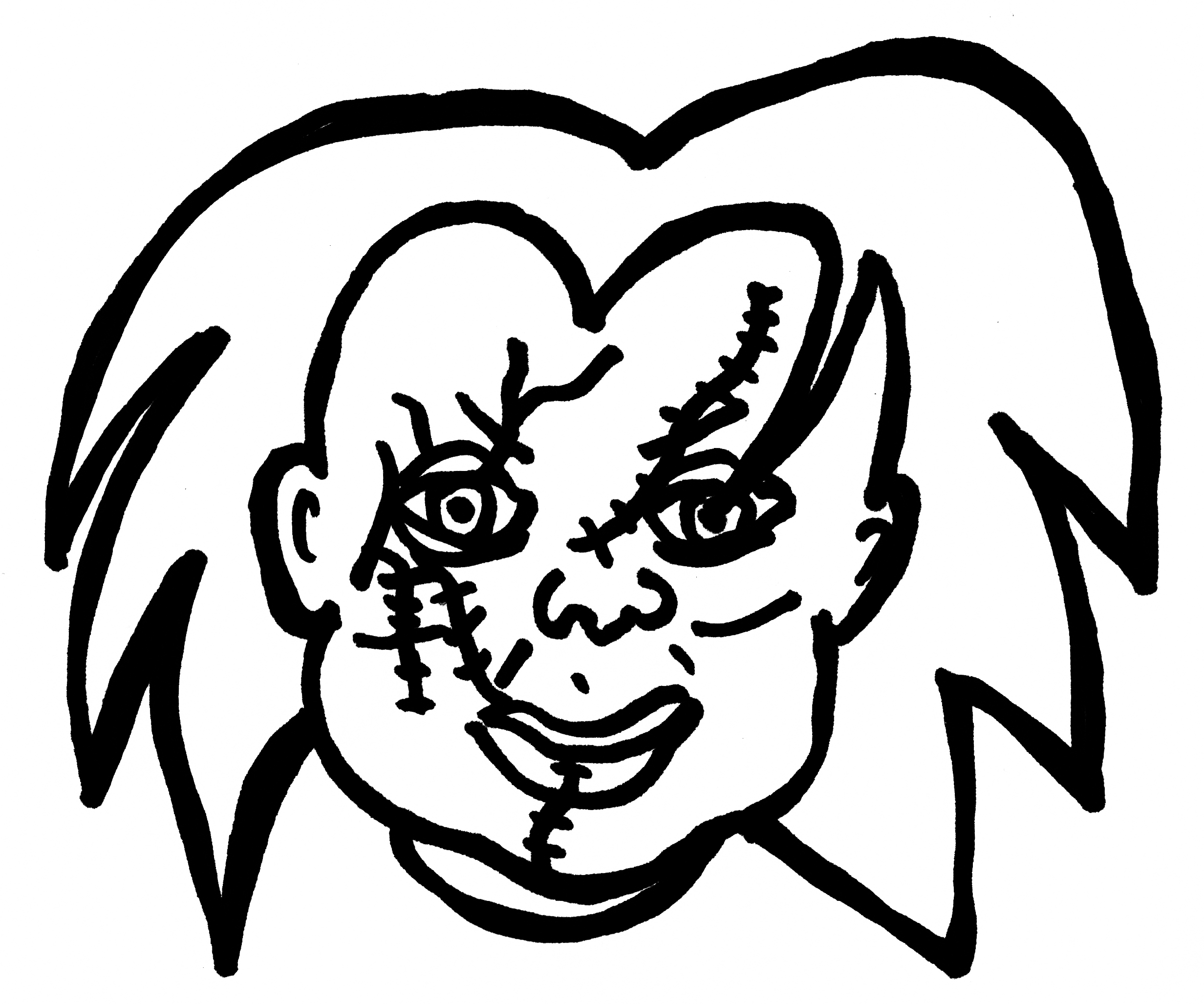
Curse of Chucky (2013)

Considering how much flak the 2019 Child’s Play remake got for straying from Mancini’s original vision, it’s incredible that Mancini had made his own in-house, in-name-only Chucky knockoff just a few years earlier. In this case, Chucky’s more of a haunted house catalyst than of an A.I. cautionary tale, so he’s more Annabelle than M3GAN. Unlike Annabelle, though, this evil doll actually moves; his kills are brutal enough to make up for a lot of the usual trappings of a purposeless, tropey reboot.

Cult of Chucky (2017)

With Curse of Chucky, it felt like Don Mancini wanted to make a generic haunted house movie and the only way to land funding was to put a Chucky in it.  Here, he does the same with the spooky mental asylum genre, except he puts many Chuckies in it.  It’s the cheapest and least substantial of the bunch, but the gore gags are gnarly enough to make it worthwhile, and it’s delightful to see how convoluted the series lore has gotten to keep the story going.  This has to be the all-time silliest ten hours of prerequisite homework to fully appreciate a TV show in the history of the medium, but if you’ve made it this far, you’re doomed to keep tuning in.

-Brandon Ledet

Child’s Play (2019)

I honestly have no idea why Orion Pictures bothered slapping the Child’s Play brand name on this evil-doll horror comedy, beyond the easy box office returns of its name recognition and the fact that its parent company, MGM, owned the rights. With a quick redesign of the killer Chucky doll and a few nodding references to the original franchise removed, Child’s Play (2019) could easily transform from a deviant remake of a beloved genre relic into an entirely new evil-doll franchise of its own design. Protective, enthusiastic fans of the original Don Mancini series have been cautions to support this corporate retooling of the director’s work, since he’s built a long-running series of passionate, campy, queer horror novelties out of the bizarro slasher premise for decades (with Brad Dourif in tow as the voice of the killer doll for the entire run). I can see how outside voices dialing the Chucky brand back to its origins for a franchise-resetting remake could feel like a betrayal to longtime superfans (especially since series steward Mancini is still making films & television shows featuring Dourif’s version of Chucky to this day). For casual fans like me, however, this MGM-sponsored blasphemy is an exciting development in Chucky lore. This is the exact right way to pull off a worthwhile remake: return to the original germ of an idea, strip away everything else, and then build something so new around it that it’s hardly recognizable. The 2019 Child’s Play remake would have been much more upsetting to me if it were a mindless, risk-adverse retread of what Mancini had already accomplished. Thankfully, it’s instead entirely its own thing separate from Mancini’s work, the ideal template for a decades-later revision.

While the 2019 Child’s Play is a drastic deviation from the 1988 original in terms of plot & tone, it does ultimately amount to a similar effect. This feels like the exact kind of nasty, ludicrous horror flicks kids fall in love with when they happen to catch them at too young of an age on cable. In addition to borrowing the Child’s Play brand name, this film also makes direct references to other titles in that exact inappropriate-kids’-horror-canon: The Texas Chain Massacre II, Killer Klowns from Outer Space, RoboCop, etc. In that way, it reminds me more of what Charles Band accomplished with Full Moon Entertainment (which is overflowing with straight-to-VHS titles about killer dolls) than it does Mancini’s work under the Chucky brand. Like most of the Full Moon catalog, Child’s Play ’19 is a violent, R-Rated horror film that perversely feels like it was intended for an audience of children, which will have to sneak their way into a movie theater (or access to unsupervised late-night streaming) to enjoy it. That’s why I was bummed to see so few pro critics & Letterboxd mutuals have a good time with this over-the-top shlock. It’s so blatant about its efforts to tap back into the goofy, childlike imagination of the straight-to-VHS nasties of yesteryear that it even makes fun of the inane “That would never happen!” complaint that’s frequently lobbed at these things in the 2010s (during a slumber party screening of Texas Chainsaw Massacre II). I was saddened, then, to see real-life movie nerds critique the film for being silly & illogical as if those weren’t its selling points. As a collective audience, we could all benefit from lightening up & going with the flow instead of straining to “outsmart” the exact kind of genre candy we used to enjoy back when we had an imagination. It’s fucked up to say so, but I hope the right kids find this film at an inappropriate age, just like how I found titles like The Dentist & The Lady in White too young in my own day.

Mark Hamill takes over the vocal booth duties from Bard Dourif in this iteration, performing Chucky as a more of a Teddy Ruxpin cutie gone haywire than a misogynist murderer on bender. That’s because the remake drops the original film’s premise of a serial killer installing their own damned soul into a doll’s body via a mysterious Voodoo ritual in favor of something more “modern”: my beloved The Internet Is Trying To Kill Us horror subgenre. Newcomer director Lars Klevberg updates Chucky to the 2010s by giving him a Luddutian makeover as a malfunctioning piece of future-tech. The killer doll isn’t Evil, necessarily. Rather, he’s a symptom of what goes wrong when we automate too much of our daily lives, submitting our autonomy to computers in exchange for comfort. The Buddi doll is now a home appliance connected to every other automated tech in your house: lights, thermostats, self-driving cab services, home-use surveillance drones, The Cloud etc. When one of these dolls inevitably goes haywire through faulty programming, these conveniences now become an arsenal to dispose of humans who dare get in the way of his friendship with this “best buddy” (the child who owns him). Chucky himself has become a real-life horror of technology as well, as the animatronic puppet used in the film has been smoothed out into a distinct Uncanny Valley look that’s frequently bolstered with cheap CGI – meaning he’s often creepy though the limitations of his animation as much as anything else. It’s up to a ragtag group of neighborhood tykes to stop the doll before he causes too much havoc with all this future-tech, as the adults in their lives don’t believe something so innocent-looking & benign as a Buddi doll could possibly be responsible for the community’s murders. Similarly, it’s up to the kids in the audience (who really shouldn’t be there, the scamps) to preserve this deeply silly film’s legacy, since adults’ lack of imagination is failing them in real life too.

It would be easy to confuse the new Child’s Play for one of those standard modern-era remakes of 80s horror classics that mistake an origin story for the killer and a more generally self-serious, muted tone as an “improvement” in revision. This is a major studio production after all, one with recognizable faces like Aubrey Plaza & Brian Tyree Henry lurking in the cast. I was delighted to discover, then, that it’s something much stranger & more unapologetically goofy than that: a film that’s too violent for children but far too silly for adults, the exact formula that made early Child’s Play movies cult classics in the first place. There may be some 2010s-specific updates to the material in the technophobia of Chucky’s design and the Adult Swim-type glitch edits & meme humor that accompanies it, but otherwise this feels like a perfect 80s horror throwback. It recalls the over-the-top delirium of basic cable & VHS horror from the era, while also exceeding as an entirely new, silly thing of its own design. It’s damn fun, an it’s a damn shame how few people have remembered how to have fun with ludicrous genre films of its ilk.

-Brandon Ledet
