Maisie Was a Lady (1941)

For the first time, we open a Maisie picture (this is the fourth) with our leading lady already employed. It’s not very dignified, unfortunately; she’s in a carnival sideshow set up in a contraption with a mirror that makes her appear headless. When troublemaking wealthy alcoholic Bob Rawlston (Lew Ayres) tickles her on stage and costs her the job, he allows her to borrow his car to get into town. Maisie takes him up on this offer but ends up spending the night in jail after being pulled over on suspicion of stealing the vehicle. When the judge lets her off per Bob’s admission of complicity in Maisie’s firing and his permission to use the car, he also requires Bob to pay Maisie the amount that she was supposed to receive for the remainder of her sideshow contract, Maisie refuses to take money for nothing, and it all shakes out that Bob will keep her on for the two months of her contract at the sprawling Rawlston manse as a maid. Maisie is taken to the house and introduced to family butler Walpole (C. Aubrey Smith). 

On her first day, she meets Bob’s sister Abigail (Maureen O’Sullivan) as well as her fiancé, Link Phillips (Edward Ashley), but is not aware of their relationship until after Link has tried (and failed) to make a pass at her. The house is full of guests who will be in attendance at the upcoming engagement party for Link and Abigail. They’re all rather hoity-toity and rude to Maisie, embarrassing Abigail so thoroughly that she asks Maisie to be her personal maid, to which our heroine agrees. We get to spend some time with Abigail and learn that, despite all her wealth and finery, the Rawlston family is in disarray; after Mrs. Rawlston’s death, the family patriarch, “Cap,” has become a largely absent presence, sending jewelry that Abigail never wears or cares about in lieu of being present in her (or Bob’s) life. We learn about most of this from Abigail herself, while Walpole relates the same is true for Bob, who won a scholarship for some kind of aviation innovation, but for whom a lack of fatherly interest meant that he abandoned all of his ambitions. Tensions in the house reach a boiling point with the arrival of Diana Webley, a woman Link Phillips previously spurned; he doesn’t see any reason that his money marriage to Abigail should spoil all of the fun that they could have together, and it’s up to Maisie to, once again, save the day. 

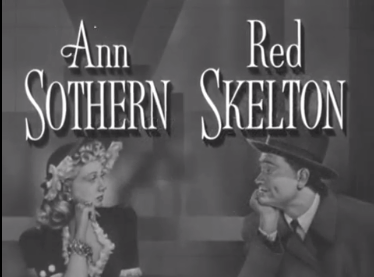
Maisie Was a Lady is the best of the Maisie series by a decent margin. Maisie wasn’t terrible, of course, but it wasn’t all that memorable, either, whereas this one hits the ground running right out of the gate. Maisie is still independent, witty, and vivacious, and as the series goes along, she’s simply dropped into place until she gets the chance to observe everyone’s foibles, then deliver a no-nonsense monologue to give them the what-for that sets everything right. For the first time since Maisie, she also gets a love interest in the form of Bob Rawlston, even if their sudden affection for each other comes out of left field in the film’s final moments. With peace restored to the Rawlston household, Abigail asks Maisie to go to Honolulu with the family and to stay on as her companion. Maisie’s eyes light up as she considers it, possibly considering what adventures she might get up to in Honolulu Maisie, but then asks Walpole what kind of woman he foresees for Bob, prompting the old butler to rattle off a description of old money gentility that causes those lights to dim. After the leading men in Congo Maisie and Gold Rush Maisie both turned out to be false flag romantic leads, perhaps I should have seen it coming that Bob was going to win Maisie’s heart in the final moments even if there was no indication of that kind of affection between them in the film’s first hour. It almost feels like this was hastily added at the end to give Maisie a happy ending, should this be the last time that we saw Ann Sothern in this role. 

The screenplay for this one is credited to Betty Reinhardt and Mary C. McCall, Jr., just as the previous films were, but this is the first time that there’s no credit given for Wilson Collison, other than “characters created by.” Reinhardt shares story credit with frequent Frank Capra collaborator Myles Connolly, which may be why this one soars out of all the Maisies so far. It’s almost an obvious choice to have Maisie play “downstairs” in a rich family’s home; this gives her the opportunity to have comic friction with both the guests and the other servants, who are accustomed to the kind of bowing and scraping that it never even occurs to Maisie to consider. It’s all in good fun, although it takes a melodramatic turn in the final act that’s very similar to the one that set up the final events of Maisie. Since these films are all essentially self-contained, it really doesn’t matter if you decide to pick one up at random and give it a chance, and this one is the best so far and doesn’t really require you to know anything about the previous; you could treat this as a standalone picture and have just as much fun (if not more) than if you didn’t know who Maisie was in the first place. 

The film has its old-timey moments, of course. When Mr. Rawlston finally returns to the manor after the one-two punch of his absence and the revelation of Link’s gold-digging nature sends poor Abigail over the edge, Maisie reads him the riot act. Notably, she compares him unfavorably to the abusive fathers of her Brooklyn neighborhood, because at least they knew their children, and, according to Maisie, “Givin’ em the flat of your hand stacks up against giving them nothing.” It’s the only noteworthy tone-deaf moment in an otherwise blistering scorcher of a dressing down, so it gets a pass. Maisie Was a Lady gives us a heaping helping of the gal we love, and, though predictable in the extreme, is worth the eighty minutes it’ll cost you.

-Mark “Boomer” Redmond

Gold Rush Maisie (1940)

After her little outing to Africa, Maisie Ravier is back stateside. She’s not headed to check out the ranch she’s supposed to have inherited at the end of Maisie, though. Instead, we find her once again trying and failing to get to her next cabaret job, this time in Tucson. A car that she bought for a bargain to get her the rest of the way breaks down in the desert at night, and she finds her way to a ghost town whose two sole inhabitants are a gruff, hostile young recluse named Bill Anders (Lee Bowman) and his ornery hired hand, Fred Gubbins (Slim Summerville). Bill warms up to Maisie enough to pitch some woo her way, but she won’t have any of it, and the two men are less than receptive to her friendly overtures the following morning. When her car still won’t start after Bill takes a look at it, Maisie sets out on foot, finally arriving at her destination, a few days too late; the cafe owner has already hired different talent when Maisie didn’t arrive as expected. While ruminating on her next move, Maisie learns that there’s a gold rush boomtown developing near Anders’s property. Her kindness to a young girl whose family are following the gold rush earns her a place in their car, and she returns to get her car back and set out for her next adventure, but ends up invested in the future of the Davis family. 

The Davises are bargain bin Joads, former tenant farmers from Arkansas who lost everything in the Dust Bowl. Patriarch Bert remains cheerful and appreciative of his wife Sarah (Mary Nash)’s long-suffering patience, and Sarah herself is the kind of sweetheart who goes hungry so that her family can eat. The family has three children including a baby; the other two are played by notable child actors of the era. “Jubie” Davis was portrayed by Virginia Weidler, who appeared as Katherine Hepburn’s younger sister in The Philadelphia Story the same year as this film, and the perpetually hungry Harold was played by former Little Rascal Scotty Beckett, whose Rascal career as Spanky’s best friend came to an abrupt end once Alfalfa appeared on the scene. Overall, the Davis clan is likable and charming, and it’s easy to believe that Maisie would be willing to spend her last few dollars getting them some groceries and helping them stake out their claim. Of course, there has to be something to keep her present in Arizona to give her rough charms time to thaw Bill Anders’s stony heart so that he offers up his land for the disenfranchised farmers to homestead on when the gold in the area turns out to be so low in concentration that it’s not worth the effort of mining. It’s even less of a romance story this time around, too, since there’s no indication that Maisie has any designs on Anders, other than to get him to warm up a little. 

The format of these movies is starting to emerge, with Maisie as a kind of folk hero who goes from place to place, gets involved in people’s lives, and then moves on like Charlie Kale in Poker Face or Huckleberry Finn. There’s no real continuity to speak of, but one imagines that the studio must have been conscious that people would remember Slim from the first film and Maisie’s relationship with him even if he goes unmentioned, as Maisie’s further adventures are largely free of romance. She pretended to be into the male lead of Congo Maisie only so long as it helped her save another woman’s marriage by demonstrating how poorly suited the man was for love. One would expect that Maisie and Bill would have some romantic entanglement here based on their positioning in the film’s poster, but other than a couple of quick, chaste kisses, there’s nothing to indicate that Maisie reciprocates the tender feelings that she inspires in Bill. If anything, it feels like the first two films were aiming for that Ernst Lubitsch adultery comedy and missing the mark a bit, and decided to drop that entirely to just have Maisie wander the earth like David Banner (ironically, Scotty Beckett would go on to portray the child version of Don Ameche’s character in Lubitsch’s Heaven Can Wait just a few years later). 

Wilson Collison is credited with the story on this one, just as he was for Maisie (which was based on his novel Dark Dame) and for Congo Maisie (which was based on his non-Maisie novel Congo Landing). I’m not entirely sure that’s a worthy credit, however, given that the screenplay was actually pinned by two women, Mary C. McCall Jr. (credited for eight of the ten Maisie pictures) and Betty Reinhardt (who would later co-write Otto Preminger’s Laura and Give My Regards to Broadway). I’m not sure how much credit Collison really deserves for grafting the character of Maisie into a riff on The Grapes of Wrath, which would have been a hot commodity at the time, as John Steinbeck’s novel was published only the year before and the John Ford film adaptation reaching theaters only four months and 11 days before Gold Rush Maisie. That’s important context, since it also means that the somewhat corny-sounding dialogue of the Dust Bowl Okies (ex: “Tarnation, it’s nigh on to supper already”) is actually contemporary. 

Ann Sothern continues to shine in these, and while a lot of her non-comedy dialogue in the first two films had the ring of melodrama about them, her indomitable spirit comes through most clearly here. There’s a real sense of gravitas in her voice as she explains to Bill that the would-be miners have learned that the ore is useless and are holding a meeting about where each is going to go, since they can’t all try to go work the same temporary farm jobs. They’ve got to part for various different destinations, “spreading the starvation around a couple of states and not bringing it on each other,” and it’s quite good stuff. And this time, we get to see Maisie drive off into the sunset, off to spread barbs and charm elsewhere, the next time we see her in Maisie Was a Lady

-Mark “Boomer” Redmond

Congo Maisie (1940)

I’m pleased to report that Congo Maisie is not as racist as I had feared. Make no mistake; it’s still racist as fuck, presenting every African with whom the white characters interact as a pidgin-speaking stereotype, universally superstitious and fearful of local witch doctors, and very quick to both bow and scrape. Even the film’s only noteworthy highlight—the finale in which Maisie puts on a performance for the attacking natives to convince them that she’s more powerful than the witch doctors—is still infantilizing and insulting. It’s deeply unpleasant, but at least we don’t hear our hero use any slurs (other than, of course, the ubiquitous use of “boy” to refer to grown men). 

When we last saw Maisie, she had just received the happy news that the late Mr. Ames had left his fortune, including the Bar-O Ranch, to her, and she planned to run it with her newfound love interest Slim. Despite this, when we catch up with her in Congo Maisie, all indication that this was where we left her has vanished. She’s once again a showgirl on the lookout for the next big opportunity, which is what has brought her to Africa in the first place. She runs out on her hotel bill in (fictional) Kurmala, West Africa, and stows away on a riverboat that she believes is bound for Lagos, where her next engagement is, but turns out to be headed elsewhere. She’s discovered hiding in one of the cabins by Dr. Michael Shane (New Orleans native John Carroll), the foul-tempered manager of a rubber plantation. He’s journeying up the river to his place, but when the boiler on the boat overheats and explodes, all passengers are put ashore. Shane was previously the physician in residence at a different colonial plantation that’s nearby, and he and Maisie make the trek to it in order to find a place to stay until the boat can be repaired. 

The new plantation hospital doctor, McWade (Shepperd Strudwick) and his wife Kay (Rita Johnson), welcome them, and the cracks in their relationship are evident immediately. Kay is lonely and misses home, friends, and family, while Dr. McWade’s devotion to researching a cure for sleeping sickness drives him to work for long hours, and his own health is worsening as a result. Shane’s reunion with a local with whom he had become friends is marred by the revelation that the man’s son is very sick and he is afraid to bring him to McWade for fear of reprisals against his family from the local witch doctors, who act as the villains of the film who stir up fear and discontent against McWade, Shane, and the other settlers, who are our protagonists. Somehow, in all of this, Shane also finds the time to try and woo Kay, and she’s a receptive party given her isolation from familiar people or sights. Maisie, perhaps having learned something from Sybil Ames in Maisie, then allows Kay to witness as she herself flirts with Shane, who has no loyalty to anyone. In the final act, the locals, at the behest of the witch doctors, arrive at the plantation hospital mere minutes after Shane has completed successfully removing McWade’s appendix with Maisie acting as nurse and begin trying to tear the place to the ground. Maisie, thinking fast, dons one of the costumes from her act and does some stage magic, stalling long enough for an inbound thunderstorm to break and for rain to fall so that she can pretend that this was her doing, and turn the locals back on the witch doctors. 

The only reason any of this works is because of Ann Sothern’s performance as Maisie. Even when the movie itself is grossly colonialist and imperial, Maisie herself remains an undaunted, lovable figure. This is based on a totally unrelated book entitled Congo Landing, which I’ve been able to find very little information about other than a contemporary NYT book blurb that names the main character as Dolly, and describes her thus: “Her savoir faire is undisturbed by the deadly tropical heat, the pestiferous mosquitos, or the explosion of the boiler on the rotten little Congo River boat. Under a hardboiled exterior she has really a heart of gold and a shrewd, intelligent mind.” That also describes Maisie, and it’s clear why someone reading Congo Landing might see this as a perfect vehicle to quickly develop into a sequel to Maisie, with Congo Maisie appearing on screens a mere seven months after the character debuted in the previous film. There’s only a singular rating of the novel on GoodReads, although there are a few very low star ratings for Das Haus am Kongo, which appears to be the German translation; the one review for Das Haus cites that the reader “found the casual racism referring to all of the [B]lack characters unbearable.” I imagine it probably is worse in the book, but that doesn’t make this film any good. Utterly unworth preservation. 

-Mark “Boomer” Redmond

The Devil Wears Prada 2 (2026)

I only saw The Devil Wears Prada once, in theaters during its original theatrical run. I didn’t care too much for it at the time. I was a teenager who was working two jobs while going to college, struggling financially and at the peak of my indie pretension, and I found the film to be both too mainstream and too propagandistic to really be enjoyable. This was still two years before the 2008 financial crisis hit, a cultural disruption that changed a lot about the way that people engaged with the lifestyles of the rich and famous. Hit reality series like MTV Cribs and My Super Sweet 16, which trafficked in both envy of the wealthy and derision for their excesses, were both quietly scuttled by 2010 (although new seasons went into production for both in 2021 and 2016, respectively). At nineteen, I was already struggling too hard in my own life to find the world of couture fashion to be escapist fantasy. When Miranda Priestly (Meryl Streep) gives her memetic “cerulean sweater” dressing down to Andy Sachs (Anne Hathaway) about how she sees herself as being outside of, uninfluenced by, and dismissively “above” the world of fashion, she may as well have been speaking directly to me. I, admittedly immaturely, saw the 2006 film as a movie about a woman with high career aspirations who is brainwashed into giving an industry that is predicated on wealthy elitism a pass. Further, I was still impressionable enough that the film’s rampant body-shaming was both distasteful and had a negative lasting impact on me personally. (Also, I just hate KT Tunstall’s “Suddenly I See.”)

In the years since, the original film’s finer moments have become Mean Girls-scale internet background radiation in the form of Miranda Priestly girlboss gifsets, “Are you wearing the?”/”The [x]? Yes I am” memes, and “Adrian Grenier is the real villain” thinkpieces. The Devil Wears Prada is a film that’s, if you’ll excuse the pun, tailor-made to be chopped into pieces for fancams of Miranda Priestly, and the predominance of vertical/portrait video means that we perpetual scrollers never have to miss whatever outfit she’s wearing at the time. The less memorable elements, like the fact that Andy’s in a love triangle between Entourage, and The Mentalist, aren’t what people think about when the film’s title comes up in conversation or online. Now, twenty years later, we’re back with another entry in what Brandon likes to call the “should have been a Super Bowl commercial” genre, a legacy sequel that for most people will simply be a nice nostalgic ride but for others will be a piece of art that is forever responsible for justifying its existence. I was surprisingly on board for Freakier Friday, so why not? 

On the same night that Miranda Priestly is hosting the similar-to-but-legally-distinct-from (henceforth STBLDF) Met Gala, Andy Sachs is present at a journalistic awards ceremony. Andy  and her entire team from the New York Vanguard are laid off via text message in the same moment that her win is announced, and she ascends the dais to express both her gratitude and her frustration at the ongoing one-percenter-led gutting of journalism as both a career and a necessary pillar that supports a theoretically free society. Miranda also finds herself in crisis mode when the reputation of Runway, the STBLDF-Vogue that she oversees, is endangered by an exposé that shows the magazine’s negligence in regards to an article about a supposed ethical manufacturer that secretly runs sweatshops. The CEO of STBLDF-Condé Nast puts his plans to move Miranda into a global editorial role on hold and hires Miranda as the new Features editor at Runway, which brings Miranda and Andy back together again. The latter is also reunited with Nigel (Stanley Tucci), still serving as Miranda’s right hand, and Emily (Emily Blunt), who has moved out of publishing and into luxury retail with Dior, which makes up a healthy chunk of Runway’s advertising and thus gives her the chance to play hardball with Miranda following the “fast fash”(ion) debacle. 

The set-up here is pretty solid. Even though Miranda still reigns over her office like she did decades previously, changes in expectations about workplace behavior mean that she doesn’t have the liberty to throw her coats at her assistants as she once did, and her current assistant Amari (Simone Ashley)’s job seems to entail no small amount of reining in Miranda’s déclassé sentiments about body positivity and trivial references to killing herself. Although she still commands respect, it’s only a matter of time before the elderly STBLDF-Condé Nast CEO hands the reins over to his mouth-breathing, athleisure-sporting, wannabe-disruptor idiot son (BJ Novak). The film also gets in on 2025’s general abuse of STBLDF-Elon Musk archetypes, with a little bit of Bill Gates thrown in for good measure. Justin Theroux plays Benji Barnes, a tech billionaire who’s unbelievably unfunny and out of touch, who, instead of aspiring to colonize Mars, instead wants to look into the potential of exploring the sun. Lucy Liu plays Sasha, his Melinda Gates-esque ex-wife, who supported him initially while he “tinkered around with code,” and is now unconscionably wealthy and hopes to give away her entire fortune before her death. When Andy’s dogged persistence nets her an interview with the infamously reclusive Sasha, one that results in an exclusive on the announcement of her new engagement, it solidifies her value to Runway, but their attempts to save the magazine (and, by extension, journalism as a whole) may all be in vain. 

The Devil Wears Prada 2 smartly decides to be about something, in a way that actually justifies going back to this well twenty years later. This is a film about the death of journalism, and it manages to be smartly trenchant for a lot of its runtime before fizzling a bit with an ending that’s both too pat and too happy while also kind of missing the point of this entire enterprise. When Andy returns to Runway, Nigel is candid with her about the publication’s deteriorating state, citing that features which would once have been budgeted as a month long international trip now only cover a couple of afternoons at a nearby studio. The magazine chugs along, but the physical copies that appear in newsstands have been whittled down to the point that Nigel jokes it could be used as dental floss. The changing social media landscape means that Andy’s writing isn’t connecting with an audience; her features are incisive and informative, but no one seems to actually be clicking through and reading them. Even something that Andy once dismissed as utterly frivolous is now another barometer for the end of the Fourth Estate as a whole, an old world dying while a new one struggles to be born. 

The film manifests the discussion of the death of culture and whatever is to follow it in the world to come in the form of Andy’s token love interest, Peter (Patrick Brammall), a contractor who has recently converted a classic New York architectural beauty into apartments painted millennial grey and furnished with faux-MCM Wayfair purchases. Peter makes the argument that, if he hadn’t done so, the building would have been torn down completely and something modern would have been built in its place, and in some way he’s managing to hold onto the old form while making it into something new. It’s a little on-the-nose as a metaphor, and the film wobbles on whether he’s right or not. He’s pretty thinly characterized, overall, and seems to exist solely to fulfill the need for a romance that the film wouldn’t suffer for lacking if it were excised. Ultimately, the film comes down to a message of “it’s okay if a billionaire owns a media monopoly, as long as it’s the right billionaire, preferably a girlboss who leans in.” I could see that this was where the film was going as it headed into the final act, but I was still a little shocked that this was where all of the rigmarole about integrity and personal growth led us. At the end of the day, this film is still a corporate product that is being seen at for-profit megaplexes, and it was never going to be able to imagine a conclusion where all of this was resolved by anything other than appealing to someone with deeper pockets. This is a film about fashion as journalism, but one of the key differences between those things is that journalism, despite often being driven by capital, is not inherently so, and as such it’s difficult to imagine any solution to the characters’ problems that isn’t the one that the screenwriters came up with. That’s not my job, though; it was theirs. 

I’m coming down pretty hard on a movie that I mostly enjoyed. I appreciated that Hathaway’s love interest was played by an actor who was handsome in a very normal way, not someone with a chiseled jawline and perfect facial symmetry, but I also found my mind wandering the most during their romantic scenes. They feel rather rote, all things considered, and at two hours, the comedy isn’t quite sufficient to really carry the film all the way to the finish line. It gets sentimental but never goes maudlin, and I was sufficiently invested for the entire runtime. It’s worth noting that every single trailer before this one was advertising a legacy sequel: the new Scary Movie, Focker-in-Law, Practical Magic 2, the live-action Moana, and, of course, the omnipresent Mandalorian and Grogu. (There was also a DWP2-themed Loreal ad with Kiran Soni and the Pepsi copaganda Jenner.) With that as an appetizer, I was primed and ready for a narrative about the death of commercial art and the strangling weed of capitalism. Other than DWP2 itself, none of these films feel like they were made with any artistic intent, or with a particular story to tell that justifies its existence the way that DWP2 does, with the possible exception of Scary Movie, a parody franchise which has lain fallow for long enough that there’s a wealth of new material for it to satirize. What all of these titles offer is the chance to take a second walk through a familiar world, and DWP2 succeeds with this in a way that doesn’t feel like it exists solely as a corporate product. It’s funny, if not quite funny enough, and it’s a little broader in its comedy than its predecessor, but it’s worth a watch. It falls short of being as worthwhile as Creed, Doctor Sleep, or Freakier Friday, but it doesn’t deserve to be sorted into the same dustbin as The Craft: Legacy and Hocus Pocus 2

-Mark “Boomer” Redmond

Maisie (1939)

Last year, after watching The Blue Gardenia and being particularly taken with Ann Sothern in it, I looked her up and discovered that, over the course of eight years, she had starred in ten(!) films as a character named Maisie Ravier, a misadventuring showgirl. Those ten films are largely forgotten now, but I found all of them on Russia’s YouTube equivalent as uploaded VHS rips from Turner Classic Movies airings, and I dutifully archived them for this year with the intent of watching them all and writing about them for something I intended to call “Maisie May.” Then, almost halfway through this month, as a result of working on a fiction project, I realized I had spent almost half of May in writing mode instead of movie mode. Will I be able to finish all ten Maisie films before the end of the month? Let’s find out together. 

The film opens as Maisie (Sothern) arrives in Big Horn, Wyoming to discover that the stage show for which she left New York has folded after a single performance. With only a nickel to her name, she convinces a carny to let her work the shooting gallery, which sets up her meet cute with “Slim” Martin (Robert Young, a few years after his appearance in Hitchcock’s Secret Agent), the manager of Bar-O Ranch. When his wallet gets lifted, Maisie ends up arrested for the theft, and although she’s cleared of the charges, she stows away in the back of his pick-up truck to avoid being arrested again for vagrancy should she remain in town. Slim is less than enthused to discover this, but allows her to stay overnight with the intention of sending her off on the train the next morning, as one of the ranch hands is already going into town to pick up the ranch’s owner, Cliff Ames, and his wife Sybil (Ruth Hussey), whom he has spirited away from New York to put some distance between her and the man with whom she’s been carrying on an affair. Maisie again latches on to an opportunity and presents herself as a maid that Slim has hired for Sybil for the summer. She comes clean to Mr. Ames once they get back to the ranch, who is impressed with her gumption and allows her to stay. 

Sybil asks Slim to show her where the “old ranch house” is, and she latches onto it immediately as a place where she can have her lover come and meet her discreetly. Maisie also manages to break through Slim’s resistance and learn that his unfriendliness is the result of previous heartbreak; the two start to fall in love. One day, while touring the ranch in his car with Maisie, Mr. Ames gets into an accident and his arm is pinned in the overturned car. Maisie, believing that she will find Slim and the other ranch hands at the old ranch house because they are on a cattle drive, and instead finds Sybil in flagrante delicto with her lover. Once Mr. Ames is safely back at the ranch, Maisie gives Sybil a dressing down about her behavior and her treatment of her loving husband, and Sybil is able to manipulate her words in conversation with Slim to convince the ranchman that Maisie has spent the summer trying to lure Mr. Ames away. Slim sends Maisie away, and shortly thereafter, Mr. Ames sends a letter to his lawyers in New York and then kills himself. Unfortunately, as Slim discovers the body first and is found standing over the body with the gun Ames used, he is arrested for murder. When Maisie learns of this, she must make her way to the trial to try and save him. 

This is a fun enough little seventy-five minute romp, and it practically breezes by. It’s also a bit of a genre-bender, as it starts out as a contemporary Western romcom before the dark twist of Mr. Ames’s suicide and a final act that turns into a courtroom drama. It’s also fairly unconventional in the sense that it plays with certain character stereotypes. Maisie’s a big city showgirl, so one expects there to be some kind of culture clash between her and the simpler Wyoming ranch hands and their employer, but instead of her being brassy and bossy, it’s instead she who is almost immediately taken advantage of by the podunks and conmen of the west, although she manages to turn things around for herself by conning her way into a job at Bar-O Ranch. Once that development occurs, one then expects that there’s going to be some comic hijinks about her not being suited for rural living, but she actually adjusts fairly quickly and does quite well for herself, coming to be adored by both Mr. Ames and Slim’s right hand man, Shorty (musician Cliff Edwards, who would be immortalized the following year as the voice of Jiminy Cricket in Disney’s Pinocchio). The conflicts aren’t at all what one would expect, and I appreciated that I never really knew where the plot was going to go next, even if the stakes are relatively low throughout, at least until Slim’s trial. 

As a movie of a bygone era, it has its detriments, most notably in its casual racism. Even our beloved hero refers to a Black train porter as “boy,” and there’s occasional fun being had at the expense of ranch cook Lee, who is referred to more than once as “the China boy.” It’s a relief that he’s played by an actual Chinese-American actor, Willie Fung, rather than a white actor in yellowface, but he’s also played as a “humorous” stereotype; it’s a mercy that his scenes are few and brief. This was, unfortunately, the exact role that Fung was often funneled into during this more (overtly and openly) racist period in Hollywood history. He has seven films in his 120+ feature filmography where he’s an uncredited “Chinese Cook,” six as “Chinese Waiter,” then “Chinese Bartender,” “Chinese Tailor,” “Chinese Laundryman,” and so on. It’s an unfortunate legacy for a man who came to the U.S. following the collapse of his uncle’s peanut business and made a name for himself as the owner and operator of East Hollywood’s New Moon Café in addition to appearing in 125 films. 

There is already trouble on the horizon for Maisie May. The very next film starring Sothern in one of her defining roles is the 1940 picture Congo Maisie, which from the title alone I expect is likely to be unconscionably racist (although I’ll eat crow if Maisie ends up communicating with a mountain gorilla). The synopsis for that one includes both mentions of a rubber plantation and Maisie having to save it from a “native attack.” This could be so awful it derails the entire thing. Stay tuned to find out. 

-Mark “Boomer” Redmond

The Drama (2026)

In Kristoffer Borgli’s international breakout Sick of Myself, a woman becomes jealous of her boyfriend’s sudden art-world fame, so she fakes a disfiguring medical condition to one-up the attention he’s been getting online. In the funniest scene, she worries that her CT scan results at the hospital will expose this fraud, imagining an official medical diagnosis that she is “a liar” with “a bad personality,” which is legally punishable by death. Borgli’s first American film, Dream Scenario, follows the foibles of a schlubby college professor who becomes a living meme when he inexplicably starts appearing in people’s dreams across the world, a phenomenon that quickly sours once the novelty wears off and everyone’s sick of seeing his uninvited face. Borgli’s latest, The Drama, smartly continues the understated fantasy-sequence playfulness of those two previous pictures, often illustrating its characters’ intrusive thoughts as they occur in real time, then doubling back to show those characters as they actually are: unremarkable in their social anguish. Like Borgli’s previous films, The Drama also presents an absurd scenario that can easily be read as a moving think-piece on the nature of “cancel culture” but somehow never fully tips into reactionary apologia. His flippant engagement with hot-button topics in The Cancel Culture Era teeters dangerously close to a kind of online edgelord conservatism but, so far, he’s always landed somewhere on the safe side of good taste. His interest appears to be in exploring the ways that our internal thoughts—however momentary—might betray our external politics, and he finds an endless wealth of humor in that tension.

The Drama starts with a young couple’s fairy-tale love story, sprinting through the full romcom meet-cute, first-date, romantic-proposal cycle in rapid montage. Borgli very quickly maps out what a crowd-pleaser romance between stars Robert Pattinson & Zendaya might look like (if Hollywood was still interested in producing such a thing) before he announces the stakes of his latest prank. Days before the couple’s wedding, they engage in a dinner-party game where everyone at the table confesses the worst thing they’ve ever done. It’s an uneasy but revelatory ritual that pushes through some of the awkward shame of the “getting to know you” phase in a young romance, until Zendaya’s character gets her turn. Her confession crosses an invisible social boundary that she doesn’t realize exists until it’s too late, and everyone else present is so shocked that it threatens to derail the wedding they’re supposed to be celebrating. Notably, what she confesses is technically a thought crime, an ugly impulse that she did not ultimately act on but very seriously considered. It’s also something I won’t dare to spoil in this review, since it is the bait on the film’s proverbial hook, something that is meant to be discovered and digested in real time with the bride-to-be’s immediate social circle. All I can say, really, is that this first-act reveal positions The Drama as a throwback to a kind of classic water cooler romcom, however bleak, with certified movie stars on their worst behavior. You’re supposed to ask yourself how you would react to it while you watch Robert Pattinson go through the same hypothetical turmoil, and you’re supposed to find your own sense of morality lacking in the process.

There’s plenty of ammunition here for the offended to dismiss Borgli as a shock-value provocateur, but I don’t think that’s the case. Once it gets past the initial shock of its first-act confession, The Drama finds some genuinely productive provocation in asking how much modern outrage is personal, as opposed to communal. This is not a typical “How much can you truly know a person?” thought exercise. It instead asks whether modern moral outrage is driven less by the thought, “Am I okay with this?” than it is by the thought, “What would other people think of me if I were okay with this?” Very little of the central conflict is mediated through phone & computer screens like in Borgli’s previous pictures, but it still feels like it’s depicting a moral crisis specific to a post-social media world. Pattinson’s protagonist is not allowed time to internally process what he’s learned about his fiancée’s past; he’s pressured to immediately take a moral stance on it as a kind of performative social spectacle, causing great anxiety as he attempts to keep his shit together for the ultimate social spectacle: an expensive wedding. The pressure of publicly responding to this moral crisis makes for great comedic tension as the wedding deadline approaches, and it inspires anxious daydreams & nightmares that recall the low-level surrealism of Borgli’s previous works. It’s neither his meanest nor his most expressive film to date, but it does manage to throttle its audience with various social & moral crises while most of its imagery ultimately amounts to People Talking in Rooms — an increasingly rare feat at the American cineplex.

-Brandon Ledet

Podcast #261: Homer & Eddie (1989) and The Whoopi Cushion

Welcome to Episode #261 of The Swampflix Podcast. For this episode, Brandon, James, Britnee, and Hanna discuss a grab bag of Whoopi Goldberg vehicles from her Hollywood heyday, starting with the 1989 road trip comedy Homer & Eddie.

00:00 Welcome
04:42 Eye of God (1997)
09:46 High Art (1998)
13:50 Together (2025)
16:10 Videoheaven (2026)
23:28 The Piano Accident (2026)

28:06 Homer & Eddie (1989)
46:45 Made in America (1993)
56:30 Jumpin’ Jack Flash (1986)
1:10:46 Ghost (1990)
1:21:58 Corrina, Corrina (1994)

You can stay up to date with our podcast through SoundCloudSpotifyiTunesTuneIn, or by following the links on this page.

– The Podcast Crew

Thank God It’s Friday (1978)

What’s the ultimate disco movie? Most people’s immediate thought would be Saturday Night Fever, but that’s because they’re picturing the few minutes of strutting & dancing that interrupt the other two hours of abject human misery that make up the rest of the runtime. Boogie Nights almost qualifies from a nostalgic throwback angle, but it’s more about disco partiers’ day jobs as pornographers than it is about their nighttime dance routines. Both the Village People vehicle Can’t Stop the Music and the Olivia Newton John musical Xanadu are strong contenders, but it’s hard to say that with a straight face without being laughed out of the room. That leaves 1978’s Thank God It’s Friday as the only legitimate pick for the ultimate disco flick, by which I mean it’s the one that you’d most readily show audiences who were too young or too square to be there and say, “This is how it was.” I assume that was the thinking behind the film’s recent screening at The Broad, anyway, which was programmed by the disco-themed Mardi Gras dance krewe Disco Amigos. Thank God It’s Friday may not be the best or most popular disco movie, but it is the most illustrative, like a cocaine-fueled time machine back to the most over-packed, overpriced nightclub of the 1970s.

This all-in-one-Friday-night ensemble cast comedy is set entirely inside and around the fictional LA disco club The Zoo. Much like the titular club in Xanadu (and, by extension, Coleridge’s “Kubla Khan”), The Zoo is an impossible fantasy space that offers multiple levels of amoral hedonism. There are multiple bars, an arcade, a makeout room, a crow’s nest DJ booth overlooking the dance floor, and multi-story bird statues seemingly themed after Baba Yaga’s home for reasons unknown. There isn’t a plot so much as there is an whole lot of chaotic busyness leading up to a climactic Commodores concert, which includes a much-anticipated dance contest for the audience. Thank God It’s Friday does a great job of keeping a fun party vibe going in the leadup to that payoff, despite its struggles as a comedy with an excess of whiny characters and no discernible jokes. Every single person who enters the club complains at top volume about how crowded, expensive, and awkward it is to be there, except in the few blissful sequences when they’re dancing too vigorously to talk. The only true standouts in the cast are a young Jeff Goldblum as the nightclub’s sleazebag owner, who spends that evening wooing an uptight married woman (Andrea Howard), and Donna Summer, who spends it trying to trick the DJ into allowing her to perform “Last Dance” as The Commodore’s unofficial opener. The DJ eventually relents (while the tempted housewife ultimately doesn’t), and “Last Dance” got enough of a main-stage spotlight to earn a much deserved Oscar for Best Original Song. Then, The Commodores perform “Too Hot ta Trot” to leave you on a strobelit high note, convincing you that this sweatily unfunny comedy was overall a pretty good time. In the movie’s own words, “Dancing! Everything else is bullshit.”

The best parts of Thank God It’s Friday‘s recent screening at The Broad were more a matter of presentation than of content. The showtime was scheduled during a pop-up poster sale run by Deadly Prey Gallery, who sell reproduced artwork inspired by hyper-violent horror & action flicks, hand-painted by artists in Ghana. When I arrived at the theater, the Disco Amigos were doing happy-faced disco routines in the sunshine, the exploitation genre freaks were gawking at art-gallery grotesqueries inside, and the city itself has rarely felt so beautiful. There was a second dance break during the film’s climactic rendition of “Too Hot ta Trot,” which the Disco Amigos performed quietly shuffling the dark, bravely pushing through the brief interjections of dialogue that lowered the song in the sound mix. They also handed out free kazoos at the door for a Rocky Horror-style call & response game that I still don’t fully understand, since I cannot recall a single kazoo appearing in the actual film. After Krewe da Bhan Gras’s recent screening of Mississippi Masala, that’s the second time I attended a Mardi Gras krewe’s promotional event at The Broad this year. In both instances, I felt like I was crashing someone else’s party, since both audiences were packed with krewe members and their immediate family, and in both instances I felt a warm welcome in the room anyway. I recommend keeping an eye out for future events from those krewes and other Mardi Gras contingents on The Broad’s monthly calendar more so than I recommend revisiting Thank God It’s Friday in particular. Like disco itself, it’s largely a “You had to be there” phenomenon, better experienced than described.

-Brandon Ledet

Number Seventeen (1932)

The last fifteen minutes of Number Seventeen are representative of Alfred Hitchcock at his finest: tense, thrilling, laden with spectacle, and very fun. It’s unfortunate that for a film with such a short runtime (under 65 minutes!), it spends its first three quarters treading water in a sloppy, lousy, mishmash of an Agatha Christie locked room mystery and an Oscar Wilde farce. 

The titular location is a seemingly abandoned house where a number of figures converge over the course of a dark and stormy night. There’s an awful lot of farting about during which the difficulty in telling all of the characters apart is made even more complicated by the fact that a lot of proper names are thrown around—Fordyce, Sheldrake, Brant, Barton, etc—among four of the five men, but the characters give false identities at different times and swap them about between each other. Two of the men even have matching hats and identical moustaches! The gist is that a very expensive diamond necklace has been stolen, some number of the men are criminals, one of them is probably a detective, a seemingly dead body is actually alive (twice!), and one of the criminals is accompanied by a woman named Nora (Anne Grey) who is pretending to be deaf and mute, for reasons that are never entirely clear. The only man who seems to be what he presents himself to be is a squatter named Ben (Leon St. Lion, who had previously appeared in the stage version), an alcoholic who has a much-abused sausage in his pocket. It’s all even less thrilling than it sounds. 

The plot gets going at last when the necklace turns up and it’s revealed that the house sits atop an access hatch that allows one to descend to a set of railroad tracks that eventually lead to a train ferry. A few of the criminals manage to board it with Nora in tow believing that the necklace is in their possession despite it having been picked from one of their pockets by Ben, while the man who introduced himself as Fordyce attempts to head off their getaway by commandeering a public bus. This is when things finally get interesting, as the thieves crawl around on the outside of the train to take out its various crew when they refuse to accommodate their demands, leaving a few petty burglars at the helm of a runaway locomotive that they don’t know how to stop. This is intercut with the rapid approach of the bus, as we watch the riders’ initial thrill of it all before they start to get tossed around a bit, and there are even brief moments when it appears that the bus and the train will collide, only for the engine to divert to an overpass while the bus passes through a tunnel that goes under the tracks. All the while, peacefully and inexorably, the ferry ship is coming into port. 

All of this is done with miniature work that most modern viewers would find laughable, but which I find utterly charming. That’s come to be one of my favorite things about revisiting his earlier films of late, from the impressive opening sequence of The Lady Vanishes to Young and Innocent’s delightful trainyard sequences. This was also a young director who just absolutely loved a train derailment, and Number Seventeen has one that involves smashing through a series of gates and crashing into a ship, with the train car bearing characters I presume we are supposed to care about are slowly sinking beneath the surface of the water like one of those convenient submarine air pockets that the photogenic leads on Baywatch were always finding themselves trapped in. It’s a delight, and it’s almost enough to save the film, but not quite. The final fifteen minutes alone in isolation are worth the ticket price, but if you can, just skip to that ending and don’t worry about the plot at all. Hitchcock didn’t. 

-Mark “Boomer” Redmond

By Design (2026)

How do you feel about performance art? Interpretive dance? Experimental theatre? Poetry? If you walked into an art gallery and were confronted with a live performer pretending to inhabit the persona of a piece of furniture or an animal or an abstract concept, would you be repulsed or intrigued? Amanda Kramer does not make movies for audiences who recoil from earnest theatricality; she makes high-artifice headscratchers for the intrigued. Her latest stars Juliette Lewis as a tragically bored woman who inexplicably trades identities with a designer chair, leaving her human body behind as a lifeless piece of furniture. A large portion of By Design‘s audience will be immediately repulsed by its self-aware, mannered tone, which engages with big-picture abstract concepts through absurdist artifice and practiced affectation. Miranda July & Peter Strickland haters, stay away. Everyone else who can tune into its wavelength will find a wryly funny meditation on how we all socially function as objects, assessed & valued more as physical presences than as human beings.

Camille (Juliette Lewis) trudges through punishingly boring, repetitive days shopping & brunching with her gal pals in a life “devoid of ideas” . . . until she finally discovers something that arouses true desire in her: the perfect designer chair. Only, by the time she gathers the money needed to make the “perfect purchase,” the chair has already been sold and gifted to a lonely man (Mamoudou Athie). The heartbreak of not being able to own this “object of desire” shatters Camille’s sense of self, so instead of parting ways with the chair she makes a desperate, magical wish to become it, to be the object that is desired. Her essence leaves her body behind for the new, curvaceous body of the chair, and her old body collapses onto the floor, catatonic. From there, she is split into two separate selves: Camille The Chair, who comfortably basks in her newfound sense of purpose & desirability, and Camille The Human, who continues to have an active social life even though she has effectively become an inanimate object. Her friends and family continue to interact with her as if she were alert & responsive while she remains motionless, painting all person-to-person social interaction as a kind of one-sided narcissism where the other participant is more of a sounding board then a fellow human being.

Lewis is one of several actresses in the cast whose careers peaked in the 1990s. Her small friend group is rounded out by Robin Tunney (Empire Records, The Craft) & Samantha Mathis (Little Women, Super Mario Bros.), and the trio’s petty conflicts are narrated by the honey-voiced Melanie Griffith, who lands most of the best laugh lines about how all women are already treated (and, eventually, discarded) like furniture — not just Camille. There’s such a stilted, dazed affect to each performance that any one of these women could’ve been substituted with Jennifer Coolidge without significantly changing the meaning or tone of the overall picture, but through them Kramer still manages to work out some sincerely heady ideas about gendered objectification and how women’s friendships are often corrupted by competition & envy. Maybe it’s all one big, elaborate “Women be shoppin'” joke, but it’s one that takes the existential crisis of its literal chairwoman seriously. Camille has been societally reduced to a physical, purchased product, and the abstract meaning of that is just as horrific as the physical mechanics of it are amusingly absurd.

Aesthetically, Kramer leaves behind the disco & leather-kink nightclub fantasia of Give Me Pity! & Please Baby Please for a more clinical, brighter-lit art gallery feel. The frame is sparsely decorated with individual, identifiable objects (both Camilles included) as if to leave space for blocks of ad copy in a designer furniture catalog. That stylistic choice is announced as early as the opening credits, which are designed to resemble a fussy luxury brand catalog, setting the mood for the film’s high-end, inhuman shopping trips. It’s a visual sparseness that echoes Camille’s feared life “devoid of ideas” without distracting from the icy, abstracted zingers in the script, like Griffith’s intonation of “Wherever she goes, there she is — a lifetime horror” or a character answering the question “Who doesn’t like women?” with “Most men, most women.” If you’re at all allergic to camp, whimsy, or art-gallery pretentiousness, you already knew this movie is not for you as soon as you read the logline “A woman swaps bodies with a char, and everyone likes her better as a chair,” no review needed. It’s an odd, thorny little delight for everyone else, as all of Kramer’s films to date have been.

-Brandon Ledet