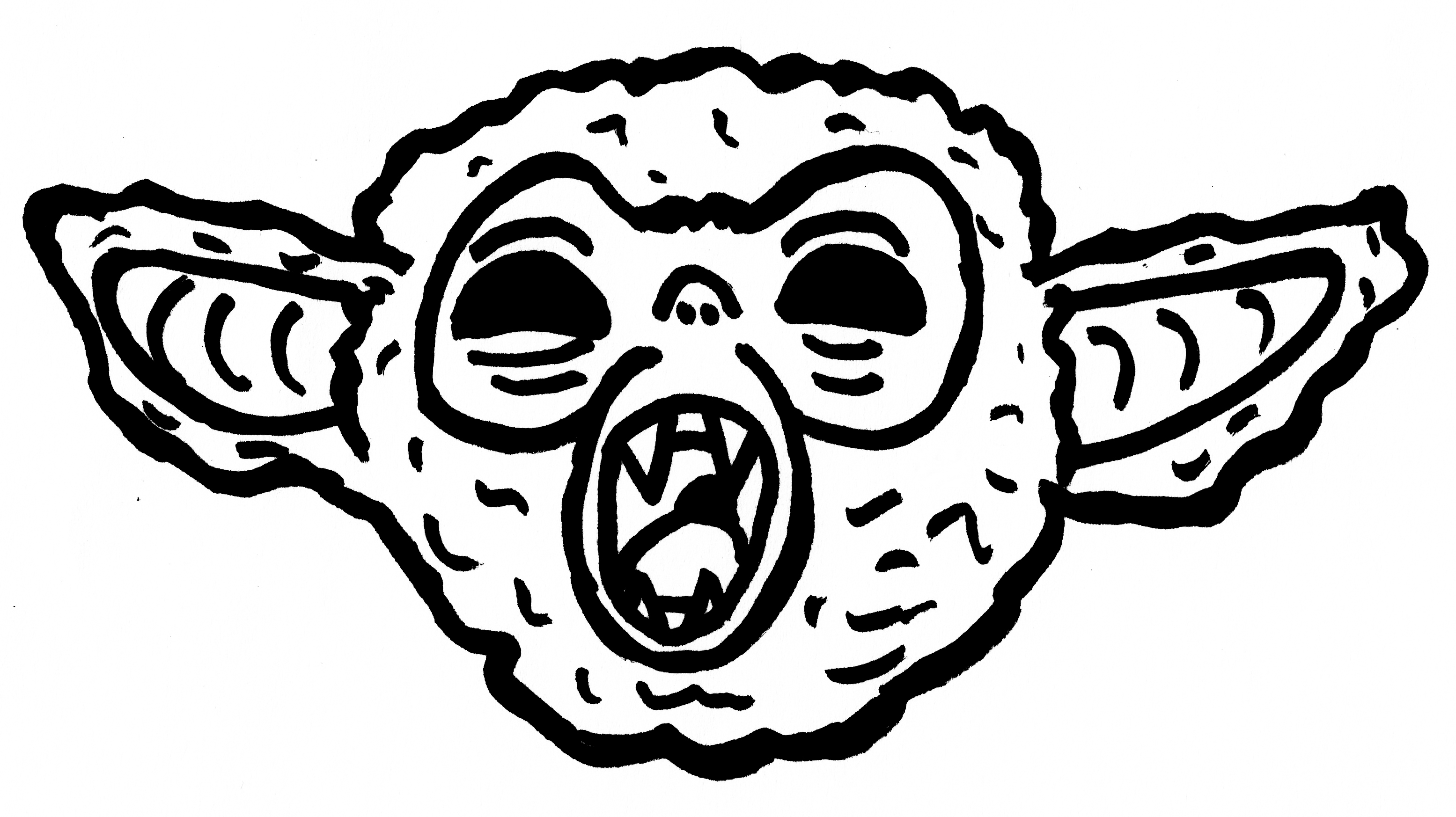
Ebirah, Horror of the Deep (1966)

There are many ways in which the Louisiana education system is an embarrassing disaster. We often rank at the stank-ass bottom of US states in our education metrics, with a long history of political corruption, racial segregation, and religious privatization getting in the way of any progress towards improvement. So, I feel it’s totally legitimate to blame that system for the fact that I have been living in Louisiana for four decades and have never once seen the movie where Godzilla fights a giant crawfish. There should be annual screenings of Ebirah, Horror of the Deep in every local middle school. It should be as integral to Southeast Louisiana culture as The Blue Dog, “You Are My Sunshine,” and “They All Ask’d for You.” Godzilla fights a giant crawfish in it, for God’s sake. The school system has failed us yet again.

Part of the reason why Ebirah is missing from local syllabi is that the exact species of its titular crustaceous monster is up for debate. Most kaiju scholarship cites Ebirah as the middle ground between a shrimp and a lobster, citing that the “ebi” section of its name is interchangeable in reference to either shrimp or lobster in Japanese. It’s a compelling aural argument, but I also have eyes and, as a lifelong Louisiana resident, I know a crawfish when I see one. Ebirah enters Horror of the Deep claw first, smashing a fishing boat with its dominant limb to tease the mystery of what kind of giant crustacean it could possibly be: shrimp, crab, lobster, etc. As soon as its body emerges from the water to reveal its full form, however, the question is firmly, definitively answered. That’s a dang crawfish.

The kaiju saviors summoned to de-claw and dispense of this monster crawfish are Godzilla & Mothra, who spend most of the movie enjoying a nap. Returning to her winged moth form after spending a couple battles against King Ghidorah as a silk-spewing grub, Mothra is getting her beauty sleep on Infant Island, while the indigenous people she protects pray for her to wake up and save the day. Meanwhile, Godzilla is thought to be dead while he takes an angry-nap under a pile of rocks in a oceanside cave. He’s awoken Frankenstein-style via electric shock, channeling lightning through a sword and a trail of copper wire rigged to ruin his nap. Pissed, Godzilla immediately springs into action and destroys everything in striking distance, a rampage that includes ripping Ebirah’s claws off and kicking him back into the ocean depths.

Because the kaiju fights are delayed by siesta, Horror of the Deep leaves plenty of room for humans-on-the-ground drama, which it only takes semi-seriously. The story centers on a young man who’s desperate to reunite with a brother lost at sea, since he was told by a psychic that his brother is still alive. His schemes to engineer the family reunion improbably involve a televised dance contest, a stolen yacht, and a fugitive bank robber, only for both brothers to be shipwrecked on a small island overrun with militant fascists, thanks to Ebirah’s boat-smashing claw. You see, a vicious militia known as The Red Bamboo have forced the indigenous people of Infant Island to work as slaves in order to produce a fruit-based chemical that repels & controls the mighty Ebirah, and the only way to stop them is cause a little chaos by waking both Godzilla & Mothra — a scheme even more harebrained than saving the day via dance contest.

Once all of the skyscraper combatants are awake and engaged, Horror of the Deep proves to be one of the more fun, lively entries in the early Godzilla canon — the most playful since King Kong vs Godzilla. Director Jun Fukuda takes over from Godzilla mastermind Ishirō Honda here, and he loosens up the tone with some fun novelty additions to the format. Ebirah’s attacks are often filmed from a 1st-person perspective, shot in Crawvision. Godzilla also fights the crawbeast underwater, a precursor to the zombie vs shark fight of Lucio Fulci’s Zombi 2. His reluctant face-turn to heroism is jubilantly scored to surf rock, a soundtrack that seemingly inspires Godzilla to dance. The biggest laugh of the movie, however, is the dialogue exchange where our yacht-stealing hero answers the insult, “Your brother’s crazy!” with the deadpan retort, “Yeah, crazy about helping those in need.” That’s good stuff.

Regardless of your personal Louisiana residency status, Ebirah, Horror of the Deep lands as an especially fun, light-on-its-feet Godzilla outing. I was surprised to learn that its American dub, Godzilla vs The Sea Monster, was given the robo-heckling treatment on an early episode of MST3k, which means the show was ironically mocking a movie that was already clearly intended to be an unserious hoot. That’s not the only American institution that let the film down, though, or even the most egregious. It’s time that Louisianans write their  senators to petition for Ebirah, Horror of the Deep to be screened in all local grade school classrooms (assuming that Louisiana schools can even still afford the AV carts of yesteryear). The kids need to know about the giant crawfish movie.

-Brandon Ledet

Enter King Ghidorah

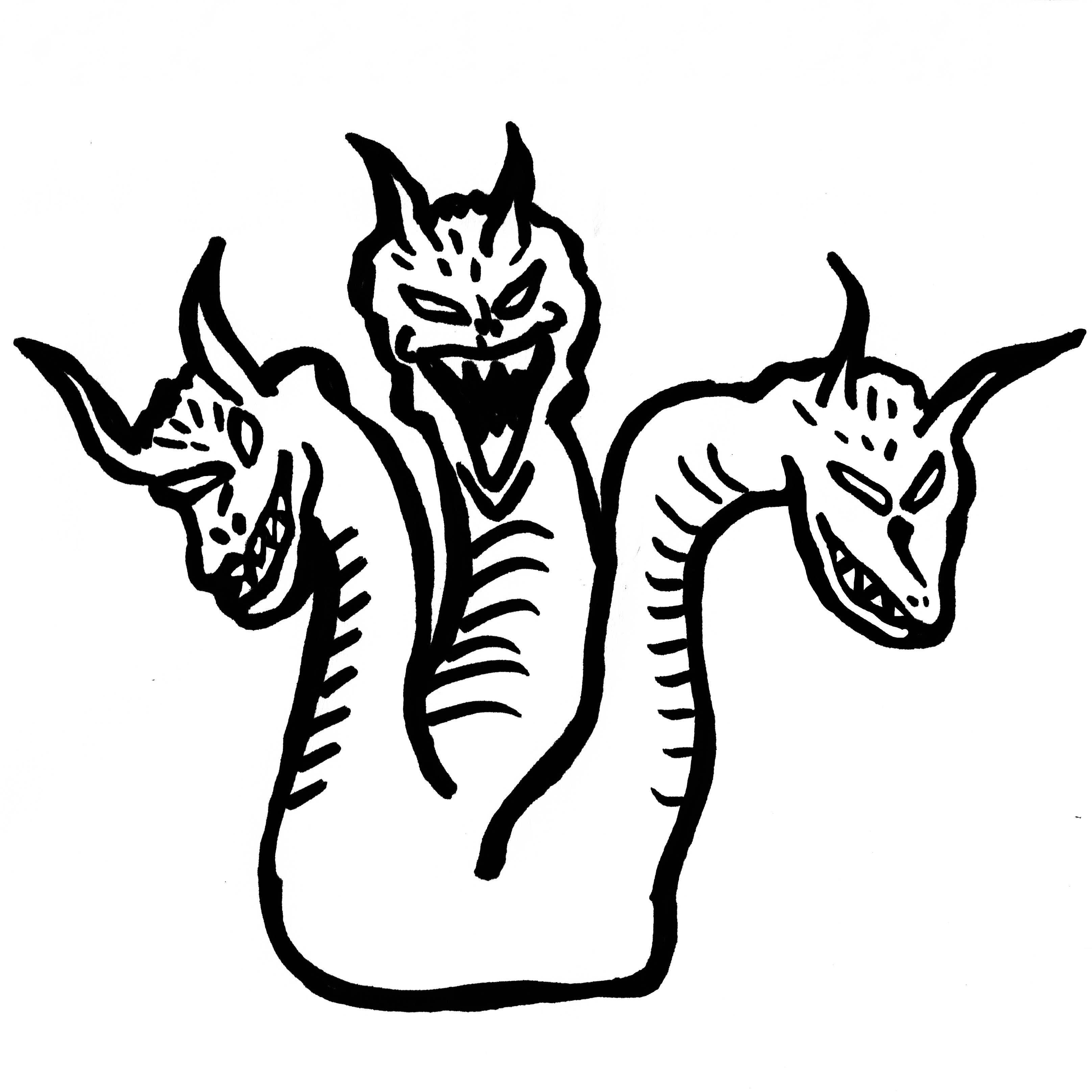
There’s just no way around it; King Ghidorah is the most heavy metal monster in movie history. I mean that in the literal sense, since the supreme kaiju being is seemingly armored by a layer of gold scales, making his “heavy metal” designation as matter-of-fact as Mechagodzilla‘s. Of course, I also mean it in the colloquial sense. The three-headed dragon beast is loudly & proudly metal as fuck on a cellular level. When Ghidorah flies into the frame to take down Godzilla and his fellow skyscraper flunkies, the image conjures the crushing sounds of heavy-metal guitar riffs in audiences’ brains, even in the 1960s pictures that were produced well before Black Sabbath had a record deal. Ghidorah is so metal, in fact, that it takes at least three other Toho-brand monsters to muscle him out of the pit, one for each lightning-spewing head. 🤘

The first time I encountered King Ghidorah was in the 1968 kaiju crossover picture Destroy All Monsters, in which the space-alien bio weapon was unleashed to union-bust a gang of kaiju that included Godzilla, Mothra, and Rodan (among the less-famous monsters Minilla, Gorosaurus, Anguirus, Kumonga, and Varan). Seen out of order in my winding journey through Criterion’s Godzilla box set, this appeared to be an especially grand ego-boost for the giant beast, like when WWE puts over their biggest, brawniest wrestler by having them eliminate every other competitor on the roster during the Royal Rumble. As it turns out, that was Ghidora’s exact funciton from the very beginning, and his debut entrance into the Toho kaiju ring marked the very first time Godzilla felt compelled to team up with other monsters to fight on humanity’s behalf. That Godzilla face-turn was in 1963’s Ghidorah, The Three-Headed Monster, in which evil space aliens declare interplanetary warfare by launching Ghidorah at Planet Earth, threatening to take over. It’s then up to Mothra, in her squirming grub form, to convince Godzilla & the pterodactyl-like Rodan to stop throwing rocks at each other like schoolyard children and instead join forces to fight off this existential, heavy-metal threat. They’re both petty assholes about it, but they eventually relent and team up to repel the flying hell-beast before going their separate ways.

The reluctant tag team of Godzilla & Rodan reforms when King Ghidorah returns in 1965’s Invasion of the Astro-monster. Rebranded with his new wrestler gimmick as Monster Zero, Ghidorah is once again deployed as an interplanetary weapon of mass destruction, one that can only be disarmed by the collective power of multiple kaiju opponents. His inevitable 2-on-1 battle with Godzilla & Rodan is delayed until the climactic 15 minutes of the runtime, though, as the invading Xiliens from Planet X smartly abduct Godzilla & Rodan with UFO tractor beams and imprison them for as long as possible so Ghidorah can do maximum damage, unchecked. Without the large-scale monster battles to fill up the runtime, Invasion of the Astro-monster spins its wheels with lengthy indulgences in political espionage and The X From Outer Space-style extraterrestrial cocktail parties. It’s maybe not the most thrilling approach to making a monster movie, but it does lead to some gorgeous 60s-kitch imagery. It’s impossible to decide what the most striking image of the film is in retrospect, but I’ve narrowed it down to two options: literalizing the Cold War aspect of the Space Race by putting a gun in the flag-planting astronaut’s free hand or Godzilla being abducted by a UFO. Then, Ghidorah soars into the frame to battle Godzilla & Rodan once again, erasing such questions entirely with heavy-metal bursts of lightning.

If there’s one detail of Ghidorah’s design that makes his metal-as-fuck majesty immediately obvious, it’s that each of his individual dragon heads moves independently, which is especially impressive when combined with his suitmation power of flight. It’s a lot like watching Kermit the Frog ride a bicycle for the first time in The Muppet Movie, adding an entire new dimension to kaiju suitmation spectacle audiences previously did not dream was possible. The suit was reportedly exceedingly difficult to operate as a result, often leading to longer shooting schedules as his operators struggled to keep his long, golden necks from tangling like noodles. Like headbanging to thrash riffs, it was well worth the headache. Everything else that makes Ghidorah so thunderously badass is immediately, visually obvious. He is the essence of metal, skyborne and beautiful. Godzilla mastermind Ishirō Honda’s impulse to bulk up the monster’s reputation by making him undefeatable unless several other kaiju attack in unison was a smart one, but it was also necessary. Look at him. No one would buy into the kayfabe otherwise.

-Brandon Ledet

Dark Intruder (1964)

Recently, Brandon texted me to let me know that Puzzle of a Downfall Child—one of my favorite films that I have ever seen and which, when we covered it for Movie of the Month in June of 2019, was almost impossible to find save for a (now deleted) YouTube upload—was on sale from Koni Lorber on Blu-ray for only $10. (We are not sponsored, but I would gratefully accept a free copy if the traffic on the above link is in any way influential.) Brandon mentioned that he thought Dark Intruder would be up my alley, and I realized that I had already acquired a copy of this in a lot of Alfred Hitchcock items some years ago. Dark Intruder is not actually a Hitchcock affiliated project, as it was shot as the pilot for a proposed series to be called Black Cloak, but the crew of the Alfred Hitchcock Presents series did shoot it, so it makes sense that the aficionado whose estate sale I attended would have lumped it in there. 

Clocking in at a hair shy of a full hour, Dark Intruder has several points in its favor. Leslie Nielsen plays the lead: a socialite playboy named Brett Kingsford, whose persona belies a fascination with (and some talent for handling) the occult. He has a little person manservant/butler named Nikola (Charles Bolender) who assists him, and he’s friends with Police Commissioner Harvey Misbach (Gilbert Green). If you’re someone like me whose brain has been completely rotted by too many comic book movies, then you probably recognize a very Batman-like pattern in there, simply replacing the “cowardly and superstitious lot” that our apparent layabout aristocrat faces with investigations into the arcane and the mystical. It’s also a period piece, being set in late 19th Century San Francisco, so there’s plenty of handsom cabs, gaslights, and fog to establish the mood. The plot kicks off when Kingsford is visited by his friend Evelyn (Judi Meredith), who asks him to check in on her fiance Robert (Mark Richman), as he has started to become sullen and withdrawn. Kingsford is also summoned by Commissioner Gordon, um, I mean Misbach, to consult on a series of murders. There’s no apparent connection between the victims, but it is clearly the work of a serial killer based on both the modus operandi and that there is a ceramic statuette left behind; the sculptures depict a man with a gargoyle on the back of his head, with each successive totem showing the gargoyle emerging further and further. 

There’s some investigative rigamarole, and it’s moderately engaging. Kingsford goes to consult an Asian mystic (if the film was more specific, I could be too) who burns some incense with him and reveals, in a roundabout way, that there will be seven murders and then the creature will fully emerge. If you’re interested in this, it’s a fairly short time commitment (even if it’s one that I wouldn’t say is particularly worth the effort), so be forewarned that I’m about to spoil the reveal of this sixty-year-old failed TV pilot, if that’s something you can bring yourself to care about. Everybody still reading fine with the reveal? Ok. See, Dark Intruder throws out a lot of ideas, including talking about Lovecraftian concepts and name-dropping Dagon, but what this ultimately boils down to is a bit of a Basket Case situation. Evelyn’s fiance Robert was born with a malformed twin that all believed had died save for the family nurse who kept and raised him, and the murdered people were all party to this in some way or another. If the creature can kill all seven intended victims by a certain night (which also happens to be the night of Eliza and Robert’s wedding rehearsal … or something — this was very difficult to pay attention to) then he and Robert will swap bodies, and he will no longer be a monster. 

There’s nothing wrong with that premise, but I have to admit that as much as I love Nielsen, he does not feel right in this role. He’s playing the character a bit too modernly, with a bit too much of a sneer. This might be a long reach, but the thing it reminded me of the most was the early-aughts Bruce Campbell TV vehicle Jack of all Trades, a campy pleasure of mine in which Campbell plays an American spy named Jack Stiles, stationed on a South Pacific Island in the early 1800s, and doing a bit of a Scarlet Pimpernel thing in his alter ego as the Daring Dragoon. A part of the comedy comes from the fact that Bruce Campbell is playing the Jack no differently than he would play a modern part; the charm comes from how much you enjoy Bruce Campbell saying something pithy and then making a face at the camera, which is not for everyone (more for me!). It feels strange to call Leslie Nielsen’s performance something that feels “too modern” when we’re talking about something that predates the moon landing, but that’s precisely what’s happening. This isn’t the sincere, stoic Nielsen that you get in Forbidden Planet or any number of his appearances across Columbo & Murder She Wrote, nor is it the all-gas no-brakes tomfoolery of his later career. Instead, it’s just a little subtle smugness to him, where he’s a little too above it all and snarky about it, and it’s the same energy that he had in Airplane! It feels wrong, and that permeates the entire piece. 

The design of Robert’s Belial is a mixed bag. The face is appropriately harrowing to look at but is little different from a wolfman design. Dark Intruder is smart to keep this from us for as long as it does, instead showing only the monster’s impressive (and scary) hawklike talons for most of the runtime. Its best sequence involves Kingsford, Robert, and Evelyn having been drawn to meet a reclusive medium, who speaks from beneath a dark cowl with an eerie, distorted voice, and when the protagonistic group leaves, the reveal of those talons from beneath the psychic’s robes is effective. For much of the rest of it, however, wheels are spinning. I was reminded of the last few seasons of Alfred Hitchcock Presents, when the program was retitled as the Alfred Hitchcock Hour and the stories ran for an entire hour block instead of a thirty-minute one. Almost all of those that I have seen suffer a great deal from being expanded to that length, in comparison to the better-paced segments from when the show was half the runtime. Everyone besides Nielsen completists can leave this one off their watchlists, unless you’re merely drawn in by the oddity’s novel mechanical qualities. 

-Mark “Boomer” Redmond

Orang Ikan (Monster Island, 2025)

I can’t remember the last time I saw a rubber-suit monster movie at the theater.  The modern monster movie has fully outsourced its creature effects to animatronics & computer graphics nerds, so that the traditional guy-in-a-suit Roger Corman creature feature is effectively an antique relic (outside the occasional tongue-in-cheek throwback like Don’t Let the Riverbeast Get You!).  There’s something refreshingly sincere about the new straight-to-Shudder monster picture Orang Ikan, then, which recently had its local theatrical premiere at The Overlook Film Festival.  It’s a fully traditional rubber-suit Corman creeper, even padding out its 80-minute runtime with a plot-recapping clip show to help it crawl into feature length — a classic Corman tactic.

The Western-market title Monster Island sets expectations for kaiju-scale creatures here, as does the early-40s WWII setting.  Two soldiers from opposing sides of the Japanese-British divide are shipwrecked together on a mysterious island in the Pacific Ocean, suddenly dependent on each other for survival instead of working towards each other’s destruction.  The search for food, shelter, and dry cigarettes is alone enough to make their time on the island lethally miserable, but then they also have to contend with the island’s native inhabitants: a creature from The Black Lagoon, or at least that famous monster’s distant relative.  In the earliest creature attacks, the monster is obscured in dark shadows, quick edits, and up-close angles that threaten to hide all of the money shots out of embarrassment for the production’s scale & budget.  Thankfully, the creature is soon displayed in a full-body wide shot in beachside daylight, proudly showing off all its classic rubber-suited glory.

If there’s any thematic justification behind importing a rubber-suited monster into what’s effectively a battlefield drama, it’s in how war transforms enemy combatants into The Other.  An international co-production, Orang Ikan is evenly split between Japanese & English dialogue, with its two stranded, chained-together soldiers attempting to find common ground despite the language barrier and their opposing military orders.  Likewise, when the creature first appears on the island, it’s likened to the instinctual violence of a territorial crocodile hunting for its next meal.  Then, the humanoid monster fights that croc to the death in a desperate bid for its own survival, mirroring the soldiers’ struggle with the local elements.  When the soldiers inevitably have to kill the monster anyway, there’s a tinge of sadness to the act, with the camera lingering on the death of the creature’s unborn fetus on a cave-room floor.  War makes monsters of us all, and so on, and so forth.

There seems to be something about aquatic creatures in particular that have made them the last refuge for the practical-effects monster movie.  Between the fish-men of The Shape of Water & Cold Skin, the killer mermaids of The Lure, and the aquatic goofballs of Lake Michigan Monster & Riverbeast!, they’re keeping the humanoid monster dream alive & wet.  In that context, I suppose that if Orang Ikan had gone full kaiju-scale “suitmation” in its rubber-suit monster mayhem, it might have registered as a more daring genre outlier, but I’m happy with the classic Roger Corman creature feature payoffs as delivered.  Funnily enough, the most daring aspect of the film was likely unintentional, as its push for wordless male bonding between its stranded soldiers reads as electrically homoerotic in moments.  It’s not like the soldiers smooch or anything, but they do lovingly call out each other’s names and light each other’s cigarettes. Of course, unspoken homoeroticism in wartime dramas is its own long-running cinematic tradition; it’s just one that usually doesn’t make room for a crocodile-murdering fish beast in the frame.

-Brandon Ledet

Gamera’s 90s Makeover

All you really need to earn respectability in the entertainment industry is to stick around long enough for the bad reviews to fade away and your presence is undeniable. It worked for Keanu Reeves, it worked for Adam Sandler, and it also worked for the fire-breathing turtle monster Gamera.  When Gamera first premiered in the 1960s, the giant turtle beast was essentially a goofy knockoff of Godzilla, and he was treated as such.  As a result, he quickly pivoted to become a “hero to children everywhere” in a long string of kiddie sequels (before Godzilla also got into that game), so that the original Daikaijū Gamera film was never treated with the same critical or historical respect as the original Gojira.  We all love Earth’s hard-shelled protector anyway, though, so it’s good to know that Gamera did eventually get his deserved victory lap in the 1990s, when he was given a slick, big-budget makeover to help boost his reputation as one of the kaiju greats.  I haven’t yet seen all of Gamera’s kid-friendly sequels from the 1960s & 70s, but I can’t imagine any could compare with his action-blockbuster spectacles from the 1990s.  Gamera’s Heisei-era trilogy is a glorious run of high-style, high-energy kaiju pictures that for once genuinely compete with the best of the Godzilla series, instead of registering as a court jester pretender to the King of Monsters’ throne.

The debut of that 90s makeover, 1995’s Gamera: Guardian of the Universe, is both the best and the most faithful of the trilogy.  Gamera is re-introduced to the world as a living relic of Atlantis, not a newly arrived extraterrestrial protector.  He battles the Giant Claw-like bird creatures the Gyaos from his 1960s days, who are theorized to have been activated by Climate Change, and his ability to fight them off is powered by a child’s love.  Just in case audiences weren’t sure that this straightforward Gamera revival was inspired by the success of Jurassic Park, Guardian of the Universe almost immediately includes an archeological dig and a scene where the scientist studying the Gyaos shoves an entire arm into their droppings like Laura Dern going shoulder deep in triceratops poop.  It’s the Jurassic Park style mixed-media approach to the visual effects that really makes this one stand out, since the plot and the monster-of-the-week enemies are such classic Gamera fare.  There’s something gorgeous about the film’s 90s green screen magic, surveillance video inserts, and rudimentary CGI mixing with the rubber monster suit tactility of classic kaiju pictures that inspires awe in this reputation-rehabilitator.  We are all Sam Neill gazing upwards, slack-jawed at our giant reptile friend and, then, begging the Japanese military to stop shooting at him so he can save the day.  Every time Gamera bleeds green ooze in his fight to save us, we too ooze a tear in solidarity.

Things turn more horrific in the 1996 sequel Gamera 2: Attack of Legion, shifting from Jurassic Park to Mimic in Hollywood comparison terms.  Instead of fighting off the Gyaos sky-beasts, Gamera has to face underground bug creatures collectively called Legion.  As a threat, Legion can be genuinely unnerving in their Phase IV-style insectoid organization skills, at one point carpeting Gamera’s entire body in a collective swarm.  In individual design, they’re a touch creepier than the Arachnids from Starship Troopers, adding a gross little cyclops eyeball to the center of each bug’s frame.  All we can do in the face of such horrors is to thank Gamera for sticking around to protect us . . . unless you happen to be one of the poor children orphaned by the large-scale destruction of his skyscraper heroism.  Gamera’s enemy in the third installment, 1999’s Revenge of Iris, is the titular parasitic monster that has been orphaned by the turtle’s heroic violence, birthed from a loan surviving egg seemingly borrowed from the set of an Alien sequel.  Really, though, Gamera has to contend with the disaffected child psychically linked to that monster, who lost her parents when Gamera crushed their apartment during a Legion attack in the previous picture.  It’s a plot that questions whether the widespread collateral damage of Gamera’s heroism is worth having him around to fight off lesser monsters, to the point where he has to fight a personified version of the Trauma he’s caused in past battles. We all still love the big guy, but accountability is important.

Of the two sequels, Revenge of Iris is the only true contender for possibly besting Guardian of the Universe as the best of Gamera’s 90s run.  By that point in the series, Gamera’s reputation as something too goofy to take seriously had been fully overcome, so there was only one goal left to achieve: make Gamera scary.  It’s an incredible accomplishment, achieved by filming the giant turtle beast from inside the homes he’s supposedly protecting with his righteous, vengeful violence.  There’s a somber, funereal tone to Revenge of Iris, as if it were clear to the filmmakers that Gamera’s 90s revival was a special moment in time that had already reached its natural conclusion.  Images of dead Gyaos covered in flies and a sea floor carpeted in dead Gameras from Atlantis’s ancient past convey a sad finality to the series echoed in Gamera’s “What have I done?” moment self-reflection when he realizes he has traumatized the very children he sought to protect.  Personally, I was much more impressed & delighted by the spectacle of Gamera’s official makeover in Guardian of the Universe, but the tonal & thematic accomplishments in Revenge of Iris are just as remarkable, considering the monster’s humble origins three decades earlier.  Attack of Legion is a worthy bridge between those two franchise pillars as well, especially on the strength of its creepy creature designs.  Gamera may not have emerged from his 90s run as a hero to all children everywhere, but he carved out an even bigger place for himself in this overgrown child’s heart.  I love my giant turtle friend, and I’m happy that he eventually found the respect he’s always deserved.

-Brandon Ledet

Podcast #224: Pitch Black (2000) & The Riddick Chronicles

Welcome to Episode #224 of The Swampflix Podcast. For this episode, Brandon is joined by Pete Moran of the We Love to Watch podcast to discuss the many chronicles of Richard B. Riddick, starting with the sci-fi creature feature Pitch Black (2000).

00:00 We Love to Watch

06:53 Vin Diesel
21:30 Pitch Black (2000)
48:52 The Riddick Cinematic Universe

You can stay up to date with our podcast through SoundCloudSpotifyiTunesTuneIn, or by following the links on this page.

-The Podcast Crew

Lagniappe Podcast: Destroy All Monsters (1968)

For this lagniappe episode of The Swampflix Podcast, Boomer, Brandon, and Alli discuss the kaiju battle royal Destroy All Monsters (1968), featuring Godzilla and all his best frenemies.

00:00 Welcome

01:09 The Craft (1996)
04:20 The Shining (1980)
07:26 Fight Club (1999)
14:47 Malignant (2021)
18:17 Civil War (2024)
19:36 It’s What’s Inside (2024)
28:52 Megalopolis (2024)
40:41 Look What Happened to Rosemary’s Baby (1976)
49:00 Christine (1983)
52:07 They (2002)
56:45 The Grudge (2019)
1:00:25 Mr. Crocket (2024)
1:05:17 Sex Demon (1975)
1:12:47 Flesh and Fantasy (1943)

1:19:13 Destroy All Monsters (1968)

You can stay up to date with our podcast through SoundCloudSpotifyiTunesTuneIn, or by following the links on this page.

– The Lagniappe Podcast Crew

Lagniappe Podcast: Lake Michigan Monster (2018)

For this lagniappe episode of The Swampflix Podcast, Boomer, Brandon, and Alli discuss the aquatic slapstick creature feature Lake Michigan Monster (2018), from the creative team behind Hundreds of Beavers (2024).

00:00 The Swampflix Top 100

09:16 Metropolis (2001)
13:56 Drop Dead Gorgeous (1999)
18:30 The Store (1983)
24:37 Beetlejuice Beetlejuice (2024)
29:18 The Deliverance (2024)
33:15 Strange Darling (2024)
40:10 Alien Romulus (2024)
47:48 Last Things (2024)
51:24 Frogman (2024)

55:27 Lake Michigan Monster (2018)

You can stay up to date with our podcast through SoundCloudSpotifyiTunesTuneIn, or by following the links on this page.

– The Lagniappe Podcast Crew

Alien: Romulus (2024)

One of the oft-vaunted strengths of the original Alien is that, for most of the film, there’s no clear protagonist. The characters were (also infamously) written gender-blind, and for much of the film’s runtime, everyone gets equal attention, until Ripley is the only character left alive. The sequels that followed that center on Ripley permanently solidified her as the franchise’s final girl, but there’s no foreshadowing in the original text that she’s destined to be so. This is not the case with Alien: Romulus, which opens and closes on a singular woman. That’s not a complaint, or a weakness, but when we’re talking about a film that has largely been a subject of discussion because of what it borrows and homages, I figured I would start out by talking about one of its differences. 

Orphaned Rain Carradine (Cailee Spaeny) lives on a Weyland-Yutani mining colony on a planet that experiences no sunlight. She’s been, for all intents and purposes, an indentured servant on this rock for her entire life, but there’s a literal and metaphorical light at the end of the tunnel in the form of Yvaga, an idyllic world that she intends to set out for as soon as she gets her release, which she has accumulated enough hours of labor to qualify for. Weyland-Yutani’s management, however, forcibly extends her contract citing a lack of additional labor forces. Thus, she’s more malleable than expected when her ex, Tyler (Archie Renaux), approaches her to ask for her help in getting aboard a W-Y spaceship that’s adrift in orbit; you see, Rain isn’t completely alone in the world, as she has an android “brother” named Andy (David Jonsson), whom her father dug out of a recycling heap and reprogrammed to be Rain’s companion and protector. Andy is the key to getting aboard, as he can interface with the ship’s systems and allow Tyler and his merry band aboard so that they can abscond with a set of cryobeds that they can then install aboard their own ship and make their way to Yvaga. Of course, they have no idea that the ship up there isn’t a ship at all, but a research station composed of modules Romulus and Remus, and that Romulus has an unexpected guest in the form of the xenomorph that Ripley ejected into space all the way back in 1979, resuscitated and ready to wreak some havoc. An Alien movie ensues. 

Alien is one of our faves around here. We recently covered Planet of the Vampires on the Lagniappe Podcast specifically in preparation for the release of Romulus, we previously covered a documentary about the original Alien, Brandon has rated and ranked all the previous films in this franchise, I took an absurd amount of umbrage (really—3.5 stars isn’t a bad score) at his review of Covenant, and I wrote an impassioned defense of Covenant and a dismissal of Prometheus. We are freaks, is what I’m saying. I was cautiously optimistic about this one, having been a bigger fan of director Fede Álvarez’s Don’t Breathe than Brandon was, although to my recollection neither of us was impressed by his Evil Dead remake. It’s taken eight years for him to direct another feature, but it was well worth the wait, and when we were talking about our mutual interest in Romulus in the weeks leading up to release, Brandon mentioned that he felt Álvarez’s particular talents were well-suited to an entry in this canon. Some friends and I saw the trailer for this one multiple times over the past few months and we were excited; I felt almost as excited for this one as I did for Prometheus lo these many years ago now. And hey, this one even made me appreciate something introduced in Prometheus for the first time, which is no small feat. 

You may have noticed that I only identified three characters in the paragraph outlining the film’s premise, and although they aren’t the only ones here, this is a pretty sparsely populated movie than most of these, with only five major human characters and an android (or two…). Rain and Andy, as our protagonists, are given the most characterization, while the others are barely sketched out. They’re fodder for the alien, which is pretty standard fare for this franchise at this point, but whereas previous films managed to get away with giving the participants minimal dimension because there were more of them, it’s a flaw in a small cast of actors here. Other than Rain, Andy, and Tyler, we also have Kay’s pregnant sister Kay (Isabela Merced, of Madame Web); pilot Navarro (Aileen Wu), and interstellar chav Bjorn (Spike Fearn). Jonsson’s performance as Andy is fantastic and is one of the highlights of the film, and Spaeny is at turns serviceable and pretty good. I’m torn in my feeling about Fearn, whose performance makes him feel like he’s in a season of Skins that I would get so annoyed by that I’d stop watching. There’s an attempt to make his hostility toward Andy a matter of anti-android prejudice based in personal tragedy (a synthetic made a judgment call to save a dozen people in a mining accident, sacrificing three others, including Bjorn’s family), but he’s still obnoxious and shortsighted. It’s his idiocy that costs most of the others their lives; it’s so satisfying to see the alien kill him that I’m led to believe we’re not supposed to like him, so I guess this makes it a “good” performance, but the CW-caliber of his and Merced’s performances is out of place here. Consider Aliens, in which the marines are all similarly thinly written, but there’s more of them and their oversimplified characteristics—the coward, the macho lady, the veteran, the one with ice water in his veins, the cigar-chomping tough—don’t feel as one-dimensional as Bjorn or Navarro. Here, it’s a detracting factor. 

That’s the most glaring flaw for me in Romulus, and it isn’t enough to turn me against the film, which I really rather liked. The plot is very cleverly constructed, with the need for Andy to use a data chip from one of the androids on the station itself in order to access a part of the station that houses the fuel for the cryopods leading to his personality being corrupted into something more clever and devious. In a franchise where synthetic humanoids can be relied upon to be morally upstanding as much as their creators can (which is to say that they have just as much chance to be good or evil), it’s a refreshing change to have a character whose ethics are completely malleable, with that mercuriality being entirely outside of his control. I’m mixed on That Reprisal (I won’t spoil it here), although I am pleased that there was extensive use of puppetry in the portrayal of the character, even if there was a perhaps-inescapable amount of Uncanny Valley happening. Feelings about digital necromancy aside, it’s effective, and is one of many tethers between this film and the franchise at large that make this feel of a piece with what came before, paying reverent homage rather than performing mere lip service to the films it follows. The xenomorph is the scariest it’s been since the last millennia, and there’s a new monster here that’s also very frightening and creepy. I’ll try to talk around it as much as possible to avoid spoiling it as well, but the final monster (which comes about through application of reverse engineered black goo) is nauseating to look at, a perfect synthesis of H.R. Gieger’s designs for the alien and, well, something you’ll know when you see it. 

All in all, this one is pretty solid. The action sequences are fantastic (there’s a particular standout zero gravity sequence) and build logically upon one another, the introduction of a ticking clock in the form of the station’s deteriorating orbit is well-done and ups the stakes at exactly the right time, and the characters who have characters are interesting. Their interactions feel at home in this universe of films in which the night is dark and full of monsters but in which humans (and maybe androids) can find a connection with each other that makes the dual horrors of late-stage space capitalism and acidic organisms that impregnate and kill seem surmountable, if at great cost. A worthy sequel in an uneven franchise. 

-Mark “Boomer” Redmond