Hellraiser (2022)

It used to be that Hellraiser movies went straight to VHS.  Now they go straight to Hulu.  Most entries in the decades-running cosmic horror franchise are remembered as late-night, ill-advised video store rentals, the kinds of disposable novelty horrors you’d squeeze in between viewings of titles like Ice Cream Man & Dr Giggles.  In 2022, the series has been upgraded to prestige television instead, with David Bruckner’s Hellraiser playing like the HBO series version of Clive Barker’s Hellbound Heart.  The new Hellraiser is unrushed, low-lit, and plotty.  It’s shot in the same bespoke-leather browns as Nü Gössïp Gïrl, offering the same post-CW melodrama as this year’s The Batman.  It might be television, but it’s at least high-quality television, which means it eventually reaches some euphoric highs once it’s done wrapping up an overlong prologue – like that new show your coworker insists gets great three seasons in if you just stick with it.

Hellraiser achieves a gruesome delirium once it fully lets loose, so it’s a shame all the elaborately gnarly images from its final half hour are in service of such an overall restrained, somber drama.  It could have been a real stunner if it just lightened up a bit, both literally & figuratively. Considering that Bruckner’s previous films The Ritual & The Night House weren’t exactly lighthearted romps either, it’s clear he delivered exactly what he was hired to here, so it might just be an awkward pairing of auteur & source material.  Bruckner continues his participation in the modern Metaphor Horror trend with a story of a recovering drug addict whose illness drags her friends & family into a symbolic hellworld.  Instead of being drawn to the Hell Priest’s puzzle box as a painful gateway to horny transcendence, she sees it as an easy score to pawn off for drug money and, later, as a weapon to be wielded against the fake friends & BDSM demons it unleashes.  I’m not sure what the point of making a Hellraiser film is if you’re not interested in the ways prurient desire and the overlap of pain & sexual pleasure can lead to personal destruction, but I guess Bruckner fills the time well enough with his own preoccupations with Trauma Metaphors and expansion of the puzzle box’s “Lament Configurations” lore.

After a full hour of place-setting & narrative justification, the new Hellraiser finally reconfigures into its best self: a haunted house free-for-all.  While the original 1987 picture is a domestic melodrama that mostly plays out in a cramped attic, Bruckner sets his cenobites loose in a gigantic Eyes Wide Shut mansion, with plenty of darkened corners for the freaky little fuckers to hide behind.  All of the new cenobites are exquisitely designed; Jamie Clayton is a stunning presence as Nü Pïnhead; and there are enough “degloving events” to gross out even the most jaded gore hounds.  You just have to push past a lot of modern muck to get there, from the sexless, humorless addiction metaphor at its core to the eye-scorchingly bright ad breaks that violently disrupt its murky prologue.  This might be the best Hellraiser movie in decades, but it’s just as indicative of the worst horror trends of its time as the direct-to-video sequels that feature cenobites growing camcorders & CD players on their heads.  The industry just happens to be in a good enough place right now that television-level mediocrity is still relatively top-notch.

-Brandon Ledet
The Ritual (2018)

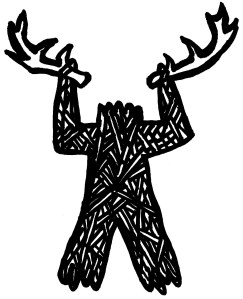
It’s no mystery why a dirt-cheap horror indie would obscure the look of its killer creature for most of its runtime. If a smaller movie is careful enough with its location & casting choices, it can pour most of its financial resources into the look of its monstrous threat, leaving an outsized impact through limited means. That tactic is a huge gamble, though. The longer you keep your monsters off-screen, the more pressure there is for them to deliver the goods. After a significant enough wait, an underwhelming creature design can cause an entire picture to fall apart & fade away, only to be remembered vaguely as a disappointment. The recent indie creature feature The Ritual, a British production Netflix picked up at last year’s TIFF, boldly goes all in on obscuring the monster at its center. Staged in the cheapo horror-favorite location of The Woods and featuring Thomas from Downton Abbey (Robert James-Collier) as its most recognizable performer, the movie puts a massive amount of pressure on its mostly off-screen monster to a leave significant impact once it steps into the light. Thankfully, the movie pulls through with a deeply chilling nightmare beast, fully satisfying the demands it put on its own mysterious force of Evil.

Four British bros hike into the forests of Northern Sweden as one of the most bizarrely ill-advised college reunion festivities imaginable. The trip gradually takes on a distinctly black metal-flavored tone of ominous terror as they stray further from hiking trails into thickly wooded wilderness, but their macho sense of comradery leaves little social grace for smartly bailing on the experience. No one would blame them for backing out of their dangerous, over-confident choice recreation, except themselves as they tease each other with questions like “What’s wrong? Are you scared of the woods?” It turns out, of course, that a healthy fear of the woods may have been beneficial on this particular venture, as they become increasingly lost & surrounded by mysterious, menacing forces. Besides the aforementioned creature that patiently hunts them one at a time and the encroaching vestiges of a witchcraft culture who worship the damned beast, the men are also supernaturally tortured by visions of their own worst fears & regrets. Sometimes even more harrowing than the ritualistically arranged animal corpses, the creepy altars, and the flashes of an unfathomable beast appearing in the creases of the trees is the mental invasions of their own guilty, grief-stricken memories. Their doom is entirely inescapable, as it encroaches from the outside and from within.

The Ritual is a debut feature for American director David Bruckner, who has so far cut his teeth helming standout segments of horror anthologies like Southbound & V/H/S. Sticking to the narrative economy demanded by anthology vignettes, he relies on a number of well-worn genre tropes that burden the film with a consistent sense of familiarity. The discovery of abandoned cabins in the woods and ominous pagan symbols (which in themselves suggest a black metal Wicker Man aesthetic) recall other classic lost-in-the-wilderness horrors like The Blair Witch Project. Its story of old friends being tormented by their toxic memories & friendship dynamics (not to mention bloodthirsty monsters) feels like The Descent for British bros, except in the woods instead of a cave. Its individualized visions of internal torment recall films like Event Horizon, except in the woods instead of a spaceship. There’s no doubt that this is a straightforward genre film, even if it pulls its disparate influences from varied extremes within that genre. That familiarity puts just as much strain on the film’s creature design as its decision to delay the monster’s reveal for as long as possible. Everything that distinguishes The Ritual as a modern, indie creature feature is the look, design, and lore around that monster. What’s incredible about the film, then, is that it really pulls off the trick of making that monster count. This is a great creature feature because, and only because, its creature is great. It would have been a forgettable letdown otherwise.

-Brandon Ledet
