
My first obsession as a child was with Oz. The MGM musical has been a part of my life for so long that I can’t recall the first time I saw it, as its entrance into my life predates my earliest still-retained memories. I can recall the first time I saw any other Oz-related media, however, as I can still remember—even if distantly and vaguely—a Christmas that we spent at my grandparents’ cold New Jersey apartment when I was four years old. They had HBO, and in the early hours of the morning, with the scent of Community Coffee (which we always brought to my grandparents when travelling, as well as several containers of Tony Chachere’s, both of these being luxuries they couldn’t obtain in the north) and my grandmother’s Marlboro Reds in the air, I watched an episode of an animated series featuring Dorothy and company. This was a revelation to me, that there was more Oz to know, and I immediately started to devour as much of it as was available. I was reading by age five and although the early 20th century diction of the Oz books was somewhat difficult to parse, most of the versions available at my library were illustrated, and this was enough for the early years. But what affected me even more than the Judy Garland film was its long distant Fairuza Balk-starring sequel, Return to Oz, which was exactly the kind of proto-horror that my young brain was attuned to.
Return to Oz opens in Kansas, where the reality of post-tornado living is dreary and dire (and, given the age that I was when I first saw it, likely felt familiar to me in the wake of Hurricane Andrew). It’s nearly winter and the new house isn’t complete, and while Dorothy excuses Uncle Henry’s tendency to stare into space with his feet up, Aunt Em knows that it’s PTSD, even if the terminology doesn’t exist yet. Still, she’s more concerned with young Dorothy’s mental state, given that the little girl no longer sleeps through the night (when she sleeps at all) and is insistent that her imaginary journey to fairyland and the friends she made there are real. Em’s desperation to do the right thing for her niece leads her to leave the girl in the care of a doctor named Worley (Nicol Williamson) and his severe-faced nurse Wilson (Jean Marsh) overnight, where they promise that the newly discovered “science” of electroshock therapy will cure all of Dorothy’s ills. A storm comes in the night that allows Dorothy an opportunity to escape, which she does, although she ends up falling into a river; climbing aboard some floating debris, she falls asleep, only to discover that she has awakened near Oz, and is in the company of Billina, one of her chickens, who has not laid an egg since the tornado.
Dorothy quickly discovers an Oz in ruins. Although she finds the old house she first arrived to Oz in, there’s no Munchkin village nearby; the yellow brick road she travelled for much of the first film is in a state of advanced disrepair; the Emerald City’s brilliant gemstones have vanished as the city’s architecture lies in ruins. Worse, the city itself is ruled by the Wheelers, a pack of feral Klaus Kinski-looking men who travel on all fours on legs that end in squealing wheels. Hiding from them, she finds “the royal army of Oz,” which consists of a single individual, a mechanical man named Tik-Tok who is awakened via a series of wind-up keys. The inhabitants of the city have all been turned to stone by magic, with only Tik-Tok having survived this transformation unharmed by virtue of not quite truly being alive. He’s only the first of Oz’s inhabitants to join Dorothy’s new adventuring party, however, as she also soon collects Jack Pumpkinhead—a Jack o’ Lantern/scarecrow hybrid brought to life in order to scare the witch Mombi (Marsh again)—who governs the empty Emerald City as regent for the Nome King (Williamson again). The final member of the group is the “Gump,” a loathsome creature that Dorothy and company build out of old furniture and assorted attic garbage and bring to life via the same magic powder as Jack was in order to escape Mombi. Adventure awaits!
Although it may not be the most valuable element of media made for children, I do think one of the things that makes a piece of kid-oriented art have some sense of staying power is the extent to which it encourages imaginary play. A kid who loves The Land Before Time will get just as much pleasure out of going to the playground and pretending to be Littlefoot with their friends as they would out of rewatching the movie. I vividly remember running around in my front yard with my mom as a kid, sometimes on all fours, shouting “To the meadow! To the meadow!” in recreation of a scene from Bambi; the Little Golden Book Scuffy the Tugboat encouraged me to get outside in the rain and play with my own toy boat, and my mother still uses “There’s enough to float Scuffy” as a descriptor of how much rainfall she gets when I call her. Even more so than The Wizard of Oz, The Return to Oz capitalizes on this inherent hunger that children have to create the magical out of the mundane, and it does so using the same extratextual decision that Wizard did—that Oz contains “echoes” of the real world—in a more deliberate way. In the earlier film, this was much more explicitly a way of telling the audience that Dorothy’s adventures were just a dream all along, that her companions were the farmhands and the witch was Mrs. Gulch, translated into her fantastical dreams. As an official sequel, Return follows that same narrative choice, but more subtly and arguably more fantastically. Besides the obvious correlation between Worley/the Nome King and Wilson/Mombi, we also see Dorothy’s “inspiration” for Tik-Tok in the form of the shock therapy device, and she’s given a tiny jack o’ lantern by another patient (who is the spitting image of the missing Ozma, princess of Oz, who also happened to be Jack Pumpkinhead’s “mother”).
This is something that all children do, applying personality to toys and items and giving them voices and roles in their imaginary play. Even if kids don’t pick up on that being what’s happening in the film, that doesn’t mean that it doesn’t unconsciously get absorbed and make their internal worlds just that much more magical. That’s not even counting the number of kids who realized that they could imagine returning to a fantasy land in disarray as a new adventure to play out, following the yellow brick road once more, but one that’s twisted and broken. What if I pretended I was in NeverNeverLand, but without Peter? What if Fantasia needed another Bastian to give the Empress a new name? What if Narnia fell? (Admittedly, Prince Caspian opens in the ruins of the Pevensie’s castle Cair Paravel and The Last Battle features the actual end of Narnia, but you get what I’m saying.)
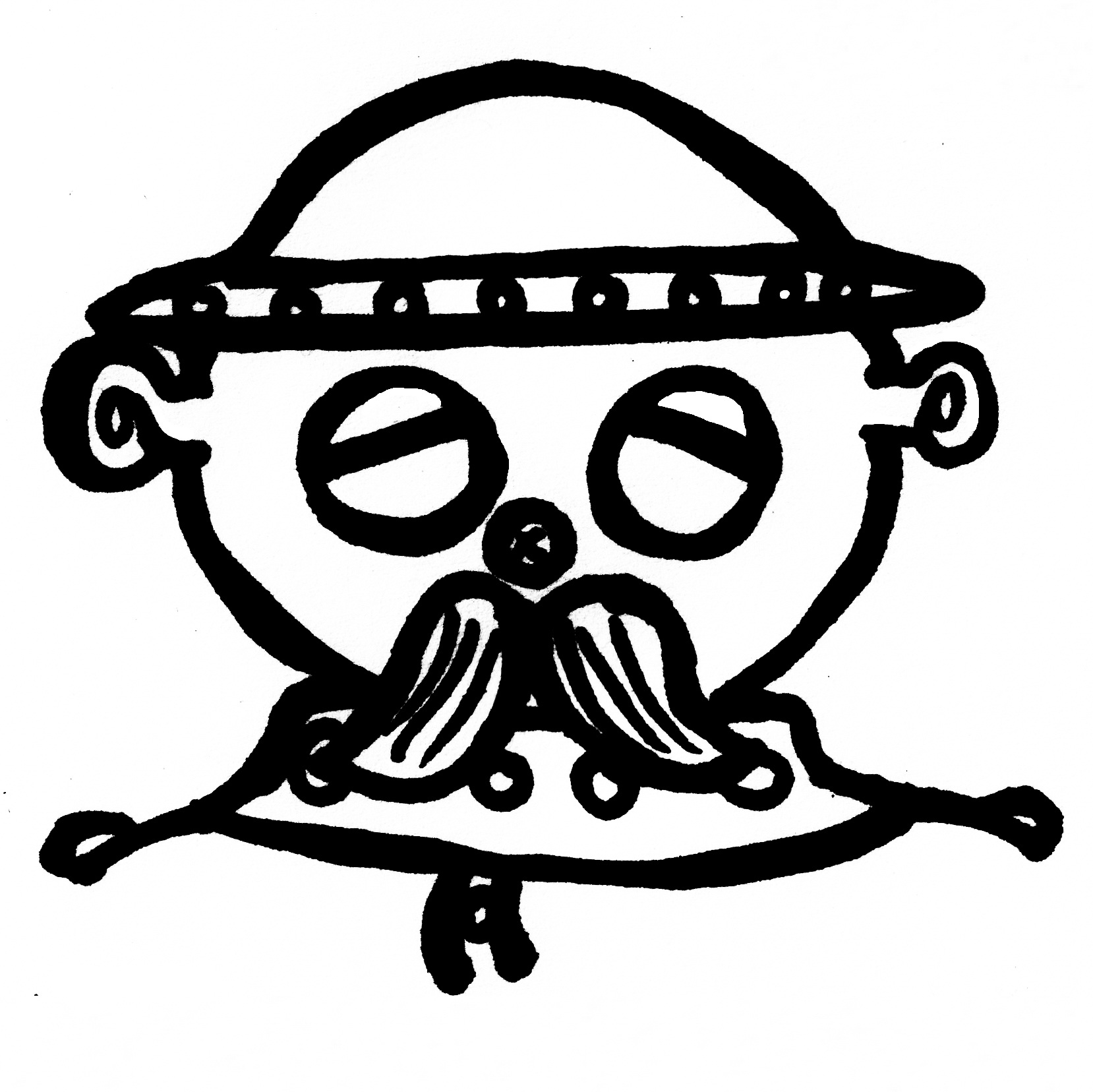
I’ve spent enough time praising the film for its potential to inspire imagination, which, while valid, isn’t praise for the film as a text unto itself. Every time I watch Return, I discover (or rediscover) something new to love about it. For one thing, this is a film that I never really thought of as being funny when I was a kid, but there are one-liners and jokes aplenty that will no doubt appeal to any adults in the audience (one of my favorite smirkers is Dorothy’s reply to Jack’s confusion that Tik-Tok might still be able to talk after his “thinking” spring had run out, which is to say that “It happens to people all the time”). My favorite thing about the film is the presence of the copper kettle-like Tik-Tok, who was always my favorite character in the books as well, with the eighth book in the series, Tik-Tok of Oz (specifically the one with this less-than-honest cover) being read no less than fifty times in my childhood. He’s just adorable. I love him. Billina is perhaps the second best non-human actor in the film, a Henson Company creation that’s such a perfect recreation of a Buff Cochin Bantam hen that there are moments where I know she’s a puppet and others where I know she’s a real chicken, but there are many more where I could not tell you if she’s “real” or not to save my life.
If the general public remembers this one at all, it’s usually negatively in comparison to their memory of the MGM picture, or they remember this one specifically for being on the scary side. While Wizard’s Wicked Witch of the West scared generations of children, this film had multiple frights that play out over the course of the film. The escape from the sanatorium is notably frightening, as the nurse screams into the pouring thunderstorm for Dorothy and her benefactor to return before they fall into a river and nearly drown. The Wheelers are scary, with their squealing wheels (inspired by the squeaking gurneys in the Kansas portion, naturally), and several of them are turned to sand and desiccate before blowing away when they fall into the Deadly Desert while pursuing Dorothy and friends. The Nome King’s death as he becomes more rocklike before crumbling and melting away in a hellish fire, his stone skeleton frozen into a screaming death face before it eventually crumbles, is also noteworthy, as is much to do with the Nomes and their kingdom in the first place (their faces moving about in stop motion on various rock faces remains impressive to this day). But the most memorable scene is one that I would argue remains one of the most chilling in all of cinema, including horror made for adults. At one point in the film, Dorothy must sneak into the chambers of Princess Mombi, which she has already seen contains dozens of glass-fronted cabinets containing the detached (but still living) heads of various Ozian women, which she changes to suit her mood as easily as changing hats. She awakens Mombi’s original head, which then begins chanting her name in a guttural, almost unearthly voice, as all the heads around her scream and Mombi’s headless body rises from her bed to attack. It’s fantastic!
It’s only a matter of time before this film gets lumped in with its intro-to-horror brethren as fodder for slop content along the lines of “CaN yOu BeLiEvE they showed THIS MOVIe to KiDs!!?!” that I’ve started to see pop up online. (Newsflash: if you’re under a certain age, you may not realize this, but art used to be created for multiple groups to enjoy and get something different out of because we didn’t all have individual devices programmed to shovel unchallenging, hyper attuned, algorithmically-driven, intellectually incurious fodder into our brains every waking hour). Enjoy it now before the internet tries to ruin it for you.
-Mark “Boomer” Redmond

 Swampflix
