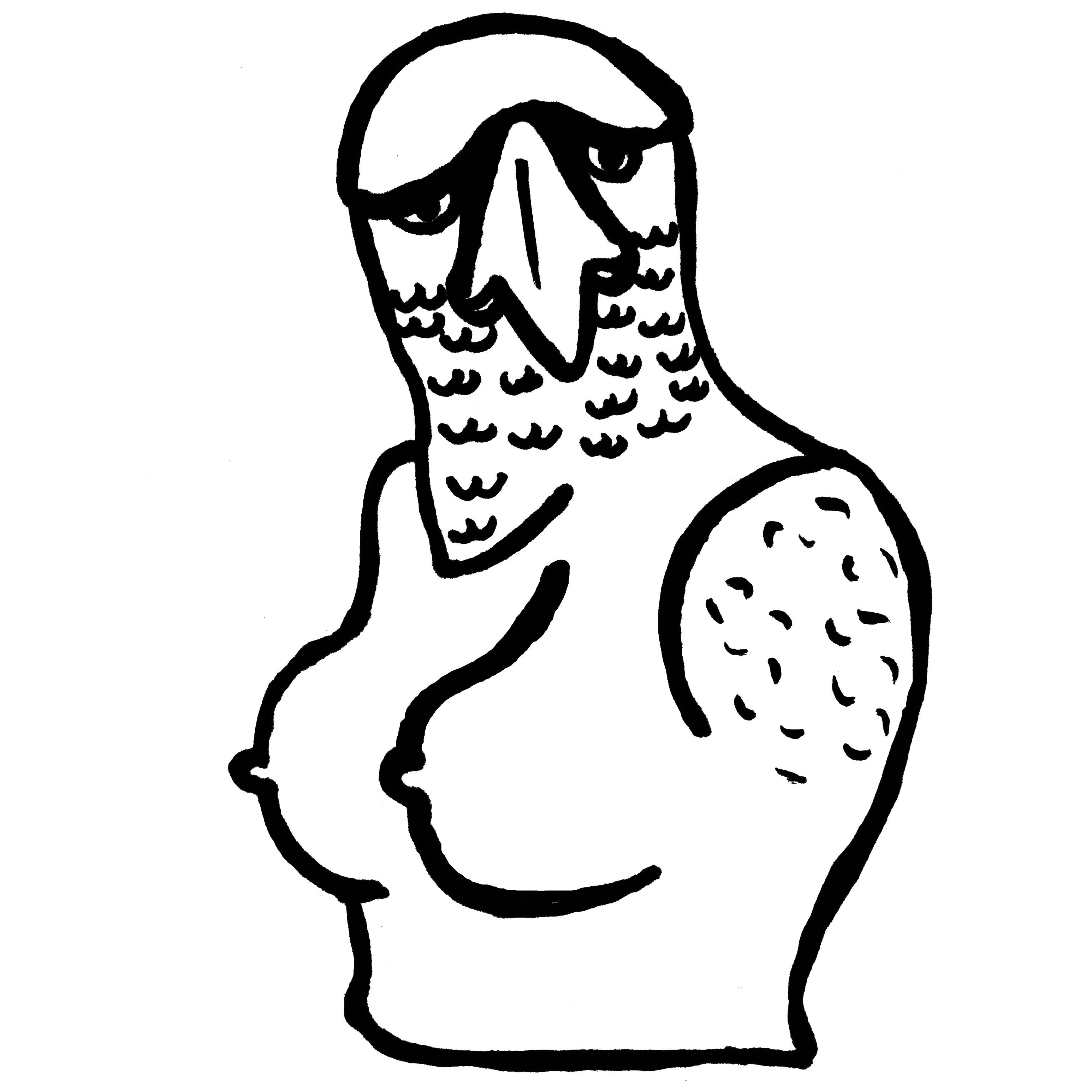
Juliet of the Spirits (1965)

The standout sequence in Juliet of the Spirits that dropped my jaw lowest in the theater was its ugliest & most mundane. The 2015 restoration of the 1960s Fellini classic is, for the most part, a gorgeous swirl of vibrant color. It’s a dark fantasy movie in which the Italian master invents the cinematic language for later texts as disparate & monumental as Lynch’s dream sequences, Jodorowsky’s circuses, and Friedkin’s exorcisms, all rendered in sinfully lurid Technicolor. That was all expected, though. What really caught me off guard is when Fellini pauses his gaudy reverie to also invent the cinematic language for the television program Cheaters. It happens in the sequence where his real-life wife & muse Giuletta Masina visits the private detective agency that’s been trailing her husband, and they play back to her a full week of documented adulterous behavior. The way the head dick in charge narrates the sepia-tone surveillance footage with time stamps and sneering innuendo is so specific to the Joey Greco era of Cheaters that I now understand that reality TV show to be a loving homage to the film’s legacy. Such is the power of Fellini.

Much like an episode of Cheaters, watching Juliet of the Spirits feels like intruding on a private domestic dispute that’s really none of our business. Our director is working through his real-life conflicts with his wife by illustrating his own adulterous behavior onscreen, through the avatar of actor Mario Pisu. Giuletta Masina stars as Giuletta Boldrini, a wealthy but lonely housewife who’s increasingly isolated by the extramarital indulgences of her husband Giorgio, played by Pisu. As Giorgio spends increasingly long stretches away with his latest fling, Giuletta seeks spiritual advice from the dark arts, meeting with a series of psychics & mystics in search of a calmer, wiser perspective on her broken marriage. This pursuit opens her mind to a loud circus of perverted spirits & ghosts that constantly parade through her head, pulling her out of her Catholic comfort zone towards a larger religious truth: pleasure is the true religion, and she should be cheating too. The whole thing plays like a plea from Fellini to his wife to start cheating on him to help balance things out and to take her mind off the marital injustice he initiated.

Unlearning Catholic guilt is easier said than done. The proto-Exorcist imagery results from a childhood memory in which Giuletta starred as a martyred saint in a church play, burned alive for the transgression of accepting Christ in her heart. Anytime the adult Giuletta considers indulging in an extramarital affair (with a handsome ghost, demon, or otherwise), her mind flashes back to this scarring memory, which has taught her to associate Earthly pleasure with guilt & pain. Everyone around her is fully enjoying what being alive has to offer—especially in the pleasures of the flesh—and yet Giuletta continues to fret, unable to let go and enjoy herself as much as her wandering husband. Buried somewhere in the film’s increasingly dreamlike imagery, there’s eventually a healing moment in which she frees her flaming inner child from her Catholic shackles and comforts her with a motherly embrace, but it’s still not enough to fully make up for what Giorgio has done to their marriage. Maybe Fellini’s admitting personal guilt there more than he’s attempting to shake his wife loose from her own self-limiting Catholic guilt. Again, it’s not really any of our business.

For all of its messy offscreen domestic drama and the deep psychological pain caused by religious repression, Juliet of the Spirits is often a light confection. Snazzy jazz scores the backyard wanderings of a mystic housecat and the Italo-fashion beachwear modeling of Giulietta’s fabulously amoral neighbor with no attempt to underline the dark-fantasy elements of the plot with any palpable menace. Fellini feels just as preoccupied with injecting eye-searing beauty into every frame of his first in-color picture as he is with working out his domestic issues with his wife. Even the candlesticks in the couple’s home are tinted lavender instead of the typical white, just to squeeze more color into the frame. It is, without question, the most gorgeous, surreal episode of Cheaters in the history of the show; and yes I am including the one where Joey Greco got stabbed on a boat.

-Brandon Ledet

Lagniappe Podcast: Sirocco and the Kingdom of the Winds (2024)

For this lagniappe episode of The Swampflix Podcast, Boomer, Brandon, and Alli discuss the Belgian-French animated fantasy adventure Sirocco and the Kingdom of the Winds (2024).

00:00 SEFCA’s Top 10 Films of 2024

07:49 Strangers on a Train (1951)
13:13 Laufey’s A Night at the Symphony (2024)
19:46 The Not-So-New 52
24:05 My Neighbor Totoro (1988)
30:09 Soundtrack to a Coup d’Etat (2024)
35:43 Nosferatu (2024)
40:14 Holding Back the Tide (2024)
43:45 Nickel Boys (2024)
48:50 Daaaaaalí! (2024)
52:04 Yannick (2024)
57:17 Wicked Part 1 (2024)
59:46 Flow (2024)

1:00:42 Sirocco and the Kingdom of the Winds (2024)

You can stay up to date with our podcast through SoundCloudSpotifyiTunesTuneIn, or by following the links on this page.

– The Lagniappe Podcast Crew

Flesh and Fantasy (1943)

Most scholars cite the 1945 British “portmanteau” film Dead of Night as popularizing the horror anthology genre.  No one would claim it was the first horror anthology film, since the storytelling format is almost as old as the cinematic medium itself, but it is credited for establishing the rules & tones of the genre that would eventually be codified in anthologies from Amicus, EC Comics adaptations, and the like.  That horror-history milestone puts the 1943 anthology film Flesh and Fantasy in a unique position.  Since the Universal Horror production precedes Dead of Night by a couple years, it avoids a lot of the typical trappings of a by-the-numbers portmanteau, delivering something so far outside the expectations of the horror anthology format that it almost doesn’t qualify as horror at all.  It’s a lot more handsomely staged and a lot less macabre than what most anthologies would become in its wake, often transforming its characters through supernatural phenomena instead of punishing them for their moral transgressions.  More genre-faithful titles like Asylum, Creepshow, and Tales from the Crypt introduce selfish, amoral assholes who get their cosmic comeuppance at the hands of otherworldly ghouls, while Flesh and Fantasy plays its horror with a softer touch.  We have immense sympathy for each of its hopeless protagonists, rooting for them to make it out of their darkly fantastic crises alive & improved.  The movie is not vicious enough to be chilling, but it is beautifully eerie throughout, and its three tales of “dreams and fortune tellers” each land with genuine dramatic impact (which is then somewhat undercut by a racist punchline in the final seconds because, again, it was the 1940s).

The first tale (read from a spooky short story collection over a nightcap between businessmen in the hotel-lobby wraparound) immediately sidesteps genre expectations in its chosen setting.  While there are countless horror stories set on the thin-veil-between-worlds holidays of Halloween, Christmas, and New Year’s Eve, Flesh and Fantasy finds its own thin-veil fantasy realm in the final few hours of Mardi Gras night, just before the Christian calendar transitions from hedonism to Lent.  The story starts with the discovery of a dead body pulled from the banks of the Mississippi River, a victim of suicide by drowning.  Drunken, costumed revelers briefly sober up while gathering around the unidentified corpse, but then quickly return to partying the last few hours of Carnival away before midnight ends the fun.  Only one woman stays behind, sympathizing with the suicide victim a little too intimately and considering joining him in death.  She sees herself as too ugly to be loved or to even party with the rest of her community, as represented by harsh low-angle lighting that accentuates strange, scowling curves on actor Betty Field’s otherwise pretty face.  Just before she drowns herself, a mysterious mask shop owner offers her an It’s a Wonderful Life-style perspective shift on her miserable life, allowing her to be beautiful for the last few hours of Mardi Gras thanks to a yassified plaster mask.  She, of course, subsequently learns a Twilight Zone-style lesson about how beauty comes from within, but the enchantment of the mask and the magical costume shop that provides it still hangs over her all-in-one-night journey like a heavy, eerie fog.  The only death in the segment happens before the story even starts, and all of its supernatural imagery is derived from the Mardi Gras floats & costumes parading in the background.

Legendary noir actor Edward G. Robinson has a much rougher time in his segment, in which he plays a wealthy lawyer who’s told by a palm reader that he’s going to become a murderer in the near future, to his shock.  This, of course becomes a story about self-fulfilling prophecies, as Robinson’s obsession over his fate to become a murderer against his will is the exact catalyst that drives him to becoming a murderer.  It’s like a noir variation on The Hands of Orlac in that way, with Robinson having heated debates with his own reflection & shadow about who in his life would be most ethical to kill, just to get the weight of the prophecy off his shoulders.  The argument is rendered in creepy, hushed whispers, which are echoed in the clouds of urban steam that pour in from every corner of the frame.  Likewise, the third & final segment of the film involves a self-fulfilling prophecy about a tightrope walker (Charles Boyer, of Gaslight fame) who envisions his own death in a nightmare featuring a cameo from (Robinson’s Double Indemnity co-star) Barbara Stanwyck.  Only, he doesn’t actually meet Stanwyck’s noir-archetype femme fatale until after he sees her in his dream, and he ignores the déjà vu feeling in pursuit of romance, ensuring that the dream will eventually come true.  It’s the most surreal segment of the trio, featuring psychedelic double-exposure compositions in its multiple dream sequences that provide the only true effects shots in the film, give or take the rear projection of Tarnished Angels-style Mardi Gras parade float footage in the opening vignette or Robinson’s onscreen doubling in the second.  It’s also the gentlest in its horror elements, though, offering a much kinder fate to Boyer’s helplessly smitten tightrope walker than what Robinson suffers after his own doom & gloom vision of the future.

In one of the stranger deviations from typical horror anthology formatting, there’s no wraparound buffer between the second and third segments, which bleed right into each other.  Edward G. Robinson reaches the end of his rope outside the very circus where Charles Boyer is walking his rope, so that the two stories are daisy-chained together.  That narrative conjunction feels excitingly ahead of its time, but it also leaves the opening Mardi Gras segment feeling isolated & insular in comparison.  The thematic & narrative connections between the tightrope & palm reading segments are crystal clear, which leaves a haze over how they relate to the opener.  What’s really important, though, is that all three segments are solidly satisfying and entertaining on their own terms, so that even if the audience might walk away with a personal favorite, it’s unlikely that one would stand out as the stinker of the bunch.  That might be the biggest deviation from horror anthology tradition, since even the best examples of the genre usually include a throwaway story that provides convenient bathroom-break time between the bangers.  The only throwaway segments of Flesh and Fantasy are its wraparound story which, again, concludes on a casually racist quip about superstitious “gypsies”.  If a horror anthology is going to whiff on any of its individual segments, the wraparound is the ideal place to do so, since it doesn’t tend to linger in the memory as much as the stories it scaffolds.  As a result, Flesh and Fantasy does register as one of the all-time greats of its genre, often by virtue of not falling victim to that genre’s worst, yet-to-be-established tropes.

-Brandon Ledet

Lagniappe Podcast: The Maidens of Heavenly Mountains (1994)

For this lagniappe episode of The Swampflix Podcast, Boomer, Brandon, and Alli discuss the sapphic wuxia action fantasy The Dragon Chronicles: The Maidens of Heavenly Mountains (1994), as suggested by ascalaphid’s Letterboxd list Wuxia Wizard Wars.

00:00 Wuxia Wizard Wars

03:14 Last Things (2024)
08:35 I Saw the TV Glow (2024)
16:55 Civil War (2024)
22:30 Sweeney Todd – The Demon Barber of Fleet Street (1982)
25:38 MaXXXine (2024)
32:30 Kingsman – The Secret Service (2014)
37:15 Psycho (1960)
45:28 The Front Room (2024)
51:43 Cure (1997)
57:00 Fresh Kill (1994)
1:03:18 The Substance (2024)

1:07:22 The Maidens of Heavenly Mountains (1994)

You can stay up to date with our podcast through SoundCloudSpotifyiTunesTuneIn, or by following the links on this page.

– The Lagniappe Podcast Crew

Spirited Away (2001)

Nearly a decade ago, when I was getting ready to move away from Baton Rouge, a friend of mine was likewise preparing to head back west to be with her now-husband. We had a dual garage sale in which we tried to get rid of some various knick-knacks. We didn’t have much that anyone would want, and we weren’t very successful. As a joke, she had priced her DVD of Spirited Away at a million dollars, because she didn’t actually want to part with it, and when she realized that I had never seen it, she gave it to me. I’m ashamed to say that in the interim, half-remembered bits of other Miyazaki films blended together during a rewatch of several of them shortly after my accident in 2018, making me think that I had watched it. When I sat down to do a rewatch in preparation for the culmination of Swampflix’s upcoming ten-year anniversary project, it turned out that I hadn’t, so this was a beautiful first-time watch for me. I have a friend who has only recently come into my life but with whom I’ve grown very close very quickly was looking forward to sharing this one with me at a screening at our local arthouse theater as it was a huge part of his childhood, plans which were dashed when we both tested positive for COVID the day before the screening. Since we both had it, however, we decided to push forward with our plans and watch it together that same night anyway. 

I’ve been digesting it ever since, and I’m still not fully sure what to say about it. It’s not just a movie; it’s a magic spell, a fairy tale journey, an unconventional narrative composed of little condensations of fantasy that moves blithely from storybeat to storybeat without ever stopping to catch its breath. It introduces and resolves so many things so quickly that the pacing reminds one of an episode of golden-age Simpsons, where a bag-boy strike in act one leads to near-death on an African waterfall at the climax. It runs on feverish imagination, unrestrained by the need to adhere to any real act structure at all. 

Chihiro is an elementary-aged girl who, along with her parents, is moving to a new home. Along the way, her father takes a detour down a road that ends at a red pedestrian gate in a wall that extends as far as the eye can see in either direction. The trio enters the area, which her father believes (and perceives) to be an abandoned amusement park; her father and mother unquestioningly eat food which they stumble upon while Chihiro explores further, meeting a boy named Haku, who implores her to take her parents back across the river before sunset. When Chihiro returns to her parents, however, they have been turned into pigs by the spirit food, as the place reveals itself to be the home of innumerable kami spirits. She refuses to leave them behind and becomes trapped there, while various parties attempt to locate her as they can smell a human amongst them. Haku helps her to evade capture and directs her to find and seek employment with a spider-like spirit named Kamaji, who runs the boiler that powers the baths of the bathhouse that serves as the primary location for the film. She proves herself to him and he asks Lin, a more humanoid bathhouse worker, to take Chihiro to Yubaba, the witch who runs the bathhouse (and is responsible for her parents’ transformation). Yubaba attempts to scare Chihiro into running off, but when she is unable to do so, she gives the girl a job, although her contract is Faustian. She takes part of the kanji of Chihiro’s name away, leaving only “Sen,” which becomes the girl’s new name. Chihiro/Sen later learns from Haku that this stripping of one’s name also leads to the loss of one’s memory, and that he is also cursed to work for Yubaba since he cannot remember his own true name. 

It’s hard to describe Spirited Away other than to outline the plot like I have above, but it goes in so many interesting directions with such vivid and luscious imagery that simply recapitulating the narrative diminishes it. Chihiro is the kind of kid everyone wishes they could have been: stalwart in the face of overwhelming odds, unrelenting in her devotion to saving her parents and returning to the real world, and compelled by an abundance of compassion that seeks no reward but nonetheless is granted them. She’s Dorothy Gale, and she’s Alice, and she’s also completely her own character, brave and fierce but always kind and thoughtful. She’s unwilling to trade her freedom for anyone else’s, and although this morality seems alien to the spirits who inhabit the world around her, it also gives her fresh eyes that grant her the ability to resolve issues the spirits can’t, like finding the source of a polluted river spirit’s pain and removing it like the thorn from the paw of Aesop’s lion, healing it. When she fails, it’s never because of her lack of ingenuity, it’s merely because she fails to grasp all of the social rules of a culture that she’s only recently found herself within. 

Visually, the film is stunning. After nearly two decades, it’s still as vibrant and gorgeous as it was the first time audiences saw it. Each sequence is beautiful, and every frame is filled to the brim with baroque details of the spirit world, but it’s almost impossible to try and explain it, because this is a movie that one has to see in order to really understand. It’s like trying to explain a painting to someone who’s never seen it; it has to be experienced, has to be felt, has to wash over you and make you a part of its world. It’s magic.

-Mark “Boomer” Redmond

She is Conann (2024)

Bertrand Mandico is the greatest filmmaker currently alive & working.  Across three features and dozens of shorts, he’s gradually established a cinematic language all of his own that feels simultaneously ancient & futuristic.  His debut feature The Wild Boys voyages into the past to obliterate gender for a more liberated, libertine future.  His follow-up After Blue sought alien worlds prophesized by the likes of James Bidgood & Kate Bush.  Now, his third feature reshapes the Conan the Barbarian myth into a lesbian fantasia built on ego death and the cruelty of having to make art in a decaying world.  No one has dared to hijack the movie-making dream machine for their own perverse pleasure in the way Mandico has.  He’s perfectly attuned to the medium’s ability to evoke powerful ideas & feelings out of pure, hand-crafted imagery.  There are allusions to luminary provocateur directors in She is Conann that indicate Mandico thinks of himself as the modern equivalent of a Kenneth Anger or a Rainer Werner Fassbinder, but he’s actually our modern Méliès: an illusionist who’s pushing the form more than he’s subverting norms.

Specifically, the Anger & Fassbinder allusions are contained in a single leather jacket worn by Mandico’s longtime muse & collaborator Elina Löwensohn.  The jacket is modeled after the title-card fashion centerpiece of Anger’s Scorpio Rising, but instead spells “Rainer” in metal studs.  Löwensohn plays the jacket’s owner, Rainer, as an on-screen avatar for Mandico.  Rainer’s a photographer who orchestrates and documents the brutal violence around him, eventually shouting for his camera’s subjects to be “Sexier! Crazier! More barbaric!” out of frustration that he cannot reach the lofty artistic ideal envisioned in his head.  Löwensohn previously played a very similar role as the pornographer Joy D’Amato (a reference to real-life pornographer Joe D’Amato) in Mandico’s Apocalypse After, but this time she shakes it up by switching genders and hiding under a prosthetic dog mask.  Rainer’s houndish loyalty to the titular, similarly-genderflipped warrior Conann is both as an opportunist and as a hedonist.  Rainer adores Conann’s capability of bone-crunching, head-severing violence more than he adores her personally, and he’s eager to follow at her heels as she swings her sword through the gushing bodies of her enemies across centuries of reincarnation, translating her violence into art.

The role of Conann is filled by a lineage of six actresses, all of whom kill their predecessor to claim her sword & identity.  As a violent brute who lives in the moment, fueled by revenge against the ugly world that shaped her, Conann refuses to accept the normal patterns of aging & death.  Instead of growing and maturing naturally, she instead reaches into the past to assassinate her younger self in a ritualistically violent act of self-reinvention.  Her warpath leads the audience through the violence of Medieval fantasy realms, a 1980s music video interpretation of The Bronx, Europe’s crumbling under Nazi fascism, and a post-human future made almost entirely of glitter.  She’s briefly distracted along the way by love & romance, but her essential barbarism eventually takes over and the body count continues to pile.  Each generation’s bloodlust directly feeds into the next, until Mandico concludes the saga with a punchline about that human impulse transforming into art instead of violence.  He appears to believe that the long history of humanity’s selfishness & viciousness has been concentrated into the work of careerist, self-obsessed artists who do not realize they’re also barbarian brutes.  Or he at least thinks that’s a funny conclusion to make.

I could be totally wrong about Mandico’s thematic intent here.  He is foremost a visual stylist, pushing for imagistic extremes in every frame through outrageous fashion, rear projection, strobe lighting, practical gore, and more glitter than any production has seen since Ridley Scott’s Legend.  His allusions to previous works are all on the surface but oddly refracted through a postmodern lens, from the misspelling of the title to the leather Rainer jacket to the background billboard that simply reads “naked lunch” in lowercase letters for no discernible reason in particular.  Finding coherent meaning in Mandico’s work is a personal journey.  The only guarantee is that he will immerse you in a fanatically vicious world you’ve never seen before; what you make of that world while you visit is entirely up to you.  There just aren’t enough people around me who’ve seen his films to tell me I’m reading too much into his metatextual commentary on art & hedonism.  Maybe one day he’ll become widely beloved enough for me to finally see his work in a proper, packed cinema instead of subjecting a small batch of friends to it on my living room couch.  For now, I’m perfectly happy gazing into his glitter-slathered hellscapes at home, unchallenged about the immense passion & beauty I find in his horny tableaux.

-Brandon Ledet

Problemista (2024)

I’ve been a fan of Julio Torres’s for years, ever since a friend introduced me to the joys of Patti Harrison and I got into that whole crew. Los Espookys was a lot of fun, and I was excited to hear about his directorial debut when it originally premiered at SXSW last year, in 2023. It took some time for it to make it to my local theater, but I was excited to see that not only did it hit the mainstream multiplex nearest me, but that there was a surprisingly dense group of people in attendance at my Tuesday night screening, and it got a response from everyone there. 

Alejandro (Torres) is the son of a Salvadoran artist, and many of her designs for public art features came from his imagination, made manifest by her. As an adult, he’s living in a nightmare NY apartment situation and attempting to break into his dream job, as a toy designer for Hasbro. Unfortunately, despite his application to their “talent incubator program,” which included such designs as Cabbage Patch Dolls that have smartphones and the attendant anxiety that comes with such devices, slinkies that simply refuse to go down stairs, and a Barbie with her fingers crossed behind her back (instant drama in the dream house), he has not been selected. Instead, he makes a meager living at a cryogenic facility, where he is assigned to a particular corpse, Bobby (RZA), a painter who was focused on one particular subject: eggs. Bobby’s been frozen for over twenty years, and his art critic wife Elizabeth (Tilda Swinton) is fed up with the ever-increasing cost of his “care.” When Alejandro is fired for a workplace accident—one with zero consequences—at roughly the same time that Bobby is to be moved to a smaller, less expensive part of the facility that does not accommodate his paintings, he latches onto the idea of helping her put together a show of Bobby’s work, as she needs the help and he needs an employee sponsorship in order to remain in the U.S. She agrees, but Ale quickly realizes that he’s bitten off more than he bargained for. Elizabeth is, it turns out, an erratic, defensive, bitter, verbally abusive narcissist, perhaps the exact evil monster his mother foresaw him encountering in a dream. 

Swinton’s performance here is utterly phenomenal, and Torres’s directorial and narrative choices that make her alternatively demonic, sympathetic, and delusional are pitch perfect. There are countless tiny details about Elizabeth that build a portrait of a very particular kind of person, one whom all of us have encountered at some point. When she’s sold on something, she’s devoted to it to the point of nearly psychotic loyalty, as evidenced by her obsession with using FileMaker Pro, a three decade old computer program, in order to maintain continuity across all of her databases. She’s hit a point of technological arrested development, and her frustration is made the problem of everyone else around her: Apple phone service agents for whom explaining how to find her photos on her phone is a daily occurrence, Ale for having to learn software that might be older than he is, and everyone who crosses her path and is blinded by her smartphone’s flashlight, which is always at full blast. She’s a classic evader, as she deflects any and all attempts to rationalize with her by changing the subject to one of her other countless complaints, and she has no appreciation for how her apathy toward signing his sponsorship documentation keeps him in a perpetual state not just of anxiety but of danger as well. 

Alejandro is her perfect foil in addition to being her assistant and, in some ways, both her student and her teacher. The details are best left discovered through a viewing rather than recited here, but the plan to be saved from deportation via Elizabeth’s sponsorship fails … but not before she empowers him to achieve not just his short-term goal of staying in the country, but his larger goals of sharing his ideas with the world through his toy creation. When he was a boy, Alejandro’s mother never limited his dreams in the slightest, and instead of that making him a selfish, demanding adult, it’s made him a soft-spoken sweetheart, and through learning to stand up to Elizabeth and break through the barrier she’s built between her reality and the world at large, he grows. And, having witnessed (and received) countless rants and diatribes from Elizabeth, he learns that this is rarely the best way to resolve a situation; there are instances in which it’s the only way to resolve it, though, and he uses this new wisdom to not only make sure that he receives credit for his ideas, but to secure a future for himself. The film has already provided an alternative happy ending by creating a path for him to stay in the U.S., and in a more realistic movie, we would likely have seen Ale accepting the job as a translator from his immigration lawyer and we would end the film with his next year’s submission to the Hasbro incubator program. Instead, Alejandro goes for broke and so does Problemista, to my delight. 

If you haven’t seen the movie or any of its advertising, then this probably sounds like a fairly straightforward plot description, since I’ve mentioned absolutely nothing about the film’s touches of magical realism, other than a brief mention of Ale’s mother’s dreams about his future. In the dream, she sees her son approaching a darkened cave, the depths of which are completely occluded other than two glowing red eyes. Elizabeth becomes that monster, dragon-like, but when Alejandro breaks through her self-deception forcefield and gets her to take an opportunity to show Bobby’s paintings despite it being “beneath” her, he appears in that imagined cave wearing a child’s toylike idea of a chivalric knight’s armor, besting her. Alejandro imagines the thirty day grace period he has to find sponsorship for his employment visa as an upturned hourglass, set amongst hundreds of other such devices, and he sees a woman fade from existence in front of him at the lawyer’s office when her time runs out. And, when he is forced into a series of degrading, quick, for-cash Craigslist jobs, the website is personified as a living being (Larry Owens) that presents him with opportunities for food delivery, handing out hair care product advertisements, and, ever present as a last resort, “Cleaning Boy (kink).” 

There are a myriad of effusively captured smaller roles here as well. Torres’s partner James Scully, of You and Fire Island fame, is ironically cast as Ale’s nemesis. The perfectly named Bingham is a white, New England landed gentry layabout whom Elizabeth is asked by a friend to take on as a secondary assistant, and whose effortless WASPy sycophantism charms her. There are hints throughout that Elizabeth may owe what meager success she had in her critical career to her aggressiveness and self-delusion more than to her eye for art, and although I don’t know that this makes her “shallow” necessarily, she’s positively wooed by Bingham’s surface level blaséness and taken in by him, to the degradation of her working relationship with Ale. One couldn’t ask for a more perfect narrator for all of this than Isabella Rosselini, whose soft enunciation of Torres’s script creates just as much magic as the visuals, and as a fan of Killjoys, it’s always exciting to see Kelly McCormack out and about in the world, even if her appearance is brief (but memorable!). My favorite appearance, however, was from Greta Lee, who appears briefly as Dalia, a former protegee (and more) of Bobby, who is in possession of Blue Egg on Yellow Satin, the final painting needed to complete his posthumous(?) show. She’s an utter delight to see here, and she makes a big impression despite her relatively short screen time. 

This is my favorite movie that I’ve seen so far this year, and I couldn’t have been happier that I ended up in a less-than-ideal seat at the theater because there were so many other people already there. There was a constant undercurrent of pure joy that rippled throughout, and it proved that it had something for everyone as groups of various ages released giggles, laughs, and even the occasional chuckle, all over different bits and jokes. (One thing that we could all agree on: Torres’s eccentric running style never got old.) I loved this one, and if you have enough joy in your heart, I think you’ll love it too. 

-Mark “Boomer” Redmond

Riddle of Fire (2024)

It’s going to sound like an insult to immediately focus on its background details, but the low-budget kids’ adventure Riddle of Fire has some of the best set decoration artistry I’ve seen in any modern picture not directed by Wes Anderson.  A large portion of the film is set in the woods, which comes with its own ready-made production value, but the interiors of characters’ living spaces are intensely, wonderfully over-curated.  Whether cataloging a curio cabinet of one witchy mother’s taxidermy projects & Pagan relics or scanning over another, normier mother’s sickbed full of used tissues & plastic medicine bottles, the adult world at the outskirts of Riddle of Fire is crammed with tactile visual information.  It’s a fascinating collection of weird little talismans and the weird little dirtbags who cherish them, conjuring up childhood memories of a time when mundane objects held immense power.  It’s the feeling of bringing home a vintage t-shirt, a futuristic video game, a cool-looking rock; it’s magic practiced through obsessive, personal collection.

This practical magic of collecting just the right assemblage of seemingly mundane objects is central to the text.  The story is set in modern, suburban Wyoming, but it’s structured as a fairy tale quest to acquire a specific list of impossible-to-secure items, achieving legendary hero status once complete.  A small gang of children shoot paintballs & ride dirt bikes around their unimpressive suburb without much outside attention.  Their petty crime spree escalates when they steal a futuristic video game counsel from a poorly guarded warehouse, and they plan to waste away what’s left of their summer eating snacks and smashing controller buttons on the couch.  Only, their mother figure has locked the TV with a parental control to ensure they’ll spend some quality time outside.  They convince her to hand over the password if they bring home a blueberry pie to ease her flu symptoms, which leads them to doing a similar favor for the local baker, then seeking out a speckled egg to bake the pie recipe themselves, and so on.  The list of items gradually leads them astray to the point where they go to war with a Cottage Core death cult in the woods outside town, shooting paintballs at violent felons who pack real guns with real bullets – all in a fairy tale video game quest to bake an epic blueberry pie.

There’s an understated but over-verbalized magic to this film, which is mined for low-key absurdist humor.  The central trio of neighborhood brats announce themselves as The Three Immortal Reptiles, distinguished by the taxidermized reptile feet they wear on novelty necklaces as gang insignia.  When they make unlikely friends with the adult gang’s young daughter figure, she’s announced as Petal Hollyhock, The Princess of the Enchanted Blade, not simply as Petal.  The forest outside town is located at the edge of Faery Castle Mountain, described in-dialogue as “a wolf land of magic & dreams.”  Everything in the script is overly verbose in this way, so that when the kids collect a creepy babydoll to aid in their quest it is consistently described as “a rather chilling, ghastly doll” with no variation.  It’s like watching the rascals from The Florida Project get dropped off on the shores of Roan Inish, with their dialogue getting stuck somewhere between those two worlds.  Between its artful collection of strange objects and the shot-on-film textures of its visual aesthetic, there’s something familiarly magical in every frame of Riddle of Fire, and the dialogue underlines that magic every chance it gets.  Whether the humor of its dissonance between old-world magic and mundane modernity hits you in the right way is all personal bias, but you can’t deny that the magic is right there on the screen; the movie never lets you forget it.

-Brandon Ledet

This is Me … Now: A Love Story (2024)

Jennifer Lopez is an amazing dancer, a magnetic actress, and . . . a singer also.  Outside her soulful tribute to Selena and the freak-chance payoff of the dance hit “Waiting for Tonight”, JLo’s decades-long singing career hasn’t produced many highlights, which is what makes it so awkward that she’s insistent on commemorating her legacy among the two towering pop acts of the current moment: Beyoncé and Taylor Swift.  Instead of sitting it out while those two titans fight for the throne in their own competing, career-defining concert films, Lopez has naively entered the fray with a couple career-recappers of her own – first, through the grand spectacle of a Superbowl halftime show (greatly aided by collaboration with Shakira) and, now, through a self-funded “visual album” retracing the steps of Beyoncé’s culture-shifter LemonadeThis is Me … Now: A Love Story is an hour-long collection of music video vignettes, titled as a follow-up to JLo’s 2000s era pop album This is Me … Then, which is only notable for puzzling the world the personal-brand PR anthem “Jenny from the Block”.  This is Me … Now is a massive vanity project that cost $20mil of Lopez’s own money, meant to celebrate her romantic reunion of the Benifer partnership and to solidify her status as one of the great artistic minds on the modern pop landscape.  Personally, I would’ve much preferred that she just work with talented, established filmmakers like Tarsem or Soderbergh again, but at least this latest project was an interesting failure, which is more than you can say for most of her recent streaming-era acting jobs (and most of her post-90s music video work as a pop star).

This is Me … Now starts with abstract, poetic ambitions, as JLo self-narrates storybook romance fantasies about her rocky path reuniting Benifer (illustrated as an uncanny CG motorcycle crash), about her years of suffering repeated heartbreak (illustrated as uncanny CG steampunk dystopia featuring a giant mechanical heart powered by rose petals), and about her lifelong idolization of true love (illustrated by an uncanny CG hummingbird searching for its floral soulmate).  In this early stretch, it’s seemingly competing with fellow post-Lemonade projects Dirty Computer & When I Get Home to challenge the boundaries of the music video as a cinematic artform.  Then, it quickly backslides into standard-issue romcom tropes, making for a weirdly talky & plotty “visual” album.  All of the fantasy elements of the narrative are contextualized as dream sequences, each to be analyzed in therapy sessions with a teddy bear psychologist played by Fat Joe.  Teams of celebrities, factory workers, and stock romcom characters join Joe to coach JLo through her crippling love addiction so she can find her way back to her beloved Ben, a destination she can only reach by learning to love & hug her inner child (again, in a dream).  It’s all very tidy and, frankly, unimaginative, which is a shame considering the free-for-all fantasy promised in its opening heart factory sequence.  By the time the closing credits pad out the runtime for a 12-minute eternity—just barely stretching the film over the one-hour feature length finishing line—it’s clear there isn’t enough artistic drive behind this project to justify the classic MGM title card announcing it as A Movie.  Meanwhile, Lemonade, Dirty Computer, and When I Get Home all ranked among the best movies released in their respective years, regardless of form.

I’m not sure that JLo has the ability to stage her own sprawling, Tarsem-style fantasy piece, but I do think she could manage Maid in Manhattan: The Musical if tasked.  The only times This is Me … Now pays off its “so bad it’s good” irony-watching potential is in generic romcom voiceover about how people call her crazy for wanting to commit to traditional monogamous partnerships, about how she still believes in “soulmates and signs and hummingbirds,” and about how when asked what she wanted to be when she grew up, she always answered “In love.”  It’s a thoroughly committed “me, me, me, I, I, I” tribute to her own hungry heart, combined with a genuine cinephilic soft spot for classic romances like Singin’ in the Rain and The Way We Were.  The problem is that her artistic ambitions reach far beyond those Blockbuster Video romcom boundaries, and they ultimately prove to be an Icarian downfall that exposes her limitations as both a pop singer and a visual artist.  Of course, none of these shortcomings really matter, because This is Me … Now has already accomplished everything it set out to do; it refreshed JLo’s name in the pop stardom conversation by promoting her new album and promoting her ongoing tabloid romance with Ben Affleck.  Whether or not it’s any good is beside the point, which is generally how her pop music career at large contributes to her overall celebrity.

-Brandon Ledet

The Lathe of Heaven (1980)

The recent career-overview documentary The Worlds of Ursula K Le Guin is a decent enough introduction to the sci-fi author’s big-picture concepts & beliefs.  The posthumous doc unfortunately highlights Le Guin’s Earthsea series as a source of inspiration for Harry Potter, of all indignities, but it’s a faux pas I’m willing to forgive since it also indulges in some transcendent Loving Vincent-style animation that illustrates her ideas beautifully.  I’m also willing to forgive it because there is so little visual, extratextual material to pull from when marrying images to Le Guin’s words.  Goro Miyazaki’s condensed anime adaptation of the Earthsea series also felt like a lazy cash-in on the popularity of Harry Potter in the 2000s, mixed with generic Games of Thrones-style fantasy tropes.  Tales from Earthsea certainly didn’t engage with the meaning behind the story of its source text in any authentic or substantial way, so it makes sense that The Worlds of Ursula K Le Guin would have to re-illustrate its central concepts instead of licensing Miyazaki’s imagery from Studio Ghibli.  There wasn’t much else to pull from beyond the Goro Miyazaki movie either – a noticeable void of extratextual illustration that becomes exponentially unignorable the further the documentary digs into Le Guin’s legacy. 

It’s outright absurd that there are only four direct film adaptations of Le Guin’s work listed on her official website.  Half adapt stories from Earthsea – including the Ghibli movie and a Syfy Channel miniseries.  The other half are TV movie adaptations of The Lathe of Heaven – one for public access and one for A&E.  That’s a shockingly thin catalog for an incalculably influential author with dozens of novels and hundreds of short stories to her name.  Luckily, there’s at least one great work lurking among these meager titles, one that eases the bitterly bland aftertaste of the middling Earthsea anime.  The very first film adaptation of Le Guin’s writing was also credited as the first made-for-Public-Access-TV movie ever.  The 1980 Lathe of Heaven is something of a cult curio for New Yorkers who happened to catch it on WNET Channel 13 in its original broadcast, and its scarcity on home video has only intensified its status as a niche object of sci-fi nerd affection in the decades since.  Made by experimental video art weirdos from the NYC area (David Loxton & Fred Barzyk), the 1980 version of The Lathe of Heaven is much more stylish than the A&E version from the 2000s.  Le Guin also had so much direct involvement in the production that she earned an official “creative consultant” credit, which is something you won’t find in the other adaptations of her work. 

The Lathe of Heaven stars Bruce “Willard” Davison as a troubled citizen of near-future Portland (Le Guin’s home city), a suicide attempt survivor who’s assigned to a “voluntary therapy clinic” to assess the mysterious sleep disorder that’s tanking his mental health.  He’s isolated by his suffering, since he is being plagued by phenomenon he describes as “effective dreams”: dreams that alter the fabric of reality in waking life, unbeknownst to everyone but him.  Against all odds, the patient convinces his new sleep therapist that the “effective dream” phenomenon is real in just a few sessions, but instead of working towards a cure, the doctor immediately exploits his fantastical power.  Using suggestive hypnosis, the therapist influences the content of his patient’s dreams, attempting to improve society and the planet through the unwieldy power.  After a couple minor successes transforming the famously rainy city of Portland into “The Sunshine City” and dreaming his way into a bigger office, the therapist quickly starts dreaming bigger – to the entire world’s peril.  His patient effectively has a cursed Monkey’s Paw for a brain, leading to a series of Twilight Zone style ironies in dreams fulfilled.  Dreaming the planet’s relief from over-population leads to genocide.  Dreaming for world peace leads to global suffering under alien invaders.  Dreaming the end of racism leads to oppressive cultural homogenization; etc.

There’s an overt philosophical conundrum at the heart of Le Guin’s story, stemming specifically from her interest in Taoism.  Although the therapist is relatively well-intentioned in his efforts to improve the world by exploiting his patient’s effective dreams, he’s constantly violating the natural flow of life & the universe, suffering grand-scale consequences for the transgression.  The dreamer, by contrast, is much better suited to a proper Taoist lifestyle, gradually accepting that there is no grand purpose or meaning to Life, explaining to his doctor, “It just is.”  The philosophical clash between those opposing forces would only be enough material to cover an hour-long block of Outer Limits, though, so it’s for the best that Loxton & Barzyk bring some much-needed visual flair to the dream sequences & sleep study experiments to translate Le Guin’s written ideas into cinema.  The directors’ video art psychedelia shines through on the display screens of the retro-futurist lab equipment and in the film-negative illustrations of invading UFOs.  It’s an effect that’s only been amplified by the film’s degenerated imagery.  Since its original production materials were lost, its most current DVD prints were remastered from time-damaged video elements – leaving it with a “ghosting” effect that smears all rapid movement onscreen in a transparent trail.  That would be a frustrating limitation in most archival contexts, but it’s appropriate to the film’s deliberately dreamlike visual style in this particular instance.

Truth be told, The Lathe of Heaven is more “great for a TV movie” than it is great for a movie-movie.  There are a few flashes of brilliance in its planetarium laser shows, its stage-bound visualization of a global plague, its Ed Woodian stock footage of jellyfish & space rockets, and its stunning montage of Portland landscapes warped by their reflection in skyscraper windowpanes.  Otherwise, the production is glaringly limited by its Public Access TV production budget, and so it’s most commendable for the imaginative & philosophical strengths of Le Guin’s writing.  The most you could say of the 1980 Lathe of Heaven as an art object is that it lands as a more level-headed, made-for-TV version of Ken Russell’s much wilder Altered States, which happened to be released the same year.  Otherwise, it’s a scrappy, serviceable illustration of its much more substantial source text.  That service just can’t be overvalued in this case, since the text’s author is so greatly talented and so strangely underadapted, with only a few relatively puny competitors, all devoid of any discernible visual style.

-Brandon Ledet