Bouchra (2026)

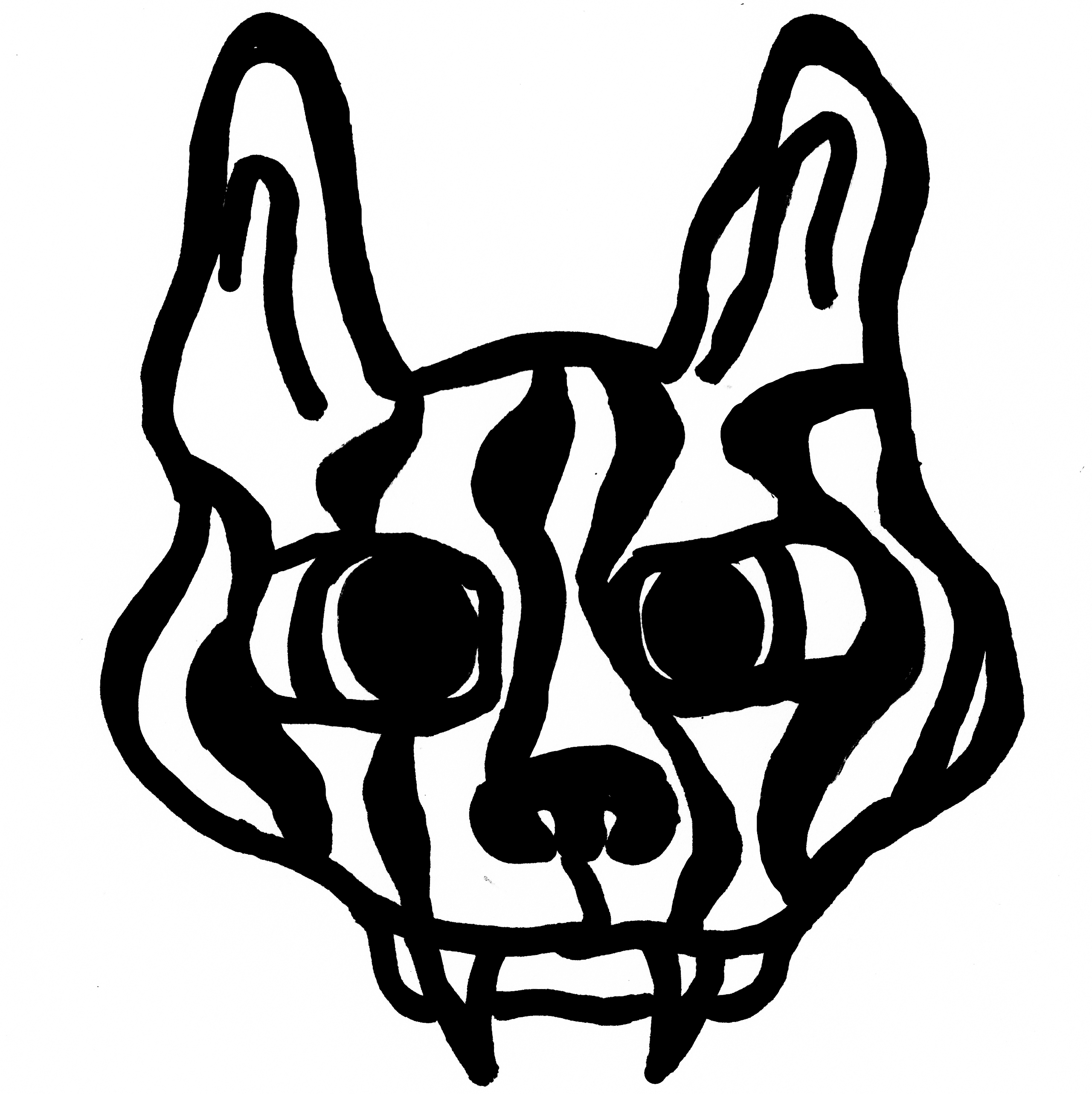
Usually, whenever I’m confronted by an image that could be categorized as “furry art”, I immediately scroll past it and move on with my day, since it’s clearly not for me. Most furry art is seemingly designed to appeal to one of two audiences: adults who find anthropomorphized animals intensely erotic or, counterintuitively, young children — whose cartoon adventure comedies are often animated by adults who find anthropomorphized animals intensely erotic. Furry art is a closed loop. Even when it leaks out into mainstream productions like Zootopia, Bad Guys, and Forgotten Island, its talking anthro-animals always find their way back to horndog internet subdungeons like DeviantArt, returning to their primary audience’s busy hands. The computer-animated memoir Bouchra deviates from that closed-loop system to appeal to anyone who might be interested in broader-appeal artforms like personal essays, queer familial dramas, or independent filmmaking, regardless of whether they’re turned on by fursona character designs. It’s refreshing to finally be confronted with furry art that aims to make its audience feel other emotions besides Horny.

Obviously, Bouchra occasionally aims to make its audience feel Horny too; that’s unavoidable. It’s a low-key indie drama about struggling artists living in New York City, and just like any other movie in that category, those hip, young characters occasionally have sex onscreen. It’s just unusual for the sex to be performed between predator & prey-type fursonas animated through the video game engine Blender. As a personal memoir about a documentarian’s difficulties adjusting to queer city life while maintaining a healthy relationship with her conservative parents back home, there’s nothing especially flashy or novel about Bouchra‘s scene-to-scene drama. However, that lesbian filmmaker being represented onscreen as a CGI jackal who occasionally strips down to lick the scruff & thighs of the cows & other prey in her life does add some specificity to the project that distinguishes it from other confessional debut features of the same ilk. The CG animation itself can be outright beautiful too, with more attention paid to blocking and light sources than most modern animation bothers with while appealing to sugar-addled children. The smoke trailing from a character’s post-coital cigarette in a stream of liquid CG glitter is so beautiful that it’s easy to forget you’re watching a talking animal inhale it. These are real, fully fleshed out characters who love, fight, fret, and fuck just like anyone else . . . give or take some major anatomical details.

The drama is convincingly personal & heartfelt too. Our main jackal, Bouchra, finds herself unexpectedly homesick for Morocco while struggling to root herself in her new life as a up-and-coming NYC filmmaker. Her relationship with her mother remains close and openly communicative despite the geographical distance, with the devastating exception that her mother refuses to acknowledge her lesbian identity. Bouchra is working on an autofictional memoir as a way of dealing with that fractured family dynamic, which she uses as an excuse to interview her mother by phone about her decade-old coming out letter that otherwise remains undiscussed by the two jackal-women. Reality & fiction intertwine as their relationship and the fictional movie about their relationship play out simultaneously, alternating between NYC & Casablanca in a purposefully disorienting continuity. First-time filmmaker Meriem Bennani also deliberately confuses the details of her personal life with this autofictional narrative, voicing Bouchra herself as an invitation to read that character as her very own fursona avatar. In doing so, she’s found a way to express the broad queer-culture theme of frustration with family’s refusal to engage with the details of your romantic life in a way that feels both specific to her own life’s circumstances and convincingly translated into honest artistic expression.

A major reason I’m comfortable classifying Bouchra as furry art (beyond defining it by the “I know it when I see it” pornographic metric) that when we watch the jackal-documentarian storyboard her own life’s story on index cards, they’re sketched out in an unmistakably furry art style — complete with prurient yiffing detail. If we’re meant to see Bouchra as Bennani’s avatar, that inclusion is an essential insight into her creative process (alongside co-director Orian Barki, who voices her talking-lizard bestie). Those storyboard index cards, as highlighted in slideshow montage, contextualize Bouchra as an authentic art piece from a filmmaker who primarily sees the world through predator-prey fursona dynamics, having been raised in an Internet subculture with its own closed-loop logic & visual language. I haven’t personally engaged with enough furry art to claim that it’s the first major artistic work achieved within that closed loop, but it does feel like the first major title to fully escape containment and stand out on its own artistic, dramatic merits beyond its occasional erotic appeal.

-Brandon Ledet

Rukus (2019)

A lifetime ago, I used to be friends with the Memphis filmmaking collectives behind the microbudget docudrama Rukus. They were making backyard movies as long as I’ve known them, from music video fan art to thematically daring documentaries to an ambitious feature-length fairy tale titled What I Love About Concrete (that felt like a breakthrough achievement for the crew). Rukus is a different beast entirely, not least of all in its personal, diary-like confessions of central contributor Brett Hanover as the film’s writer-director, with the rest of the collective (mainly Alanna Stewart & Katherine Dohan of Do You Know Where Your Children Are? Productions) taking on a myriad of supportive filmmaking duties – music, sound, cinematography, assistant-direction, etc. This sense of a long-lasting community collaborating on a single project over many years of spare weekends & rigidly structured “free time” affords Rukus a sense of depth in both subject & emotion, especially in how it tracks Hanover’s own maturity from high school sexual anxiety to a more confident, adult sense of self-understanding over what feels like fifteen years of footage & backstory. It’s over that exact span of time that I have drifted away from this community myself, to the point where I’m so far outside their orbit now I’m hesitant to suggest I have the right to still call them friends – even if “acquaintances” sounds too cold. I also don’t believe it’s extratextual to mention my fading personal connection to the filmmakers here or to recount their backstory as a microbudget filmmaking collective, as Rukus is a film about communities & intimate connections, both online and in the flesh (and fur). Like all great documents of personal importance, it has universal implications about relationships we’ve all had over the internet & irl; we all already know the players in Rukus, whether or not we’ve actually met them.

It’s important to mention the universality of Rukus’s themes of isolation, community, maturity, and self-harm upfront, because its on-paper premise indicates that it’s about something far more niche: furries. The most flippant (and inaccurate) way you could describe Rukus would be to contextualize it as the furries equivalent of the Netflix documentary Bronies: The Extremely Unexpected Adult Fans of My Little Pony. That might have even been Hanover’s original intent when he first documented a Memphis furries convention for a high school photography project in the aughts: a fascinated, but detached interrogation of furry culture that borders uncomfortably close to a gawking “Getta load of this freak show!” voyeurism. Smartly, Hanover instead shifts this eagerness to gaze at human oddities inward – confronting his initial impulse to engage with furry culture from the academic distance of an “anthropological observer” as a self-serving lie. Anyone looking for a culture-gawking doc on furry conventions is going to be disappointed by the breadcrumb trail of information Rukus leaves behind as it prods at something much more personally vulnerable & ambitious. I was frequently reminded throughout of Nathan Rabin’s (excellent) book You Don’t know Me but You Don’t Like Me, in which the pop culture critic learns almost too much about his own mental & emotional health while attempting to cheekily document the often-mocked subcultures of Phish & Insane Clown Posse fandoms, only to become a member of both communities himself. Hanover’s personal journey as the loudest creative voice & most central subject of Rukus parallels Rabin’s across two entirely separate communities: his irl Memphis friends who are directly confronted with his OCD & sexual hang-ups and an online contingent of furries whose digital anonymity offers a freer, more accepting playground where he can find himself. Larger themes of kink power dynamics, queer identity, depression, romance, abuse, and self-harm emerge over the long haul of the story’s over-sprawling narrative, but it’s all anchored to that pursuit of finding intimate connections & personal fulfillment while navigating the needs & politics of the communities that are willing to put up with you – furries and beyond.

The thematic ambition & personal vulnerability of Rukus is evenly matched by the film’s own formal adventurousness. It initially presents itself as a documentary on Hanover’s interaction with real-life furries (with a particular focus on his relationship with the titular self-published furry artist Rukus), but as it unravels the question of what is & what isn’t real becomes muddled to the point of not mattering at all. There are moments of pure fantasy represented through hand-drawn sketchbook animation and childhood fursona dreamscapes that recall the immersive artworlds of films like Paperhouse & MirrorMask. Outside those forays into escapist magic, though, the question of what’s “real” is much more deliberately confused. Real-life footage & interviews mix freely with dramatic reenactments and intangible online personae to test the boundaries of what could be considered a “documentary.” It’s a dissociative tactic that evokes the feeling of looking at the world through a video camera – a remove that’s echoed in the film’s multimedia indulgences in laptop-lit stage plays, webcam cinematography, and crudely drawn outsider art. It’s also a fitting approach for conveying the emotional lives & development of its subjects: furries that express their truest selves through the remove of carefully-sculpted costumes & online avatars and the director’s own expression of his sexual & romantic impulses through a detached “academic” interest in niche fetish communities outside his comfort zone. I’ve seen plenty of recent documentaries that blur the line between reality & crafted narrative in this way – Rat Film, Swagger, and The World is Mine to name a few. The overall effect of Rukus is something much more personal & vulnerable than what those dramatically obscured titles offer, though. It reaches more for the unembarrassed emotional exhibitionism of Josephine Decker’s (criminally underrated) project Flames: the volatile self-revelation of reading your private diary’s most intimate passages at top volume in a public space.

It’s doubtful that if Rukus were an outside-observer’s anthropological examination of furry culture it would have meant as much to the community it depicts. I doubt Bronies gather around to watch that Netflix documentary as a community, for instance, whereas past public screenings listed on Rukus’s website (where you can now watch the film in its entirety, for free) include multiple furry conventions. It’s tough to suppose whether that’s because Hanover & the Do You Know Where Your Children Are? crew tapped into something deeply true about furries in particular or if the movie moreso taps into something universally true about the roles of community & identity in our larger modern digital hellscape while inviting furries along for the ride. Either way, it’s the exact kind of ambitious, challenging filmmaking you’d hope to see from no-budget outsider artists passionate about their craft but locked outside official means of production. I’m proud to have ever been even on the periphery of a community this empathetic, inclusive, and vulnerably honest, even if time has eroded those connections to the point where we’re total strangers only flimsily tethered to our shared past online.

-Brandon Ledet

Pottersville (2017)

Early reactions to the bizarre Christmas comedy Pottersville have been intensely focused on the over-the-top absurdity of its plot, which is totally fair. Michael Shannon stars as a small town general store owner who, once discovering his wife (Christina Hendricks) is having an affair with his best friend (Ron Perlman), goes out on a drunken rampage in a gorilla suit, inadvertently sparking a Bigfoot hoax that makes his once-humble community internationally famous. Oh yeah, and this incident is sparked by his discovery of a secret club of closeted furry fetishists lurking in his community. That’s certainly not the most traditional of Christmastime narratives (especially the part about the furries), but the movie is much more intentionally (and successfully!) goofy than people are giving it credit. It plays a lot like a Christmas-themed, kink-shaming episode of Pushing Daisies and its plot’s overarching sweetness more or less amounts to It’s a Wonderful Yiff, but there’s no way that highly specific aesthetic wasn’t its exact intent. I wouldn’t suggest entering Pottersville if you’re not looking for a campy, tonally bizarre holiday comedy, but it’s novelty subversion of the Hallmark Channel Christmas Movie formula is both deliberate and surprisingly successful.

Pottersville works best when the material is played straight, allowing the (intentional) camp value of the absurdist plot to shine through in full glory. Michael Shannon is disturbingly committed to his lead role as the put-upon shopkeeper, his natural creepiness only making the most impossibly kind character’s earnest, charitable heart all the more bizarre. His befuddlement over the existence of furries (which he unfortunately discovers by catching his wife mid-yiff) and subsequent, moonshine-influenced decision to run amok as Bigfoot are the easy highlights of the film, wonderfully clashing against the Frank Capra Christmas backdrop. By the time he’s drunkenly howling to the night like a wild animal, the performance is downright Nic Cagian. Thomas Lennon’s turn as the film’s heel is much more pedestrian. Dressed up like an early 2000s boy band singer and armed with a horrendous Australian accent, Lennon plays a reality TV “monster hunter” who blows the Bigfoot story way out of proportion, compounding the small town & general store owner’s problems exponentially. He feels like he’s airdropped in from a much broader, more conventional comedy, which detracts heavily from the much more unique tension between Michael Shannon and the furries, but he’s also amusing enough in isolation that he doesn’t ruin the fun of the picture at large. If nothing else, between this movie & Monster Trucks, Lennon has at least built an interesting case for being Bad Movie MVP of 2017.

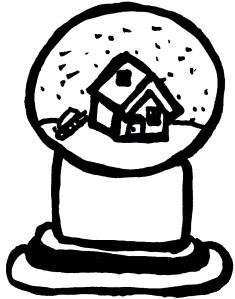
Delivered by first-time writer/director team of Seth Henrikson & Daniel Meyer, Pottersville is surprisingly well constructed as a visual piece & an oddly subversive act of comedic writing. The town itself looks like a whimsically manicured snow globe miniature, giving it that Pushing Daisies dollhouse look; even the run-down trailer park is super cute. The script also sneaks in out-of-nowhere allusions to Freaks, Jaws, and the Christian Bale freak-out tape … just because? Whenever it functions as an outright comedy it threatens to become hopelessly pedestrian, but the basic premise of Michael Shannon as an undercover Bigfoot hoaxer trying to infiltrate a community of small town furries in a modern retelling of It’s a Wonderful Life is enough to carry the film as a Christmastime novelty. I have to assume everyone involved knew exactly what they were doing when achieving that strange imbalance; you don’t stumble into that kind of absurdity completely by mistake no more than you can accidentally wander into yuletide yiffing. Either way, it’s a strange delight.

-Brandon Ledet