
Teenage Sex and Death at Camp Miasma is the latest feature from director Jane Schoenbrun, following A Self-Induced Hallucination, We’re All Going to the World’s Fair, and I Saw the TV Glow. In the film, Hannah Einbinder plays Kris Williams, an indie darling director whose most recent project—the last third of which “remade Psycho from the point of view of the shower curtain”—brought her to the attention of the studio in possession of the rights to the fictional Camp Miasma slasher franchise. Following the breakout commercial success of the first Camp Miasma flick, the film’s killer Little Death and their inexplicable air vent-shaped helmet became horror iconography on par with Freddy Krueger and his glove or Jason Voorhees and his machete. The drive to produce endless sequels led to creative rot (like the late sequel Little Death Takes Manhattan), gimmicks (like Camp Miasma 3-D), and diminishing monetary returns. Kris now finds herself at the helm of Camp Miasma reboot, which the studio wants to ensure is “elevated” in order to align with current horror film trends. The purpose is two-fold: the studio hopes to reinvigorate interest in a once-lucrative intellectual property while also redirecting attention away from the original film’s transphobia by hiring Kris, a queer woman. Supposedly seeking inspiration, Kris tracks down reclusive Billy Presley (Gillian Anderson), Camp Miasma’s final girl, who invites Kris to meet with her at her home, which turns out to be the same abandoned campground where the first Miasma picture was filmed. Of course, Kris’s motivation to meet Billy has additional undercurrents that she herself isn’t fully cognizant of, stemming from an epiphanic experience she had while watching Camp Miasma as a child.
The text within the film, the Camp Miasma franchise, is wonderfully detailed stuff: the mounting number of sequels on VHS that bear the distinct typeface of the Friday the 13th film series, from which Camp Miasma takes most of its aesthetic cues; the watering down of the genuinely menacing Little Death until they start to appear in 90s anti-drug campaigns; the moral outrage from concerned citizens’ groups, leading to picketing of the movie, resulting in even more attention from the public. It’s window dressing, but it’s so thoroughly realized that one can’t help but gawk in amazement at the level of attention to detail. It’s referential through reinterpretation and reinvention, rather than just recreation. Besides the Friday the 13th films, the most obvious inspiration is Sleepaway Camp. Instead of simply recreating that film’s twist ending, the original Camp Miasma’s Little Death (Jack Haven) was an avenging spirit of a genderfluid child who was killed by several other campers. This allows Schoenbrun to grapple with the transphobia of that film by using it as a vehicle to criticize the ignorance that led to its creation, while also playfully poking fun at the large amount of cinematic non-criticism that, instead of grappling with a text’s successes and failures, relies solely on pointing out older media’s flaws without anything more substantial to say.
The meta-textual nature of the narrative draws comparison (even within the text itself!) to “Frightmaster Wes Craven’s New Nightmare,” but an equally applicable comparison would be to say that Teenage Sex and Death at Camp Miasma is a movie that loves horror of a bygone era the same way that Galaxy Quest loves Star Trek. Of course, what was lacking from those films was a character using their media obsession to examine their sexuality or the nature of desire. Camp Miasma reflects, I imagine, what it feels like to experience sexual arousal only when it’s part of a fantasy mediated by a screen, rather than being aroused by touch, sensation, or intimacy. Kris admits to Billy that she’s allowed herself to be coaxed into opening up her relationship with her partner because she’s unable to meet their sexual needs because, like Owen in TV Glow, she’s more interested in TV/movies than she is in real life, and more comfortable with experiencing sexuality through the distance that a lens creates. Where this differs from Schoenbrun’s previous film is that the ending of TV Glow is considered a bleak, downer ending by most audiences, while Miasma feels like a much more celebratory endeavor, like Schoenbrun got out all of their negative feelings in Glow so that they could tackle the inherent eroticism of the slasher genre in a more fun, positive way. Owen’s narrative is one about what happens when one consigns themself to a box, while Kris’s is one that teaches her that it’s totally okay to be obsessed with a one hit wonder scream queen and only get off through fantasy — even a violent one, because that’s the point of fantasy, it’s not real. As the advertisements for the home video release of the original Camp Miasma note, “if it gets too real, you can always turn it off.”
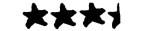
The major detriments largely come in the form of visuals. This is a film that is largely unconcerned with making sense of time. The on-screen date given in Roman numerals for the release of the original Camp Miasma is 1980, which would make Billy a solid decade older than she is said to be, and the area around the campground moves from winter to summer over the course of a single night. One can accept that as artistic license, and one must accept it when considering that, when we get to see Little Death’s rampage from the end of Camp Miasma, it’s set to “Long December” by Counting Crows, which was not released until 1996. One could even chalk that up to the idea that we’re not seeing that scene as it was in the film, but as Kris remembers it. What I can’t accept about that scene is how badly done the special effects imagery is. There’s a fun little homage to one of Jason Voorhees’s most famous kills, the sleeping bag scene from The New Blood, wherein Little Death picks up a camper and slams them against a tree, but the kill is farcical rather than sincere, because the victim flies apart and falls to pieces like a mannequin. This same “error” occurs throughout the Little Death massacre, and it’s distracting. I’m not sure if this is supposed to represent Kris’s point of view, as it’s made abundantly clear that she finds slasher film death arousing in a way that she doesn’t understand, but if it’s supposed to be funny, it falls apart. There are several special effects “failures” throughout that have intentionality and are open to interpretation (like the Thomas Kincaid-esque winter scenes, which also look awful but have narrative purpose), but this rampage feels as if it were generated using AI. I’ve searched high and low for confirmation of this and can only find minimal discussion of it from others who get the same feeling, but please bear in mind, dear reader, that if it eventually is revealed that this is the case, disregard the star rating above and consider this film radioactive, with a big thumbs down. With nothing proven at this time, it’s still a negative, as it looks like hot garbage, but it’s not enough to ruin what is otherwise a delightfully fun movie.
Einbinder and Anderson have absolutely excellent chemistry. Anderson puts on a delightful Southern drawl for the character, and every one of her line reads is magical. During their first meeting, Billy intentionally gives Kris a tiny fright, and the following morning, she encourages Kris to enter a room where a Little Death costume is on display, cackling like a cartoon witch when her prank succeeds. What fun! I don’t eat fast food, but Schoenbrun’s choice to shoot Billy and Kris digging into KFC in pornographic, erotic close-up meant that I ended up getting some myself less than 48 hours later. I also had my biggest laugh of the year when Kris is word vomiting about the problematic elements of art from previous generations; when she mentions a Mickey Mouse racial caricature, Billy responds “Mickey did that?” and I laughed until I choked. When watching Camp Miasma together, Kris excitedly says “This part’s transphobic!”, prompting Billy to merely shush her, even though this is the scene that gave the film its macabre, thoughtless, hilarious tagline, “They killed him. They had to.” Sleepaway Camp has been derided in the intervening decades for its blatant transphobia, but like Rocky Horror Picture Show (as we have been reminded by the think pieces that have sprung up in the wake of the death of Tim Curry), it was also transgressive, and those who may be part of the demographic that has the right to be offended by dissonant values of older media are also capable of finding something meaningful within it. Rejection of art that was, intentionally or unintentionally, textually or subtextually, and positively or negatively queer in eras past prevents us from examining them within the context of their time, and how people lived in that time. It’s not a defense of antiquated portrayals, but it is an invitation to do something more than have a knee-jerk reaction to the past. Schoenbrun certainly has, and I was pleased to join them on their journey.
-Mark “Boomer” Redmond