Welcome to Episode #245 of The Swampflix Podcast. For this episode, Brandon, James, Britnee, and Hanna discuss a grab bag of Roald Dahl adaptations, starting with the Wes Anderson anthology film The Wonderful Story of Henry Sugar and Three More (2024).
0:00 Welcome 02:45 Beavis and Butthead Do America (1996) 07:12 Napoleon Dynamite (2004) 13:52 Peter Pan (1960) 16:55 The Legend of Ochi (2025)
24:04 The Wonderful Story of Henry Sugar and Three More (2024) 49:09 The Witches (1990) 1:10:12 James and the Giant Peach (1996) 1:23:35 Matilda (1996)
One of the bigger trends of the 2022 movie calendar was the prominence of stop-motion animation as a medium. Netflix’s cheeky horror anthology The House was the first Great film of the year, and that early stop-motion triumph rolled into the wide, acclaimed release of so much direct competition that it now feels distant & puny in retrospect. Rolling into awards season,Marcel the Shell with Shoes On and Guillermo del Toro’s Pinocchio are formidable contenders for best animated film of the year against the more typical Disney-funded CG mediocrities that have earned that prize by default since Toy Story put Pixar on the map. And then there was Phil Tippet’s magnum opus horror show Mad God, which pushed the stop-motion medium to the outer limits of what animated cinema can achieve. Usually, I’m on top of all stop-motion feature films as soon as they’re released, but this year offered so many varied, prominent titles in that category that I let a couple slip through my fingers until now. Neither The Old Man Movie nor Wendell & Wild completely blew my mind as I caught up with them for Best of the Year listmaking season, but that was mostly a result of them joining such an already crowded field. In a more typical year, these would have been the only two stop-motion releases of note, and I likely would have been much more ravenous for what they have to offer.
The more disappointing title of this late-entry pair is Wendell & Wild, since it’s the one with the highest pedigree behind its production. Not only does it reunite the iconic comedy duo Key & Peele as a pair of wisecracking demons, but it’s also the comeback film of legendary stop-motion animator Henry Selick, who has not directed a film since 2009’s Coraline. As a recently converted Monkeybone apologist, it brings me no pleasure to report that Wendell & Wild is, by far, Henry Selick’s worst film to date. The good news is that it’s still pretty great, as long as you only pay attention to its mall goth art design & vintage Black punk soundtrack. Story wise, the film is a sprawling, unresolved mess in a way a lot of blank-check Netflix productions have been for directors like Scorsese, Baumbach, Fincher, and The Coens, who have been putting in some of their career-weakest work on the platform with no one to push back on or hone their ideas. Out of the pair, Netflix was smart to give del Toro’s Pinocchio the bigger Oscars Campaign—it is the better film—but it’s also far from del Toro’s best work either. If anything, the two films could have borrowed and swapped a lot of their shakier qualities: Wendell & Wild should have been a punk rock musical, since its charms rely entirely on its soundtrack & visual spectacle, and Pinocchio should not have been a musical at all, since its entire songbook is limp & forgettable. They’re both decently entertaining movies about rebellious youth, though, with Wendell & Wild falling somewhere at the Hot Topic end of that spectrum.
If the story of a high school punk rocker teaming with a pair of wisecracking demons to resurrect her dead parents with magical hair cream (and to avenge the wrongful deaths of the family’s condemned root beer factory while they’re at it) is a little overly complicated, maybe The Old Man Movie has a leg up on Wendell & Wild. In The Old Man Movie, three siblings have to recapture & milk their grandfather’s escaped cow before its udder explodes, nuking their entire village in a milky “lactocalypse”. Those are pretty clear, cut-and-dry stakes even if they are ridiculous ones, and the movie even provides a helpful 24-hour deadline before that udder catastrophe strikes. The Old Man Movie also enjoys the benefit of nonexistent expectations. Henry Selick’s previous films Coraline, The Nightmare Before Christmas, and James and the Giant Peach rank highly among the most beloved stop-motion films of all time. By contrast, The Old Man Movie is the most profitable animated film ever exported from Estonia, but it’s likely most audiences outside that country have never heard of it. That might hint at its comparatively limited appeal, since Selick makes mildly spooky movies that are still friendly enough for children, while The Old Man Movielooks like it was made for children but would likely psychologically scar any who wander into the room. It performs the shrill gross-out humor of Ren & Stimpy in the once-wholesome visual language of Wallace & Grommet. It’s teeming with grotesque milk monsters, mile-high piles of pig shit, and unstoppable killer kratts – pushing it more into Phil Tippet nightmare territory than Henry Selick’s goth kid starter packs.
Some of The Old Man Movie‘s one-off gags offend, especially when it singles out hippies & women as targets for mockery. Other gags deliver enormous laughs that make the eyerolls worthwhile, especially in its visible disgust for the gnarlier details of daily farm work. While Wendell & Wild pushes the boundaries of stop-motion as an artform into the technological marvel territory of a Laika film, The Old Man Movie scales it back down to a handmade claymation style that feels a little like serial killer bedroom art. It was refreshing to see a film so volatile in its moods & humor after the more cumbersome, plot-fixated machinations of Wendell & Wild felt so weighed down by its own enormity. That’s not to say Wendell & Wild isn’t shocking or over-the-top in its own ways; it’s especially bold to see a children’s film about a rebellious youth’s team-up with demons get a major-platform release in a year when online Evangelicals are obsessed with the ways Satan is “grooming” children into cannibalism & debauchery through “hidden” messages in popular media. What’s most incredible, though, is that neither The Old Man Movie nor Wendell & Wild qualify as the wildest, most outrageous stop-motion release of the year – a title that has a shocking amount of competition (and still belongs to Mad God). There has been enough of a wealth of anarchic, ambitious stop-motion feature films that I can be a little bratty and brush both of these movies off into the “Pretty Good” pile instead of the “Saviors of Modem Animation Pile.” I want to live in a world where I’m this spoiled every year.
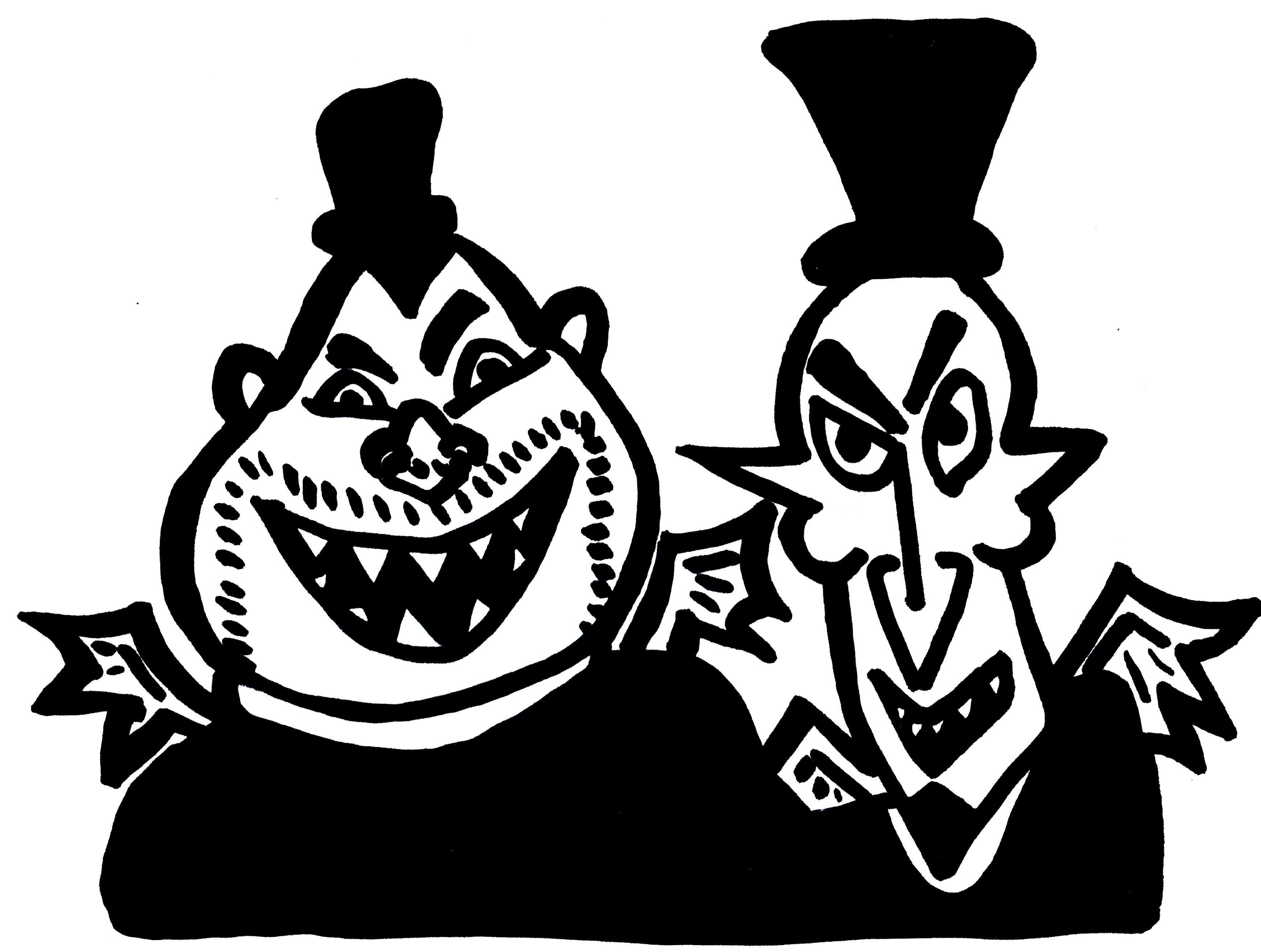
There are two immediately obvious reasons why the special effects horror comedy Monkeybone is worth revisiting in 2022: its director and its star. Henry Selick’s upcoming Wendell and Wild is his first feature film since 2009’s cult favorite Coraline, and it appears to be perfectly in rhythm with the stop-motion nightmares for kids that have defined his career. Not only is Monkeybone Selick’s only live-action film to date, but it also happens to feature another beloved 90s figure who’s making a comeback this year: Brendan Fraser, who’s soon to launch a Best Actor awards campaign for Aronofsky’s The Whale. Fraser is in his wacky, live-action Looney Tunes mode in Monkeybone, as opposed to the dramatic vulnerability mode he brings to films like Gods & Monsters and, presumably, The Whale. Trapped in a literal nightmare-world induced by a coma, Fraser’s comic book artist protagonist goes to war with his own cartoonish creations in a physical version of the Hot Topic mall-goth fantasyscapes Selick made his name on in A Nightmare Before Christmas. It’s like a dispatch from an alternate universe where Tim Burton directed Who Framed Roger Rabbit?, one made even more fascinating by the fact that it flopped hard on its initial release – investing $75mil on a $7mil payoff.
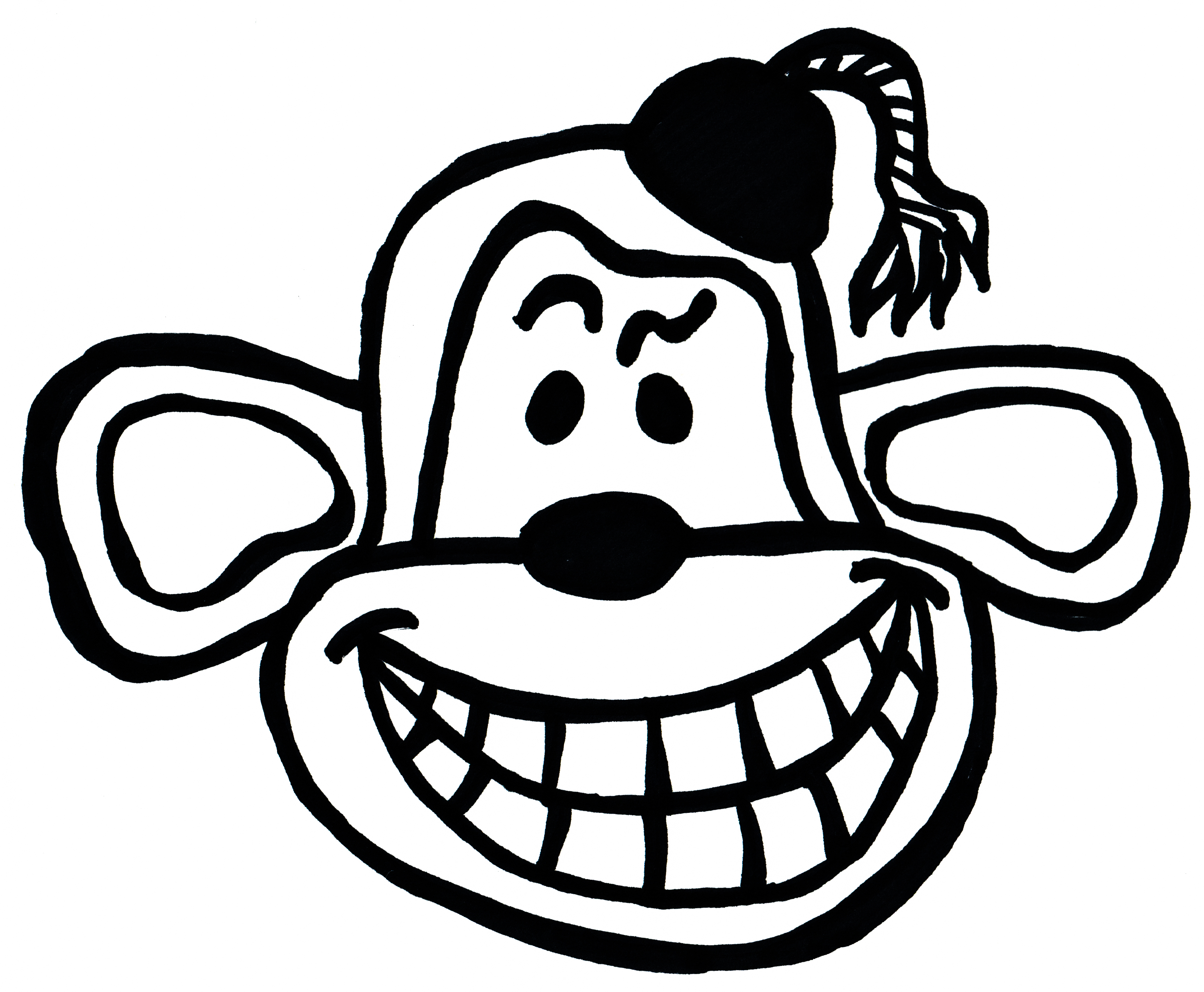
To my shame, I don’t want to spend much time praising what Selick nor Fraser achieve in Monkeybone. No, I want to praise Chris Kattan. I outright groaned when Kattan’s name showed up in the opening credits, expecting the SNL veteran to be voicing the titular, annoying cartoon monkey sidekick character as an extension of his Mr. Peepers sketches. It turns out that Kattan is totally innocent on that front; Monkeybone is voiced by John Turturro, the scamp. He’s also supposed to grate on the audience’s nerves, as evidenced by Fraser’s constant efforts to get him to shut up & go away every time he opens his obnoxious little mouth. For his part, Kattan doesn’t show up until about an hour into the runtime, playing the corpse of a gymnast who died in a horrific accident. Through convoluted cosmic circumstances that involve a deal with Death herself (played by Whoopi Goldberg, naturally), Fraser’s comatose cartoonist takes over the gymnast’s body mid-organ donation and flees the hospital into an unsuspecting world. Kattan’s physical acting as an animated corpse with a broken neck and organs plopping out of its open body cavity had me absolutely howling with laughter. It was the quickest I’ve ever turned around on a famous actor’s presence in a film, encountering Kattan’s name with dread, then finding his performance so deliriously funny that I almost threw up from the physical exertion. I suppose it’s also worth pointing out that another 2022-relevant actor played a major part of that movie-stealing gag: Better Call Saul’s Bob Odenkirk as the perplexed surgeon who trails behind the undead gymnast, continuing to harvest his organs as they fall to the ground behind him. It’s sublimely silly.
As screechingly funny as Monkeybone gets during Kattan’s third-act zombie run and as wildly imaginative as Selick’s coma-induced Land of Nightmares set designs can be, its legacy mostly resonates with a what-could’ve-been melancholy. Selick might have become a household name if this film didn’t flop so spectacularly. Or at least we wouldn’t get his work confused with Tim Burton’s quite so often. Grimmer yet, Fraser, Kattan, and Rose McGowan (playing a humanoid-cat cocktail waitress, of course) have all gone public with stories of behind-the-scenes sexual abuse from major Hollywood players in the #MeToo era, haunting the film with questions of where their careers might have gone in a better world. In the aftermath of those revelations, Fraser’s getting his late-career comeback, McGowan’s become a self-appointed spokesperson for the movement, and Kattan has continued to live in relative, semi-retired anonymity (give or take an affectionate shoutout in this summer’s Nope). I don’t know that Kattan deserves the same red-carpet career revival as his co-stars, or if the actor would even be interested in a proper Kattanissance if it were an option. I do know this, though: his performance is absolutely the highlight of Monkeybone, somehow outshining all of the cheeky monkeys, cyclops babies, Guernica bulls, and Nazi Mickey Mouse prison guards that Selick packs into the frame. It would have been an interesting relic even without Kattan, creating an amusement park dark ride version of the kinds of grotesque cartoons that only aired on late-night Comedy Central in the 1990s. Still, Kattan’s late-in-the-game intrusion is what pushes it over the line from interesting to essential.


 Swampflix