Americans Under Siege, With and Without Context

I recently caught a double feature at my local multiplex of high-style, high-tension thrillers about American soldiers under siege in claustrophobic locations. The stories told in Alex Garland’s Warfare & Ryan Coogler’s Sinners are separated by entire genres, decades, and oceans, and yet they both trap American soldiers in tight-space locales by surrounding them with enemy combatants, whittling down their ranks one corpse at a time. That shared Americans-under-siege dynamic puts them in unlikely conversation with each other as two feature films currently in wide release, but what really makes that conversation interesting is the films’ respective relationships with the cultural & historical context around their sieges. Warfare is so hostile to providing context that it borders on experimentation in narrative form, while Sinners is entirely about context, explaining its own supernatural siege’s relation to America’s past, present, and future. Together, they represent the two extremes of contextual explanation in cinematic storytelling, to the point where considering them together is something that would only occur to you if you happen to write movie reviews and catch them both at the same theatre in a single evening.

Assigning Warfare‘s authorship entirely to Alex Garland is a bit misleading, since he shares directorial credit with former U.S. Navy SEAL Ray Mendoza. In fact, the real-time, true-story siege thriller is most interesting for the battle between its two directors: one who wants to honor the soldiers depicted “for always answering the call” (Mendoza) and one who wants to examine them & pluck their limbs off like bugs he caught in a jar (Garland). An opening title card explains that the film’s reenactment of a failed 2006 American military mission during the Iraq War was made “using only the memories” of Mendoza’s platoon, who experienced the violent episode first-hand. After the reenactment concludes, surviving members of that platoon are shown visiting the film’s set mid-production to provide their insight, contextualizing the movie as an honorable commemoration of their service & sacrifice during the harshest conditions of war. Only, that final moment is undercut by inclusion of a portrait of the Iraqi family who were also present that day and whose home was invaded & destroyed to fit the American military’s needs & whims. Earlier, when the surviving American soldiers have safely escaped the real-time gunfight in rescue tanks, the camera then lingers on that family appearing puzzled & shellshocked in the rubble of their home, as if they were just invaded by space aliens and not fellow human beings.

Garland & Mendoza’s choice to reenact this one specific mission without explaining the larger context of the U.S. military’s invasion of Iraq (under false pretenses of seeking weapons of mass destruction) has been hotly debated as a disingenuous, amoral screenwriting choice among the film’s detractors. From the Iraqi family’s perspective, however, that absence of context only makes the unlawful intrusion even more terrifying & cruel. The family is sleeping in their cozy duplex when Americans kick down their doors and sledgehammer their walls in the middle of the night, inviting enemy fire into the home as a makeshift military base while they’re gathered to huddle on a single bed, powerless. There is no warning or preparation for this invasion, nor is their any communication once the fighting ceases. There’s no context whatsoever, neither for that family nor for the audience. All that’s offered is a dramatic reenactment of the gunfight from the surviving American soldiers’ perspective, with the flattering casting of young Hollywood hunks like Charles Melton, Will Poulter, Kit Connor, and D’Pharaoh Woon-A-Tai to help sweeten the deal for those who “answered the call.” The absence of testimony from the Iraqi citizens invaded, shot at, and displaced by those soldiers’ mission becomes glaring by the final credits, though, and the questions that absence raises hang heavy in the air. I like to think that unease was Garland’s main contribution to the picture but, without context, I can only guess.

The political & historical context behind the all-in-one-day siege plot of Sinners is much easier to parse, since Ryan Coogler is much more upfront about what he’s saying through his art. The director’s fifth feature film (all starring career-long collaborator Michael B. Jordan) and his first not adapted from either pre-existing IP or real-life events, Sinners is set in a 1930s Mississippi overrun with bloodsucking vampires. You wouldn’t guess the vampire part in its first hour, though, which is mostly a getting-the-gang-back-together drama about two former soldiers and current booze-runners (twins, both played by Jordan) who return to their hometown to set up a juke joint for Black patrons during Prohibition. After a long stretch of friendly “Look what the cat dragged in” reunions (featuring consistently dependable character actors like Delroy Lindo & Wunmi Mosaku), the juke joint proves to be a communal success, if not a financial one. Unfortunately, the party gets to be a little too lively, which attracts the attention of white, vampiric interlopers (led by the consistently intense Jack O’Connell). The vampires are particularly attracted to the transcendently beautiful blues music played by the juke joint’s youngest employee, Preacher Boy (newcomer Miles Caton), which introduces an unignorable cultural appropriation metaphor to the vampires’ violent desire to be let inside the party. More practically, it also sours the vibe of the evening by trapping the partygoers in a single location, waiting to be drained of their blood and assimilated into the vampire cult.

Sinners is a truly American horror story, a beer & blues-fueled gangsters vs ghouls battle set against endless fields of cotton and all the commodified evil they represent. Every detail of the story that isn’t character-based drama registers as commentary on American identity: the illusion of freedom, the fixation on money, the compulsory Christianity, the lingering infrastructures of slavery & The Klan. The only positive touchstones of American culture are, in fact, Black culture, as represented in a fish-fry dance party that offers a Mississippi farming community a few hours to cut loose before returning to a life of poverty & backbreaking labor . . . until the party attracts vampiric outsiders who want to claim that culture as their own. In one standout sequence, Coogler extrapolates on this idea to visually & aurally lay out how the Delta blues that Preacher Boy is playing in the juke joint is foundational for all fundamentally American music & pop culture, illustrating its connections to funk, rock, hip-hop, bounce, and beyond in a physical, impossible embodiment of the story’s context. It’s a moment that not only accomplishes everything Baz Lurhman’s Elvis picture failed to do across 150 extra minutes of runtime, but it also positions Sinners as one of the most distinctly American vampire stories ever told on screen (among which I suppose its closest competition is Katherine Bigelow’s Near Dark).

The only dramatic context Warfare provides before kicking off its real-time siege sequence is a brief moment where all soldiers involved are watching a pop music video on a shared laptop, laughing at its over-the-top sexuality & pelvic thrusts. There’s just enough time allowed to that scene for the audience to discern a few key soldiers’ personalities through body language & facial expressions, before they’re immediately shown breaking into and destroying a sleeping family’s home. In contrast, Sinners spends the first half of its 140min runtime getting to know the gangsters, players, and partiers it eventually puts under vampiric siege, so that they feel like real people instead of walking, talking metaphors. It’s through that sprawling attention to context that we learn that the booze-running twins who open the Mississippi juke joint were WWI soldiers before they became gangster contemporaries of Al Capone in Prohibition-era Chicago. Even after the siege story is officially over, Coogler can’t help but pile on more context about cultural vampires & the blues, dragging the setting into contemporary times with a surprise guest appearance by blues legend Buddy Guy. Normally, I would say less is more when it comes to a movie explaining its own themes & context, but Coogler overcommits to those explanations to the point of academic scholarship, while still managing to deliver a fun & sexy vampire movie in the process. Meanwhile, Warfare‘s deliberate aversion to context threatens to implode the entire project, with only a few stray shots of Americans viewed from an outsider’s perspective affording it any sense of artistic or political purpose.

-Brandon Ledet

Killers of the Flower Moon (2023)

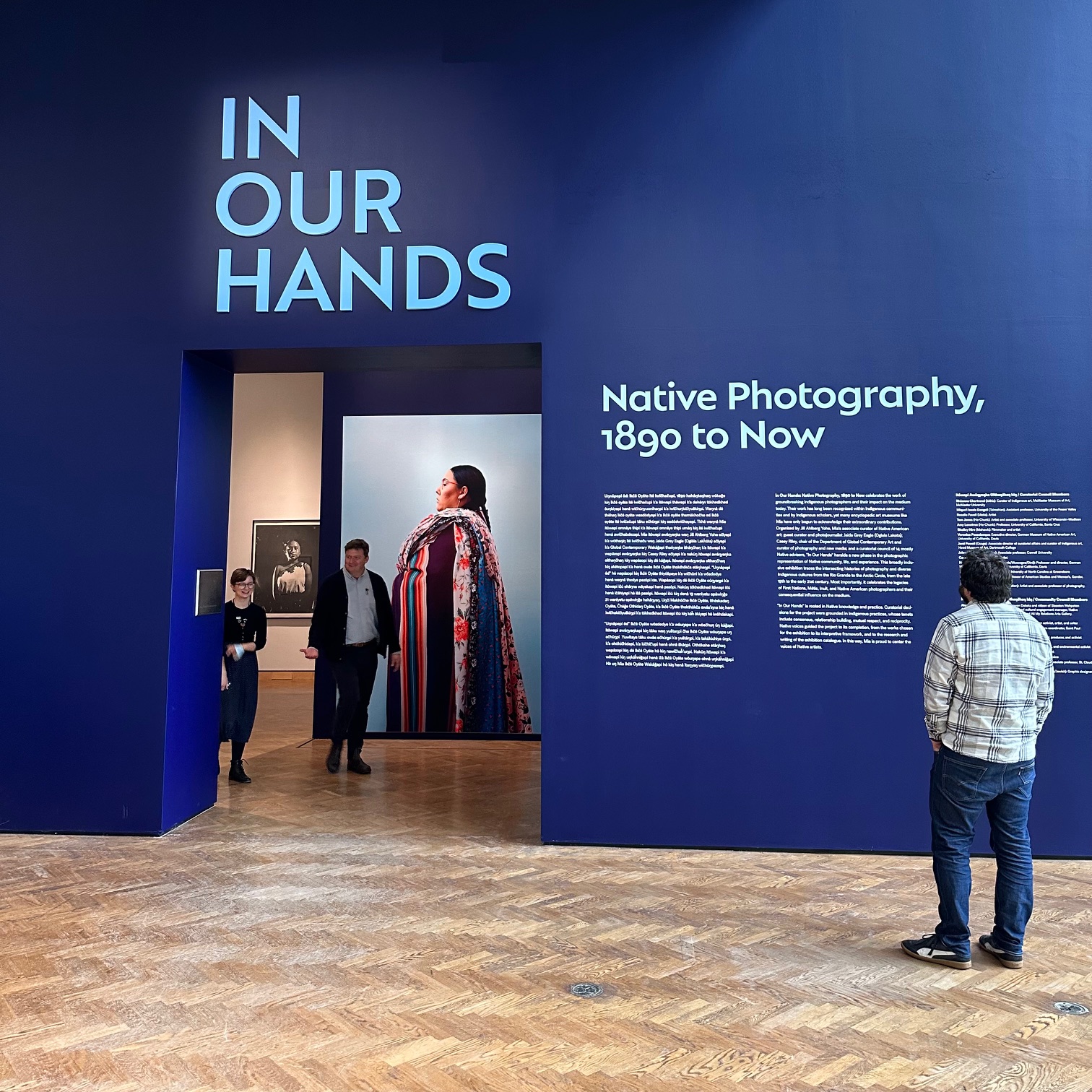
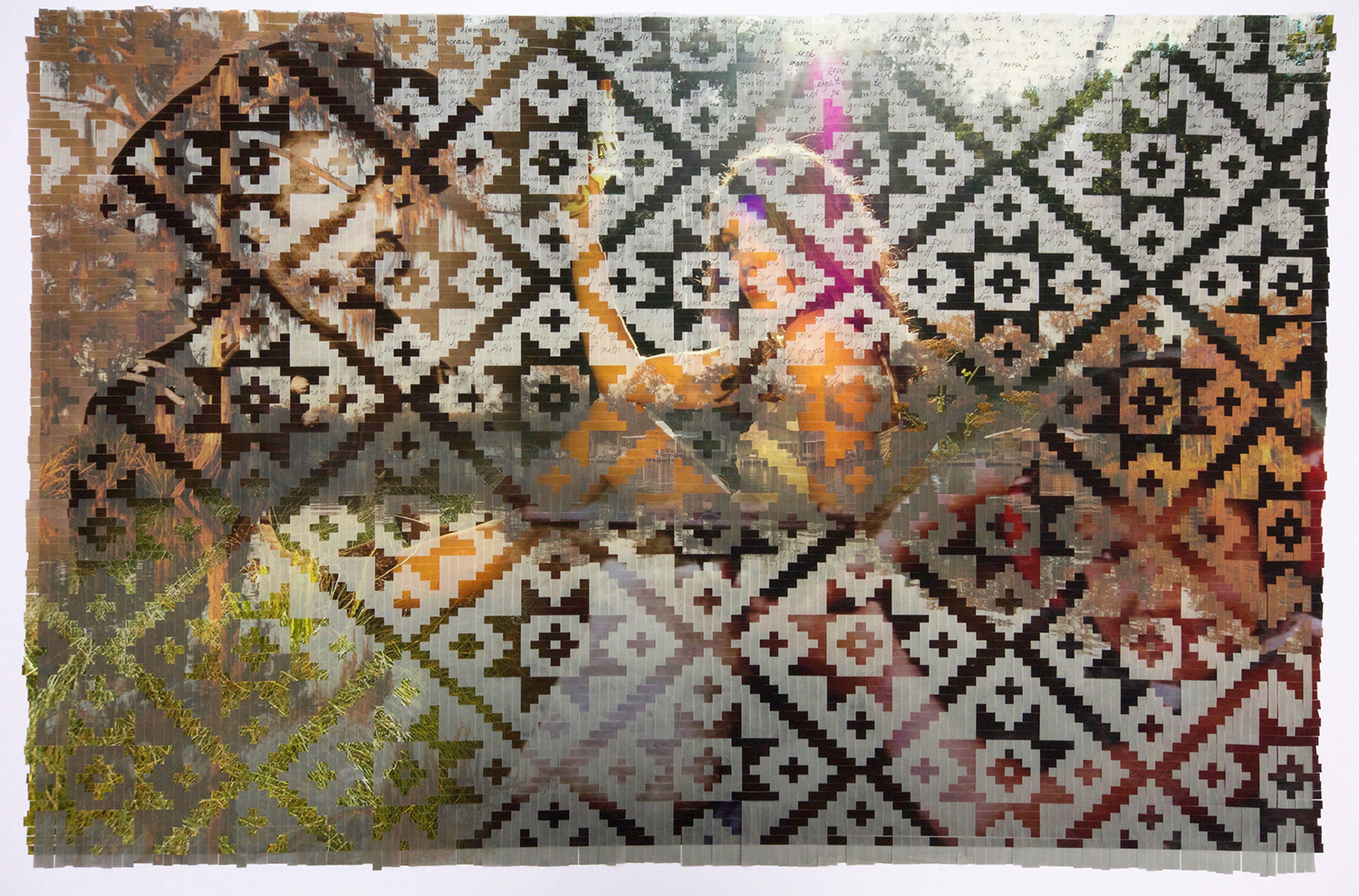
On a recent vacation in the Twin Cities, I spent an afternoon at the Minneapolis Institute of Art, which is currently exhibiting “150 photographs of, by, and for Indigenous people” in a photography collection titled “In Our Hands”.  It was during that same vacation when I watched Martin Scorsese’s Indigenous genocide drama Killers of the Flower Moon, which is also a series of photographs grappling with the medium’s representation & othering of Indigenous peoples.  Because I’m a movie obsessive, the photographs featured in “In Our Hands” that spoke to me loudest were the ones about misrepresentations of “American Indians” in American pop media.  Cara Romero’s 2017 photograph “TV Indians” pairs living Indigenous figures with vintage images of fictional Indigenous stereotypes, displayed on cathode-ray televisions in the colonized & decimated landscape of New Mexico.  Sarah Sense’s 2018 mixed-media piece “Custer and the Cowgirl with Her Gun” combines images of vintage Indigenous stereotypes in media with personal photographs & historical writing from her Chitimacha & Choctaw homeland through a traditional basket weaving technique that transforms & reclaims the medium of photography for a culture it has been historically weaponized against.  Killers of the Flower Moon also addresses the fraught history of Indigenous representation in American media, to the point where its theatrical exhibition opens with Scorsese explaining his “authentic” behind-the-scenes collaboration with the Osage communities the story depicts. The film also concludes with a second onscreen appearance from the director effectively apologizing for his participation in the tradition of speaking for & about Indigenous people from a white American perspective.

To his credit, Scorsese does limit the amount of time & space he spends speaking for the Osage tribe, smartly focusing instead on the people he’s built an entire artistic career around understanding: white thugs.  Killers of the Flower Moon is a typical Scorsese crime picture in that it details the step-by-step villainy of greedy American brutes who commit heinous, organized acts of violence in order to squeeze a few petty dollars out of their neighbors.  He acknowledges this continuation of his pet themes by casting his two go-to muses in central roles: Leonardo DiCaprio as a slack-jawed goon and Robert De Niro as the criminal mastermind who puppeteers him.  The dastardly duo conspires to become friends, family, heirs, and murderers to the Osage people, who have stumbled upon immense wealth when their government-assigned strip of land proves to be a viable source of crude oil.  DiCaprio’s assigned mark is a lonely but stoic young woman played by Lily Gladstone, whom he seduces, marries, creates children with, and then slowly poisons while murdering members of her family under the direction of De Niro’s whims & schemes.  Gladstone’s performance is formidable within that central trio, and she stands to benefit the most from this collaboration with Old Uncle Marty.  Still, it’s the slimy, bottomless cruelty of De Niro & DiCaprio’s characters that drives most of the scene-to-scene drama, so that Scorsese is telling his own people’s story more than he is speaking for the Osage.  Watching the movie in conjunction with visiting the M.I.A.’s “In Our Hands” exhibit raises questions of why these same film production resources can’t be put in the hands of Indigenous artists as well, but that question does little to unravel the specific story Scorsese chose to tell here.

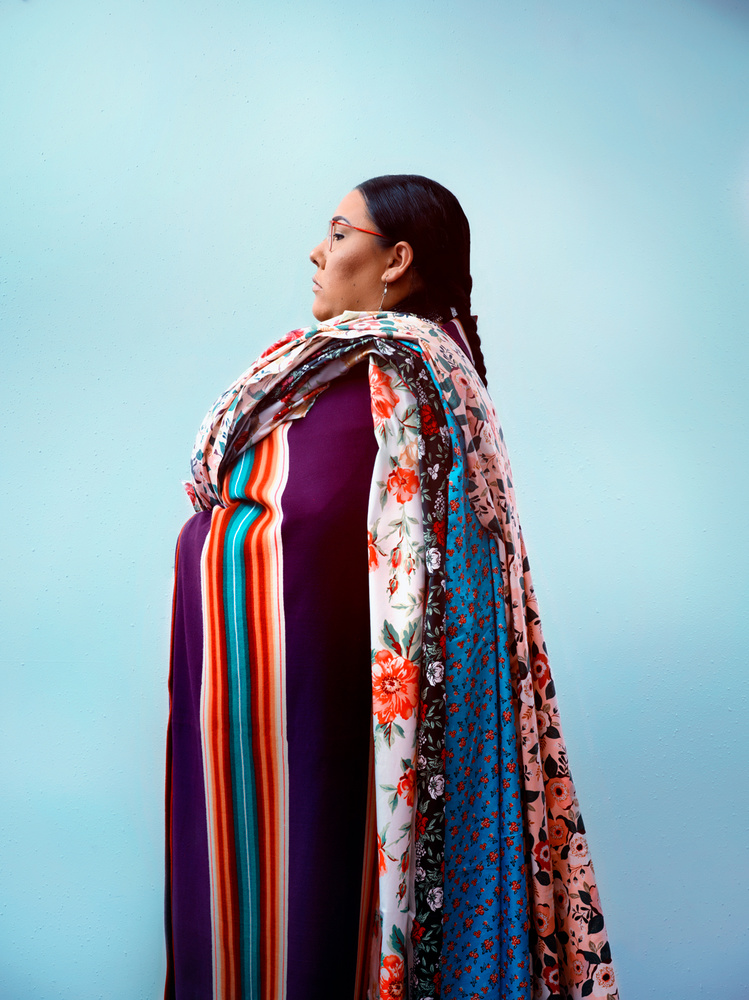
Where the question of authenticity & representation really comes into play is in the film’s coda, delivered after De Niro & DiCaprio’s thugs have already been arrested for their crimes by the Baby’s First Steps version of the FBI.  Where lesser Awards Season historical dramas will fill the audience in on how their characters’ lives resolved via onscreen text before the end credits, Scorsese delivers that information via dramatic radio play — complete with the outdat foley sound effects and outdated racist stereotypes that would’ve been contemporary in that pre-cinematic medium.  The director then shambles onscreen himself as a radio announcer to read Gladstone’s character’s real-life obituary to the audience with humble solemnity.  This is a jarring stylistic swing for a film that often finds Scorsese working in Boardwalk Empire mode more than Goodfellas mode (more dramatic than cinematic), but it’s at least one that seeks artistic purpose beyond reciting this history to a wide audience who needs to hear it.  Here we have a quintessentially American story told by a quintessential American storyteller, and yet there’s no way for Scorsese to recite that history without in some way participating in its ongoing genocidal erasure of Indigenous voices.  The opening doorway image to the “In Our Hands” exhibit is a portrait of an Osage woman taken by photographer Ryan Redcorn, purposefully representing his subject in a proud, dignified pose.  In Scorsese’s picture, Osage women are sickly victims of white American greed, because that’s true to white American history.  It’s worth pushing for a better world where both of those images are offered equally accessible platforms, and this film’s coda feels like an uneasy acknowledgement of the current imbalance.  Still, this is a story worth reciting, and there are certainly less noble things Scorsese could be doing with $treaming $ervice money than turbocharging Lily Gladstone’s career.

-Brandon Ledet

The Private Lives of Elizabeth and Essex (1939)

I feel like what I’m looking for in any Bette Davis movie is for the actor to let loose & open fire on her costars. I’m not sure if this is retroactively a result of her late career comeback in the famously combative (onscreen & off) What Ever Happened to Baby Jane? or if it’s just a natural extension of a deliberately non-demure persona she carried throughout her career. I didn’t think to expect that loose cannon antagonism in the 1939 Technicolor costume drama The Private Lives of Elizabeth and Essex, but Davis’s lead performance as Queen Elizabeth I delivered it by the truckload. Although it has the pedigree of an expensive Major Studio period piece, the film is essentially just Bette Davis wearing beautiful costumes, gobbling snacks, and hurling vicious insults for two solid hours. In other words, it’s fabulous.

Many actors have interpreted Elizabeth I onscreen over the decades, ranging as wide as Cate Blanchett & Quentin Crisp, but Bette Davis’s depiction feels entirely singular in its vicious, feral energy. Like with many pictures over her career, it’s rumored that she was not at all happy with her coworkers or the demands of the production. She was especially miffed that Elizabeth’s remarkably high hairline required her to shave her head, which put her in a persistently ornery mood. This made the film a chore to shoot, especially since Davis would act out in juvenile ways like slapping the piss out of her romantic co-lead, Errol Flynn, with all of her might instead of just making sure the scripted hit looked good for the camera. That anger translated well to the role, though, making Davis’s Elizabeth come across as a kind of furious demon in beautiful costumes. She’s visibly uncomfortable, constantly reaching for grapes or wine or invisible stress balls to calm her nerves as she inhales between each insult. The effect on the film is glorious, though, transporting Davis’s slack, unceremonious, Baby Jane Hudson-mode energy into a stuffy Studio Era drama where it doesn’t belong.

A 16th Century tale of real life war & romance endowed with the same Major Studio bloat of the 1960s Camelot musical, there isn’t much to The Private Lives of Elizabeth and Essex in a formal sense. As Robert Devereux, the Earl of Essex, Errol Flynn is propped up as a kind of love/hate romantic sparring partner meant to periodically threaten Davis’s power as the Queen of England. She steamrolls him with ease. Essex & Elizabeth both can’t get enough of each other in their lustful bouts of loneliness and can’t possibly share the same space & time, due to their individual thirsts for power & the throne. This sometimes leads to the Queen sending Essex off to war in the Irish Moors (which look an awful lot like a studio lot) without proper supplies to succeed, just to be temporarily rid of him. It also leads to literal, direct rebellion within the palace where the two square off head to head with their respective guards. Flynn’s Essex is never given a chance to really stand up to the Queen, however. Outside occasionally riding a horse, the athletic leading man isn’t even afforded a chance to do any of his signature swashbuckling. Elizabeth’s other foils, a dangerously horny Olivia de Havilland and a foppish knight played by a baby faced Vincent Price, don’t fare much better. As much as this film’s dialogue frets over Elizabeth’s duties as a Queen being hindered by her desires as a woman, there’s no question who’s in charge and who’s going to make it out on top. I’m not saying that because of the inevitability if its Wikipedia-verifiable history lesson, either. Davis’s fierceness demands her victory, with obligatory demise for each of her opponents, whether or not she wants to fuck them.

I’d be a liar if I said I cared at all about the plot of this film. Formally, The Private Lives of Elizabeth and Essex is remarkable less for its narrative than it is for its gorgeous production & costume design. One Orry-Kelly-designed dress in particular, with shimmering green mermaid scales, a pale pink Elizabethan collar (naturally), and a neon green feathered hand fan had me gasping for air. Those luxurious design flourishes only serve to contrast Elizabeth’s demonic furor, however, as she complains about her old age, smashes mirrors, claws at a pile of snacks, and fires off long strands of insults: “lying villain,” “wicked devil,” “slimy toad,” “stupid cattle,” “snakes & rats,” etc. If, like me, your favorite Bette Davis performances find the actor in vicious attack mode, the formal mediocrity of this Studio Era period piece won’t matter to you one bit. The film is downright delicious for Davis’s inhuman bursts of Technicolor furor, especially considering the restrained pomp & propriety of the setting that contrasts it.

-Brandon Ledet