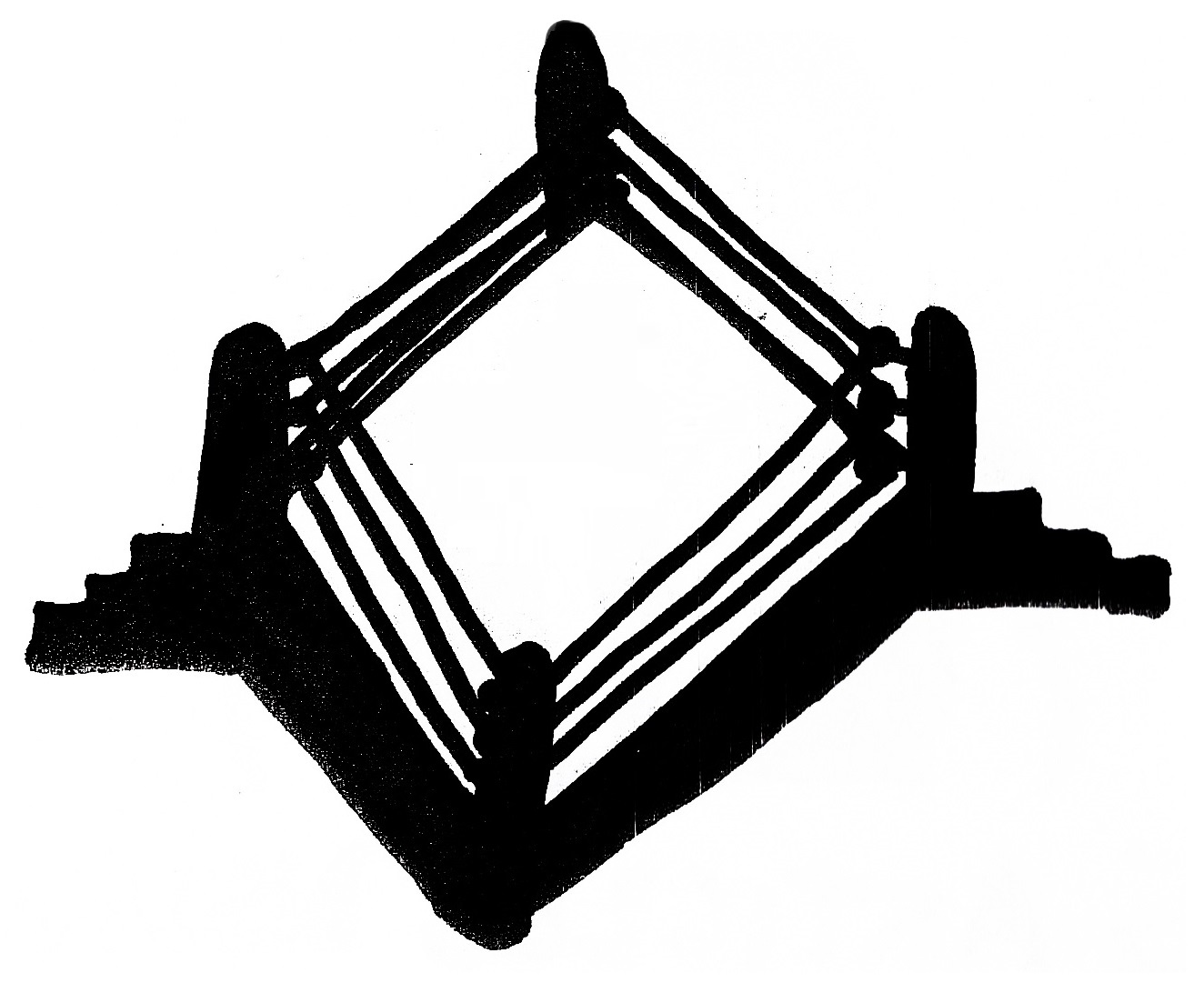
Unsurprisingly, a lot of this year’s major Awards Frontrunners are solemn biopics of men who committed some of the worst sins in human history: the invention of the atom bomb, the daily operation of concentration camps, the genocide of an Indigenous nation. As much as The Academy has attempted to reconfigure what qualifies as an Oscar-Worthy movie, it’s clear that the Oscar-friendly template of Important Men directing history lessons about Important Men is still an effective one; all that’s really changed is that those portraits of Important Men have become more critical than celebratory. Further down the power rankings of this FYC season’s major players, there’s also a curious pair of historical biopics about Important Men who operated in a much smaller arena than the frontrunners’ global politics stomping grounds: the regional pro wrestling circuit of 1980s Texas. The men depicted in these pro wrasslin’ biopics are of much smaller historical importance than a J. Robert Oppenheimer or a Rudolf Höss; the tearjerking melodrama of their lives is less about the moral sins of their own actions than it is about how cruelly unfair the world was to them, and whether they survived the trauma. However, in a big picture sense, they echo the same criticism of the rigid machismo and the hypocrisy in Family Values conservatism that drove the Important Men of Oppenheimer, Killers of the Flowers Moon, and The Zone of Interest to commit humanity’s greatest. They just work through that cultural tragedy within the walls of their small family homes and within the rubber-padded ropes of the wrestling ring. It’s more contained.
If this season’s pro wrestling dramas are being contextualized as awards-hopefuls, they’re most overtly engineering FYC attention for their male stars. In that way, pro wrestling is the perfect cinematic subject, since it offers such a familiar, convenient storytelling template to help get male performers over with the crowd. Even when a wrasslin’ pictures’s in-movie drama feels minor in comparison to more historically important works, their in-ring drama carries the audience through, highlighting an actors’ talents with the emotional histrionics of a soap opera or a Greek tragedy. Nobody benefits from that dramatic bolstering this year more than Gabriel García Bernal, who stars as the titular lead in the lucha libre history lesson Cassandro. This by-the-numbers biopic isn’t half as stylistically daring as the Cassandro, el Exótico! documentary on the same subject, nor as fabulously glamorous as the luchador himself, but it’s an inherently cinematic story and García Bernal shines in the central role. The real-life Cassandro is credited for changing the artform of lucha libre by subverting the homophobic trope of the “exótico.” When he entered the business wrestling on both sides of the Texas-Mexico border, exóticos were a purely homophobic stereotype: heels who would earn cheap heat by flirting with their more traditionally macho opponents, then get immediately crushed in the ring to the crowd’s enthusiastic cheers. It was gaybashing as ceremonial pageantry. Cassandro flipped the script by genuinely getting over with the crowd through the artistry of his wrestling, to the point where promoters saw potential profits in letting an exótico win for a change; or, that’s at least how the story goes, according to kayfabe. The beyond-the-mat drama of his struggles with a loving but homophobic mother and with sex-partner colleagues who are willing to fuck him in private but renounce him in public can feel a little phony & cliche to anyone who’s seen their share of queer indie dramas in the past few decades. The nonstop montage of Cassandro’s career in the ring is still emotionally compelling in a succinct, celebratory, wrasslin’-specific way that makes up for those broad cliches, though, and by the time the credits roll it’s hard to tell whether you’re rooting for Cassandro or rooting for García Bernal – an FYC publicist’s dream.
The Von Erich family drama The Iron Claw spreads the FYC wealth to many more potential nominees than Cassandro‘s fixed spotlight on Gabriel García Bernal. The improbable true story of the supposedly “cursed” family of professional wrestlers has plenty of star-making tragedy to spread around its four central brothers: Zac Efron as Kevin Von Erich, Jeremy Allen White as Kerry Von Erich, Harris Dickinson as David Von Erich, and Stanley Simons as David Von Erich. Efron is the most obvious awards play of the group, transforming himself into a human He-Man action figure for the role in a grotesque way that awards bodies love to celebrate. Each of the Von Erich brothers get their moment to bring the audience to tears, though, as they’re each pushed to the brink of what their hearts and bodies can handle by their toxically macho father Fritz Von Erich, played with monstrous villainy by Holt McCallany. The first half of the movie recalls the laidback nostalgic cool of Dazed and Confused as the four central brothers lean on each other for warmth & validation in the happiest times of their lives, working together as up & coming wrestlers who have yet to be fully poisoned by their father’s insistence they compete amongst themselves for his scraps of praise. The second half disrupts that momentary bliss with the heightened violence of a Greek tragedy, with each brother meeting improbably horrific ends in a rapid, relentless procession. The Iron Claw‘s reliance on the in-ring drama of pro wrestling is heaviest in the early stretch, as the Von Erichs’ prominence in pre-WWF regional wrasslin’ circuits is mapped out in montage & dramatic recreations of select, pivotal matches. The back half is a much more straightforward drama that could have befallen any sports-family household, since cataloging the parade of traumas that crushed the Von Erichs leaves very little time to show them actually doing the work. Besides, the movie isn’t really about their wrestling careers anyway; it’s more about the love they shared as brothers, and how important that bond was in a home run by a man incapable of expressing affection. If it were any less successful as a sincere family drama, the men’s frequent repetition of the word “Brother” would play as a joke, the same way audiences now laugh every time Vin Diesel says “Family” in the Fast & Furious movies.
If this were a one-on-one, three-count fight, it would be a squash match. Cassandro is dramatically and stylistically outperformed by The Iron Claw by practically every metric – except, maybe, in the vintage-glam detail of Cassandro’s gemstoned ring gear. Neither film is an exceptional work of great artistic importance, though; they’re both just FYC acting showcases for their above-the-line talents, who utilize pro-wrestling’s played-to-the-cheap-seats pageantry to add some emotional heft to otherwise traditional sports dramas. If they have any standing in discussion with the Oscar-hopefuls who’ve risen to the top of the Vegas-odds rankings over the course of this FYC season, it’s in their shared skepticism over the effects of stoic masculinity and conservative Family Values in recent generational history. Cassandro finds a way to offer a triumphant rejection of those traditional values, while The Iron Claw drags our battered hearts through their most miserable consequences. In either case, their performers are never more powerful nor more beautiful than they are on the wrestling mat, and both films are excellent examples of acting as full-body physical artistry. If I have to watch straightforward, mediocre melodramas to keep up with the buzziest titles in the Oscars Cycle every year, I’d be more than happy if they’d continually return to the wrestling ring for easy crowd work and promotion. It gives us something easy to root for, which is honestly something I’d rather put myself through than yet another war atrocity drama about the worst things that have ever happened in the history of the human species.
-Brandon Ledet


 Swampflix