
There was a round of headlines earlier this month announcing that George Miller is looking to complete his ongoing Mad Max saga with a new TV show & movie, which is impressively ambitious for an 81-year-old filmmaker nearing the end of his career. To his credit, Miller’s advanced age didn’t affect his ability to deliver high-octane action spectacle in his last Mad Max chapter, Furiosa, which found the octogenarian still experimenting with new ways to wow his audience with comic book mythmaking in every brutal frame. Even so, it appears Warner Bros is reluctant to allow Miller another spin behind the wheel of the war rig, so it might be a while before we see what Furiosa and the gang are up to in the proposed final chapter (if we ever see it at all). In the meantime, Miller was on the top of my mind while watching a different over-the-top action spectacle from an aging auteur, 80-year-old Yuen Woo-Ping’s big budget comic book adaptation Blades of the Guardians: Wind Rises in the Desert. Yuen’s flying-swordsmen action epic recalls Miller’s work both in its CGI sandstorm surrealism and in its shockingly elaborate brutality for a man of Yuen’s age. His name may not be as readily familiar to American audiences as Miller’s, but rest assured you are already a fan of his work, and you owe it to yourself to see how far he’s still pushing his craft while major movie studios are still allowing him to do so.
As a director, Yuen Woo-Ping is most famous for making Jackie Chan a household name in 1978’s Drunken Master, half a century ago. However, he’s most revered by martial arts fans in the West for his work as the fight choreographer for 1990s & 2000s actioners as formidable as Kill Bill & The Matrix. He effectively brought authentic wuxia action to the America for the first time, notably choreographing the flying-swordsmen spectacle of Crouching Tiger, Hidden Dragon, which still defines the wuxia genre for most Western audiences. So, even if you are not familiar with the comic-book source material for Blades of the Guardians, you likely have some expectation for what a top-of-his-game Yuen Woo-Ping can bring to big-screen fight choreo. He exceeds expectations by the end of the first fight, much like Miller wowing audiences with the late-in-the-game ferocity he brought to the nonstop chase scenes of Fury Road. Yuen’s camera gets inches away from the hand-to-hand street brawls that break out at the opening locale, then pull away to catch a top-down aerial view of the same ongoing action. A nameless goon is pantsed & humiliated mid-fight by our vagabond hero in that opening bout, recalling the anything-goes tonal shifts of Hong Kong’s action filmmaking heyday. Later, two assassins battle each other with flaming swords in an oil field setting worthy of a heavy metal album cover. Arrows fly all the way through horse riders’ skulls mid-gallop, throwing them lifeless to the ground. An epic one-on-one assassin battle is staged during a world-ending sandstorm of Fury Road proportions. Blades of the Guardians travels across the desert from one action set piece to another like a true big-budget blockbuster, far from the philosophical sparseness of King Hu-style wuxia titles like A Touch of Zen. It’s a big-canvas crowdpleaser designed to keep your heart rate up and your fist in the air, held there by a seasoned elder of its genre.
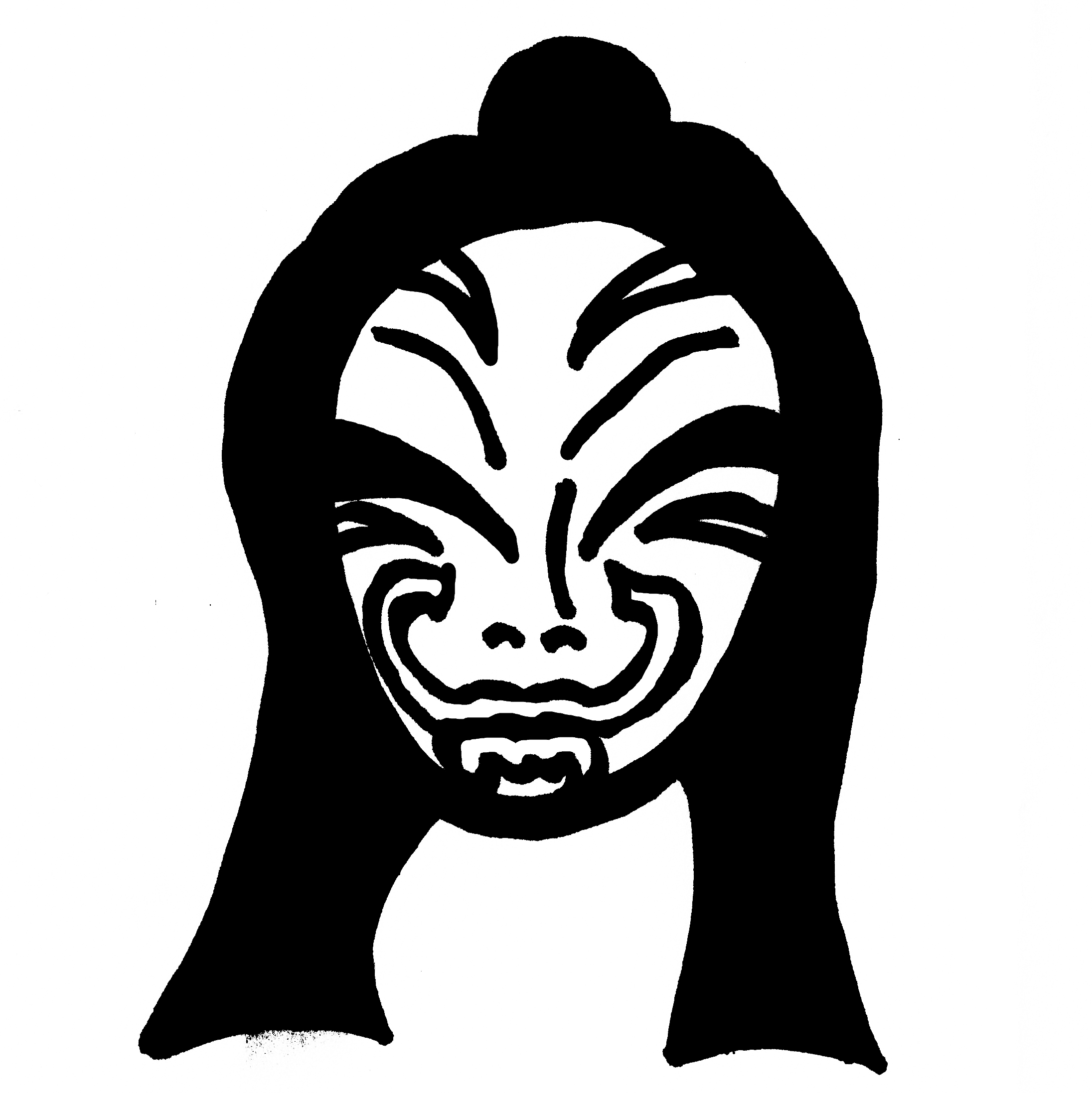
Wu Jing (Wolf Warrior) stars as a 1st Century transient bounty hunter who’s constantly dodging offers to settle down as a government official (training troops in sword fighting) or as a small-village family man (raising the adorable young child he’s seemingly adopted Grogu-style). His skills as the #2 fugitive of the empire are put to the test when he’s hired to transport the empire’s #1 fugitive—the enigmatic leader of The Flower Revolution—to safety at the opposite end of the desert. The revolutionary in his care does not help make this task easy in any way, both wearing a conspicuous cat mask that broadcasts his identity to all onlookers and being so feebly averse to conflict that he makes each fight harder just by hanging around. Meanwhile, every assassin in the game is eager to collect the bounty on the revolutionary’s head, and the protector’s unwanted road companions land him in larger crises of political intrigue that complicate the mission at every stop. Like most wuxia actioners, Blades of the Guardians is adapted from popular lit that presumes familiarity from its audience and only offers rapid-fire exposition dumps and character-intro title cards for narrative bearings. If you can let go of needing to know the political & historical alignment of every character beyond their obvious designations as “good” or “evil,” however, it’s follows a fairly familiar action blockbuster path, wherein a seemingly stoic warrior gradually warms up to his found family of traveling companions after initially taking on a mission for selfish personal gain. The rest is all communicated in the broad strokes of horseback battles, head-chopping sword fights, and unexpected whirlwind romance — each depicted with an incredible amount of elaborate detail and technical precision from a Hong Kong industry legend who doesn’t get the opportunities to flex his muscles nearly as often as he used to.
I don’t think it’s inappropriate to dwell so much on the long-spanning legacy Yuen Woo-Ping represents in the director’s chair. Blades of the Guardians very deliberately acts as a passing of the cultural torch from older generations of Chinese action blockbuster filmmakers to youthful up-and-comers. While Wu Jing might headline the film after two solid decades of onscreen martial arts spectacle, he has costars so young & fresh to the game that their cast listing on Wikipedia links to a K-pop boy band instead of their own designated page (namely, Dong Sicheng of NCT, among other boy banders in the cast). It’s a movie that goes out of its way to pay respect to the industry’s old-timers, though, including small roles for Jet Li & “Big Tony” Leung Ka-fai and a last-minute cameo from Yuen Woo-Ping himself. You just wouldn’t know that if you saw any of the film’s elaborately choreographed fight scenes out of context, since they each convey a relentless eagerness to wow the audience that’s usually associated with younger filmmakers who feel they have something to prove. The stylized fights of Blades of the Guardians are unmistakably aligned with Yuen Woo-Ping’s most iconic work (especially recalling The Matrix in its hand-to-hand closeups and Crouching Tiger in its fantastic swordfights), but I still found myself thinking of George Miller as he staged those fights across the vastness of the landscape’s whirling sands. The two old-timers share a demonstrated hunger & ferocity you wouldn’t typically expect from filmmakers’ their age, putting to shame all of the other auteurs of their generation who get generously graded on a curve for the sloppiness of their own “Late Style” missives.
-Brandon Ledet



 Swampflix