Quick Takes: New Orleans Rep Scene Update

Excluding the AMC multiplexes out in the suburbs, the Zeitgeist outpost in Arabi, and the backroom microcinemas in-between, there are exactly two regularly operational cinema hubs in Orleans Parish: The Prytania and The Broad. Both of these cultural epicenters work hard to make full use of their relatively limited screen space, finding the right balance between the arthouse titles that keep their die-hard regulars hooked and the big-ticket Disney products that actually keep the lights on. The most noble service The Prytania and The Broad provide is making room for regular, weekly repertory programming in the schedule gaps between new releases. Not too long ago, the Sunday morning Classic Movies slot at The Prytania Uptown was the only reliable spot to catch older titles in a proper theater around here, but the New Orleans repertory scene has gradually bulked up in recent years. The Broad has a classic horror movie slot every Monday night through ScreamFest NOLA (who’ve recently screened classics like Ginger Snaps, Frankenhooker, and Day of the Dead), an arthouse repertory slot every Wednesday night via Gap Tooth Cinema (who’ve recently screened once-in-a-lifetime obscurities like The Idiots, Supervixens, and Adua and Her Friends), and frequent specialty screenings at their neighboring outdoor venue The Broadside. Meanwhile, Rene Brunet’s Classic Movie Series is still going strong at The Prytania (recent standout titles: The Conversation, Dial ‘M’ for Murder, and 13 Ghosts in Illusion-O), and they’ve recently collaborated with the folks at Overlook Film Fest to program classic horror titles as well (Frankenstein, The Exorcist, and Interview with the Vampire, among others, during this year’s in-house “Kill-O-Rama” festival). Between these two businesses’ four locations, you can also routinely find specialty one-off screenings & re-releases on the weekly schedules (recently, Battle Royale & Linda Linda Linda at The Prytania’s Canal Place theaters and Night of the Juggler & Leila and the Wolves at The Broad).

All in all, our local rep scene is still too small to compete with larger cities like Los Angeles, New York, Austin, Chicago, Toronto, and San Francisco, where audiences seemingly get to see an older “new-to-you” title projected on the big screen every day of the week. New Orleans rep screenings are out there, though, and they are easily accessible if you know where to look. As evidence that this scene exists, here are a few quick short-form reviews of the repertory screenings I happened to catch around the city over the past couple weeks, along with notes on where I found them. I’ve also recently started a Letterboxd list to track what classic titles we’ve been able to cover on Swampflix over the years thanks to this growing scene, which seems to have only gotten more robust since I last filed one of these reports in 2023.

The Asphalt Jungle (1950)

The original Uptown location of The Prytania is still the most consistent local venue for seeing repertory titles on the big screen, as it has been for as long as I can remember. The only catch is that their Classic Movies program is almost entirely restricted to Hollywood productions, the kinds of titles you expect to see on TCM’s weekly broadcast schedule. As limited in range as that may sound, it’s an excellent resource for catching up with the works of luminary greats like Kubrick, Welles, and Hitchcock that you might’ve missed (especially Hitchcock, their house-favorite auteur), big & loud in an environment where you’re unlikely to get distracted by your phone. To that end, I recently saw John Huston’s foundational diamond-heist thriller The Asphalt Jungle for the first time as part of that series, after having previously seen Huston’s foundational noir The Maltese Falcon there several years earlier. Within the heist-thriller genre, there’s nothing especially surprising about The Asphalt Jungle‘s scene-to-scene plot beats, as it is an immeasurably influential work that helped establish that genre’s basic story structure in the first place. Where it does manage to surprise is in the little details of the character quirks, as it gradually becomes a story about the unlikely friendship between the elderly mastermind and the young hooligan muscle at opposite ends of the criminal hierarchy, both of whom are equally doomed. The framing compositions are also top-notch; that John Huston kid is a name to watch, I tell you what.

It would be disingenuous to call The Asphalt Jungle a hangout film, as there is plenty of urgent thriller tension in its textbook bank heist plot. The four factions vying for victory are clearly defined: the heist crew hastily assembled by a recently-paroled criminal mastermind (Sam Jaffe), the crooked lawyer who intends to steal away that crew’s loot for himself (Louis Calhern), the corrupt cop who pretends to be on their case while taking bribes beneath the table (Barry Kelley), and the by-the-books police commissioner who still believes in the nobility of obeying the law (John McIntire). The cops’ involvement in the diamond-heist fallout is mostly present as a background inevitability, something that makes the crooked lawyer sweat as he schemes to rip off his own accomplices. The real heart of the story is in the way the bank robbers pass their time between the heist and getting caught, recalling the crime-thriller hangouts of Quentin Tarantino’s oeuvre. There’s something sweet in the simple, pleasure-seeking worldviews of the mastermind and the hothead muscle (Sterling Hayden) in particular — one of whom meets his end while taking the time to watch a teen girl dance to a roadside diner jukebox and the other meeting his own end while indulging in homesick nostalgia, feebly returning to his family farm while he slowly bleeds to death from a gunshot wound. A baby-faced Marilyn Monroe also makes a huge impression in the couple scenes afforded to her as the crooked lawyer’s age-gap mistress, exclaiming “Yipe!” whenever she gets excited, and referring to her much older lover by pet names like “Uncle” and “Banana Head.” The editing rhythms of The Asphalt Jungle are not especially hurried or thrilling, but Huston arranges his performers in the Academy-ratio frame with consistently adept blocking, and he constantly feeds them all-timer lines of dialogue like, “Experience has taught me never to trust a policeman. Just when you think one’s all right, he turns legit.” It’s a great mood to sit in, especially once its noir-archetype characters start making unlikely friends & foes in the hours after the plot-catalyst heist.

Black Narcissus (1947)

Curiously, my most recent dip into the Gap Tooth Cinema program at The Broad was also a classic title you could expect to catch in TCM’s broadcast line-up, whereas the series is generally more unique for its “Where else would you ever see this?” selections (On the Silver Globe, Entertaining Mr. Sloane, Coonskin, etc.). 1947’s Black Narcissus is as core of a text to nuns-in-crisis cinema as The Asphalt Jungle is to bank heist thrillers. If it’s not the most often seen & referenced convent drama, that’s only because The Sound of Music has a more iconic sing-a-long soundtrack, whereas most of the sound design in Black Narcissus is overpowered by howling, ominous winds. It was hearing those winds in immersive theatrical surround sound that made this first-time watch so memorably intense for me, though, whereas Powell & Pressburger’s follow-up ballet industry melodrama The Red Shoes is more striking for its three-strip Technicolor fantasia. While there are flashes of Technicolor brilliance throughout Black Narcissus, the combination of its doomed nuns’ white habits & skin is so uniformly pale the film often registers as monochrome. It’s the constant roar of the cold winds that gradually break those nuns’ minds along with the audience’s, eventually triggering the passionate, color-saturated violence of the third act. I know it’s gauche to describe anything as “Lynchian” these days, but those howling winds are maddening in a distinctly Lynchian way, and it turns out the production was filmed the same year Lynch himself was born. Coincidence? I think not.

The sinful evil those winds summon is mostly the seduction of nostalgia & memory. Deborah Kerr stars as a remarkably young Mother Superior who’s assigned to start a new convent in a former cliffside harem in the Himalayas, offering medicine and education to the Indian locals who don’t need or want the nuns’ presence. The isolation of the newly repurposed “house of women” on that mountaintop weighs on the sisters who are assigned there, as the ominous winds and dizzying altitude invite their minds to drift to memories from before they took their holy vows. Since it’s a British studio picture made in the 1940s, the nuns never express the transgression directly, but they specifically start to doubt their commitment to Christ because they’ve become desperately horny & lonely, to the point of madness. The burly presence of a blowhard macho handyman onsite is especially tempting for the women, and their repressed desire for him explodes into expressionistically violent acts that can only lead to death, never actual sex. It’s in those climactic violent acts that Black Narcissus most directly recalls the dark fantasy gestures of The Red Shoes, especially in the sisters’ extreme, wild-eyed close-ups. The winds that push them towards the matte-painting cliffsides outside the convent are much more consistently surreal throughout, however, recalling much later, freer works like David Lynch’s Twin Peaks: The Return or Hiroshi Teshigahara’s Woman in the Dunes.

Mr. Melvin (1989, 2025)

While The Prytania’s Classic Movies and The Broad’s Gap Tooth series are dependable workhorse repertory programs, you have to walk next door from The Broad to their outdoor sister venue The Broadside to catch the more extravagant specialty screenings. For instance, it’s where I caught Lamberto Bava’s classic Italo meta-horror Demons with a live score from Goblin’s Claudio Simonetti and, more recently, it’s where I caught the new remix of The Toxic Avenger Parts II & III (1989), now Frankensteined together and retitled as Mr. Melvin (2025). That Mr. Melvin screening was supposed to be accompanied with a Lloyd Kaufman meet & greet, but the recently injured Kaufman couldn’t travel so he appeared only via video message, sending Troma regular Lisa Gaye to act as his brand ambassador instead. The movie was also accompanied with an opening punk rock set from The Pallbearers, making for a much rowdier setting than is typical for movie-nerd rep screenings around the city. The general party atmosphere at The Broadside can be distracting if you’ve never seen the film they’re screening before (I remember being especially distracted by the circus-act antics of Gap Tooth’s showing of Carny there), but it’s perfect for celebrating a VHS-era classic that you’re used to watching alone at home. The timing of this Mr. Melvin cut was personally serendipitous for me, then, as I had just watched every Toxic Avenger film for a podcast episode the previous month.

Since I had already exorcised all my demonic opinions about Toxie’s big-screen journey so recently on the podcast, I don’t have much new to say about Mr. Melvin except in pinpointing where it ranks among other titles in the series. Objectively, the best Toxic Avenger film is likely either the bad-taste original from 1984 or Macon Blair’s punching-up revision that was also released this year, and yet I can’t help but admire Mr. Melvin as a completionist’s timesaver. It’s all the best parts of the official Toxie sequels (the Japanese travelogue from Toxic Avenger II, the Toxie-goes-yuppie satire of Toxic Avenger III, not a single frame from Toxic Avenger IV) with at least 70 minutes of time-wasting junk erased from the public record. Mathematically speaking, it’s the most efficiently entertaining Toxic Avenger film to date, which technically qualifies it as public service — something to be considered by Lloyd Kaufman’s parole board. And since the original, in-tact sequels were rotting so close to the forefront of my mind, I was able to step away during the screening to grab another beer without missing anything, which is essential to appreciating any Troma release. You go to The Prytania to watch Old Hollywood classics in a historic setting, sipping morning coffee to the vintage Looney Tunes shorts that precede the feature. You go to Gap Tooth screenings at The Broad to challenge yourself with some daringly curated arthouse obscurities, chatting with friends afterwards to parse through complex feelings & ideas. In contrast, the repertory programming next door at The Broadside is for pounding beers and whooping along to a personal fav you’ve already seen a couple dozen times with likeminded freaks. Plan your repertory outings accordingly.

-Brandon Ledet
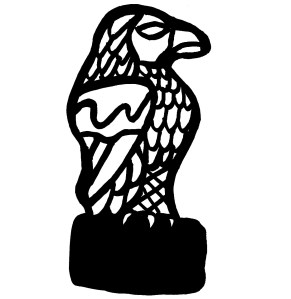
The Maltese Falcon (1941)

The common wisdom about Bugs Bunny is that he was modeled after Old Hollywood hunk Clark Gable; the only reason we even have the misconception that real-life rabbits love to eat carrots is because Bugs Bunny parodied Gable doing so in It Happened One Night and the image stuck. However, Gable’s slick, fast-talking, devilish pranksterism is just as much of a reflection of Studio Era sensibilities as they are a personal quirk. His rapid-fire dialogue delivery screams “Turner Classic Movies” more so than seeming specific to him, as if he were speaking a language called “Old Movie” that just happens to sound a lot like sped-up English. I’m saying this mostly because Bugs Bunny was the only thing I could think about while recently watching The Maltese Falcon for the first time, even though that’s a film that stars Humphrey Bogart, not Gable. The Maltese Falcon is a film with an absurdly prestigious pedigree: it’s the directorial debut of Studio Era legend John Huston; it’s cited as the first “major” film noir (as opposed to the smaller, independently produced noir pictures that preceded it); it’s one of the most defining examples of the MacGuffin as a literary device; etc. Still, all I could think about for the entire duration of the film was how funny Humphrey Bogart was in the lead role, and how much he reminded me of Bugs. Bogart is fluent in the same Old Movie language Clark Gable speaks (Bugsy Bunny also parodied him in the Casablanca poof Carrotblanca), and I feel as if I already owe the film a re-watch, not being able to keep up with each joke as fast as they were flying at me in Old Movie dialect.

As the film’s reputation of typifying a MacGuffin may suggest, the plot of The Maltese Falcon does not matter all that much. Bogart stars as a hard-drinking detective who gets sucked into a thieves’ quarrel by a dangerous dame (Mary Astor). At the expense of his partner, his freedom, and potentially his life, he aids this sultry stranger in their quest to obtain a highly valuable ornament ([whispering to my date while watching The Maltese Falcon when The Maltese Falcon first appears on the screen] “That’s the Maltese Falcon”) while avoiding the bullets of a small ring of thieves who also desperately desire to possess it. Casablanca’s Sydney Greenstreet, The Killing’s Elisha Cook Jr, and everyone’s favorite pervert Peter Lorre round out the main cast as that trio of gun-toting thieves, each taking turns backing Bogart into a corner so he can promptly talk his way out of it. It’s Bogart lashing out in that fight-or-flight position that makes The Maltese Falcon such a consistently fun watch. Whether talking to the dame, the cops, or the crooks, Bogart’s hardboiled detective delivers long strings of uninterrupted sass at a machine gun’s pace. Bogart knows he’s being lied to & bullied from all directions, but he finds the danger & mystery of that set-up to be a gas, taking great delight in calling everyone out in their deceits as his hypersensitive bullshit detector goes haywire. When Sydney Greenstreet’s would-be criminal mastermind repeatedly tells Bogart, “You are a character,” out of a gamesman’s delight, it the most honest sentiment shared by any of the film’s various players. This is a film built entirely on Bogart being a comically oversized character, in the colloquial sense of the word.

I don’t want to oversell The Maltese Falcon as a laugh-a-second yuck ‘em up comedy. Based on a very serious crime novel, the second adaption after a 1930s original (Hollywood remake culture has gone too far!), the film’s surface-level details deliver everything you’d want to see in a classic noir. Our “hero” is a hard-drinking adulterer who inserts himself into deadly criminals’ schemes for amusement & personal profit. He dons the classic suits & fedoras combo that inspire those wretched “Men used to dress classy” MRA memes. He’s framed with the intense lighting & drastic angles of classic noir while simply rolling a cigarette or pouring himself a drink, a handsome personification of gruff masculinity. This is directly contrasted with the fey, sexually devious energy of Peter Lorre, playing a character explicitly described as homosexual in the source material. Bogart gets into some S&M play with Lorre (who is introduced practically fellating the handle of his cane), dominating him with some Kung Fu action and barking “When you’re slapped, you’ll take it and like it.” There’s a serious, even tragic romanticism to this Alpha Male masculinity, typified by his fawning secretary’s plea “You always think you know what you’re doing, but you’re too slick for your own good.” Unfortunately, that macho posturing was something that trickled down into the zeitgeist just as much as Bogart’s “Ain’t I a stinker?” pranksterism, influencing descendants as disparate as the wise-cracking meatheads of French New Wave staples like Breathless and 1980s action spectacles like Commando. There’s a danger in making your troubled antiheroes out to be such slick charmers; they end up being so lovable they’re practically children’s-entertainment cartoon bunnies.

At this point, you probably don’t need to hear from me or any amateur film blogger that The Maltese Falcon is well-made & worth seeing. Catching it for the first time on the big screen (thanks to The Prytania’s Classic Movies series) mostly just confirmed for me what I had already assumed from its name recognition & its heavy rotation in corners like TCM: it’s a handsome, well-crafted noir with a talented cast & a distinct Old Hollywood charm. The only thing I didn’t know to expect was that it would be so damn funny. Even its score often reinforces the humor of the dialogue, with chipper flights of orchestral whims incongruously accompanying a murderous plot about greedy, gun-toting thieves. It’s practically the same accompaniment you’d expect to hear in a Merrie Melodies cartoon while Bugs Bunny cracks wise in an Old Movie cadence to talk his way out of getting shot by Elmer Fudd.

-Brandon Ledet

The Other Side of the Wind (2018)

It’s almost impossible to say anything about Orson Welles’s posthumous bomb-thrower The Other Side of the Wind, positive or negative, that the film doesn’t already say about itself. A notoriously troubled production that only came to completion though Peter Bogdanovich’s stubborn devotion to boosting Welles’s legacy, the film features Bogdanovich as a sycophantic right-hand man to an elderly auteur. A frustrated return to Hollywood filmmaking for Welles after years of European exile, the film features Old Hollywood director John Huston as an elderly auteur struggling to gain backing for his first American production in years, titled The Other Side of the Wind. A collaboration with porn & B-movie cinematographer Gary Graver, it’s a lusciously sleazy affair that cheekily blurs the line between European art film & cheap porno. A messily meta commentary on youthful rebellion & a changing film landscape overrun by New Hollywood upstarts, the film both approximates the same Industry-condemning self-indulgence of Dennis Hopper’s The Last Movie and features Dennis Hopper as himself talking out of his ass about filmmaking philosophy. Caricatures of critic Pauline Kael & New Hollywood producer Robert Evans, who Welles saw as roadblocks to getting this doomed project off the ground, create conflict as the film-within-the-film version of The Other Side of the Wind attempts its first screening to drum up financial support—only for the filmmaker to die at the party before that’s accomplished. For a sprawling, incoherent mess that’s been cooking for four decades solid before finally arriving on Netflix, The Other Side of the Wind is almost impossibly self-aware; it also weaponizes that awareness so that anyone who has ever made (or even seen) a movie is a target.

Another way The Other Side of the Wind feels incredibly self-aware is in the ways it brings Orson Welles’s career full-circle. The director’s legendary debut, Citizen Kane, not only suffered the same troubled path to respect & admiration as what would prove to be his last, but also functions like a documentary profile of a fictional man explained to be larger than life. “A film likeness of the man himself as he looked,” The Other Side of the Wind’s central concern is the psyche of John Huston’s bitter old pervert auteur, frustrated that he has to grovel for funding in a post-Studio System where the New Hollywood rug-rats have taken over. Instead of the birth-to-death portrait of Citizen Kane, however, this film mostly captures the events of a single night, with the details of its subject’s past filled in by partygoers’ gossip & hearsay. In staged found-footage captured on a wide range of cameras, The Other Side of the Wind is supposedly assembled from documentation of the party where the film-within-the-film is meant to be screened, like an arthouse version of the first-season party episode of American Vandal. This fractured structure allows cinematographer Gary Graver to play around with a variety of tones & textures, as if he were filming an especially smutty Guy Maddin picture. It also allows Welles to poke fun at every cinematic archetype – from the Studio System elite to New Hollywood brats to European art snobs – as they swirl around a disaster of a party waiting for The Other Side of the Wind to finally screen. It’s no wonder this film took 40 years to complete; it must have been an editing room nightmare. Still, it opens the floor for Welles to lash out (from beyond the grave) at as many Hollywood phonies as he can strike within a two-hour span, including whichever version of himself is represented in John Huston’s avatar.

The frantic, fractured editing style on display here makes it difficult to latch onto any solid character or narrative definitions, so that the slow, stony baloney movie-within-the movie that interrupts that chaotic party feels like a huge relief. The fake movie in question becomes one of the more intense focal points of the picture, then, which is hilarious because Welles packs it with pornographic smut: naked breasts, cuckolding, bathroom orgies, strap-on dildos, etc. Even in The Other Side of the Wind’s quieter, more thoughtful moments, Welles attacks the audience with the menacing sleaze of a Russ Meyer picture. Of course, he’s aware of his own indulgences in smut here, and the screenings of the movie-within-the-movie often cross-cut to John Huston’s peeping-Tom auteur intensely licking his lips, gazing at the prurient glory of his own work. This meta commentary on Welles’s own pervy interests in those sequences is only compounded by his casting of his real-life young lover Oja Kodar as the star of the psychedelic art-house porno, billed simply as The Actress. Part of me wishes that the entirety of the movie were dedicated to feature-length parody of pornographic art-house pretension in this style, as the filmmaking craft of the fake Other Side of the Wind is much more pleasurable to watch than the frantic satire of the real one (although even the party scenes recall Russ Meyer’s rapid-fire editing style in films like Beyond the Valley of the Dolls). For me, the relentless sketch comedy-like humor of the party scenes wears a little thin in the second hour, but the smutty art house psychedelia parody of the movie screening at their party remains potent throughout. I suspect Welles’s own interests were also more . . . aroused by the sensory pleasures of those sequences as well.

I’m not sure the second hour of The Other Side of the Wind fully lives up to the promise of its first, as it’s difficult to care too deeply about a story meant to disorient & frustrate its audience at that length. Even that complaint is addressed in the film’s script, however, both in screening room scenes where the continuity of the movie-within-the-movie is explained to be not quite the mess it appears to be, and in the question posed to the fictional auteur, “If the audience can’t get it, why even go to the movie?” That question plays as a jab both at the creator and at the public, as The Other Side of the Wind can find no shortage of enemies in Welles’s expressed frustrations with an industry that had essentially abandoned him. John Huston’s character is detailed to be far from a saint – exploiting women (and sometimes men) he’s attracted to for both professional & personal pleasure, treating little people as novelty objects, and just generally acting like a drunken asshole who believes the world of himself and little of anything else. There’s certainly some self-laceration detectable in that portrait of a despicable auteur the world has left behind, but it’s a critique that extends to all selfish, self-aggrandizing men who have shared his profession – from Russ Meyer to Antonioni. The Other Side of the Wind is both critic & participant, both weapon & target. It’s both incredibly flawed & incredibly aware of those shortcomings, easily making for one of the most fascinating & storied releases of the year—just not the most wholly satisfying one. Even if you somehow walk away from The Other Side of the Wind as frustrated with its stops & starts as Welles did, you still have to admire the picture for all its go-for-broke smutty audacity and its drunken willingness to throw a punch.

-Brandon Ledet