The Rage: Carrie 2 (1999)

It was recently announced that self-appointed Stephen King adapter Mike Flanagan (usurping Mick Garris’s throne) will soon be adapting the horror author’s debut novel Carrie into a five-part miniseries.  If you’re not already onboard for Flanagan’s melodramatic, literary take on horror storytelling, it’s not an especially promising proposition.  On the page, Carrie is King at his most direct & succinct, barely breaking through the page count of a novella to tell a simple story of a bullied teenager who violently strikes back at her religious-zealot mother & high school tormentors with newfound telekinetic powers.  It’s a tragic tale without much room to expand, especially not over five hours of serialized television.  Brian De Palma already staged a book-faithful adaptation of Carrie in under 100 minutes nearly half a century ago, while also finding plenty room to bulk up the work with his showy directorial style – the opposite of Flanagan’s grounded interpersonal drama.  If anyone is going to expand the Carrie story without dragging out what’s already on the page with endless expositional filler, they’d have to deviate from the source text entirely and just make up their own thing . . . which is exactly what happened when Carrie was given a late-90s nu-metal makeover in The Rage: Carrie 2.

Written as an original screenplay titled The Curse, The Rage was only reworked as a Carrie sequel several drafts into its rocky production.  Its only tangible narrative connection to the original film is the return of Carrie White’s well-meaning classmate Sue Snell (Amy Irving, reprising her role from the De Palma film), who now works as a guidance counselor at the high school where she once watched all her friends get telekinetically slaughtered.  This disconnection from the original Carrie was a major red flag to director Katt Shea, who only reluctantly signed onto the project (filling in for another director who bailed at the last minute) once she secured permission to include clips of Sue & Carrie in flashback to make it a more credible sequel.  I’m not sure those clips would’ve meant much to the teens of 1999, since De Palma’s Carrie was released before they were born and only lived on through cable broadcasts & Blockbuster Video rentals.  If anything, The Rage‘s horror cinema callback that spoke loudest to that generation was a spoof of the “Do you like scary movies?” phone call from Scream, delivered in a mocking Donald Duck voice by the leader of a new crop of high school bullies.  The moody teenagers of the era were likely showing up to The Rage looking for something contemporary, not to check in on how Sue Snell was doing 20 years later.  To Shea’s credit, she mostly delivered it to them.

Emily Bergl stars as Rachel Lang, the de facto Carrie White in this somewhat-sorta sequel.  She’s a goth-girl loner who’s already grieving the loss of her single mother (Succession‘s J. Smith-Cameron) to institutionalization for schizophrenia when she’s hit with another loss: the sudden suicide of her only good friend (Mena Suvari).  That friend’s death is quickly linked to a small gang of football players who’ve made a point-system game of sleeping with and then immediately dumping as many virginal classmates as they can in a ripped-from-the-headlines plot befitting a Law & Order episode.  Unfortunately for those meathead degenerates, the school goth at the bottom of the social ladder happens to have immense telekinetic powers that could crush them at any time.  This all comes to a head at a homecoming game afterparty at a local rich boy’s house, when Rachel goes full Carrie and burns the entire senior class to the ground.  I hadn’t wanted to see shitheel teens die in a horror movie that badly since, well, since I rewatched Carrie a few weeks ago.  The difference is that the bullies’ deaths felt like an actual victory this time instead of just small & sad, like in the De Palma film.  Rachel unleashes Hell at that party, killing her tormentors with everything from harpoons to flare guns to eyeglasses to Compact Discs.  It’s the kind of payback that makes you stand up & cheer instead of feeling sorry for everyone involved.

The Rage repeats many beats from the original Carrie but transforms the story into such a blatant goth-girl power fantasy that it’s much more closely aligned with films of its own time like Ginger Snaps & The Craft.  There are some very sweaty script-rewrite maneuvers that directly link the source of Rachel Lang’s telekinetic powers to the source of Carrie White’s, but for the most part Katt Shea does her best to distinguish The Rage as its own thing.  The harsh flashbacks to the original Carrie are highlighted in a blood-red color filter, echoed in the black & white, choppy frame-rate textures of Rachel’s telekinetic episodes.  Shea’s background directing erotic thrillers also leaks through, especially in a tender Cinemax-style sequence where Rachel sheds her virginity with one of the popular boys.  I just don’t expect to see that kind of source-text deviation or personal auteurism in a made-for-streaming take on Carrie.  If studios are only going to greenlight (or, in The Rage‘s case, complete) projects with built-in name recognition, the only path forward is for filmmakers to deliver in-name-only sequels that transform their source material into something entirely new.  It’s unlikely that a modern, five-hour version of Carrie will add much to the novel’s cinematic legacy besides digging into its individual character’s motivations & backstories, which means more dutiful homage to forgotten-to-time characters like Sue Snell and fewer novelty modernizations like the flying, throat-slicing CDs of The Rage – reminding you to buy a copy of the official tie-in soundtrack on your way out.  In other words, Mike Flanagan could never; Katt Shea forever ❤

-Brandon Ledet
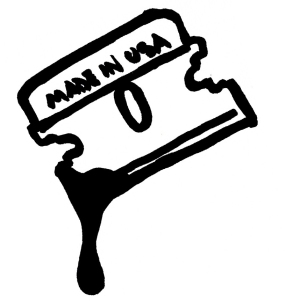
Stripped to Kill 2: Live Girls (1989)

Stripped to Kill 2: Live Girls is my favorite kind of unnecessary horror sequel. Since the first film in Katt Shea’s unashamed sleaze franchise is a self-contained murder mystery mostly comprised of 15(!!!) strip routines and a few gruesome murders, no one was exactly salivating for a follow-up – at least not for narrative reasons. The only reason the sequel was made in the first place (besides the surprise financial success of its predecessor) is that Roger Corman had a strip club set leftover from an unrelated production for a few days before it was going to be dismantled. Having wrapped filming her previous picture Dance of the Damned on a Saturday and rushed unprepared into filming this movie on the leftover set with no script the following Monday, Shea found herself working in the Corman machine at its most budget-efficient but most creatively restrained. She used the few days of strip club access to film as many dance routines as she could, then retroactively churned out a screenplay to tie them together in the following weeks. The result is total madness, a disjointed sense of reality that transforms the original serial-killer-of-strippers formula of Stripped to Kill into something much more surreal & directly from the id. It’s the same madhouse horror sequel approach as films like Slumber Party Massacre 2, Rob Zombie’s Halloween 2, and Poltergeist III: avoiding rote repetition of its predecessor by completely letting go of reality and indulging in an over-the-top free-for-all of nightmare logic. The fact that it was written in a rush after it already started filming only adds to its surrealist pleasures, like how the best SNL skits are the nonsensical ones written in a 3 a.m. state of delirium.

Live Girls opens with its best scene. A frightened stripper in 80s hairspray & lingerie dances in frightened flight as a room full of mysterious nightmare figures reach out to handle & harm her. Ominous winds roar on the soundtrack as if we had accidentally stumbled into David Lynch’s wet dreams. The dance routine itself is less akin to the straightforward LA strip club acts of the previous film than it is to the interpretive dance madness of The Red Shoes or any Kate Bush music video you can conjure (especially the one where Bush pays homage to The Red Shoes). As early as that opening, it’s clear that Live Girls has abandoned the gritty real-world crime drama of Stripped to Kill for a logically looser MTV aesthetic, caring little for how plausible its strip routines & murder spree play onscreen as long as they’re “cool.” The dance numbers are less frequent here (they were rushed to accommodate a soon-to-disappear set, after all), but they’re also more memorably bizarre. A tag-team lion tamer act, a fire-breathing routine with a flaming stripper pole, and an oddly juvenile ballerina number feel just as detached from reality as the frequent dream-sequence murders that are expressed in full-on interpretive dance. Although the MTV nightmare logic of the opening sequence does persist throughout, though, the film never quite matches the Kate Bush striptease madness of its opening, which concludes with a masked killer taking out their first stripper victim with a razor blade kiss. The howling winds of this opening nightmare do return in subsequent stripper-killing dreams, but none are quite as delirious or deranged as the first. Still, I was too immediately enamored for my mood to drop too significantly as the movie calmed down to stage a proper murder mystery.

Besides adding some heightened surrealism to its never-ending parade of strip routines, the dream logic conceit of Live Girls also improves on the Stripped to Kill formula by obscuring the misogyny of its stripper-killing violence. In this sequel, the kills are staged in the context of a stripper’s half-remembered dreams as she mentally unravels. Amidst the dream sequences of interpretive dance, a masked killer with a razor blade secured in their mouth slices stripper victims on the face & neck with a deadly kiss and our frazzled protagonist wakes with a mouth full of blood & no recollection of the hours since she blacked out. The ultimate reveal of the killer’s identity is unfortunately just as politically #problematic here as it was at the conclusion of the previous film. The difference is that the kills leading up to it aren’t nearly as brutally misogynistic. I respect the unembarrassed sleaze of Stripped to Kill in concept, but the way that film alternates between gawking at women’s bodies as sexual objects and then gawking at those same bodies being mangled and torn apart left me a little queasy at times. Here, both the sex and the violence are less reminiscent of real-world misogyny and play more like a horny teenager’s nightmare than a proper thriller. Disembodied hands reach through a series of glory holes on a shiny zebra-striped wall to grab a stripper as she’s tormented by the howling wind. Occultist strippers with face-obscuring masks & robes dance erratic circles around a victim before they’re kissed to death at the business end of a fog machine. Both Stripped to Kill films end on a morally offensive queerphobic twist, but only the first is truly morally grotesque long before it gets there. This follow up is loopy & goofy in all the places where its predecessor is grimy & gruesome, endearingly so. The neon lights & hairspray-fried mops of curls didn’t change between the two films, but the worlds they decorate feel like they belong to entirely separate realms – the real & the unreal, the grotesque & the delirious.

In its most surreal moments, Stripped to Kill 2: Live Girls is like a psychedelic, Kate Bush-inspired porno where the performers took too many hallucinogens and accidentally slipped into interpretative dance when the script said they should bone. At its worst it’s low-energy Skinemax sleaze, which can be charming in its own way. In either instance, it’s way more entertaining & bizarre than the first Stripped to Kill film, despite their shared penchant for poorly aged, queerphobic conclusions. Even if the final twist spoils the fun, you do have to admire the distinct delirium of the picture, which it shares with other rushed-through-production Corman classics like Blood Bath, Bucket of Blood, and Little Shop of Horrors. This addition to that haphazard canon of barely coherent projects that somehow lucked into cult status is a little more adherent to the bare flesh & neon lighting of MTV-era sleaze than its cohorts, but it fits right in among the best of ‘em all the same.

-Brandon Ledet

Stripped to Kill (1987)

In a career defined by inconsistences and exploitation of passing fads, the one constant to Roger Corman’s instincts as a producer is that the knows how to make money. He even proudly marketed his own autobiography on that conceit, titled How I Made a Hundred Movies in Hollywood and Never Lost a Dime. That’s why it’s so bizarre to hear Katt Shea recall in a recent interview with Blumhouse’s Shock Waves podcast how difficult it was to pitch her wildly successful debut feature to Roger Corman in the mid-1980s. If you boil Stripped to Kill down to its bare essentials, the film is basically just 15 (!!!) strip club routines, a few scenes of horrifically gruesome violence, and an extremely offensive twist ending that has aged about as well as a fart in a jar. It’s possible that Corman’s queasiness with the film’s #problematic conclusion was a smart instinct, and he should not have caved to Shea’s repeated, insistent pitches on the film. I doubt being politically correct ranks as highly in the producer’s mind as making enough money to fund his next picture, though, as evidenced by the existence of Stripped to Kill 2 and Katt Shea’s continued employment under his wing. Shea had a distinct, neon-soaked vision for a movie so sleazy it made Roger Corman afraid of making money; even if Stripped to Kill is so morally offensive that it should not exist, you still have to admire that accomplishment.

Two Los Angeles detectives stumble into an investigation of a serial killer who targets local strippers. Both detectives want to use this opportunity for a promotion to the homicide division, but only the woman of the pair has to strip for it. Undercover among strippers while her male coworkers cheer her on from the audience (to boost the appearance of her popularity), our heroine finds herself torn between staying focused on the investigation and losing herself to the unexpected pleasures of sexual exhibitionism. Her initial prime suspect for the stripper murders is far too obvious of a misdirect, meaning the real murderer is hiding in plain sight among the main characters. There isn’t much time for the audience to pick up on clues ourselves, though, as the film is (under$tandably) much more concerned with packing in as much sex & violence as it can manage in it brisk 88min runtime. There are brief glimpses of backstage stripper drama in the film that recall the backroom politics of sex work in flicks like Working Girls & Support the Girls, but they’re inevitably interrupted by flashier, more attention-grabbing indulgences: misogynist hyperviolence, leather fetish strip routines, explosions, etc. Even the opening credits of the film are accompanied by a full-length strip routine set to sub-Lou Reed beat poetry, just to squeeze in a little more bare flesh without wasting any time. It’s remarkably easy to lose track of the undercover cop’s hunt for a crazed killer among all this hedonism (a thread the cop loses herself as she comes to enjoy her new trade), which almost makes the unnecessary transphobic twist ending even more offensive, since the film makes very few narrative strides to justify it.

To be fair, Stripped to Kill is offensive long before the arrival of its killer reveal. The way it gawks at women both performing onstage and privately engaged in lesbian foreplay, then turns around to gawk at those same bodies being mutilated by a misogynist killer leans into the ickiest trappings of the sex thriller genre. The violence on display in this film is upsettingly brutal; women are strangled, tossed off bridges, raped, set aflame, and dragged behind giant commercial trucks. It has a shockingly gruesome mean streak for something that’s ostensibly meant to be sexually titillating (given the space it allows for more than a dozen strip routines, which often punctuate its kill scenes). There is something transgressively perverse about watching a young woman recreate this misogynist violence herself, especially in the case of Katt Shea believing in this project so passionately that she effectively bullied Roger Corman into greenlighting it. In its best moments, Stripped to Kill recalls the same 80s LA grime Jackie Kong exaggerated to a cartoonish degree in her cult classic horror comedy Blood Diner. Played straight here, the misogynist violence & sexual exploitation on display feel like a detailed time capsule of the era’s sleaziest sleaze – decorated perfectly with big hairsprayed mops of curls, high-wasted black lace lingerie, and intense washes of neon lighting. As shameless as they are, the sex & crime that defines most of Stripped to Kill are perfectly in tune with the hardboiled LA detectives & drug-addled street punks that populate its sleazy, greasy world. It’s just that sometimes that sleaze results in a badass moment (like women kicking an offending john to pulp in a back-alley act of vigilante stripper justice) and sometimes it results in poorly-aged cringe (the ill-considered twist).

It’s difficult to say with any certainty whether Stripped to Kill’s merits outweigh its faults. As its never-ending pileup of strip routines & grotesque murder scenes continually muscled out any room for genuine, legitimate drama, I found myself impressed by its wholehearted commitment to sleaze. Your own appreciation of that commitment will depend on your personal taste for unembarrassed, hyper-sexualized, politically careless trash. Thankfully, Roger Corman himself was won over by the film’s box office receipts despite his early reservations with Katt Shea’s pitch, and the young director was able to churn out a few better-respected titles under Corman brand – notably Poison Ivy, Dance of the Damned, and Streets. I’m looking forward to seeing how her keen sense of sleaze evolved in those pictures, but also a little weary of her instincts after the conclusion of this one.

-Brandon Ledet