Scream 7 (2026)

I was recently in Illinois, and the flights to and from O’Hare gave me the opportunity to catch up on some new releases I had missed. I had intentionally avoided (read: boycotted) seeing Scream 7 in theaters because of what happened to Melissa Barrera and the utter cowardice with which her morally correct opposition to the Palestinian genocide resulted in her being let go from the franchise. I must offer thanks to United Airlines for offering the chance to legally and ethically see the film; now having watched it, I can confirm: it fucking sucks

After sitting out Scream VI, Neve Campbell returns in this one as Sidney Prescott, now living in Pine Grove, IN and running a cafe called The Little Latte. This means that she’s hundreds of miles away from Woodsboro when a new Ghostface murders a couple who have rented out Stu Macher’s old house, which has been turned into an AirBnB experience themed after the real-life Woodsboro murders and the Stab film franchise that mythologized them. Ghostface torches the place, symbolically burning down the old. In Indiana, Sidney’s daughter Tatum (Isabel May), named for her best friend who was killed all the way back in Scream, is dating a boy named Ben, who recreates the “Billy sneaks into Sidney’s window” scene from that film, although Sidney isn’t fooled for a moment. Despite what we all inferred (and the previous production teams confirmed) about Sidney’s husband being the Mark from Scream 3, we learn here that she’s married to Pine Grove police chief Mark Evans (Joel McHale). 

In addition to Tatum’s boyfriend Ben, we also meet the rest of her friend group: Hanna (Mckenna Grace), Chloe (Celeste O’Connor, who hasn’t aged or changed their hair style since Madame Web), and creepy next door neighbor Lucas, whose mother Jessica (Anna Camp) is Sidney’s only real adult friend that we meet. Sidney begins to get FaceTime calls from none other than the presumed long-dead Stu Macher (Matthew Lillard) just as a new Ghostface appears in Pine Grove to terrorize Sidney, her daughter, and her daughter’s friends. Of course, it’s only a matter of time before Gale Weathers (Courteney Cox) appears on the scene, with more recent franchise additions Mindy (Jasmin Savoy Brown) and Chad (Mason Gooding) in tow; her show has been cancelled, and she’s trying to climb her way back into relevance with the twins as her crew. Campbell’s fellow nineties mainstream teen actor Ethan Embry also appears as an employee of the mental institution where Stu has apparently spent the past three decades as an amnesiac John Doe before being released, just a couple of weeks prior to the events of the film. 

Scream is my favorite horror franchise, but it’s been well established that my favorite overall media empire is Star Trek, and there’s a quote from one of the producers of the ill-fated 2001 series Star Trek: Enterprise that I couldn’t stop thinking about all throughout Scream 7. I’ve been unable to relocate it, but I think it was Brannon Braga who said, in essence, that Enterprise failed because the shepherds of the franchise failed to consider that they needed a better reason to produce the series than “it’s time to go back to the well again.” The reason that Scream 4 and the two more recent sequels work so well is because they let the ground lie fallow for a while. Scream 3 (which was the worst of the franchise until this one, and even then was not without its inspired moments) ran everything into the ground, and by the time of Scream 4, there were all new elements of the horror genre to deconstruct. 5cream and Scream VI, likewise, justified their existence by playing with the relationship between legacy sequels, toxic fandom, and copycat killings. The franchise’s central conceit—that Ghostface is a mask anyone can wear and attracts people who are obsessed with horror media—is barely paid lip service here. Mindy mentions that this time, the killer is all about nostalgia, and Chad immediately shuts her down by saying that they’re not doing “the rules” this time because the idea is played out, which is the perfect microcosm of just how little care, thought, or effort mattered in the creation of Scream 7. This exists solely because it was time to go back to the well again, and boy, does it show, and it also does little to assuage accusations that this was an attempt to launder the franchise’s image in the wake of the Barrera controversy. 

The characters here are half-baked at best, and the performances are nothing to write home about, either. Isabel May is, as politely as I can put this, not a very good performer, and learning that Mckenna Grace was cast as early victim Hanna after auditioning for Tatum means that the producers passed on having Grace, who gives consistently strong performances, as Sidney’s daughter. That’s inconceivable! An unjustifiable whiff if ever there was one. When Mindy and Chad gather Tatum’s friend group to tell them that, statistically, one of them is likely a party to the killings, every person present is so thinly drawn that the audience knows they must all be red herrings (ironic, given that the actual killers are somehow even less developed, to the point that one of the actors portraying them had to beg for a couple more scenes of character development). Ben is a computer guy, so he might be able to pull off the potential deep-faking of Stu Macher; Lucas is deep in the “true crime lexicon” and is overly invested in the Woodsboro murders; and Chloe, um, has a crush on Lucas. That’s it! In 1996, Scream up-ended what had become the de facto slasher formula of having a bunch of interchangeable teenagers dying at the hands of an implacable killer; in 2026, Scream 7’s teenaged characters are those interchangeable kids. The most memorable new character here is Jimmy Tatro’s ill-fated AirBnB guest who’s dead by the title card. 

It’s impossible to say where the overreliance on nostalgia in this franchise first entered as the series’ original sin. Scream VI could be argued to have started this, given that the killers in that film were recreating kills from the previous movies using actual collected murder weapons. 5cream addressed nostalgia and its effect on toxic fan culture in its text with relation to the in-universe Stab franchise, but the first Stab film was referenced all the way back in Scream 2, so it’s been a part of this narrative for a long time. Scream 3 may have been the first to take it too far, with the narrative revolving around the shooting of a Stab film. A case can be made for any of them, even the original film, but it is undeniable that there is now a clear winner for the film in which this is the most poisonous. Scream 7 has a moment in which Tatum comes downstairs wearing Sidney’s leather jacket from Scream 2, and the music swells in a way that makes it apparent that we’re supposed to have some kind of emotional investment in this piece of apparel. Not even the biggest Screamhead could make a rational argument that this was a look that needed to be inscribed alongside the actual iconic outfits from the franchise (which are, in order, Rose McGowan’s Tatum’s bosomy sweater, Drew Barrymore’s blonde bob and cozy fleece, and Courteney Cox’s horrible bangs in Scream 3). We have dug through the bottom of the barrel for things to reference. And that’s not even getting into the fact that the killer’s deepfake of Stu isn’t the only one that we see of a prior Ghostface. It makes sense that the AI Stu would be made to look as if he had continued to age since 1996, because he’s supposed to be Stu, or close enough to convince Sidney. Why the hell they didn’t bother to de-age Laurie Metcalf or Scott Foley for their cameos at the end would be a riddle for the ages, were it not for the fact that we know the answer: the film-makers were lazy, and they just didn’t care. 

Every interpersonal conflict here is contrived and unrealistic. The idea that Sidney would try to shield her teenage daughter from all of the horrors she faced at the same age, it absolutely holds no water that this would mean that she’d fail to protect her daughter from the reality that their family will never not be in potential danger from various legacy Ghostfaces. Tatum should be strong, fierce, and self-sufficient, not whining to her mother about her over-protectiveness. This might have worked had Grace been in the Tatum role, but May doesn’t have the chops for it, although she’s not alone in the crop of teen actors when it comes to having talent that fails to pass muster. Original Tatum showed more character and imagination in the garage scene alone than new Tatum does in this entire film. Gale and Sidney go live on TV at one point to try and draw “Stu” out, and Gale gets a rise out of Sidney by asking questions about her offspring, which causes Sidney to get defensive and rip off her microphone. This scene doesn’t feel like the culmination of a long-awaited reunion between characters we’ve known for decades, and instead feels like forced conflict, one that’s immediately dismissed when Sidney gets a call from an under-attack Tatum. Chad and Mindy barely even have a reason to be present, and Mindy’s sudden desire to be the new Gale Weathers is baffling. 

Scream 7 has precisely three good ideas. The first is the opening sequence; that the Macher house has become a bit of a shrine that is of interest to true crime obsessives is a fresh concept, and having a new Ghostface murder a couple of them on the spot is such a good opening that I’m surprised it wasn’t already used before. The second good idea is that the film features the death of one of the Ghostfaces in the middle of the second act, catching the characters and the audience off guard. It was such a refreshing change that I was pleased with it, until I remembered that this was just a variation on the opening from Scream VI. Even one of its few good ideas is just a rehash. Finally, what this return to the well brings to the table is the discussion of AI and deepfakes. Having Stu Macher return and there be a question as to whether it’s really him or someone using his likeness to torment Sidney is perhaps the only bold choice that Scream 7 makes, although it ultimately amounts to little more than the nostalgia bait equivalent of dangling keys in front of a baby. There were countless different ways that this could have been incorporated, and better fit the Scream concept. Why not have the lead Ghostface pose as Stu Macher online to indoctrinate other would-be Ghostfaces, with the question of whether or not Stu remaining alive is the same? If you’re going to go to all the trouble of bringing Lillard back, why not have a plot point about members of the younger generation finding something that he pre-recorded, “movie rules for killers” on some VHS that a true crime collector discovers? It’s as bad a fumble as casting the lead of The Daily Wire’s Run Hide Fight as Sidney Prescott’s daughter instead of Mckenna Grace. 

As a Scream fan, my nomination is that we all agree that the series ended with Scream VI. Sidney was safe and far away, there was a decent capstone of using all of the previous films without retroactively making them “connected” in an unbelievable way, and Kirby got her redemption. Gale was never going to be able to get direct vengeance for Dewey’s death since “Ghostface” is only an idea and not a being, but she got the closest she was ever going to. Sam and her sister put an end to their family’s killer legacy and walked off into the sunset. That’s more than good enough for me. 

-Mark “Boomer” Redmond
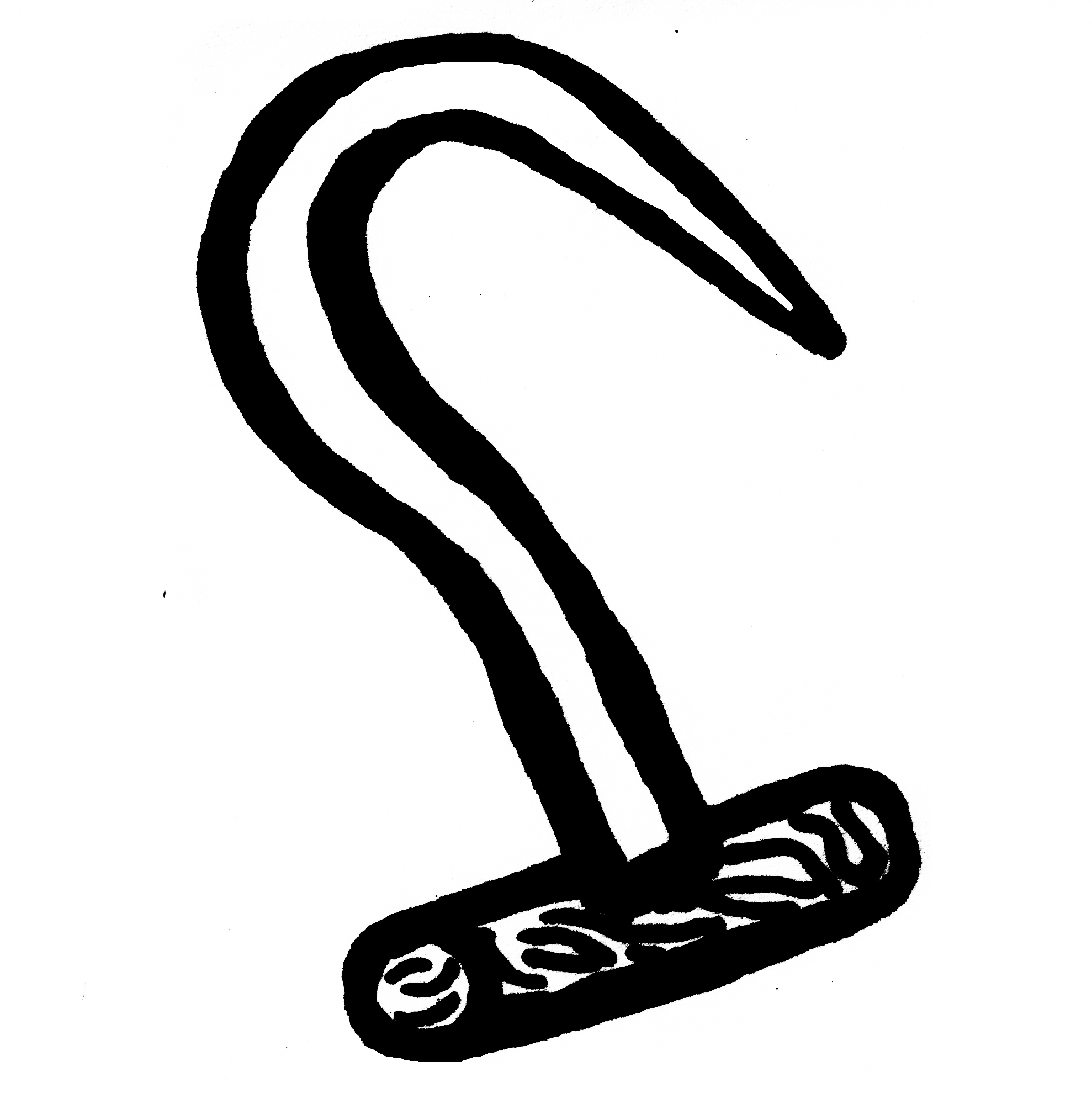
I Know What You Did Last Summer (1997)

One of my most distinct moviegoing memories from my childhood was seeing the post-Scream teen slasher I Know What You Did Last Summer with my parents opening weekend. As an exclusive new track from my then-favorite band played over the end credits (“Proud,” by KoЯn), I was in 12-year-old nü-metal brat heaven, beaming in delight. That’s when my father leaned over and whispered in a firm, disappointed tone, “You never get to pick the movie again.” Three decades later, I’m older now than my father’s age was then, and I totally get it. This mildly violent teenage melodrama must be torturously tedious for any adult outside its very narrow target demographic (gloomy Millennials who were 12—and exactly 12—years old in 1997). In retrospect, I can’t believe that I dragged my parents to see it in a theater, regardless of how giddy it made me personally. Even more so, I can’t believe that some poor parent my age now is about to suffer the same fate via legacyquel. Must we forever be tormented by the sins of our mall-goth past? Can’t the world finally forgive & forget what we did that summer? Will there ever be peace in the suburbs?

All of your favorite late-90s teen stars are here: Sarah Michelle Gellar as a small-town beauty queen, Ryan Phillipe as her spoiled fuckboy sweetheart, Freddie Prinze Jr. as the townie interloper who’s desperate to earn his way into his friend group’s tax bracket, and Jennifer Love Hewitt as the only normal, well-adjusted youngster among them. The four bright young things get into trouble one night after partying on the beach outside their small fishing village, when they accidentally strike & kill a pedestrian crossing a dimly lit road and dump his body into a nearby bay to avoid hassle from the law. A year later, this act of semi-voluntary manslaughter haunts all four of the now-estranged kids involved, derailing their professional & educational ambitions as they quietly stew in the isolation of their own guilt & grief. The haunting becomes a lot more literal when a mysterious killer dressed in a fisherman slicker starts picking them off one by one via fish hook, seemingly avenging their hit-and-run victim from beyond the grave. If you’ve seen any formulaic teen slasher, you’ve seen it all before (doubly so if you’ve seen 1985’s The Mutilator); you just haven’t seen it performed by this era-specific cast.

I Know What You Did Last Summer splits the difference between an 80s teen slasher & a 50s road-to-ruin PSA about the perils of reckless driving, updated with a totally 90s cast & an astonishingly shitty 90s soundtrack (including, among other atrocities, covers of “Summer Breeze” by Type O Negative and “Hey Bulldog” by Toad the Wet Sprocket). It’s a little too squeamish about bloodshed to be an effective horror film, slaying most of its victims offscreen and keeping their corpses on ice like freshly caught fish so they don’t stink up the place. It is relatively compelling as an afterschool melodrama, however, with the two main girls’ increasingly grim home lives leading to a few memorable scenes that outperform the undead fisherman’s kills. Its lack of slasher-genre ingenuity is a little surprising given that the screenplay was written by Kevin Williamson one year after he penned the meta-horror hit Scream, which is much smarter about reshaping & reexamining the slasher formula from new angles. His trademark post-modernism enters the frame in an early scene where the teens in peril share campfire stories of the urban legend about a killer with a hook for a hand before suffering an updated version of it in real life, but the same idea was pushed much further in the next year’s Urban Legend, leaving this one effectively moot.

It’s easy to point out the ways in which I Know What You Did Last Summer falls short of 90s slasher greatness, but it’s by no means the worst of Kevin Williamson’s post-Scream teen horror scripts (that would be Teaching Mrs. Tingle). If nothing else, its coastal fishing village on the 4th of July setting affords it some occasional distinguishing novelty, not least of all in the multiple parade sequences featuring gigantic paper mâché fish on wheels. Thanks to Williamson’s previous commercial triumph, it was also made in a time when these teen bodycount movies were produced with robust Hollywood budgets behind them, so director Jim Gillespie (of Venom “fame”) gets to make frequent use of swooping crane shots to liven up the dialogue-heavy melodrama. Still, of all the 90s properties to continually get serialized & rebooted, it makes no sense that something this generic is still being kept alive as Horror Icon IP instead of, say, the more stylish & memorable Williamson-penned classic The Faculty. I pity the poor parents whose pre-teens are going to drag them to the theater for the latest legacyquel addition to the I Know What You Did franchise this summer because they have a crush on one of its famous-only-to-children stars. It’s a tradition that’s gone on for far too long, dragging on since the long-gone days of Soul Asylum, Our Lady Peace, and KoЯn.

-Brandon Ledet

Sick (2023)

Besides maybe the horny-old-biddies football comedy 80 For Brady being inexplicably set in 2017, the new straight-to-Peacock slasher Sick is likely to be the most conceptually bizarre period piece of the season.  The COVID-19 pandemic might be waning, but it is still ongoing, which makes screenwriter Kevin Williamson’s decision to set Sick in the early-pandemic days of Spring 2020 a little confusing, if not outright immoral.  COVID-themed horror that takes advantage of the pandemic’s of-the-moment novelty and finance-forgiving social isolation is now a three-year-old gimmick at this point, with early standouts like the excellent screenlife ghost story Host getting produced & released in the same timeframe when Sick is set.  So, why would Williamson bother stepping outside his highly successful slasher franchise Scream to dial the clock back to those early COVID days, when that’s already such an overcrowded market?  Apparently, it’s because he’s been itching to complain about people who are a little too zealous & militant about mask-wearing, social-distancing safety measures in public life, and he couldn’t be satisfied venting about it in a Facebook rant like every other Gen-X crank, so he made a feature film instead.

In its opening hour, Sick appears to take the ambient terror of COVID very seriously, likening it to the intangible menace of horrors like Final Destination, The Happening, and Skinamarink.  Again, this is a period piece set in the early wiping-down-your-groceries era of the pandemic, when coherent public understanding of how COVID spreads—let alone vaccines—had yet to formulate.  There’s an oppressive paranoia in all public life that’s distinct to that era, illustrated by how a single cough in a grocery store has all other shoppers shooting daggers in your direction.  The tension is instantly high, and the vibes are instantly bad, which is a great start for a lean, low-budget slasher with only 80 minutes of playtime.  It’s also a great excuse to isolate a slasher’s teens-in-peril victims, who plan to ride the pandemic out by self-quarantining in a cabin in the woods.  The knife-wielding killer who stalks them also comes pre-masked, as was the fashion (and legitimate safety precaution) of the time.  All of this COVID-based terror is cleverly considered, but once the killer’s face & motives are revealed, Williamson’s screenplay devolves from we’re-all-in-this-together societal camaraderie into bitchy “Some of you are taking this pandemic stuff a little too seriously” apathy, and all of the tension gives way to eyerolls & jerk-off motions.

As often as Williams is determined to step on rakes in the last few pages of his screenplay, a lot of Sick‘s faults are smoothed over by DTV action director John Hyams’s knack for bone-crunching impact & small-scale visual spectacle.  The novelty of COVID horror is fading, and the basic tropes of the home-invasion slasher are so familiar that Williamson made a name for himself mocking them in a meta-horror franchise nearly three decades ago, but Hyams manages to make Sick feel consistently thrilling & surprising from moment to moment.  Yes, we have already seen Jason Voorhees emerge from Crystal Lake as an unkillable ghoul, but have we ever seen him thrust his blade at victims from under the water, like a deadly-sharp Jaws fin?  Yes, we’ve already seen teens chased around a remote cabin after enjoying a few hand-rolled joints, but rarely with such creative, dynamic blocking & fight choreography – since most independent first-wave slashers of that ilk were made by youngsters who enjoyed a few beers & joints on-set themselves.  Honestly, Sick has all the hallmarks of a classic slasher: style, efficiency, brutality, novelty, and boneheaded reactionary politics that sour nearly all of those merits.  According to that scorecard, Hyams has acquitted himself, Williamson has embarrassed everyone and, as is always true, Jane Adams (whose role I won’t spoil) deserves better.

-Brandon Ledet

Podcast #168: Scream (1996 – 2022)

Welcome to Episode #168 of The Swampflix Podcast. For this episode, Brandon, James, and Britnee ease into spooky season with a discussion of the meta-slasher franchise Scream.

00:00 Welcome
00:56 Breathless (1983)
05:57 Butcher, Baker, Nightmare Maker (1981)
09:50 The Burning Bed (1980)
12:45 Orphan: First Kill (2022)

16:08 Scream (1996)
33:13 Screams 2 – 5 (1997 – 2022)

You can stay up to date with our podcast by subscribing on SoundCloudSpotifyiTunesStitcher, or TuneIn.

– The Podcast Crew

Scream (1996) is a Modern Horror Classic, but It’s Not Wes Craven’s Meta Masterpiece

When Wes Craven passed away in 2015, I commemorated the loss by revisiting what I’ve long thought to be his crown jewel, New Nightmare. The late-in-the-game Nightmare on Elm Street sequel is a meta reflection on the philosophical conundrums of the director’s own work. By creating the evil of Freddy Krueger in his fiction, what exactly was Craven unleashing into the world and what power did he hold over that evil once it seeped into public consciousness? This intellectual launching pad allowed the director, who appears as himself within the film, to not only lament & poke fun at the way his vision had been bastardized by the Elm Street series’ diminished returns sequels, but also to engage with the nature of Art & Horror as ancient societal traditions & metaphysical lifeforms all unto their own. It continues to surprise me that the Scream series that followed the trail of these meta-critical inquiries is generally held in higher regard than New Nightmare, despite their much shallower mode of self-aware criticism. 1996’s Scream is a modern classic that completely rejuvenated the teen slasher genre, altering the trajectory of mainstream horror as an art form for many years to come. Scream is a great film. However, its meta-commentary on the nature of horror isn’t nearly as philosophical or as ambitious as New Nightmare‘s, as it shifted Craven’s focus away from self-examination & towards the deconstruction of tropes.

I was very young when Scream hit theaters in the mid-90s, so the film served as my Rosetta Stone for a genre I didn’t know much about at the time, outside titles like Killer Klowns from Outer Space & The Monster Squad. Its hook is that it’s a slasher film where every character is highly aware that they’re living in a slasher film. Before setting in motion its A-plot hybrid of Prom Night & John Carpenter’s Halloween, Scream opens with a vignette homage to When a Stranger Calls. A (supposedly) teenage Drew Barrymore is harassed over her parents’ cordless phone by a masked, off-screen killer who grills her over the line about her favorite scary movies. Their verbal cat & mouse game escalates to real life violence in a trivia game about horror classics like Halloween & Friday the 13th. When Barrymore gets enough answers wrong, she’s brutally murdered. This opener has become more infamous than the film’s main plot in some ways, if not only for the shock that Barrymore is so easily discarded after featuring prominently in the advertising (which might in itself be a nod to Vivian Leigh’s role in the first act of Psycho). Scream’s main plot follows (a conspicuously twenty-something) Neve Campbell as she attempts to survive her final year of high school despite being stalked by the same serial killer from that opening vignette. As the killer’s catchphrase is “What’s your favorite scary movie?” and most of Campbell’s friends appear to be horror nerds (including a video store clerk played by Jamie Kennedy), Scream allows itself to name check nearly every classic horror title it apes in its own dialogue: Psycho, Carrie, Friday the 13th, Candyman, Basic Instinct, Prom Night, The Silence of the Lambs, the list goes on. The film even openly jokes about the declining quality in Nightmare on Elm Street sequels and features a brief cameo from Wes Craven himself as the high schools’ janitor, wearing Freddy Krueger’s exact sweater & fedora costume. Having since caught up with virtually all of these reference points in the two decades since I first saw this film as a child, these namedrops now play like adorably clever winks to the camera. In the mid-90s, however, that list was a doorway to a world of horrors I would take mental note of for future trips to the video store. It was essential.

As a more seasoned horror nerd, my appreciation for Scream has shifted away from its direct horror references to its broader deconstruction of slasher genre tropes. As fun as it is to hear characters reference The Howling as “the werewolf movie that has E.T.’s mom in it,” it’s much more rewarding to pick apart the mechanics of the genre while still delivering on their basic chills & thrills. Neve Campbell is immediately introduced to us as a virginal Final Girl archetype, wearing the girliest white cotton nightgown costume imaginable for a “high school senior.” Despite her self-awareness about that archetypal role in horror films, she lives out her Final Girl duties in a textbook manner. In one breath she’ll deride how it’s insulting that female horror victims are idiotic enough to run up the stairs instead of out the front door, then in the next breath she’ll allow herself to be chased up the stairs instead of running out the front door. Characters seem totally aware of the mistakes that get victims killed in slashers, warning each other not to drink, fuck, or say things like “Who’s there?” or “I’ll be right back.” Despite a verbal assurance that “This is life. This isn’t a movie,” the soon-to-be-victim teens make all of these exact mistakes anyway and immediately suffer the consequences. The movie is so aware of its own participation in well-worn slasher tropes that even decisions like casting twenty-somethings to play high school students feels like an intentional choice of self-parody when it could just as easily be a genuine participation in a Hollywood cliché.

Scream’s meta-commentary on the slasher genre is much more clever & trope-aware than New Nightmare’s earnest, philosophical stares into the metaphorical mirror. This may be a symptom of the Scream screenplay being written by Kevin Williamson instead of Craven himself, who was certainly doing a bit of career-spanning navel gazing with his New Nightmare script. As intricate & delightful as Scream’s self-awareness of its participation in horror tropes is for a lifelong fan of the genre, the film’s not nearly as impressive in its thematic depth as New Nightmare’s more metaphysical interests. The closest the film gets to reaching those New Nightmare heights is in a sequence where a newscaster van is watching hidden camera surveillance footage of a teen party on a 30 second delay, helpless to save victims who are unaware of the killer behind them, despite shouting “Turn around! Turn around!” at the screen. It’s as if the characters themselves are watching a copy of Scream in that moment, which is an interesting logical thought loop the movie creates within itself. Since Scream’s release, I do feel like I have seen a trope-deconstruction meta-horror that does approach New Nightmare’s philosophical ponderings; Drew Goddard & Joss Whedon’s The Cabin in the Woods does a phenomenal job of satisfying both ends of that divide. What’s interesting now is that in the decades since its release Scream itself has become a kind of cultural object worthy of nostalgia like the countless slasher titles it namedrops in its dialogue. It not only has been spoofed by the (godawful) Scary Movie series (as if a self-aware meta horror needed spoofing) & was followed by four of its own sequels, but its 90s-specific details have amounted to a kind of cultural time capsule. 90s telephone technology & fashion choices, along with callbacks to a time when Neve Campbell was the star of Party of Five and Courtney Cox & David Arquette were America’s goofball power couple/punching bag have all aged the film in a way that’s ripe for its own nostalgia. Even the mask design of the film’s killer, colloquially known as Ghostface, has become just as iconic as the killer visages of Jason, Freddy, Michael Meyers, and any other fictional slasher villain mentioned in the film. Scream may not be as philosophically curious or thematically ambitious as New Nightmare is in its own self-examination, but it has proven to be one of Wes Craven’s most iconic works in its own right instead of getting by as just an empty callback to the titles that inspired it.

-Brandon Ledet