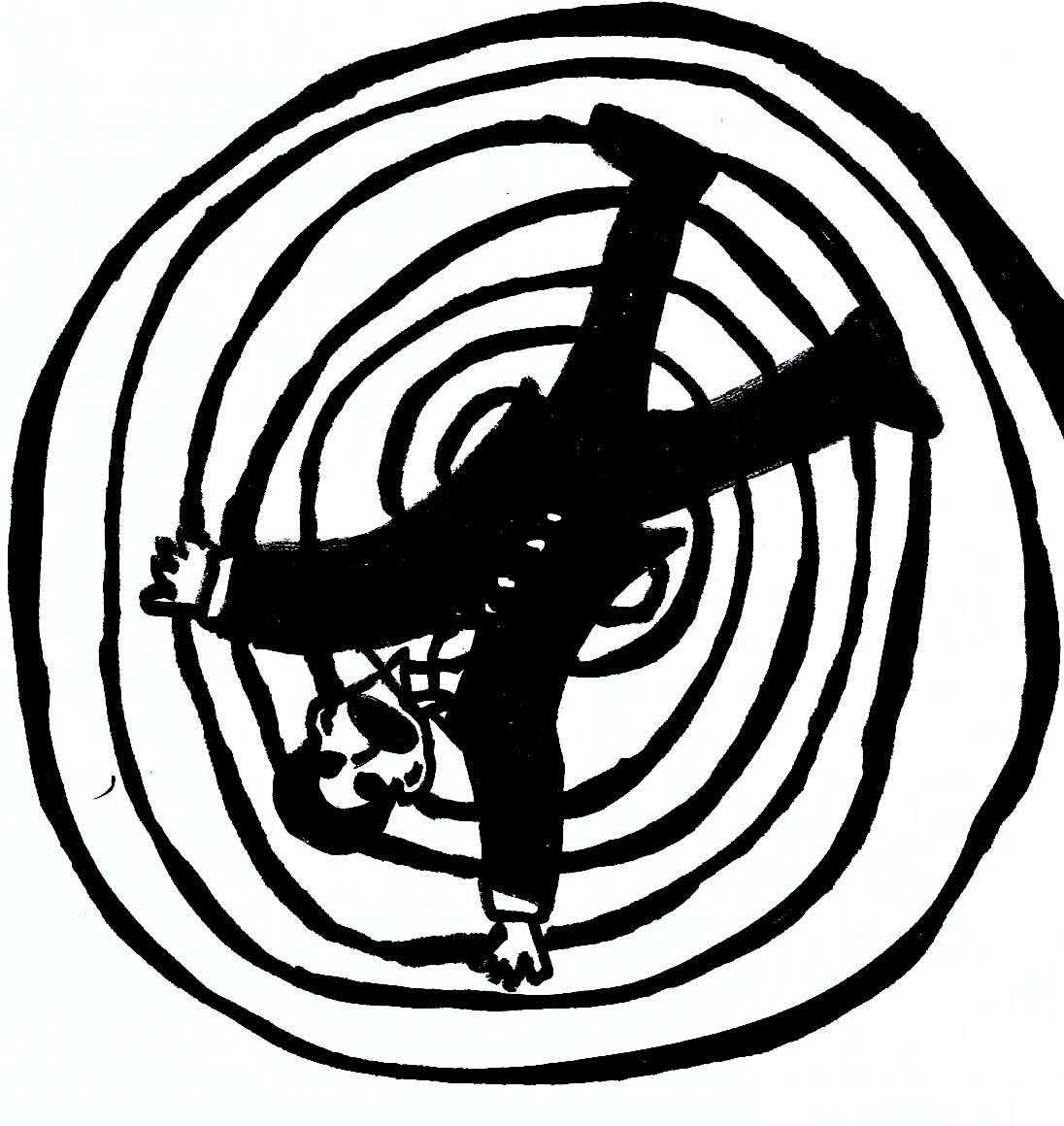

Brandon & I recently recorded a podcast episode about our major Alfred Hitchcock oversights; Brandon had never seen North by Northwest, and I had never seen Rebecca, but perhaps the greatest oversight on my part was that I had never seen Vertigo. Vertigo had a lukewarm reception upon release in 1958, but has in more recent decades been re-evaluated and come to be considered not only Hitch’s greatest film, but in the Sight & Sound poll for 2012, it was considered the greatest film of all time (the 2022 re-draft put Jeanne Dielman, 23 Commerce Quay, 1080 Brussels at number one). I’ve done some reading about the 2012 voting, and it seems there is some suspicion that several of the participants simply wanted to dethrone Citizen Kane from the number one spot and seemed to rally around Vertigo more for contrarian purposes than genuine belief that it’s the greatest film ever made. I didn’t go into this project with the expectation that I would compose a ranked list of Hitchcock’s work that would greatly upset the commonly accepted wisdom, but now having seen all but one of the director’s thriller films (I’m saving his final film, Family Plot, for last), I must put forward my most controversial opinion here; Vertigo is “merely” good, not exceptional.
The film opens with Detective John “Scottie” Ferguson (Jimmy Stewart) and a fellow police officer in the middle of a rooftop chase of a suspect. Scottie loses his footing and finds himself clinging to a gutter over a fatal drop into an alley. When his partner attempts to rescue him, the man slips himself and falls to his death. Sometime later, Scottie has retired from the force when he receives a request from college acquaintance Gavin Helster (Tom Helmore) to put his skills to use by following his wife, Madeleine (Kim Novak). Gavin does not suspect her of infidelity, but instead fears that she may come to some harm as the result of her connection to a long-dead woman named Carlotta Valdes, Madeleine’s great-grandmother who killed herself at the age of twenty-six, the same age Madeleine now is. As Scottie follows her around, he learns that Madeleine occasionally seems to enter a fugue state where she takes flowers to Carlotta’s grave, spends hours staring at a portrait of the woman in a local museum, and even rents a room in the hotel that was once Carlotta’s house. Over time, Scottie falls in love with Madeleine, and after he rescues her from an apparent suicide attempt when she leaps into San Francisco Bay, she seems to reciprocate these feelings. Madeleine’s apparent haunting/possession by Carlotta seems to be hurtling toward a tragic end, but when something unthinkable does happen, that’s only the beginning of many more twists and turns.
I can see why this is as popular as it is. Like Psycho, Spellbound, and Marnie, Vertigo reflects Hitchcock’s fascination with contemporary psychology, even if the science was very Freudian and of its time. It’s also the only Hitchcock thriller that, at least for a time, presents itself as being a more traditional, supernaturally-influenced horror story, as the presumably skeptical audience is led to wonder whether Madeleine is, in fact, being possessed by her great-grandmother’s ghost. Other than the possibly preternatural link that Young Charlie and Uncle Charlie share in Shadow of a Doubt, this is the only Hitchcock thriller that contains that element, and even though there is a logical explanation for what happens, I understand the appeal that the plot line holds. If Kim Novak is your cup of tea, then you’re in luck, as the film spends long periods of time gazing at her or at a painting of her; I don’t personally find her performance here to be very strong, and learning that Hitch wanted either Vera Miles or Eva Marie Saint for the role makes a lot more sense. Arguably this is the point, as her tabula rasa nature allows Scottie to obsess over her without anything pesky like a personality getting in the way (presumably the only reason that he doesn’t go for the available, lively, spunky, adorable Midge), so I can make an allowance for it, but imagining either Miles or Saint in the role is frustrating, since I can only see either of them improving my personal absorption in the narrative. Stewart’s character here is largely indistinguishable, personality-wise, from Jeff in Rear Window, which is well within his wheelhouse, even if it feels like he’s doing an impression of himself rather than really trying to make Scottie feel real.
If one were to judge the film on its visual merits alone, it’s virtually peerless and its reputation is unassailable. The film is definitively one of the director’s most beautiful; Helster’s office is one of the most sumptuous sets I’ve ever seen, and it’s not a surprise that Hitchcock was so taken with it that he had his own real life office redecorated to imitate it. Ernie’s Restaurant is likewise a gorgeous locale, with crimson damask wallpaper and matching carpeting that make one feel as if they are looking at the interior of a heart, all that red making Madeleine’s green dress stand out all the more. In the scene where Scottie follows Madeleine to a floral shop, the way that the bounty of flowers frames the grey-suited Madeleine is simply gorgeous, and the reverse shot of her reflected in a mirrored door as Scottie peers out from a gap is one of the best compositions of Hitchcock’s career. There are excellent counter-compositions as well, as we move from the rundown McKittrick Hotel, which still retains all of its dark, ornate woodwork and its now-faded wallpaper, to Midge (Barbara Bel Geddes)’s modern apartment with her drawing desk and cluttered supplies and artworks, then to the beautifully appointed Argosy Bookstore. Exterior shots capture some of the best American architectural feats of the early twentieth century as we visit the California Palace of the Legion of Honor (where Carlotta’s painting is kept), spend some time on the Presidio marveling at the Golden Gate Bridge, and gaze at the distant Coit Tower Madeleine uses as a landmark to retrace her steps back to Scottie’s home. We even spend some time in a forest of sequoia trees, and the effect is magical, and there’s not a single window in the film that doesn’t feature a gorgeous view of San Francisco. Every frame is perfect, and I haven’t even mentioned the bizarre, perfect acid-dream nightmare sequence that Scottie has at roughly the 2/3rds mark, which is a perfect piece of cinema unto itself.
The narrative has a lot of potential, but it falls apart under scrutiny. Spoilers (for a nearly seventy-year-old film) through the end of this paragraph. The twist that the “Madeleine” Scottie has followed for so much of the film is really a woman named Judy Barton whom Helster hired to play the role of Madeleine while his wife is away in the country, so that Scottie can witness her slowly deteriorating mental state and testify to it, is a solid one. Knowing that Scottie’s acrophobia will prevent him from following “Madeleine” to the top of a tower in an old Spanish mission, Helster is already there, and he throws the real Madeleine’s already murdered corpse from the top, seemingly committing the perfect crime. Things start to fall apart when Scottie sees Judy some time later and begins to court her in an attempt to recreate “Madeleine” without realizing that they are the same woman, which stretches the bounds of credulity a bit too far. The mystery is decently maintained until the moment that the audience learns what Helster did, as it carries that same maybe-supernatural element through since it appears that Madeleine has a doppelganger, but once we learn the truth about Judy, the film plods along for far too long before it reaches its conclusion. To relate this to Hitchcock’s famous discussion about the tension that is created by telling the audience that there is a bomb under a table and how that tension is diffused the moment that the bomb goes off, this is like telling us that the bomb under the table has already been defused, with half an hour left to go. The sequence of events also leads to audience confusion as well; Scottie witnesses “Madeleine’s” death, then attends the coroner’s inquest, then has the nightmare sequence that seems to render him catatonic when Midge leaves him in a recovery facility, then immediately cuts to Scottie walking down the street, where he thinks he sees Madeleine. Watching this, I had to ask my viewing companion: “Wait a second, when did he recover?” before I decided to just go with it. Since I was in that state of mind, it didn’t even occur to me that Scottie wasn’t aware that Judy was Madeleine until he has his epiphanic moment when she puts on Madeleine/Carlotta’s necklace.
I’m sorry to say that I was largely disappointed in Vertigo. I understand the appeal, and I even understand the acclaim, but I was left fairly cold by the film overall. It’s a visual feast, but the narrative is convoluted in a way that’s more frustrating than fun and the performances are merely adequate. I did appreciate that the reveal explains some things about Helster’s performance. In his initial meeting with Scottie, he jumps straight to the “It’s not what you think” explanation of his hiring of the man to follow his wife without waiting for Scottie to react to the initial overture, which makes sense in retrospect given that he had likely rehearsed the monologue to death. It also explains some of his dialogue choices from the coroner’s inquest, but it doesn’t gel with his other poor line deliveries in other scenes. The effectiveness of Kim Novak’s performance will vary from person to person depending upon how much one is willing to accept that her monotony is intentional. In doing some light research about the film, I can see that it has been the subject of great academic criticism, and I can understand that as well, since this is a very mood-oriented piece and thus gives itself over to style over substance in a way that invites dissection. I’ve also seen that there are a great number of people who argue that the film is an extended dream sequence, in whole or in part, beginning either in the wake of the animated dream sequence, immediately following the first bell tower scene, or (An Occurrence at Owl Creek Bridge style) all the way back at the five-minute mark when Scottie is dangling from a gutter. I don’t usually think too highly of any flavor of extratextual “it was all a dream” explanation, but I have to admit that I might adopt that belief for myself, as it does improve the text for me as an audience member, at least this time (and it would explain why we spend so much of this film watching Scottie slooooowly drive from place to place). Maybe I was simply too excited for this one, and the movie itself was never going to be able to live up to my expectations. It’s still a good picture, just not (for me) a great one.
-Mark “Boomer” Redmond


