The King’s Daughter (2022)

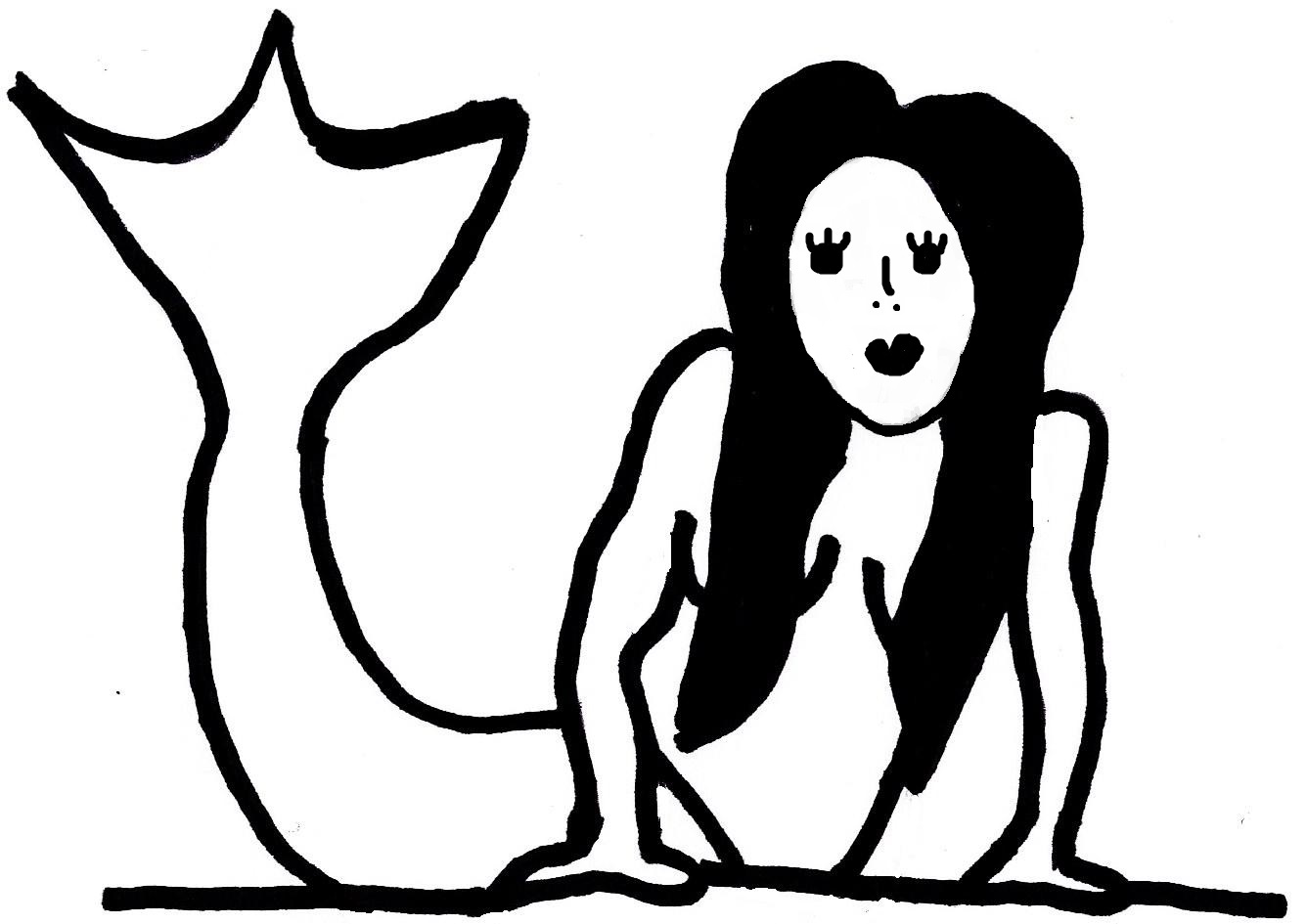
I fully understand the mockery that met the mermaid fantasy movie The King’s Daughter when it was dumped into theaters this January.  Filmed at Versailles in 2014, the cursed production has been collecting dust for seven long, bizarre years, mostly waiting for the funding needed to complete its CGI.  The King’s Daughter was supposed to be released as The Moon and Sun in the spring of 2015.  Obama was president then.  Its star, Kaya Scodelario, was a hot commodity, fresh off the set of the hit TV show Skins.  Its bargain bin CGI would’ve been laughable even seven years ago, but getting displaced outside its time only makes it feel goofier than it already is.  It’s a movie made of leftover scraps, loosely stitched together with Bridgerton-style “Once upon a time” narration from Julie Andrews, turning over each scene like the brittle pages of a crumbling book.  The King’s Daughter is the exact kind of barely presentable debacle that cordially invites internet mockery; it’s more punching bag than movie.

And yet, picking on it feels unnecessarily cruel.  This is a cute, harmless (and, despite itself, gay) wish-fulfillment fantasy for little girls.  Its target audience is so young & uncynical that it mostly gets away with being outdated & uncool.  Adults might snicker at every “Meanwhile …” interjection from Andrews that clumsily lunges us towards the next disconnected scene, but young children are only going to see an aspirational tale of a rebel artist who makes friends with a magical mermaid despite her mean father’s wishes.  Pierce Brosnan stars as a highly fictionalized King Louis XIV, who commissions the capture of two very special creatures: his illegitimate, impoverished daughter (Scodelario) & a mermaid citizen of Atlantis (Fan Bingbing).  The daughter has a total blast at Versailles, celebrated by her estranged father for her musical talents & her Individuality.  The mermaid has less fun as the king’s prisoner—held captive as a potential fountain of youth—but forms a semi-romantic friendship with his daughter that almost makes her own constant suffering worthwhile; it’s a pretty thankless role.  The whole movie is in service of making the daughter’s new life seem magical & great, so little girls in the audience can live their mermaid-friend fantasies through her.

There are obviously much better mermaid movies out there, from the kid-friendly romanticism of The Little Mermaid to the disco-beat eroticism of The Lure.  Considering the wealth of better-funded, better-publicized titles between those two extremes, The King’s Daughter is harmless & anonymous enough to deserve a pass.  If there’s any reason for an adult audience to seek this film out, it’s to see Pierce Brosnan’s over-the-top, flouncy-wigged performance as King Louis XIV, but I can’t claim that he’s enough of a hoot to be worth the 90-minute mediocrity that contains him.  Otherwise, the only real draw for this film is if you’re a wide-eyed child with a long-running mermaid fixation, in which case no shoddy CGI or online dunking was ever going to stop you from seeing this anyway.  The only real shame of the picture is that it chickens out of making that mermaid-kids’ fantasy explicitly gay, choosing instead to romantically pair Scodelario with a Fabio-style hunk to de-emphasize her obvious attraction to the mermaid.  It’s not the romance novel swashbuckler whose heart-song calls out to Scodelario in the middle of the night, though, and even the youngest, naivest children in the audience will see right through that ploy.

-Brandon Ledet

The Death of Louis XIV (2017)

Actor Jean-Pierre Léaud has worked with a long line of Important Auteurs in his near life-long career: Cocteau, Godard, Varda, Assayas. Only one has defined him as a cultural icon, though: François Truffaut. After casting the actor as the pint-sized star of his seminal work The 400 Blows, Truffaut fashioned Léaud as a human talisman of the French New Wave by continuing the story of his same character from that film, Antoine Doinel, in several other features. Cinephiles have watched Doinel, and by extension Leaud, grow up on celluloid, a journey that’s now been effectively completed in the recent period piece The Death of Louis XIV. Where as Léaud entered the scene a young, poor schoolboy in 400 Blows, he’s leaving it a dying, old king in The Death of Louis XIV. He explained in an interview, “The line has been crossed. I went all the way. I am not acting in that film. I am someone who is waiting for the meeting [with death].” The sadness of that statement and the cultural significance of Léaud’s effective departure from cinema are both undeniable. What is up for debate, however, is if the film itself is at all worthwhile when stripped of its context.

At the start of The Death of Louis XIV, Léaud’s historical monarch is already bedridden by an injury to his leg. He indulges in small joys like playing with his beautifully groomed hounds or putting on a show of tipping his hat to the women who visit his chamber, but mostly he is immobile and in pain. Doctors are confident they can treat the king without amputating his leg to stave off encroaching gangrene. Consultants as wide ranging as university professors and common snake oil salesmen are summoned to treat the king in a variety of highly questionable methods, all while his leg continually worsens, turns black, and, as both the title and Wikipedia promise, takes his life. There’s a (very) dry sense of humor in the way these royal doctors hold onto old world superstitions & remedies. They humorously excite with any sign that the king’s condition is improving, even openly applauding when he manages to swallow a single bite of food. Even the king’s eventual death doesn’t stop them from examining his condition with an unending dedication to optimism. In a concluding autopsy, they examine his exhumed organs for signs of inflammation and abnormality. That scene somehow sticks to the same exact tone that dominated the two hours that preceded it. Even in death, nothing changes.

If there’s some kind of metaphorical correlation between the ways the dying king & Léaud ‘s career were doted on, yet left to rot, I was either too dense to understand it or too bored to fully care. The Death of Louis XIV is above all else a highfalutin bore, recommendable only to the most dedicated of French New Wave academics who have a completionist’s compulsion to watch their once-youthful mascot die. The film perfectly captures the stillness & exhaustion of waiting for death and occasionally searches for the humor of clashing the indignity of that condition with an ineffective excess of wealth. There’s a perverse joke in seeing Léaud’s upsetting little egg-shaped body slowly fail & give up while dressed in expensive fabrics & oversized wigs. The film also has a visually striking dedication to natural lighting, affording it the painting-in-motion look of something like The Witch or The Libertine. That sense of visual craft and the quiet meta humor of Léaud bowing out in such a compromised sense if indignity vs. royal reverence could’ve been captured in a series of photographs or even a short film, however. The Death of Louis XIV does very little to justify its medium as a feature film outside some occasional humor in the dialogue of unqualified medical men who watch idly as their King dies in what feels like real time. Mostly, the audience watches along with them, listening to the sound of a ticking clock. As an academic exercise, that might have some significance in helping contextualize Léaud’s​ career as an artist. As a cinematic experience, however, it feels like waiting for death, which is not an activity I’d readily recommend.

-Brandon Ledet