
The Pit and the Pendulum (1961)

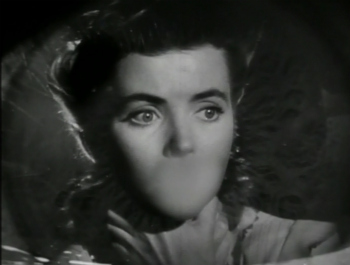
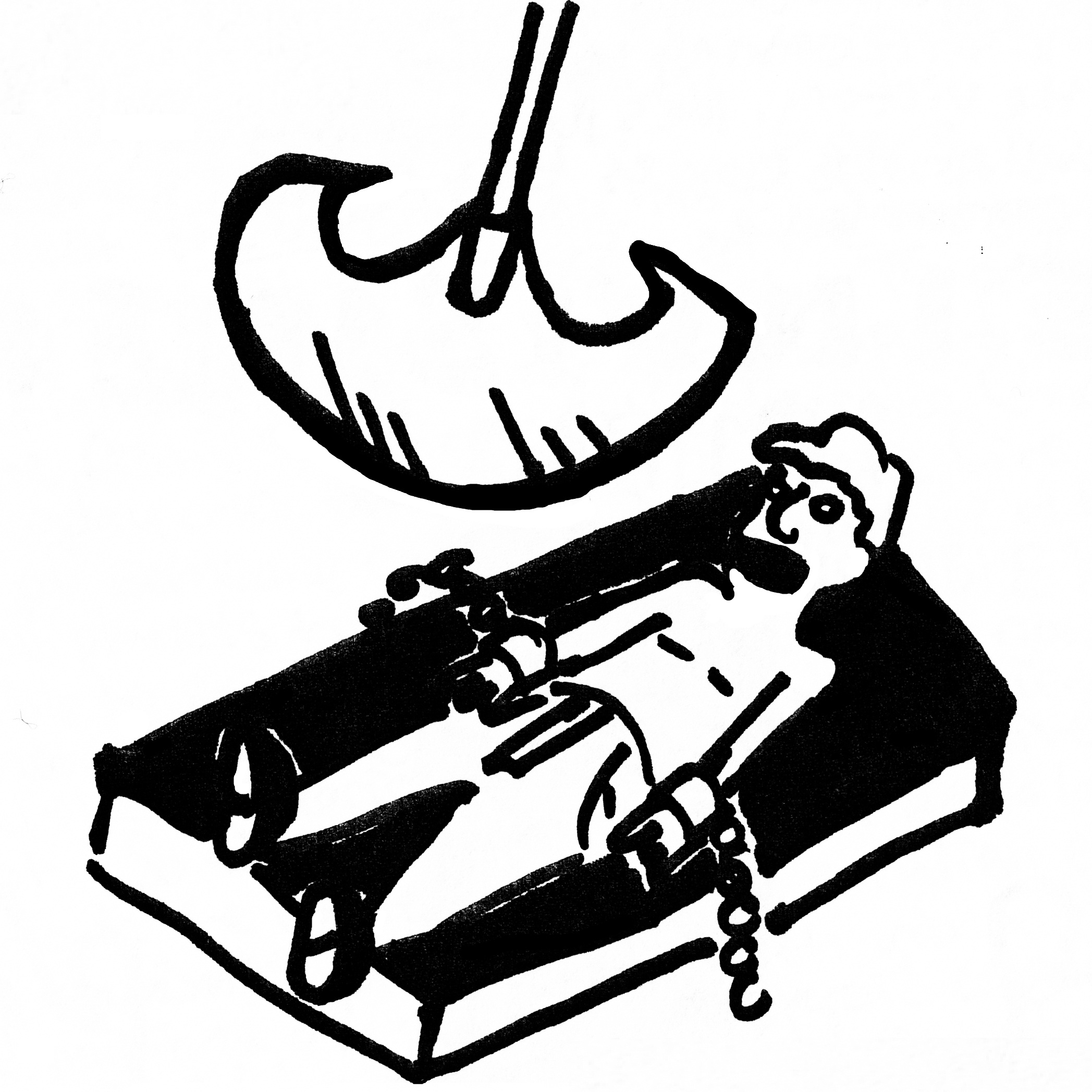
In my review of The Spiral Staircase, I mentioned Douglas Brode’s Edge of Your Seat: The 100 Greatest Movie Thrillers, and that I expected I would soon be getting to #61 on that list, Roger Corman’s adaptation of Edgar Allan Poe’s short story “The Pit and the Pendulum.” It is the only film from Corman to make the list, and although I am reviewing it last in my Corman/Poe series of reviews, it’s notable that this was only the second of these adaptations, following House of Usher by about a year. It was itself followed by Premature Burial, and having viewed those out of order, I made a joke in my Usher review that it and Burial follow a fairly similar and specific sequence of events. I’m glad I didn’t watch them in release order, because I might have given up on Burial, given that Pendulum follows almost the exact same stations of the plot. 

As the film opens, a man approaches a seaside castle (different from Usher and Burial in that the character does not approach the lead’s home from across a foggy moor), knocks upon the door and demands to see the home’s owner, and is initially rebuffed by the servant who answers the door, but is then allowed in to the home by the sister of Vincent Price’s (and in the case of Burial, Ray Milland’s) character. It’s genuinely shocking that so little effort was made to differentiate this from its immediate predecessor, and that the film that immediately followed would adhere so closely to the same structure. Here, our hero is Francis Barnard (John Kerr), who has come to see the widower of his late sister Elizabeth (Barbara Steele). He is allowed entry by his sister-in-law, the Donna Catherine Medina (Luana Anders), who tells him that her brother Don Nicholas (Price) is resting, but allows him inside nonetheless. Barnard asks to see his sister’s grave, but Catherine tells him that she is not buried in some churchyard and is instead interred in the crypts beneath the castle; as she escorts him to Elizabeth’s resting place, the two pass another room in the catacombs from which a great racket emerges. Nicholas exits the door and tells Barnard that it conceals a contraption, the ceaseless operation of which he is responsible for. 

Although the Medinas are reticent to reveal every detail of Elizabeth’s death, the arrival of family friend Dr. Leon (Antony Carbone) leads him to drop some information that prompts Barnard to demand explanation. As it turns out, although theirs was a good and loving marriage, Nicholas’s beloved bride was ultimately affected by the evil that is present in the Medina estate, as Nicholas and Catherine’s father, Sebastian (also Price) was a member of the Spanish Inquisition. An untold number of people were tortured and killed in the castle’s catacombs, where Sebastian’s implements of torture remain. Apparently, the sleepwalking Elizabeth made her way to this chamber and somehow got herself stuck in an iron maiden, and when she awoke there, she died of heart failure from the fright of it all. Of course, Nicholas himself fears that Elizabeth was not truly dead when she was buried (again, just as in Usher and Burial), despite Dr. Leon’s willingness to stake his reputation on his confirmation of her death, and that her spirit haunts the castle as a result. There are spooky things about, after all. Elizabeth would play the harpsichord nightly for her husband, and when the instrument is heard late at night and one of her rings found atop it despite the apparent absence of any people or even a way in or out of the room, it raises questions. A kind of explanation is found when Barnard discovers a series of secret passageways that connect locked rooms to Nicholas’s own chambers, with Nicholas himself fearing that he may be losing his mind and performing as Elizabeth. 

This one is pretty fun, and it probably is the best thriller of Corman’s Poe cycle. I’ve tried to avoid spoilers as much as I can for these but I don’t seem to be able to find a way to talk “around” another of the recurring elements here, so I’ll just have to come right out with it: it’s very strange how often the resolution to the apparent mystery is that Vincent Price’s character’s wife isn’t as in love with him as he was with her, and also that reports of her death are greatly exaggerated. As in The Raven, we’re never given any reason to think that Elizabeth here, Lenore there, or Emily in Burial are anything other than the loving, adoring spouses that they appear to be, until the sudden revelation that all of the gaslighting being performed against the lead is being done by his wife. And it’s Hazel Court two of those times! (She also appeared in Masque of the Red Death, but her villainous nature is on display from her first moment on screen therein.) It stands to reason that making eight of these movies in four years would be bound to lead to some recycling of plots, especially given that the specific Poe works being “adapted” also have large Venn diagram overlaps in their narratives, but viewing this one as the finale in an attempt to save the best for last ends up doing it a disservice. It’s not a bad movie, but it feels repetitive, which isn’t fair to hold against Pendulum because it was only the second one of these that Corman made and is thus responsible for setting the standard which was copied, not vice versa. But hey, at least the Medina castle doesn’t get burned to the ground at the end.

One of the recurring elements present here that really works is the use of the oversaturated nightmare sequence, although here it’s more of an oversaturated flashback. As Nicholas reveals the details of the halcyon days that he and Elizabeth had together, everything is bathed in greens and blues, which turn to purple when Elizabeth “takes ill.” There’s also a fun iris-in transition to this flashback, which happens again when Catherine reveals to Barnard that Nicholas actually bore witness to the murder of his mother and uncle Bartolome at the hands of their father, who discovered his wife and brother were adulterers. In this sequence, the saturation color turns to a bloody, angry red, and it works remarkably well. (For those like me whom I would lovingly refer to as “Belle & Sebastian-pilled,” think of it as going from the cover of The Boy With the Arab Strap to Write About Love to If You’re Feeling Sinister.) Of course, this all comes back around when it’s revealed just who’s behind everything, only for Nicholas to fall backward down some stairs in fright at the sudden reappearance of Elizabeth and, concussed (or more), descends into the belief that he is Sebastian and that Elizabeth and her lover are the late Mrs. Medina and Bartolome and exacts his revenge accordingly, not entirely unlike Dexter Ward being overtaken by the spirit of his ancestor in The Haunted Palace

Another notable element of these, now having seen all of them, is how variably effective they work as mystery thrillers. Other than Masque with its large ensemble, the cast of all of these films has been relatively small, in line with Corman’s notoriously spendthrift nature. As a result, the extremely limited number of characters can curtail the film’s ability to provide sufficient red herrings or otherwise conceal the identity of the film’s villain or villains. Pendulum certainly does the best job of keeping one guessing as to what’s really happening in the stately mansion in which all the events occur, playing things close enough to the vest that the reveal of Elizabeth’s co-conspirator feels satisfying but not obvious. That’s probably why Brode selected this one for inclusion in Edge of Your Seat, even though I wouldn’t call this the best of the Corman-Poe cycle overall. In his “also recommended” section, however, I found that he agreed with me overall, writing “Among the other Poe adaptations, by far the best two are The Masque of the Red Death […] and Tomb of Ligeia,” the latter of which he calls “an intelligent, restrained suspense tale.” 

You may be asking yourself where the pendulum is in all of this, or the pit, for that matter. For that, my friend, you will have to watch for yourself.

-Mark “Boomer” Redmond

The Raven (1963)

Fair warning: The friend with whom I have been watching these Roger Corman adaptations of Edgar Allan Poe’s work hated this one. I pointed out that the presence of Peter Lorre here should have been an early indication that this was going to be a more comedic outing, like Tales of Terror, but this was still a disappointment to him even with that qualification. During the viewing this was referred to as a “Scooby Doo ass movie” and the final verdict from my friend was “I like Looney Tunes; I don’t like Scooby-Doo.” Take from that what you will, and keep it in mind for your viewing decision

This movie is so much fun. From the film’s opening moments, in which Vincent Price’s dulcet tones recite Poe’s “The Raven” while we see him fiddling his fingers around in the air and drawing a neon bird in the room with magic, I was enraptured. Within moments, a raven appears at his window and taps at it; upon being let in, said bird begins talking with Peter Lorre’s voice, identifying himself as a fellow sorcerer and demanding assistance with being returned to human form. Once he’s back in his true body (after an interlude in which insufficient potion ingredients rendered him back into Lorre-form, but with bird wings), he introduces himself as Dr. Adolphus Bedlo, while Price’s character is revealed to be called Dr. Erasmus Craven. Bedlo recognizes the name and identifies Craven as the son of the late leader of the wizard order and asks him why he has never sought to take his father’s place, instead allowing the organization to be controlled by the late elder Craven’s lifelong enemy Dr. Scarabus (Boris Karloff). Craven demurs, saying that since he lost his wife, he’d really rather stay home near her body and do little magic tricks rather than any powerful sorcery. Upon viewing her portrait, Bedlo swears he has seen the late Lenore that very night at Scarabus’s castle. Craven’s daughter Estelle (Olive Sturgess)—who is notably stated to have been the daughter of Craven’s unnamed first wife, not Lenore—demands that she be allowed to accompany them, although Craven only relents when his coachman becomes enchanted and must remain behind. This lack of someone to drive the coach is resolved by the sudden appearance of Bedlo’s son Rexford (Jack Nicholson!), who takes the quartet to Scarabus’s castle. What secrets lie there in wait? 

This is another Corman-Poe feature penned by Richard Matheson, and was apparently based on his desire to do a full comedy feature following how much fun it was to put Lorre and Price together in the “Black Cat” section of Tales of Terror. As you can tell from the preface above, my friend and viewing companion did not find this to be a successful endeavor, while I can say that it totally worked for me. Price and Lorre are once again a terrific double act, and they ham it up here for much of the first half. The audience that will enjoy watching Craven attempt to dress Bedlo in some of his clothes so that they can go and face off against Scarabus may be small, but I’m in it; Lorre’s clear smaller stature trying to pull up the sleeves and hem of clothes designed to fit Price (or even exaggerated from there) is very funny, and it doesn’t hurt that the two of them end the scene wearing the most ridiculous hats one could imagine. In fact, by the time that the quartet of Craven and daughter, Bedlo, and Rexford arrive at Scarabus’s castle, all four of them are wearing extremely stupid headgear, and I got a real kick out of that. 

Where most Poe heads may find greatest displeasure in this one is in just how far it strays from the source material. All of these do, really, but most of them at least maintain some kind of atmosphere and are relatively respectful to the intent of the stories from which they draw their origins; Raven is arguably disrespectful in how it treats Lenore. In a plot that recurs from Pit and the Pendulum, it turns out that Lenore isn’t dead; she simply faked her death in order to move in with Scarabus and learn “greater magic” from him. One can only assume that Lenore initially got together with Craven expecting that he would assume his place at the head of the wizard guild, and when he didn’t, she glommed onto his father’s successor instead, making her a philosopher’s stone-digger from the outset. This becomes more clear at the end when Scarabus’s apparent death leads her to immediately claim that she was with him because she was bewitched and that his death has released her from his thrall, but luckily no one buys it. “The Raven” is a poem that is so deeply about anguish, longing, and grief, one can’t help but find that this subversion of the lost Lenore, whose representation of this feeling is so foundational to western literature that there’s a whole TV Trope about it, to be moderately controversial. 

The nature of this film makes it one that provides little opportunity for criticism. We’ve said it before here, in both reviews and on the podcast, that sometimes a comedy film can be the hardest to review because one simply finds themself recapitulating and restating the jokes within the film that one found funny. With Tales of Terror, that comedy was in the prolonged middle segment and bracketed by more self-serious fare, so there was still much to discuss. Here, this one is a straight comedy all the way through. Where it fails is in its insistence on the insertion of the magician’s offspring. Estelle has little to do here, and although it makes sense that it would be established that Lenore was merely her stepmother so that she’s not as heartbroken as her father is, one could argue that making Lenore her mother might have given the film something more in the way of emotional stakes. Her presence is really only justified in the end so that a threat against her safety is used to attempt to extort Craven into giving up his magical secrets. In turn, Rexford is really only an appendage to her story, padding out the runtime with a sequence in which he’s driving the coach from Craven’s to Scarabus’s and becomes apparently possessed by some wild force before he regains his composure. 

I’d also say that Karloff is underused here. He doesn’t appear until halfway through the film, but when he does, he’s great. His feigned friendliness in his greeting of Craven and his waving away of Bedlo’s charges as being the result of a social visit that turned sour because of the latter’s excessive drinking are fun, but one wishes that he might have been present a bit earlier in the runtime. He is used to great comedic effect in the film’s finale, however, as Craven and Scarabus get into a wizard’s duel that presages wuxia wizard battles in the vein of Buddha’s Palm (in fact, there are some special effects that appear to have been used part and parcel in Buddha’s Palm). It’s magnificent, and even my friend who hated the movie couldn’t help but enjoy himself as Price and Karloff flit around on hovering chairs and turn magic missiles into harmless plastic bats, etc. If that’s all that you’re interested in, you can find that in isolation on YouTube, but I would recommend giving this one a full watch.

-Mark “Boomer” Redmond

Lagniappe Podcast: X – The Man with the X-Ray Eyes (1963)

For this lagniappe episode of The Swampflix Podcast, Boomer & Brandon discuss Roger Corman’s psychedelic sci-fi crime thriller X: The Man with the X-Ray Eyes (1963).

00:00 Sinners (2025)
08:48 Secret Mall Apartment (2025)
13:50 The Ugly Stepsister (2025)
19:15 Beau Travail (1999)
25:28 Strawberry Mansion (2022)
33:01 The Haunted Palace (1963)

37:20 X – The Man with the X-Ray Eyes (1963)

You can stay up to date with our podcast through SoundCloudSpotifyiTunesTuneIn, or by following the links on this page.

– The Lagniappe Podcast Crew

Belle de Jour (1967)

When writing about The Spiral Staircase, I mentioned that I was working on filling out some of the gaps in Douglas Brode’s Edge of Your Seat: The 100 Greatest Movie Thrillers. I have a few in the top twenty that I still hadn’t seen, so when deciding what to pick up at my local video store recently, I settled on Brode’s #17, Luis Buñuel’s 1967 film Belle de Jour. The title is a play on the French idiom “belle de nuit,” literally meaning beauty or lady of the night but colloquially meaning a prostitute. In Belle de Jour, Catherine Deneuve plays a woman whose repressed sexuality leads her to seeking employment with a madame, but only until 5:00pm each day, as she must get home before her husband returns from work. Hence, lady of the day. 

Séverine Serizy (Deneuve, fresh off of The Umbrellas of Cherbourg) is seemingly happily married to handsome doctor Pierre (Jean Sorel), but her inability to be intimate with him belies a deviant, vivid sexual fantasy life. On their anniversary, the two go to a ski town, where they run into Séverine’s friend Renée (Macha Méril) and her boyfriend, an acquaintance of Pierre’s named Henri Husson (Michel Piccoli), whom Pierre has no real interest in befriending and whom Séverine despises because of his constant leering at her. While the two women are out shopping, Renée reveals that another friend of theirs has recently started working as a prostitute, and Séverine is surprised to learn that whorehouses are still in operation in such a modern era. Later, Henri reveals to her the location of one such place, and out of compulsion and curiosity, Séverine finds herself there, meeting Madame Anaïs (Geneviève Page), who offers her employment. Séverine is the blonde employed alongside a redhead and a brunette also working for Anaïs, and after some initial hesitation, finds herself in demand and successful, until she finds herself entangled with the criminal Marcel (Pierre Clémenti), who refuses to accept her work/life balance, to disastrous results. 

I was disappointed with this one initially. The truth of the matter is that this isn’t really a thriller, and when you expect that going in, you should be prepared to be disappointed. Most contemporary reviews cite the film as an erotic romance, and it’s not really that, either; it’s much more surreal, and defies traditional classification. It’s not very romantic, and I didn’t find it particularly erotic either, although I understand that it probably is for some people. If you’ve somehow come to Swampflix to find out if you’re going to see some areolas in this movie, I can tell you now that the answer is “No.” Séverine’s fantasies (and there is some argument to be made as to which scenes are fantasies and which really “happened”) are of a sadomasochistic nature, largely about being bound and whipped, but it’s quite tame to the sensibilities of a modern viewer. As the film opens, Séverine and Pierre enjoy a nice countryside carriage ride, until he complains about her frigidity and has the coachmen pull the carriage over and drag her into the nearby woods, where he ties Séverine’s hands above her head and has the coachmen whip her, then tells them to have their way with her before Séverine suddenly awakens from her daydream. 

As I went into this with the notion that this was going to be a thriller, I was pre-emptively wincing at the wounds I expected to see appear on Deneuve’s bare back as she was whipped, but none appeared. That would ruin the fantasy, both for Séverine and for the audience members who are experiencing this thrill vicariously through her. But it also reveals something about her psychology, that she’s not really interested in intimacy, just into being forced into doing something. When Renée first tells her about their mutual friend’s sex work, they both shudder at the idea of not having a choice in whom they sleep with; Renée saying “It can be unpleasant enough with a man that you like,” but the shudder that runs down Séverine’s spine is different. She’s interested in what it would be like to have no choice, at least in the abstract. When it comes time to actually perform services for clients, what she imagined and the reality of the situation come crashing together, and it’s much less pleasant, especially when Henri appears at the bordello one day and insists that she give herself to him. It’s much less fun than she had hoped, even if it does open her up to finally sleeping with her long-suffering husband. 

This is far too surreal a picture to easily slot itself into a genre category. There’s no real suspense at play for most of it, as Séverine merely wanders through one escapade after another, with it being unclear just how much of it is happening only in her mind. The film is bookended by the aforementioned appearance of countryside carriage riding, as the image repeats while Séverine hears the bells on the horses and looks out her window and seems to see the carriage approaching up a country lane, despite the fact that what lies outside is an urban Parisian street. At another point in the film, a man credited as “The Duke” arrives via the same carriage (including the same coachmen as in her earlier daydreaming) and invites her to come to his home for some “work.” This turns out to be dressing in a sheer black veil that covers her entire body and lying in a coffin, where he enters and addresses her as his dear departed daughter before descending out of frame and, one implies, masturbating. There are some reviews I’ve read of this that question the reality of this sequence, which I interpret to be purely fantasy based on the reappearing coachmen, but I suppose it’s up to the individual viewer. Each of the johns that she meets is screwed up in one way or another. The world-famous gynecologist known only as “the professor” has specific demands for a scene in which the “Marquisse” whips him. One client shows up with a box that he shows the contents of to one of the other girls, which she rejects for use in their bedplay (we never learn what it is, but after his session with Séverine, there is a little blood on one of the towels in the room). Marcel, of course, is the worst, the brutish thug of a much more civilized-seeming mobster, who has a lean and hungry look to him that’s attractive despite his unkempt hygiene. He even has several gold teeth as the result of a fight, which he bears at Séverine like the Bond villain Jaws at one point. 

That surreality is what makes the film interesting, to those of whom it may be of interest. We learn nothing of Séverine’s backstory or history, with all that is revealed of her happening in two separate flashes under five seconds, one of which shows her receiving communion as a child and the other of which shows her being kissed inappropriately by an adult man. There’s also something interesting happening in the way that Henri is infatuated with Séverine and even all but sends her to Madame Anaïs, but as soon as he learns that she’s working there, his interest dries up. It reminded me of something I read of John Berger’s years ago, about sexism of an older era in which a man would paint an image of a nude woman and then “put a mirror in her hand and [call] the painting ‘Vanity.’” Henri desires the observable woman, with her lack of sexual interest and apparent virginity, but as soon as she is like the women that he can attain, he has nothing but disdain for her, and he goes from one extreme to the other without ever getting even the tiniest glimpse into her internal life. 

When returning the DVD to the video store after watching it, both of the clerks volunteering that evening asked me how I had liked it, with one of them noting that he had rented it before and then simply run out of time to watch it, while the other was disappointed to learn that I hadn’t been thrilled with it. The truth was, it simply wasn’t what I was expecting. In many ways, it is the quintessential European art film that cinephiles are often mocked for enjoying. For me, I think that I’ll be digesting this one for a long time to come, but can reasonably say that it wasn’t for me, and it’s certainly not a thriller in any meaningful way.

-Mark “Boomer” Redmond

The Spiral Staircase (1946)

I’ve brought up in previous reviews that, for many of my teenage years, Douglas Brode’s Edge of Your Seat: The 100 Greatest Movie Thrillers was a treasury of knowledge for me. I’ve had the book for decades, making notes in it that go back to 2003 about when I watched a film on the list, what my personal rating was, that sort of thing. I’m still working my way through it, having seen about half of them. Some of these were fairly recent, like The Conversation (#60) and The Last of Sheila (#88), with my Roger Corman Poe adaptation journey meaning that The Pit and the Pendulum (#61) soon to be added to that list. Just ahead of that one and The Conversation, at #59, is 1946’s The Spiral Staircase, and I’m delighted to report that it does not disappoint. Just as a forewarning to anyone who may be interested and has access to Brode’s book, however, please note that the film’s synopsis does spoil the identity of the killer, so make sure to view the film before reading that section. 

Set some years before the film’s actual production date (more on that later), the film opens on Helen (Dorothy McGuire) attending a screening of the silent 1896 film The Kiss, although the movie treats this as a feature rather than the 18 second featurette that it really is. The screening is being held just off of the lobby of a hotel, and upstairs, a woman is strangled to death. The constable (James Bell) arrives and speaks with Dr. Parry (Kent Smith), a relative newcomer in town who wishes to offer his opinion, even though the town’s primary physician is already on-site. Parry then offers to give Helen a ride home in his horse-and-buggy, and it becomes apparent that Helen is mute, and Parry regards her with some affection and has attempted to interest her in seeing a Bostonian doctor friend of his about treatment for her condition. He’s pulled away by a medical emergency before getting her all the way home, but she’s fine to walk the rest of the way, at least until a sudden thunderstorm occurs. As Helen races back to the mansion in which she is employed as a servant, we see that she is being watched by a rain-drenched man in a slicker and hat. There’s great concern that Helen may be the killer’s next victim, as each of the previous killings were of women with some kind of disability. 

The mansion itself is a great set, with the spiral staircase that Helen ascends and descends throughout taking center stage. Even though we spend an unbroken hour within its walls, the house’s expansiveness means that it never becomes boring visually, and we learn the place’s general layout fairly quickly, which makes the breakneck pace of the final act easy to follow as Helen rushes about, pursued by her would-be killer. It also means that there’s plenty of room for a smorgasbord of characters, any one of which could be the murderer. There’s Dr. Parry, of course, whose recent arrival to the community marks him as a kind of outsider, and whose interest in Helen could be more than merely medical or social. The house’s matriarch is Mrs. Warren (Ethel Barrymore), apparently bedridden and requiring nursing care, but who prefers the ministrations of Helen, although she warns the girl several times that she should flee the house and never come back, if she can. The house is also occupied by Professor Albert Warren (George Brent), Mrs. Warren’s stepson, an upstanding member of the community who nonetheless has some resentment for his stepbrother Steven (Gordon Oliver), who has all but abandoned his mother to Albert’s care while he lives prodigally on the family’s money, only taking time from philandering around Europe with loose women when he needs to return home to refresh his accounts. This means that he, too, has only recently returned, and his arrival’s overlap with the sudden rash of killings makes him suspicious, and although he tells the constable that he didn’t leave the house the whole of that day, Professor Warren notes that his shoes are muddied, and questions why he would lie. Of course, one wonders when he would have time to get away when he’s so smitten with Blanche (Rhonda Fleming), the professor’s assistant/secretary. For the most part, the women are above suspicion, except for Mrs. Warren’s nurse, Barker (Sara Allgood, just a few years after her Best Support Actress win for How Green Was My Valley), whom one character refers to as being just as good as a man in a fight. Also not a likely suspect is Mrs. Oates (the Bride of Frankenstein herself Elsa Lanchester), the housekeeper, although her groundskeeper husband, Mr. Oates has suspicion cast upon him from the moment he appears, as he enters the house wearing a raincoat and hat just like the person stalking Helen in the yard. 

It’s a decent cast for a mystery that takes place over the course of a single evening in a single locale, creating a great sense of suspense. Clues are planted throughout (like the early foreshadowing of the use of ether as a medicine for Mrs. Warren), doubts are raised about everyone’s activities (like who has the missing ether), and characters are given good reasons to be leave the vicinity just long enough to be suspicious (like Mr. Oates being sent to the next town over to get more ether; it’s a rather ether heavy plot). We learn fairly early on that Mrs. Warren is a crack shot and may be less enfeebled than she lets on, as she keeps a gun next to her bed that Helen is unable to wrest from her grasp, and she boasts about having slain the tiger that gave its life for her bedroom rug. She even notes that her late husband used to tell her that although she was not as pretty as his first wife, she was a much better shot. That late Mr. Warren, though long passed, cast a pall over the house that is still very much in effect. A man of much machismo, he resented that neither of his sons had much interest in sport or riflery as he did, and thought little of both of them as they instead chose academia and ribaldry as their passions instead. That paternal disappointment is at play in the behavior of both living Warren men, and a revelation that a woman was murdered at the house years before casts further suspicion on them both. It’s great character work that effectively keeps you guessing until the moment that the killer is revealed. 

We often talk about Psycho as the sort of decades-early prototype of the slasher genre, but there are a lot of novel, modern elements here that are also clearly part of that same genealogy, and even earlier to boot. Images of the slicker-wearing killer hiding just where Helen cannot see him, framed from the back, have a very slasher vibe, with the first image that comes to mind being the hook-wielding killer in exactly the same outfit in I Know What You Did Last Summer. As Dario Argento later would, director Robert Siodmak used himself to represent the killer before the reveal, most notably in several moments where there is an extreme close up of the killer’s eye. Sometimes, we get to see the reflection of a victim in said eye, which is not something I expected to see in a film produced in 1945. It’s so modern that it feels almost too far ahead of its time. We even get several first-person shots from the killer as he snuffs out his victims. In the first, they attack the woman when she’s changing clothes and is halfway through getting her dress on, her arms pinned in an overhead position, her long-nailed hands grasping at the air as she struggles; in the second, the victim plays the old “Oh! It’s you! You scared me!” routine until the killer lunges and strangles her in a chiaroscuro-lit cellar, with the actual murder happening in the darkened, unlit center of the frame, her seemingly disembodied hands likewise clawing at nothing from opposite sides of the image. 

The imagery is potent, and the film isn’t afraid to occasionally go for the surreal. When Helen first returns to the Warren estate and is making her way up the grand central staircase, she stops for a moment to look into the mirror mounted on the landing (which will later make for some very cool angles in the chase scenes), and the camera crawls along the floor of the upstairs to reveal a pair of feet, letting us know that the killer is already in the house and is watching. As the killer watches, we see from their perspective that Helen has no mouth, and although the effect is rather limited, it’s still very creepy. Later still, when Parry has convinced Helen to run away with him, we get to see her imagine a brief, sweet courtship that leads right up to a wedding, the daydream turning into a nightmare when she is unable to say “I do,” as even in her fantasy she is unable to speak. 

Helen is a very cool final girl, and McGuire imbues a character who has no lines before the film’s final moment with a great deal of life and vivaciousness, conveying a lot through her body language and expressions. In one of the film’s most exciting moments, Helen is alone in the house with the killer as everyone else is dead, gone, imprisoned, or bedbound, and the constable comes to relay that Dr. Parry will not be returning that evening as he is attending a medical emergency, and Helen, in an upstairs room, beats against the window to get the lawman’s attention to no avail, and her desperation and frustration as he leaves are palpable. We see her playfulness with Mrs. Warren, her professionalism with Professor Warren, and her warmth and affection with Mr. and Mrs. Oates, and there’s a tangible difference in the way that she “speaks” to each of them. It’s damn fine acting work. The two best on-screen pairings are McGuire with Barrymore and McGuire with Lanchester. For the former, there’s an authentic sense of maternal warmth and protectiveness that Mrs. Warren has for Helen, and Helen seems to be the only person in the house whose company Mrs. Warren genuinely enjoys. With the latter, a lot of that is simply that Mrs. Oates is my favorite character here, and she was a delight every moment that she was present. Her rambling to Helen when she first returns home is quite fun, as is her antipathy toward her husband’s lazy dog. There’s a very fun bit in which she goes for her hidden brandy and finds it empty, to which Mr. Oates replies that he got rid of it because of her temperament. Later, when Professor Warren needs her help retrieving a bottle of brandy from the cellar, she fakes dropping the candle in order to steal another bottle for herself. It’s a helpful addition of some physical comedy to the proceedings while also setting up a scene later in which Helen locks her potential killer in the same underground room (and also a scene in which Helen is unable to rouse Mrs. Oates to help her with the killer as the older woman is passed out drunk). 

One thing that seems to be a point of contention is exactly when the film is supposed to be set. It’s clearly some time before the actual production date, as there is not a single automobile in sight, with characters riding around in horses and buggies. There’s no on-screen confirmation of an exact year, but Wikipedia lists it as 1906, as does TVTropes (although I assume the latter gets this from the former). Brode’s book lists it as 1916, and in fact makes some hay with the fact that this would have been right in the middle of the Great War, at a time when Freudian theory was becoming somewhat mainstream and that the film’s text is about Freudian themes of suppression and desire. It doesn’t really matter in the end, but thought it was worth mentioning, as I sometimes wonder where we get these “facts” about movies, and the way that something you might only learn in a now long-lost press kit have somehow been passed down as paratext and become unclear over time. 

-Mark “Boomer” Redmond

Beau Travail (1999)

It’s no secret that I was no fan of Claire Denis’s High Life when I saw it nearly six years ago, but I had always heard the director’s name in conjunction with high praise for her work. Often foremost among those cited as her masterpieces is Beau Travail, a 1999 film loosely based on the (infamously unfinished) Herman Melville novel Billy Budd. And the people are right! Beau Travail is a ballet, a very simple story that plays out slowly over long tracking shots of desert topography and portraiture of stoic, unchanging faces, with very little dialogue. Instead, the narrative is composed almost entirely of internal monologue of Adjutant-Chef Galoup (Denis Lavant), as he recalls the last days he spent in Djibouti overseeing a division of the French Foreign Legion there, and the mistake that cost him his career. 

I’m going to relate to you the whole plot in this paragraph, because that’s not what’s important here, and there’s not much to it, really. In the desert, Galoup oversees a group of about fifteen Legionnaires. He has a heroic worship of his own superior, Commandant Bruno Forestier (Michel Subor), which may verge on the romantic. Galoup’s life takes a turn with the arrival of Gilles Sentain, a new young Legionnaire. Galoup takes an instant dislike to the newest member of the team, which is exacerbated when he perceives that Forestier has a fondness for Sentain. While in the field at an abandoned barracks, Galoup goads Sentain into striking him by excessively punishing another Legionnaire and kicking a canteen out of Sentain’s hands when the boy attempts to give water to the man being punished. Sentain’s own disciplinary action takes the form of being stranded in the desert and forced to walk back to camp, but Sentain’s compass has been tampered with, and he becomes lost and apparently dies. Although most assume that Sentain simply deserted, a common practice among Legionnaires, Forestier nonetheless sends Galoup back to France to face court martial and dismissal for his actions; back in Marseille, Galoup recollects the events that we have just witnessed while demonstrating that he cannot shake the habits of a soldier, and the film ends ambiguously as Galoup dances alone in an empty nightclub. 

Beau Travail is a film about ambiguity. We know next to nothing about Galoup’s past, so everything that we learn about him is delivered through his narration, which is clearly not always reliable. Discussing his relationship with Forestier first, it’s clear that Galoup is, or at least was, in love with him at some point in time, but my interpretation is that there probably was some kind of sexual relationship in the past in which Galoup was more emotionally invested. He narrates that the commandant never confided in him, but he does so while lovingly coaxing a memento: a bracelet inscribed Bruno. This aligns with my interpretation of the scene between Forestier and Sentain while the latter is on night watch (one of very few scenes in which Galoup is not present to witness what is otherwise a fairly straightforward first-person perspective on his part). Forestier seems flirty with the twenty-two-year-old and beautiful Sentain, from which I infer that Forestier occasionally latches onto young and handsome recruits, with Galoup having been one of his previous conquests/victims, with Galoup still harboring feelings for the commandant. 

None of this is explicit, however, and there’s a great deal left up to interpretation. Their relationship could very easily be the purely professional one that we actually witness onscreen, and it’s entirely possible that the scene in which Forestier coyly interacts with Sentain happened entirely in Galoup’s imagination. The departure from the “Galoup’s perspective” format could be implying this; even though he isn’t present in the scene, this is still his story, it’s just one that’s created by him rather than one that is being recalled. That’s another level of the film’s ambiguity, as much of it plays out as if what we’re seeing is the truth while what we’re hearing are Galoup’s internal rationalizations and judgments. In nothing that we see does Sentain do anything to earn Galoup’s scorn, we are merely told that Sentain was inordinately popular with the other Legionnaires, and we are told that Sentain goads Galoup. Yet there are other large sections of the film in which what we’re seeing feels more representational, most notably the various choreographed exercises that the Legionnaires do, glistening beneath the hot African sun. They are more dance than training, and there’s one sequence in which the group is doing a series of stretches which ends with all of them in a position that makes them appear dead, the camera winding about slowly to ensure we see the entire squad in a synchronized death pose. Are these scenes “real”? Why does Galoup go out one night in his uniform but is in his all-black civvies the next morning when he encounters the other Legionnaires? The reality being conveyed here isn’t important, the truth is, at least as far as what’s true for Galoup. 

As we catch up narratively to Galoup back home in Marseille, we see that the man may leave the military but the military does not leave the man. He irons his civilian clothing to a perfectly crisp press and in the penultimate scene makes his bed with the precision of man who’s faced inspection. Once this is complete, he sets his pistol next to the bed and lies down on it, the camera passing over his chest tattoo which reads “”Sert la bonne cause et meurt” (“Serve the good cause and die”) before finally closing in on a pulsing vein in his bicep that feels ominous, as if we are waiting for that movement to stop. Instead, the film cuts to Galoup in a nightclub. We know that he’s alone as he stands before a wall of diamond shaped mirrors, beveled at the edges, which we’ve seen a few times throughout the film, as through starts and fits, he dances alone to “Rhythm of the Night.” I thought that the mirrored wall was in the club in Djibouti, which would imply that this is a dream sequence, but is it? Or does Galoup just fill in the details with the familiar when his memory fails him? Did he kill himself, or is he finally just loosening up? I couldn’t tell you; I can only convey my interpretation, and it would be better for you to find this one and let it wash over you so that you can make your own judgments. 

-Mark “Boomer” Redmond

The Kid Detective (2020)

Several years back when I was working on a pitch document for a potential subversive cozy mystery series, I wanted my main character (a riff on Miss Marple) to have had a previous mentor relationship with a now-jaded adult who was formerly a child detective. I imagined her as a kind of Veronica Mars by-way-of Encyclopedia Brown, a character whose books were among some of my favorite reading when I was eight or nine. Even at that age, there was a simplicity to the brief mysteries, and it was always fun to try and figure out what the clue was that led Encyclopedia to his always correct solution, flipping to the “solutions” section at the back of the book to see if I had come to the correct conclusion. I had also very much enjoyed Joe Meno’s novel The Boy Detective Fails when I read it while in college. There’s something so fascinating about that archetype to me, perhaps speaking to the former gifted child in me, about a kid whose potential fails to pan out as an adult because they peaked too early in life. There was a 2009 film starring Donald Glover called Mystery Team that I remember trying and failing to enjoy when it first came out; it was more about adults stuck in their misdemeanor-catching adolescence, and the humor was a little too broad for me. I was hesitant to give Kid Detective a shot after the bad taste that one left in my mouth, but the Adam Brody of it all pulled me in, and I’m glad it did. 

When he was a kid, Abe Applebaum was the similar-to-but-legally-distinct-from Encyclopedia Brown of his quiet town. He figured out who stole the cashbox from the student fair, solved the riddle of missing jewelry, and even managed to solve a couple of majorish crimes. His youth was his advantage, as any time he had to hide in a closet when someone came home while he was searching their house, they found the situation cute rather than troubling. Eventually, the town set him up with an office, where the mayor’s daughter Gracie was his secretary and got paid in soda pop, but at age twelve, he lost all zest for his shenanigans when Gracie went missing. Although all of the adults in his life tell him that this is out of his league, he gets calls from his peer group asking when he’ll find her, and he carries that psychological weight into adulthood. Now, Abe (Brody) is barely getting by on the meager money he makes doing private detective work, sharing a rental house with a slovenly roommate and bickering with his current assistant, Lucy (Sarah Sutherland). It’s mostly still the same half dollar ante nonsense as when he was a kid—finding out if a kid’s classmate actually played with the Mets while on summer vacation, locating a missing cat—until Caroline (Sophie Nélisse, now best known for playing teenaged Shauna on Yellowjackets) appears in his office. Her boyfriend Patrick Chang was murdered, stabbed seventeen times, and she doesn’t feel like the police are doing anything. She wants Abe to solve the case. 

The actual mystery throughline in this one is clever, with red herrings aplenty and revelations that seem important in the moment but which end up leading nowhere, while smaller moments have greater implications down the line. That’s the basic art of the mystery misdirect, but comedic ones like Kid Detective are rarely woven so expertly. It turns out that Patrick was living a bit of a double life, as the Red Shoe Gang had started turning to the tactic of recruiting academic high performers to sell in school since they were above suspicion, and he had cheated on Caroline with an older girl. There’s also the presence of Calvin, Patrick and Caroline’s schlubby friend who has a strong crush on her, and he joins a pack of potential suspects that populates the film. Caroline is along for most of the ride, or more accurately is there to provide the ride, as she carts Abe around in a beige 1990 Chrysler LeBaron convertible so he can interview people. 

When reminiscing, Abe narrates that he used to lie awake at night wondering if he was the smartest person in the world. We do see that a large part of his solutions to the mysteries from his childhood were the result of the exact kind of (simplistic) deduction that Encyclopedia Brown would come to. E.B. would figure out that Bugs Meany had never actually hidden a dollar bill in the book he claimed to because he said he hid it between “pages 77 and 78,” which is of course impossible because those two page numbers would be on opposite sides of the same leaf. Abe does the same, naming a boy who was bitten by a dog the previous summer for stealing the school’s money because it was for animal welfare, and his apparent random deduction does seem to be correct based on the cashbox being found in the kid’s desk the next day. Abe has gone through his whole life like this, synthesizing scientific tidbits with questions that get people to think around their problems, like asking someone who had a piece of jewelry stolen at a birthday party who had the most cake, to determine who the burgled person subconsciously trusts the least. A lot of his leaps in logic, like that a person’s recent preference for bananas over peaches suggests a depressive episode because one fruit requires much less effort and cleanup, are far from “evidence,” but he gets things right just often enough that he’s decently good at his “job” despite the trauma and failure that haunt him. 

The first two acts of the film are comedically balanced. We establish who Abe is and that he’s still literally reaping the rewards of his past despite people’s general apathy toward him in the present, like still cashing in on the “free ice cream for life” that he was given at Old Mr. Hepburn’s sweets shop for something that he did as a child, despite Mr. Hepburn’s clear resentment of him. The scenes with Calvin are among the best. When we first meet him, he attempts to delicately tread around revealing some of Patrick’s indiscretions in front of Caroline, while also unsuccessfully concealing his crush. Later, he sneaks into Calvin’s family’s home while he believes that they’re away and ends up trapped in an upstairs closet in the younger sister’s room, where he ends up being caught while trying to escape after night falls and ends up branded as a pedophile. Another decent running gag is that Abe is so disconnected that he never seems to know what day of the week it is, breaking into people’s houses when he expects them to be at work only to be told that it’s Sunday. The only thing that doesn’t really work is the relationship that Abe has with his parents; there’s just something that’s a little off about the “You need to get a real job” paternalism that’s undercut when they follow him around while he’s following leads. 

In the third act, we take a pretty steep turn into the dark. There turns out to be a connection between Patrick’s murder and Gracie’s disappearance two decades prior that I didn’t see coming, although there were a couple of things that were already failing to add up for me. Patrick’s killing turns out to have had nothing to do with the Red Shoe Gang leads that Abe was trying to track down, but I won’t spoil it for you here. This is one that’s worth checking out, especially if you always wanted to be a kid detective, too. 

-Mark “Boomer” Redmond

Lagniappe Podcast: Deadline (1980)

For this lagniappe episode of The Swampflix Podcast, Boomer & Brandon discuss the Canuxploitation meta-horror Deadline (1980).

00:00 Welcome

01:40 Tales of Terror (1962)
06:10 The Tomb of Ligeia (1964)
11:07 The Wolf of Snow Hollow (2020)
16:20 Wolfen (1981)
22:46 True Romance (1993)
27:58 My Cousin Vinny (1992)
31:36 Fame Whore (1997)
38:30 Quadrophenia (1979)
43:48 Beyond a Reasonable Doubt (1956)
47:43 The Doll (1919)

54:55 Deadline (1980)

You can stay up to date with our podcast through SoundCloudSpotifyiTunesTuneIn, or by following the links on this page.

– The Lagniappe Podcast Crew

Wolfen (1981)

When collecting The Wolf of Snow Hollow at the library recently, I saw Wolfen sitting next to it on the shelf and thought, “Hey, why not?” Wolfen is a not-quite-werewolf movie that has been largely lost to time, as it was released the same year as more notable (and well-remembered) definitely-a-werewolf films An American Werewolf in London and The Howling. Although a bit slow, it is an interesting little oddball, and another contender for one of the better films made by a “one-and-done director.” Of course, that’s only technically true if you exclude his 1970 documentary release, Woodstock, which won Best Doc at the 1971 Oscars while also picking up a nomination for Thelma Schoonmaker’s editing. Still, this is his one and only directorial feature, from a screenplay that he co-wrote with David Eyre, who was fresh off of his work on Cattle Annie and Little Britches, making this his sophomore effort. Stranger still, it was based on a novel by Whitley Strieber, and if that name sounds familiar, it’s probably because you’ve seen this book cover before: 

And if you haven’t seen that, then you’ve probably at least seen the parody of it on The X-Files:

(This is my favorite episode, by the way.)

Strieber is no stranger to adaptations. Wolfen was his first novel, with his second, The Hunger, becoming the 1983 Tony Scott-helmed David Bowie vehicle of the same name, and his non-fiction book The Coming Global Superstorm is the basis for 2012’s Rolan Emmerich disaster film The Day After Tomorrow. This one seems to deviate pretty far from the source material, at least inasmuch as the titular “Wolfen” are handled, but we’ll get to that. 

It’s New York in the early 80s, a place and time where blight and crime were apparent and plentiful. Following a ground-breaking event, an entrepreneur, his wife, and their bodyguard make a stop in Battery Park, where the two were married. Shortly, however, all are slain by an unseen force or being, one that’s animalistic in some ways but also capable of neatly severing the hand of the bodyguard before he can finish drawing his sidearm. The bizarre nature of the crime prompts Captain Warren (Dick O’Neill) to call in Detective Dewey Wilson (Albert Finney), who’s been forced into semi-retirement due to personal issues and alcoholism, from which he seems to have recovered. Wilson ends up working closely with two others: Whittington (Gregory Hines), a coroner in the overworked morgue, and Dr. Rebecca Neff (Diane Venora), a criminal psychologist. At the top of the suspect list is a recently released felon Eddie Holt (Edward James Olmos), a (tribe not specified) Native American who was previously incarcerated based on his supposed involvement with a paramilitary terrorist organization. Of course, all the forensic evidence indicates that no knife or blade was used in the killings, and the only physical traces left behind all point to a wolf as the killer. 

In his contemporary review, Roger Ebert was quick to say that Wolfen was not a werewolf movie, which plays out in a scene that bears remarkable similarities to American Werewolf and Howling – until it doesn’t. Olmos (young and shockingly fit)’s Eddie strips down at the beach and begins howling at the moon and making dog-like prints in the sand with his hands, with the audience prepared for him to morph into a wolf of some kind, and then … he doesn’t. Dewey approaches him at the beach, having followed him from a bar, and Olmos stops in the middle of what would be a transformation scene in any other film, to taunt Dewey for his superstitions. Having semi-defined what Wolfen is not, we can say that Wolfen is a lot of things; it may, in fact, be too many things. The deceased billionaire killed in the film’s opening was the owner of a security firm whose budget apparently dwarfs that of the NYPD, complete with a monitoring system that looks like NASA launch command. Their network of surveillance borders on the futuristic, and that sci-fi boundary is crossed when we get to witness several interrogation scenes that feature impossibly advanced lie detection equipment. Wolfen is also a murder mystery that evolves into the pursuit of a serial killer as more bodies (well, more body parts) start popping up all over the Bronx. It’s a parable about ecology and colonialism that draws a comparison between the European slaughter of indigenous animals and humans. And, perhaps the most detrimental blow to the film, it’s a movie that has that New Hollywood zhuzh that makes it more interesting in some places and unfortunately bloated in others. 

Visually, this one is a stunner. A few years before it would be put to use in Predator, Wadleigh shoots a lot of footage from the point of view of the Wolfen using a technique that mimics thermographic filming. Many scenes are set in the penthouse of the first victim, which features a panoramic view of the city that can be enclosed by long, slender mirrored blinds which lend themselves to great multi-mirror shots and other less conventional uses. The dilapidated church in which the Wolfen are (probably) hiding stands alone amidst a pile of rubble of the surrounding buildings as starkly as if it were on a flat plain, and its burn-darkened exterior lends it a tremendous sense of ominousness. Large areas of urban terrain are composed of nothing but bricks and detritus that look like something out of The Third Man as Dewey seeks answers amidst the decay. The first scene in which Dewey and Holt meet is set atop Manhattan Bridge in a dizzying sequence that follows Dewey carefully treading along a narrow bit of scaffolding before the two of them face off at one of the bridge’s highest points, and it’s positively vertiginous. It’s cleverly and atmospherically photographed, but I can’t help but take some issue with the many instances in which the film goes on just a minute too long, and these add up to something that’s a little too stilted in places. 

Once Dewey can no longer pretend that something clearly supernatural is at work, he confronts Holt at the bar and gets the whole “Wolfen” thing explained to him. I won’t spoil it for you, other than to say that it does apparently differ from the book (in which the Wolfen are a semi-sentient parallel anthropomorphic evolution to humans who descended from a common ancestor with wolves). I’ll also say that it’s a little more heady than one would expect, and one that resonates despite some early invocation of “magical Native American” stereotypes. In that scene, Holt talks about how men may have the technological advantage over the Wolfen, and the film plays with this visually by showing us that the same kind of thermal imaging presented as being from the predator’s point of view is also in use in the lie detection software, showing that science is closing the gap, further enclosing the metaphorical (and perhaps literal) hunting grounds. 

Despite the occasional dragging and the very New Hollywood touch of forcing a romance plot between two formerly married people (Dewey and Neff, who have little chemistry), this one is solid, and worth checking out.

-Mark “Boomer” Redmond

The Haunted Palace (1963)

Oooh boy, this one is a bit of a clunker. Although The Haunted Palace is considered the sixth of Roger Corman’s adaptations of Edgar Allan Poe’s work, it’s not really; it takes its title from a Poe poem that was later incorporated into “The Fall of the House of Usher” but draws its narrative from an H.P. Lovecraft novella, The Case of Charles Dexter Ward. If anything, the misspelling of Poe’s middle name as “Allen” in the credits for this one tells you just how far we’re straying afield for these, and although this was followed in production order by The Masque of the Red Death and The Tomb of Ligeia, if you were to tell me that this was the last of these Poe flicks, I would believe it, because it feels like it’s really running on fumes. As always, when it does manage to tread water, it’s being buoyed aloft by the performance of Vincent Price, and he also has Lon Chaney Jr. on site to help (not that they are able to save it). 

In 1760s New England—Arkham, Massachusetts, to be precise—several men in the town notice a young, apparently bewitched woman making her way to a mansion on an elevated cliffside that is known as the home of Joseph Curwen (Price), alleged warlock. Ezra Weeden (Leo Gordon) leads a mob of villagers with pitchforks and torches to Curwen’s palatial home, among them Benjamin West (John Dierkes), Gideon Leach (Guy Wilkerson), and Micah Smith (Elisha Cook, whom you may recall as a sympathetic lowlife in The Big Sleep or one of the creepy neighbors in Rosemary’s Baby). The men force Curwen from his home and burn him alive in front of his mistress Hester (Cathie Merchant), but with his dying breath he curses them and their descendants. Precisely 110 years later, Charles Dexter Ward (Price again) appears in Arkham with his wife, Anne (Debra Paget in her final film role, with her penultimate role having been Mrs. Valdemar in Tales of Terror), having inherited the home of Curwen, who was his ancestor. The people of the town (all of whom are played by the same actors as in the prologue) are unfriendly and refuse to help him find it, other than Dr. Willet (Frank Maxwell), who becomes the only friend that the Wards have in town. Once they let themselves into the mansion, they are greeted by the caretaker, Simon (Chaney), who shows them a portrait of Curwen and notes the resemblance between the two men despite the generations that separate them. Although they are prepared to leave, Simon encourages them to stay; the longer that they remain, the more the spirit of Curwen attempts to possess the body of his distant progeny. 

This one clocks in at only 87 minutes, but it feels a lot longer than the others. Part of that is that this one has a repetition problem; in order to demonstrate that they house has a hold over Ward, he has to try and leave several times before, at the last moment, being unable to force himself to go, or delayed by Simon juuuust long enough for Curwen to regain control. The film treads water here, and too much of the film passes without much happening. Although I’ve joked about it in every one of these reviews so far, I found myself missing the mid-film nightmare sequence that every other one of these that I’ve seen has, because that would have broken things up a bit in the middle. For most of the second act, the only scene with any life in it is one in which Ward and Anne go into town and find themselves surrounded by several of Arkham’s mutant residents, stated to be the result of Curwen’s “collaborations” between something housed in the catacombs beneath the house and the poor women of Arkham. 

We do get to see this Cthulhu monster, represented by a not-quite-humanoid green dummy with four arms. I assume it’s a dummy, anyway, since we never see it move. Instead, it’s given the appearance of motion by passing warped glass over the lens. It’s not the worst idea of how to represent the madness of seeing but not comprehending, and it almost works. The make-up effects to represent the maladies of the mutant descendants, which Curwen was breeding in an attempt to allow the Elder Gods entry back into our world, ranges from passable to comical, and one gets the impression that Corman simply got a really good deal on some almost-expired foam latex and wanted to use it quickly. There’s no one to root for, as the descendants of the eighteenth century mob are all mean drunks, and although they have good reason to fear Curwen’s potential rebirth, when we find one of them has his mutated son locked in the attic like Rochester’s first wife in Jane Eyre, our sympathies lie with the prisoner, not his warden/father. Debra Paget is another in a long line of Corman/Poe ladies who’s just kind of there, serving as witness to the proceedings just like Madeline in Usher, Kate in Premature Burial, Francesca in Masque, and Rowena (although she’s a more active participant) in Tomb of Ligeia. There are make-up effects in use on Chaney from the start and intermittently with Price that indicate Simon has long since been completely subsumed by his Curwen-accomplice ancestor and that show when Ward is being possessed by Curwen. The performances between the two are notably distinct, so that this is a necessity to show when Curwen is “active” but pretending to be Ward, and it’s fine enough. 

There’s simply nothing to get too excited about here, and it feels like a half-hearted effort. The deaths of the mob’s descendants in the 19th Century “present” are fine enough as horror moments—Weeden is killed when his monster son is released from the attic and seeks vengeance, Smith is burned alive just as Curwen was—but this one lacks the things from some of the others that make them transcend their American International Pictures roots. The palace is, of course, burned down at the end, and we don’t even get a shot of the fire from the matte painting town like we have in others. Notably, this one also ends on an almost identical surprise ending freeze frame as X: The Man with the X-Ray Eyes, which premiered only three weeks later, so it might be that Corman was spreading himself a bit thin in the summer of 1963. Since it isn’t even a Poe movie, even the completists amongst the readership can be assured that they can skip over this one without missing anything of note. 

-Mark “Boomer” Redmond