Angel’s Egg, a 1985 film from director Mamoru Oshii of Ghost in the Shell fame, is currently screening in limited runs with a 4K remaster, and I was lucky enough to catch it at my local arthouse. It’s stunning. A beautifully rendered monochrome world with only two living beings within it, the film is one that resists most attempts to interpret its metaphors, with Oshii himself admitting that there are parts of it that he does not understand. As such, it feels like a long, strange dream, full of images that feel pregnant with symbolism but too ephemeral to achieve any truly coherent exegesis.
In a waterlogged and abandoned city, an unnamed girl protects a large egg, while she forages for canned food and collects jugs of water. A giant machine rolls through the town, and an unnamed man bearing a cross-shaped weapon clambers down from it. They resemble one another, both being porcelain pale with platinum hair, but the girl flees from the man initially, and when he asks her for her name, it’s unclear if she fears him, can’t remember her name, or if she perhaps never even had one in the first place. The man briefly steals the egg and then returns it to her, retelling the story of Noah’s Ark but changing the ending so that the dove never returned, and that everyone on the ark simply forgot about their pasts. This leads the girl to take the man to a sort of sanctuary where she has been bringing her collected jugs of water, numbering in the thousands, and placed them all around the fossilized skeleton of an angel. The man, who has said that the only way to know what is inside of an egg is to break it, does so one night while the girl sleeps, and her screams the following morning when she discovers the bits of shell are heartbreaking. She runs and falls into the churning sea, where she drowns.
That’s a very rough sketch of what barely constitutes the “plot” of the film. This isn’t a story so much as it is a series of surreal images strung together as flimsily as the sluggish narrative of a dream in which you’re exploring a seemingly endless, empty city beneath a gray sky. (These are positive qualities that the film possesses despite “flimsy” and “sluggish” having derogatory connotations.) None of it really seems to mean much of anything. My favorite images from the film are completely tertiary to the above synopsis. The city seems to be filled with statues of fishermen, which the girl is startled by and avoids the presence of. Later, the city suddenly becomes filled with shadows of giant fish, silhouettes cast upon the streets and the sides of buildings, and the fishermen spring into action in an attempt to catch them, firing harpoons into the road and through streetlamps and into windows and empty houses. When I was still trying to understand the film and not simply experience it, I thought of them as automatons from the derelict city’s ancient past, left running in order to catch fish which had been hunted to death. That didn’t at all explain where the shadows came from, and now I see the sequence as two different kinds of ghosts, memories of two extinct parties that are both now long gone, physical husks that hunt long-dead prey, and the shadows of the flesh long since transcended. Is that accurate? Does any of it mean anything? I’m not sure, but it definitely doesn’t really matter.
Angel’s Egg is filled with Biblical imagery, with occasional glimpses of what appears to be the (or an) actual ark, sitting on a cliff as rain falls. Noah’s Ark is thematically central, and the film’s final image implies that all of what we have seen transpire occurred on the upturned hull of a giant ark-style vessel. The man’s use of a weapon in the shape of a cross is likewise open to many interpretations, but I remain convinced that attempting to puzzle all of that out is utterly the wrong way to engage with the film. There’s a giant mechanical sun that’s also an eyeball, and it’s covered in statues. What does it mean? Who cares? Enjoy the ride.
“No other choice,” the new, American corporate overlords of Solar Paper say to Yoo Man-su (Lee Byung-hun) when he attempts to confront them about their mass lay-offs at the company where he has worked for decades. “No other choice,” Goo Beom-mo (Lee Sung-min) says to his wife when she asks why he can’t get a job in another industry; “Paper has fed me for 25 years, honey. It’s how I’m meant to be.” “No other choice,” say Man Su’s interviewers at Moon Paper as they describe their company’s movement to more automation and the removal of all human labor from their process. “No other choice,” Man Su murmurs to himself over and over again, taking the mantra-repeating practice taught in his lay-off exit group counseling session and applying it not to positive affirmations but to reassurances that his increasingly violent actions are justifiable. It’s the refrain of the past as it overshadows the present, a soundbite of self-flagellation about the impossibility of changing the future while actively creating that future in the same moment.
If you’ve seen the trailers for No Other Choice, then you probably think you know what the film will be about, and to an extent, you’re going to get some of what you’re expecting. That’s the Park Chan-Wook special! I’ve still never seen Oldboy, the film he’s probably best known for, but I have seen (and loved) The Handmaiden, Lady Vengeance, Decision to Leave, and Stoker, and No Other Choice can now be added to that list of Park’s great achievements. If you’ve seen any of those films, you’ll also likely remember that they all feature a major upheaval right around the middle of the runtime to the expectations regarding all the ways that the plot could branch and pivot, based on what you’ve become accustomed to from other films in the same genre. No Other Choice presents itself as a film about a man who loses his job and, desperate to cling to the status and lifestyle that his former position offered, turns to murderous ends to eliminate his competitors for a position with a paper company that has “cracked the Japanese market.” That’s true, but in classic Park style, the director manages to take unexpected but plausible turns, with that mid-film sharp turn taking things in entirely unexpected directions.
In narratives of this type, the protagonist’s family is often left on the margins of the story, treated as merely branches upon which some extensions of the male lead’s drama can hang. Most often, the wife leaves, taking the kids with her, if there are any. Sometimes, she leaves with blackmail material so that her husband must keep his distance. Other films that have a superficially happy ending, as this one does, see the family shunted to the side until the final moments reunite them before the credits roll. Man Su, his wife, stepson, and daughter are all once again ensconced in their home again at the end of the film, but the victory feels temporary. For one, Man Su’s wife Miri (Son Ye-Jin) doesn’t know the width and breadth of her husband’s activities, but she knows enough to know that he’s killed, and she not only keeps this secret, but also lies to her son about her husband’s nocturnal adventures to cover for him, so as to prevent him from fearing Man Su. For the rest of her life (or at least the rest of her marriage), she will be forced to maintain a facade of normalcy while compartmentalizing her deception of her son and of her husband, from whom she keeps the knowledge that she had seen one of the bodies he buried. Miri and Man Su have also kept the fact that their boy is not his son, acknowledging between themselves that they promised to tell him once he was old enough to shave, but they decide to maintain that lie as well. For Man Su, it’s also clear to the audience that although he may have wormed his way back into the world of paper manufacturing, this position is even less solid than the one he had before, and it’s likely only a matter of time before he’s laid off again, and then this whole violent cycle may begin anew.
If I had to treat this review like a middle school book report and identify its theme, I would highlight that this film is about the fickle nature of independence. Man Su and Miri’s daughter is a nonverbal cello prodigy who refuses to play for the family, and even when the characters forego a lot of their costlier possessions—selling both of the family’s luxury cars and consolidating to a singular utilitarian sedan, giving their beloved dogs to Miri’s parents to care for, cancelling their tennis lessons and Netflix subscriptions, and even slowly selling off their furniture and electronics—the one thing that they ensure continues to be paid for are her cello lessons. When she reaches a point when her tutor is no longer able to teach her anything and refers the family to a music professor, the parents replay a conversation that they had earlier in which they talked about how the most important thing that they could do for their daughter would be to ensure that she is able to be independent, which they only see being possible if she becomes a musician. Their son also attempts to attain his own minor financial independence, in a poorly thought out cell phone reselling scheme that almost ends in tragedy, but offers Man Su the opportunity to show off his new, tough attitude in front of Miri when facing off against the owner of the shop, whose son is their son’s best friend and co-conspirator.
Independence is good for one but not the other, and it’s unclear where Miri lies in all of this. Strangely, almost all of the wives of the four men in competition with one another are unemployed women of leisure; Miri’s life consists of ferrying her children about between their academic and extracurricular activities between tennis bouts, Beom-mo’s wife is an actress who can’t seem to get a part and has so much free time she still manages to carry on an affair in a house with a laid-off husband, second victim Ko Si-jo (Cha Seung-won)’s wife is unmentioned, and his final victim Choi Seon-chul (Park Hee-soon) is recently divorced and seems to still be supporting his ex. All of them are literally dependent, and what independence they do achieve undermines their respective husbands’ masculinity, through adultery, the perception of infidelity, or something completely different. Man Su’s suspicions about his wife are unfounded, with his overall hypocrisy highlighted by the fact that what he’s done is much, much worse than being unfaithful. Every man here tells himself that he has no other choice, and they’re all wrong, to their respective downfalls.
This is a beautifully shot film, with fantastic and imaginative use of color. That’s never been something that Park has been afraid of, but it makes this combination of his uniquely unforgiving style and a (new to me) almost slapstick sense of comedy synthesize into something unique, and the almost Technicolor landscape makes it all the more special. The film is also full of seeming mundanities that might be metaphors for us to puzzle out over multiple viewings. A great deal is made out of Man Su’s tooth pain, as he has a molar that’s rotting away but he can’t do anything about it, until he finally pries the thing out in a primal rage in the film’s final half hour. There’s also time spent on the backstory of the house, that it was the house he grew up in and it stood on the edge of his father’s pig farm, but the farm went bust when a couple hundred pigs had to be put down due to a disease and were buried in a mass grave that still exists under part of the property. It’s grim stuff, and I’m looking forward to reading other critics’ analyses and interpretations in the coming months just as much as I’m looking forward to a rewatch.
“His flock has not only begun to shrink, but to calcify,” Bishop Langstron (Jeffrey Wright) warns young Reverend Jud Duplenticy (Josh O’Connor) about his reassignment to serve under Monsignor Jefferson Wicks (Josh Brolin) at Our Lady of Perpetual Fortitude in upstate New York. Jud has just faced a committee of three upper-level members of the church for punching a fellow priest in the face, and he recounts the story of his turn to Christ, one of redemption not achieved but ongoing. Jud was a boxer in his youth before he found salvation, and for large parts of the film, the driving conflict is between Jud’s willingness to sacrifice, his sincere desire to bring others closer to Christ, and his testament to Christ’s love, versus Wicks’s egotistical self-martyrdom, his drive to consolidate his power at the expense of eroding his flock’s faith, and his heretical performance of his own prejudices as if they were God’s words. If Glass Onion could be (rightly) criticized for being a little too on-the-nose with its depiction of an Elon Musk-like richer-than-sin weenie loser villain, Wake Up Dead Man instead goes for a less specific target with the same ostentation by taking on all of the sins of modern right wing nationalism that cloak their evil under a banner of faith, and those who put darkness for light. Like me, director Rian Johnson had a profoundly religious upbringing, and although we both have left the churches in which we were raised, this film demonstrates a deep and abiding admiration for and fondness of true believers who practice God’s love, and I both respect and was moved by the approach. Johnson may have, intentionally or unintentionally, created one of the best pieces of Christian propaganda since Chronicles of Narnia or “Sinners in the Hands of an Angry God,” and he did it showing the apotheosis of contemporary American Christian Nationalism tending to a church that was literally without Christ.
When I was young, one of the oft-repeated sermons that I witnessed (through countless Thursday chapel sessions at the fundamentalist Christian school that I attended, Sunday School sermons, Children’s Church ministries, and Wednesday Youth Pastor recitations) was one about the Christ-shaped hole in everyone’s being. Sometimes the hole was in your soul, and sometimes it was in your heart; if it was in your latter, they would occasionally use a piece of wood cut into a heart, with a lower-case-t-shaped void in the middle, into which a conveniently sized cross could slot as a visual representation. (Presumably, the more ambiguous nature of the soul prevented it from being carved out of scrap wood for these performances). I get the feeling that Johnson likely sat through some of these same services, and he transposes that metaphor in this film to a literal void in the shape of a crucifix on the walls of Our Lady of Perpetual Fortitude. We learn the reason for this in a story related by Martha Delacroix (Glenn Close), who witnessed the destruction of the temple as a child; the monsignor’s grandfather Prentice was a widower with a daughter, Grace, when he became the shepherd of the town’s flock, and the daughter was a girl of “loose morals” who ended up a pregnant teen. Prentice promised her his fortune if she remained under his roof and didn’t embarrass him by going into the town, and she honored her end of the bargain until his dying day, watching as Prentice poisoned her own son against her and groomed him into becoming the next in a line of men who disguise their hatred behind their vestments. She found his bank accounts empty, and destroyed much of the church, supposedly out of rage, before dying while pounding on the outside of his “Lazarus tomb,” which can only be opened from the outside by construction equipment but which can be opened from within with only a light push. Ever since, Grace has been characterized as “The Harlot Whore,” and has become a key figure in Monsignor Jefferson’s fiery sermons.
It’s to this lost flock, not only shrinking but calcifying, that Jud arrives. That sounds like a coldly analytical way to describe it, but it’s with that same clinicality that Jud diagnoses the rot at the heart of Perpetual Fortitude, metaphorically calling it a cancer that must be cut out. This raises suspicions, of course, when Jefferson Wicks dies, seemingly impossibly. He entered a small cubby near the pulpit with no apparent exit, in full view of all witnesses, and collapsed before a knife was found in his back. Those in attendance that day other than Jud were a select few extremely devoted followers, who form our cast of suspects and witnesses. Martha was there, as was her husband Samson (Thomas Haden Church), the church groundskeeper who has found the strength to maintain his own sobriety because of his respect for the Monsignor’s own dubious overcoming of his addictions. Town doctor Nat Sharp (Jeremy Renner), whose wife recently left him for someone she met on a Phish message board and took the kids with him, is present, as is concert cellist Simone Vivane (Cailee Spaeny), who is currently funneling all of her savings into Perpetual Fortitude in the hopes that the Monsignor will be able to cure her of her painful, disabling neuropathy. The town has also become home to Lee Ross (Andrew Scott), a former pulp sci-fi novelist of some (niche) renown whose pivot into libertarianism has made him an outcast in the elite literary circles he envies and left him with only a small but devoted fandom of survivalists who, in his words, “all look like John Goodman in The Big Lebowski.” Ross hopes to make his way back into polite society by publishing a book of Wicks’s sermons and his own accompanying essays and commentary, and as such is one of the Monsignor’s sycophants. Rounding out the group is Vera Draven (Kerry Washington), who is carrying on the family tradition of acting as the Wicks family’s lawyer, following in her father’s footsteps, as well as Cy (Daryl McCormack), the son her father forced her to adopt when she was still a student and the boy was already old enough to be in school. Cy has returned to Perpetual Fortitude, tail between his legs, after a failed attempt at breaking into politics.
Most of the film’s political satire revolves around Cy. I mentioned before that the satire in this one is less about mocking a specific individual than about painting a broader picture, but Cy seems like a deliberate invocation of Christian Walker, at least if I’m reading Cy as being as closeted (which I am). When Cy complains to Jud that he failed to make his political ambitions come true, it was in spite of the fact that he hit every single right-wing talking point, listing them one by one in a screed that lasts for over a minute of the film’s runtime. He describes his playbook as, to paraphrase, “making people think about something that they hate and then make them afraid it will take away something that they love,” which is an encapsulation of the go-to method of reactionary appeals to perceived attacks on normalcy. Wicks is clearly not a technically adept person, a member of an older generation, but Cy’s incessant need to constantly curate his existence for his online following means that Wicks’s ideas work their way out to Cy’s followers, a genealogy of intolerance. It works thematically while also justifying why there’s footage of a very important meeting that reveals every participant’s motivation.
We’ve gotten pretty far into this without ever mentioning Benoit Blanc (Daniel Craig), the gentleman detective who is ostensibly the star of this series. He enters the film fairly late as well, but it’s a damned good entrance, as he finds himself inside Perpetual Fortitude and face to face with Jud, who has provided the narration to this point, and finds it difficult to find something nice to say about the church and can only bring himself to compliment the architecture. Blanc has been brought in by the local sheriff (Mila Kunis), and he’s fascinated by the opportunity to solve what is, despite the lack of a door, a locked-room mystery. It turns out that the church reading group has all read multiple examples of the genre, including The Murder of Roger Ackroyd and The Hollow Man, which means that any one of them could have drawn inspiration from them. It was here that I first suspected that we were being led to the inevitable conclusion that Jud had committed the crime and was merely an unreliable narrator, as is the case in Roger Ackroyd (um, spoiler alert for a book that turns one hundred next year, I suppose); after all, his name sounds like someone trying to say the word “duplicity” after too many drinks. As it turns out, the presence of Roger Ackroydis a clue, but not the one that I thought.
Blanc, despite a slightly smaller presence here, is nonetheless excellent when he’s on screen. As with the previous two installments in this series, there’s much to laugh at and be puzzled by here, and the audience for my screening had a delightful time. You will too.
The morning of the day on which I’m writing this, Brandon texted me to let me know that our most recent streak of daily posting was coming to an end after forty consecutive days (starting on October 20th). If only I had been productive last night, as I intended, alas! Then I remembered that these streaks are fairly exclusively interesting to us and stopped beating myself up about it. And then I got in an under-the-wire review of Went the Day Well?, which kept the streak alive. What I did instead of being productive last night was—realizing that I had gotten all the way to the end of the month without following up at all on the goal I had announced in my Blue Gardenia review, to celebrate “Noirvember”—I checked out another one of the films featured on the recent Criterion service’s “Black Out Noir” list. I hadn’t realized until watching both The Blue Gardenia and Black Angel that the “black out” referenced in the collection title isn’t just a reference to these being films noir but to actual periods of drunken or drugged lost time that characters experience within the text. In the case of Black Angel, however, it’s almost a bit of a spoiler.
Mavis Marlowe (Constance Dowling) is a torch song singer living in luxury in Los Angeles. Her somewhat estranged, alcoholic husband Marty Blair (Dan Duryea) comes to visit her on their anniversary, but she leaves strict instructions with her doorman that he’s to be prevented from entering the building. Rousted from the lobby, Marty watches as another man (Peter Lorre) approaches and is allowed in to visit her. Sometime later, Kirk Bennet (John Phillips) comes to Mavis’s apartment and finds her dead; a recording of her biggest song “Heartbreak,” composed by Barry, plays on repeat. Kirk lifts the phone to call the police when he hears a noise in the other room and returns to find that a notable piece of jewelry, a heart-shaped ruby brooch, has been taken from her body, before he’s startled by the return of Mavis’s maid, who identifies him to police. Kirk is quickly convicted and sentenced to execution, and it falls to his wife Catherine (June Vincent) to try and clear his name. To that end, she and Marty team up, posing as a musical duo act and infiltrating the club of Lorre’s character, whom we learn is named Marko. They’re convinced that, if they can get into his safe, they’ll find the missing brooch and be able to clear Kirk’s name, but time is quickly running out.
If certain parts of that plot summary sound as familiar to you as they did to me, then you’re probably noticing the similarities in structure to The Phantom Lady, a noir directed by Robert Siodmak that came out just two years prior. The wrongfully convicted killer in Phantom Lady was accused of murdering his wife, with his secretary being the only one to believe in his innocence, while Black Angel’s dead man walking is put away for killing his blackmailer (and perhaps mistress) and only his wife has faith in him. Other than that, the schematic of the film is much the same, with Catherine/Kansas finding her respective police investigators mostly unhelpful until she does his job for him by finding exonerating evidence. Each woman is assisted in this endeavor by someone who seems to fall in love with her a little and who (spoiler alert) turns out to be the actual killer. Each woman successfully manages to secure her husband’s release, just in the nick of time, and everything ends happily ever after. Why are they so similar?
One might assume that the whiff of Black Angel feeling like an off-brand Phantom Lady can be attributed to the fact that both are adaptations of novels by Cornell Woolrich. Black Angel, in particular, was a re-working of a couple of earlier short stories into a longer work, something Woolrich did consistently throughout his career, so it would be logical to assume that this was just one of his variations on a theme. The summaries I have found of the Black Angel novel, however, paint a different picture about its source material, namely that Alberta (as she is named in the text) ends up ruining the lives of the other four male suspects and is changed internally by the lengths that she went to in order to save her husband and the things she saw that she can never forget. That’s not the structure of the film(s), which see the true culprits of the relative plot-instigating murders meet different ends but are identical in their happy reunion between the freed innocent men and the women who saved them. Black Angel the novel is more melancholy and bittersweet. From that, we have to assume that the film was produced with the directive that it ape Phantom Lady as closely as possible while keeping the characters and relationships from Black Angel’s source text, and while that might make this film more enjoyable in isolation, seeing it so soon after the superior Phantom Lady causes this one to suffer in comparison.
What this film does feature in its favor is yet another deliciously slimy performance from Peter Lorre, who is wonderful here as the villainous Marko. He’s got a great scene partner in the form of his “heavy,” Lucky (former boxer Freddie Steele), and the two of them have utterly watchable chemistry as the mastermind and his lunkhead enforcer. As Marko is ultimately revealed to have had no hand in Mavis’s death, one could criticize the narrative cul-de-sac in which Catherine and Marty infiltrate his nightclub as pointless, but despite the amount of screen time that it occupies, the breathless pace of this eighty-minute feature means that the red herring doesn’t feel like time wasted. If Marko were played by an actor with less magnetism than Lorre, it might be a different story. June Vincent is also quite good, but it’s not enough to really carry this one across the finish line. I’m more intrigued now to read the novel than I am to give this one another watch. It’s competent, but not exciting.
Austin Film Society Cinema is currently programming a series entitled “Nope to Nazis,” consisting of films contemporaneous to Germany’s descent into nationalism and fascism, celebrating “the resilience of spirit deployed in opposition to these monsters” and their “authoritarianism, racism, and fraudulent populism.” The series contains some notable and well-known examples of films of this type, notably 1942’s Casablanca and 1940’s The Great Dictator alongside lesser-known examples, like John Farrow’s 1940 The Hitler Gang, which uses the framing of a gangster picture to show the rise of the titular monster and his ilk. All of these are American productions, but I was most intrigued by a British title that was new to me, Went the Day Well?, from 1942, directed by Alberto Cavalcanti.
The film opens with an introduction and welcome to the quaint British village of Bramley’s End by local Charles Sims (Mervyn Johns), who shows us to a small gravestone in the village’s churchyard, upon which are written several German surnames. They came to claim Bramley’s End, he says, and this small plot of land in which they are buried is all that they managed to hold, with Sims’s narration clearly placing this framing device after the end of the war. From there we go “back” to the film’s contemporary setting of May 1942, which finds the village going about its end-of-week business under all the wartime restrictions, when several lorries (trucks for us on this side of the pond) arrive filled with soldiers who will need to be billeted in the town for exercises. The leader of the soldiers, Major Hammond (Basil Sidney) goes around town and meets the various prominent locals before surreptitiously rendezvousing with Bramley’s End’s local squire, a quisling named Oliver Wilsford (Leslie Banks, of the original The Man Who Knew Too Much). After all of the men, who are secretly German paratroopers, have been placed in homes about the village, the treachery is exposed, and we learn that they are tasked with using some kind of ultimate weapon which, upon Monday morning, will ensure that Hitler’s invasion of England cannot be repelled. Wilsford, as a double agent, is rounded up with the rest of the villagers in the town’s church while the children are taken to Bramley End’s large manor house to be held separately, under the care of Mrs. Fraser (Marie Lohr). Later, when the town’s vicar refuses to go along with the Nazis, telling them to their faces that they are an evil force and an affront to God, he is killed while attempting to ring the church bell to call for help. His daughter Nora (Valerie Taylor), in her “hysteria,” is sent to the manor house to help mind the captive children.
What follows are two days and nights of the villagers finding ways to resist and attempting to get news to the outside world of what is happening in Bramley’s End, with each moment of hope that arrives, those hopes are dashed. In order to prevent the neighboring towns from growing suspicious, the German soldiers force the village’s phone and telegram operators to remain in place, but at gunpoint. When two women manage to write a message on an egg, they manage to get a half dozen to the paperboy from the next town, but he’s run off of the road and his eggs are smashed when Mrs. Fraser’s cousin comes to the village for tea. Mrs. Fraser manages to entertain her cousin and get her back on the road, without the Germans ever seeing that she slipped a note into the visitor’s pocket, but said cousin merely uses the paper she finds in her pocket to try and stop her car window from rattling, and it blows away before it can ever be read. Courageous postmistress Mrs. Collins (Muriel George) manages to kill the guard assigned to her by throwing pepper in his face before attacking him with her kindling hatchet, but the switchboard operators in the next town over are too busy gossiping and badmouthing her to take the call before she’s caught in the act and shown the sharp end of a German bayonet for her troubles.
The message throughout (because make no mistake, this is a propaganda film, even if it’s one where the lecture we get—Nazis are bad—is the morally correct one) is about the moral failures of laxity in wartime, even if you think that you’re far from the warfront. The whole thing could have been over more quickly and with far fewer casualties if it weren’t for the carelessness of individual citizens, multiple times over. The switchboard girls, Mrs. Fraser’s careless cousin (twice!), and even the hometown members of the Home Guard who hear the peal of the church’s bell and shrug it off all share their complicity with the treacherous Wilsford. Even Mrs. Fraser herself laughs off Nora’s concerns when she notices that the “British” soldiers were keeping score in their card game with “Continental” numbers, marked by elongated number fives, and she pays for it with her life, as she bravely grabs a German grenade and runs into the hallway with it to protect the children under her command as the Nazis advance on the manor house. Unusually for the time, the violence is rather explicit and shocking, certainly with the intent of driving home the dangers of failed vigilance. Mrs. Fraser does manage to save the village’s children, but the film does not spare us from seeing another boy shot by Nazi soldiers as he attempts to run to the next village for help. Dozens of men, women, and children are felled in this movie. The Home Guard are gunned down in the street; the father of one of the Home Guard boys is attacked from behind by Wilsford, having tagged along on an escape attempt in order to prevent its success; an old poacher is shot while attempting to help the aforementioned shot boy escape to the next town; Wilsford is shot in cold blood by Nora, who has figured him out and manages to stop him from unbarricading an entry point for the encroaching Nazis. It’s in black and white, but it sure is bloody.
This one was admittedly a bit difficult to get into at first. We’re introduced to what feels like far too many people within the film’s opening minutes: milkmaids and milkmen, constables and vicars, telegraph operators and rabbit hunters. It’s a bit overwhelming, and the sudden appearance of the infiltrating soldiers, some of whom will be important later but who are indistinguishable from the rabble upon first sight, muddies things even further. I assume that there would have been obvious differences to the contemporary viewer between the uniforms of the soldiers needing to be billeted and the Home Guard who were going into the surrounding area for their own exercises, but those differences were lost on me. As a result, we have Germans disguised as British soldiers, all of them coming into Bramley’s End at the same time, while there are also actual British soldiers (technically militiamen), and it confuses some of the early plot points in the film. At the film’s climax, as the Germans attempt to wrest control of the manor house of Bramley’s End back from the locals who have successfully rebelled and holed up there, the cavalry finally arrives in the form of the neighboring villages’ own Home Guard (or maybe they’re proper British soldiers. As we’ve established, my eye is not trained to differentiate between them), but when those two opposing factions are fighting, I couldn’t properly tell you which was which.
Regardless of those weaknesses, this was a very effective thriller, and that’s coming from someone who’s ultimately pretty apathetic to war films. It’s a kind of proto-Red Dawn, and the film is quite tense throughout as one winces over and over again upon seeing yet another failed attempt to call for help. Worth seeking out.
In the lead up to the release of last year’s Wicked—which surprised no one by turning out to be an adaptation of only the first half of the hit Broadway musical inspired by Gregory Maguire’s revisionist novel of the same name—I saw a spectrum of positive to negative press from legitimate outlets and fawning praise from musical fans and Ariana Grande devotees. My thoughts were mostly positive, finding it a perfectly pleasant, if incomplete, story with passable-to-admirable performances. I didn’t understand then why people seemed so upset about the film’s visual stylings; it wasn’t perfect, but I went into that film expecting to hate it and came out pleasantly surprised. It didn’t end up on my end of the year list, however, despite my positive review; I had a good time, but it didn’t stick with me. As early as the days following the premiere of 2024’s Wicked, those most familiar with the Wicked musical cited that it infamously has a weaker second half than its first and that this downward momentum would not serve the second film well. Their foresight was mostly true. Early reviews of Wicked: For Good moved the needle in an even more negative direction, as those who came without the foreknowledge of the overall quality of the back half of stage production were underwhelmed by this concluding outing. The reception has been mixed at best, so I once again went into this film expecting that I wouldn’t have a very good time, but once again, I enjoyed myself. Not as thoroughly as last time, and I expect this one to stick with me even less, but less enchantment didn’t mean I wasn’t charmed at all.
The film picks up five years after Elphaba (Cynthia Erivo) oooh-wa-ah-ah-aaaaah’d off into the western sky. In the interim, her sister Nessarose (Marissa Bode) has taken over their late father’s position as governor of Munchkinland, with Munchkin Boq (Ethan Slater) as her primary attendant. The Wizard (Jeff Goldblum) is continuing his wholesale prosecution of the talking Animal community while winning the public relations war on two fronts: the impending completion of a major public works project, The Yellow Brick Road (which was built with enslaved Animal labor), and—via Madame Morrible (Michelle Yeoh)—a constant output of propaganda painting Elphaba as the terroristic “Wicked Witch of the West.” The opposite of wickedness is goodness, and to that end, Morrible and the Wizard have created a cult of personality around Galinda (Ariana Grande), who has now taken the name “Glinda” and accepted the title “the Good.” It’s so like a modern P.R. campaign that they even throw in a sudden celebrity marriage between Glinda and Prince Fiyero (official sexiest man alive Jonathan Bailey), who has been appointed to the Emerald City’s special “Gale Force” (get it?) tasked with taking down the Wicked Witch.
There’s a big love pentagon going on here. Nessarose is in love with Boq, who was encouraged by Glinda to show Nessarose attention and affection in their college days, and who is ready to move on but has been hesitant to do so because she’s still grieving her father (and Elphaba, in a different way). Boq is in love with Glinda and has been since they were all in school together, and learning of her impending wedding to Fiyero causes him to try and depart for the Emerald City, only for Nessarose to go full fascist and shut down Munchkinland’s borders to keep him from leaving her. Glinda, despite still being a bit of an airhead, is deep enough to know that the lack of happiness she feels despite public adoration and supposed romantic fulfillment means that it’s all hollow underneath; nevertheless, she genuinely loves Fiyero. For his part, Fiyero is taken aback by the sudden announcement of his wedding (no proposal was made by either party) and feigns positive feelings about this development, continuing to hide his pining for Elphaba. She feels that same love in return, but all she can see from her vantage is the Emerald City-propagated public image of him as a righteous crusader against the vile Wicked Witch.
These interpersonal relationships are more integral to the story than the supposed greater political situation, the subjugation of the sentient Animals, although there’s more here than in the stage musical. The film opens with an action sequence in which Elphaba disrupts the building of the yellow brick road by freeing the Animals being used as slave labor, and she later interacts with a group of animals who are fleeing Oz via a tunnel under the road, begging them not to give up. Later still, she discusses a truce with the Wizard, with her final demand being that he release the flying monkeys, to which he agrees, only for her to discover an entire second chamber full of abducted Animals in cages, including her goat professor from Shiz University. She releases the animals, which stampede through Glinda and Fiyero’s wedding, and then this subplot is mostly forgotten about as the film moves on to putting all the pieces on the board in the place that they need to be for the events of The Wonderful Wizard of Oz (the book) and perhaps more importantly The Wizard of Oz (the movie) to occur, getting only a moment of lip service in the conclusion as Glinda gives her big speech.
That table-setting is this film’s biggest hindrance, and why the back half of this story feels less organic and emotional than the first part. Nessarose has to decide to take advantage of the ancient spell book being open to try and use magic to make Boq stay with her, causing him to lose his heart. Elphaba has to try additional magic to save him, which means turning him into the Tin Woodsman, because eventually turning into the Tin Man is the only reason Boq is here in the first place. Madame Morrible wants to lure Elphaba out of hiding, so she sets out to hurt her sister. In order to do so, she creates the tornado that brings Dorothy’s house to Oz and crushes her in the street, because that’s where this story has always been going. The Cowardly Lion stuff is borderline irrelevant, other than his accusation that she was responsible for creating the winged monkeys rattling the Animals’ faith in her, but it’s here because that’s where this story has always been going. The most egregious is the fate of Fiyero. After holding his own ex-fiancee at gunpoint in order to get the Gale Force to release Elphaba, he doesn’t go with her, citing that it would be “too dangerous.” What? More dangerous than them dragging him off to torture him? Moments later, in “No Good Deed,” Elphaba sings that she presumes that they are in the process of beating him to death, if they haven’t already; I’m not really sure how that’s better than going on the run together? There’s absolutely no reason within this narrative for Fiyero not to run off with Elphaba in that very moment, but because we have to move the pieces into place for the story of The Wonderful Wizard of Oz to happen, he has to stay behind so that Elphaba’s concern for him can drive her to cast a spell that—surprise!—turns him into the Scarecrow we all know and love. It’s a necessary evil, but it doesn’t exactly flow the way that last year’s release does.
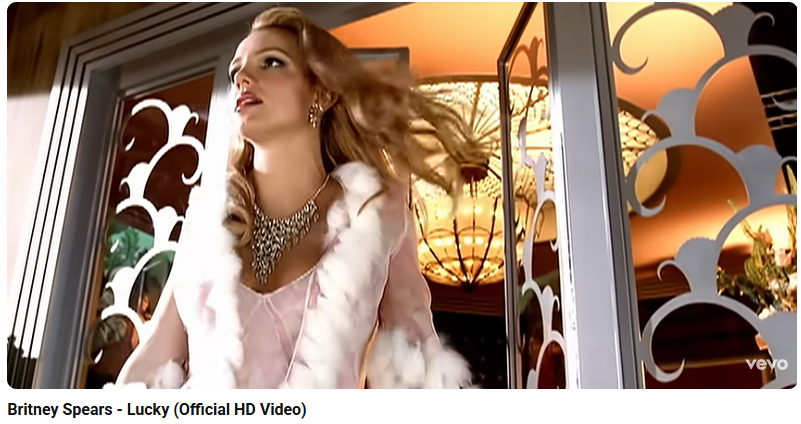
This film is also goofier than the first, and it feels like it comes from carelessness, except when it’s audaciously borrowing elements from the MGM film. Elphaba levitates her paraplegic sister by enchanting their late mother’s silver (as they were in the book) slippers, but her power makes them glow red so that Universal Pictures can skirt MGM’s copyright for Judy Garland’s ruby slippers. Two of the songs featured in the film are new to the adaptation; one of them is Ariana Grande as Glinda as Britney Spears in the “Lucky” video. I’m serious.
The second is a new song for Elphaba when she tries to inspire the Animals to stay and fight, and it’s called “No Place Like Home.” That’s trying too hard. It’s difficult not to notice since this film wraps up the narrative threads of everyone but the little girl whose fate is left unknown, given that Glinda is a witch with no magic (which is a miserable creature indeed) and can’t send her back to Kansas. Admittedly, this does lead to a funny background bit where the Wizard takes off in his balloon and leaves Dorothy behind, this viewpoint implying that he was running for his life before Glinda decides to turn his exile into imprisonment. About half of the laughs I had in the theater were clearly intentional on the film’s part; the other half … I’m not so sure. After Elphaba’s disruption of the road construction, the film’s title suddenly appears over an image of a government overseer fleeing through fields of flowers as tense, dramatic music plays, and it’s so jarring it feels like an intentional joke. When Elphaba confronts the Wizard for the first time in this film, he playfully bonks himself with a yellow brick, which he then demonstrates as being light and bouncy before tossing it away. Was that a bit that Goldblum did on set with a prop brick that they decided to keep in? It’s bizarre. At other times, I merely groaned as the film forced in references, or when we had to make a hard right in a given character’s storyline so that they can get railroaded on track for their respective stations of the canon.
I’m being pretty negative about a film that I had a pretty decent time watching, so it’s worth noting that there’s still a lot to enjoy, even if it’s rushed in some places and sluggish in others as it chugs toward its inevitable conclusion. Erivo’s pipes are still masterful, and the songs are sufficiently rousing even if they’re not as inspired as the last time we were all here. It has come, it will go, and by this time next year we’ll have mostly forgotten about it. Once its theatrical run is completed, the overwhelming tie-in advertising (Bowen Yang and Bronwyn James put in two brief appearances as their sycophant characters from the first film in order to justify their appearances in For Good-themed ads for Secret Clinical deodorant) will come to an end, and people will mostly remember the first film fondly, and this one little if at all. Don’t take it too seriously, have a good time, and perhaps see it late enough in the evening that there will be a minimal number of children in your audience (trust me).
I’ve been living in Austin for over a decade now, and there’s still a goodly number of famous locals that I have yet to encounter or even learn about. Most recently, some friends hosted a backyard cookout/projector movie night at their home in East Austin, as they had acquired a VHS copy of the locally-produced 2022 comedy Erica’s First Holy Sh!t, starring “Very Famous [Austin Specific] Fitness Guru” Erica Nix. I was fairly certain that night that I had never heard of Erica Nix before, but the very next morning I went to the same local coffee shop where I had hosted my recent Halloween film screenings and there on the bar was a flyer for one of her workout classes:
This past weekend was also the second weekend of the Austin Art Crawl/Studio Tour, and I asked some friends that I ran into at Canopy Studios if they had ever heard of her; some had, some hadn’t, and one had made out with her once. It also turns out that she’s participated in some of the same Austin Public TV sketch stuff that I occasionally do (although we’ve never worked in a scene together), so maybe the problem is just that I don’t pay enough attention. Upon further reflection, I did remember her brief run for Austin mayor, which features as a plot point in Holy Sh!t, but didn’t connect her name to the one that I recalled from reading that story in the newspaper years ago. Regardless, Erica’s First Holy Sh!t is a stunning piece of art for someone whose extreme fame is so geographically fixed.
In the midst of the pandemic lockdown, Erica Nix hosts a queer virtual orgy of mostly witches before settling in for some self care via a long soak with a Lush beauty mask. Realizing that the mask contains molly, meth, and more, she flashes back to purchasing the goop in the days leading up to the lockdown, then goes on a psychedelic journey that takes her to her childhood bedroom to interrupt her pubescent self (P1Nkstar)’s pillow-humping session, a Zoom call with God (Nikki DaVaughn), an erotic encounter with Mother Nature (Christeene), a quick sidebar with Satan herself (Andie Flores) while exploring the inside of Mother Nature’s anus like Lemmiwinks, and a wellness session with Gwyneth Paltrow (Lynn Metcalf) in which Erica learns to forgive herself. She also runs the gauntlet of several of her personal issues, American Gladiators style, facing off against personifications of her nemeses/weaknesses: Olestra, Xanax, Prolapse, and Buzzfeed, all of it hosted by the Effie Trinket-esque Edie Teflon and her co-host, Problematic.
It’s all great fun, but it’s also one of those films that’s a deeply revelatory exploration of its creator’s soul. Erica bares it all—literally and figuratively—many times. Some of the things that she’s concerned about are so specific that they transcend the personal and become universal; one standout is a scene during one of the gauntlet challenges where Erica has to vibrate herself to climax while ignoring increasingly mounting concerns, and another is the fact that she’s supposed to be feeding a friend’s cat but she suddenly can’t remember the last time she checked in on the pet. It’s a small thing, but in microcosm represents so much about the tendency to prioritize self care, which is something that Erica tackles over and over again throughout the movie. There’s also a great bit where Erica has her Zoom call with God, represented here by a Black actress, who chides Erica for calling her real-life counterpart (each of the people Erica encounters were also part of her Zoom orgy at the beginning, to ensure we get one last Oz allusion in at the end with the “And you were there, and you were there . . .” scene) after the death of George Floyd, as if her Black friend was now going to be somehow responsible for helping Erica navigate the social and political situations that were to follow. This is followed up on again later, when Erica has to face off against one of the Gladiators, who is shooting lasers at her as she navigates a literalized obstacle course of allyship, activism, and insecurities about being perceived as being merely performative. It’s self-reflective without being too self-forgiving, and it makes for an interesting film.
This is also a production that clearly managed to navigate COVID restrictions and still create something special. Aside from the big outdoor dance number at the end, I’m hard pressed to think of many scenes in which two actors are physically in the same space; there’s Erica and her younger self, the two hosts of the American Gladiators spoof are together in the same room, and the outdoor sequence in which Erica meets Gwyneth Paltrow and learns to forgive herself for her flaws. Almost everything else is green screened and edited together into shot/reverse-shot compositions, but it’s pretty seamless. Speaking of, Metcalf’s performance as Paltrow is alongside DaVaughn’s as God, Flores’s as Satan, and Christeene’s as Mother Nature as one of the best in the film; she doesn’t even superficially resemble the GOOP “guru,” but her vocal impersonation is spot on. It’s quite good.
I would recommend this film pretty highly, and although it’s not streaming for free anywhere, you can find it for rent on Vimeo here. Or, if you’re local to Austin, you can always rent a VHS copy from WeLuvVideo on North Loop Blvd, presuming you’ve got a membership of sufficient tenure. It won’t be for everyone, but if it’s for you, you know who you are.
It’s strange that we got two different films this year that were based on Stephen King novels that he originally published under his pseudonym of “Richard Bachman,” with TheRunning Man premiering just a few short months after The Long Walk. I haven’t seen the 1987 adaptation of Running Man since I was a kid, but I remember skimming the original text once in my adolescent years and not seeing many similarities, and reading that the earlier film had largely taken only a few concepts from the novel and changed much of the meat of it. Edgar Wright’s new film, based on a cursory examination of the text’s summaries online, hews closer to it, with a few modernizations to account for changing technology, as Bachman/King’s original, despite being set in 2025, couldn’t have foreseen the ways that we’d build our own dystopia. What struck me about this is that although The Long Walk was written when King was a student in the 1960s and was published in 1979, both that narrative and this one focus on a man driven to participate in a widely broadcast, necropoliticalbread and circuses-style contest that ends in either death or functionally endless wealth. For The Long Walk, it’s clear that King drew inspiration from the seemingly endless Vietnam War, the first war to be televised. (As a side note, the Latin for “bread and circuses” is panem et circenses, with the Long Walk-inspired Hunger Games taking the word “panem” as the name of the nation in which it takes place.) The origin of what inspired The Running Man is less clear.
Regardless, this made me curious about whether, consciously or unconsciously, King shunted the works in which he expressed rage against an unfair and unjust system into his Bachman-credited works while keeping his King brand spooky (as of the 1977 publication of the first Bachman novel, aptly titled Rage, King had published Carrie, ‘Salem’s Lot, and The Shining). Rage, which has nothing to do with The Rage: Carrie 2, has become semi-notorious since publication, as to the rise of school shootings in the decades since its publication has haunted King, who removed the book from publication after it became associated with some actual acts of violence. In that novel, main character Charlie Decker retrieves a pistol from his locker after being expelled and goes on a rampage, but he does so with no real ideology and the only clues we get to his reasoning are flashbacks to his abusive childhood.
That’s not quite in the same wheelhouse as Running Man or The Long Walk, but the latter two do share similarities to the 1981 Bachman novel Roadwork, which could best be synopsized as “Charlotte Hollis does a Falling Down.” Roadwork features a man named Dawes whose sentimental attachment to the industrial laundry where he is employed and the house in which he raised his deceased son Charlie leads him on a campaign against the expansion of a highway that will result in both being demolished. He eventually finds himself in a standoff with the police before he detonates the house himself while inside of it, and the epilogue confirms that the highway extension project had only been approved so that the city could build the minimum number of miles to secure future federal funding. Roadwork was a contemporary novel, so it lacked the speculative fiction future setting of the dystopias of The Long Walk or Running Man, but despite a more realistic setting, the protagonist is still a person who, like the boys in the former and the running men in the latter, finds himself forced by an inhumanly callous and bureaucratic system into a path from which there seems to be no escape. It lacks the “being broadcast to the masses” element, but it is replaced by the fact that the piece is bookended by excerpts from a journalist who interviews Dawes both before and during his rampage.
With that frustration with (and ultimate defiance of) the system being a foundational element of most of the Bachman-credited works, and with the globalization of virtual omnipresence of social media creating a world in which most people have willingly submitted themselves to an online surveillance state, it’s not surprising that we would get a Running Man remake (or re-adaptation). And, if you’re going to do it, I can hardly think of a better person to play protagonist Ben Richards than Glen Powell, who has the handsome face and toned body to please a ravenous viewing audience, both those watching the film and the TV—or rather “FreeVee”—show within it. Edgar Wright has made some of my favorite little oddballs over the years; I was a huge fan of his Sean Pegg/Nick Frost/Jessica Hynes-nee-Stephenson TV series Spaced as well as Shawn of the Dead, Hot Fuzz, and his Scott Pilgrim adaptation, and even if I was lukewarm on The World’s End and never saw Baby Driver, I was more fond of Last Night in Soho than most. The early reactions to Running Man, many of which expressed frustration with Wright and recommending he re-team with Pegg and Frost, had me worried, but I ultimately had a pretty good time with it. While catching up about recent releases we had seen in the top half of our recent podcast episode, Brandon and I talked about our different reactions to Predator: Badlands, and aligned on the fact that it was the perfect movie for a mid-afternoon beer at an action flick; this is exactly the same experience.
Ben Richards (Powell) is a laborer who has been blacklisted from virtually every job because of “insubordination” like telling a union rep about radiation leakage; that one megacorporation has a monopoly on virtually all industry doesn’t help. When his wife Sheila (Jayme Lawson) is planning to hit a third shift at the seedy nightclub where she waitresses so that they can try to get medicine for their ill infant daughter, Ben instead heads off to audition for one of the many game shows that are presented on the megacorp’s FreeVee service. He promises that he’s not foolish enough to try and get on The Running Man, a show in which the contestants must try to stay alive for thirty days while staying ahead of the elite five person “Hunter” team led by the mysterious masked McCone (Lee Pace), the omnipresent “goons” (the corp’s privatized police which have replaced all other law enforcement in the U.S.), and all private citizens, who are incentivized to record and report the Runners with cash prizes. He ends up not having a choice, as he gets slotted to The Running Man after various physical and psychological tests, and he’s talked into accepting the signing bonus that will get baby Cathy in to see a doctor by network exec Dan Killian (Josh Brolin). Killian tells Ben that he thinks he has what it takes to go the distance, and even as he tries to endear himself to Ben by admitting that he says that to all the players but “this time [he] really mean[s] it,” Ben sees right through him, promising that he’ll destroy him in the end. Killian directs him to amp up his rage issues for the camera, and then Ben and the other runners, Laughlin (Katy O’Brian) and Jansky, are introduced to the in-studio and at home audiences by host Bobby T (Colman Domingo), where they’re painted as thieves, welfare parasites, and malcontents, to the jeers and boos of the frothing populace.
The rules are simple. Viewers at home can record and submit footage of the Runners via an app, and they get cash payouts both for confirmed sightings and if their contribution helps “eliminate” the Runner; Runners have to stay alive and on-the-run while recording a ten-minute tape per day and then mailing it in, supposedly anonymously. After a near miss with the Hunters while staying at a similar-to-but-legally-distinct-from YMCA, Richards meets Bradley (Daniel Ezra), a rebel who takes him in as part of the underground resistance and whose online presence as an anonymous exposer of the secrets of the broadcasts means he can provide all the exposition that Ben needs. He helps secret Ben to Elton Parrakis (Michael Cera), another rebel who plans to get Ben to an underground bunker after pre-recording his tapes so that he can lie low, and whose house is booby-trapped to the gills. Ben attempts to get more information out about the real activities of the megacorp, but his tapes are edited before broadcast to show him confessing to having enjoyed killing the goons sent after him and that he literally eats puppies. The longer he stays alive, however, the more the in-universe audience transitions from believing the villainous image that the show paints him as to finding him a bit of a folk hero.
Before Bachman was outed as King, some contemporary critics compared the “two” writers’ work and usually found that although their styles were very similar, Bachman’s endings tended to be more bleak than King’s, which were often dark but ended on an optimistic tone. I’m not sure I really agree; Carrie ends grimly, as does ‘Salem’s Lot, but this apparent discrepancy was highlighted specifically by Steve Brown, the bookstore clerk credited with cracking the case that Bachman and King were the same person, so there must be some merit in that analysis. The recent adaptation of The Long Walk makes minor changes to the ending (mostly regarding who wins) but retains that work’s dark tone. Wright’s reimagining of the finale of King’s Running Man rejects the original climax, in which Ben crashes a stolen jet into the megacorp network building, in favor of having Ben escape the plane’s destruction prior to the plane being destroyed by the megacorp’s missiles so that he can become the figurehead of a revolution. I’m not terribly concerned with textual fidelity, all things considered, but it’s worth noting that all of the Bachman texts have downer endings. Charlie is killed by the police at the climax of Rage, the winner of the titular Long Walk runs toward a specter of death on the other side of the finish line, Dawes blows himself up in Roadwork, and Ben Richards of the novel is a martyr (at best), not a revolutionary. Even the latter works that were published after Bachman’s true identity was exposed, Thinner and Blaze, end with their protagonists losing weight to death and being shot to death by the police, respectively. It does feel like The Running Man, in either prose or film form, shouldn’t really have a happy ending; it could have had a merely poignant one. Instead, this one ends in such a way that although it is a complete story in and of itself, it’s deliberately open-ended enough that it leaves the door open for a sequel that it should not have.
Politically, the film is kind of shallow. Ben Richards is a man with a short fuse, and his driving need is to provide for his family. He is a man with a motivation but without an ideology, and although he takes up arms against the system, one never buys that his personal vendetta against Killian transcends the personal into the revolutionary. We never learn what becomes of Ben’s wife and child in the novel, and that kind of ambiguity makes for a more interesting text, giving you something to mull over, while the film explicitly shows him reuniting with his wife after “winning” the game, after a fashion. There are the occasional very minor references to our contemporary real world and its problems. The only broadcast FreeVee that seems to exist consists entirely of game shows and a Kardashians spoof called The Americanos, which reflects a lot of the current media landscape, and there’s one piece of graffiti that reads “A[ll] G[oons] A[re] B[ad],” but no one is going to go into this film and see themselves in any of the characters with negative traits. That’s not something that every film needs to have, but when one is making a satire, which this film purports (and occasionally manages) to be, if there’s nothing that challenges the viewer to recognize himself in the brain-rotted masses who cheer for the death of an innocent man because of manipulation tactics, then what are we doing here? When the film does hit, it does so in the way that the audience is manipulated. In one particularly noteworthy scene, the mouthpiece of a show that gives Richards a bonus for the death of a goon brings all of the children of the dead men on stage for a candlelight vigil. It’s good stuff, and it’s in these moments that the film manages to show a little of the edge that it’s reaching for but failing to grasp.
It sounds like I’m really down on this film, and that’s not really the case. I had a good time, and this was a well-paced action thriller with a likable leading man and some side characters who, if they can’t be fully fleshed-out, can at least be quirky. Glen Powell’s selling some tickets based on his towel-clad hostel escape alone, I can assure you. ‘Tis the season of heavy, heady prestige dramas like If I Had Legs I’d Kick You, After the Hunt, Die My Love, and still more in the days ahead, and sometimes it’s nice to have something that’s pretty to look at and decently constructed, even if it’s a little empty, just to break things up a little.
For this lagniappe episode of The Swampflix Podcast, Boomer & Brandon discuss two different films that share the same title and director: Alfred Hitchcock’s The Man Who Knew Too Much (1934) and its loose remake The Man Who Knew Too Much (1956).