Until 1956’s Forbidden Planet screened at The Prytania last week, I had only ever watched it as a VHS tape, fuzzed out and color-faded on a squared-off TV screen. It’s easy to take the movie for granted as an Atomic Age sci-fi novelty in that format, where it resembles any number of 1950s space adventures of the Buck Rogers mold. Revisiting it in CinemaScope on the big screen painted a much clearer picture of just how extravagant its production was for that genre. If anything, Forbidden Planet is the Atomic Age sci-fi novelty. Between its flying saucers, laser battles, psychic monsters, synthesizers, mini-skirted alien babes, and Mid-Century Modern decor, it stands as the Platonic ideal of Atomic Age sci-fi, a perfect specimen. Its influence on all space-adventure sci-fi to follow is also glaringly apparent in retrospect. Within the first five minutes, the Earthling astronaut heroes step into a light-beam transporter device that looks suspiciously like the ones on Star Trek; the yellow text scroll of its original trailer looks suspiciously like the opening prologues of classic Star Wars films. Not for nothing, composers Bebe & Louis Barron’s far-out analog synth soundtrack is also cited as the first feature-length electronic score in movie history, overloaded with futuristic beep-boop sounds that would change the shape of music forever, in cinema and beyond. I was delighted by the Barrons’ opening credit for “electronic tonalities,” since what they were doing with their self-invented gadgetry was so experimental the studio unions weren’t convinced it technically qualified as music. I was even more delighted by the similar credit “introducing Robby the Robot” in that sequence, though, as if Forbidden Planet‘s breakout robo-star was a working actor instead of a movie prop.
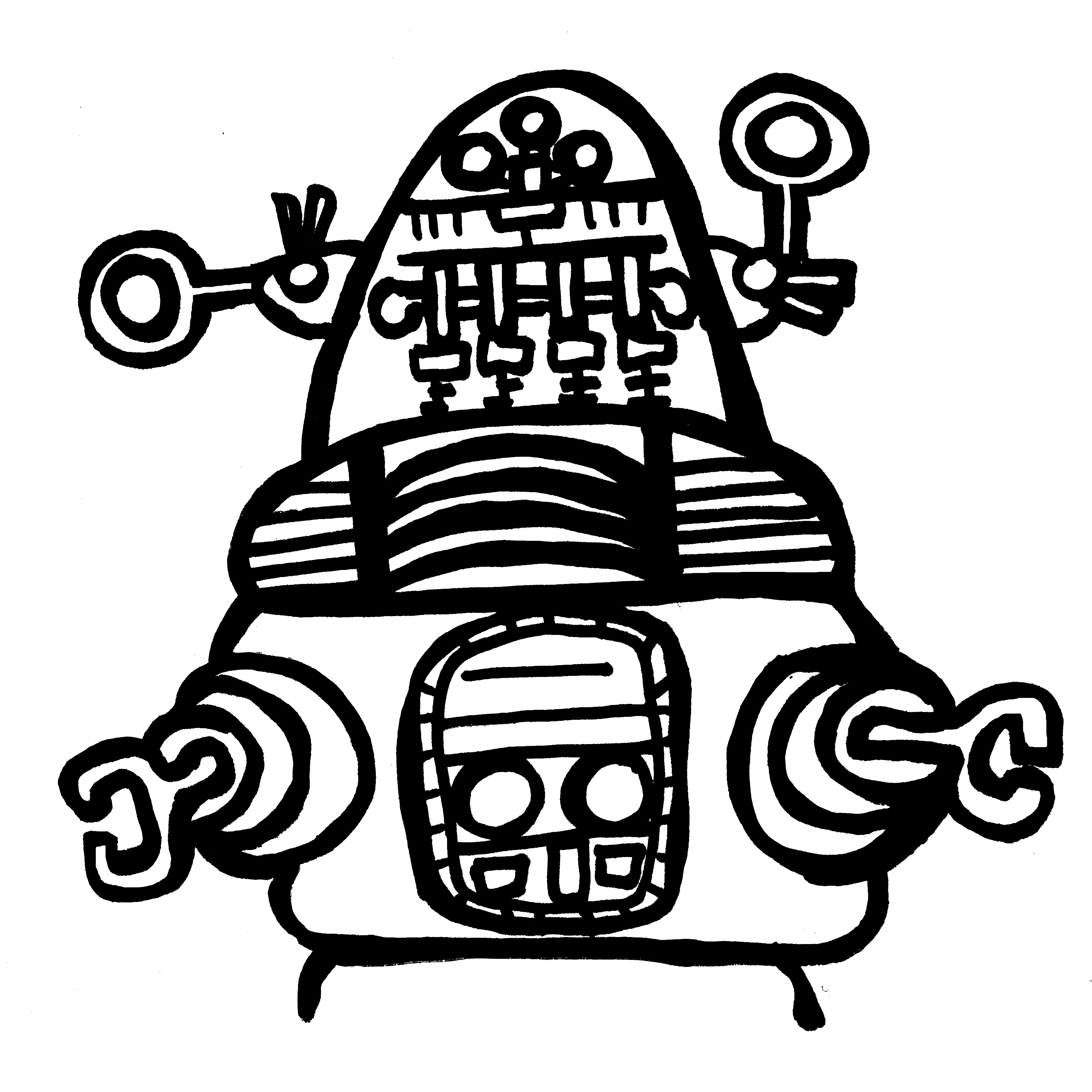
Robby the Robot should be familiar to any movie lover regardless of their personal interest in Atomic Age sci-fi or whether they know Robby by name. His image is synonymous with the genre, to the point where he earned the nickname “the hardest working robot in Hollywood” for how often he was referenced in other works. Robby has dozens of acting credits on IMDb, ranging from speaking roles in vintage TV shows like Lost in Space, Twilight Zone, and Columbo to uncredited background cameos in Gremlins, Explorers, Looney Tunes: Back in Action, and even a few movies not directed by Joe Dante. His continued popularity after his “introduction” in Forbidden Planet was at least partly genuine, since he is an instant charmer in that big screen debut. Robby was introduced to audiences as a kind of robot butler & 3D printer, always available to serve cocktails and fabricate gem-studded haute couture gowns at the simplest request. His flat vocal affect (provided by actual-human actor Marvin Miller) and his overly buff body design also made him an oddly manly screen presence, so bulkily muscular that he had to toddle across the screen like a baby taking its first steps. A lot of Robby’s continued public circulation after Forbidden Planet was an effort from MGM to recoup a return on investment, though, since his construction for his introductory film appearance was exorbitantly expensive, estimated at nearly 7% of the film’s overall budget. That money was put to great use, affording Forbidden Planet a recognizable mascot that could sell tickets with his coneheaded good looks and dry robotic wit, but it was a huge gamble to invest so much of the special effects budget on a single prop. The only way to justify the expense, really, was to put the robot to work.
Without question, the most bizarre ploy to squeeze more return on investment out of Robby’s robo-body came the immediate year after Forbidden Planet, when the sci-fi mascot was once again billed as a big-name actor in the children’s comedy The Invisible Boy. Robby’s second acting credit only does the bare minimum to justify the logic of his screen presence, gesturing towards an offscreen time travel device that connects its 1950s suburbia setting to a future century when Robby could’ve conceivably traveled to Earth after the events of Forbidden Planet. All of this half-baked lore is effectively contained to a single postcard, briefly discussed by the father-son duo who hog most of the runtime. Personally, I prefer to take the opening credits at face value, agreeing to a reality where Robby is a working actor whose appearance onscreen doesn’t need to be narratively justified any more than his human costars’. The important thing is that Robby is given the opportunity to make friends with a young nerd in the American suburbs, offering some direct-to-consumer wish fulfillment for the target audience of sci-fi adventures like Forbidden Planet. Then, a dirty Commie supercomputer hijacks Robby’s programming, temporarily turning him evil and overriding his prime objective to do no harm to living beings. He gets up to increasingly ridiculous, nefarious deeds in his second outing: turning the young boy invisible, kidnapping him to the moon, and getting hit with a military-grade flamethrower for his troubles. Then, he finally snaps out of it and becomes the Robby we all know & love in the final scene. All’s well that ends well, I guess, as long as you don’t pay too much attention to the Father Knows Best familial dynamics that continue in the subtly abusive family home Robby invades, in which spankings are frequent and other expressions of parental affection are difficult to come by.
The Invisible Boy is kiddie stuff, but it’s at least memorably deranged kiddie stuff. There’s a brief comedic sequence after Robby first turns his young friend invisible that threatens to run out the rest of the runtime with slapstick hijinks (again, mostly involving unseen spankings). Instead, the movie gets admirably bizarre in its scene-to-scene plotting, diverting attention from Robby’s new homelife to the evil machinations of a treasonous supercomputer, hellbent on ruling the world in an AI takeover by hypnotizing the humans at its controls. That computer is about the size of an average home’s living room, but it’s said to contain the sum total of human knowledge in its memory banks the same way the cavernous underground computers in Forbidden Planet were explained to contain the sum total of space-alien Krell knowledge. Any of The Invisible Boy‘s direct connections to Forbidden Planet could only diminish it in comparison, though, since that bigger-budgeted work was set entirely in a sound stage otherworld (the first of its kind in that regard as well), while the action sequences of its kinda-sorta follow-up mostly amount to military goons firing blanks at its most expensive prop in an open, barren field. Whenever Robby’s not onscreen in The Invisible Boy, the audience is asking, “Where’s Robby?,” whereas he’s just one of many wonders in Forbidden Planet, competing with flying saucers, psychic monsters, and laser battles for the audience’s attention. It sure is fun to imagine what life would be like with Robby hanging around as your big, buff robo-butler as a child, though, which makes the overall appeal of The Invisible Boy immediately apparent. We all wish we could spend more quality time with our good friend Robby, which is partly why he has never truly gone away. He’s always hanging around in the background somewhere, chilling and collecting royalty checks from past acting gigs.
-Brandon Ledet


