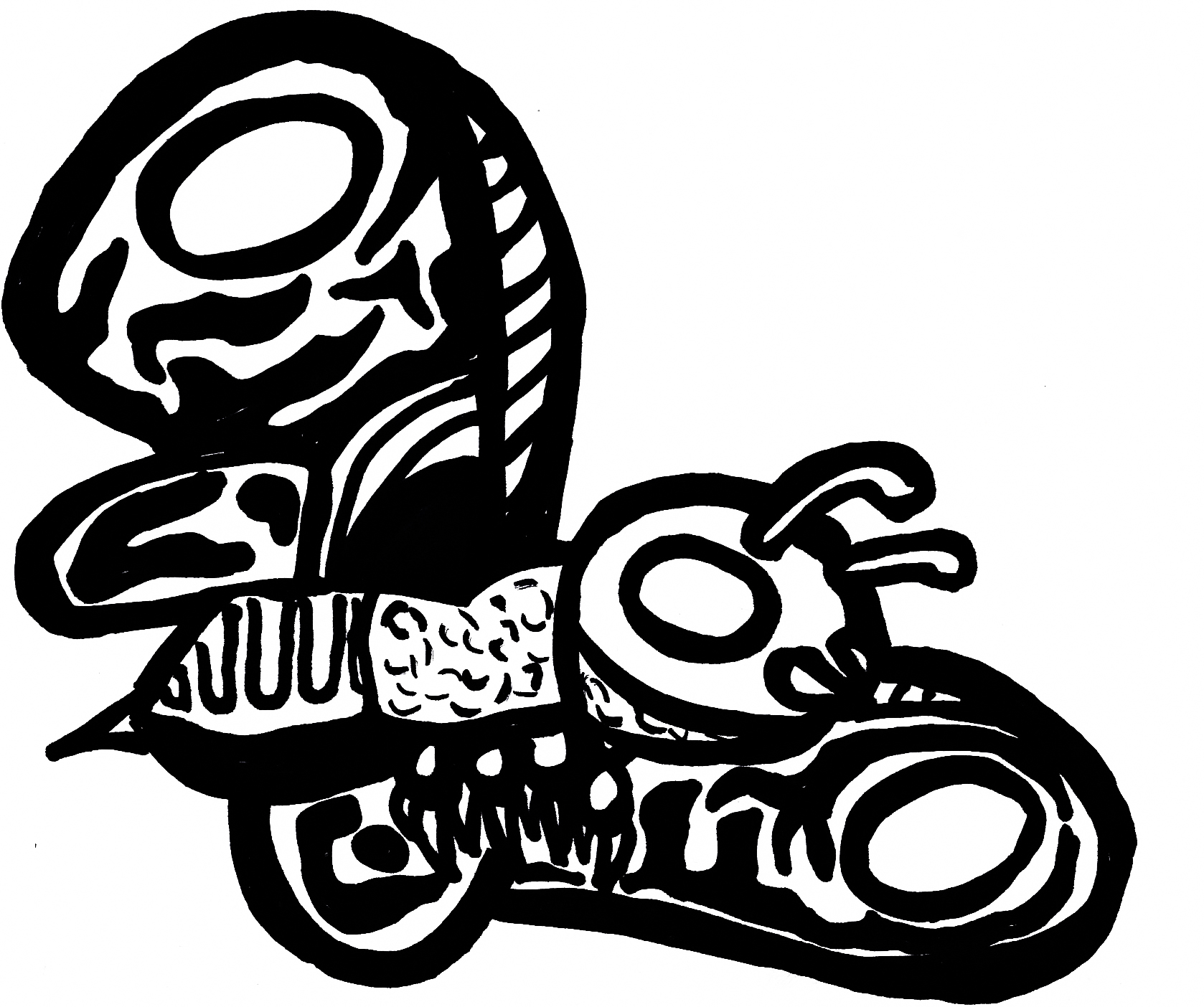
Ebirah, Horror of the Deep (1966)

There are many ways in which the Louisiana education system is an embarrassing disaster. We often rank at the stank-ass bottom of US states in our education metrics, with a long history of political corruption, racial segregation, and religious privatization getting in the way of any progress towards improvement. So, I feel it’s totally legitimate to blame that system for the fact that I have been living in Louisiana for four decades and have never once seen the movie where Godzilla fights a giant crawfish. There should be annual screenings of Ebirah, Horror of the Deep in every local middle school. It should be as integral to Southeast Louisiana culture as The Blue Dog, “You Are My Sunshine,” and “They All Ask’d for You.” Godzilla fights a giant crawfish in it, for God’s sake. The school system has failed us yet again.

Part of the reason why Ebirah is missing from local syllabi is that the exact species of its titular crustaceous monster is up for debate. Most kaiju scholarship cites Ebirah as the middle ground between a shrimp and a lobster, citing that the “ebi” section of its name is interchangeable in reference to either shrimp or lobster in Japanese. It’s a compelling aural argument, but I also have eyes and, as a lifelong Louisiana resident, I know a crawfish when I see one. Ebirah enters Horror of the Deep claw first, smashing a fishing boat with its dominant limb to tease the mystery of what kind of giant crustacean it could possibly be: shrimp, crab, lobster, etc. As soon as its body emerges from the water to reveal its full form, however, the question is firmly, definitively answered. That’s a dang crawfish.

The kaiju saviors summoned to de-claw and dispense of this monster crawfish are Godzilla & Mothra, who spend most of the movie enjoying a nap. Returning to her winged moth form after spending a couple battles against King Ghidorah as a silk-spewing grub, Mothra is getting her beauty sleep on Infant Island, while the indigenous people she protects pray for her to wake up and save the day. Meanwhile, Godzilla is thought to be dead while he takes an angry-nap under a pile of rocks in a oceanside cave. He’s awoken Frankenstein-style via electric shock, channeling lightning through a sword and a trail of copper wire rigged to ruin his nap. Pissed, Godzilla immediately springs into action and destroys everything in striking distance, a rampage that includes ripping Ebirah’s claws off and kicking him back into the ocean depths.

Because the kaiju fights are delayed by siesta, Horror of the Deep leaves plenty of room for humans-on-the-ground drama, which it only takes semi-seriously. The story centers on a young man who’s desperate to reunite with a brother lost at sea, since he was told by a psychic that his brother is still alive. His schemes to engineer the family reunion improbably involve a televised dance contest, a stolen yacht, and a fugitive bank robber, only for both brothers to be shipwrecked on a small island overrun with militant fascists, thanks to Ebirah’s boat-smashing claw. You see, a vicious militia known as The Red Bamboo have forced the indigenous people of Infant Island to work as slaves in order to produce a fruit-based chemical that repels & controls the mighty Ebirah, and the only way to stop them is cause a little chaos by waking both Godzilla & Mothra — a scheme even more harebrained than saving the day via dance contest.

Once all of the skyscraper combatants are awake and engaged, Horror of the Deep proves to be one of the more fun, lively entries in the early Godzilla canon — the most playful since King Kong vs Godzilla. Director Jun Fukuda takes over from Godzilla mastermind Ishirō Honda here, and he loosens up the tone with some fun novelty additions to the format. Ebirah’s attacks are often filmed from a 1st-person perspective, shot in Crawvision. Godzilla also fights the crawbeast underwater, a precursor to the zombie vs shark fight of Lucio Fulci’s Zombi 2. His reluctant face-turn to heroism is jubilantly scored to surf rock, a soundtrack that seemingly inspires Godzilla to dance. The biggest laugh of the movie, however, is the dialogue exchange where our yacht-stealing hero answers the insult, “Your brother’s crazy!” with the deadpan retort, “Yeah, crazy about helping those in need.” That’s good stuff.

Regardless of your personal Louisiana residency status, Ebirah, Horror of the Deep lands as an especially fun, light-on-its-feet Godzilla outing. I was surprised to learn that its American dub, Godzilla vs The Sea Monster, was given the robo-heckling treatment on an early episode of MST3k, which means the show was ironically mocking a movie that was already clearly intended to be an unserious hoot. That’s not the only American institution that let the film down, though, or even the most egregious. It’s time that Louisianans write their  senators to petition for Ebirah, Horror of the Deep to be screened in all local grade school classrooms (assuming that Louisiana schools can even still afford the AV carts of yesteryear). The kids need to know about the giant crawfish movie.

-Brandon Ledet
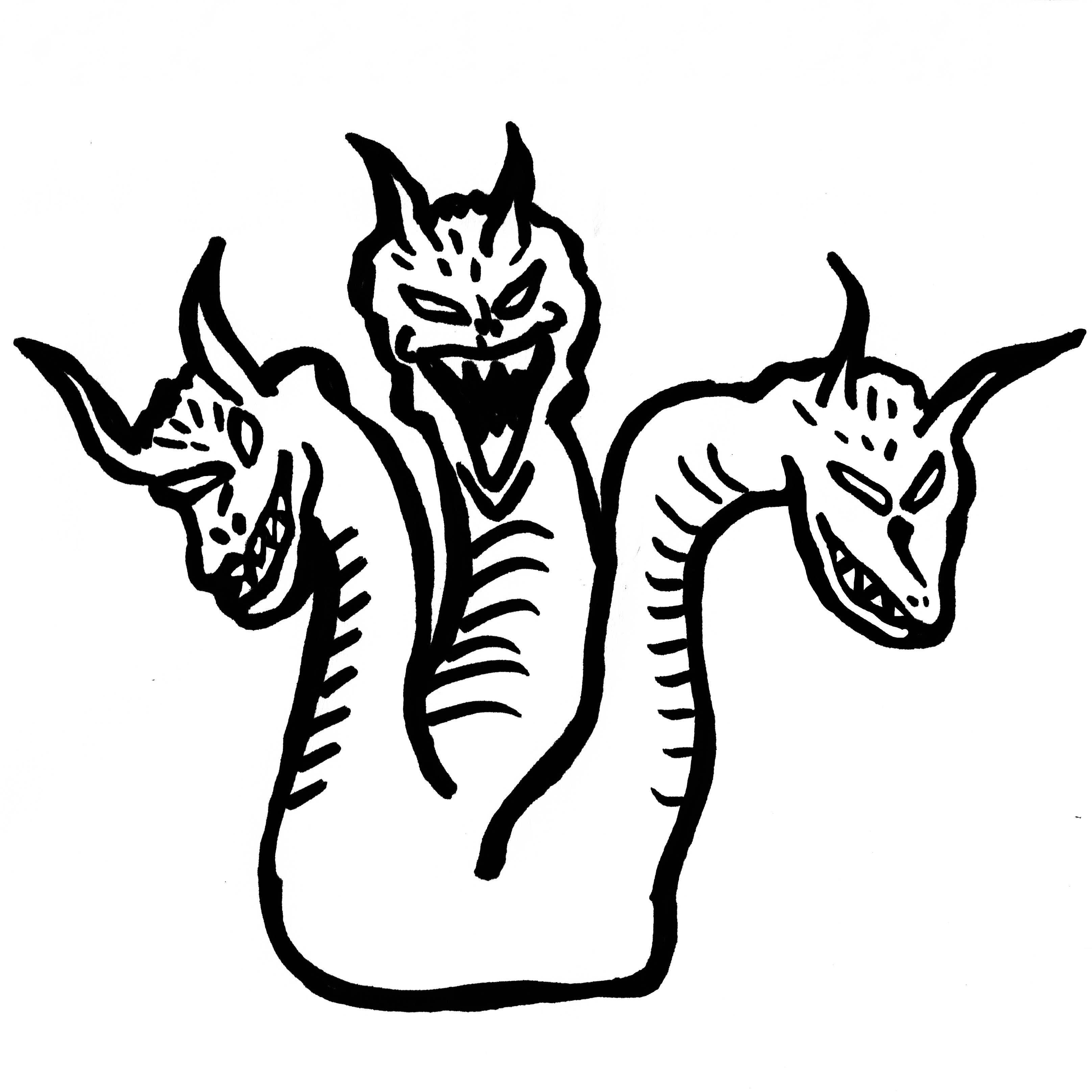
Enter King Ghidorah

There’s just no way around it; King Ghidorah is the most heavy metal monster in movie history. I mean that in the literal sense, since the supreme kaiju being is seemingly armored by a layer of gold scales, making his “heavy metal” designation as matter-of-fact as Mechagodzilla‘s. Of course, I also mean it in the colloquial sense. The three-headed dragon beast is loudly & proudly metal as fuck on a cellular level. When Ghidorah flies into the frame to take down Godzilla and his fellow skyscraper flunkies, the image conjures the crushing sounds of heavy-metal guitar riffs in audiences’ brains, even in the 1960s pictures that were produced well before Black Sabbath had a record deal. Ghidorah is so metal, in fact, that it takes at least three other Toho-brand monsters to muscle him out of the pit, one for each lightning-spewing head. 🤘

The first time I encountered King Ghidorah was in the 1968 kaiju crossover picture Destroy All Monsters, in which the space-alien bio weapon was unleashed to union-bust a gang of kaiju that included Godzilla, Mothra, and Rodan (among the less-famous monsters Minilla, Gorosaurus, Anguirus, Kumonga, and Varan). Seen out of order in my winding journey through Criterion’s Godzilla box set, this appeared to be an especially grand ego-boost for the giant beast, like when WWE puts over their biggest, brawniest wrestler by having them eliminate every other competitor on the roster during the Royal Rumble. As it turns out, that was Ghidora’s exact funciton from the very beginning, and his debut entrance into the Toho kaiju ring marked the very first time Godzilla felt compelled to team up with other monsters to fight on humanity’s behalf. That Godzilla face-turn was in 1963’s Ghidorah, The Three-Headed Monster, in which evil space aliens declare interplanetary warfare by launching Ghidorah at Planet Earth, threatening to take over. It’s then up to Mothra, in her squirming grub form, to convince Godzilla & the pterodactyl-like Rodan to stop throwing rocks at each other like schoolyard children and instead join forces to fight off this existential, heavy-metal threat. They’re both petty assholes about it, but they eventually relent and team up to repel the flying hell-beast before going their separate ways.

The reluctant tag team of Godzilla & Rodan reforms when King Ghidorah returns in 1965’s Invasion of the Astro-monster. Rebranded with his new wrestler gimmick as Monster Zero, Ghidorah is once again deployed as an interplanetary weapon of mass destruction, one that can only be disarmed by the collective power of multiple kaiju opponents. His inevitable 2-on-1 battle with Godzilla & Rodan is delayed until the climactic 15 minutes of the runtime, though, as the invading Xiliens from Planet X smartly abduct Godzilla & Rodan with UFO tractor beams and imprison them for as long as possible so Ghidorah can do maximum damage, unchecked. Without the large-scale monster battles to fill up the runtime, Invasion of the Astro-monster spins its wheels with lengthy indulgences in political espionage and The X From Outer Space-style extraterrestrial cocktail parties. It’s maybe not the most thrilling approach to making a monster movie, but it does lead to some gorgeous 60s-kitch imagery. It’s impossible to decide what the most striking image of the film is in retrospect, but I’ve narrowed it down to two options: literalizing the Cold War aspect of the Space Race by putting a gun in the flag-planting astronaut’s free hand or Godzilla being abducted by a UFO. Then, Ghidorah soars into the frame to battle Godzilla & Rodan once again, erasing such questions entirely with heavy-metal bursts of lightning.

If there’s one detail of Ghidorah’s design that makes his metal-as-fuck majesty immediately obvious, it’s that each of his individual dragon heads moves independently, which is especially impressive when combined with his suitmation power of flight. It’s a lot like watching Kermit the Frog ride a bicycle for the first time in The Muppet Movie, adding an entire new dimension to kaiju suitmation spectacle audiences previously did not dream was possible. The suit was reportedly exceedingly difficult to operate as a result, often leading to longer shooting schedules as his operators struggled to keep his long, golden necks from tangling like noodles. Like headbanging to thrash riffs, it was well worth the headache. Everything else that makes Ghidorah so thunderously badass is immediately, visually obvious. He is the essence of metal, skyborne and beautiful. Godzilla mastermind Ishirō Honda’s impulse to bulk up the monster’s reputation by making him undefeatable unless several other kaiju attack in unison was a smart one, but it was also necessary. Look at him. No one would buy into the kayfabe otherwise.

-Brandon Ledet

Mothra vs Godzilla vs Godzilla vs Mothra

Keeping track of which titles are available to stream on what platform when is a constant struggle for sub-professional movie nerds.  This has been doubly true in the past year, where the COVID-19 pandemic has blurred & warped the traditional theatrical window into near oblivion.  That might explain how I showed up to HBO Max intending to watch the new Godzilla vs Kong film a week early, confusing the date of its Chinese market theatrical debut for the date it was supposed to start streaming on HBO Max in America.  Getting jazzed to watch a big-budget kaiju spectacle only to discover I’d have to keep that excitement on ice for an entire week was a letdown, and I was determined to do something with my giant-monster energy in that moment of panic so as not to waste it.  I needed to watch Godzilla fight a formidable foe that night, so I scrambled to come up with which opponent would be a worthy replacement for the mighty Kong.  The answer was immediately obvious, as the last time I saw Godzilla breathe atomic fire in 2019’s King of the Monsters re-sparked my interest in the mystical femme kaiju Mothra, who I’ve seen in too few of her own onscreen epic battles.

Choosing to watch Godzilla battle Mothra might’ve been a quick, easy decision, but it immediately led to another, trickier what-to-stream crisis.  Having appeared in 15 feature films to date, Mothra is second only to Godzilla in her number of onscreen battles in the sprawling Zillaverse.  Whittling down the list of options from there was a complicated process.  I removed titles where Mothra appeared on her lonesome, terrorizing only the puny, Earth-polluting humans in her path.  I was looking for a fair fight.  I then discarded titles like Destroy All Monsters & Giant Monsters: All Out Attack where Mothra had to share the screen with the dozens of other kaiju baddies who have beef with the King of the Monsters.  That left me with two clear contenders for the perfect Godzilla vs Mothra match-up, which should’ve been obvious by their titles alone: 1964’s Mothra vs. Godzilla and 1992’s Godzilla vs. Mothra. Choosing between the two of them was essentially a coin-toss—given their near-identical titles—so I did the only sensible thing: I watched both.  And they were both great.  All I can really do here is attempt to distinguish them from one another in case someone else finds themselves in that hyper-specific scenario – wanting to watch Godzilla fight Mothra and having to make a snap decision on where to satisfy their kaiju craving.

The 1964 film Mothra vs Godzilla is the platonic ideal of what you’d want out of a retro kaiju battle film.  A beloved classic from Godzilla’s Shōwa era, it’s earned both populist praise as a fun action romp featuring two of the greatest movie monsters of all time and the recent stamp of approval from The Criterion Collection as a culturally significant work of Art.  In the movie, Godzilla is a monstrous personification of nuclear waste & coastal erosion who can only be vanquished by the righteous Earth-protector Mothra.  Only, the corporate greed of the smiling chumps at Happy Enterprises make Mothra question whether humanity is worth saving at all.  The foot-tall fairy women from Infant Island who represent Mothra’s wishes (as Happy Enterprises jokingly declare have “the power of attorney” over the beast)—and can summon her in song—eventually broker a deal for Mothra (and her freshly-hatched larvae) to fight Godzilla to protect humanity for destruction.  In the ensuing battle, she flaps up punishing winds with her wings, puffs out a poisonous pollen, and drags Godzilla around by his tail until he retreats back into the ocean.  It’s wonderful.  The entire movie is a pure, kitschy delight, registering as the Godzilla equivalent of The Bride of Frankenstein in its balance between cutesy humor and retro terror.

1992’s Godzilla vs Mothra (marketed in America as Godzilla and Mothra: The Battle for Earth) is a little clunkier in its build-up to its titular monster battle, even though it repeats most of the 1964 film’s broader details.  The Infant Island fairy women (originally played by The Peanuts) may have been replaced by a new generation of foot-tall mystic beauties called The Cosmos and the easy-target villain Happy Enterprises may have been replaced by the hubris & pollution of Humanity as a species, but story-wise Godzilla vs Mothra is near-identical to Mothra vs Godzilla, just as it is in title.  Only, it delays that traditional story with some hokey Indiana Jones-style adventurism and the crash of a CGI asteroid in its early goings, needlessly inflating its runtime.  That unnecessary delay may mean that Mothra vs. Godzilla ’64 is the better film overall, but once it fully unleashes its monster mayhem Godzilla vs. Mothra ’92 has much more exciting kaiju fights, which is a pretty major qualifier.  Mothra fully emerges into battle about an hour into the film in a cloud of poisonous, glittering pollen, and attacks Godzilla with sparks, lasers, and underwater brawling in a huge step up from her original move set.  She’s also teamed up with a goth frenemy named Battra (decorated with Guy Fieri flame decals on its wings) who adds an entire new dynamic to the titular fight.  Together, they shock Godzilla into submission, smash a Ferris wheel into him, and ultimately, as the kids would say, “throw the entire man away” as a team.

I’m not enough of an expert in the kaiju battle genre to declare a clear victor here.  All I can report is that the two Godzilla vs. Mothra films have their own distinct flavors despite the ways they overlap in narrative and lore.  Mothra vs. Godzilla (1964) is a perfectly calibrated rubber-monster creature feature from start to end, but it doesn’t offer much in the way of surprise in what you’d expect from a Shōwa era kaiju picture starring these particular two monsters.  By contrast, Godzilla vs. Mothra (1992) is a much more uneven picture that spends a little too much time building up to its creature-feature payoffs.  However, its actual kaiju battle scenes are much more exciting than its predecessor’s, staging absolutely gorgeous rubber-monster battles within the hyper-femme color palette of a teen girl’s bedroom.  Choosing between the two movies is no easier now that I’ve watched them both, so my selection process would have to revert to the kinds of arbitrary filters that narrowed down my field of options in the first place.  Mothra vs. Godzilla (’64) is ten minutes shorter, currently streaming in HD, and carries the art-film prestige of Criterion Collection canonization.  It wins by default, but Godzilla vs. Mothra (’92) put up a hell of a fight.

-Brandon Ledet