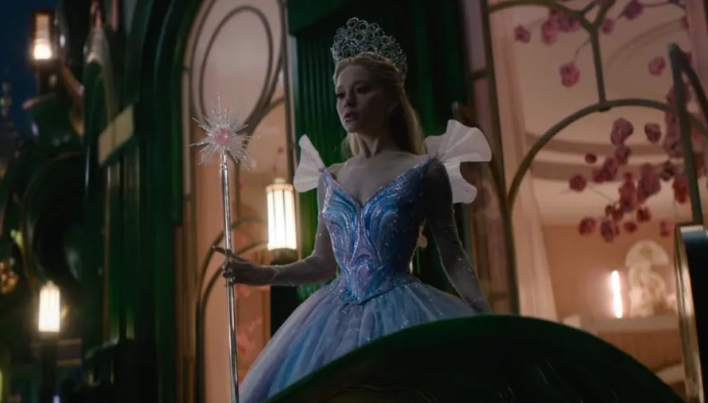
Wicked: For Good (2025)

In the lead up to the release of last year’s Wicked—which surprised no one by turning out to be an adaptation of only the first half of the hit Broadway musical inspired by Gregory Maguire’s revisionist novel of the same name—I saw a spectrum of positive to negative press from legitimate outlets and fawning praise from musical fans and Ariana Grande devotees. My thoughts were mostly positive, finding it a perfectly pleasant, if incomplete, story with passable-to-admirable performances. I didn’t understand then why people seemed so upset about the film’s visual stylings; it wasn’t perfect, but I went into that film expecting to hate it and came out pleasantly surprised. It didn’t end up on my end of the year list, however, despite my positive review; I had a good time, but it didn’t stick with me. As early as the days following the premiere of 2024’s Wicked, those most familiar with the Wicked musical cited that it infamously has a weaker second half than its first and that this downward momentum would not serve the second film well. Their foresight was mostly true. Early reviews of Wicked: For Good moved the needle in an even more negative direction, as those who came without the foreknowledge of the overall quality of the back half of stage production were underwhelmed by this concluding outing. The reception has been mixed at best, so I once again went into this film expecting that I wouldn’t have a very good time, but once again, I enjoyed myself. Not as thoroughly as last time, and I expect this one to stick with me even less, but less enchantment didn’t mean I wasn’t charmed at all. 

The film picks up five years after Elphaba (Cynthia Erivo) oooh-wa-ah-ah-aaaaah’d off into the western sky. In the interim, her sister Nessarose (Marissa Bode) has taken over their late father’s position as governor of Munchkinland, with Munchkin Boq (Ethan Slater) as her primary attendant. The Wizard (Jeff Goldblum) is continuing his wholesale prosecution of the talking Animal community while winning the public relations war on two fronts: the impending completion of a major public works project, The Yellow Brick Road (which was built with enslaved Animal labor), and—via Madame Morrible (Michelle Yeoh)—a constant output of propaganda painting Elphaba as the terroristic “Wicked Witch of the West.” The opposite of wickedness is goodness, and to that end, Morrible and the Wizard have created a cult of personality around Galinda (Ariana Grande), who has now taken the name “Glinda” and accepted the title “the Good.” It’s so like a modern P.R. campaign that they even throw in a sudden celebrity marriage between Glinda and Prince Fiyero (official sexiest man alive Jonathan Bailey), who has been appointed to the Emerald City’s special “Gale Force” (get it?) tasked with taking down the Wicked Witch. 

There’s a big love pentagon going on here. Nessarose is in love with Boq, who was encouraged by Glinda to show Nessarose attention and affection in their college days, and who is ready to move on but has been hesitant to do so because she’s still grieving her father (and Elphaba, in a different way). Boq is in love with Glinda and has been since they were all in school together, and learning of her impending wedding to Fiyero causes him to try and depart for the Emerald City, only for Nessarose to go full fascist and shut down Munchkinland’s borders to keep him from leaving her. Glinda, despite still being a bit of an airhead, is deep enough to know that the lack of happiness she feels despite public adoration and supposed romantic fulfillment means that it’s all hollow underneath; nevertheless, she genuinely loves Fiyero. For his part, Fiyero is taken aback by the sudden announcement of his wedding (no proposal was made by either party) and feigns positive feelings about this development, continuing to hide his pining for Elphaba. She feels that same love in return, but all she can see from her vantage is the Emerald City-propagated public image of him as a righteous crusader against the vile Wicked Witch. 

These interpersonal relationships are more integral to the story than the supposed greater political situation, the subjugation of the sentient Animals, although there’s more here than in the stage musical. The film opens with an action sequence in which Elphaba disrupts the building of the yellow brick road by freeing the Animals being used as slave labor, and she later interacts with a group of animals who are fleeing Oz via a tunnel under the road, begging them not to give up. Later still, she discusses a truce with the Wizard, with her final demand being that he release the flying monkeys, to which he agrees, only for her to discover an entire second chamber full of abducted Animals in cages, including her goat professor from Shiz University. She releases the animals, which stampede through Glinda and Fiyero’s wedding, and then this subplot is mostly forgotten about as the film moves on to putting all the pieces on the board in the place that they need to be for the events of The Wonderful Wizard of Oz (the book) and perhaps more importantly The Wizard of Oz (the movie) to occur, getting only a moment of lip service in the conclusion as Glinda gives her big speech. 

That table-setting is this film’s biggest hindrance, and why the back half of this story feels less organic and emotional than the first part. Nessarose has to decide to take advantage of the ancient spell book being open to try and use magic to make Boq stay with her, causing him to lose his heart. Elphaba has to try additional magic to save him, which means turning him into the Tin Woodsman, because eventually turning into the Tin Man is the only reason Boq is here in the first place. Madame Morrible wants to lure Elphaba out of hiding, so she sets out to hurt her sister. In order to do so, she creates the tornado that brings Dorothy’s house to Oz and crushes her in the street, because that’s where this story has always been going. The Cowardly Lion stuff is borderline irrelevant, other than his accusation that she was responsible for creating the winged monkeys rattling the Animals’ faith in her, but it’s here because that’s where this story has always been going. The most egregious is the fate of Fiyero. After holding his own ex-fiancee at gunpoint in order to get the Gale Force to release Elphaba, he doesn’t go with her, citing that it would be “too dangerous.” What? More dangerous than them dragging him off to torture him? Moments later, in “No Good Deed,” Elphaba sings that she presumes that they are in the process of beating him to death, if they haven’t already; I’m not really sure how that’s better than going on the run together? There’s absolutely no reason within this narrative for Fiyero not to run off with Elphaba in that very moment, but because we have to move the pieces into place for the story of The Wonderful Wizard of Oz to happen, he has to stay behind so that Elphaba’s concern for him can drive her to cast a spell that—surprise!—turns him into the Scarecrow we all know and love. It’s a necessary evil, but it doesn’t exactly flow the way that last year’s release does. 

This film is also goofier than the first, and it feels like it comes from carelessness, except when it’s audaciously borrowing elements from the MGM film. Elphaba levitates her paraplegic sister by enchanting their late mother’s silver (as they were in the book) slippers, but her power makes them glow red so that Universal Pictures can skirt MGM’s copyright for Judy Garland’s ruby slippers. Two of the songs featured in the film are new to the adaptation; one of them is Ariana Grande as Glinda as Britney Spears in the “Lucky” video. I’m serious. 
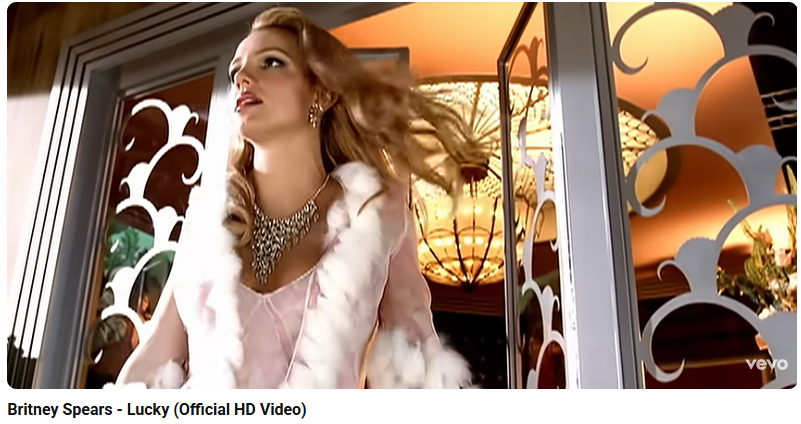
The second is a new song for Elphaba when she tries to inspire the Animals to stay and fight, and it’s called “No Place Like Home.” That’s trying too hard. It’s difficult not to notice since this film wraps up the narrative threads of everyone but the little girl whose fate is left unknown, given that Glinda is a witch with no magic (which is a miserable creature indeed) and can’t send her back to Kansas. Admittedly, this does lead to a funny background bit where the Wizard takes off in his balloon and leaves Dorothy behind, this viewpoint implying that he was running for his life before Glinda decides to turn his exile into imprisonment. About half of the laughs I had in the theater were clearly intentional on the film’s part; the other half … I’m not so sure. After Elphaba’s disruption of the road construction, the film’s title suddenly appears over an image of a government overseer fleeing through fields of flowers as tense, dramatic music plays, and it’s so jarring it feels like an intentional joke. When Elphaba confronts the Wizard for the first time in this film, he playfully bonks himself with a yellow brick, which he then demonstrates as being light and bouncy before tossing it away. Was that a bit that Goldblum did on set with a prop brick that they decided to keep in? It’s bizarre. At other times, I merely groaned as the film forced in references, or when we had to make a hard right in a given character’s storyline so that they can get railroaded on track for their respective stations of the canon

I’m being pretty negative about a film that I had a pretty decent time watching, so it’s worth noting that there’s still a lot to enjoy, even if it’s rushed in some places and sluggish in others as it chugs toward its inevitable conclusion. Erivo’s pipes are still masterful, and the songs are sufficiently rousing even if they’re not as inspired as the last time we were all here. It has come, it will go, and by this time next year we’ll have mostly forgotten about it. Once its theatrical run is completed, the overwhelming tie-in advertising (Bowen Yang and Bronwyn James put in two brief appearances as their sycophant characters from the first film in order to justify their appearances in For Good-themed ads for Secret Clinical deodorant) will come to an end, and people will mostly remember the first film fondly, and this one little if at all. Don’t take it too seriously, have a good time, and perhaps see it late enough in the evening that there will be a minimal number of children in your audience (trust me).

-Mark “Boomer” Redmond

Carmen: A Hip Hopera (2001)

After several false-starts in the build-up to this moment (most of them penned by backpack-rap dork Lin-Manuel Miranda), we have finally arrived at the official return of the mainstream movie musical.  The monkey’s paw irony to that triumph is, of course, that neither of the awards-nominated musicals marking that return are any good.  If anyone who isn’t already afflicted with a debilitating, life-long case of Oscar Fever is paying attention to this year’s Awards Race, it’s because they’re fans of the pop stars Selena Gomez or Ariana Grande, who are both competing for a Best Supporting Actress statue in their respective movie-musical projects.  Gomez struggles to speak-sing Spanish in the operatic French musical Emilia Pérez, which is a strong Oscar frontrunner despite wide critical disdain for its ludicrous misrepresentations of transgender identity & Mexican criminality.  For her part, Grande excels as the only successful element of the Wizard of Oz fanfic musical Wicked: Part One, which is a strong Oscar frontrunner despite playing like a color-desaturated Target commercial with exactly one redeemable performance.  It’s baffling that either film is in Awards Contention at all, considering their shared artistic anemia, but their dual success is still a healthy sign for the movie industry at large – proving a wide-appeal audience interest in the movie musical format and activating sleeper-cell agents from the pop-girlies Stan Wars to draw wider attention to this year’s Oscars race.

In this world where two of the biggest Awards Season frontrunners are embarrassingly clunky musicals starring pop singers with rabid online fanbases, 2001’s Carmen: A Hip Hopera is a foundational text.  Produced for broadcast on MTV, the hip-hop flavored reinterpretation of the classic opera Carmen was propelled entirely by the star power of a young Beyoncé Knowles.  Before she tested the limitations of her Movie Star presence in her official debut Austin Powers in Goldmember and the limitations of her rapping skills in the albums leading up to Lemonade, Beyoncé was given the titular role in a made-for-TV feature that asked her to be a rapping Movie Star, hoping that her charm & beauty would overpower her unpreparedness.  The gamble mostly worked, if not only because the MTV production team was able to surround her with a talented cast of actors (most significantly Mekhi Phifer) and rappers (most significantly Mos Def) for support.  Like Emilia Pérez & Wicked, it was a film younger viewers watched solely for the star presence of their favorite pop singer and supported on principle, so as not to cede ground in the fight to cement their fav on Pop Music Mt. Rushmore.  As a result, it’s aged into a fun novelty as an early-aughts time capsule, padded out with performances from names that would only mean something to children raised on daily broadcasts of TRL: Da Brat, Lil Bow Wow, Jermain Dupri, Rah Digga, etc.

Beyoncé enters Carmen wearing a sparkly red Jessica Rabbit gown, turning the head of every Philadelphia cop slamming brewskies in their department’s go-to dive bar (tended by blacksploitation legend Fred Williamson).  Even the straightlaced family-man cop played by Mekhi Phifer can’t help but drool over her classic beauty, much to the indignation of his loving fiancé.  Instead of seducing any of the already crooked cops on the force who’d sleep with her in a heartbeat, Carmen of course zeroes in on the above-board gentleman in the room as a kind of personal challenge.  Phifer resists her advances at first, explaining in Seussian rap verses, “You’re too hot for a guy like me.  You and me are unlikely.”  They immediately bone anyway, which gives Phifer’s corrupt superior (Mos Def, giving the only genuinely good performance in the film) an excuse to lock the goody-two-shoes up and eventually chase the mismatched lovers out of town.  A classic tragedy follows as Carmen gets bored with her new plaything and moves onto the next, as slowly spelled out in a prototype for R. Kelly’s “Tapped in the Closet” narrative style.  There’s plenty of humor in the effort to reconfigure Carmen‘s narrative into modern hip-hop rhymes, like in Beyoncé’s warning that “Everything that glitters don’t bling,” or Phifer’s romantic declaration, “Let me tell you how much I care. Man, when I was locked up I couldn’t smell the piss, only the scent of your hair.”  It’s all vintage early-aughts camp, as long as you don’t take the inevitable deaths in the final beat too seriously.

Carmen: A Hip Hopera is at its most enjoyable when it drops the pretense of respectability and fully leans into its MTV-flavored novelty.  After a brief opening-credits music video wherein Da Brat explains the basic elevator pitch, the movie naturally slips into a kind of low-rent melodrama that happens to be set to a rap beat.  Eventually, though, director Robert Townsend (B*A*P*S*, Eddie Murphy: Raw) loosens up and has fun with the premise, introducing green screen illustrations of the rap lyrics in pure music-video kitsch.  The MTV branding is noticeable throughout in the choppy Pimp My Ride editing style and in-film references to shows like MTV Cribs, but it isn’t until the second half of the runtime that the music-video aesthetic fully takes over and Carmen becomes something sublimely silly instead of disastrously silly.  I’m willing to admit that I am personally biased on this front, as it was produced in the exact era when I would have been glued to MTV myself, so that its vintage music-video touches trigger an easy nostalgia for me.  I am also biased since, of all the singers currently vying for positions on Pop Music Mt. Rushmore, Beyoncé is the only one that most appeals to me.  As a musician and a stage performer she’s consistently impeccable, so to see her try her hand at something in which she’s merely mediocre only makes her that much more adorable.  So, maybe my dismissive opinions on Emilia Pérez & Wicked will cool over the next couple decades as they become cultural artifacts instead of poor excuses for Prestige Cinema, but it’s more likely that I will never warm up to them, since I have unknowingly chosen my own combatant in the War of the Pop Girlies and just hate to see the competition win.

-Brandon Ledet

Wicked (2024)

In our recent podcast episode about Sirocco and the Kingdom of the Winds, Brandon mentioned having seen (and not enjoyed) Wicked. I had previously shared that, when this film was over, I turned to my viewing companion and said, “I have a confession to make. I thought I was going to hate this,” but admitted that I had, in fact, loved it. The Wizard of Oz is one of the first movies that I can ever remember seeing, and I had a secondhand walkman that the red cassette of Oz songs basically lived inside of for years. I loved the books, reading them repeatedly (my favorite characters were Tik Tok and The Hungry Tiger, whose tormented existence torn between desire and moral conviction probably spoke to me at a deeper level, even at that young age). We named one of our chickens Billina and I even spent an entire summer saving my chore money toward a layaway copy of the much-maligned SNES Wizard video game. (The only other person I have ever met with any memory of the game, my friend Eric, also admitted he had never been able to beat it. About five years ago, we got together to watch a playthrough of it on YouTube and were shocked to discover that, of about 110 minutes of gameplay, neither of us had ever gotten past the first 25 minutes, which is where we inevitably died. It was just that hard.) I read Gregory Maguire’s Wicked in the summer between undergrad and grad school, and while I didn’t love it, I didn’t think it was bad, just that I preferred to imagine Oz as I had when I was a child. But after so many bad Oz movies and series over the years (especially Oz the Great and Powerful), I didn’t expect that I would fall into the magic of a movie that had so much negative press surrounding its visual style, especially since a musical is already kind of a hard sell for me. I was mostly there for the Jonathan Bailey of it all (since Broadchurch, if you’re keeping score at home). 

Wicked (Part 1, as everyone suspected) is about Elphaba Thropp (Cynthia Erivo), a woman from Munchkinland who, as the result of some magical hanky-panky in the middle of some extramarital hanky-panky, was born with green skin. This makes her an ostracized outsider among the Munchkins and leaves her the less-favored daughter of her widowed father, who dotes upon her paraplegic younger sister Nessarose (Marissa Bode). Nessarose is accepted to attend Oz’s Shiz University, and although Elphaba is not a prospective student, her accidental use of real magic in the presence of Madame Morrible (Michelle Yeoh) leads her to being invited to attend, under direct tutelage of Morrible, on the spot. As the result of a misunderstanding, Elphaba is set up to room with Galinda (Ariana Grande), the prettiest, most popular girl in all of Oz, although Elphaba ends up shoved into a small corner of their shared lodgings as a result of Galinda’s extensive pink wardrobe. Initial conflict between the two leads to Elphaba’s further isolation at school, and it is further exacerbated with the arrival of Prince Fiyero from Winkieland, whose devil-may-care attitude and carpe diem approach to academics, love, and life in general. Fiyero and Elphaba meet before he arrives at the school, and he is charmed by her lack of deference to either his royal title (of which she is ignorant) or his stunning good looks (which she cannot help but notice). However, upon arrival at the school, Galinda immediately gloms onto him and he accepts and reciprocates the attention, attempting to get the entire student body to reject the boredom of academia in favor of vice and fun, much to Elphaba’s annoyance. Meanwhile, there is an undercurrent of fascism and racism at Shiz U, as the once-diverse teaching body of the university has been whittled down to have only one remaining talking Animal instructor, the goat Dr. Dillamond (Peter Dinklage), who is the person willing to befriend Elphaba. Galinda and Elphaba eventually reconcile when, after a particularly cruel prank, Galinda learns that Elphaba has done something genuinely kind and meaningful in helping Galinda pursue her greatest ambitions; Galinda then makes it her project to rehabilitate Elphaba’s public image and make her, as the song says, popular. When Elphaba at last receives an invite to come to the Emerald City and meet The Wizard (Jeff Goldblum), she chooses instead to argue on behalf of the plight of the Animals rather than ask him to cure her of her green skin, setting events into motion that change the destinies of everyone involved. 

I’ve long been known to be a musical-averse person, but I’m coming around. After having seen recorded versions of Sweeney Todd (the one with Angela Lansbury) and Phantom of the Opera (the 25th anniversary production) this year, I’m more open to them than I once was, and it’s no secret that Wicked is one of the biggest and most widely acclaimed ones of all time. I can’t really speak to this one as an adaptation, but I really enjoyed it. I didn’t love every song (“Dancing Through Life” is acceptable as a bit of exposition/character development, but it’s very boring to me, and if it didn’t have Jonathan Bailey dancing through it, I wouldn’t work at all), but I thoroughly enjoyed most of them, and some are real standouts. Erivo’s voice is fantastic, and in some behind-the-scenes footage she’s singing live in several scenes that show that the magic is coming from her and not from any studio enhancements. She’s entrancing here as Elphaba, and I see so much of people I’ve known and loved in her performance that she completely won me over. I’ve also never been all that interested in Ariana Grande; she came along after I had already long graduated from the age group that she’s aimed at. I was of the generation whose adolescent-aimed-cable-channel-musical-industrial-complex products were Raven and Hillary Duff, so Grande’s rise from that same metaphorical farm league came long after I was among the target demographic. She’s quite fun here, and separates herself from the others on the same career path with a lot of genuine charm and a willingness to commit to the bit that’s quite admirable. 

As for most people’s complaints about the film and its visual style, I have to admit that I didn’t mind it. It would have been nice to have the film try to replicate the Technicolor-sais quoi of the MGM classic, but there’s still a lot to love here in the designs and the details. The costuming is fantastic, and at no point did I think that Oz looked boring or colorless, except in moments in which there’s an intentionality to the blandness that I find appropriate. This one left me feeling elevated and effervescent, and I loved that, even if what we’re watching is the real time character assassination of our protagonist at the hands of an evil government. What more could one really ask for?

-Mark “Boomer” Redmond

The End (2024)

When questioned on why the lighting & color grading of Wicked: Part 1 was so muted & chalky when compared to the Technicolor wonders of the classic MGM adaptation of The Wizard of Oz, director Jon M. Chu explained that he wanted to “immerse people into Oz, to make it a real place […] Because if it was a fake place, if it was a dream in someone’s mind, then the real relationships and stakes that [the characters] are going through wouldn’t feel real.”  Given the immense popularity of the film, I have to assume that most audiences understand the appeal of that desaturated, “real stakes” take on the movie musical and are hungry for more reality-bound singalongs just like it.  Luckily, they do not have to wait an entire year for the arrival of Wicked: Part 2 to scratch that itch.  Joshua Oppenheimer’s climate-change musical The End has arrived to immediately supply what the people demand: a drab, real-world movie musical with grim, real-world stakes.  Set entirely in a single, secluded bunker after our impending global environmental collapse, The End is as grounded in reality as any musical has been since the semi-documentary London Road.  The stakes are the continued survival of human life on planet Earth.  The relationships are strictly parental or economic.  Oppenheimer even has the good sense to luxuriate in a near three-hour runtime, just like the first half of Wicked.  With an immersive approach like that, it’s sure to be a hit.

George MacKay stars as a twentysomething brat who’s spent his entire life sheltered from the apocalypse in his family’s luxurious bunker, located inside a salt mine.  His only social interaction has been confined to his erudite parents and their small staff: a cook, a doctor, and a butler.  Playing the mother, Tilda Swinton frets nervously with her fine-art home decor with the same sense of existential dread that she brought to Memoria.  Playing the father, Michael Shannon maintains order & civility while grappling with his first-hand contributions to the environmental disaster as a vaguely defined executive in The Energy Business.  The domestic fantasy of their life underground is disrupted by the arrival of a starving, haunted survivor of the world outside, played by Moses Ingram.  The newcomer’s only potential place in the house is as a mate for McKay’s poorly socialized, brainwashed rich boy, which is not verbally acknowledged but weighs heavily on her every decision.  Helpfully, every character confesses their internal emotional conflicts to the audience in song, which never escalates from patter to barnburner but at least adds a minor note of escapism to an otherwise grim, limited setting.  The musical numbers are conversational, recalling the sung-through movie musical style of films like The Umbrellas of Cherbourg (or, more recently, Annette), except they’re much more sparingly deployed among the more traditional, reserved dialogue.

With The End, Oppenheimer has leapt from documentary to the deep end of narrative filmmaking: the movie musical.  Or, at least, that’s what the movie musical should be.  Jon M. Chu’s quotes about making Oz “a real place” where audiences can “feel the dirt” is entirely antithetical to the pleasures of movie musical filmmaking, a fundamental misunderstanding of the artform.  By contrast, Oppenheimer appears to understand the artform but actively seeks to subvert it to make a political point.  The End is a movie musical about the economics of surviving climate change; it only cares about the “real relationships” between the ultra-wealthy and their small staff within the terms of economic power & control.  It speaks in Old Hollywood musical language but limits its setting to what would traditionally account for one isolated set-piece song & dance, contrasting the grandeur of the salt mine to the smallness of its characters’ hermetic world.  I can’t say that he fully manages the discordance between movie magic & political doomsaying with anything near the success of his breakthrough triumph The Act of Killing, but The End is at least occasionally uncanny in an interesting, provocative way, as opposed to uncanny in a cowardly way.  Anyone who’s praising Wicked for its political allegories about fascism & repression will surely find their next favorite musical in the new Oppenheimer film . . . unless everyone’s just needlessly making excuses for enjoying assembly-line Hollywood spectacle.  Its current state requires many such excuses.

-Brandon Ledet

Blonde Ambition (1981)

I recently picked up a used copy of Linda Williams’s landmark academic text Hard Core at The Book House in Dinky Town, a wonderful Minneapolis bookstore.  Written in response to the anti-porn feminist movements of the 1980s, the cultural context of Hard Core‘s arguments may initially seem outdated, but it’s proven to be an extremely useful read.  In attempting to assess the filmic medium of pornography from a neutral, objective distance, Williams found herself writing one of the first substantial academic works on the subject.  She breaks the genre down to its building-block elements, performing a kind of autopsy on the fresh corpse of porno’s Golden Age, killed by the rise of home video.  One of her methods in attempting to define pornography in academic terms (beyond the famously vague “I know it when I see it” definition coined by the Supreme Court) is finding direct 1:1 comparison with other cinematic genres.  The most obvious go-to for those comparisons is usually the horror film, since they are both genres that intend to stimulate a physiological response in the audience.  Williams goes a step further by citing horror’s “Final Girl” trope, indicating that pornography invites male viewers to identify with its female stars the same way they are when watching slashers.  The genre comparison that really tickled me in Hard Core, though, was pornography’s likeness to the Old Hollywood musical, which I had never considered before.

The generic parallels between the porno and the musical are obvious once you start looking for them.  Williams spends a lot of time cataloging the individual “numbers” that make up a typical porno feature (i.e, the blowjob scene, the masturbation scene, the lesbian scene, the group sex climax, etc.) and likens them to the way musicals stop their plot momentum dead to deliver a full song-and-dance number.  She writes, “It is commonplace for critics and viewers to ridicule narrative genres that seem to be only flimsy excuses for something else—musicals and phonography in particular are often singled out as being really about song and dance or sex.  But as much recent work on the movie musical has demonstrated, the episodic narratives typical of the genre are not simply frivolous pretexts for the display of song and dance; rather, narrative often permits the staging of song and dance spectacles as events themselves within the larger structure afforded by the story line.”  In that paradigm, the spectacle of a blowjob or a threesome is just as worthy of a minutes-long break from narrative as a Fred & Ginger dance routine; they’re the very reason for the film’s existence.  Porno may be similar to horror in its intent to provoke a bodily response in its audience, but in terms of narrative structure it’s much more akin to the movie musical. It’s a variation of musical with all of the usual song-and-dance numbers replaced by suck-and-fuck numbers instead. 

Given this astute observation of the structural similarities between the porno and the musical, it’s incredible that Williams does not cite the 1981 feature Blonde Ambition in her research.  It perfectly illustrates her point.  Blonde Ambition is deliberately structured as an Old Hollywood backstage musical wherein all of the song-and-dance numbers are replaced by sex numbers.  The movie chronicles the sexual exploits of the Kane Sisters (Suzy Mandel & Dory Devon) as they rise up the entertainment industry ranks from Podunk South vaudeville performers to reluctant porn stars to makeshift drag queens to Broadway legends.  They’re characterized with a Gentlemen Prefer Blondes dynamic, wherein the older sister (Mendel) shrewdly negotiates their business deals while the younger, ditsier sister (Devon) constantly cruises for men.  Like in Gentlemen Prefer Blondes, there’s even a comedic mix-up involving a wealthy man’s inherited jewels (in this case, a diamond-encrusted broach instead of a diamond-encrusted tiara).  Otherwise, Blonde Ambition reaches even further back into the great Hollywood songbook to follow the example of Busby Berkeley backstage musicals like 42nd Street, finding hokey humor & romance in the lives of off-duty Broadway performers.  Only, the joke is that that the Kane Sisters are not especially talented.  When they receive their first round of applause from a smitten hunk during their dive-bar stage act, they ask “What was that noise?” in total confusion.

Blonde Ambition‘s substitution of song-and-dance numbers for hardcore sex numbers is so direct and so literal that there’s no point in hammering the point home any further.  My favorite example is a shower masturbation scene in which one of the sisters slips into what would normally be a dream ballet in another musical but instead is a kaleidoscopic homage to the gay-male psychedelia of Wakefield Poole’s Bijou.  Directed by and partially starring gay men, Blonde Ambition also shares DNA with the Old Hollywood musical in the conceptual conflict of its heterosexual romance narrative versus its aesthetic appeals to queer sensibilities.  Once the sisters make it to New York, they become overly friendly with a gay couple who live one floor below their apartment (including coercing them into sex with women, of course), and the whole saga climaxes at a dive-bar drag night hosted by one of those men.  In an effort to reclaim possession of the Buckingham Broach, the women sneak into the bar undercover as drag queens, performing for a room full of leather daddies who find themselves disappointed (and comically horrified) by the resulting strip show.  Blonde Ambition was ostensibly made with a straight male audience in mind, but it’s so classically Old Hollywood gay that it includes an “original gowns by” credit in its opening scroll. 

Less surprisingly, it turns out the shared intersection of the Golden Age porno and the Golden Age musical is shameless hack comedy.  Comedically, Blonde Ambition is located much closer to Branson than it is to Broadway, but its punny, campy humor is charming all the same.  Between its cutaways to barnyard animal reaction shots and the costuming of its orgiastic Gone with the Wind parody sequence, the musical it most directly resembles is The Best Little Whorehouse in Texas (released just one year later), which has just the right sweetly hokey flavor to counterbalance its old-fashioned sensibilities.  Presumably, the locker room jockstrap number in that musical was also designed for a gay audience’s gaze, despite the totally hetero sex shenanigans in the foreground.  Although Linda Williams does not directly assess Blonde Ambition in her book, she does frequently touch on that dissonance between the presumed sexual orientation of pornography’s target audience and the audience mostly likely to enjoy it.  That topic mostly crops up in the way presumed-straight male consumers view pornography socially and value extraordinarily large male genitalia in their erotica, suggesting their enjoyment of the medium is somewhat inherently bisexual.  In the addendum of my 1999 edition of Hard Core, Williams also references her own participation in that dissonance, explaining that as a straight female viewer, her favorite, most effective category of pornography depicts male-on-male gay sex, something that was presumably not made with her gaze in mind.  Blonde Ambition works much in the same way.  It’s self-categorized as a straight film, but most of its scene-to-scene appeal would be to gay men who enjoy vintage showtunes.  Those men might have preferred to watch actual musical numbers instead of the sex numbers that provide the movie’s narrative-stopping spectacles, but the genre’s dissonance is often its greatest source of fascination & entertainment, especially after decades of distance. 

-Brandon Ledet

Podcast #205: The Boy Friend (1971) & Ken “The Mad Lad” Russell

Welcome to Episode #205 of The Swampflix Podcast. For this episode, Britnee, James, Brandon, and Hanna discuss four cult classics directed by madman provocateur Ken Russell, starting with his Busby Berkeley-style backstage musical The Boy Friend (1971).

00:00 Welcome

01:16 Krewe Divine
03:13 Coonskin (1975)
11:48 Possum (2018)
14:35 The Parallax View (1974)
19:45 Schultze Gets the Blues (2003)
24:10 Queenpins (2011)
27:14 Lenny Cooke (2013)
33:20 The Butterfly Effect (2004)
40:03 Fish & Cat (2013)
43:40 Joe’s Apartment (1996)

47:07 The Boy Friend (1971)
1:05:13 Lisztomania (1975)
1:19:43 Altered States (1980)
1:36:00 Crimes of Passion (1984)

You can stay up to date with our podcast through SoundCloudSpotifyiTunesTuneIn, or by following the links on this page.

– The Podcast Crew

Podcast #201: King Creole (1958) & Elvis vs Priscilla

Welcome to Episode #201 of The Swampflix Podcast. For this episode, James and Brandon discuss cinematic representations of Elvis Presley, from his youth-culture acting chops in Michael Curtiz’s New Orleans noir King Creole (1958) to his recent post-mortem biopic depictions in Baz Luhrman’s Elvis (2022) & Sofia Coppola’s Priscilla (2023).

00:00 Welcome

02:40 Master Gardener (2023)
07:00 The Taste of Things (2024)

13:05 King Creole (1958)
27:30 Elvis (2022) vs. Priscilla (2023)

You can stay up to date with our podcast by subscribing on SoundCloudSpotifyiTunesor by following the links below.

– The Podcast Crew

Dicks: The Musical (2023) 

Dicks: The Musical opens with a title card joking that the film bravely breaks new ground by casting gay actors as straight characters.  In reality, it breaks ground by being the world’s first feature-length movie Rusical, hitting the exact same braying, sarcastic tone as the musical theatre challenges of RuPaul’s Drag Race.  In this case, we’re watching a Rusical parody of The Parent Trap (a step up from the Footloose/Dear Evan Hansen matchup from last season, at least), in which non-related writer-performers Joshua Sharp & Aaron Jackson discover they are “fucking identical twins” as adult Big City businessmen and plot to restore order in their family unit by getting their estranged parents back together.  Those estranged parents are the ringers in the cast (give or take an extended cameo from Megan Thee Stallion as the twins’ nonplussed dominatrix boss): Megan Mullally as a kooky Manhattan shut-in and Nathan Lane as a closeted Manhattan drunk.  The film’s humor recalls the offensive-on-purpose musical theatre of Trey Parker & Matt Stone, but the effort to underline every line of dialogue with an explicitly gay sense of camp is pure Drag Race kitsch.  The Fucking Identical Twins stage show that Dicks is adapted from started as a UCB revue in the 2010s and, although still funny, feels dated at least that far back in terms of its equal-opportunity-offender sensibilities.

Okay, now that the big-picture premise is out of the way, let’s talk about The Sewer Boys.  Dicks is mildly, low-key funny throughout, but it stumbles up on one truly Great joke in the unholy creation of the subhuman characters The Sewer Boys.  During Nathan Lane’s big musical number about why his marriage to the twins’ mother didn’t work out, he breaks down exactly what it means that he is a gay man: he appreciates fine things, he has sex with men, and he loves his Sewer Boys.  He is, of course, referring to the small, diapered goblins that he keeps caged in his living room, periodically feeding them with premasticated ham.  Every detail about the sewer boys’ underground origins, grotesque physiology, and hierarchy within Lane’s unconventional family structure is outrageously funny and earns most of the film’s biggest laughs.  The little grey goblin puppets are on-theme with the movie’s larger project of queering up gay-musical representation too, as Lane equates their role in his life to Gay Culture™, as if every adult gay man in America keeps a couple Sewer Boys as pets at home.  It’s obvious that Sharp & Jackson knew they struck gold when creating The Sewer Boys as a tossed-off joke, since they keep returning to the boys’ gilded cage to mine more visual punchlines out of their wretched image.  It’s disappointing, then, that they didn’t just abandon the initial Adult Men Parent Trap premise they used as an improv thought exercise to instead refine the one great idea they discovered in the process.  This should have been Sewer Boys: The Musical from start to end.

In that way, Dicks feels like a wish granted by a cursed Monkey’s Paw.  I’ve found myself wishing in recent years that partial-musical comedies like Barb & Star and Barbie would just fully commit to being proper musicals, and when I finally get one, I’m frustrated that it wasn’t a musical entirely about its one great joke.  If anything, this might have even changed my mind about wanting to force Barbie & Star into a musical theatre format, since that medium doesn’t always serve Sharp & Jackson’s humor well.  Each song in the book starts very funny, but they have nowhere to go once the audience gets the joke.  There’s a punchline up front in each song that earns a genuine laugh, and then there’s three more minutes of song left to play out in full, based on traditional stage musical structure.  Even my beloved Sewer Boys never stop being funny, but once they’re revealed it feels anticlimactic to return to the foretold Parent Trap story beats as if reality had not just been broken.  I appreciate that Mullally is eventually given her own flying pet monster to help balance that out, and Bowen Yang’s performance as God eventually builds to a joke meant to offend anyone left unshocked in the room — an ambitious last-minute gamble.  Mostly, though, Dicks: The Musical is a little too predictable in its adherence to musical theatre song & story structure, leaving very little room for surprise once the audience catches onto each telegraphed punchline.  Only The Sewer Boys continue to surprise & delight throughout, and the movie is most recommendable for their ghoulish presence.

-Brandon Ledet

Will-o’-the-Wisp (2023)

Is there a sizable audience out there still steaming mad that the erotic firefighter sequences of Titane weren’t even gayer?  João Pedro Rodrigues appears to believe so, as evidenced by his pornographic firefighter musical Will-o’-the-Wisp, which is being pitched at the dwindling crowd of arthouse shut-ins who remember that Titane even exists (i.e., losers like me who pay attention to “the news out of Cannes”).  Or rather, its indulgence firefighter fantasia is shiny packaging meant to lure those art snobs into the theater.  Once ensnared, Rodrigues sits us down for abstract academic pontification about climate change, racial justice, and outdated governmental power structures, which helps give the film a sense of political purpose beyond its initial novelty.  Boiling Will-o’-the-Wisp down to any one genre or tone is a fool’s game; the arthouse curio is a one-stop-shop for art history lectures, environmentalist theory, gay pornography, rage-bait trolling, sitcom schtick, and interpretive dance – all in an hour’s time.   I’m something of a fool, though, so I’ll do my best to condense & summarize by declaring the Titane stage musical sequence at its center to be is its most attention-grabbing tangent, which makes it an effective Trojan horse for the million other things on Rodrigues’s mind.

In the year 2069, an ineffective Portuguese king waits out his last few days of hospice before death, wistfully watching his great grandnephew play with a toy firetruck.  The toy evokes the king’s most cherished memory: a time when he was a young, idealistic prince who abandoned his royal duties to join the local fire brigade.  This decision is partly influenced by his royal parents’ indifference to the global disaster of climate change, listening to news reports of wildfires and their son’s recitation of Greta Thunberg’s “How Dare You” speech as mild annoyances instead of immediate crises.  It’s also influenced by his childlike naivete, which approaches firefighter iconography and a mythical royal pine tree forest with the same awestruck fascination as the young grandnephew playing with the toy.  Once in training, the prince grows up quick.  He learns real-life, adult responsibilities & passions on the job, both physically combating the immediate effects of climate change and physically making love to his hot fireman instructor, a commoner hunk with impeccable abs.  The prince’s ferocious joy for his new, meaningful life is expressed through song & dance in the film’s erotic centerpiece, which is why it’s such a betrayal when he quickly throws it away the second his meaningless “royal duties” call him back to the throne – where he gradually dies a pointless life.

The most important thing to understand about Will-o’-the-Wisp is that it’s a total troll job, a flippant provocation aimed at post-irony academics.  It’s politically furious, eager to throw intellectual bombs at institutional failures to address climate change and at the roles race & class play in the romance between the white prince and his Black fireman hunk.  It’s also seemingly resigned to the futility of attempting institutional change, throwing those bombs for self-amusement as the world burns to the ground regardless.  Its indulgence in incendiary race-play kink and coronavirus death feel no more serious than its erotic CPR training, its gay-porno restagings of classical art, or the absurdly fake ejaculating dildos featured in its climactic 69 set piece.  The Thunbergian urgency of its climate change activism is the only genuine impulse in its arsenal; it just also sees any response to the crisis beyond large-scale institutional disruption or intervention to be useless, amounting only to academic infighting.  Maybe the idea behind the Titane musical sequence is a nihilist one, trying to find a little novelty & levity in the world before it melts away.  A more generous reading is that it’s a novel attempt to draw attention to the urgency of a political issue that will kill billions of people if the wealth class who can afford to travel to Cannes don’t wake up and take charge.

-Brandon Ledet

Guillermo del Toro’s Pinocchio (2022)

I suppose it’s remarkable that Guillermo del Toro has directed his first stop-motion animated film, and yet his Netflix-funded Pinocchio adaptation feels so comfortably at home with everything he’s made before it that it doesn’t even register as a new chapter in his career.  Del Toro and Wes Anderson have got to be the two most stubbornly consistent auteurs working today, in that every new project they make is such an obvious, natural progression in their work that it feels as if it’s already come out years earlier – either to your boredom or delight, depending on how you feel about their individual quirks & kinks.  It’s only fitting, then, that del Toro collaborated with animation director Mark Gustafson on his Pinocchio film, since Gustafson also worked on Fantastic Mr. Fox, Anderson’s own debut in the stop-motion medium.  Del Toro also teamed with Fantastic Mr. Fox‘s composer Alexandre Desplat (a regular collaborator of Anderson’s and now, after this & Shape of Water, del Toro’s) and Over the Garden Wall creator Patrick McHale, stacking the bench with enough heavy hitters to ensure his first animated feature would be a winning success.  Even with all those outside voices guiding the clay puppets through del Toro’s signature Gothic nightmare worlds, though, the stop-motion Pinocchio is unmistakably a stay-the-course continuation of what he’s already achieved as a household name auteur.  It may not be the most surprising, inventive take on the material he could’ve conjured, but it easily earns his name’s prominent inclusion in the title.

Familiarity is certainly the tallest hurdle that Guillermo del Toro’s Pinocchio has to clear.  That’s less of a symptom of del Toro’s own tried-and-true macabre formula than it is a symptom of a crowded market.  This is at least the third major adaptation of the Pinocchio story in recent memory, starting with Mateo Garonne’s grotesque fairy tale version in 2020 and more recently counter-programmed by Disney’s “live-action” CG abomination unleashed this summer.  By shoehorning the Pinocchio story into his own personal auteurist template, del Toro at least breathes some new life into the time-battered, tossed-around puppet.  He envisions Pinocchio as one of the gentle, misunderstood monsters that always anchor his Gothic horror dramas.  He also sets the story amidst the wartime brutality of Mussolini’s Italy, recalling the children-in-rubble peril of past works like Pan’s Labyrinth, The Devil’s Backbone and, hell, even his kaiju smash-‘em-up Pacific Rim.  He also uses the opportunity to revisit the old-timey carnival setting that staged the best parts of Nightmare Alley, before that film is sidelined in Cate Blanchett’s ornate therapist office.  I don’t know that del Toro brings anything especially unique to the medium of animation; if anything, the film’s best qualities are all excelled by their thunderous echoes in Laika’s Kubo and the Two Strings.  I do think his insular, self-tropifying formula of repeated pet obsessions & spooky production designs brings a new perspective to the Pinocchio myth, though, if not only in highlighting how well it already fits into his milieu.

If there’s anything especially bold about del Toro’s Pinocchio take, it’s in his celebration of the titular wooden boy’s rebelliousness, which most versions of the tale feel compelled to condemn.  Guillermo del Toro’s Pinocchio is essentially a stop-motion musical about how delightfully annoying & revolting children can be, and how their obnoxious misbehavior is a necessary joy in this rigid, fascist world.  Pinocchio enters life as a hideous monster whose inhuman puppet-body contortions terrify the local Italian villagers.  His childlike exuberance & wonder with every new discovery in this grim, grey world is played for shock value comedy; his broad, dumb smile never wavers as he rambunctiously destroys lives & homes.  Gradually, Pinocchio learns about the full “terrible, terrible joy” of living, as his puppet body outlasts the mortal members of his family, but the bittersweetness of life (and death) does little to tamper his boyish enthusiasm.  While most Pinocchio stories are cautionary tales about why you shouldn’t lie or act selfishly, del Toro openly encourages that behavior in his little wooden monster.  Pinocchio saves the day by being a selfish, chaotic liar with a grotesque little puppet body; his eternal resistance to being governable is directly opposed to the militaristic fascism of Mussolini’s Italy.  All Pinocchio movies find the puppet-boy’s misbehavior delightful (at least until they trip over themselves to condemn it), but del Toro’s is the only one I can name that celebrates it as a radical political ideology.

I enjoyed this movie a great deal, but I wish I liked it more.  Since the Pinocchio story nests so comfortably in del Toro’s long-established worldview and since the director’s visual artistry translates so fluidly to the stop-motion medium, neither of those pop-culture mashups can land as a stunning surprise.  It doesn’t help that there isn’t one catchy tune among its plentiful song-and-dance numbers, and that it dwells at least a half-hour longer than needs to get its point across.  A middling del Toro picture is still a wonderful time at the movies, though, no matter the medium.  Like all of his live-action pictures to date, Pinocchio is a heartwarming, gorgeous grotesquerie that feels intensely personal to the del Toro’s insular loves & obsessions; and that personal touch is exactly what distinguishes it from the thousand other Pinocchio adaptations it’s competing against for screen space.

-Brandon Ledet