Dial M for Murder (1954)

In narrative terms, the 1954 crime thriller Dial M for Murder isn’t much of an outlier in director Alfred Hitchcock’s career. If anything, it’s a useful timesaver for anyone looking for an overview crash course in Classic Hitchcock storytelling, as it effectively plays like what would happen if Strangers on a Train was retold within the stage-play limitations of Rope. Both of those preceding Hitch classics are hypothetical plottings of The Perfect Murder, which inevitably go awry in execution, leading to the murderer’s demise. The premeditated killer in this case (Ray “X-Ray Eyes” Milland) blackmails an old college classmate into killing his adulterous wife (Grace “Princess of Monaco” Kelly) as a lucrative act of marital revenge. The story is mostly contained in a single living room set and is rigidly sectioned into three dramatic acts: the opening act in which the killer explains the scheme to his accomplice, one in which the accomplice fails in his mission mid-strangling, and a final act of Columbo-style “howcatchem” investigation that puts the pieces of the puzzle back together through the nosy inquiries of an unassuming detective (John “Comic Relief” Williams). It’s all very tidy & succinct, possibly owing to the fact that Hitchcock was planning the much more elaborate production of Rear Window while going through the motions of adapting this morbid little stage play.

The surprising thing about Dial M for Murder is that its stage-bound telling doesn’t convey Hitchcock’s visual artistry, which is usually foregrounded as a knack for special effects dazzlement. At least, that’s what I thought when I first left the theater. At the start of the local screening of Dial M in The Prytania’s Classic Movies series, I was disappointed in the quality of the film scan, which appeared to be a fuzzy SD transfer from an ancient DVD print. Then, when Grace Kelly appears onscreen in the first interior scene, her gorgeous face & gowns were suddenly in sharp focus, as if someone had flipped on the HD-quality light switch. The initial fuzziness then periodically returned in a few exterior shots, which appeared to be partially composited or greenscreened for no practical, discernible reason. It turns out, of course, that this alternating visual quality was a result of the film being shot for 3D processing, then later retrofitted into a 2D print. It was produced in the brief early-50s window when the classic red-and-blue 3D glasses presentation was a popular fad, but the novelty of the effect had worn off by the time Dial M hit theaters, and the prints were descaled to a measly two dimensions halfway into its run. As Hitchcock bitterly acknowledged, 3D was “a nine-day wonder, and [he] came in on the ninth day,” making for one of the rare times when he was a latecomer instead of an innovator in visual effects.

The Prytania’s Sunday-morning Classic Movies slot is a reliably wonderful way to catch up on any Old Hollywood mainstays that might be personal blindspots, and Hitchcock’s catalog has long been the backbone of that program. Since the single-screen theater is over a century old, it feels like time-traveling back to the classic films’ initial release, when they likely screened in that very theater. That effect was especially potent for their most recent screening of Dial M for Murder, which was preceded by a classic Looney Tunes short instead of trailers for upcoming attractions (the Hitchcock-spoofing Tweety Bird short “The Last Hungry Cat,” for anyone curious). Part of me wishes that they could have presented the film in its original 3D format, glasses and all, for maximum time-travel novelty. The truth is, though, that Dial M‘s 3D format was very quickly rejected by contemporary audiences, so that most people did see it screened in its confused & compromised 2D form, making my experience with the film authentic to its initial run. To the theater’s credit, they will also be screening William Castle’s 13 Ghosts in its original “Illusion-O” presentation this October, which was Castle’s personally branded 3D gimmick. There’s something beautiful about the fact that Castle’s own special-effects artistry is still chasing after its classier Hitchcock equivalents all these decades later, sometimes in the exact venues where they started their one-sided feud.

While learning about Dial M for Murder‘s retracted 3D tech after leaving the theater did help make sense of why its exterior & effects shots looked so bizarrely hazy, I still can’t figure out why Hitchcock would choose to give such a stage-bound story that treatment in the first place. The beauty of Dial M is in its narrative simplicity. By the final act, the nosy detective’s post-murder puzzle solving mostly comes down to three isolated pieces of evidence: a key, a letter, and a silk stocking. Those three pieces are moved around the puzzle board through verbal speculation, with most of the visual spectacle resulting from Grace Kelly’s elegant beauty and Ray Milland’s dastardly performance as a smug drip who hates his elegantly beautiful wife. Even so, Hitchcock finds small moments for visual extravagance, such as the husband’s explanation of how the murder should go down being framed in a high-angle shot from the ceiling’s POV, as if he and the killer were pieces on a board game. The only moments I can recall that may have benefited from the original 3D effect are the isolated shot of the contract killer reaching his hands out to strangle Kelly as she answers a phone call and the surreal shot of Kelly later answering to a judicial panel as if she were being tried for murder in the courts of Hell. Those few seconds of screentime are not worth filtering the rest of the picture through the 3D process, especially since it mostly consists of lengthy conversations in a single parlor.

It’s a testament to the strength of the stage-play source material and Hitchcock’s ability to wind up tension in his audience that Dial M is still solidly entertaining despite all of the needless distractions of its 3D processing. The Prytania’s Classic Movies crowd was an especially robust turnout that Sunday morning, likely owing to the director’s name recognition. Hitchcock always delivers, apparently even when working on autopilot.

-Brandon Ledet
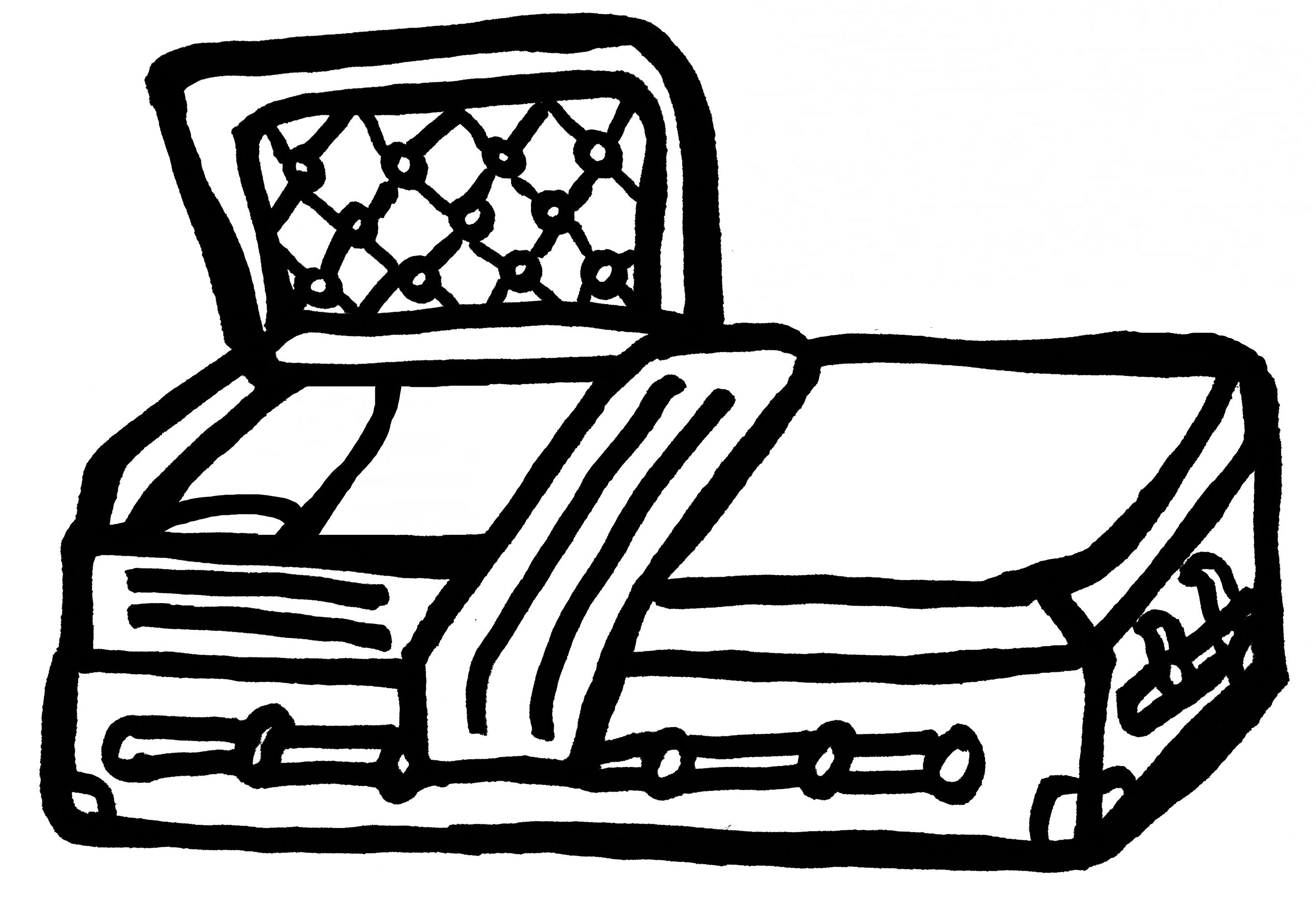
The Premature Burial (1962)

The Premature Burial is, unfortunately, not very good. The third Roger Corman film based (very loosely, in this case) on an Edgar Allan Poe short story, this was the only film of the eight that the director made which did not star Vincent Price. The story is that while Corman was in dispute with American International Pictures about what project to film next, he was approached by a film printing lab that wanted to get into the production business. They put up half the funding and Corman provided the other half out of his own pocket, but Price was unavailable due to being under contract with AIP. On the first day of shooting for Premature Burial, the two heads of AIP showed up and said that they were excited to be working with Corman again, because they had just that very morning bought out the film lab that Corman had partnered with. As a result, this one ended up being released by American International as well, but it was too late in the process to change horses, and instead of Price, we get Ray Milland in the leading role. Interestingly, the night that my friend and I ended up renting Goodfellas (as discussed recently on the podcast), we were seeking out Corman’s Masque of the Red Death at the video store and were unable to locate it. It was supposed to be in the “double features” section, as it’s paired with Premature Burial on one of those “MGM’s Midnite Movies” DVDs. It wasn’t there, under “P” for “Premature” or “M” for “Masque,” nor could it be found in the general horror section. When I returned Goodfellas the following week, I decided to check again, and there it was, filed correctly. The weird thing was that the person working that day thanked me for finding it, since the person who had assisted me before had marked it as missing in the system. It’s not a very interesting story, but it is more than you’re going to get from Premature Burial

After an opening sequence in which a gaggle of grave robbers are digging up a body only to discover the inside of the coffin lid streaked with blood and tattered from scratching, we open on Emily Gault (Hazel Court). She’s arrived at the manor house—on a perpetually misty soundstage moor, of course—of her beloved, Guy (Milland), and although Guy’s sister Kate (Heather Angel) attempts to send her away, Emily insists that if Guy won’t receive her, he must tell her to her face. Kate relents, and we learn that Guy is a pupil of her father, Dr. Gault (Alan Napier), and that Dr. Gault and Guy were present at the desecration of the coffin in the pre-title opening, with Guy feeling so embarrassed about having fainted that he’s ready to end their engagement rather than admit the truth. He reveals that his family has a predilection toward catalepsy, that is to say that they enter into a comatose state that so closely mimics death that he believes his father was buried alive, as he recalls hearing him screaming within his tomb in the catacombs beneath the manor. As a result, he also possesses a paralyzing fear that he will be entombed while still alive, a fear that seeing the corpse that had tried to dig its way out triggered. Emily convinces him that they can work through it together, and he agrees to proceed with their wedding. 

At the ceremony, we meet Miles Archer (Richard Ney), whose repeated insistence that he’s truly happy for Emily telegraphs that he and Emily were once in love but that he has lost her. Emily sits at the pianoforte and plays the song “Molly Malone,” which causes Guy to spiral further, as this was the same tune that was hummed by the gravediggers on the night that he went out with Dr. Gault and saw the man who had clawed at the inside of the coffin. Guy then builds an elaborate freestanding tomb with layer upon layer of failsafes that would allow him to escape if he were entombed there prematurely, including a rope ladder that appears at the pull of a sash, digging tools (and tools for the repair of digging tools), and even a couple of sticks of dynamite. The final safeguard, of course, is a dose of poison, so that he could kill himself quickly rather than die slowly. Emily convinces him to get out of this morbid place and go for a walk on the moors, but when he hears “Molly Malone” being whistled, he and Emily are parted, so that she does not see the grave robbers who appear out of the fog (or do they?) to torment Guy. 

It’s at this point in the film that my already taxed investment hit an all time low. Guy passes out, and then he has an extended dream sequence in which he is locked in his fancy foolproof tomb, only for all of his various and sundry plans to fall apart. The rope ladder falls from the ceiling, unanchored. The dynamite has dry rotted and crumbles under his touch. When Guy was showing all of his contraptions to Emily and Miles (and thus to the audience), this was already tedious enough, but now we have to go through essentially the same motions and at the same speed, just watching everything not work. It’s the scene that serves as a microcosm of just how much this whole film simply doesn’t work, as Guy runs through the same cycles of depression and paranoia in a way that may be meant to evoke a descent into madness but which ultimately feels repetitive and tiresome. Milland is trying here, I suppose, but there’s never a point before his obsession that we get to meet him and know him as a mentally healthy person, so there’s not that far for him to fall from the person we meet in the first scene to the person he becomes when he actually does get buried alive and then wreaks havoc on those who have wronged him. It’s a short trip between those two mental states, but it takes over an hour to get there. 

The pace does quicken a bit around the middle. Emily gives a fairly well written and delivered speech in which she tells Guy that his obsessive fear of being buried alive has made him functionally do exactly that, as he spends his days fully within his tomb. There’s also a bit of fun to be had when someone sneaks down to the family basement and messes around with Guy’s father’s crypt, so that when Kate seeks to prove that their father died peacefully by opening his tomb, Guy’s fears seem to come to life, as it appears his father tried to escape. Things quickly peter out by the end, however, and the reveal of the architect of this attempt to drive Guy mad is hardly surprising. Even if you’re a Poe or a Corman completist, this is one that I can recommend that you skip. 

-Mark “Boomer” Redmond