Dicks: The Musical (2023) 

Dicks: The Musical opens with a title card joking that the film bravely breaks new ground by casting gay actors as straight characters.  In reality, it breaks ground by being the world’s first feature-length movie Rusical, hitting the exact same braying, sarcastic tone as the musical theatre challenges of RuPaul’s Drag Race.  In this case, we’re watching a Rusical parody of The Parent Trap (a step up from the Footloose/Dear Evan Hansen matchup from last season, at least), in which non-related writer-performers Joshua Sharp & Aaron Jackson discover they are “fucking identical twins” as adult Big City businessmen and plot to restore order in their family unit by getting their estranged parents back together.  Those estranged parents are the ringers in the cast (give or take an extended cameo from Megan Thee Stallion as the twins’ nonplussed dominatrix boss): Megan Mullally as a kooky Manhattan shut-in and Nathan Lane as a closeted Manhattan drunk.  The film’s humor recalls the offensive-on-purpose musical theatre of Trey Parker & Matt Stone, but the effort to underline every line of dialogue with an explicitly gay sense of camp is pure Drag Race kitsch.  The Fucking Identical Twins stage show that Dicks is adapted from started as a UCB revue in the 2010s and, although still funny, feels dated at least that far back in terms of its equal-opportunity-offender sensibilities.

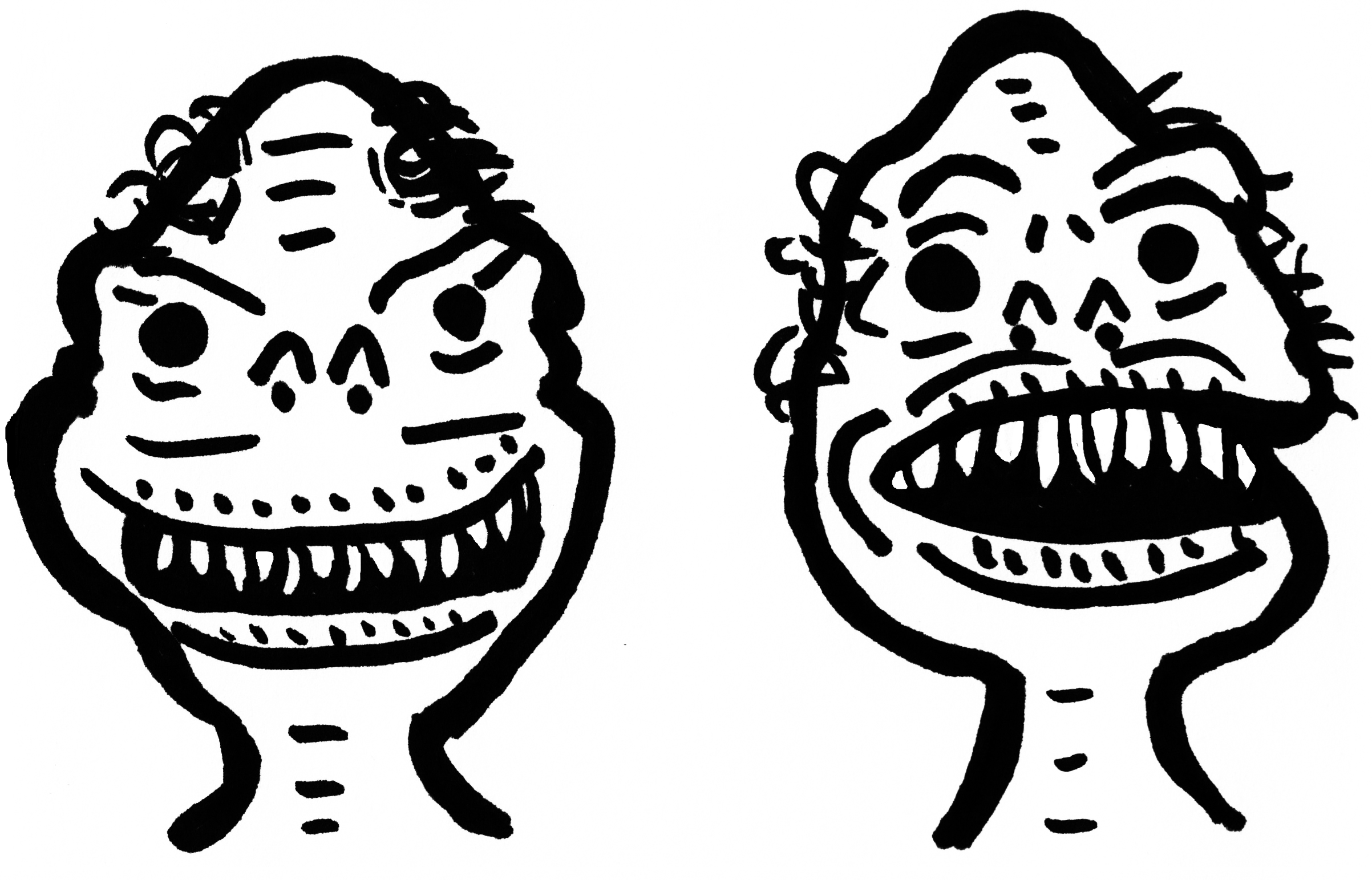
Okay, now that the big-picture premise is out of the way, let’s talk about The Sewer Boys.  Dicks is mildly, low-key funny throughout, but it stumbles up on one truly Great joke in the unholy creation of the subhuman characters The Sewer Boys.  During Nathan Lane’s big musical number about why his marriage to the twins’ mother didn’t work out, he breaks down exactly what it means that he is a gay man: he appreciates fine things, he has sex with men, and he loves his Sewer Boys.  He is, of course, referring to the small, diapered goblins that he keeps caged in his living room, periodically feeding them with premasticated ham.  Every detail about the sewer boys’ underground origins, grotesque physiology, and hierarchy within Lane’s unconventional family structure is outrageously funny and earns most of the film’s biggest laughs.  The little grey goblin puppets are on-theme with the movie’s larger project of queering up gay-musical representation too, as Lane equates their role in his life to Gay Culture™, as if every adult gay man in America keeps a couple Sewer Boys as pets at home.  It’s obvious that Sharp & Jackson knew they struck gold when creating The Sewer Boys as a tossed-off joke, since they keep returning to the boys’ gilded cage to mine more visual punchlines out of their wretched image.  It’s disappointing, then, that they didn’t just abandon the initial Adult Men Parent Trap premise they used as an improv thought exercise to instead refine the one great idea they discovered in the process.  This should have been Sewer Boys: The Musical from start to end.

In that way, Dicks feels like a wish granted by a cursed Monkey’s Paw.  I’ve found myself wishing in recent years that partial-musical comedies like Barb & Star and Barbie would just fully commit to being proper musicals, and when I finally get one, I’m frustrated that it wasn’t a musical entirely about its one great joke.  If anything, this might have even changed my mind about wanting to force Barbie & Star into a musical theatre format, since that medium doesn’t always serve Sharp & Jackson’s humor well.  Each song in the book starts very funny, but they have nowhere to go once the audience gets the joke.  There’s a punchline up front in each song that earns a genuine laugh, and then there’s three more minutes of song left to play out in full, based on traditional stage musical structure.  Even my beloved Sewer Boys never stop being funny, but once they’re revealed it feels anticlimactic to return to the foretold Parent Trap story beats as if reality had not just been broken.  I appreciate that Mullally is eventually given her own flying pet monster to help balance that out, and Bowen Yang’s performance as God eventually builds to a joke meant to offend anyone left unshocked in the room — an ambitious last-minute gamble.  Mostly, though, Dicks: The Musical is a little too predictable in its adherence to musical theatre song & story structure, leaving very little room for surprise once the audience catches onto each telegraphed punchline.  Only The Sewer Boys continue to surprise & delight throughout, and the movie is most recommendable for their ghoulish presence.

-Brandon Ledet

Anatomy of a Fall (2023)

Anatomie d’une chute (Anatomy of a Fall) is this year’s Palme d’Or winner, and it recently came to theaters in the states. For the first twenty minutes, I kept flashing back to earlier this year, when I wrote a glowing review of Tár, a movie that Brandon was much less fond of; it seemed like, at last, I had finally come face to face with my own prestige boredom piece, as I found the opening scenes didn’t initially catch my attention, but once the plot gets going, I was very invested. 

Sandra Voyter (Sandra Hüller) is a German writer living in a snowy region of southern France with her husband Samuel Maleski (Samuel Theis) and their son Daniel (Milo Machado-Graner). The film opens with Sandra giving an interview to a young woman studying her work (Camille Rutherford) before the interview is first interrupted and then abruptly concluded by Samuel’s loud music from upstairs. Daniel, blinded at a young age as the result of a street accident that damaged his optical nerve, takes a walk with his faithful guide dog Snoop, only to discover the dead body of his father at the base of the house, near a wood shed and below both a second-floor balcony and a third-floor window into a room where his father had been recently working. The police are called, and when an autopsy reveals that his head wound was sustained prior to hitting the ground, suspicion falls on Sandra. She seeks help from an old friend and lawyer, Vincent (Swann Arlaud), and when they review the details together, he tells her that, if she is indicted, it will be almost impossible to convince a jury that the death was an accident, and that their best chance at acquittal would be to argue that Samuel had committed suicide. When further evidence compounds to further insinuate Sandra’s guilt, an indictment is inevitable, and we watch this play out as both a courtroom drama and a portrait of a family being torn apart by doubt. 

One of the oddest things about this movie is that, despite being a prestige picture, in the darkness before the film begins, projected against the screen was a URL: didshedoit.com. It’s one hell of a marketing technique, and even feels a little tacky when taken in combination with the cinematic quality and legacy within which the film is situated. After my screening, I checked out the site because I was curious as to whether it was real or not or was perhaps meant to be attached to another reel for a different movie or series of trailers but no, it’s a poll in which you can vote on whether you think Sandra killed Samuel. As of both the evening on which I saw the film and at the time of writing, the poll sits at almost perfectly ⅓ guilty, ⅔ not guilty, which was reflected in the feelings of my viewing trio. I’ll tip my hand now and say that I was among the two who do not believe that Sandra is guilty (or, at the very least, I cannot be convinced of it beyond the proverbial shadow of a doubt), but I also will adamantly state that her guilt or innocence is irrelevant, which is why this polling situation seems so bizarre. 

Information about Sandra and Samuel’s relationship is doled out slowly and with masterful intentionality. At first, we have no reason to believe that Sandra would be inclined to kill her husband, and as the prosecutor (Antoine Reinartz) paints a version of the events of the day leading up to Daniel’s discovery of his father’s body, he adds layers of intent. Could the bisexual Sandra have been upset about Daniel intentionally ruining her interview with a pretty young woman? Hasn’t she cheated on him in the past? Hadn’t they had an argument that turned physical just the previous day, which it turns out that Samuel surreptitiously recorded? But any one of these things could just as easily contribute to the narrative that Samuel took his own life—Samuel was the one who was ultimately responsible for leaving young Daniel with a babysitter, which lead to the accident that cost him his sight, and Samuel himself has never been able to get over it and has been rendered impotent by his guilt. Even though Sandra believes (or at least claims to believe) that Samuel would not have committed suicide and only accepts (or seems to accept) this potential explanation for events due to having no way to prove her stated innocence, she does admit that he attempted an overdose with aspirin earlier in the year. Daniel’s attempts to help his mother by establishing that he heard his parents speaking calmly with each other before he went on his walk cannot be corroborated when they test this possibility, which leads to his own doubts. However, the revelation of his father’s earlier attempts cause him to reframe his own understanding of the situation in a way that leads him to ask to be called to the witness stand a second time to talk about a conversation he had with his father that seems only now to make sense. 

Where the genius of the film lies is in that perpetual reframing, for the characters within it and within our own judgments as members of the audience, to whom pieces of evidence are presented over time. Where you stand on Sandra’s guilt or innocence can change very suddenly, as we learn more about her and her potential motives as well as Samuel and his own character and desires. A non-extensive, quick search of the internet tells me that the French legal system has adopted the same precept of presumed innocence as the U.S. (nominally) has, so one would assume the same or similar legal protections for Sandra as one would have in the states, but this is a trial that features an extremely antagonistic and far reaching prosecution and expert witnesses who seem more invested in securing a conviction than in honest testimony, not to mention that Sandra’s sexuality is frequently treated as if it means that she is inherently more suspicious than the “average” citizen. The prosecution offers up computer modeling of how Sandra “definitely” struck Samuel on the second floor balcony in order to leave behind three stray splashes of blood—the primary keystone for their accusations—while a physical model provided by a witness for the defense is presented only with the argument that their interpretation of the on-site evidence is equally consistent with their suicide theory. In what I hope is an exaggeration about the leniency of French court system with regards to what they will allow prosecution to put forth, the judge even allows a section of one of Sandra’s novels to be read in court, a sequence in which a first person character wishes for the death of their husband, and this is allowed to be entered into the record as evidence. 

Like most Americans, I grew up being propagandized by things like Law & Order into thinking that prosecutors are bastions of truth and justice, and unlearning that has admittedly been a long road; however, in no other piece of media have I ever felt so strongly about how ACAB includes prosecutors. Reinartz is doing stellar work here at creating a character that you have no choice but to despise, a sniveling, rat-faced little Grima Wormtongue of a man who, even when you are in one of the phases of the movie in which you’re convinced of Sandra’s innocence, you wish you could just pinch out of existence like a pimple. Also doing some extremely heavy lifting is Machado-Graner, who with this film alone deserves to be canonized as one of those exceedingly rare child actors whose presence improves a film rather than diminishing it. His sense of loss, first of his father and then over and over again with his mother in increasing amounts, is palpable, and that the film’s climax hangs upon his shoulders is a big gamble, but it not only works, it soars. As he gives his speech, in which he recounts a conversation with Samuel that they had months before—while returning from the vet when Daniel’s dog got sick, which unbeknownst to the boy was the result of the dog licking up his father’s suicide attempt-induced vomit—that he now believes (or is pretending to believe, or even simply willing to believe) was his father communicating with him honestly but subtly about his ideation and the need to be ready for when “he” goes, leaving it ambiguous as to whether “he” is Snoop or Samuel. 

I believed that the film would end there, and a part of me wanted it to. I know that the majority of general audiences now are very hung up on plot and resolution, and there would have been outcry if the film left two ambiguities to the viewer’s imagination; that is, whether Sandra was guilty or not and whether she would be convicted or acquitted. I won’t spoil the latter and I’ve already made my decision about the former, but I don’t want to make my case for it since I would rather allow those reading this who have not already seen it the opportunity to know only what I thought while being unburdened with why. I would have felt the film complete even without knowledge of the ruling, however, and there’s a part of me that wishes that version of the film existed, as it would leave even more topics open for discussion with others after the film was over, but I am also content with what we have. For instance, it’s fascinating that Daniel’s final testimony plays out on screen with him and his father as a flashback, as several previous scenes had, but we never hear his father’s voice, only him as he recounts Samuel’s words. What are we to make of that? In an earlier scene, when the court hears the recording of the argument between Samuel and Sandra on the day before his death, the playback begins and then we are transported into that moment to watch the argument play out, up to the point where violence is about to begin, at which point we are back in the courtroom hearing the recording. From there, we only have Sandra’s word as to what the sounds we hear are (although there is physical evidence to back up her claim that one of the sounds was Samuel punching the wall hard enough to leave a hole). When discussing the physical evidence and the, ahem, anatomy of the fall, the prosecutor’s witness’s version of events includes a flash-brief shot of Sandra striking Samuel just as he describes; no symmetrical shot appears during the defense’s expert witness’s testimony. This distinction between what we as audience members are presented with as “video” “evidence” and that which we only hear described is an integral part of the questions that the movie will leave you with, as the film has a distinctively documentarian feel (which it draws attention to near the end of the second act, as the camera “follows” the presiding judge offscreen and then returns to focus on the center of the dais, as if the camera operator had been taken aback by unexpected movement and attempted to keep it in frame). 

I’m usually hot or cold on prestige dramas like this, and Anatomy of a Fall is one that definitively falls into the former category. We don’t get many courtroom dramas on the big screen anymore, as the small screen world of copaganda has eaten up most of the general public’s allotment of attention for that genre, but this is one that’s well worth the time and the praise that it’s been receiving. 

-Mark “Boomer” Redmond
Killers of the Flower Moon (2023)

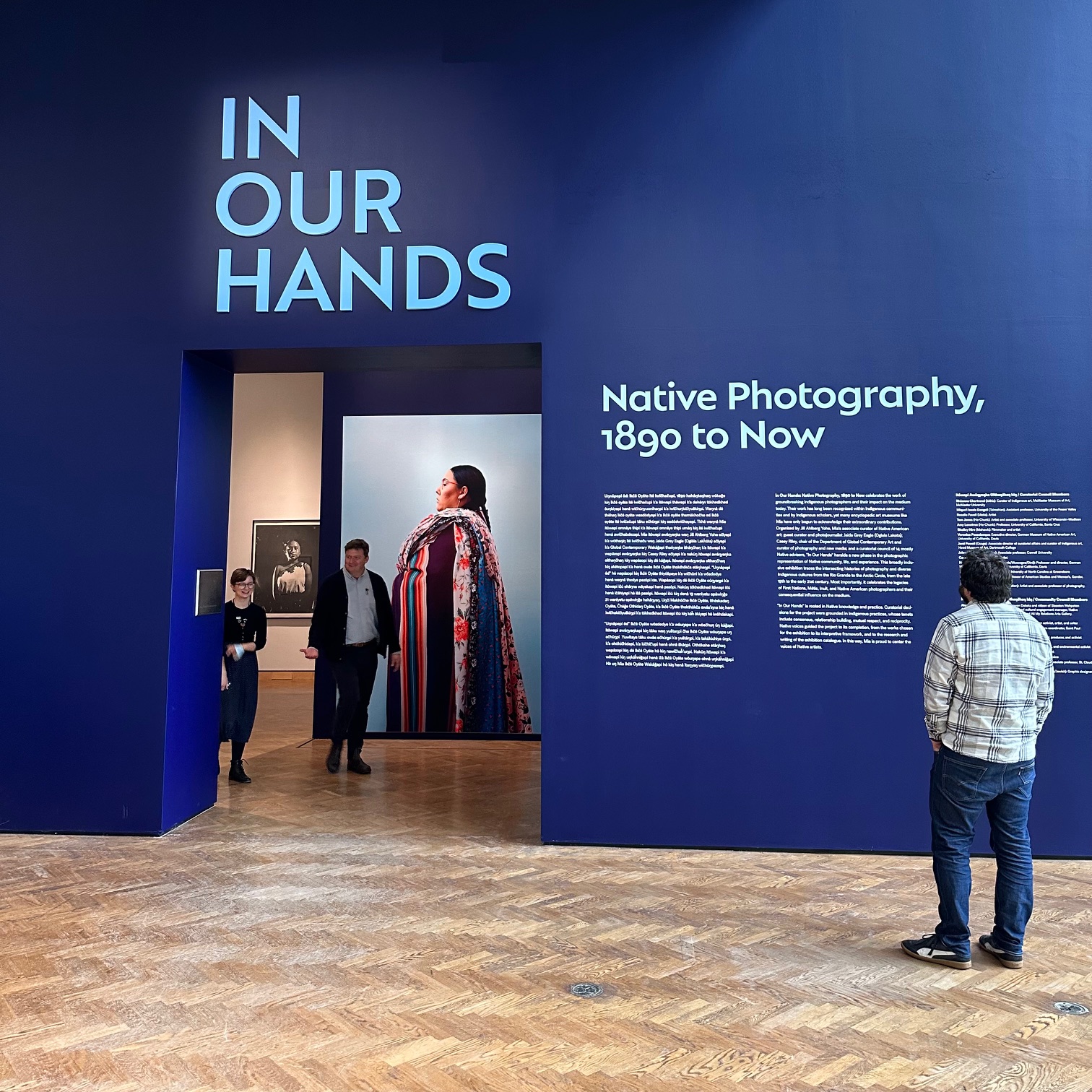
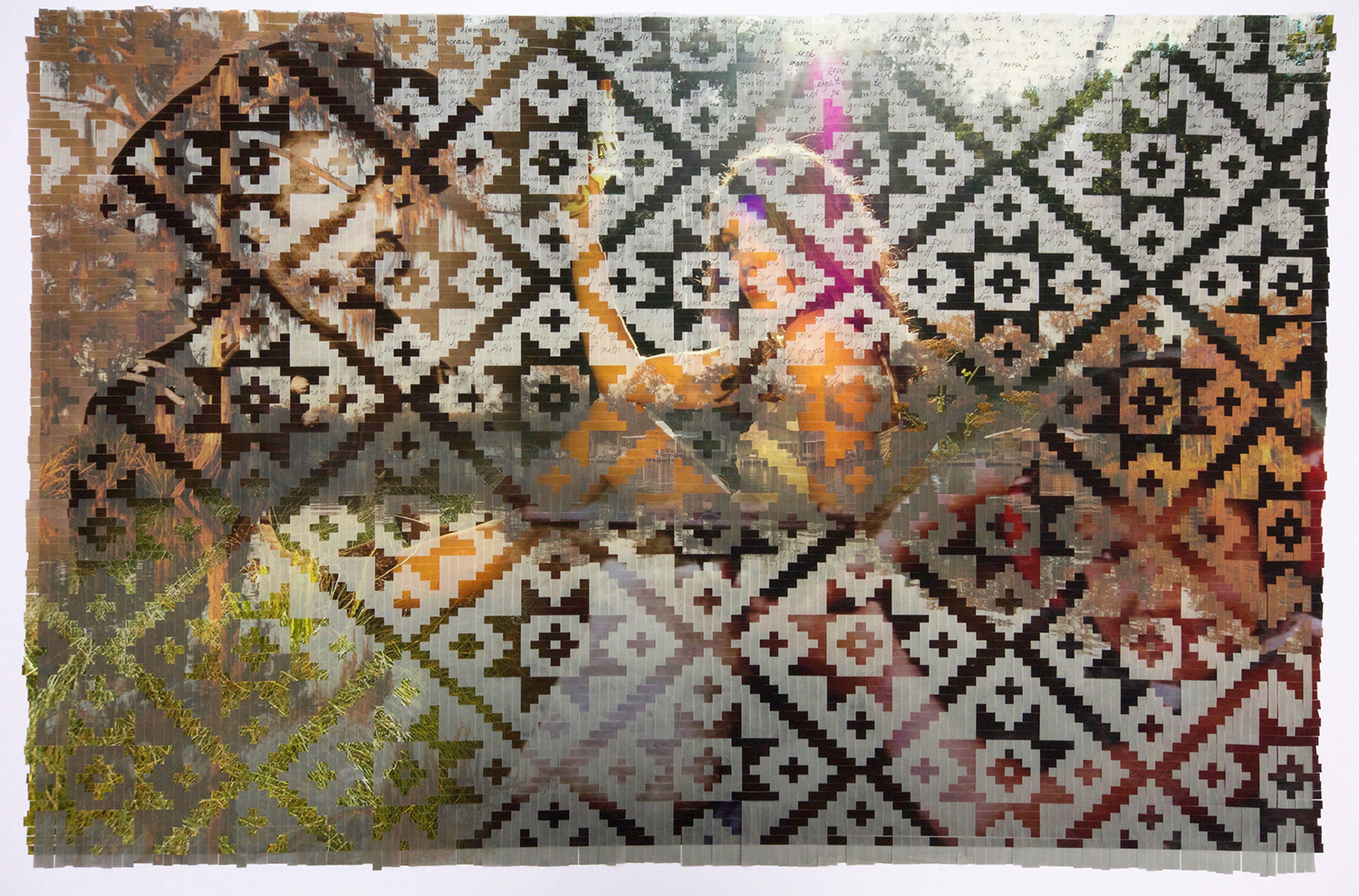
On a recent vacation in the Twin Cities, I spent an afternoon at the Minneapolis Institute of Art, which is currently exhibiting “150 photographs of, by, and for Indigenous people” in a photography collection titled “In Our Hands”.  It was during that same vacation when I watched Martin Scorsese’s Indigenous genocide drama Killers of the Flower Moon, which is also a series of photographs grappling with the medium’s representation & othering of Indigenous peoples.  Because I’m a movie obsessive, the photographs featured in “In Our Hands” that spoke to me loudest were the ones about misrepresentations of “American Indians” in American pop media.  Cara Romero’s 2017 photograph “TV Indians” pairs living Indigenous figures with vintage images of fictional Indigenous stereotypes, displayed on cathode-ray televisions in the colonized & decimated landscape of New Mexico.  Sarah Sense’s 2018 mixed-media piece “Custer and the Cowgirl with Her Gun” combines images of vintage Indigenous stereotypes in media with personal photographs & historical writing from her Chitimacha & Choctaw homeland through a traditional basket weaving technique that transforms & reclaims the medium of photography for a culture it has been historically weaponized against.  Killers of the Flower Moon also addresses the fraught history of Indigenous representation in American media, to the point where its theatrical exhibition opens with Scorsese explaining his “authentic” behind-the-scenes collaboration with the Osage communities the story depicts. The film also concludes with a second onscreen appearance from the director effectively apologizing for his participation in the tradition of speaking for & about Indigenous people from a white American perspective.

To his credit, Scorsese does limit the amount of time & space he spends speaking for the Osage tribe, smartly focusing instead on the people he’s built an entire artistic career around understanding: white thugs.  Killers of the Flower Moon is a typical Scorsese crime picture in that it details the step-by-step villainy of greedy American brutes who commit heinous, organized acts of violence in order to squeeze a few petty dollars out of their neighbors.  He acknowledges this continuation of his pet themes by casting his two go-to muses in central roles: Leonardo DiCaprio as a slack-jawed goon and Robert De Niro as the criminal mastermind who puppeteers him.  The dastardly duo conspires to become friends, family, heirs, and murderers to the Osage people, who have stumbled upon immense wealth when their government-assigned strip of land proves to be a viable source of crude oil.  DiCaprio’s assigned mark is a lonely but stoic young woman played by Lily Gladstone, whom he seduces, marries, creates children with, and then slowly poisons while murdering members of her family under the direction of De Niro’s whims & schemes.  Gladstone’s performance is formidable within that central trio, and she stands to benefit the most from this collaboration with Old Uncle Marty.  Still, it’s the slimy, bottomless cruelty of De Niro & DiCaprio’s characters that drives most of the scene-to-scene drama, so that Scorsese is telling his own people’s story more than he is speaking for the Osage.  Watching the movie in conjunction with visiting the M.I.A.’s “In Our Hands” exhibit raises questions of why these same film production resources can’t be put in the hands of Indigenous artists as well, but that question does little to unravel the specific story Scorsese chose to tell here.

Where the question of authenticity & representation really comes into play is in the film’s coda, delivered after De Niro & DiCaprio’s thugs have already been arrested for their crimes by the Baby’s First Steps version of the FBI.  Where lesser Awards Season historical dramas will fill the audience in on how their characters’ lives resolved via onscreen text before the end credits, Scorsese delivers that information via dramatic radio play — complete with the outdat foley sound effects and outdated racist stereotypes that would’ve been contemporary in that pre-cinematic medium.  The director then shambles onscreen himself as a radio announcer to read Gladstone’s character’s real-life obituary to the audience with humble solemnity.  This is a jarring stylistic swing for a film that often finds Scorsese working in Boardwalk Empire mode more than Goodfellas mode (more dramatic than cinematic), but it’s at least one that seeks artistic purpose beyond reciting this history to a wide audience who needs to hear it.  Here we have a quintessentially American story told by a quintessential American storyteller, and yet there’s no way for Scorsese to recite that history without in some way participating in its ongoing genocidal erasure of Indigenous voices.  The opening doorway image to the “In Our Hands” exhibit is a portrait of an Osage woman taken by photographer Ryan Redcorn, purposefully representing his subject in a proud, dignified pose.  In Scorsese’s picture, Osage women are sickly victims of white American greed, because that’s true to white American history.  It’s worth pushing for a better world where both of those images are offered equally accessible platforms, and this film’s coda feels like an uneasy acknowledgement of the current imbalance.  Still, this is a story worth reciting, and there are certainly less noble things Scorsese could be doing with $treaming $ervice money than turbocharging Lily Gladstone’s career.

-Brandon Ledet

Head of the Family (1996)

One distinctly American subgenre is the backwoods family horror, which shocks the audience simply by introducing them to a family of reclusive weirdos who live in the rural South.  Defined by such low-budget, high-visibility titles as The Texas Chainsaw Massacre, Spider-Baby, and Mudhoney, the backwoods family horror tradition continued in an increasingly goofy fashion in The Texas Chainsaw Massacre Part 2, the later Basket Case sequels, Nothing but Trouble, and in pretty much every movie directed by Rob Zombie.  And since the intersection of unrestrained goofiness & unoriginal genre filmmaking is the exact sweet spot of the American home video label Full Moon Features, they of course made a backwoods family horror of their own for the mid-90s video market.  Head of the Family is a variation on the Texas Chainsaw weirdo-family subgenre, reconfigured to fit into Full Moon Features’ house specialty: R-rated movies for children.  It has everything an unsupervised child could possibly want out of a late-night movie snuck past their sleeping parents: cussing, sex, and a house full of weirdo freaks.  Adults might not be as impressed with those goofball transgressions, but Full Moon doesn’t really make horror movies for adults anyway.  That ground was already well covered by Tobe Hooper.

Head of the Family is built entirely on one visual pun.  The “Head” in question is just that: an oversized human head.  He pilots his wheelchair around his family home with the tiny limbs that extend from the liminal space where his neck and torso should be.  The other three members of The Head’s family make up a set of telepathically-linked quadruplets.  Naturally, The Head is the brains of the operation, and his similarly mutated siblings help make up the rest of his deconstructed body: The Eyes (a spy with hyperactive senses), The Muscle (a towering brute enforcer), and The Body (a buxom bimbo honeypot).  They all share thoughts & senses as a collective, but The Head makes all of their decisions – until The Muscle eventually rebels.  Not much is done with the disembodied body horror of this premise, which is a little disappointing when it comes to the three brothers vicariously experiencing sexual pleasure through the dalliances of The Body.  Mostly, the movie coasts on the initial shock of introducing the audience to the horrid little monster inspired by its titular pun, and then letting us get to know his fucked up family as they go about their busy routine (of collecting & torturing local, unsuspecting citizens in the dungeon under their Grey Gardens mansion).

One thing this entry in the backwoods family horror canon gets exactly right is the genre’s inherent Southerness.  The Head is a bitchy Southern dandy, constantly rolling his eyes at the comparative unintelligence of his fellow conversationalists as if he’s constantly four martinis deep.  To be fair, the dialogue offered by his intellectually inferior foes is remarkably vapid, including such astute observations as “This is some kind of weird bullshit” and “Sometimes I feel like a big ol’ turd in a small toilet”.  The audience is forced to spend a half-hour with these low-life dolts before we’re graced with the refined Southern gent presence of The Head, patience that it is only somewhat helped along by most of their lines being delivered mid-coitus.   Once The Head arrives, though, the Full Moon dream factory makes the most of his hideous visage, dwelling on the horror of watching him accomplish simple tasks in confrontationally tight close-ups: slurping soups, wetting lips, licking nips, etc.  When the novelty of that image wears off, the movie mostly just kills time in order to achieve feature length.  At one point, The Head forces his dungeon captives to put on little stage plays for his amusement, as if to make fun of how bad of an actor everyone else is except him.

In case you were unaware you had stumbled into a Full Moon Feature, the label’s house composer Richard Band opens the production with the most acrobatically goofy score of his career – employing violins, harps, glockenspiels, vibraslaps and percussive cheek pops to achieve the Fullest Moon sound ever recorded on VHS.  Head of the Family also promises to deliver on another definitive Full Moon Features trope: the sequel no one asked for.  Just a couple years ago, Full Moon teased promotional art for a decades late follow-up titled Bride of the Head of the Family, coming soon to a Tubi app near you.  It makes sense that a sequel to this picture would have to expand the size of the Family with new, hideous members, since there isn’t much to this genre beyond getting to know the insular, often incestuous little freaks who populate it. 

-Brandon Ledet

The Craft (1996)

Two of my childhood-favorite horror classics from the year of our Dark Lord 1996 screened at The Prytania Theatre this month: Wes Craven’s teen-slasher renaissance sparker Scream and Andrew Fleming’s teen-witchcraft charmer The Craft.  Of the two, I only made time to revisit the latter, where I had the pleasure of sitting behind a row of giggling college students who were enjoying it for the very first time.  Repertory screenings of The Craft are a much rarer treat than screenings of Scream (as evidenced by only one of those titles also playing at The Broad this month), which makes sense given the stature of Scream‘s director within horror nerdom and given that it is still being kept alive by endless discourse & rebootquels well into the 2020s.  Both movies meant a lot to me as a wannabe goth young’n who never earned his eyeliner wings, if not only because I was the perfect age to look up to their much cooler, slightly older teen protagonists when the movies were fresh arrivals on the shelves of my local Blockbuster Video.  My anecdotal research (scrolling through my Letterboxd follows’ flippant one-liner reviews) suggests that The Craft is considered the much lesser of the two works, especially in recent years, which is the exact opposite opinion that dawned on me while watching it on the big screen for the very first time.  As a kid, Scream was a great reference text for a laundry list of horror classics I needed to catch up with in future video store rentals, while The Craft was the full witchy power fantasy I desperately needed in my miserable Catholic school years – a substantial, self-contained work that required no extratextual viewing.  Among the two slick ’96 teen studio horrors currently enjoying victory laps around the city, my heart clearly belongs to coven; praise be to Manon.

Pitting these two enduring sleepover classics against each other is mostly a game of 1-on-1 performance match-ups.  Fairuza Balk is just as chaotically charismatic in The Craft as Matthew Lillard is in Scream, but she’s much better dressed – sporting mega-goth bondage gear instead of oversized sweaters from The Gap.  Neve Campbell is dependably lovely & solid in both, playing the genre’s most sensible Final Girl in Scream and the coven’s most vulnerable pushover in The Craft, where she cedes power to Balk, Rachel True, and Robin Tunney.  Skeet Ulrich is the deciding factor, then, putting in the performance of his career as a dopey puppy dog under a love spell in The Craft, which comes slightly ahead of his performance as a dirtbag psycho boyfriend with a horrid secret in Scream.  It’s unlikely that these names mean anything to anyone born outside the Millennial age range of 1981 – 1996, but I can confirm from first-hand observation that Skeet Ulrich’s performance in The Craft still kills with the modern teenage crowd.  The row ahead of me was explosive with giggles every time he showed up at Tunney’s feet, adorably perplexed over why he was so magnetically attracted to her despite his usual aloof bad-boy demeanor.  Of course, a lot of the film’s current entertainment value is rooted in nostalgia for 90s pop culture aesthetics, whether it’s the extremely dated teen cast or the tie-in CD soundtrack that includes artist like Jewell, Julianna Hatfield, Letters to Cleo, Portishead, Elastica, and Our Lady Peace.  Even on that end, I’d say The Craft has Scream beat, since it’s only invested in setting a traditional witchcraft story within that 90s pop arena instead of simultaneously cataloging & restaging tropes from previous missteps & triumphs in its genre.

When I say that The Craft doesn’t require extratextual viewing the way Scream does, that doesn’t mean I didn’t immediately go home to watch all of the Special Features on my ancient DVD copy as soon as I left The Prytania, so I could prolong the pleasure of the experience.  There were some fun insights in its promotional behind the scenes “interviews”, mostly in the cast’s recollections of Fairuza Balk’s contributions as a true-believer Wiccan bringing authenticity to the production (along with hired outside Wicca consultants) and in Rachel True’s observation that as the coven’s magical powers grow stronger & stronger, their skirts are hemmed shorter & shorter.  Mostly, my extratextual journey outside The Craft was a horrified scroll down Letterboxd lane, where I found a lot of complaints from cinephiles I usually trust about a movie I’ve always loved.  Most reviews among mutuals range from 1-to-3 star ratings, with a particular disdain for the third-act dissolution of the central teen coven.  It’s true that the “Fuck around” section of the movie is a lot more fun than its “Find out” counterpart, as that’s when we watch goth teen witches confidently strut down their Catholic high school hallways to 90s pop tunes in defiance of their school’s usual social power rankings.  Once all four witches have solved their very simplistic personal issues at home (racism, body dysmorphia, the powerlessness of poverty and, least significantly, crushing on a bully) through dabbling in dark magic, there’s nothing left for the movie to do than to show what happens when they take their magic powers too far.  It’s a political blow to idealists looking to The Craft for depictions of feminist solidarity (who would be best served skipping the ending entirely), but it at least opens the movie up to other themes besides the allure of power to teen-girl outsiders: addiction, fear of losing social stature, the willingness to cower behind an overly bossy leader for convenience, etc.

Speaking of extratextual viewing, what’s interesting to me about the complaints over The Craft‘s third act is that someone did attempt to correct its political issues in a modern revision of the film.  Zoe Lister-Jones’s recent soft reboot The Craft: New Legacy smooths out a lot of the original film’s rough spots in representation, feminist solidarity, and third-act resolution, mostly by giving its own coven an outside enemy to fight instead of each other (David Duchovny as an MRA warlock) and by putting their hunk-bully stand-in for Skeet Ulrich under a “woke” spell instead of a love spell.  It might be a more politically sound film, but it’s also a thoroughly dull one, mostly because its poorly lit, dialogue-heavy teen drama registers more like a backdoor pilot for a CW series than a legitimate Movie.  Say what you want about the original, but it at least has a sense of style, something the recent remake only approaches when copying the exact occultist-imagery graphics of the original’s opening credits as lazy homage.  The Craft‘s style happens to be tied to a very specific era in commercial filmmaking that I happen to be susceptible to nostalgia for, but it still looks fantastic.  It probably serves me right, then, to see this same story warped into an extremely dated generational touchstone for a different era of potential horror nerds, so I can see how generic one of my childhood favorites looks to people who it didn’t hit at the exact right time.  To me, The Craft: Legacy is cute but inconsequential, which is seemingly what most audiences also think of the original, even among my peers.  So, maybe I should shelve my argument that there’s more overt queer sexuality in the suggestive wagging of Fairuza Balk’s fingers during the original’s iconic light-as-a-feather-stiff-as-a-board scene than there is in the entirety of the deliberately inclusive Queer Representation remake.  I’m already risking sounding like an out-of-touch whiner about the good old days here, exalting the pop culture residue of my youth as if it were a sacred text.

-Brandon Ledet

Bell, Book and Candle (1958)

This month’s Classic Movies and Late Night oddities line-up at The Prytania has been, without question, the best run of repertory programming I’ve ever seen in New Orleans.  Even with the caveat that I came of age during the AMC Palaces’ total decimation of the city’s indie cinema scene, the wealth of classic horror titles on their October docket feels like an all-time great moment in local theatrical exhibition: Psycho, The Shining, The Craft, The Wicker Man, Don’t Look Now, Scream, Halloween, Night of the Living Dead, Friday the 13th, Dracula’s Daughter, Beetlejuice, The Black Cat, The Exorcist, The Creeping Flesh, Theatre of Blood, Little Shop of Horrors, and their regular midnight reruns of The Rocky Horror Picture Show.  It’s such a staggering assemblage that I had to be choosy about which screenings to make time for, especially since The Broad was screening some of my favorite oddball horror sequels on the other side of town: Halloween III, A Nightmare on Elm Street III, and Friday the 13th Part VIII, all choice selections.  What a time to be unalive! Maybe it’s a little silly, then, that I treated The Prytania’s Sunday morning screening of Bell, Book and Candle as high-priority, can’t-miss viewing while I skipped out on a few screenings of classics I already know & love.  Bell, Book and Candle is a fluffy major-studio romcom about a lovelorn witch, establishing the 1950s middle ground between its 40s equivalent I Married a Witch and its 60s equivalent Bewitched.  It’s not an electrifying watch, but it is a cozy one, providing the same witchy-but-not-scary seasonal viewing most modern audiences find in Hocus Pocus instead.  While it feels a little puny in comparison to some of the all-time classics it shared a marquee with this month, its exhibition was more of a special occasion in some ways, since it has weirdly spotty home-video distribution right now, available only on Tubi or on DVD through the New Orleans Public Library.  More importantly, it fit in nicely with the usual programming of The Prytania’s Classic Movies slot, due to its unlikely connection to Alfred Hitchcock.

Part of the reason this month’s classic horror line-up at The Prytania feels so refreshingly adventurous is because the single-screen landmark usually only has the space in their schedule for a couple well-worn, widely beloved classics – more TCM (Turner Classic Movies) than TCM (Texas Chainsaw Massacre).  It’s still the most dependable repertory venue in the city, though, and over the years I’ve come to associate it with Hitchcock’s catalog in particular, since the director seemed to be a personal favorite of late proprietor Rene Brunet, Jr.  I’ve seen a good handful of Hitchcock titles for the very first time by attending The Prytania on Sunday mornings: To Catch a Thief, Strangers on a Train, Saboteur, Rope, Suspicion, Stage Fright, and Frenzy, to name them all.  Unfortunately, Hitchcock did not direct his own witchy love-spell romcom for The Prytania to program this month (they opted for Psycho instead), but Bell, Book and Candle does share some incidental similarities to his most critically lauded work.  It’s essentially the cutesy, witchy B-side to Vertigo. Both films feature Kim Novak putting Jimmy Stewart under a spell while his jilted, more socially appropriate love interest works out her romantic frustration by furiously painting on canvas alone in her apartment.  Novak’s given more to do here than play Stewart’s object of desire, since she initially holds all the (magical) power in their relationship and the vulnerability of their romance puts her in danger instead of him.  In either case, she is treated as a kind of fetish object by the camera. Here, she’s so performatively feminine that she’s basically feline, as indicated by the onscreen credit for the costumer who provided her furs.  There’s also an intense, Tarantino-esque focus on her bare feet, which is presented as a witchy character quirk but becomes outrageously obsessive by the time we linger on them slipping in & out of high heels.  The difference is that in Bell, Book and Candle she’s an aspirational figure for a lovelorn audience, while in Vertigo she’s a collectible figurine for an obsessive Stewart (and his directorial counterpart).

Novak plays Gillian Holroyd—a powerful young witch making waves on the Manhattan occult scene—whose loneliness & boredom at the top fixates her on the unsuspecting, nonmagical book publisher Shepherd Henderson, played by Stewart.  She’s careful to only share her powers with those she trusts: a bumbling hipster brother who’s smoked one too many jazz cigarettes (Jack Lemon, auditioning for his career-making part in Some Like It Hot), a kooky upstairs aunt (Elsa “Bride of Frankenstein” Lanchester), and the fellow witches & warlocks who drown martinis and talk shop at the magical dive bar The Zodiac Club.  Falling for her new neighbor and enchanting him to ditch his uptight fiancée is what unravels her usually careful approach to witchcraft, both because he’s a publisher who’s threatening to expose her coven with an upcoming book titled Magic in Manhattan and because falling in love means that she’ll lose her magical powers, according to The Rules.  Outside a couple scenes in which Novak and her witchy family (including the actress’s real-life pet Siamese cat) cast spells in her lavish apartment, there isn’t much genuine horror imagery in Bell, Book and Candle.  It’s just as much a precursor to Sex and the City as it is a precursor to Bewitched, with most of the central drama resulting from the witch’s disastrous, Carrie Bradshaw style attempts to “have it all” while living in The Big City.  It’s all very light, cozy, and unrushed, with only a couple jokes about the coven’s “Un-American activities” and what possible insults “witch” might rhyme with registering as anything especially risqué.  Still, it was wonderful to see on the big screen for the first time with a giggling crowd, and it was a wonderful middle ground between this month’s run of classic-horror obscurities at The Prytania and their Classic Movies series’ usual TCM-friendly fare.

While I’m fixating on Bell, Book and Candle‘s appropriateness as seasonal programming, I do want to note that it resonated with me as more of a Christmas movie than a Halloween one, despite all of its thematic & aesthetic focus on witchcraft.  Much of the early stretch of the film is set during Christmas rituals, including a Christmas Eve get-together at The Zodiac Club and Novak trading presents with her family around a modernist “tree” sculpture.  Halloween and Christmas both have cultural significance as liminal stretches of the calendar when the veil between worlds is at its thinnest, so it makes just as much sense to me that this story about a young witch in love would be set during Yule as it would during Samhain.  It also makes sense to me that its Christmastime setting would be forgotten when choosing seasonal programming, especially as memories of the film get muddled with its better-remembered predecessor I Married a Witch.  Speaking personally, I’m grateful that I got to catch Bell, Book and Candle on the big screen for my first viewing, but I am mentally filing it away as a Christmas movie for future revisits.  As a life-long Scrooge, I’m always desperate for lightly spooky Yuletide movies that aren’t so saccharine they rot your teeth, while witchy Halloween movies are already more than plentiful. 

-Brandon Ledet

The Royal Hotel (2023)

I suppose I shouldn’t be surprised that the barebones, few-frills thriller The Royal Hotel is my favorite film of the year so far, given that I bought in early on director Kitty Green (Casting JonBenet) & actor Julia Garner (Electrick Children) back when stock prices were low.  Still, it clicked with me as both collaborators’ finest work to date, following their much more muted workplace chiller The Assistant in 2020.  The Royal Hotel explodes The Assistant‘s post-#MeToo themes of misogynist microaggressions & mundane labor exploitations into a much more immediate, visceral chokehold thriller – channeling 1990s psych thrillers like Dead Calm instead of the low-hum, methodical terror of Jeanne Dielman.  If it were even slightly dumber or trashier, it could pull off a sensationalist title like You In Danger, Girl: The Movie or The Male Gaze: A Horror Story, while The Assistant was much more careful to not be boxed in by expectations of genre.  It’s wildly entertaining as a result, while never losing sight of the political target in its crosshairs (a tactic also adopted by this year’s fellow sun-drenched indie drama How to Blow Up a Pipeline).

Garner costars besides Jessica Henwick as a pair of American tourists who find themselves flat broke while backpacking in Australia.  In an act of financial desperation (or, depending on the character, an act of self-immolation), the 20-somethings take a government-assigned temp job working as barmaids in the Australian Outback, serving beers to the roughneck workers of a remote mining town.  From there, the plot plays out like a slightly more grounded version of Alex Garland’s Men, with each of the blackout drunk brutes on the other side of the bar attempting slightly different angles on manufacturing sexual consent from the “fresh meat” working the register, whether with charm or with the threat of violence.  Like in Men, the customers are all essentially the same threat disguised in slightly different presentations, except this time they swarm their victims like George Romero zombie hordes, overwhelming the humble little pub in waves of drunken chaos.  The women are constantly told to smile & “take a joke” while struggling to interpret the thin line between flirting and bullying, like the difference between an Australian calling you “a cunt” vs. an Australian calling you “a sour cunt.”  Meanwhile, every social signal from every direction is telling them to get so drunk they don’t care what happens to them, since they’re powerless to stop it anyway – whether as self-protection or as willful self-destruction, depending on who’s drinking.

The premise of two outsider tourists being shipped off to an isolated mining-town bar specifically to serve as eye-candy for the sexually frustrated workers sounds like a screenplay contrivance looking to justify a metaphor, but Green & co-writer Oscar Redding were inspired to write The Royal Hotel by real life events, relying on the 2016 documentary Hotel Coolgardie as shockingly direct source material.  The young tourists profiled in Hotel Coolgardie may be Finnish instead of American, but their stories are followed closely in The Royal Hotel to the point of exact images & phrases of dialogue being photocopied in direct adaptation.  Hotel Coolgardie is just as horrifying as Green’s movie, except it’s shot & presented more like a TLC reality show than a psychological thriller, which almost makes the women’s story more unnerving.  In either case, the premise makes for wickedly effective Service Industry Horror that’s deeply relatable to anyone who’s ever worked a chaotic front-of-house job with rowdy, drunken customers, the same way The Assistant is relatable to anyone who’s ever worked a soul-draining office job for an evil corporate overlord (speaking as someone who’s done both).  They’re not just single-use metaphors about the horrors of “male attention” (a phrase used in both the doc and the narrative feature), since the generalized exploitations of modern labor and the women’s personal levels of desire to survive the ordeal complicate the central theme at every turn.

The Royal Hotel is a great film about misogyny, labor, social pressure, and alcoholic stupor.  And that’s not even getting into the racist power imbalance between the mostly white miners and the Indigenous workers who make up most of the service class (give or take a couple misplaced tourists).  Its Australian-set psych thriller credentials are cemented both by the appearances of a majestic kangaroo and the appearance of a menacing Hugo Weaving, near unrecognizable behind thick layers of sunburn and beard hairs.  It feels more immediate than nostalgic, though, distinctly a movie of its time.  Conceptually, it’s presented as Kitty Green’s simplest, most widely accessible work to date, but the nuances beyond its surface tensions & metaphors get remarkably complex the second you start to scratch at them – which is exactly what makes it her best.

-Brandon Ledet

Beyond Dream’s Door (1989)

Most of my favorite art tends to get labeled as “Bad Movies” outright, as if “Bad Movies” were a legitimate, defined genre.  Snarky mockery of low-budget genre films accounts for a lot of movie-nerd culture in a post-MST3k world, without much thought to what the “Bad Movie” label even means.  Friends will gather for regular, celebratory Bad Movie Night rituals, and then log the films watched on Letterboxd with a half-star review that reads “I had the time of my life watching this! The most entertaining movie ever made.”  It’s driven me to the conclusion that what most people label as “Bad Movies” is really just underfunded outsider art. There’s a discomfort in stepping outside the systemic quality controls of a professional production, but those same controls can also dampen the personalities & idiosyncrasies of the artists behind those productions.  When someone says they love watching Bad Movies, there’s a cognitive dissonance between objective quality in craft and the subjective enjoyment of the audience.  To me, nothing made with ecstatic passion and highly entertaining results could ever truly be “Bad”; it’s just art that requires you to readjust what you expect out of Movies in general.  What good is consistency, coherence, and logic in a robust, mainstream production if the images feel limp & uninspired when compared to their no-budget equivalents?

Beyond Dream’s Door is A+ outsider art that I’m sure has made the rounds among the irony-poisoned Bad Movies crowd.  It’s an easy target for that kind of mockery, inviting laughter as soon as you hear the first few sitcom-level line deliveries from its subprofessional actors.  If you can stifle your snickering long enough to stick with it, though, Beyond Dream’s Door proves to be an ideal example of passion outweighing resources.  It recreates the nightmare surrealism of the Elm Street series, restricted by the production values of a 16mm regional-horror cheapie but also much freer to disregard the boundary between its dream sequences and waking “reality.”  The emotional & narrative logic behind its nightmare imagery isn’t especially deep or nuanced; it hinges its entire premise on the cryptic idiom “Beyond dream’s door is where horror lies,” and it contextualizes all of its action within a university’s Psychology program so it can make room for brief, vague lectures on “psychosis.”  It also relies on frequent dream-within-a-dream-within-a-dream rug pull surprises, making it clear that nothing in the characterizations or story matters as much as establishing a consistently fun, unnerving sense of dream logic in its low-budget aesthetics.  At times, it’s transcendent in what it achieves within that seemingly limited frame, even recalling the headlights crime scene terror of a David Lynch nightmare (years before those exact images were echoed in Lynch’s Lost Highway).  And yet, it’s the exact kind of sub-professional production that instantly gets slapped with the “Bad Movie” label, while more venerated, traditionally trained artists like Lynch are afforded the benefit of the doubt.

The story of a Psychology student’s stress dreams breaking out of his skull to infect the reality of (and physically attack) his classmates isn’t sketched out with much detail, give or take his dreams finding a demonic mascot in the movie’s special guest star The Suckling.  Mostly, Beyond Dream’s Door follows its moment-to-moment whims to create movie magic on a college student budget.  Beyond posing a few dreamworld images in a blacked-out sound stage void, most of its action is staged in generic, practical locales.  The film attempts to make liminal spaces out of the mundane, Skinamarinking its suburban homes through confused geography and warping the empty halls of its academic institutions through video surveillance displays.  It conjures a literal demon through a college sleep study gone awry, but most of its horror is established in the uncertainty of where its dreams begin & end.  Lightbulbs explode in slow-motion close-up to punctuate the shock of being dunked back into a recurring nightmare.  Clear glass skulls fill with running water to erase the physical humanity of the characters navigating the dreamworld.  Disembodied arms rise from an open grave like time-elapsed flower growth, shot in psychedelic red & blue crosslighting.  The narrative may be simple, but the visual language is constantly surprising, never lazy or needlessly repetitious.  This is clearly the work of cinephiles striving to make the best possible movie they can with the resources they have within reach. It’s noticeably cheap, but it’s also thoroughly wonderful.

The main reason I love horror as a genre is because it makes this kind of dream-logic outsider art commercially viable in a way no other medium can.  If a group of college students made an avant-garde art film about the thin veil between dreams & reality, it’s extremely liable to have been forgotten to time (unless it was an early project for a director who later earned a mainstream fanbase, like Lynch).  By contrast, Beyond Dream’s Door has a kind of built-in, infinitely repopulated audience who will always be voracious for more nightmare-logic horror schlock, especially after they’ve run through the official Elm Street films a few dozen times.  It seems conscious of its debt to the larger horror genre in that way, reaching beyond the visual touchstones of an obvious Freddy Kruger knockoff to instead make allusions to Hitchcock’s Psycho and Steven King’s novel IT.  The need for scares & gore to attract an audience serves the film well structurally, giving it momentary goals to achieve beyond crafting artsy images with literal arts & crafts supplies.  The would’ve been just as great without its more overt horror elements, though; it would just also have far fewer eyes on it.  A lot of my favorite filmmakers fit into that same category: underfunded visionaries like Ed Wood, Roger Corman, and William Castle, who managed to make & sell wildly entertaining pictures on shoestring budgets by working on the B-horror margins.  They’re the exact kind of names that end up on lists titled “The Best of the Bad” instead of earning the label they truly deserve, “The Best Outsider American Filmmakers.”  I haven’t seen enough of Jay Woelful’s directorial work to say he belongs in that same conversation, but I can confirm Beyond Dream’s Door admirably continues the tradition.

-Brandon Ledet

The Severing (2023)

Without question, the strangest moviegoing experience I’ve had all year was attending a repertory screening of the 2002 supernatural thriller The Mothman Prophecies, presented by a formerly incarcerated member of the West Memphis Three in a series about ceremonial magick.  There was just something intensely odd about seeing such a flavorless, anonymous PG-13 Studio Horror presented as a deeply spiritual text.  And just a few months later, I am once again confronted with a bizarrely idiosyncratic presentation of director Mark Pellington’s workman-for-hire artistry.  Pellington’s filmmaking career peaked in the Y2k era with The Mothman Prophecies & Arlington Road, two serviceable thrillers with mainstream appeal.  His most recent feature, The Severing, is borderline avant-garde in contrast, enduring a slow-trickle rollout from smaller festivals like Slamdance to the public library-supported streaming service Hoopla.  It’s an abstract interpretive dance horror film made in collaboration between Pellington (whose involvement doesn’t make much sense) and Nina McNeely, the choreographer of Climax (whose involvement makes all the sense).  Like The Broad’s recent screening of The Mothman Prophecies, this really was one of the stranger viewing experiences I’ve enjoyed all year, and although neither were especially great films, they were at the very least memorable.

I guess this film makes sense within Pellington’s larger catalog if you know him primarily as a music video director, which is the side hustle that’s been paying his bills since well before his feature-length breakout in Arlington Road.  Shot with a small dance crew in a single, crumbling warehouse locale, The Severing is essentially a feature-length music video without much actual music to speak of.  Composer Peter Adams mostly works in light piano twinkles and long, droning tones, so that the interpretive dance artistry on display never convincingly builds to any kind of crescendo or catharsis.  However, if you hit the mute button and throw on your favorite Nine Inch Nails record as soundtrack replacement, it’s easy to see the spooky mood Pellington & crew were aiming for.  The dancers craft some gorgeous, upsetting images throughout, painted in full-body bruising that makes them look like rhythmically decomposing corpses.  Their movements are pained & frustrated, often stuck in repetitive, throbbing movements like looping .GIFs.  The warehouse locale is lit with the sickly fluorescent washes of vintage torture porn, recalling the haunted house your dirtbag cousin worked at on the weekends more than a professional movie set.  It’s eerie, it’s uncanny, but it’s mostly hung off the shoulders of the contorted dancers and their avant-garde choreographer.  Pellington’s generic-horror touches mostly just get in their way.

Replacing the soundtrack with your industrial rock album of choice would help cover up some of the ill-advised dialogue snippets that distract from the dancers’ onscreen movements, but the film’s high school goth poetry is still inescapable as constant, on-screen text.  Title cards & incoherent ramblings about how we shallow humans “move like lemmings” or how “sleep is a doorway to the 4th dimension” detract from the inherent tension & beauty of the dance choreography.  In a year when horror has been shaken up by slow-cinema abstractions like Skinamarink, The Outwaters, and Enys Men, it’s frustrating to see a formal experiment like this repeatedly ground itself instead of fully giving into its true, alienating self.  Since my familiarity with Pellington is as an openly, thoroughly commercial director, I’m assuming a lot of that normalized framing is his doing.  As such, this is more of a balletic echo of the Michael Jackson “Thriller” video than it is some jarring breakthrough in cinematic form.  It makes for great spooky background imagery for the Halloween season, but it’s frustrating that it couldn’t amount to more than that, since there’s some truly powerful artistry expressed through these tortured, writhing bodies.  A more daring, adventurous director would’ve matched the dancers’ artistic boldness in their own visual medium, but there’s something to be said for Pellington’s workman spirit getting this project completed & distributed at all.

-Brandon Ledet

Buzz Cut (2022)

There’s not a lot of information online about Buzz Cut, a New Zealand film from a couple of years ago that recently made its stateside debut. With most movies, you’ll see some variation between multiple synopses on different websites, but everywhere that the film has any online presence at all, the informative text is identical, from IMDb to the movie’s few sparse reviews to the description on Hoopla (where I found it): The Hash House Harriers (“a drinking club with a running problem”) encounter a killer Bee Keeper in a crazy Kiwi horror-comedy that is part Animal House and part 80’s slasher movie. It sounds promising, especially since NZ churned out one of the best horror comedies of the last decade with 2014’s Housebound (directed by future M3GAN helmer Gerard Johnstone). More, the film has a great retro horror poster featuring the film’s slasher, an apiarist (that is, a beekeeper) wielding a chainsaw while surrounded by bees and featuring two great taglines: “By the time you hear the buzzing[,] it’s too late” and “Bee prepared, bee warned, bee scared!” Unfortunately, although there are a few pretty funny bits throughout, some great stylistic choices, and a fairly well-developed plot for a parody, the film’s tendency toward outdated, mean-spirited humor makes the film feel like a throwback in a bad way. 

Jemma is the newest member of the Hash House Harriers, a group of runners who meet up once a year to go on a nature run and spend some time getting sloshed in a cabin. Jemma is especially out of her depth here, since the co-worker who invited her has contracted a bug that renders him unable to participate that year, and the other dozen or so participants are all strangers to her, although not to each other. The main case feels large and unwieldy at first, since it’s naturally a pretty large crew owing to the nature of slashers meaning they’re going to have to start dropping like flies sooner or later. We get two introductions to all of them, the fist of which comes as the camera moves through the converted bus on which they’re en route to “The Hash” and labels each of them with their “hash names,” which range from raunchy puns (Wino-na Ride-Her, Sir Cum Navigator) to mocking insults (Mini-Schlong, Fugly Moa, Rigid Beef Whistle) to what I think are NZ references that are impenetrable to me (Gnarly Barney, Angry Dragon, Gorb). When the gang stops for a rest break, Sir Cum provides Jemma, who has yet to be given a hash name, additional introduction to the players via bits of exposition about each member of the group … and drops a transphobic slur right out of the gate. 

So … yeah — when the film cites one of its influences as Animal House, we’re not talking about the parts where Dean Wormer delivers a hilarious speech about why he wants to get rid of Delta House, or the food fight, or the guitar smashing, or the unbelievable series of events leading up to the fate of that poor horse, we’re talking about the parts where our heroes use the word “n*gro,” play fast and loose with sexual assault and statutory laws, and all the other things that have aged more and more poorly in intervening years. This kind of shit is often present in slashers of yore, but it feels like writer-director Martin Renner really overshot the mark with this retro throwback and ended up in territory that’s not difficult to watch because it’s offensive (which it is), but because it’s not very funny. It stands out in sharp relief to a lot of other good jokes in the script. There’s a particularly funny sequence where the group gathers and drunkenly (and stonedly) argue about social mores, eating habits, and pop culture in a way that betrays both their present inebriation and their intrinsic idiocy. Dim-witted pretty boy Gnarly Barney mistakes Mini-Schlong’s statement that he’s a pescatarian as a profession of faith; Sir Cum is furious that Schlong believes that Deckard is a replicant; Barney confuses Stephen Hawking and Stephen King, and Angry Dragon is stuck on the idea that Star Trek star DeForest Kelley was somehow involved with the clearcutting of the Amazon because she’s hung up on his first name. It’s proof positive that the talent behind this film are not without comedic insight and ability and that they could have produced a funnier movie if they had reined in some of the bits that push past humorously raunchy into retch-inducing territory and cut all the racist shit. 

The film called to mind The FP, another independently produced parody of bygone genre gems, and another which wore its filmmaking competence on its sleeve while being mired down in making cheap jokes that punch down. There are some great stylistic choices here that betray a cleverness that carries over into the script, but only, like, 50% of it. I particularly like the use of old-timey black & white interstitials that explain the hash, and the bit where the pranksters in the group have to navigate the presence of two separate “local farmer with ominous warning” archetypes. In another callback to the cheapy horror flicks of yesteryear, there are two distinct scenes with gratuitous partial frontal nudity, and as the second takes place at a strip club visited in flashback, the characters gathered around to hear this story mock the teller for the unnecessary setting and narrative focus. It’s not that there’s nothing here to enjoy, but I’ve really skipped over a lot of things that are just awful. For instance, one of the runners is a New Zealander of Chinese descent, dudded out as a Rastafarian and going by the hash name “Bruce Ma Lee” (get it?). In one of his very few scenes, his every line of dialogue consists solely of describing the shapes of clouds as various couplings and copulations of his clubmates using language that is as puerile as it is exaggeratedly “broken.” Although there are many things about it that I wish I could recommend, you only get four free borrows from Hoopla a month, and I wouldn’t burn one of them on Buzz Cut

-Mark “Boomer” Redmond