There was a point sometime in the past decade—at least as early as 2014’s Sharknado 2: The Second One—where I completely lost my appetite for ironic “bad”-on-purpose schlock. Even retro broadcasts of Mystery Science Theatre 3000 have lost their luster for me, as I often find myself wishing I was just watching the B-movies being mocked without all the Gen-X sarcasm spoiling the mood. Based on its title, its blatant Ed Wood homages, and its $10 budget, I was worried that Codependent Lesbian Space Alien Seeks Same would be the exact kind of lazy B-movie throwback that I’ve lost my appetite for in recent years. I was wrong. It’s incredibly funny & heartwarming, joining the ranks of the few rare examples of digital-era retro schlock that’s genuinely entertaining as the genre relics it’s parodying:Don’t Let the Riverbeast Get You!, B.C. Butcher, The Lost Skeleton of Cadavra, etc. Its cheap digital sheen & buzzing room tones almost scared me away in the very first scene, but by the end I was wishing it was a pilot for a What We Do in the Shadows-style sitcom instead of a standalone film.
The titular lovelorn Lesbian Space Aliens are basically a rehash of The Coneheads, complete with bald caps and robotic vocal inflections. They’ve been exiled to Earth from planet Zots because their “big emotions” are eroding their homeworld’s ozone layer. The plan is for the trio of romantic misfits to enter the dating pool in NYC, where they’re sure to have their hearts broken and return to Zots emotionally numb. While one of the Zotsians is a shameless flirt seeking “hot alien-on-Earthling action,” the other two are just painfully lonely. Their romantic mishaps on the NYC singles scene are mostly an absurd excuse to make tragicomic observations about the quirks of lesbian dating – the kinds of anxious “Are we being friendly or are we flirting?” observations that still routinely make the rounds on Twitter. Every character in their orbit is oddly loveable in their downtrodden, softspoken misery – right down to the self-deprecating G-men who’re assigned to uncover their UFO launching site. And when one alien does make a genuine romantic connection, it’s more satisfying than any mainstream romcom storyline Hollywood has produced in decades.
I’m not surprised to learn that Codependent Lesbian Space Alien Seeks Same originated as a queer-culture stage play in the early 90s, nearly two decades before its movie adaptation. Its writing & performances are much better defined than most backyard digi movies on its production level, and its retro-schlock patina is more of a launching pad for its humor than it is the entire joke. The film was met with high praise when it premiered at Sundance & Out Fest in the early 2010s but hasn’t had much of a cultural impact in the decade since. Anecdotally, it appears to have a low number of viewers but a high satisfaction rate, and director Madeleine Olnek at least went on to helm the more robust production Wild Nights with Emily (with Susan Ziegler, the actor who plays the codependent lesbian space alien Zoinx, in tow). I totally get audiences’ general suspicion of low-budget, “bad”-on-purpose B-movie parodies like this, but it’s one of the good ones – meaning it’s one that has a sincere heart beating in its chest, just beneath its irony-coated novelty skeleton.
Saint Maud was one of the very first 2021 releases to sneak onto my Best of the Year list and Benedettawas one of the last, which means that my movie year was bookended by erotic horror stories about religious zealots. Let it be known that queercore provocateur Bruce LaBruce also entered the chat in that particular forum last year with his latest low-budget button pusher, Saint-Narcisse. Of the three erotic religious nightmares I saw last year, Saint–Narcisse was the least substantial, but it was also the gayest and the most pornographic, which has gotta count for something. Saint Maud & Benedetta were also pretty horned-up & gay in their own respects, but they were outdone in both metrics by LaBruce, whose fearlessness in soaring over the top apparently surpasses even Verhoeven’s.
Saint–Narcisse is a taboo melodrama about a narcissist who falls into lust with his long-estranged twin. The narcissist has transformed himself into his own fetish object, only experiencing erotic euphoria when taking dirty Polaroids of himself in isolation . . . until he meets his twin. The twin is a cloistered monk whose own sex life is traumatically limited to the abuses of the higher-ups in his monastery, who’ve raised him since birth. The two brothers are psychically linked through erotic nightmare visions of each other; they’re also linked to their witchy, reclusive mother, who’s been estranged from them since birth. The narrative drive of the film is in liberating the diasporic family from their various sexual prisons, uniting them in a shamelessly incestuous commune isolated from the judgmental eyes of the outside world. As always, its overall purpose is driven by LaBruce amusing himself by discomforting the audience with a series of tongue-in-cheek erotic pranks. It’s not great, but it is great fun.
There’s a flat, soap opera approach to this incestuous familial drama that’s in direct conflict with the atmospheric tension that usually carries religious inner-conflict movies of its kind. In LaBruce’s The Misandrists, that emotionless, detached acting style was hilariously paired with overwritten political rants that kept the mood lively, if not outright volatile. Here, the flat dialogue exchanges are spaced out with pensive motorcycle rides & wet dream sequences, calling for a level of dramatic & atmospheric tension that the movie never delivers. Still, LaBruce rewards your patience with plenty of narrative pranks at the expense of good taste, including a backyard cookout cheerily scored by a cover of Sly & The Family Stone’s “Family Affair.” Whether that punchline ending is worth the road trip journey of its set-up is debatable, but it’s undeniable that LaBruce is a brave soul for attempting it in the first place.
We’d be in a much better place if more filmmakers were this shameless in amusing themselves at their audience’s expense, even if the results are often bested by better-funded competitors who work within much more rigid guard rails.
It’s totally understandable to feel burnt out on biopics as a genre. They’re often formulaic to the point of self-parody, especially the American star-vehicle variety that seems specifically designed to generate applaudable clips for Oscar highlight reels. The recent Finnish film Tove admittedly does little to reinvent the biopic, but it at least finds ways to make its overly familiar tropes & structure feel intimate & tactile. It’s unlikely that anyone who wasn’t already interested in the life & art of its titular subject would get much out of the film, which likely means it does not transcend the limitations of its genre. Still, it doesn’t waste her fans’ time by shoehorning her into the by-the-numbers clichés that sink most biopics into tedium.
It helps that Tove is not a birth-to-death recap of Moomins creator Tove Jansson’s entire life. It covers only her creative breakthrough & troubled romance years post-WWII. We do not watch her experience an “Aha!” discovery at her drafting table, conjuring Moomins characters directly out of the creative ether. She’s already doodling them in the margins of her notebooks at the start of the film, as if they were idle distractions from her “real art” as a classically trained painter. Her journey in the film is less a rise-to-success story that is a slow, reluctant acceptance of the popularity of her more “frivolous” children’s book illustrations at the expense of her Serious Art. Her self-acceptance as an artist runs parallel to her volatile bisexual romances in that same period, where she also finds herself reluctant to accept which opportunities are fruitful vs which are dead ends. It’s all shot with a delicate, drunken fury in up-close, handheld engagement with Jansson as a complete, self-contradicting person – not just an iconic visual artist.
Tove is nothing mind-blowing, really, but it is lovely. I was much more impressed with the similarly styled biopic Tom of Finlanda few years back, which more aggressively shakes loose the limitations of its genre. By contrast, the rejections of biopic cliché are much subtler here, rooted in exclusion & de-emphasis. I’m a recent Moomins reader, so I knew nothing of Jansson’s life going into the film beyond the most popular work she left behind. It was cool to see her raising hell in post-War Europe with her fellow art-community rebels, who dreamed that they could collectively re-shape the morals of modernity in the wreckage of the Old World. Even though the Moomins are new to my life, I likely would’ve most appreciated this film in my teens or 20s, since it presents one of those fantasy realms where every single person you know is an artist of some kind – including your browbeating parents. Seeing it now, it really only enhances the art I already adore by fleshing out the ferocious creator behind it.
It’s been a popular meme among online movie-nerds in recent years to declare “All movies are bad” in self-deprecating irony. The latest experimental essay from Theo “RatFilm” Anthony actually makes a sincere case for that exact sentiment, damning its own medium as a tool of police & military violence since the moment of its invention. AllLight, Everywhere broadly details the weaponization of motion picture recordings in our racist surveillance state, but it extends that critique to the very first examples of motion pictures, underlining that “All movies are bad” – at least on a moral, political level. It’s one of those philosophical nightmares that makes you bitter about being born on this miserable hell planet (or at least makes the cinephile in you want to find a new hobby). It’s also a great movie, even if it is anti-movie.
It doesn’t take much effort for All Light, Everywhere to make a modern audience feel sickened & infuriated by police bodycam tech. The breezy, self-protective training that cops receive when equipped with bodycams and the smug self-satisfaction of the tech’s biggest manufacturer Axios advertising their wares is difficult to stomach. Memories of Black citizens murdered by the police state without consequence for the cops who pulled the trigger—thanks to the intentional limitations & biases of surveillance tech—lurk just outside the frame, souring every chipper onscreen boast about its profitability and illusion of accountability. Anthony even threads those memories into his larger thematic preoccupations with his home city of Baltimore by citing the murder of Freddie Gray as a specific example of bodycams protecting cops instead of citizens. It’s all emotionally raw, morally corrupt, and worthy of documentation.
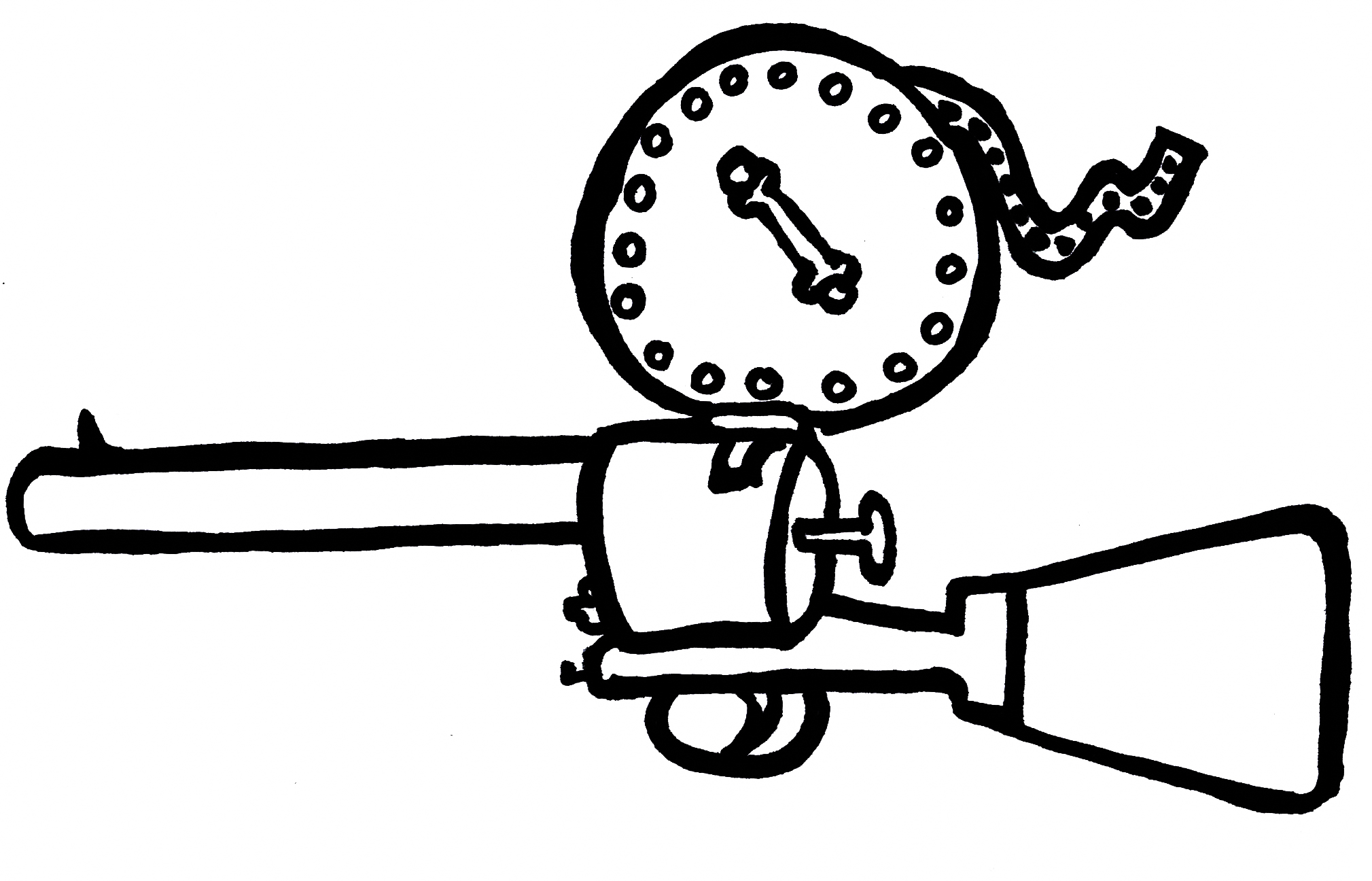
Where All Light, Everywhere excels is in connecting that modern weaponization of the motion picture camera back to its earliest uses & abuses. Early movie cameras were typified by designs like “the photographic rifle” and “the photographic revolver,” leaving behind a language where cameras still “shoot” their subjects. There’s a hypothetical version of this movie to be made where each new development in motion picture tech was used to further the art & distribution of pornography, but instead Anthony focuses on how they were used to afford the illusion of unbiased automation to morally bankrupt police & military systems. Police body cameras are just the next logical evolution in a long history of supposedly “objective” motion picture recordings reinforcing the biases of the inherently violent political institutions behind them.
If you’ve seen RatFilm, you know that Anthony does not lay out this political history of the weaponized movie camera in a linear, easily digestible argument. Instead, scientific explanations of the camera’s “blind spots”, the philosophy of its place in modern culture, its effect on human perception of the world, and the racial politics of Baltimore as a microcosm of the US at large are all loosely mixed in an open-ended visual essay that’s heavier on atmospheric dread than it is on declarative statements. Still, the movie leaves you disgusted with the motion picture as a medium, no matter how open its arguments are left for interpretation or how much Anthony strives to leave on a moment of hope in the epilogue. It turns out all movies really are bad. Bummer.
There’s a brilliant sequence in RoboCop 2 where a boardroom full of market testers discuss what a new & improved RobCop should look & act like. Their conflicting input confuses his already perfected programming & design, rendering the rebooted RoboCop 2.0 entirely useless. It’s a hilarious example of a movie sequel arguing against its own existence, mocking the concept of diluting a pure, original concept with a profit-obsessed aim for mass appeal. Given RoboCop 2‘s general reputation as an empty-headed misfire, I’m not surprised that The Matrix Resurrections is proving to be a divisive work among general audiences, since it expands that exact brand of self-loathing meta-humor into a feature-length screed against corporate franchise filmmaking at large. The Wachowskis reportedly did not want another Matrix film to happen, but Warner Brothers was going to reboot their iconic cyberpunk series with or without their input. Lana stepped in on her own to save their work from falling into the wrong creative hands, then used the opportunity to condemn the very idea of making a nostalgia-bait Matrix sequel in the first place. Using Neo as an avatar, she practically stares directly into the camera to declare, “This movie should not exist,” in open defiance of the IP-addicted movie industry that forced her hand. It’s as hilarious now as it was in RoboCop 2, and in this case the critique is drawn out to feature length.
The opening fifteen minutes of Resurrections plays like a worst-nightmare scenario of what a 2020s Matrix sequel could be. New, hip, young characters revisit and replay exact scenes from the original 1999 movie, trading quips about how totally awesome Neo & Trinity were in their time. It’s an escalation of the callbacks & Easter eggs that superhero nerds crave in each new big-budget fan-pleaser, turning those cheap nostalgia pops into full-on cosplay & highlight reels. Not only is that obsession with past triumphs a disappointing turn for a series that felt genuinely revolutionary when it premiered, but it’s also self-defeating in the way it draws comparisons between the original film’s exquisite fight choreography & cinematography and the blurry, incoherent mess of Resurrections’s own action sequences. Then, that disastrous opening sequence is revealed to be a video game simulation designed by a still-alive Neo himself (rotting at another miserable desk job in-Matrix under his deadname, Thomas Anderson), and Resurrections starts editorializing about those modern industry-standard shortcomings in soulless, movie-by-committee sequels. It turns out the film is not the worst-nightmare version of The Matrix 4; it’s Lana Wachowski’s New Nightmare: a platform for her to reflect on the core philosophy of her most iconic work while lashing out at a movie industry that seeks to dilute & pervert it for an easy cash-in. It’s an A+ prank, both on the audience and on the higher-ups at Warner Brothers.
It may be a stretch to assume that Resurrections‘ unwieldy 148min runtime was also a metatextual joke about the cumbersome length of modern Hollywood action franchises (or maybe not, considering that it taunts the audience with an ironic post-credits punchline after a 15-minute scroll). Either way, I appreciate that Wachowski never drops her searing industry commentary once she gets into the thick of the film’s actual plot. She approaches the ongoing philosophic & romantic conflicts of The Matrix‘s core players—Neo & Trinity—with full, open-hearted sincerity. She just frames the doomed revolutionary couple’s strive for a happy ending as a heist plot, where she (again, through Neo) has to infiltrate her movie studio’s evil lair to rescue their fairy-tale romance before it’s killed forever. Along the way, she continually cracks meme-culture jokes about bots, MILFs, Handsome Chads, “binary” code, and Arthur Read’s clenched fist – never letting up on her meta-commentary on the way movies and the Internet have changed in the two decades since Neo chose the red pill. Wachowski may open Resurrections arguing “This movie should not exist,” but she follows it up with a “But while we’re here . . .” addendum that allows her to sincerely grapple with the lives & loves of characters she’s obviously still emotionally & creatively invested in. It’s a volatile mix of sincere sentimentality and ironic shitposting, one that’s sure to alienate plenty of uptight nerds in one or both directions.
I was not this enthusiastic about The Matrix Reloaded or The Matrix Revolutionswhen James & I revisited them for the podcast last year. I really wanted to join the freaks on Film Twitter in reclaiming those back-to-back sequels as something that was wrongly dismissed in their time, but they really are exhaustingly dull – especially considering how vibrant the original film still feels. Some of the action in the earlier sequels is delightfully over-the-top, but for the most part they turn what started as a very simple, tactile sci-fi allegory into trivial superhero fluff. The Matrix Resurrections is their functional opposite. This time around, the action is underwhelming, but the ideas are explosively combative in a way that totally makes up for it. Fans who’ve swooned for every entry in this series are going to be over-the-moon for its epic Neo-Trinity romance plot no matter how they feel about the film’s self-critical meta-commentary. I’m here to report as a Matrix-sequel heretic that the film is a triumph no matter how invested you are in that emotional core; it’s the most I’ve appreciated a Wachowski movie since The Matrix ’99, entirely because of its cynicism over how the world (and the movie industry in particular) has gotten worse since 1999.
I got so wrapped up in reflecting on how Adam Sandler’s career & persona reshaped the Safdie Brothers’ usual schtick in Uncut Gems that I forgot to mention the true standout discovery among its many NYC-caricature performers: Julia Fox. As Sandler’s breathy, pouty mistress/employee, Fox softened Uncut Gems‘s acidity with a much-needed sweetness you won’t find elsewhere in the film. At the very least, she’s the only character who finds the continuous fuck-up anti-hero adorable instead of despicable, and it’s oddly cute watching her play moll to his delusions of mafioso grandeur. Fox felt refreshingly authentic & eccentric in the same way a lot of the Safdies’ NYC caricatures do, except with an unusual star power that had me leaning in for more, unsure that more would ever arrive.
2021 has been a pretty decent year for Julia Fox’s post-Uncut Gems career. Not only did she land a small role in Stephen Soderbergh’s star-studded neo-noir No Sudden Move, but she also found an opportunity to co-lead a feature film that plays directly into her strengths as a screen presence (and, thus, one that’s unavoidably reminiscent of the Safdies’ grimy NYC filmmaking style). PvtChat is a grim internet-age romance starring Fox as a camgirl dominatrix with the world’s wormiest fuckboy client (Peter Vack). She spends most of her screentime domming the porn & gambling addict from the safety of a webcam, taunting him, “spanking” him, and using his tongue as a virtual ashtray. Even when she’s playing mean in these exchanges, there’s a sweetness to her persona that leaks out of her patent leather armor. It’s a dangerous allure for her character, whose approachability inspires her online client to become her on-the-street stalker. It’s a huge benefit to her as an actress, though, proving that her radiant performance in Uncut Gems was not a one-time anomaly. Julia Fox is the real deal.
PvtChat is not so much a Safdies photocopy as it is pulling inspiration from the same independent NYC filmmaking subcultures that inspire them. It drags the late-night grime & mania of New York City livin’ up the fire-escape and onto the laptop computer, icing down the city’s up-all-night genre traditions with the cold isolation of life online. It’s classic No Wave filmmaking echoed in 1’s & 0’s; it’s Smithereens for the Pornhub commentariat. PvtChat declares itself to be “a romance about freedom, fantasy, death, friendship.” In truth, it’s more about how all modern relationships have been completely drained of their intimacy through our transactional, performative online interactions. It presents a world where intimacy is an illusion for purchase, not an authentic shared experience. Setting that crisis in a city overflowing with genuine, in-the-flesh people only makes it more tragic (and more perverse).
There are some instances in which PvtChat‘s nostalgia for independent NYC filmmaking of yesteryear gets in its own way. In particular, the way Julia Fox gradually falls for her sadboy crypto-bro client feels like the kind of pure masturbatory fantasy that would’ve been much more common on the 1980s & 90s film festival circuit than it is now. Imagine a boneheaded version of Taxi Driver where Cybil Shepphard & Robert DeNiro genuinely hit it off after their porno theatre date on 42nd Street. Personally, that romantic development didn’t ruin the film for me. It arrives after so many preposterous, manic decisions made by late-night lunatics that it felt oddly at home with the movie’s M.O. More importantly, even when the doomed lovers do physically connect, the movie does not abandon its themes of isolation & performance. It perverts the consummation of their shared desire in a way that still leaves them physically alone & unfulfilled. Maybe the movie is all in service of a delusional fuckboy fantasy, but it at least seems aware of how pathetic & grim that fantasy is.
Even if the unlikely central romance of Pvt Chat is a turn-off for most audiences, the movie is still a worthy vehicle for Julia Fox. She commands the screen (and the screen within the screen) with an infectious ease that still has me leaning in for more. It’s incredibly cool that her acting career wasn’t limited to a one-off novelty; she’s a goddamn star.
It’s that frivolous, needlessly contentious time of year when every movie I watch is being filtered through our annual listmaking process, prompting me to ask idiotic questions like “Sure, this movie is really good, but is it Best of the Year good?” I’m especially guilty of Listmaking Brain this year, since there were only five films released in 2021 that Iratedabove4stars, leaving the rest of my usual Top 20 list open to dozens of titles that I really liked but wouldn’t exactly call personal favs. Discerning which 4-star film is worthier of a slot on my Best of the Year list than another feels more arbitrary & meaningless than ever before, something that is not helped at all by my full knowledge that no one alive gives a shit about the final results except me. I love listmaking season as a diary recap of the year and as a movie recommendation machine, but I am fully aware that the “catching up” cram session portion of it is unfair to the (mostly) great movies I’m watching when there’s already no room left on the lifeboat. By this time of year, I’ve completely lost track of what qualifies a movie as “list-worthy”, and I’m mostly just looking forward to the genre-trash relief that January dumping season brings when it’s all over. That is when I shine.
While Jumbo is a very good movie on its own terms, I’m embarrassed to admit that I most appreciated the way it helped clear up some of grey areas in that listmaking struggle. It’s one of two French-language movies I’ve seen this year where an emotionally stunted young woman has sex with a machine, the other of which is currently my favorite new release I’ve seen all year. Julia DuCorneau’s Titaneis often referred to as a kind of novelty film where “a woman has sex with a car”, which feels insultingly reductive considering how much else is going on in that sprawling mind-fuck genre meltdown. Meanwhile, if you referred to Jumbo as “the film where a woman has sex with an amusement park ride,” I feel like that comfortably sums up everything that’s going on with it. It’s a very good movie where a woman has sex with an amusement park ride, drawing an oddly touching & genuine story out of a novelty premise that’s loosely “inspired by a true story.” Still, I found it most useful as an illustration of why Titane was smart to have more going on than a simple sex-machine premise. It’s pretty limiting at feature length, even when the emotions of that scenario are treated with full sincerity, which is why Jumbo is not the one that’s surviving the arbitrary cruelty of the listmaking process.
For some reason I assumed Jumbo was about a woman romantically falling for a Gravitron (totally understandable), but instead she falls for a Move It (an inferior ride, but to each their own). Noémie “Portrait of a Lady on Fire” Merlant stars as a sheltered mommy’s girl whose total lack of self-confidence prevents her from being properly socialized among adults outside her house. The amusement park rides she services as a seasonal job don’t seem to mind her awkward social tics, though, which allows her to vulnerably open up to the first gigantic inanimate object that makes a move on her. Jumbo makes no jokes at its lovestruck amusement park brat’s expense. It takes her first-crush romantic feelings as seriously as it can, reserving its judgement for the people in her life who make her feel like a freak for the transgression instead of just letting her be. Beyond the ups & downs of her amusement park romance, the dramatic core of the film is in begging her community to just let her have this one thing that makes her happy, whether or not it’s “real.” Life is lonely & cruel enough without the people closest to you shaming you for whatever small comforts get you through it – even if that small comfort happens to be fucking a Move It.
Jumbo delivers everything you’d want out of a great romance: a convincingly emotional performance from its star, some charming personality quirks from the object of her affection, a close-minded community who fails to keep them apart, etc. It even achieves some surprisingly striking visuals for an indie comedy on its budget level, especially in the glowing lights & otherworldly voids of its star’s ecstatic trysts with her gigantic fetish object. It just also limits itself to a relatively small, contained premise, which doesn’t really push through its initial novelty to explore anything bigger or unexpected. Had I discovered it during its film festival run instead of during Best of the Year catch-up season, that smallness in concept likely would not have bothered me, but here we are. This is when I’m on my worst behavior, shrugging off 4-star films for not being “good enough” because of some self-imposed bullshit metric that does not matter in the slightest.
Although the Hulu/Blumhouse collaboration Into the Dark has come to an end, I was still holding out on catching up on the episodes I hadn’t seen yet, since it was a tradition between me and Erstwhile Roommate of Boomer to watch them together, and although we have seen each other in person several times this year, as things start to open back up, catching up on movies from an anthology series wasn’t really at the forefront of anyone’s agenda. The series was never very far from my mind, however, as I still managed to mention it several times, whether I was saying thatThe Unholy orBlack Box felt better suited for the series, or including one of its installments at number 13 in my Top Films of 2019 list. However, after getting my little family unit to buy in on the delightful Deadly Games, I didn’t want to push things by nominating another subtitled Christmas horror flick, and there was much objecting to the Creepshow holiday special (you still have one fan in this house, Anna Camp), so we switched from Shudder to Hulu and checked out the 2019 December/Christmas release, A Nasty Piece of Work. Some spoilers! Big ones! But not of everything!
Ted (Kyle Howard) just can’t seem to get into the good graces of his unpleasant and unpleasable boss, Steven (Julian Sands, star of the worst Phantom of the Opera), especially in comparison to and competition with perennially brown-nosing Gavin (Dustin Milligan). After a particularly embarrassing incident in which he put himself in harm’s way to retrieve and deliver Steven’s golf clubs in an ass-kissing attempt, only to be dressed down by Steven for doing so and shown up by Gavin, who mocks him for picking up Steven’s [dumb rich people bullshit] clubs instead of his [also dumb rich people bullshit] ones, Ted destroys the mirror in an executive bathroom with said implements. He’s got impulse issues! Later, following the announcement at the annual office holiday party that there will be no Christmas bonuses that year, Ted sees Steven alone on the office balcony and at first seems to be planning to push the older man to his demise, but instead delivers a clipped corporate platitude of gratitude about what an honor it is to work there, etc. Steven takes this opportunity to invite Ted out to his home for a special Christmas celebration, implying that he plans to share more information about a promotion for Ted then.
When Ted and his wife Tatum (Angela Sarafyan) arrive at the party, they barely have any time to bask in the opulence of the exterior of Steven’s home before they’re nearly run down by Gavin in his Porsche; he and his wife Missy (Natalie Hall) have also been invited. Although Ted spots someone in an upstairs window, Steven’s wife Kiwi (Molly Hagan) insists that the three couples are alone in the house. What follows is an evening of increasing mind games, some of which work and some of which are purely fantastical. Kiwi and Steven go full Who’s Afraid of Virginia Woolf?, with her withering remarks about his priorital elevation of his business over starting a family as well as his present impotence, while he bons mot about her drinking and other indulgences. Paul Soter of Broken Lizard fame is the credited writer here, but there may as well be a “based upon characters created by Edward Albee” thrown in there for good measure, since we even get a staged shooting, just as in Woolf, although this time when Steven splatters Kiwi’s “brains” all over the marble walls, he immediately turns to Gavin and Ted for recommendations for plans of action to ensure none of them see jail time. It bears mentioning here that, like their husbands, Tatum and Missy are also fundamentally different. Tatum is a down-to-earth woman who works as an insurance mediator and is excited about her snowflake earrings. Missy, for her part, is an astrology-espousing unemployed trophy* wife who shares her husband’s drive for sucking up, although she’s less successful at it; when she tells Kiwi that the older couple’s home has excellent feng shui, Kiwi playfully says that at least designers don’t charge extra for that, but her contemptuous scowl doesn’t disguise just how little she thinks of this input. Missy’s not a complete slouch, however, as when Steven prompts his employees for a solution for what to do about Kiwi’s “corpse,” Gavin is speechless, while Missy manages to kick him into gear, and when Ted reluctantly joins in, Tatum is justifiably horrified.
Things only get stranger from there, and although the film never really got quite as weird in the way that I wanted, it exceeded my expectations in other areas. Kiwi jokes that they got a great deal on the house due to a series of murders that were performed by people living in the walls, which, in combination with Ted’s aformentioned spotting of masked people in an upstairs window and a sequence in which Missy is watched by someone peeping from a hidden room, makes you think that this little Mike Nichols LARP is bound to take a Bad Ronaldian twist any second, but the actual resolution of that particular plot thread is an underwhelming revelation that will have you saying “You’ve got to be Eyes Wide Shitting me!”, which sort of makes sense in context and which I thought was very funny, although no one else laughed. Instead, things take a turn for the even more bizarre. For instance, we learn that Ted’s been lying to Tatum about his Friday night activities, which everyone initially infers to mean that he’s an adulterer. Instead, he’s actually visiting a boy, Daniel, whom Ted paralyzed as the result of a traffic accident that Ted catalyzed by driving in while in an infuriated state following a previous work outburst, years before he and Tatum met. This twists further when Kiwi and Steven reveal that they have Daniel (Nico Greetham) in the house with them and plan to adopt him, and that if Ted doesn’t fulfill Steven’s latest demented command, Daniel will be intentionally subjected to a life of neglect and abuse, but that scene alone contains at least two more additional revelations that push the absurdity to the extreme, but I couldn’t help loving every minute of it.
Essentially, this is a movie in which we get not only such genre-standard classics as:
Rich old creep creeps on his employee’s wife.
Drunk rich lady creeps on husband’s employee in front of her husband.
Chekhov’s guns!
Rich old creep creeps on his other employee’s wife.
Intramural voyeurism.
We also get such strange new heights as:
Bros wearing a suit of armor.
Angrily smashing delicate face masks.
Drunk rich lady threatens to kill herself by tying her scarf to a life-sized poolside statue and pushing it in.
Schrödinger’s ammunition!
A truly outstanding amount of gaslighting and preparation.
Contemporary criticism of the movie from closer to its release largely focused on the film’s lack of discussion of class friction. While that’s a valid critique, I suppose, most of them cite that there’s little discussion of the vast differences in wealth between Steven and his employees, and I’m not really sure that I agree, especially because my biggest problem with the film’s economic commentary lies in what it doesn’t talk about, rather than what it does. Essentially, I have the same complaint that I’ve had about National Lampoon’s Christmas Vacation for years: the money problems that Clark Griswold faces are not relatable to me, as he has a large and lovely home, no trouble providing for his family, and doesn’t seem to be in any danger of losing his job if he takes a truly staggering amount of vacation time. Clark just wants a Christmas bonus so that he can get a swimming pool, and because he assumed he would be getting it, he made plans for it without making sure funding was secure; Christmas Vacation requires Cousin Eddy to show up and good-naturedly antagonize Clark because otherwise the only conflict is the result of Clark’s bad decision. Likewise, we never really get a very good explanation of why Ted and Tatum need this bonus so much. Ted’s so angry about being shown up by Gavin in one scene that he destroys a very expensive bathroom, but the fact that he, like Clark Griswold, has so much riding in a bonus, makes him feel like an artifact from a different era.
Clark Griswold is unrelatable because, in the 1980s, a middle class chucklenut was living the American Dream. In a 2021 where everything is worse, Ted’s desperation for a bonus, when he seems to be doing better than a lot of people, is a premise that is alienating in just how out of touch it is. One of the strengths of Into the Dark is the way that it streamlines its storytelling, and this installment (like most) takes place almost entirely in one location (Steven and Kiwi’s house), other than a couple of bookend office sequences and an interior dialogue scene in Ted and Tatum’s car. They don’t openly talk about their financial straits on that drive; they just talk about the long hours that Ted has been putting in, and because of the budget constraints that force these smooth-running narratives we see nothing of their home and the life they lead therein. There’s no sense that Ted feels distant from his wife or that she feels a particularly sharp loneliness because of their long hours apart. Of the two, it’s Gavin who’s having money problems because he’s leveraged his credit to create a facade of wealth to impress Steven, while Tatum and Ted seem to be… fine. Only 12% of employers provided bonuses in 2020, with that number up to 23% in 2021, and while that’s self-reporting from businesses, the Bureau of Labor and Statistics data from 2019 backs this up, with year-end/holiday bonuses ranging from 6-15% depending on the industry and type of bonus. I happen to be fortunate enough to work a day job where I usually get a bonus at the end of the year, but it’s not every year and I know better than to count on getting it in order to maintain financial stability (and all of them added together for the past 6 years still wouldn’t get me a swimming pool), and most people don’t at all. I certainly never got one from working in the public sector as a teacher or in academic support, and the only bonus I ever got while working retail was a frozen turkey. Hell, if we’re going to crib from Albee and Harold Ramis, why not bring old Dickens into this and give Ted and Tatum a son who needs an expensive treatment, or maybe one of them has an ill parent who needs full time care. Even being behind on a mortgage payment because of a surprise short term medical emergency would add a little bit more urgency to the proceedings.
That same need for an aerodynamic production process and quick and easy cash returns on investment that are a hallmark of even the best Blumhouse releases is great, because they’re the only company giving any real money to small-scale productions, but those pursestrings are tight when it comes to locations. Usually where Dark succeeds or fails is in the performance and the style. Director Charles Hood made only two features prior to this, and if you don’t recognize the names of the TV shows he’s directed episodes of, I don’t either. Cinematographer James Kniest, however, is a frequent Mike Flanagan collaborator, and that shows in the shot choices and composition here, elevating this episode of the anthology above some of its less ambitious peers. Milligan is known more for his comedy roles, and while he’s good at playing dim-witted here as he did on Dirk Gently, there’s a talent in the way that he can deliver a serious scene, as he does here as Gavin while Steven plays back unkind things that Gavin said about Missy in front of her, then effortlessly and seamlessly transition right back to childlike wonder. Molly Hagan is the real MVP here, however. Hagan’s an actress who has made a single appearance in virtually every television show produced between 1992 and 2015. Scarecrow and Mrs. King? Yes! NCIS: New Orleans? Of course! The Golden Girls? You bet! Chicago Hope? Uh- huh. Six Feet Under? Well, obviously! Numb3rs, Monk, JAG, and Friends? Yes, yes, yes, and duh. But here she really gets to be Elizabeth Taylor, and she does it with style and aplomb.
So yes, A Nasty Piece of Work is more than the sum of its parts. If you happen to have Hulu and want to have a little fun with a horror-adjacent Christmas special, take another journey into the dark.
* The film does seem to pretend that Sarafyan isn’t a beautiful woman, and later in the narrative Missy calls her “podunk,” but the rest of the movie doesn’t really sell that, other than a moment wherein Kiwi compliments her boots and Tatum talks about getting them on sale, to which Kiwi gently chastises her that rich people don’t brag about that sort of thing.
In our recent discussion of Paprika for the Lagniappe podcast, Brandon mentioned that he likes Christmas slashers, and I challenged him to name three (sinceBlack Christmas is a given, and everyone has their own favorite Silent Night, Deadly Night – for Brandon, it’sInitiation). Luckily, streaming service Shudder has an “Unhappy Holidays” selection. There are some perennial favorites in there, like the aforementioned Black Christmas and its much-maligned 2006 remake as well as prior Movie of the MonthRare Exports. While fishing for something to watch to help get into the spirit of the season, I stumbled upon 3615 code Père Noël (literally “3615 code Santa Claus” in reference to the Minitel code for sending messages to “Santa,” but released in the U.S. as Dial Code Santa Claus and Deadly Games). And boy was it a treat!
Thomas de Frémont (Alain Musy), age 8, has the epitome of a charmed life, living in a castle with his widowed mother Julie (Brigitte Fossey) and her father, Papy (Louis Ducreux). Deep within the walls of the castle lies a series of secret passages and a gigantic playroom, filled with toys that once belonged to his late father, and his father’s father, etc. Even the boy’s mother does not know about this room, as this secret is passed from father to son. As his mother is the manager of a nearby location of the famous French department store Printemps, he also has all of the latest high tech gadgets, including the aforementioned Minitel system, a closed circuit surveillance system that he can operate with a chunky wrist remote, and even a trapdoor with a net, which he uses to capture his dog during an opening sequence in which he gives himself Rambo-style guerilla campaign war paint and acts out a quasi-Vietnam in miniature, all before breakfast. Thomas is a young millennial Pippi Longstocking: a child’s wish-fulfillment character, a hypercompetent little boy who mostly takes care of himself while still maintaining a childlike sense of wonder 3615; he can repair his mother’s car without adult assistance, but also still believes in Santa Claus. For now, anyway.
It’s Christmas Eve, and in the city, a man in his forties wearing a yellow scarf (Patrick Floersheim) attempts to join in a children’s snowball fight, but they are disturbed by him and flee. Meanwhile, Julie manages to elicit her son’s Christmas list from him, despite his insistence that he can communicate directly with Santa using his Minitel, and leaves for work, but not before reminding him to make sure that Papy takes his insulin. Julie is given a ride by her assistant, Roland (François-Eric Gendron), much to Thomas’s annoyance, which prompts him to set to work repairing her vehicle. At work, Roland hands Thomas’s Christmas list off to an employee, to gather the desired toys and have them delivered to the caretakers at the de Frémont house, as Julie will be working late for the last-minute Christmas Eve push, which includes getting as many Santas into the store as possible. After a visit from a friend who tries to convince him that Santa is a lie, Thomas uses his Minitel to communicate with the 3516 Santa line, but unbeknownst to him, the person on the other end is the man in the yellow scarf, who asks increasingly invasive questions, until Thomas logs off. The yellow scarfed man then takes one of the Printemps Santa positions, but when a young girl is disturbed by him, he ends up striking her, which Julie sees, prompting her to fire him immediately. In the personnel office to collect his payment and be discharged, he overhears Roland giving final instructions for the delivery of Thomas’s Christmas presents, and he hides in the back of the van, with the intent to make some merry (and murderous) mischief.
This is going to date me, but the first memory I have of going to the movies was to see Beauty and the Beast. According to my mother, however, I was first taken to the theater at age 3 in 1990, to see Home Alone, which, according to Deadly Games director René Manzor, was plagiarized from his film. And yeah, there are definitely similarities; ironically, when I think about sitting in that theater watching Beauty and the Beast and being utterly captivated, what I remember most is that opening sequence with the stained glass and the musical track that is similar-to-but-legally(?)-distinct-from the seventh movement of Charles-Camille Saint-Saëns’s Le Carnaval des animaux, so in reality, both of my earliest filmgoing experiences were in some part (allegedly) stolen from the French. The thing about Deadly Games is that it’s infinitely superior to its alleged American rip-off. Home Alone is a perfectly fine family movie with slapstick comedy that acts as a sort of fantasy for children, and which is slotted into being a Christmas movie by default simply because it takes place during the holidays (see also: Die Hard); the fact that Kevin is alone at Christmas is fairly incidental to the plot, and the film could just as easily be set in July with no real change to the plot and only a few minor changes to dialogue. Deadly Games, with its Santa-dressed antagonist, Christmas Eve plot elements, and explicit connection to the loss of innocence and faith in magic that comes as a result of learning that Santa Claus isn’t real, cannot be separated from the narrative without changing it substantially. Even the whiteness in the killer’s beard and hair comes from using a can of tree flocking.
Not to keep harping on the similarities to (and differences from) Home Alone, Thomas and Kevin are very different kids living in very different universes. Kevin is buoyant and well-tempered, and although our heartstrings are tugged when he misses his family, he never seems to be in too much danger; we never really fear for his life. Thomas, on the other hand, gets injured (pretty badly) over the course of Deadly Games, although he manages to take care of himself and his grandfather fairly well in spite of being a child, and his innocence is contrasted with both his hypercompetence and the distinctly adult nature of the danger that he is in. Before she leaves for work, Thomas’s mother tells him not to try and stay up to wait for Santa Claus, or see him, as Santa turns into an “ogre” if he is seen by children on Christmas Eve. Thomas still tries to use his security camera set-up to be the first kid to get proof of Santa’s existence, but when he does see the less-than-jolly intruder enter the house (through the chimney, no less), he’s excited, until the moment that the killer hurts his dog. From there, an intense cat-and-mouse ensues, and Thomas matches wits pretty well, despite his injuries including presumed frostbite from both climbing around on the roof to escape “Santa” and running through the woods to the caretakers’ house to get his grandfather’s spare insulin, a leg injury that he is forced to splint using a broken chair, and a lifetime of mental scars.
A lot of people in my friend group hate Christmas, and I’m actually the odd one out for loving it. I love Christmas lights, the joy of getting someone something that they didn’t know existed but which fits them perfectly, wrapping presents, tinsel, hot chocolate and cider and mulled wine, and the aesthetics of the Winter Wonderland. By the same token, however, I dislike many of the trappings of the holiday: the idea of “gift guides” is, in and of itself, disgusting commercialist, consumerist propaganda to me; I find Christmas music exhausting, pervasive, and annoying; I can’t stand the right wing propaganda mills’ annual manufactured outrage about the supposed “War on Christmas” and how those “news” outlets have simultaneously radicalized and rotted the brains of large swaths of multiple generations of American voters. Other than holiday-themed episodes of generally cynical shows that I already enjoy, most Christmas filmic media is far too saccharine, cloying, and regressive for my taste. How I long for a subversive anti-Hallmark Christmas movie where our lead goes back to their hometown and, instead of encountering a situation that inscribes and glorifies the morally questionable values of rampant consumerism, patriarchal family structures, and having precisely one (1) apolitical black friend, they instead are reminded that they left their podunk nowheres to pursue dreams, not of having more, but of being more, and that home is actually full of undisguised racism, self-congratulating political hypocrisy, and abuse, only to return to their found family in The City and having a truly merry Christmas. But alas, such a thing does not seem to exist. For those of us who love both Christmas and thrills, however, at least there’s Deadly Games.
The latest of many actor/director co-credits from Mélanie Laurent, The Mad Women’s Ball, is a solemn period drama set in a prison-like mental institution in 19th Century France. It’s a formulaic film in a lot of respects, touching on every dramatic cliché you’d expect in its women’s sanitorium setting. There’s nothing new here you won’t see in goofier, better-publicized works like Girl Interrupted, Cosi, Unsane, or your local drag scene’s cabaret parody of One Flew Over the Cuckoo’s Nest. And yet, those clichés are all performed so earnestly in The Mad Women’s Ball that their familiarity hardly matters. At the risk of repeating a cliché observation myself, Mélanie Laurent’s extensive background as an actor shows in her filmmaking’s focus on performance & characterization, two details that add enough specificity & emotional impact to the central drama that it avoids backsliding into tedium.
It helps that the ghost story half of The Mad Women’s Ball actually does manage to feel novel, in that it takes the existence & presence of “spirits” seriously without forcing an illustration of them onscreen or tipping the tone into horror. Our POV character (Lou de Laâge) is the kind of stubborn, free-thinking intellectual who would routinely get institutionalized for “hysteria” by their embarrassed, cold-hearted families in this era. Except, she also suffers the burden of constant communication with spirits of the dead which, as you can imagine, are in no short supply in her new asylum/prison/home. She slowly earns her way out of confinement by proving her supernatural connection with these spirits to her nurses & guards (including Laurent as her sole kind-hearted advocate), helping them reconnect with ghosts of their past in exchange for the promise of freedom. Meanwhile, she finds uneasy, unlikely sisterhood with her fellow “patients,” who range from genuinely ill to politically troublesome, like herself.
As the title implies, The Mad Women’s Ball culminates in a grand masquerade where the local wealth class is invited on asylum grounds to gawk at (and sexually violate) its patients as they dressed in costume – apparently a very real, very fucked up tradition in some mental institutions at the time. Until that physical convergence of life inside & outside the asylum, Laurent contrasts their parallel timelines with an aggressive crosscutting effect, her one major stylistic imposition on the plot. Otherwise, the film’s aesthetic recalls the melancholic Bates-in-prison episodes of Downton Abbey, with the chaotic echoes of unwell women resisting “therapy” (i.e., torture) echoing throughout its dank, joyless hallways. This is a long, somber, delicate film with only occasional flashes of musical accompaniment. The contrasting crosscuts between life inside & outside the asylum are absolutely essential to giving it a sense of vibrancy, and it makes total sense that its narrative would have to resolve with those two worlds crashing into each other.
Outside those crosscuts, I’m not sure Laurent does much to call attention to her craft as a filmmaker here. She mostly just provides a stage for her characters & performers to shine, treating their individual quirks & personae with full respect – whether they’re a bipolar pickpocket with a wicked mean streak or a spiritual medium whose genuine talent for communication with the dead is misunderstood for madness. Laurent chose to direct a film set in a time that was brutally unkind to women, seemingly so she could extend kindness & empathy to them in retrospect. It’s surprisingly heartwarming, despite the institutional cruelty & cultural familiarity of its setting.









 Swampflix