
By Design (2026)

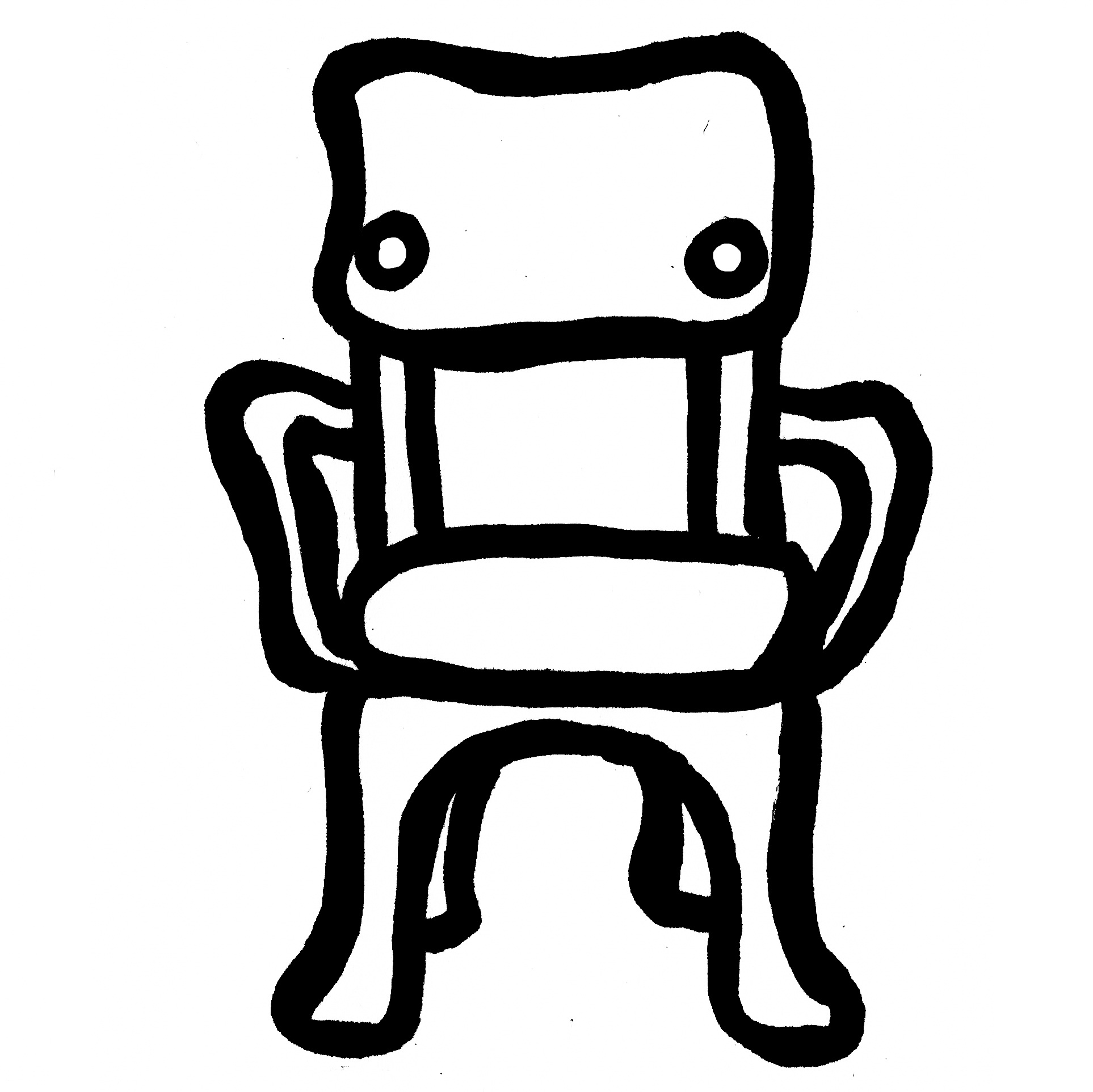
How do you feel about performance art? Interpretive dance? Experimental theatre? Poetry? If you walked into an art gallery and were confronted with a live performer pretending to inhabit the persona of a piece of furniture or an animal or an abstract concept, would you be repulsed or intrigued? Amanda Kramer does not make movies for audiences who recoil from earnest theatricality; she makes high-artifice headscratchers for the intrigued. Her latest stars Juliette Lewis as a tragically bored woman who inexplicably trades identities with a designer chair, leaving her human body behind as a lifeless piece of furniture. A large portion of By Design‘s audience will be immediately repulsed by its self-aware, mannered tone, which engages with big-picture abstract concepts through absurdist artifice and practiced affectation. Miranda July & Peter Strickland haters, stay away. Everyone else who can tune into its wavelength will find a wryly funny meditation on how we all socially function as objects, assessed & valued more as physical presences than as human beings.

Camille (Juliette Lewis) trudges through punishingly boring, repetitive days shopping & brunching with her gal pals in a life “devoid of ideas” . . . until she finally discovers something that arouses true desire in her: the perfect designer chair. Only, by the time she gathers the money needed to make the “perfect purchase,” the chair has already been sold and gifted to a lonely man (Mamoudou Athie). The heartbreak of not being able to own this “object of desire” shatters Camille’s sense of self, so instead of parting ways with the chair she makes a desperate, magical wish to become it, to be the object that is desired. Her essence leaves her body behind for the new, curvaceous body of the chair, and her old body collapses onto the floor, catatonic. From there, she is split into two separate selves: Camille The Chair, who comfortably basks in her newfound sense of purpose & desirability, and Camille The Human, who continues to have an active social life even though she has effectively become an inanimate object. Her friends and family continue to interact with her as if she were alert & responsive while she remains motionless, painting all person-to-person social interaction as a kind of one-sided narcissism where the other participant is more of a sounding board then a fellow human being.

Lewis is one of several actresses in the cast whose careers peaked in the 1990s. Her small friend group is rounded out by Robin Tunney (Empire Records, The Craft) & Samantha Mathis (Little Women, Super Mario Bros.), and the trio’s petty conflicts are narrated by the honey-voiced Melanie Griffith, who lands most of the best laugh lines about how all women are already treated (and, eventually, discarded) like furniture — not just Camille. There’s such a stilted, dazed affect to each performance that any one of these women could’ve been substituted with Jennifer Coolidge without significantly changing the meaning or tone of the overall picture, but through them Kramer still manages to work out some sincerely heady ideas about gendered objectification and how women’s friendships are often corrupted by competition & envy. Maybe it’s all one big, elaborate “Women be shoppin'” joke, but it’s one that takes the existential crisis of its literal chairwoman seriously. Camille has been societally reduced to a physical, purchased product, and the abstract meaning of that is just as horrific as the physical mechanics of it are amusingly absurd.

Aesthetically, Kramer leaves behind the disco & leather-kink nightclub fantasia of Give Me Pity! & Please Baby Please for a more clinical, brighter-lit art gallery feel. The frame is sparsely decorated with individual, identifiable objects (both Camilles included) as if to leave space for blocks of ad copy in a designer furniture catalog. That stylistic choice is announced as early as the opening credits, which are designed to resemble a fussy luxury brand catalog, setting the mood for the film’s high-end, inhuman shopping trips. It’s a visual sparseness that echoes Camille’s feared life “devoid of ideas” without distracting from the icy, abstracted zingers in the script, like Griffith’s intonation of “Wherever she goes, there she is — a lifetime horror” or a character answering the question “Who doesn’t like women?” with “Most men, most women.” If you’re at all allergic to camp, whimsy, or art-gallery pretentiousness, you already knew this movie is not for you as soon as you read the logline “A woman swaps bodies with a char, and everyone likes her better as a chair,” no review needed. It’s an odd, thorny little delight for everyone else, as all of Kramer’s films to date have been.

-Brandon Ledet

The Craft (1996)

Two of my childhood-favorite horror classics from the year of our Dark Lord 1996 screened at The Prytania Theatre this month: Wes Craven’s teen-slasher renaissance sparker Scream and Andrew Fleming’s teen-witchcraft charmer The Craft.  Of the two, I only made time to revisit the latter, where I had the pleasure of sitting behind a row of giggling college students who were enjoying it for the very first time.  Repertory screenings of The Craft are a much rarer treat than screenings of Scream (as evidenced by only one of those titles also playing at The Broad this month), which makes sense given the stature of Scream‘s director within horror nerdom and given that it is still being kept alive by endless discourse & rebootquels well into the 2020s.  Both movies meant a lot to me as a wannabe goth young’n who never earned his eyeliner wings, if not only because I was the perfect age to look up to their much cooler, slightly older teen protagonists when the movies were fresh arrivals on the shelves of my local Blockbuster Video.  My anecdotal research (scrolling through my Letterboxd follows’ flippant one-liner reviews) suggests that The Craft is considered the much lesser of the two works, especially in recent years, which is the exact opposite opinion that dawned on me while watching it on the big screen for the very first time.  As a kid, Scream was a great reference text for a laundry list of horror classics I needed to catch up with in future video store rentals, while The Craft was the full witchy power fantasy I desperately needed in my miserable Catholic school years – a substantial, self-contained work that required no extratextual viewing.  Among the two slick ’96 teen studio horrors currently enjoying victory laps around the city, my heart clearly belongs to coven; praise be to Manon.

Pitting these two enduring sleepover classics against each other is mostly a game of 1-on-1 performance match-ups.  Fairuza Balk is just as chaotically charismatic in The Craft as Matthew Lillard is in Scream, but she’s much better dressed – sporting mega-goth bondage gear instead of oversized sweaters from The Gap.  Neve Campbell is dependably lovely & solid in both, playing the genre’s most sensible Final Girl in Scream and the coven’s most vulnerable pushover in The Craft, where she cedes power to Balk, Rachel True, and Robin Tunney.  Skeet Ulrich is the deciding factor, then, putting in the performance of his career as a dopey puppy dog under a love spell in The Craft, which comes slightly ahead of his performance as a dirtbag psycho boyfriend with a horrid secret in Scream.  It’s unlikely that these names mean anything to anyone born outside the Millennial age range of 1981 – 1996, but I can confirm from first-hand observation that Skeet Ulrich’s performance in The Craft still kills with the modern teenage crowd.  The row ahead of me was explosive with giggles every time he showed up at Tunney’s feet, adorably perplexed over why he was so magnetically attracted to her despite his usual aloof bad-boy demeanor.  Of course, a lot of the film’s current entertainment value is rooted in nostalgia for 90s pop culture aesthetics, whether it’s the extremely dated teen cast or the tie-in CD soundtrack that includes artist like Jewell, Julianna Hatfield, Letters to Cleo, Portishead, Elastica, and Our Lady Peace.  Even on that end, I’d say The Craft has Scream beat, since it’s only invested in setting a traditional witchcraft story within that 90s pop arena instead of simultaneously cataloging & restaging tropes from previous missteps & triumphs in its genre.

When I say that The Craft doesn’t require extratextual viewing the way Scream does, that doesn’t mean I didn’t immediately go home to watch all of the Special Features on my ancient DVD copy as soon as I left The Prytania, so I could prolong the pleasure of the experience.  There were some fun insights in its promotional behind the scenes “interviews”, mostly in the cast’s recollections of Fairuza Balk’s contributions as a true-believer Wiccan bringing authenticity to the production (along with hired outside Wicca consultants) and in Rachel True’s observation that as the coven’s magical powers grow stronger & stronger, their skirts are hemmed shorter & shorter.  Mostly, my extratextual journey outside The Craft was a horrified scroll down Letterboxd lane, where I found a lot of complaints from cinephiles I usually trust about a movie I’ve always loved.  Most reviews among mutuals range from 1-to-3 star ratings, with a particular disdain for the third-act dissolution of the central teen coven.  It’s true that the “Fuck around” section of the movie is a lot more fun than its “Find out” counterpart, as that’s when we watch goth teen witches confidently strut down their Catholic high school hallways to 90s pop tunes in defiance of their school’s usual social power rankings.  Once all four witches have solved their very simplistic personal issues at home (racism, body dysmorphia, the powerlessness of poverty and, least significantly, crushing on a bully) through dabbling in dark magic, there’s nothing left for the movie to do than to show what happens when they take their magic powers too far.  It’s a political blow to idealists looking to The Craft for depictions of feminist solidarity (who would be best served skipping the ending entirely), but it at least opens the movie up to other themes besides the allure of power to teen-girl outsiders: addiction, fear of losing social stature, the willingness to cower behind an overly bossy leader for convenience, etc.

Speaking of extratextual viewing, what’s interesting to me about the complaints over The Craft‘s third act is that someone did attempt to correct its political issues in a modern revision of the film.  Zoe Lister-Jones’s recent soft reboot The Craft: New Legacy smooths out a lot of the original film’s rough spots in representation, feminist solidarity, and third-act resolution, mostly by giving its own coven an outside enemy to fight instead of each other (David Duchovny as an MRA warlock) and by putting their hunk-bully stand-in for Skeet Ulrich under a “woke” spell instead of a love spell.  It might be a more politically sound film, but it’s also a thoroughly dull one, mostly because its poorly lit, dialogue-heavy teen drama registers more like a backdoor pilot for a CW series than a legitimate Movie.  Say what you want about the original, but it at least has a sense of style, something the recent remake only approaches when copying the exact occultist-imagery graphics of the original’s opening credits as lazy homage.  The Craft‘s style happens to be tied to a very specific era in commercial filmmaking that I happen to be susceptible to nostalgia for, but it still looks fantastic.  It probably serves me right, then, to see this same story warped into an extremely dated generational touchstone for a different era of potential horror nerds, so I can see how generic one of my childhood favorites looks to people who it didn’t hit at the exact right time.  To me, The Craft: Legacy is cute but inconsequential, which is seemingly what most audiences also think of the original, even among my peers.  So, maybe I should shelve my argument that there’s more overt queer sexuality in the suggestive wagging of Fairuza Balk’s fingers during the original’s iconic light-as-a-feather-stiff-as-a-board scene than there is in the entirety of the deliberately inclusive Queer Representation remake.  I’m already risking sounding like an out-of-touch whiner about the good old days here, exalting the pop culture residue of my youth as if it were a sacred text.

-Brandon Ledet