
The Doom Generation (1995)

If you follow enough fired-up cynics on Twitter, you’d think that queer youth culture is suddenly going soft after decades of consistent, unified radical politics.  There are surely some fruitful debates to be had about the ways corporate & police presence have been welcomed into Pride celebrations recently, especially when it comes at the expense of freer, kinkier expressions of queer sexuality.  However, I’m a little more skeptical about the recent in-house dogpiling on “tenderqueer” Zoomers for their generational desire to see wholesome, conflict-free Gay Representation onscreen, as if that impulse is anything new.  Politically edgier queer audiences have been debating Gay Assimilationists about the value of presenting “the right kind of representation” to the public at large since at least as far back as Stonewall, which has led to much controversy over “the wrong kind of representation” in movies like Basic Instinct, Cruising, and The Boys in the Band for presenting their queer characters as flawed & villainous when they had no wholesome mainstream counterbalance.  I have to wonder how much that eternal controversy has dulled the career & reputation of queer provocateur Gregg Araki, whose signature works have been left to rot in censored, out-of-print obscurity since he first made a splash in the New Queer Cinema era of the 1990s.  All those decades ago, Araki got enough pushback for making hyperviolent, oversexed queer art he describes as “too punk rock for gay people” that he thought it’d be easier to sneak his edgier, more outrageous ideas into his version of a straight film. Araki’s breakout 1995 road trip flick The Doom Generation is even subtitled “A heterosexual movie by Gregg Araki,” a cheeky in-joke about how it’s easier to get away with making his provocative, overtly queer outsider art within a heterosexual dynamic, since there’s much less pressure to deliver “the right kind of representation” in that context.  Or, as Araki put it in a recent interview, “I made this heterosexual movie, but in a very punk rock bratty way, made it so gay.”

That hetero cosplay may have landed Araki easier production funding, but the prudish straights in charge of mainstream movie distribution were not fooled.  The Doom Generation has been heavily, viciously censored since it first premiered at Sundance, with its various R-rated home video cuts removing up to 20 minutes of footage so that what’s left onscreen is borderline incoherent.  Although some of those Blockbuster Video-friendly edits removed scenes of cartoonish ultraviolence, you will not be surprised to learn that a majority of what has been removed is its queer sexual content, which drives most of the relationship dynamics between its trio of disaffected Gen-X leads.  So, it’s a huge deal that The Doom Generation has been recently restored to fit Araki’s original vision nearly three decades after its film festival premiere, re-released into a post-She-Ra, post-Steven Universe tenderqueer world that’s just as squeamish about the wrong kinds of representation as it’s always been.  Its theatrical victory lap is a bittersweet blessing for me personally, in that I wish it was around in my life when I was a John Waters-obsessed edgelord teen, but I also cherished getting to see it for the first time with a rowdy crowd of queer weirdos who hooted & hollered the entire screening.  Laughing along with like-minded genre freaks made every horned-up, airheaded line reading hit way harder than it would have if I watched it alone on VHS in the 90s, with or without the prudish MPAA censorship.  There was something heartwarming about sharing that experience with multiple generations of in-the-flesh human weirdos who might be inclined to snipe at each other for minor political differences online but can’t help but cackle & gasp in unison at campy, radical queer art when it’s presented IRL.  It’s just not that often that boundary-pushing queer art survives the controversy cycle to reach queer audiences in the first place, and it turns out that costuming itself as “heterosexual” can only help it get so far.

Internal gay debates about positive representation in American media may have not changed much in the past few decades, but to be fair neither has America at large.  If The Doom Generation lives up to its “heterosexual” subtitle in any authentic way, it’s in its depiction of an apocalyptic USA in cultural decline.  It’s one the best movies out there about how boring, rotten, and beautifully cheap life in America can be, defining US culture as a putrid pile of junk food, junk television, fundamentalist Christians, and Nazi right-wingers.  Set in an America where everything costs $6.66 and is protected by loaded gun, the film responds to the nation’s final moments before Rapture with pure Gen-X apathy, shrugging off every grotesque fascist afront with a Valley Girl “Whatever!” worthy of Cher Horowitz herself.  Rose McGowan & James Duvall star as a pair of aimless, politically numb punks whose teenage puppylove is disrupted by the intrusion of Johnathon Schaech, a leather-clad agent of chaos.  After the third-wheel interloper makes them accomplices in the brutal (and somewhat accidental) murder of a gas station clerk, the trio go on a cross-country, Natural Born Killers crime spree touring the nation’s cheapest fast-food joints & honeymoon motels.  The reluctant throuple’s initial sexual dynamic starts as adulterous betrayal, but quickly devolves into a bisexual free-for-all that edges the audience to desperately want to see the two male leads kiss (and more).  Only, Araki interrupts the gay male tension in that central threesome with a violent reminder of just how broken & violent life in America can be, concluding their road trip with a shock of strobelit Nazi brutality that fucks everything up just when it things are starting to get properly heated.  The Doom Generation might feature characters exploring the boundaries of their emerging queer sexual identities, but it’s also honest about how horrific it can feel to do so among the straight Christian psychopaths who run the USA – something all generations of queer audiences can relate to, no matter how sensitive they are to onscreen sex & violence.

I could go on all day about how sexually, politically transgressive The Doom Generation is in both its modern & retro American contexts, but really its greatest strength is that it’s extremely cool.  McGowan’s Gen-X punk uniform of plastic gas station sunglasses, see-through plastic raincoat, and blunt, dyed goth bob looks just as hip now as it ever did.  Every motel room & dive bar interior is a gorgeously cheap fantasy realm of D.I.Y. decor & artifice, so much so that I mistook the out-of-context screengrabs I’ve seen over the years for a momentary dream sequence instead of the overall art design.  Decades before anyone would think to tweet “Give Parker Posey a sword,” Gregg Araki gave Parker Posey a sword, casting her as a crazed lesbian stalker in a cheap drag queen wig.  And yet Duvall’s performance stands out as the coolest detail of all, nailing the kind of puppydog himbo humor that would have made him a beloved Keanu Reeves-level cult figure if this film were given the proper, uncensored distribution it deserved.  It’s not often you see a movie combine the finer points of Heathers, Freeway, Blood Diner, and Terminal U.S.A. into one toxic Gen-X gumbo, even if it’s one that crassly force-feeds the concoction to its audience through an unwashed beer funnel.  I was overjoyed to gulp down The Doom Generation unfiltered with a full crowd of fellow filth-hungry weirdos, if not only for the reminder that radical queer art has always been controversial by nature, and America has always been an apocalyptic cesspool.  At the same time, I also left the theater angry that the film hadn’t been funneled into my brain sooner, and that so much of Araki’s back catalog of bad-representation punk provocations are still not readily accessible to the modern public.  Here’s to hoping that titles like Nowhere, Splendor, and Totally Fucked Up get this same digital-restoration victory lap soon—theatrical re-release and all—before Christian America gets the Rapture it so desperately wants.

-Brandon Ledet
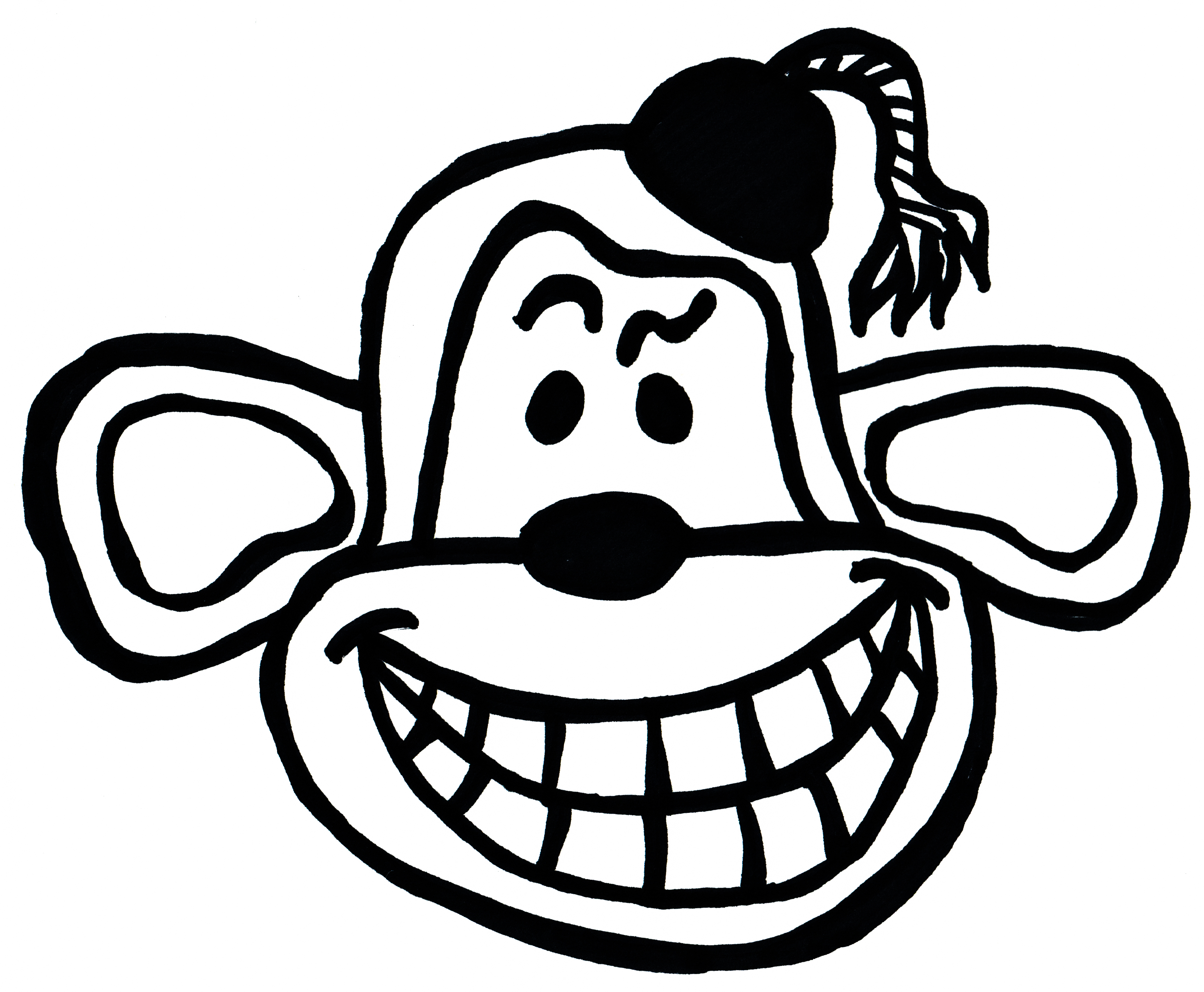
Monkeybone (2001)

There are two immediately obvious reasons why the special effects horror comedy Monkeybone is worth revisiting in 2022: its director and its star.  Henry Selick’s upcoming Wendell and Wild is his first feature film since 2009’s cult favorite Coraline, and it appears to be perfectly in rhythm with the stop-motion nightmares for kids that have defined his career.  Not only is Monkeybone Selick’s only live-action film to date, but it also happens to feature another beloved 90s figure who’s making a comeback this year: Brendan Fraser, who’s soon to launch a Best Actor awards campaign for Aronofsky’s The Whale. Fraser is in his wacky, live-action Looney Tunes mode in Monkeybone, as opposed to the dramatic vulnerability mode he brings to films like Gods & Monsters and, presumably, The Whale.  Trapped in a literal nightmare-world induced by a coma, Fraser’s comic book artist protagonist goes to war with his own cartoonish creations in a physical version of the Hot Topic mall-goth fantasyscapes Selick made his name on in A Nightmare Before Christmas.  It’s like a dispatch from an alternate universe where Tim Burton directed Who Framed Roger Rabbit?, one made even more fascinating by the fact that it flopped hard on its initial release – investing $75mil on a $7mil payoff.

To my shame, I don’t want to spend much time praising what Selick nor Fraser achieve in Monkeybone.  No, I want to praise Chris Kattan.  I outright groaned when Kattan’s name showed up in the opening credits, expecting the SNL veteran to be voicing the titular, annoying cartoon monkey sidekick character as an extension of his Mr. Peepers sketches.  It turns out that Kattan is totally innocent on that front; Monkeybone is voiced by John Turturro, the scamp. He’s also supposed to grate on the audience’s nerves, as evidenced by Fraser’s constant efforts to get him to shut up & go away every time he opens his obnoxious little mouth.  For his part, Kattan doesn’t show up until about an hour into the runtime, playing the corpse of a gymnast who died in a horrific accident.  Through convoluted cosmic circumstances that involve a deal with Death herself (played by Whoopi Goldberg, naturally), Fraser’s comatose cartoonist takes over the gymnast’s body mid-organ donation and flees the hospital into an unsuspecting world.  Kattan’s physical acting as an animated corpse with a broken neck and organs plopping out of its open body cavity had me absolutely howling with laughter.  It was the quickest I’ve ever turned around on a famous actor’s presence in a film, encountering Kattan’s name with dread, then finding his performance so deliriously funny that I almost threw up from the physical exertion. I suppose it’s also worth pointing out that another 2022-relevant actor played a major part of that movie-stealing gag: Better Call Saul’s Bob Odenkirk as the perplexed surgeon who trails behind the undead gymnast, continuing to harvest his organs as they fall to the ground behind him.  It’s sublimely silly.

As screechingly funny as Monkeybone gets during Kattan’s third-act zombie run and as wildly imaginative as Selick’s coma-induced Land of Nightmares set designs can be, its legacy mostly resonates with a what-could’ve-been melancholy.  Selick might have become a household name if this film didn’t flop so spectacularly. Or at least we wouldn’t get his work confused with Tim Burton’s quite so often.  Grimmer yet, Fraser, Kattan, and Rose McGowan (playing a humanoid-cat cocktail waitress, of course) have all gone public with stories of behind-the-scenes sexual abuse from major Hollywood players in the #MeToo era, haunting the film with questions of where their careers might have gone in a better world.  In the aftermath of those revelations, Fraser’s getting his late-career comeback, McGowan’s become a self-appointed spokesperson for the movement, and Kattan has continued to live in relative, semi-retired anonymity (give or take an affectionate shoutout in this summer’s Nope).  I don’t know that Kattan deserves the same red-carpet career revival as his co-stars, or if the actor would even be interested in a proper Kattanissance if it were an option.  I do know this, though: his performance is absolutely the highlight of Monkeybone, somehow outshining all of the cheeky monkeys, cyclops babies, Guernica bulls, and Nazi Mickey Mouse prison guards that Selick packs into the frame.  It would have been an interesting relic even without Kattan, creating an amusement park dark ride version of the kinds of grotesque cartoons that only aired on late-night Comedy Central in the 1990s.  Still, Kattan’s late-in-the-game intrusion is what pushes it over the line from interesting to essential.

-Brandon Ledet

Jawbreaker (1999)

I’m genuinely shocked by how few times I’ve seen the 1999 high school murder comedy Jawbreaker compared to other films in its same wheelhouse. This is far from the pinnacle of the post-Heathers teen girl cruelty satire, but I’m still close enough to dead center in its target demographic that it should have been a teen-years favorite for me. Was it merely the happenstance that Drop Dead Gorgeous was the murderous-teen-girls high school comedy that found its way onto Blockbuster’s used VHS liquidation tables at the right moment that made that one a go-to standard for me instead? Both films are deeply flawed for sure, but I could never tell exactly why one was a beloved favorite that I looped into dust while the other was a film that I occasionally ran across here or there. In retrospect, I think it’s mostly because the appeal of Drop Dead Gorgeous is instantly recognizable; the low-key absurdism of its femmed-up Christopher Guest mockumentary schtick strikes a somewhat familiar tone, no matter how ill-behaved its amorality can be from gag to gag. The specificity of Jawbreaker’s appeal was a little more obscured & difficult to pin down for me, but it finally clicked on my most recent rewatch (only my second or third experience with the film, somehow): it’s Gay.

More specifically, Jawbreaker is perversely funny for having teenage high school girls deliver dialogue obviously written by adult gay men. Judging by writer-director Darren Stein’s work on explicitly gay projects like the queer screwball high school comedy G.B.F. (Gay Best Friend) and the drag queen horror comedy All About Evil, he knew exactly what he was doing here. The dissonance of Jawbreaker is that the Teen Girl actors tasked to deliver his Gay Man dialogue don’t know what they’re communicating at all; it’s as if they’re phonetically speaking a foreign language for the very first time. The result is a bizarre comedy that is paradoxically both over-written and under-performed, which makes it exceedingly difficult to connect with if you aren’t aware of the reason for that disconnect. Once you realize the film is basically the preemptive drag parody of itself, however, everything clicks into place. It becomes clear why all the girls are breathlessly horny for each other, why they use the word “kink” every other sentence, why they emphasize the pet names “Honey” and “Bitch” with such withering sass, and why the film’s only genuine sex scene revolves around a jock hunk fellating a popsicle. It’s Gay™.

One thing both Jawbreaker and Drop Dead Gorgeous get exactly right about the post-Heathers mean-girl high school comedy template is the callous cruelty, something not all its descendants have the stomach to commit to. In this case, Stein specifically zeroed in on the Corn Nuts gag from the iconic Daniel Waters screenplay, a sequence in which a beloved prom queen chokes to death in a prank gone horribly wrong. In Jawbreaker, the most popular girl in school is “kidnapped” by her friends as a prank for her 17th birthday, gagged with the titular candy to muffle her screams of protest. When she chokes to death on the giant ball of sugar in the trunk of their car, they decide to restage her death as a rape & murder case at the hands of a stranger, and their lies eventually overwhelm them in a haphazard cover-up. This mostly manifests in them bribing the school’s most reclusive werido nerd (played by Judy Greer, somewhere under a pile of oversized wigs & sweaters) with a hot-girl makeover. They help her navigate being on top of the clique culture food chain that once buried her (pointing out such adorable social distinctions as The Karen Carpenter Table in the cafeteria) while also coaching her in how to lie to the homicide detective who investigates their friend’s death (Pam Grier, forever a badass). Unbeknownst to anyone involved, they also teach her the ways of Adult Gay Man sass & slang in exchanges like “Life’s a bitch and then you die.” “No, honey, you’re the bitch.” Did I mention that this film is Gay?

Besides its post-Heathers cruelty and its preemptive drag parody humor, Jawbreaker is most enjoyable for its bubblegum pop art aesthetic. It’s a film that’s firmly rooted in a 90s high school comedy patina (after all, it’s one of two 1999 films in which The Donnas play the climactic prom), but its candy-coated surface also has a distinctive retro appeal to it. In that way, I’d almost more readily recommend it to fans of the Sexy Archie update Riverdale than to anyone looking for more of a Drop Dead Gorgeous sensibility. If nothing else, Rose McGowan exudes some real Cheryl Blossom energy in her role as the school’s queen bee, and the cheekily named Reagan High setting shares an R letterman patch with the classic Riverdale uniform. Sometimes this heightened rot-your-teeth pop aesthetic shines beautifully, like in several surreal sequences where the titular jawbreaker makes its way through a giallo-lit candy factory or rotates in the air like a planetary orb. Sometimes it falls embarrassingly flat, as in the obnoxious screen-wipes that frequently interrupt the dialogue or the visible boom mic that dips into the cafeteria tour. Either way, the film shares the clueless-teens-delivering-Adult-Gay-Man-dialogue dissonance that also makes Riverdale weirdly enjoyable, which manifests here in strange touches like the casting of legends like P.J. Soles & Carol Kane or in throwaway references to Barbara Streisand’s “On a Clear Day You Can See Forever” for no reason in particular. It’s disorienting, but it helps distinguish Jawbreaker as having a distinct flavor within the post-Heathers teen cruelty pantheon. I still don’t love it as much as Drop Dead Gorgeous, but I at least now clearly recognize its appeal as The Gay One in its genre.

-Brandon Ledet

