

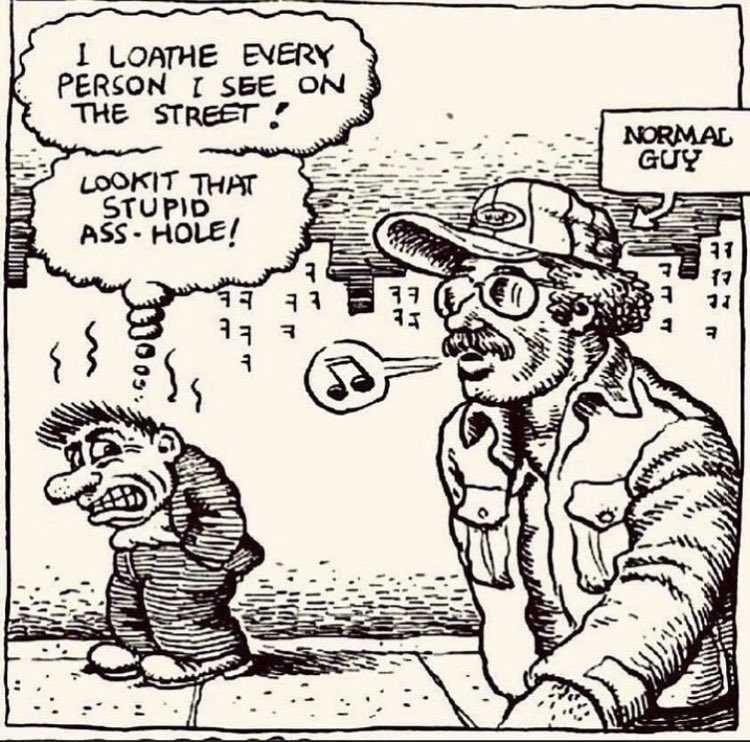
As much as I love the movies, I hate moviegoing audiences – at least en masse. Chatting with individual festival attendees at this year’s Overlook Film Fest was as warm & friendly as always, like meeting up with old friends who I’ve technically never met before. Then, watching Boorman and the Devil at that same fest reminded me just how rare of an experience it is to celebrate the artform with a like-minded crowd. David Kittredge’s documentary about the production & public perception of John Boorman’s Exorcist sequel The Heretic is an intensely alienating experience for true cinephiles, a reminder that most people who go to the movies don’t care at all about art. They are not open to being challenged; they demand satisfaction. It’s repugnant. Even when Kittredge gets cutesy about the mass-audience rejection of The Heretic, I could feel my blood boiling in general misanthropy, loathing every person I see on the street like that one Robert Crumb comic panel.
After the overwhelming financial success of William Friedkin’s The Exorcist, Warner Bros threw an obscene amount of money at Linda Blair to return for a cash-in sequel, alongside new-to-the-franchise costars Richard Burton & Louise Fletcher. They also gave free rein to New Hollywood auteur John Boorman to take the Exorcist story in any direction he wanted, an opportunity Boorman leveraged to deliver a hypnotic arthouse nightmare that recalls The Exorcist in name only. His vision was met with wide public derision, derailing his career until he could redeem himself with another hit in Excalibur a few years later. So, who are we supposed to side with here? The incurious audience who laughed The Heretic off the screen for taking chances instead of delivering more of the same? The studio executives who lost money or an artistic gamble? Or the artist himself, who improbably staged a literal fever dream on someone else’s dime? There is only one morally acceptable answer.
Boorman developed a life-threatening fever while filming The Heretic, a direct result of his own overly demanding ambition. That wasn’t the only on-set disaster. Burton struggled to stay sober enough to deliver his lines while standing still. Fletcher barely made it through the shoot before needing to have her gall bladder removed in emergency surgery. Blair spent long hours dangling off the roof of a skyscraper, unharnessed. Meanwhile, Boorman’s sick-leave absence opened a power vacuum for his screenwriting partner Rospo Pallenberg to run wild & unchecked on set, an off-putting presence that almost inspired open mutiny. The production was so troubled that the crew joked it was cursed by the demon Pazuzu himself, but none of that would’ve mattered if Boorman ultimately delivered a hit.
Kittredge relays these production-delay anecdotes from people who were actually there via tried-and-true documentary clichés that barely liven up the still set-photo imagery: first-person narration in his own voice, talking-head interviews with film critics & historians, cut & paste animation, and periodic chime-ins from fellow filmmakers with no direct association to the subject at hand (namely, Karyn Kusama, Mike Flanagan, and genre-doc mainstay Joe Dante). However, while Kittredge doesn’t match Boorman’s sense of poetic imagination, he is sincerely in awe of it, which goes a long way. This is not a movie about how Exorcist II: The Heretic was a laughable disaster; it is a story about how ambitious, risk-taking art isn’t always appreciated by the public, who’d rather laugh in mockery then get lost in cinematic poetry. Fuck ’em. They don’t know what they’re missing.
-Brandon Ledet

