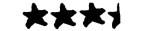
Sorry, Baby (2025)

The Sundance Film Festival is soon to move locations to Boulder, Colorado within the next couple years, after decades of staying put in the smaller town of Park City, Utah. The move has been announced as a major shakeup for the festival, but from where I’m sitting halfway across the country, it’s at best the second biggest move the fest has made this decade. The biggest culture shift for Sundance in the 2020s has been moving a significant portion of its program online, launching a Virtual Cinema component in 2021 to compensate for the social distancing restrictions of the COVID-19 pandemic. The shift from a purely in-person festival to a semi-virtual one has had some hiccups, especially since it’s invited opportunistic piracy among fanatics who’ve leaked steamier scenes of their favorite actors out of context to social media for momentary clout, jeopardizing this new resource. It has also opened the festival up to a wider range of audiences & critics who can’t afford (either fiscally or physically) to attend in-person, calling into question the value of film-festival exclusivity. I have not yet personally “attended” Virtual Sundance in any direct way, but the experience does sound like a more condensed version of how I interact with the festival anyway. Staged in January, months before the previous year’s awards cycle concludes at The Oscars, Sundance is always the first major event on the annual cinematic calendar. Intentionally or not, I spend my entire year catching up with the buzzier titles that premiere there, as they trickle down the distribution tributaries until they find their way to Louisiana. Let’s take this year for example. Swampflix has already covered ten feature films that premiered at Sundance this January — some great, some so-so: Twinless, Lurker, Dead Lover, Predators, The Ugly Stepsister, Zodiac Killer Project, Move Ya Body, Mad Bills to Pay, If I Had Legs I’d Kick You, and The Legend of Ochi. This was not an intentional project, just something that happened naturally by keeping up with the more significant releases of the year. And we’re still anticipating a few 2025 Sundance titles that won’t hit wide distribution until after Sundance 2026 has concluded: Obex, By Design, and Endless Cookie, to name a few. In that way, most film-nerd audiences who aren’t firmly established in The Industry are constantly attending some form of Virtual Sundance just by going to the movies week to week, so it’s been exciting to see the festival condense that slow rollout process a little bit by offering some more immediate access to their program online during the festival proper.

My unintentional Virtual Sundance experience has continued into the 11th month of the year with the recent addition of the festival standout Sorry, Baby to the streaming platform HBO Max. The positive critical reception of the film at the festival (along with a jury prize for screenwriting) positioned Sorry, Baby as one of the first Great, Must-See movies of the year, months before it would be available for wide-audience exhibition. I mention all of this not to claim the film has become overhyped or outdated in the months since, but to register my surprise at how Sundance-typical it is in practice. There are a lot of ways that Sorry, Baby‘s tone & tenor are specific to the creative voice of its writer-director-lead Eva Victor, but its storytelling structure is also unmistakably Sundancy. Here we have a story about a smart twentysomething academic navigating their way through a personally traumatic event with the help of quirky side characters played by widely respected indie-scene actors (most notably in this case, Naomi Ackie, Lucas Hedges, and John Carroll Lynch). The themes are heavy but the overall mood is defiantly light, with constant self-deprecating character humor undercutting the soul-crushing facts of modern life. Also, there’s a kitten hanging around, providing the homely comfort of the obligatory cat that lounges in every decent used bookstore. With the exception of a couple showy framing choices that consciously distance us from the protagonist’s trauma (one in physical distance, one in chronology), the filmmaking side of Sorry, Baby is secondary to the writing and the performances, which are as smartly crafted as they are grounded to reality. Victor shines brightest as a writer and a screen presence rather than as a director, with the darkness & fearlessness of the dialogue often cutting through the more restrictive, routine form of the images. They land some tricky laughs and the real-life hurt of the drama weighs heavy on the heart, but there’s not much to the film that can linger past the end credits beyond recognition that it was written by a smart person. In fact, Victor seems intent to constantly establish their mouthpiece character as the smartest person in every room, often as a way to vent about the institutional failures that compound personal trauma. Legal, medical, and academic bureaucrats play strawman to the mightier-than-the-sword screenwriter’s pen, while only the protagonist’s inner circle of supportive friends are afforded any humanistic grace notes. It’s a writer’s project first & foremost, to the point where it’s literally about the writing of a master’s thesis.

I suppose I should be more specific here and note that this is a film about the personal & professional fallout following a sexual assault. Victor plays a master’s student who is assaulted in her advising professor’s home, derailing any personal or professional development past the most traumatic event of her life. This assault is revealed to the audience indirectly. It is obscured from view behind the closed door of the professor’s home, which is framed in an extreme wide shot of rapid time elapse, chilling the audience instead of inviting us into the violence of the act. We are also kept at a distance from this violent act by the screenplay’s scrambling of the dramatic timeline, with chapter titles like “The Year with the Baby,” “The Year with the Bad Thing,” “The Year with the Questions,” and “The Year with the Good Sandwich” confusing the chronology of her trauma & recovery. At first, all we know is that she’s been stuck in time since “The Bad Thing” happened, living in the same grad-school house and working in the same dusty university offices for an eternal limbo as she puzzles her way through how to move past that moment without allowing her entire life to be defined by it. Quietly hostile interactions with doctors, lawyers, colleagues, and clueless neighbors offer Victor an opportunity to vent about how ill-equipped institutions are to address personal trauma with any empathy or humanity. The most striking thing about the movie is when Victor cuts through those broader observations about the culture of rape to rattle the audience with more personal observations. After the assault is obscured from an extreme wide-shot distance, Victor is then shown recounting minor details from the event to a roommate in intimate close-up, crouched in her bathtub. That intimacy is later echoed in a second bathtub scene in which she attempts to physically connect with her sex-buddy neighbor, who spoils the moment in much subtler, underplayed ways than the doctors & lawyers who press her for invasive details about the worst moment of her life. Whether broad or intimate, it’s all smartly observed and it’s all couched within a deadpan-humorist writing style that lessens the miserabilist potential of the topic. The question is whether having something smart to say fully justifies making a movie—as opposed to writing an essay or a stage play—beyond the form’s ability to get Victor’s words in front of as many people as possible. Sorry, Baby‘s chosen form is a useful delivery system for Victor’s writing, but I don’t know that it ever fully registers as cinematic beyond its recognizability as routine Sundance fare, to be slowly doled to the masses throughout the year.

-Brandon Ledet

Nanny (2022)

In Nikyatu Jusu’s debut feature Nanny, a Senegalese domestic worker struggles to maintain her sanity while caring for the white child of a wealthy NYC family and scraping together money to emigrate her own son to her new home.  It’s essentially an atmospheric horror update to Ousmane Sembène’s Black Girl, the second one I’ve seen this year after the South African apartheid horror Good Madam.  I personally preferred Good Madam, but Nanny earned better reviews and the Grand Jury Prize at Sundance, so I’m out of sync with the consensus.  I suspect that’s because Nanny is less of a proper Horror Movie, landing the same accolades as an important “social thriller” that Get Out earned outside of horror circles in 2017 (in a way no other Blumhouse productions have in the years since, until now).  It’s an immigration story first & foremost, neatly containing all of its supernatural menace in its frequent nightmare & hallucination sequences in a way that the more straight-forward body possession story Good Madam does not.  Whichever spooky revision of Black Girl you prefer, it’s undeniably cool that they both exist, and remarkable that their distribution paths converged on the festival circuit this year – Nanny premiering locally at New Orleans Film Fest and Good Madam premiering at Overlook.

Comparisons aside, Nanny mostly holds together as a sharply tense, surprisingly funny domestic drama about working class exploitation, with plenty of spooky window dressing to maintain an eerie mood.  Heavily referencing African folklore figures like the arachnid trickster-god Anansi and the alluring water spirit Mami Wata, Jusu easily establishes a dense visual language in the film’s plentiful nightmare sequences & daytime hallucinations.  Spiders, mirrors, snakes, and mermaids creep into the frame at almost every turn, disrupting the labor exploitation story at the film’s core in violent jolts of surrealist imagery.  Highlighting that labor exploitation is the main point, though, and whatever supernatural scares accompany it are only there to provide texture.  With a few scattered edits, Nanny could easily be reconfigured into a standard Sundance drama about an undocumented worker’s grim daily routine sacrificing her own familial bonds to hold a wealthy family together for petty cash.  If anything, removing the supernatural horror elements might have left more room to dwell in the moments of discomfort, heartbreak, and rebirth in the film’s rushed ending, which would’ve been much more emotionally effective if the audience were allowed to fully sink into it.

Speaking generally, I’m happy that horror movies are starting to earn festival prestige & awards-season accolades instead of being siphoned off as disposable straight-to-streaming #content (which accounts for a lot of Blumhouse’s output these days).  Nanny winning the Grand Jury Prize at Sundance feels a little like Silence of the Lambs winning Best Picture at the Oscars, though.  Technically, it’s an industry win for horror, but it’s such a safe, cleaned-up, presentable version of horror that it doesn’t leave much room for the victory to be repeated.  I would need an actual, physical intrusion of a devious spider-god or killer mermaid into the “real world” to get excited about what this movie’s success means for the prominence of the genre on awards ballots & festival red carpets.  As is, I get the sense that Jusu is much more interested in the Dardennes-style economic drama she gets to tell outside those horror elements, which were more of a funding & marketing hook than the main purpose of her story.  Thankfully, the horror industry is booming right now with or without festival accolades, so I can find what I’m personally looking for in stories like these plenty other places: Good Madam, Good Manners, His House, Zombi Child, I Am Not a Witch, etc., etc., etc.

-Brandon Ledet

Troop Zero (2020)

Once upon a time, the Sundance Film Festival was a cinematic tastemaker that would routinely break new artistic ground by spotlighting low-budget, high-ambition filmmakers who’d come to define the innovative spirit of Indie Filmmaking: Todd Haynes, Steven Soderbergh, Quentin Tarantino, Jim Jarmusch, etc. Those days are long gone. The typical Sundance story in recent years is instead one of immense hype, followed by a sharp decline in critics’ & audiences’ enthusiasm. Year after year, the hottest new movie opens to rave reviews & skyrocketing acquisition prices at Sundance, only to later flail in wide distribution. The rest of the festival’s schedule between those early-buzz duds is typically padded out by cute-but-inoffensive indie comedies with a lot of heart & earnestness, but nothing that could be mistaken for innovation. It’s like the festival’s programmers hit a wall after the breakout success of Little Miss Sunshine and have desperately scrambled to recreate that formula every passing year to no avail. The result is a lot of ill-advised distribution purchases that don’t survive the grueling test of wide-audience cynicism and even more harmless-but-trivial indie comedies that don’t get seen by audiences at all.

Troop Zero is the exact kind of adorable, feel-good underdog story that Sundance gets mocked for programming year after year as line-up filler. It follows the Little Miss Sunshine story template as if it were a strict roadmap, pushing Beasts of the Southern Wild co-writer Lucy Alibar’s penchant for cutesy childhood whimsy into the outer limits of good taste. Does the movie feature a ragtag group of bullied, outsider children who fight to compete against the talent-show pageantry of more popular, privileged brats? Yes, and when they fail miserably it’s treated as more of a victory than an embarrassment. After all, victory isn’t some trophy you can take home to put on your shelf; it’s the friends you make along the way. If you’re not careful, this movie can give you a tooth-size cavity, but that doesn’t mean you can’t take pleasure in the fact that it’s sweet. If anything, Troop Zero is proof that the modern Sundance formula actually works; or it at least helps explains why the formula can be so enticing for the festival’s programmers & attendees. The film’s roster of pint-sized outcasts & jaded adults is incredibly charming. Its minute-to-minute gags are consistently funny, or at least-heartwarming. I even got a little verklempt at the emotional payoff of its climatic talent show (twice!), despite seeing exactly where the story was going lightyears away. The formula may be safe & predictable, but it works.

Set in an artificially cutesy version of 1970s Georgia (which looks conspicuously like contemporary rural Louisiana), Troop Zero details the rise & fall of the titular, shaggy Girl Scouts troop (or generic Girl Scouts equivalent) as they fight for legitimacy in a system that does not want them. Their unlikely organizer is an astronomy-obsessed nerd who covets the prize for the scouts’ annual Jamboree talent show: a vocal recording that will be launched into space as an attempt at extraterrestrial contact. This space-record MacGuffin sets a clear goal for our tiny protagonist to accomplish. She must form a Girl Scout troop among fellow weirdos adjacent to her trailer park, earn enough merit badges to land a spot in the climactic talent show, wow the judges with her adorkable fabulousness, and then speak her truth to the aliens she so desperately wants to contact. Only, she learns over the course of this journey that making friends among her fellow pint-sized weirdos is more fulfilling than defeating the more popular, privileged troops at the Jamboree, and the aliens eventually take second place in her heart to her newly formed group of friends. The entire tale is potently, unashamedly cute, and your response to that overdose of twee whimsy will depend largely on your cynicism towards that arena of pop media in general.

There’s no denying that Troop Zero is formulaic. Its entire premise feels like a shrewdly calculated mixture of Little Miss Sunshine, Troop Beverly Hills, and Southern Women nostalgia pieces like Fried Green Tomatoes and Now & Then to synthesize the perfect Sunday afternoon comfort-viewing. Nothing about the film feels especially authentic to the oddball charms of Southern living, which is especially apparent in Jim Gaffigan’s slack-jawed parody of Poor Southerner archetypes as the protagonist’s dumb-drunk father (and in directors Bert & Bertie’s status as British outsiders to the culture). Gaffigan’s performance is the only instance of the movie punching down, though. Most of the cast is fully committed to the bit, especially Viola Davis as the slumming-it small-town law student who’s destined for bigger things (an amusing reflection of her over-qualified credentials for the role) and Allison Janney as the heel administrator who’s absurdly obsessed to shutting the troop down before they make it to the Jamboree. Even with all that big-name talent, Mckenna Grace is the film’s clear MVP as the science-nerd protagonist that holds the cast of oddball children together as their overenthusiastic leader. Her off-kilter, Kool-Aid addled charisma is so effortlessly charming that you can’t help but for root for her roundabout scheme to contact space aliens, no matter how contrived it sounds on paper.

I can’t predict whether Sundance will ever reclaim its former glory as a groundbreaking film festival with any real significance as a beacon of artistic innovation. It can certainly do worse than routinely boosting these feel-good underdog comedies, however, which are just as harmless as they are effortlessly charming. It would be extremely limiting if the only kind of indie movie that earned coveted festival slots were post-Little Miss Sunshine trivialities where “a bunch of losers and trash that nobody wants” learn to “be sweet to each other.” That doesn’t mean those movies can’t be individually enjoyable for their own merits, though, and this one’s more winningly adorable than most.

-Brandon Ledet