Rhinestone (1984)

Dolly Parton owes her half-century of success & popularity to two specific talents.  First & foremost, she’s a songwriting machine.  Parton’s distinctive, meticulously crafted image & voice would’ve only taken her career so far if it weren’t for her uncanny ability to crank out a hit song in an afternoon as if it were as easy as washing the dishes.  Over 3,000 titles into her songbook, her career is overflowing with anecdotes about writing “Jolene” & “I Will Always Love You” in a single session or tapping out the rhythm for “9 to 5” while she was bored between takes in her trailer.  She also owes her longevity to her talent for the business end of show business, always knowing exactly what moves to make at what time to expand her brand far beyond the typical boundaries of a Nashville singer-songwriter career.  When she started performing as a side act on The Porter Wagoner Show in the 1960s, she was able to reach a much wider audience than she would’ve just cutting records.  Once she had thoroughly charmed every country music fan in the US through their television sets, she left the show to become a main attraction elsewhere, aiming to charm the rest of America as a big-screen movie star.  Parton quickly accomplished that goal in her first couple roles, finding a perfect vehicle for her talents in the legalized-prostitution musical The Best Little Whorehouse in Texas and stealing the show from legendary comedian Lily Tomlin in 9 to 5.  The only problem is that most Hollywood executives don’t share Dolly’s creative or business talents, and they weren’t entirely sure how to package her as a comedic lead without the ensemble-cast support of hits like 9 to 5 or Steel Magnolias.  Her awkwardly chaste chemistry with Burt Reynolds in Whorehouse was cute and a huge part of the film’s Broadway musical appeal, but by the time she was romantically paired with the eternal asshole cynic James Woods in 1992’s Straight Talk, it was clear casting directors & boardroom executives weren’t sure how to balance Dolly’s country-fried warmth with a proper love-interest leading man.  This disconnect, of course, was never more glaring than it is in her pairing with Sylvester Stallone in the 1984 romcom Rhinestone, the most notorious flop of Dolly’s career – at no fault of her own.

Rhinestone finds Dolly & Stallone at their Dolliest & Stalloniest, clashing their respective rural sweetness & urban gruff in cultural combat instead of romantic entanglement.  They fire incoherent line readings at each other for two schticky, jittery hours without ever once having an actual conversation, not even for a second.  Intentionally or not, it’s America in a nutshell, capturing the great, wide cultural divide between small-town hospitality & big-city living.  If that either/or cultural binary were a contest for moral & intellectual high ground, Dolly clearly wins the debate, sassing Stallone with the zinger “There are two kinds of people in the world, and you ain’t one of them.”  She’s correct.   Her costar is an Italian NYC cabbie & proud knuckledragger, navigating modern urban life like a drunk toddler who missed naptime.  Nothing he does or says makes a lick of sense, which makes Dolly’s simplified country livin’ sensibilities seem like the only reasonable way to live.  She did move to the big city herself to become a famous singer, though, which is how she gets involved in a classic Cinderella bet that she can turn the lughead city-dweller into a popular country musician in just a few weeks’ time.  When agreeing to the bet, she failed to take into account that she was working with subhuman raw material, which becomes apparent by the time Stallone is screaming half-remembered lyrics to “Tutti Frutti” while banging on random piano keys at his helpless parents’ family-owned funeral parlor (mid-service, of course, for full comedic effect).  Thanks to the touring Acrocats band, I have literally seen cats & chickens play musical instruments with a clearer sense of rhythm & song structure.  Dolly’s helpless country star-to-be also didn’t take into account matters of the heart, which catches her off-guard when the mismatched pair’s discordant rapport suddenly turns romantic without warning.  The first time they kiss & make love is a scarier plot development than anything you’ll see in director Bob Clark’s landmark slasher Black Christmas; it’s so wrong it’s haunting.  And yet there’s something sweet about watching these two crazy kids get together, if not only because the heart & social fabric of America itself hangs in the balance of their volatile dynamic.

As bizarre as Dolly’s chemistry with Stallone can be, she does have clear, coherent chemistry with New York City at large.  Although the song never actually plays in the movie, Rhinestone is “adapted” from the Glen Campbell novelty hit “Rhinestone Cowboy,” which it essentially boils down to the clash of big-city glam vs. simple country livin’.  If there’s anything about the film that “works” the way it’s intended to, it’s the fish-out-of-water humor of sending Dolly to the bright lights & mean streets of NYC.  In an opening song (penned by Dolly herself, naturally), she yodels over helicopter footage of the Statue of Liberty and complains “Life ain’t as simple as it used to be, since the Big Apple took a bite out of me.”  The Big Apple of Rhinestone is defined by discos, pizza, room service, and casual racism. Meanwhile, small-town America is all front-porch concerts, farm animals, and Christian sweethearts who are willing to teach a city boy how to honky tonk even though the city is way less inviting when the cultural exchange flows the other way.  Stallone’s fish-out-of-water humor as a boneheaded, punch-drunk cabbie who can’t walk ten feet in the country without slipping and falling in pig shit is much less convincing, but only because he’s much less convincing as a human being.  Dolly also wrote Stallone his own song to define his struggles in life, a novelty tune about black-out alcoholism called “Drinkenstein” that he barks & howls more than sings.  It’s difficult to tell how much of the film’s baffling, uncanny humor is a result of the miscasting of Dolly & Stallone as a romantic pairing vs how much is just a result of Stallone going off the rails in a Nic Cagian freakshow that disrupts the flow of the picture around him.  In Straight Talk, there is absolutely no chemistry between Dolly & Woods, who might as well have filmed their shot-reverse-shot “conversations” on entirely different shooting schedules.  In Rhinestone, by contrast, there is disastrously explosive chemistry between Dolly & Stallone – like, the poorly homemade pipe bomb kind of chemistry, the chemistry of an oil spill disrupting freshwater pH. 

In the short term, Rhinestone may have been a professional embarrassment for Parton, but everything that makes it so off-putting & ill-fitting for her rests on Stallone’s shoulders.  In the long term, it’s endured as one of her strangest, most memorable movie projects, one that inadvertently exemplified how refreshingly out of place she was in Big City show business outside her Nashville songwriting roots (and how bizarrely inhuman the show business urbanites could be on the other side of the table).  Or, at least, it could endure that way if those Big City lugheads hadn’t allowed it to slip into distribution limbo after its decades-old DVD went out of print.

-Brandon Ledet
The Suicide Squad (2021)

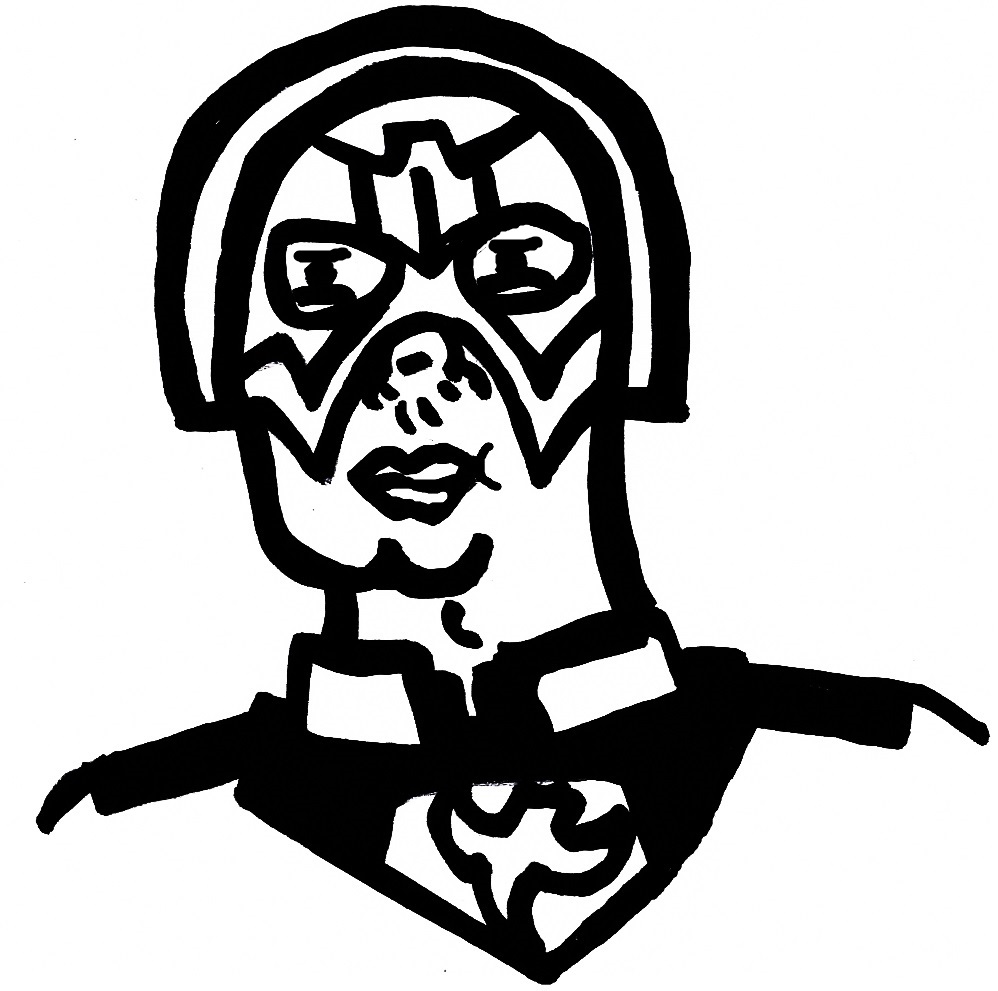
There is something hilariously ironic about James Gunn reviving the Martin Scorsese “theme parks” discourse while making the promotional rounds for his Suicide Squad sequel.  Over two years ago Scorsese off-handedly referred to billion-dollar superhero blockbusters in the MCU and DCEU as theme park rides (as opposed to legitimate cinema) in a one-off interview, and nerds have had their bedroom-mounted swords out for the auteur ever since, apparently Gunn included.  While promoting The Suicide Squad for the DC Comics brand this month, the long-time MCU Guardians of the Galaxy director defensively retorted (into the void, I’m assuming, since there’s no possible way that Scorsese could still give a shit), “It just seems awful cynical that [Scorsese] would keep coming against Marvel and then that’s the only thing that would get him press for his movie […] He’s creating his movie in the shadow of the Marvel films, and so he uses that to get attention for something he wasn’t getting as much attention as he wanted for it.”  There are two things that are cracking me up about this: Gunn is himself reviving a long-dead non-rivalry with a director way above his punching weight in order to promote his new superhero movie, the exact thing he claims Scorsese was up to.  Even more hilariously, “a theme park ride” is exactly how I would describe my experience with The Suicide Squad.  I had a lot of fun riding this Tilt-a-Whirl while it lasted, but forgot practically every detail about it the second it was over while seeking out my next amusement.

All told, I enjoyed Gunn’s latest big-budget superhero sequel with a gold-plated heart of rot about as much as I enjoyed his two Guardians films.  As with Guardians, this crass, colorful sci-fi action epic follows a misfit group of anti-hero outlaws who reluctantly save the day despite their communal and moral dysfunction.  There are bestial humanoids among the crew (this time a shark and a weasel instead of a raccoon); there’s lots of handwringing about fathers who fall miles short (this time pantomimed by Idris Elba & Taika Waititi, two more crossover Marvel contributors); and there are the requisite cameos from extended members of the James Gunn family (including Michael Rooker in a flowing Edgar Winter wig).  As you likely recall from the first Suicide Squad film, these particular imprisoned supervillains only fight for Good because they’re being controlled by a government institution that has implanted explosives at the base of their brains, basically holding them hostage in exchange for heroism.  And if you don’t recall that, it’s no matter.  The set-up is mostly an excuse for Gunn’s big-budget escalation of the same character-based splatstick horror comedy he’s been doing since he was a twentysomething Troma employee.  Cruel baddies crack wise, crack skulls, and crack open some cold ones with the boys, getting so chummy with the audience that you often forget they’re worthless scum who kill innocent people for fun.  If the gory action-horror sequences are this theme park’s rollercoaster attractions, at least you get to hang out in line with interesting friends who can tell some solid one-liners while you wait.

If there are any specific details about The Suicide Squad that will cling to your braincells, it’s likely to be a stand-out character among the misfit cast.  It was unanimously agreed that Margot Robbie’s interpretation of Harley Quinn was the stand-out performance in the first film, which led to the fantabulous spin-off sequel Birds of Prey (the only truly Great superhero movie of the past two decades, imo).  Declaring the stand-out character in Gunn’s sequel is more of a toss-up.  Robbie’s as delightfully devious as ever here, but she’s more of a tangential side character than a main member of the crew.  Lots of people seem to be drawn to the rodent-commanding sleepyhead Ratcatcher 2 (Daniela Melchior) as Quinn’s successor, likely because she’s the only beacon of sincerity among her heartless comrades.  On the exact opposite end, I could see Sylvester Stallone’s slurred vocal performance as a himbo shark-man stealing the show for anyone looking for goofball one-liners, since his entire purpose is to serve as a joke delivery machine.  Personally, I was most enamored with John Cena as the fascist American “superhero” Peacemaker, who chipperly parodies the ACAB side of superheroics that usually goes unexamined in these types of movies.  There are a lot of reasons why Cena’s performance was the stand-out to me: I’ve never watched popular TV show The Boys—which parodies that exact superheroic fascism in the exact same way—so the humor was still fresh to me.  I’m also deeply invested in John Cena’s R-rated comedy work in films like Blockers & Trainwreck, to the point where I’ve turned around in the past decade from thinking he’s the worst thing about pro wrestling to thinking he’s one of the great entertainers of our time.  Speaking of which, my most anticipated match at this month’s SummerSlam PPV is John Cena vs. Roman Reigns, something I’m still wrapping my mind around considering both performers’ dull, repetitive ringwork in the not-too-distant past.  John Cena is currently at the height of his self-aware, image-subverting powers right now, and Gunn puts his surprisingly game, shockingly raunchy screen presence to great effect here.  If I were to visit this particular theme park again, Cena’s performance is the one attraction that I’d be looking forward to revisiting – the same way I used to eagerly anticipate riding the Gravitron at local fairs every year as a little kid.

Besides its gaudy, momentary thrills, the way The Suicide Squad most resembles a theme park is that it’s absolutely fucking exhausting.  The film is, at heart, a comedy, which makes its 132-minute runtime more of an affront to good sense & good taste than any of its amoral one-liners or post-Troma gore gags.  Even with forty fewer minutes weighing this thing down, it likely still would’ve felt like a never-ending game of bumper cars, but as is it feels like enduring that series of scrapes & jolts while keeping down a stomach full of corn dogs, cotton candy, and gallon-sized sodas.  I left the film amused but numb, hardly remembering any details of the sensory assault I just bought a ticket for.  The only way I know how to rate this thing is by scoring it slightly higher than the first Suicide Squad movie – a much shabbier, more sinister kind of amusement park run by some real scary looking carnies.  Even if this is technically a better film than the first, I don’t know that it’s the more interesting one of the pair.  At least in the original, there was a behind-the-scenes war between director & studio execs whose editing room bickering led to a singularly bizarre experience.  By contrast, Gunn seemingly got free reign to do his own thing here, and pretty much delivered exactly what you’d expect from him (an R-rated revision of Guardians of the Galaxy with some throwback gross-out aesthetics echoed from his Troma days).  It’s hilarious that he thinks this is the art that’s worth picking a one-sided fight with Scorsese over, not his darker, more idiosyncratic works like Super or Slither.  It’s a fun ride, but that’s about all you can say about it.

-Brandon Ledet

Creed (2015)

EPSON MFP image

fourstar

Creed is more of a sequel than a proper reboot, but writer-director Ryan Coogler is more than forgiven for not wanting to title his film Rocky VII: Creed. Following the lead of 2006’s succinctly titled Balboa, Creed keeps it simple in more than ways than just its name. It’s very much a by-the-numbers boxing movie, hitting every familiar beat you’d expect from the genre. After Southpaw‘s helpful example earlier this year of just how poorly that formula can be put to use, though, it’s downright miraculous just how effective Creed manages to be while never coloring outside the lines. As far as Stallone franchises go, I’m typically a much bigger Rambo fan (can’t help myself), but who doesn’t love a good underdog story? The pugilist protagonist (played by an all-grown-up The Wire vet Michael B. Jordan) of Creed‘s narrative may go through the motions of successes & failures the audience sees coming from miles away, but the movie is visceral enough in its brutal in-the-ring action & tender enough in its out-the-ring romance & familial strife that only the most jaded of audiences are likely to get through its runtime without once pumping a fist or shedding a tear before the end credits.

The illegitimate son of Apollo Creed, a father he never met & a boxing legend within the Rocky universe, Adonis Creed is more a child of the foster & juvenile correctional system than he is of the former Carl Weathers character. With that chip weighing heavily on his shoulder, Adonis attempts to walk the tightrope of earning a name for himself as a self-taught boxer while avoiding living his life in Apollo’s massive shadow. It’s hard to tell exactly how serious he is about ducking association with his father, though, since he adopts an elderly Rocky Balboa as his reluctant trainer & makeshift family. Balboa & Creed’s shared history is assimilated into the story expertly, made to feel real by adopting the format of high-end ESPN & HBO sports documentaries & talking heads forums. While Adonis is trying to balance his own career with his father’s legacy, he also struggles to stay connected with a mother figure who doesn’t want him to fight & falls hopelessly in love with a downstairs neighbor (played by an all-grown-up Veronica Mars vet Tessa Thompson) who records a less avant garde FKA twigs style of pop music in her bedroom in hopes of making a name for herself on her own terms.

There are Inspirational Training Montages galore in Creed, but only two proper bouts, a smart choice that not only allows the film’s familial & romantic bonds room to build, but also helps to establish Adonis as an in-over-his-head underdog. There are some fun, updating-the-franchise touches to the movie, such as a scene where a grandmotherly Sylvester Stallone perplexedly contemplates smart phones & “the cloud”, but the best thing Creed accomplishes is acknowledging the past while living firmly in the present. The two main bouts of the film are feats of pure cinematography & choreography, a brutally physical style of storytelling. There’s impressive imagery to be found elsewhere in the film’s smaller moments as well, such as a shot of Balboa & Adonis boxing duel punching bags in unison & a chilling scene where Adonis fights a projection of his dead father’s image. The sexual tension between Tessa Thompson & Michael B Jordon is also remarkably well played, both in the written dialogue & in the body language of the performances. The worst crime the film commits is occasionally functioning as a video form of Philadelphia tourism, an offense that’s more than excusable given that Balboa is now as much a part of the city’s DNA as cheesesteak & the Liberty Bell.

When Creed‘s production was first announced I’ll admit my initial reaction was a yawn & an eyeroll. Coogler’s film somehow completely turned me around on the idea of a non-Stallone-penned Rocky franchise living on in perpetuity, despite never truly deviating from the format. It’s a great example of how a strict genre film feel new & exciting when played with fully-committed earnestness. If Creed II ever makes it to a theater, I’m pretty much guaranteed to be there, which is  a sentiment I didn’t expect to leave the film with before the opening credits.

-Brandon Ledet
