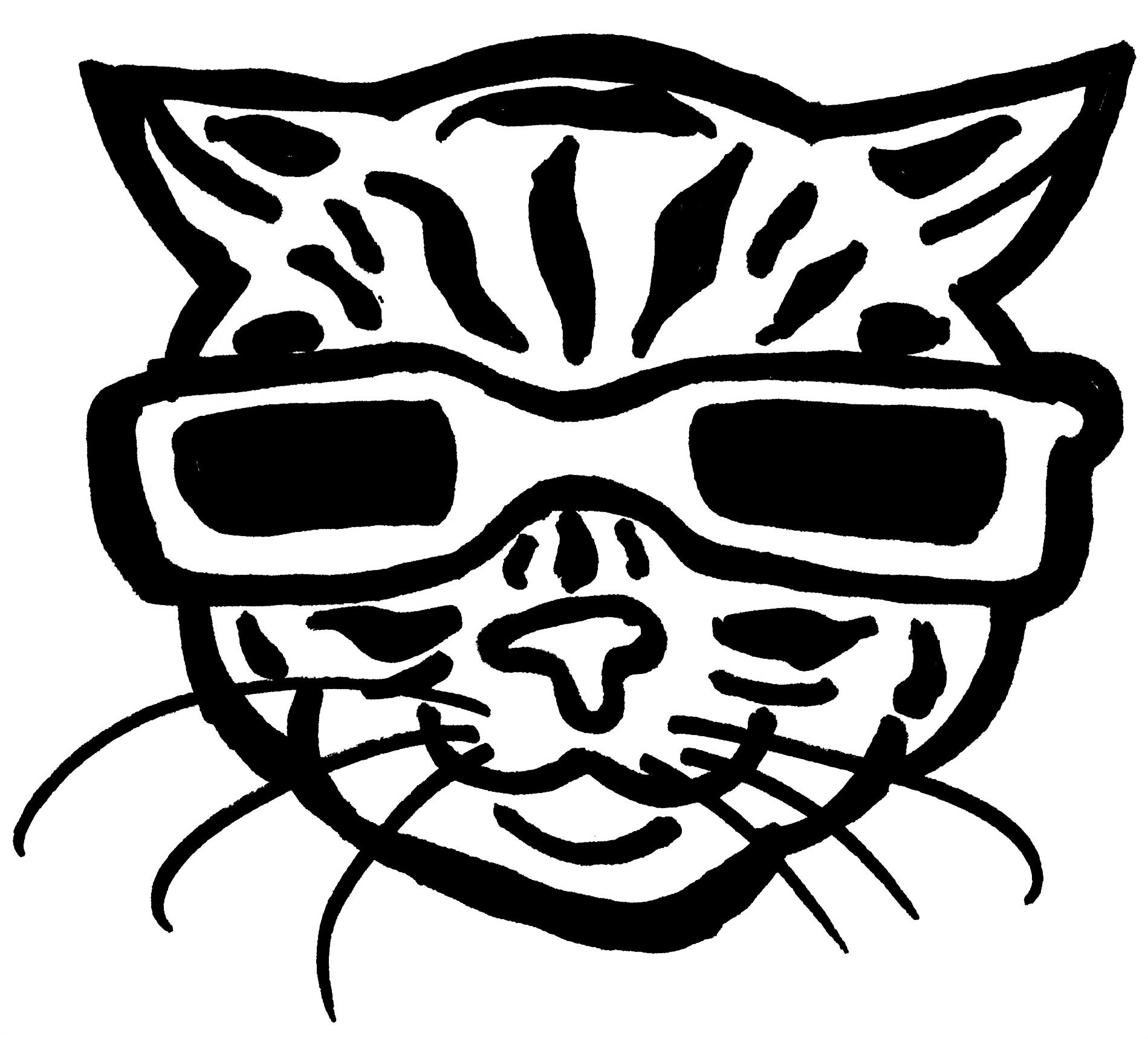

One of the sharpest reminders that the Internet is not real life that I’ve gotten recently was the sparse attendance at a local screening of The Cassandra Cat. Also distributed under the English titles When the Cat Comes and That Cat, The Cassandra Cat is best known (to me) as the subject of a viral tweet, recommended by a film student whose Czech professor bragged about making a movie about a cat who wore sunglasses called The Cat Who Wore Sunglasses. I certainly didn’t expect that one tweet would exalt The Cassandra Cat up to the level of household Czech New Wave standards like Daisies or Valerie and Her Week of Wonders, but it is one of those tweets that rattle around in the back of my mind the same way serious film scholars can quote lines of criticism by Kael, Sarris, and Godard. So, when there were fewer than ten people in attendance for The Prytania’s afternoon screening of its recent restoration, I was shocked. I could not believe so few people showed up to see a half-century-old Czech film about a magical cat that I’ve only ever heard about via Viral Tweet. So weird.
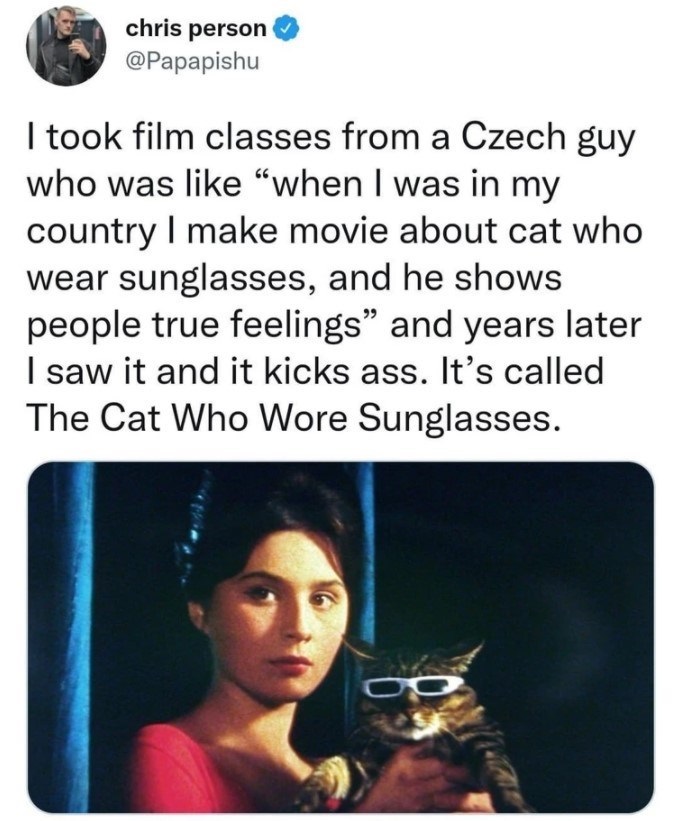
Y’all missed out. The Cassandra Cat is a wonderfully imaginative children’s film about collective action, holding adults accountable for being liars & cheats, and about how cats are excellent judges of character. The titular cat is a trained circus performer who arrives to a small Czech village with an army of talented coworkers: a ringleader magician, a gorgeous trapeze artist, and a legion of faceless, supernatural puppeteers. Their act initially goes over well with the townspeople until the final routine, in which the trapezist takes off the cat’s sunglasses so he can stare his naked cat eyes into the audience. It turns out that the cat’s direct gaze has the magical power to expose people’s true nature by making them glow like mood rings (an effect achieved through body paint & gel lights). Adulterers glow yellow, revealing secret affairs hidden from their spouses. Selfish careerists glow violet, exposing their greed to higher-minded comrades. Lovers glow red, revealing their pure, earnest hearts as artists & true friends among their careerist counterparts. This, of course, causes a riot among the adults, who spend the rest of the film attempting to banish & discredit the cat in front of the children who witnessed their secret selves.
There is some political allegory to The Cassandra Cat that might not entirely translate to modern audiences unfamiliar with the day-to-day complexities of the Czech Republic pre-Prague Spring. Mostly, though, it’s fairly easy to follow as the Czech New Wave version of “The Harper Valley PTA”. That’s what makes it such a great children’s film, especially once the magical cat is weaponized by the town’s schoolchildren, who stage a mass classroom walkout until he’s surrendered to their care & use. It’s also a great children’s film because of its vintage sense of magic & whimsy, recalling other psychedelic children’s media of bygone eras like H.R. Pufnstuf, The Peanut Butter Solution, and The 5,000 Fingers of Dr. T. There were no actual children present at that afternoon screening at The Prytania, just a few stray adult weirdos who had nothing better to do in the breezy sunshine outside. At this point, The Cassandra Cat is a film exclusively for weirdo shut-ins, the kid who file away hit tweets in the back of their minds in case the forgotten Czech films referenced therein happen to pop up on the local repertory schedule. Maybe that makes us losers, but if like to think that if a cat stared at us that day we’d at least glow red.
– Brandon Ledet
 Swampflix