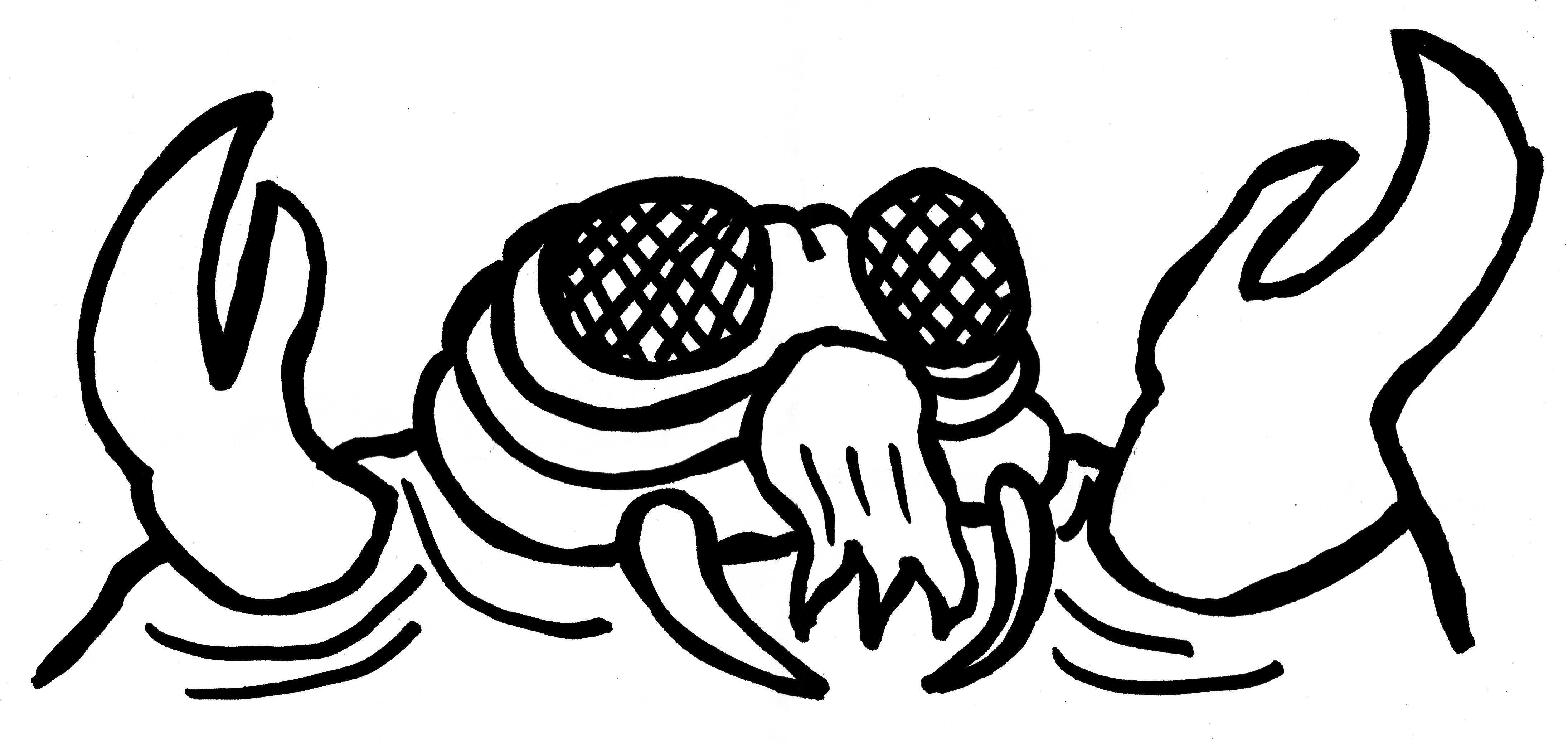
Rodan (1956)

Most children grow up with innate knowledge of the main-cast monsters in the Godzilla series, regardless of whether they’ve ever seen a Godzilla film.  Names like Mothra, Ghidorah, Mechagodzilla, and Jet Jaguar really mean something to children, who extend their fascination with real-world dinosaurs to the fantastic monsters of classic Toho tokusatsu as if they were interchangeable.  It isn’t until you’re older and learn the names of second-tier kaiju that the absurdity of that knowledge becomes apparent.  The names Dogora, Atragon, Matango, Varan, and Gorath sound like AI-generated nonsense to anyone not obsessed enough with the genre to collect those lesser monsters’ action figures, but it’s only their general unfamiliarity that makes them ridiculous.  Or that was at least my thought when I sat down to watch 1964’s Ghidorah, the Three Headed Monster for the first time and had to back away because I didn’t recognize one of the monsters billed on the poster.  Godzilla, Mothra, Ghidorah . . . these names all mean something to me, but Rodan the Pteranodon (speaking of the fuzzy border between fictional kaiju and real-world dinosaurs) was entirely foreign.  So, I took the time to get to know the winged beast before watching his official entry into the Godzilla canon.

Appropriately enough, the introduction of Rodan is as an Unidentified Flying Object that attacks jet fighter pilots who have no idea who he is either.  The flying dinosaur travels at supersonic speeds and leaves sky trails in his path, playing into 1950s sci-fi audiences’ fascination with contemporary reports of UFOs.  The answer to the mystery of his body is fairly straightforward; he’s an unearthed pterosaur who’s mutated to kaiju scale through radiation exposure – Godzilla-style.  His mutant abilities can be surprisingly devastating, though, as he can flap his wings with enough force to create shockwaves & wind gusts that level entire cities in a manner of minutes.  Since the monster design is a little unimaginative, it’s clear he needs help to carry the film along, so he’s joined in his debut by a race of giant bug larva with sword-sharp claws that slice people to death on the ground while Rodan attacks from the sky.  The bugs are identified as mutated dragonfly larvae and assigned their own official kaiju name Meganulon, which is well-earned, given than they carry the first half of the movie on their exoskeletal backs before the mystery of Rodan is fully revealed to the audience.  It turns out that even in his titular debut, Rodan was already presented as a second-tier monster and no threat to Godzilla’s reign as King to them all.

You obviously don’t need to know Rodan or Meganulon’s names to fully enjoy the Godzilla series.  Only hopelessly nerdy completists would feel compelled to Do The Homework for a genre that’s mostly just pro wrestling matches in novelty rubber costumes.  The only name you really need to know is Ishirō Honda, Toho’s go-to director for most of its tokusatsu classics.  From the sincere post-war devastation of the original Godzilla to the groovy psychedelia of Space Amoeba, Honda was central to the invention & evolution of kaiju filmmaking in his three decades as a director.  With Rodan, he hit the milestone of directing Toho’s first in-color kaiju picture, which makes for beautiful vintage pop art in its modern HD presentations, especially as the tactile monster costumes clash against the matte-painting vistas of the background.  More importantly, Rodan is interesting as a tonal middle ground in Honda’s kaiju oeuvre.  If you put aside the giant-bug attacks in the first hour, it’s a surprisingly grounded mining labor drama that’s just as grim as the original Godzilla.  Mining-town workers are drowned, crushed, and sliced while their widows wail in agony, making the movie just as much of a political piece about working conditions as it is a pollution allegory.  That dramatic sincerity can slow down the monster-action payoffs in the first hour, but it does make for a fascinating contrast with the screen presence of Rodan and his insect frenemies, who are too goofy to take 100% seriously. 

I am choosing to accept Rodan‘s self-conflicting tone as a feature and not a, uh, bug.  If it were made a decade later, it would’ve been pushed to a more cartoonish extreme to fully appeal to children, which might have robbed it of its interest as a volatile battleground for the sincere vs. silly sensibilities of early kaiju movies.  Arriving just a couple years after the 1954 Godzilla, it’s an early sign of the goofier direction Honda and the rest of the genre would go while still maintaining the brutality and harsh political messaging of that original text.  The least interesting aspect of Rodan, then, is likely Rodan himself, who only earns top bill by default.  I doubt the film would’ve lost all that much if it were just about miners being attacked on the job by Meganulon, so it’s somewhat a shame that their name was pushed to the back pages kaiju history books alongside the likes of Ebirah, Baragon, Destroyah, etc.  I’m never going to complain about getting a chance to see a flying dinosaur attack a miniature city, though, so count me among the dozens of nerds who are glad that Rodan was given his momentary spotlight.

-Brandon Ledet
Godzilla 2000: Millennium (2000)

The 2016 theatrical release of Shin Godzilla was an incredible experience for varied reasons: it was an excellent course corrective for a series that hit a slump with Gareth Edwards’s lumbering 2014 Godzilla film; it packed a surprisingly acidic taste of unexpected political satire among its kaiju action; Godzilla himself is always exciting to see on the big screen no matter the vehicle, etc. Most significantly, though, as an American audience, I appreciated the chance to see a Japanese Godzilla production faithfully translated in its original tone & intent on the big screen, which is a frustratingly rare experience. From the original 1950s Godzilla to the 1985 American-Japanese coproduced sequel to beyond, the standard for most Godzilla imports is for them to be heavily re-edited & altered in translation in their American dubs. In the case of Godzilla 1985 (titled Return of Godzilla in Japan), many of the scenes not involving the monster itself were swapped out with inserts of war rooms packed with American actors, completely altering the story. There’s no telling to my English-language ear what might have been lost in translation in Shin Godzilla’s journey to America, but I highly doubt that anything so egregious transpired there. It’s something I appreciated even more in retrospect when recently watching Godzilla 2000: Millennium for the first time. While the American dub of Millennium doesn’t quite substitute entire scenes with American actors like Godzilla ’85, it does drastically alter the tone & intent of the original Japanese script in a show of bad faith for the attention spans of American audiences and the inherent appeal of the original work. Shortened by nearly ten minutes and punched up with intentionally campy dialogue not included in the original script, the American release of Godzilla 2000 is yet another example of the typical fuckery this long-running franchise is subjected to in its trips across the ocean and the language barrier.

Luckily for Americans, there’s a baseline enjoyability to all Godzilla movies that transcends these bad faith translations. As the 24th entry in the franchise and the start of its own “Millennium” era, you might suspect hat Godzilla 2000 would find it necessary to change up the basic formula to keep itself fresh. Instead, this is largely the same kaiju action vehicle all Godzilla movies are, just with updated effects. Chronologically a sequel to the 1954 film, Godzilla 2000 finds its titular lizard beast returning to the shores of Tokyo to battle a mysterious UFO that has been terrorizing its people & buildings (mostly the buildings). While different organizations argue over whether Godzilla needs to be subdued or destroyed, the monster busies himself by attacking the mysterious UFO with his kaiju fire-breath, to no avail. For its part, the UFO attempts to absorb Godzilla’s DNA to steal his regeneration powers, making it possible for the alien species to adapt to life on Earth. This culminates in the UFO transforming into the (new to the series) kaiju Orga for a classic big-beast battle among Tokyo’s fragile skyscrapers. The fight is played 100% seriously, but the Humorous Dialogue surrounding it can be try-hard goofy in a way that’s difficult to earn a genuine laugh. There’s enough physical humor & basic absurdity inherent to the original Japanese cut that there’s no need for these additional wisecracks, which include a military general bragging that his missiles will “go through Godzilla like crap through a goose.” Har, har. I’m not entirely opposed to the idea of making a Godzilla film that’s shorter & campier than the series’ dead serious nuclear origins (Godzilla vs. Hedorah is my favorite in the franchise, after all), but the joke-writes on Godzilla 2000 do seem especially hokey, outside maybe the brilliance of the “Get ready to crumble” tagline. Either way, they didn’t cut any of the sweet monster action in the American release, which is a universal pleasure that can never be truly lost in translation.

As frustrating as it likely was to have its Japanese cut goofed-up for its domestic release, I’m sure it was still a massive joy to have a Godzilla picture back in American theaters in the year 2000. The few previous Toho-produced Godzilla films were straight to video affairs (I’m guessing the 1998 Roland Emmerich Godzilla picture gave the series enough of a popularity-boost to transcend that) and kaiju movies are obviously meant to be seen as big and loud as possible. That’s largely because special effects are their main draw, whether or not films like Godzilla ’54 and Shin Godzilla back them up with Big Ideas. Special effects-wise, Millennium offers an exciting mix of the old and the new. Godzilla & Orga are still actors in rubber suits stomping around hand-built miniatures. That original-flavor special effects recipe is spiced up with a more current influence, though, particularly the matte painting & set piece spectacle of the early Spielberg era and the shoddy CGI of post-Spielberg disaster pictures. Godzilla 2000 arrived long after the 90s disaster epics wave of titles like Twister & Independence Day (not to mention Godzilla ’98’s own participation in that aesthetic), so it shouldn’t be so jarring to see Toho’s tried & true brand of Kaiju action mixed with that influence. Still, the visual references (to Twister & Independence Day particularly) are too specific and too plentiful not to stand out in this context. I’m sure that the Japanese cut of Godzilla 2000 is the superior piece of writing (and I probably should have watched it before filing this review) but even the goofed-up American version of the film retains enough visual spectacle, both in classic kaiju action & in its 90s disaster epic aesthetic, to be well worth a look. That was likely especially true for those who caught it on the big screen in its initial theatrical run. It would have been vastly preferable for Millennium to be afforded the Shin Godzilla treatment of a faithful American translation, but this is still a badass monster movie where Godzilla lays an extensive beatdown on a sky scraper-sized UFO beast. It would be near-impossible to ruin that.

-Brandon Ledet