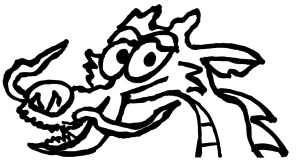
I’m not entirely sure how it came to this, but I recently found myself watching Disney’s Mulan for the first time nearly two decades after its initial release. It was somewhat wise to avoid the movie for so long on my part. I’d hate to complain at length about something that was never made for my enjoyment in the first place, so I’ll avoid being too harsh here on the film’s flat CG slickness or its garbage comedy routines starring Eddie Murphy as a pipsqueak dragon. Instead of fully restraining myself from the conversation, however, I would like to touch on the one aspect of Mulan that makes it an interesting outlier in the realm of Disney-animated romance/fantasy: its exploration of gender identity.
You’d expect that a children’s movie from one of the world’s largest media conglomerates with a crossdressing protagonist would get a lot of praise for its bravery in exploring gender identity & expression on such a large, international stage and, indeed, a quick Google search of “Mulan trans” heeds a wealth of Tumblr posts doing just that. What was interesting to me as a first-time viewer, however, was that the movie itself was not fully committed to this ideal of trans representation. The titular Mulan is not presented to the audience as a trans man. Donning male garb & persona to serve in her aging father’s place in the Chinese Emperor’s army, Mulan joins a long history of women who crossdress (especially during war time) to gain agency & autonomy. She wears men’s clothes to escape hateful remarks like “Teach your daughter to hold her tongue in a man’s presence,” not because she necessarily identifies as a man. The film treats crossdressing in the classical comedic sense of a Shakespearean farce. It’s a source of amusement & never reaches past a depiction of transvestism to genuinely explore/represent transgender issues.
That is, not officially. Although Mulan doesn’t actually identify as male, there is an undeniable trans subtext to the film. Her peers & ancestors call her a “crossdresser”& a “lunatic” in outrage, which surely resonates with at least one viewer or two out there who’ve suffered similar bullying when expressing their gender identity in public. There’s also a lot of attention paid to Mulan’s efforts to “pass”. She’s depicted wearing a binder over her breasts. She’s coached into using a deeper register voice, walking with gait, acting like a violent oaf, etc. Even though Mulan herself is not a trans man, a lot of her conflict seems true to certain facets of the trans experience. You could even argue that Mulan’s distress with having to live & appear as a man despite her true gender identity is a reflection of the way forcing someone to live a lie based on societal norms is emotionally abusive. However, this gender identity subtext is never as explicit in the movie as it is during an early scene where Mulan sings the song “Reflection”.
“Reflection” is such a strong, emotionally fragile ballad that cuts through nearly all of the Disney bullshit to reveal something truly heartfelt and vulnerable. For much of the film, Mulan is treated like a crossdresser and a source of shame, but “Reflection” almost changes the meaning of those exchanges entirely. The song makes it feel as if Mulan is a trans man, just one without the proper words or context to express that identity. Within the plot of the film, it’s meant to play as a mere expression of frustration with performing certain gender & societal roles that would please her family. The song appears even before the first time she dons male garb, after all. The subtext goes much, much deeper than that, though. It’s hard to even explain how striking & powerful the song plays when considered as trans subtext. It’s something you have to see & hear to believe:
Look at me
You may think you see
Who I really am
But you’ll never know me
Every day
It’s as if I play a part
Now I see
If I wear a mask
I can fool the world
But I cannot fool my heart
Who is that girl I see
Staring straight back at me?
When will my reflection show
Who I am inside?
I am now
In a world where I
Have to hide my heart
And what I believe in
But somehow
I will show the world
What’s inside my heart
And be loved for who I am
Who is that girl I see
Staring straight back at me?
Why is my reflection
Someone I don’t know?
Must I pretend that I’m
Someone else for all time?
When will my reflection show
Who I am inside?
There’s a heart that must be
Free to fly
That burns with a need to know
The reason why
Why must we all conceal
What we think, how we feel?
Must there be a secret me
I’m forced to hide?
I won’t pretend that I’m
Someone else for all time
When will my reflection show
Who I am inside?
When will my reflection show
Who I am inside?
Holy shit.
I don’t think Mulan‘s a particularly good or handsome or even entertaining movie. The one time I remember being struck by what it accomplishes on a technical level is during a brief synth-scored suiting up sequence where its titular protagonist wears armor for the first time. The rest of the film was mostly me rolling my eyes at the sassy dragon or the drag jokes or whatever other CGI-aided abomination was boring me to tears from minute to minute. Still, I don’t think it’s fair to hound Disney for not fully committing to the trans narrative of its unorthodox protagonist. Any kind of representation on the queer spectrum would’ve been a lot to ask for a children’s film released 20 years ago by a conservative media giant. All I’m really saying here is that the massive power of “Reflection” turns all of that on its head. The song subtly, devastatingly warps Mulan’s central story & emotional arc, calling into question the exact meaning of everything that follows. Disney may have openly, deliberately addressed the fundamental nature of societal gender roles throughout the film, but none of that feels as strong or as subversively progressive as the trans subtext of “Reflection.” It’s a really powerful, truly vulnerable moment in a mostly lifeless film that could’ve used more like it.
-Brandon Ledet


 Swampflix