The single-screen microcinema Zeitgeist Theatre & Lounge has been hosting weekly silent movie screenings with live piano accompaniment every Sunday afternoon for months now. I know this because I happened to see a flyer for the series while catching another movie there. While other local repertory series like Prytania’s Classic Movies and The Broad’s Gap Tooth program are regularly well attended, Zeitgeist’s Silent Films series feels like an open secret, a kind of backroom speakeasy version of local theatrical programming. The vibe in the room can be electric, as pianist David Bradley’s live, semi-improvised movie scores add an immediacy to century-old relics like Harold Lloyd’s Safety Last! that wouldn’t earn nearly as big of laughs or gasps streaming alone at home with a canned soundtrack. It can also be remarkably intimate, echoing the spirit of a D.I.Y. punk show whenever Bradley finds himself playing to a near empty room, engaging his audience in conversation and asking for help wheeling his instrument into the theatre. These are live concerts after all, even more so than they are movie screenings, with all of the fluctuating charm & chaos that distinction suggests.
The reason I got such a wide sample of live-concert experiences at Zeitgeist’s Silent Films showings is that Bradley’s weekly programming veered hard into my personal interests last month, in a series he titled “Silent Monster May.” In the immediate days after I had fallen in love with the century-old romance horror of Lon Chaney’s Phantom of the Opera (1925), Bradley announced that he’d be exclusively screening silent horror movies that month, including a precursor to Chaney’s Phantom in the 1923 version of The Hunchback of Notre Dame. I hit all three screenings in the “Silent Monster May” series, which varied in attendance & intensity but were consistently high quality. Before live-scoring 1920’s Dr. Jekyll & Mr. Hyde, Bradley mentioned that he hadn’t seen the movie in a while and doesn’t like to overprepare before showtimes, choosing instead to react and respond in real time along with the audience. His silent movie soundtracks are rolling moodsetters that emotionally ebb & flow along with the action onscreen, which in the case of “Silent Monster May” meant accentuating the pitiable romance & tragedy of horror cinema’s earliest monsters.
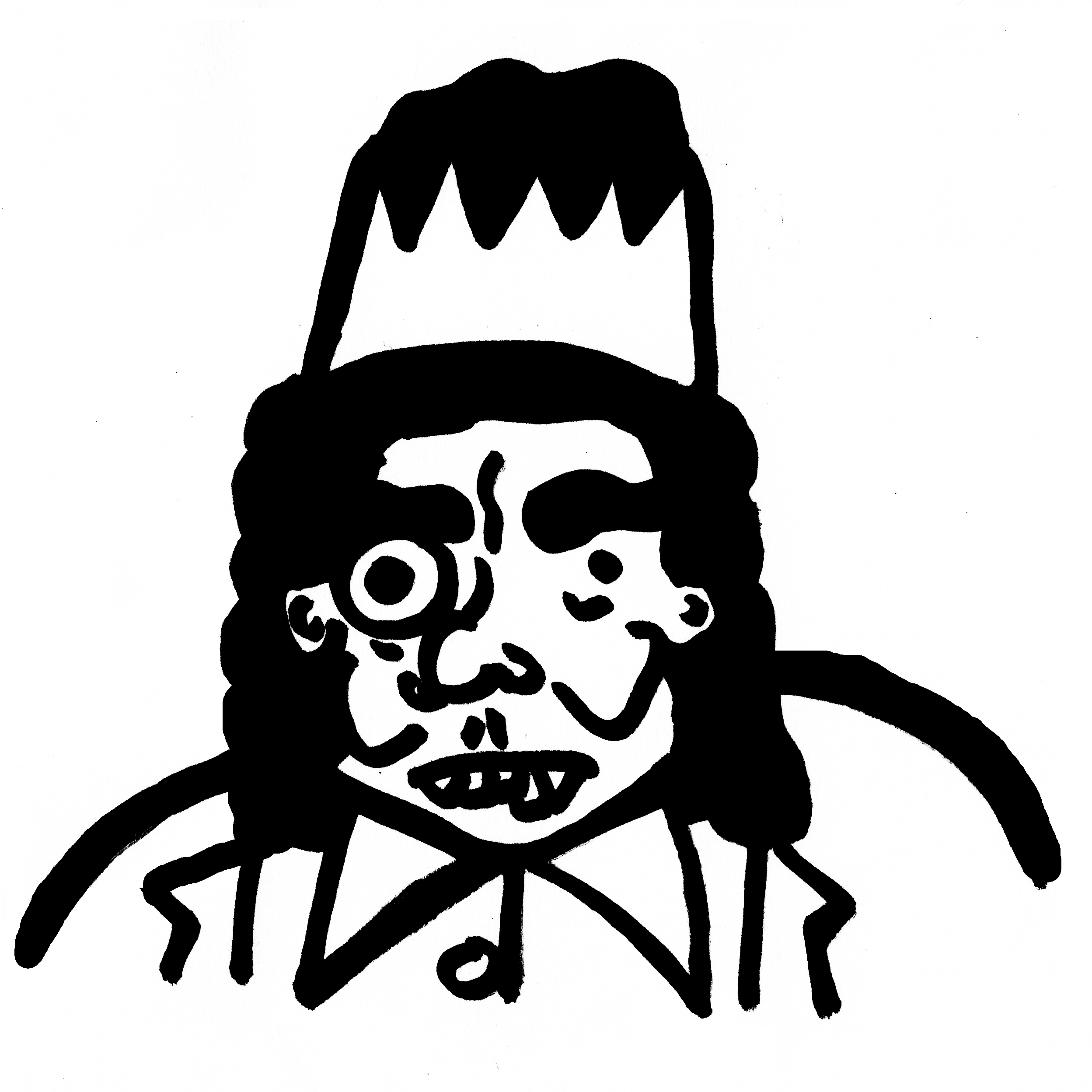
The most pitiable monsters in the program were also the most famous, both penned by French literary hero Victor Hugo. Lon Chaney’s aforementioned hunchback, Quasimodo, is ugly-cute like a scraggly stray dog. He lusts after the Romani bombshell Esmeralda while playing voyeur from the upper tiers of Notre Dame’s ornate walls, occasionally descending to join in her community’s orgiastic parties so he can watch her dance along with her other, handsomer suitors. The Hunchback of Notre Dame gets a little sleepy in the middle stretch whenever Esmeralda indulges in romantic flings outside of Quasimodo’s’ crooked view, but Chaney is dependably entertaining as the lovelorn monster in every scene which he appears. Not only is “The Man of a Thousand Faces” notoriously talented at transforming himself through rudimentary prosthetics, but he also proves to be an impressive stunt performer here; he crawls all over the church’s exterior walls and hangs upside down from the ropes of its ringing bells like an impish Tom Cruise with wagging tongue & protruding eye. He is, unquestionably, a silent horror movie star, and he carries that burden on his bulging, knotted shoulder with apparent ease.
1928’s The Man Who Laughs also presented a kind of silent-horror celebrity, although one associated less with an actor than with pop-culture IP. Conrad Veidt’s titular laughing man is most famous for having inspired the design for Batman’s arch nemesis, The Joker, which would be immediately apparent to any modern audience who catches a glimpse of his Glasgow smile. Paul Leni’s post-German Expressionist adaptation of Hugo’s novel says less about comic books than it does about the ever-evolving history of Universal horror movies, though. Since they’re no longer considered scary, the modern take on Universal’s famous monsters is that they’re tragic figures, sympathetic victims of society’s ills. The Man Who Laughs didn’t waste any time waiting around for that reclamation; the laughing man’s only monstrous quality is a surgical disfigurement that makes him look extremely friendly, however grotesque. Its circus-carny setting (the only place a permanently smiling abomination could find work) also positions it as a softer, kinder version of Freaks, which Tod Browning would soon direct for MGM. Like every monster in this series, he’s just looking for love, but the world around him is too cruel to allow it. It wouldn’t even qualify as a monster movie at all if it weren’t for the disturbing intensity of Conrad Veidt’s facial contortions, which he intentionally undercuts by reflecting deep wells of pain from behind his watery eyes.
Because the legends of Lon Chaney and The Joker came with their own pre-packaged expectations, I was most impressed by the 1920 adaptation of Dr. Jekyll & Mr. Hyde, which is saddled with a much lighter load of modern scholarship & hype. Admittedly, it’s been several decades since I last read its Robert Louis Stevenson source material, but I don’t remember quite so much of the original Jekyll & Hyde novel being set in a strip club & brothel, so the silent movie version largely took me by surprise. John Barrymore plays the virtuous Dr. Jekyll, whose future father-in-law and other colleagues find unnerving for his high morals and buttoned-up demeanor. So, they drag him to the local house of pleasure to catch a glimpse of the real him and, thus, trigger his first ever crisis of conscience. Jekyll doesn’t especially enjoy feeling adulterous lust for the first time in his life, so he invents the mad-scientist concoction that separates his monstrous impulses into the dastardly doppelganger Mr. Hyde. It’s a continually relatable story about the fact that there’s a lecherous pervert lurking in all of us, desperate to claw its way out at the slightest wayward temptation. As a result, it’s not only a great monster movie but also a great strip club movie, placing its dual nature early in the lineages of both Striptease and The Substance — the full Demi Moore spectrum.
All of these vintage monster flicks are highly demanding on the modern attention span, but well worth the effort. The color-tinted frames that distinguish their interior-exterior settings (like the pink hue of Jekyll’s brothel and the cold blue of Hyde’s moonlight strolls) and the massive scale of their crowd scenes (like the castle-storming sequence of Hunchback, wherein Quasimodo scalds the crowds below with vats of molten lead) are remarkably, inextricably cinematic for an artform that was still working to distinguish itself from the moods & methods of stage theatre. You just have to put down your smartphone long enough to witness them. Even with the distracting sounds of traffic, parties, and general urbanite mayhem occasionally audible through Zeitgeist’s theater walls, it’s much easier to lock into the wavelengths of these cinematic relics than it would be at home, especially with the guiding hand of a live piano score reacting to each scene’s emotional gearshifts in real time. If you have any interest in silent era cinema, there’s no better way to experience its old-world magic in New Orleans than to keep up with David Bradley’s microcinema concerts. I’ll be returning to them soon myself, and I’ll hopefully meet more classic movie monsters along the way.
-Brandon Ledet


