Theodore Rex (1995)

There can be something reassuring about watching a truly Bad movie.  Comforting, even.  The term “Bad Movies” has been applied to a growing canon of “so-bad-they’re-good” oddities with such wild abandon that a lot of so-good-they’re-great titles like Showgirls, Glen or Glenda, and Freddy Got Fingered have gotten swept up in the momentum, either because their intent is misunderstood or because they fail to meet arbitrary standards of objective, professional quality.  The further I’ve immersed myself in the deep end of iconoclastic, outsider-art filmmaking the more difficult it is to find any value in a Good vs Bad dichotomy.  If I had to come up with my own binary, I’d say movies are usually either Interesting or Boring.  So, it’s helpful to have a reality check like the 1995 buddy-cop comedy Theodore Rex to remind me that, yes, movies can be objectively Bad.  Everything about Whoopi Goldberg playing a future-cop who’s reluctantly partnered with a talking animatronic dinosaur sounds like the kind of nonsense novelty that gets me to overlook objective quality markers to instead find joy in the inane and the absurd.  And yet, there is no joy to be found in Theodore Rex.  It’s bad; it’s boring.  It’s more chore than art.

I mean “chore” in the literal sense.  Whoopi Goldberg was contracted to star in this 90s Dino Craze kids’ film though an oral agreement that she tried back out of once she smelled the stink on the project, then was forced to follow through on her promise via lawsuit.  As a result, most of the blame for its dead-eyed energy has defaulted to criticism of her performance, which is indeed a legally obligated sleepwalk.  The real shame, though, is that her T-Rex screen partner has no personality to speak of either.  His human-scale dino suit is cute enough to appeal to kids, but George Newbern’s vocal work as Teddy Rex is embarrassingly whiny & unenthused.  He spends the entire film mumbling to himself like a socially awkward nerd who just got dropped off for his first day at a party college (speaking from personal experience), draining all of the ferocious cool out of the T-Rex’s street cred and replacing it with generalized, unmedicated anxiety.  Worse yet, these two lifeless drips are investigating the conspiratorial murder of another T-Rex, so kids not only have to hang out with the least exciting dinosaur alive, but they’re also confronted with the limp corpse of their favorite dino in multiple scenes.  The whole thing plays like a cult deprogramming tape meant to convince children that dinosaurs are in no way interesting or cool.

If there are any signs of life in this dino-themed court summons, it’s in the production design.  Theodore Rex was one of the most expensive direct-to-video productions of its time, as it was initially budgeted for theatrical release.  That bloated scale mostly translates to big explosions, a thoughtful mix of animatronic puppetry & 90s computer graphics, and surprisingly engaged performances from recognizable names like Bud Cort, Carol Kane, and Richard “Shaft” Roundtree.  The money also shows in its intensely artificial sets, which take the “Once upon a time in the future …” framing of its sci-fi noir premise to a cartoon extreme where all the world is a DZ Discovery Zone.  However, you could just revisit the live-action Super Mario Bros movie or the TV-sitcom Dinosaurs for that exact effect without having to spend time with these dipshit dino cops.  They suck all of the fun out of every room they enter, and as a result the movie just kinda sucks.  There’s something especially painful about how every failed, flat punchline is punctuated with goofball sound effects to remind the audience that we’re supposed to be having fun! fun! fun!, so that our participation in this bullshit feels just as mandatory as Whoopi’s.  When it ends on a sequel-teasing title card that reads “See Ya!”, it reads like a threat.  Leave me out of it.

-Brandon Ledet
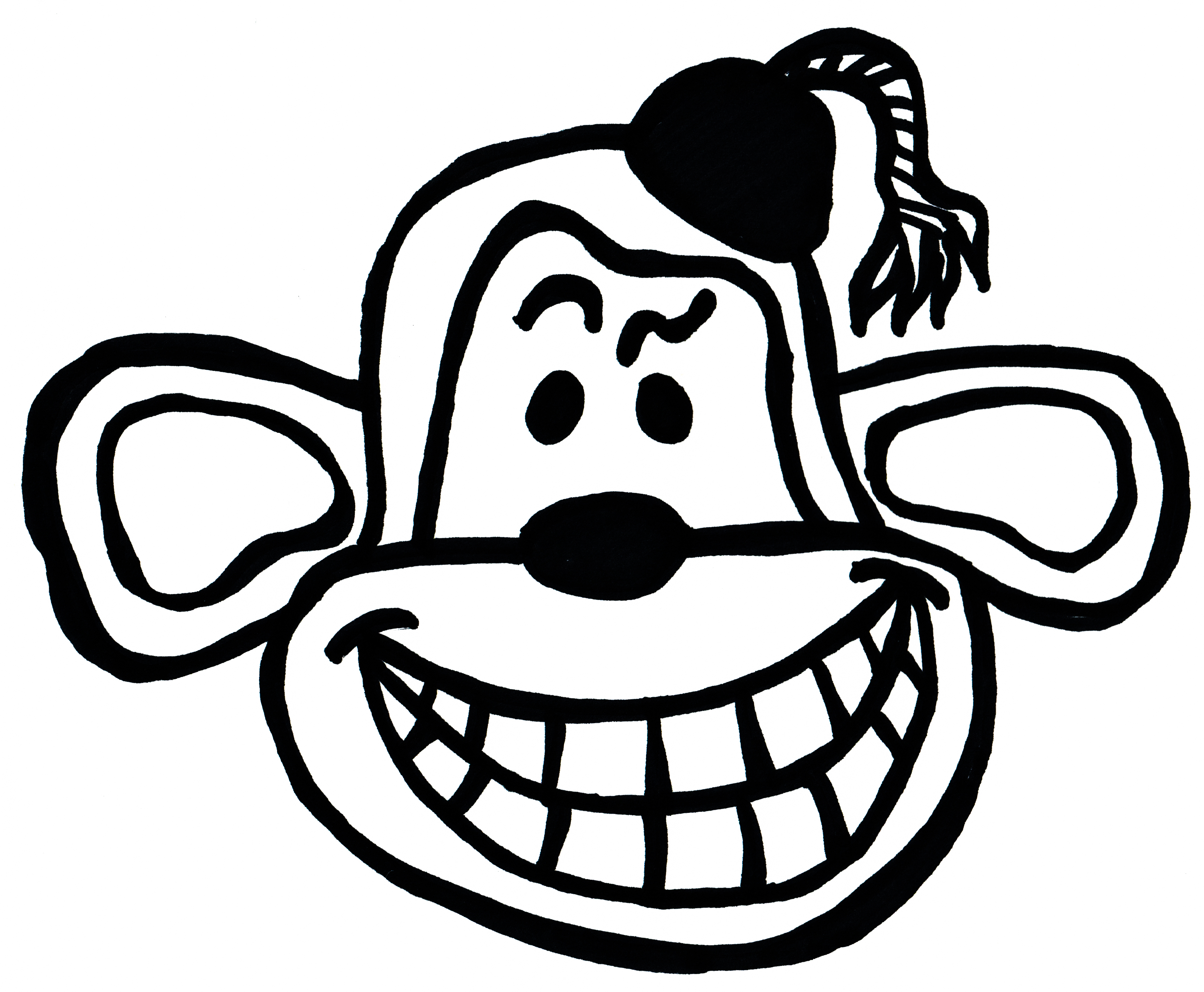
Monkeybone (2001)

There are two immediately obvious reasons why the special effects horror comedy Monkeybone is worth revisiting in 2022: its director and its star.  Henry Selick’s upcoming Wendell and Wild is his first feature film since 2009’s cult favorite Coraline, and it appears to be perfectly in rhythm with the stop-motion nightmares for kids that have defined his career.  Not only is Monkeybone Selick’s only live-action film to date, but it also happens to feature another beloved 90s figure who’s making a comeback this year: Brendan Fraser, who’s soon to launch a Best Actor awards campaign for Aronofsky’s The Whale. Fraser is in his wacky, live-action Looney Tunes mode in Monkeybone, as opposed to the dramatic vulnerability mode he brings to films like Gods & Monsters and, presumably, The Whale.  Trapped in a literal nightmare-world induced by a coma, Fraser’s comic book artist protagonist goes to war with his own cartoonish creations in a physical version of the Hot Topic mall-goth fantasyscapes Selick made his name on in A Nightmare Before Christmas.  It’s like a dispatch from an alternate universe where Tim Burton directed Who Framed Roger Rabbit?, one made even more fascinating by the fact that it flopped hard on its initial release – investing $75mil on a $7mil payoff.

To my shame, I don’t want to spend much time praising what Selick nor Fraser achieve in Monkeybone.  No, I want to praise Chris Kattan.  I outright groaned when Kattan’s name showed up in the opening credits, expecting the SNL veteran to be voicing the titular, annoying cartoon monkey sidekick character as an extension of his Mr. Peepers sketches.  It turns out that Kattan is totally innocent on that front; Monkeybone is voiced by John Turturro, the scamp. He’s also supposed to grate on the audience’s nerves, as evidenced by Fraser’s constant efforts to get him to shut up & go away every time he opens his obnoxious little mouth.  For his part, Kattan doesn’t show up until about an hour into the runtime, playing the corpse of a gymnast who died in a horrific accident.  Through convoluted cosmic circumstances that involve a deal with Death herself (played by Whoopi Goldberg, naturally), Fraser’s comatose cartoonist takes over the gymnast’s body mid-organ donation and flees the hospital into an unsuspecting world.  Kattan’s physical acting as an animated corpse with a broken neck and organs plopping out of its open body cavity had me absolutely howling with laughter.  It was the quickest I’ve ever turned around on a famous actor’s presence in a film, encountering Kattan’s name with dread, then finding his performance so deliriously funny that I almost threw up from the physical exertion. I suppose it’s also worth pointing out that another 2022-relevant actor played a major part of that movie-stealing gag: Better Call Saul’s Bob Odenkirk as the perplexed surgeon who trails behind the undead gymnast, continuing to harvest his organs as they fall to the ground behind him.  It’s sublimely silly.

As screechingly funny as Monkeybone gets during Kattan’s third-act zombie run and as wildly imaginative as Selick’s coma-induced Land of Nightmares set designs can be, its legacy mostly resonates with a what-could’ve-been melancholy.  Selick might have become a household name if this film didn’t flop so spectacularly. Or at least we wouldn’t get his work confused with Tim Burton’s quite so often.  Grimmer yet, Fraser, Kattan, and Rose McGowan (playing a humanoid-cat cocktail waitress, of course) have all gone public with stories of behind-the-scenes sexual abuse from major Hollywood players in the #MeToo era, haunting the film with questions of where their careers might have gone in a better world.  In the aftermath of those revelations, Fraser’s getting his late-career comeback, McGowan’s become a self-appointed spokesperson for the movement, and Kattan has continued to live in relative, semi-retired anonymity (give or take an affectionate shoutout in this summer’s Nope).  I don’t know that Kattan deserves the same red-carpet career revival as his co-stars, or if the actor would even be interested in a proper Kattanissance if it were an option.  I do know this, though: his performance is absolutely the highlight of Monkeybone, somehow outshining all of the cheeky monkeys, cyclops babies, Guernica bulls, and Nazi Mickey Mouse prison guards that Selick packs into the frame.  It would have been an interesting relic even without Kattan, creating an amusement park dark ride version of the kinds of grotesque cartoons that only aired on late-night Comedy Central in the 1990s.  Still, Kattan’s late-in-the-game intrusion is what pushes it over the line from interesting to essential.

-Brandon Ledet
