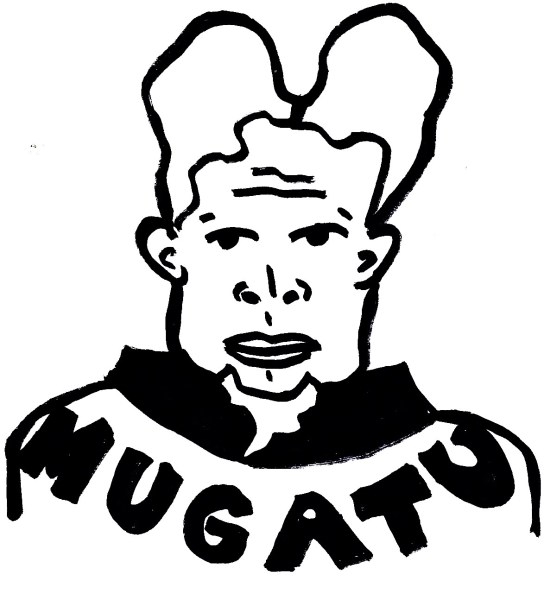
I’m an Arnie Girl in an Arnie World

Every year, I watch an Arnold Schwarzenegger movie on my birthday as a gift to myself.  This year, that personal celebration happened to coincide with the national celebration of Barbenheimer: our newest, most sacred federal holiday.  I didn’t participate in the full Barbenheimer meme myself, largely because I didn’t understand the value in cramming Gerwig’s & Nolan’s latest into an incongruous double feature simply for the LOLs.  Instead, I paired Oppenheimer with fellow unfathomable-weaponry-of-war “Dad movie” Mission: Impossible, Dead Reckoning, and I sought out an appropriate Schwarzenegger classic to watch with family the same day as Barbie.  Luckily, Last Action Hero happens to be celebrating a 30th birthday milestone of its own this year, and it proved to have a surprising amount of thematic overlap with the summer’s biggest hit.  In a way, Last Action Hero is Barbie for Boys™, which is to say that its fictional character’s real-world existential crisis at the opposite extreme of the gender spectrum made for a surprisingly rewarding double feature – much more so than I suspect I would’ve found in the all-day Barbenheimer mind melter.

Margot Robbie stars in her own existential meta comedy as Stereotypical Barbie, a plastic ideal of girl-power pop feminism whose insular dollhouse world is shaken when she’s introduced to real-life human problems, emotions, and politics.  Barbie is both a delirious celebration and a pointed critique of the world-famous Mattel toy brand – combining the bubbly pop feminism of sleepover classics like Legally Blonde with the menacing, high-artifice movie magic of Old Hollywood nightmares like The Wizard of Oz.  It’s fantastic, an instant classic.  Last Action Hero is more of a cult curio that had to gradually earn its cultural footing over time, but it approaches Schwarzenegger as a household brand the same way Gerwig’s film approaches Barbie.  Schwarzenegger stars as both himself and as a typical Schwarzenegger action hero, Jack Slade, who does not initially realize he is a fictional character sidestepping the harsher consequences of life in the Real World.  When a magical golden movie ticket frees him from the silver screen and he gets a taste of reality, Slade is confronted with the limitations of his once indestructible body and his insatiable addiction to macho hyperviolence, sending him into an existential tailspin.  There are few things more hack than assigning movies a strict placement on the gender binary in the year of our Dark Lord 2023, but both of these meta comedies are specifically about the ways gender stereotypes are established & reinforced by corporate pop media products, to the point where they become kitsch and, ultimately, targets of satire.  It’s just that women had to wait an additional three decades to get a Last Action Hero equivalent specifically marketed to them, to Hollywood’s shame.

The funny thing about Barbie & Last Action Hero‘s shared purpose is that in both cases the call is coming from inside the house.  There is potential, legitimate criticism to find in Gerwig’s decision to make a crowd-pleasing commercial for a Mattel product, even if her script (written with partner Noah Baumbach) includes direct, damaging punches to the Mattel brand.  She’s participating in the same Art Vs. Commerce tug of war that all mainstream Hollywood movies wrestle with, but she makes that struggle a blatant feature of the text, even casting the Mattel execs toying with her script behind the scenes as on-screen buffoons and comic relief (led by Will Ferrell).  Likewise, Last Action Hero was initially conceived as a spoof of excessively violent, comically tropey action movies of its era: films like Rambo & Commando.  Hilariously, the project was written & directed by two of the filmmakers most directly responsible for the exact tropes it mocks: director John McTiernan (Die Hard, Predator, The Hunt for Red October) and screenwriter Shane Black (Lethal Weapon[s] 1 – 3).  When Barbie features a TV commercial for Depression Barbie or when Last Action Hero features a trailer for a shoot-em-up version of Hamlet, the movies are mocking the exact pop media tropes and real-world social ills the industry behind them helped create in the first place.  They’re self-conflicted, but in a way that adds authenticity to their parodic intent.  Last Action Hero‘s goofball ZAZ gags are much funnier in the visual context of a typical John McTiernan action flick, just as Barbie‘s intrusive existential thoughts and feminist rants are much sharper in the visual context of a legitimate Mattel toy commercial.

The truth is that you don’t have to look far to find direct comparison points for Last Action Hero.  It wasn’t even the only self-spoofing action hero meta comedy of 1993, since Schwarzenegger’s fellow Planet Hollywood investor Sylvester Stallone had his own macho-fish-out-of-water satire in Demolition Man that same year.  And that’s not even counting the more generalized action genre spoofs of the era like Hot Shots & Naked Gun, nor their more recent smartass superhero equivalents in the Deadpool series.  Meanwhile, most of the aesthetic & tonal touchstones I can think to compare the new Barbie movie to are all relics of the VHS rental era: Josie and the Pussycats, The Brady Bunch Movie, Romy & Michelle’s High School Reunion, Spice World, the aforementioned Legally Blonde, etc.  Those titles have all stood the test of time as obsessive-rewatch classics not only because they’re all sharp-witted and visually vibrant, but also because Hollywood hasn’t bothered to offer up-to-date replacements in the same high-femme register in the decades since.  The instant, participatory enthusiasm for Barbie is reflective of an audience starved for a kind of women-marketed satire that Hollywood doesn’t regularly make anymore.  Meanwhile, Last Action Hero bombed in its time, failing to take on its opening weekend rival Jurassic Park the same way Barbie trounced Oppenheimer.  It still has its own dedicated-to-the-cause cult audience, though, mostly among lifelong Schwarzenegger super-obsessives like me who grew up with it as a childhood favorite.  There’s just so much other self-mocking action schlock out there that it’s a little more difficult to immediately recognize it as something special.

-Brandon Ledet

Barbie (2023)

When we were talking about coverage and discussing the Barbenheimer phenomenon, Brandon generously offered me the opportunity to be the one who covered Barbie, after I declared in no uncertain terms that I had no interest in Oppenheimer (sorry, Cillian). I did my part, going to the movie on opening night, wearing the only garment I own with any pink in it—a mostly-blue luau shirt with flamingos nestled in the pattern—and having my picture taken in the doll box that was being hastily assembled in the lobby when I arrived. It’s looking like this one will end up being a favorite for a lot of the Swampflix crew, and I’m happy to report that I had a good time as well. 

Barbie (Margot Robbie) is the most popular resident of Barbieland, a pink utopia inhabited by a seemingly endless series of Barbies, including President Barbie (Issa Rae), Doctor Barbie (Hari Neff), Physicist Barbie (Emma Mackey), Journalist Barbie (Ritu Arya), and Author Barbie (Alexandra Schipp). There are also a multitude of Kens, including the “stereotypical” Ken (Ryan Gosling), whose job is “beach” and who is paired with likewise stereotypical Prime!Barbie. Also present is his primary rival Ken (Simu Liu), and several others (including Ncuti Gatwa), as well as one-offs like Ken’s friend Allan (Michael Cera) and poor pregnant Midge (Emerald Fennell). Every day is beautiful, as Barbie interacts with her dreamhouse, drinking imaginary milk from empty doll cups and bathing in a waterless shower, then goes about her adventures before retiring back to her home for a nightly dance party. Things couldn’t be more perfect, until one day Prime!Barbie asks the others if they ever think about dying, which brings the party to a screeching halt. The next day, nothing goes right; her shower is inexplicably cold, her imaginary milk is spoiled, her heart shaped waffles are burned and fail to land perfectly on her plate, and worst of all, she’s somehow become a flat-footed doll in a world of high heels. At the advice of her compatriots, she seeks guidance about her situation from “Weird” Barbie (Kate McKinnon), who was “played with too hard.” Weird Barbie sends Prime!Barbie on a quest to the real world to find the girl who’s playing with her so that she can cheer her back up so that her distinctly un-Barbie thoughts stop finding their way into Prime!Barbie’s head. 

In the real world, Gloria (America Ferrera) is the receptionist at Mattel, a company that, despite depending on the monetization of the fantasies of little girls, is run entirely by men in identical gray suits; she finds herself drawing concepts for new dolls that share/embody her personal ennui. When Barbie (with stowaway Ken) escapes the boundaries of Barbieland and enters California via a portal at Venice Beach, young Mattel employee Aaron (Connor Swindells, the third alum from Sex Education in the movie) is contacted by the FBI to warn the dollmakers about this breach, and he delivers the news directly to the CEO (Will Ferrell). Elsewhere, Barbie’s search for her doll seems to lead to a dead end as she finds Sasha (Ariana Greenblatt), her presumed dollplayer, only to find that the girl has become a tween edgelady who dresses down the cowboy-clad living doll for her ties to capitalism, neoliberal feminism, and body dysmorphia. While this is happening, Ken comes face-to-face with the omnipresent patriarchal nature of the real world, wholeheartedly buying into the ideals of male domination because of his own lack of fulfillment in his non-relationship with Barbie. Upon his return, he spreads this anti-gospel around to the other Kens, which leads to all of the Barbies losing the memories of their impressive accomplishments in lieu of becoming servile dolls to the Kens with whom they are paired. With help from Gloria and Sasha, who are mother and daughter, Prime!Barbie has to try and wrest control of Barbieland back before it becomes the Kendom forever. 

Early marketing for the movie featured that famous image of Margot Robbie, currently poised at the moment between memetic and iconic, with the tagline “Barbie is everything.” And not only is she, but Robbie is a star, baby. Although there may never come a day when society forgives Suicide Squad, it’s time for us to all try and forget it, because Robbie is really outdoing herself with each new project. As an actress, her absolute control over her every movement and facial muscle is astonishing. When confronted by a world in which she is frequently hated instead of universally beloved, it would be easy for this sort of narrative turn to feel like one of those “the regent learns their subjects hate them” plots, but because Robbie’s Barbie is kind, empathetic, fun-loving, and heretofore carefree, it’s emotionally devastating, and Robbie makes it work. That having been said, the beating emotional heart at the center of the film is America Ferrera, whose Gloria is the motivating factor behind all of the events of the film, and who gives a powerhouse monologue near the film’s climax that utterly steals the show. Kate McKinnon’s smaller part is also a delight, and the explanations of how she came to be the way that she is have a kind of quintessence of truth that I couldn’t help but laugh at. I was a bit disappointed upon the initial entrance into the real world with Gosling’s Ken instead of Liu’s, the latter of whom I found much more charming in their initial scenes, but given that specific Ken is called on to temporarily become the king of the jerks, literally and figuratively, I came to prefer that it was Gosling’s Ken who becomes the film’s antagonist for a bit. 

At the core of that antagonism is Ken’s deep and profound insecurity. Ken’s existence, his destiny, is to be “and Ken” to Prime!Barbie, secondary to her. Since Barbie—as the idealization of a certain idea of liberated womanhood—doesn’t need him the way that he needs her, he lives in a perpetual existential crisis in which he has no real job or purpose other than an  exaggeratedly asymmetrical relationship. It’s precisely this lack of security in his identity that leaves him open to being brain-poisoned by patriarchy, and he even ultimately admits that he got carried away and that what he really wanted to get into wasn’t phallocentric government so much as horses (it makes sense in context … sort of). There was no way that a movie like this one wasn’t going to end up on the radar of all the expected grifter outrage manufacturing machine mouthpieces, but the ones who can’t stop blathering on and on about film’s “woke” agenda with the fury of a man who’s mad that his wife put the cookies on a shelf he can’t reach; they’re really tattling on themselves with this outing, even more than usual. It takes a truly deep level of self-doubt and an utter dearth of self-reflection to take a look at this movie, which is about how sad, unfulfilled men unsuccessfully try to fill that void inside with toxic masculinity and be like “This is a movie that attacks me personally.” Do you not even see how much you’re showing your whole ass with that, bro? The Kens aren’t even doing the things that are violent, just the things that are annoying, like keeping a slovenly house, favoring patent leather couches, and mansplaining The Godfather. They’re not trying to entrap women through emotionally manipulative therapy lingo, or being shitty to their pregnant wife while she begs to be allowed to leave the house without administering veterinary medicine that she’s medically forbidden to handle, or isolating a woman with the intent to do harm. Don’t be like that. Just have a “brewski-beer” and teach yourself how to play a Matchbox Twenty song or two and let this one float past you in the stream, man. 

In this case, the MST3k mantra applies on a couple of levels. Remember, this is just a movie, and you should just relax, both in any attempts to make this light, effervescent, bubblegum movie into another wedge in the culture war, and in the more traditional sense of letting go of the urge to try to figure out the exact limits of the film’s internal logic. It’s not what anyone is here for. This is an aesthetic experience just as much as (if not more than) it is a narrative one, and that’s what art is, baby. Just have a good time. 

-Mark “Boomer” Redmond

Zoolander 2 (2016)

EPSON MFP image

threehalfstar

It’s been fifteen years since the release of the original Zoolander, which seems like an awfully long stretch of time before deciding the world needs a sequel. A lot has happened since 2001, including (perhaps least importantly) a major turnaround on Ben Stiller’s fashion world comedy’s cultural cache. Zoolander suffered mixed-to-negative reviews upon its initial release, but has since grown a strong cult following that seems too large to even consider “cult” at this point. I even remember personally going into the theater prepared to hate Zoolander‘s guts as a grumpy teenager & being wholeheartedly won over as soon as the explosive Wham!-soundtracked gas station gag in the first act. The funny thing about Zoolander‘s fifteen-years-late sequel is that it’s on the exact same trajectory for long-term cultural success as the first film. The reviews are dire. The box office numbers are hardly any better. However, the dirty little secret is that Zoolander 2, while being nowhere near as perfectly inane as its predecessor, is actually a damn fun time at the movies. Nowhere near every joke lands in the film, but it’s smart to flood you with enough impossibly idiotic humor that you’re bound to laugh at something, maybe even more often than you’d expect.

In order to justify its own existence, Zoolander 2 has to undo a lot of the happy ending denouement of the original. Former male models/makeshift political intrigue heavies Derek Zoolander (Ben Stiller) & Hansel (Owen Wilson) must again start from the bottom. Hansel has been horrifically scarred & is experiencing growing pains with his in-effect wife, an orgy of weirdos. Derek’s own wife has passed away due to his own failures as a businessman & custody of his son has been revoked by the state due to his total lack of parenting skills in areas as basic as “how to make spaghetti soft”. In order to reclaim their estranged familial relationships & earn back their rightful place on top of the fashion world, Hansel & Derek have to repair their irrevocably broken friendship, putting aside the narcissism that plagues them both so deeply. Obviously, the plot doesn’t matter too much in a comedy as aggressively vapid as this, but I do think there’s something oddly sweet about Zoolander 2‘s central bromance that wasn’t nearly as fully realized in the first film. Derek & Hans really do need each other. They’re entirely codependent in their joint efforts to understand a world that doesn’t make sense to their tiny, uncomprehending minds. It’s a fascinating, even touching companionship even if it is an assertively brainless one.

Zoolander 2 does have an Achilles heel, but it’s not exactly the first place you’d expect. The film sidesteps most concerns about being late to the table in terms of following up its original iteration by making the outdated, past-their-prime cultural irrelevance of the its protagonists a major plot point. The redundancy of a second film following the same protagonists as they transition from male modeling to a life in political intrigue is also avoided by adding concerns about familial bonds and, absurdly enough, radical Biblical interpretations & quests for immortality into the mix. Where the film gets a little exasperating is in its never ending list of cameos & bit roles. Even in the film’s trailer swapping an appearance by David Bowie for the much lesser musical being/tabloid fixture Justin Beiber felt like a weak trade-off (although Bieber is actually far from the worst cameo on deck; his time is brief & fairly amusing). The film is overstuffed with both celebrity cameos & SNL vets dropping in for a dumb joke or two. Will Ferrell was a welcome return as the impossibly wicked megalomaniac Mugatu, Penélope Cruz was charming (not to mention breathtakingly gorgeous) as a secret agent for INTERPOL’s fashion division, and current SNL cast member Kyle Mooney proved himself to be a stealth MVP as a double-talking sleazebag hipster piece of shit who’s ironically stuck in the nu metal 00s (an archetype he always nails without fail). These are just a few faces in a sea of many, though, and the nonstop torrent of names like Kristen Wiig, Willie Nelson, Fred Armisen, Katy Perry, and whoever else felt like walking through the film’s perpetually open door did little for Zoolander 2 except to make it feel a little sloppy & out of control.

There were thing I loved about Zoolander 2 & things I easily could’ve done without. The film’s Looney Tunes physics & complete disinterest in stimulating the intellect felt entirely in tune with the original’s sensibility. The vaguely transphobic joke about Benedict Cumberbatch’s androgynous model All in the trailer is not at all improved by being expanded in the movie. Even though Hansel & Derek are close-minded imbeciles who believe things like fat = bad person, their treatment of All is an uncomfortable mixed bag at best & mostly just distracts from the film’s better realized gags. Many of the celebrity cameos & bit roles equally feel like a waste of time that could’ve been better step, but Zoolander 2 decisively aims for a quantity over quality M.O. & by the time the film finds its stride far more of its jokes land than fall flat. I spent most of Zoolander 2‘s runtime laughing heartily, which might as well be the sole requirement for a movie this militantly irreverent to succeed as a finished product. It’s not the best comedy in the theater right now (that would be Hail, Caesar!), but it’s also not the worst (*cough* Deadpool *cough*) & I could easily see myself watching/enjoying the film multiple times in the future. If nothing else, that’s a far better experience than I expected based on its early reviews, which is pretty much how this whole ordeal worked out the first time around in 2001.

-Brandon Ledet

A Night at the Roxbury (1998)

EPSON MFP image

fourstar

campstamp

My favorite soundtrack for kitchen work is a genre of music I like to call “Gay 90s”. Long forgotten pop acts like La Bouche, The Real McCoy, Snap!, and C&C Music Factory are great motivation for a stressful service industry shift & I’ve been relying on them for moral support a great deal lately. That’s why it felt like an appropriate time to revisit A Night at the Roxbury, a sublimely dumb comedy about a pair of club-hopping airheads who survive on a strict diet of tacky suits, Gay 90s club music, and bad cologne. I have fond memories of this movie from when I was a kid & I’m sure I’m not alone there, but it’s far from the universally loved Saturday Night Live-related properties like Wayne’s World or Tommy Boy or even the recent cult-inductee MacGruber. It’s tempting to say that the film was way ahead of its time, given how much costar Will Ferrell’s comedic stylings have become part of the cultural zeitgeist in the last decade (while Chris Kattan has been left behind & forgotten), but the truth is that the movie is so 90s it hurts. If you squint at A Night at the Roxbury the right way it can be seen as a Step Brothers prototype with a much  healthier family dynamic, but I’m not sure  that prescient element is strong enough to overshadow how much of the film is mired in 90s SNL & Gay 90s dance music – two things I happen to love very much.

The problem a lot of SNL sketches-turned-movies have is that they have no idea how to establish a sense of purpose. Recurring SNL sketches can sometimes feel stretched a little thin at two-to-five minute intervals, so the idea of sustaining these properties for full-length film can often be disastrous. A Night at the Roxbury is off to a worrisome start when it recreates its SNL sketch origins in its entirety in the opening two minutes of its runtime . . . which then leaves the question of just what the hell it’s going to do with the remaining 80. You can’t just build an entire film around two gross club rats bopping their heads to Haddaway’s “What is Love?“, right? The film provides some necessary background information its protagonists were missing, like a name (The Butabi Brothers), jobs (they work at their dad’s “fake plant store”), short-term goals (getting laid), and longterm aspirations (opening a dance club where the outside looks like the inside of a typical club & vice versa). There’s also a little tinkering with the sketches’ basic premise, where the brothers imply that they’re cokeheads & bimbos, by making them out to be wholesome virgins. For the most part, though, A Night at the Roxbury succeeds in expanding its limited origins by structuring the plot as a traditional love story. It just so happens that the love is shared between two brothers instead of two potential sex partners.

Of course, the film is more commendable as an irreverent comedy & a 90s time capsule than it is for its narrative strengths. From the brothers’ voguing-while-driving tendencies to the beach butts to Dan Hedaya (the dad from Clueless) playing a father figure to a throwaway line about “dancing The Macarena with Donald Trump”, the movie is an incredibly inclusive collection of the era’s trashiest calling cards. There’s also some completely purposeless irreverence in humorous details like washed-up actor Richard Grieco’s role as washed-up actor Richard Grieco and in random asides like the line “Yeah, yeah, yeah Joanie Loves Chachi, but does Chachi give a flying fuck about Joanie?” What’s most impressive, though, is how these elements are mixed into an oddly sad platonic love story about two over-primped buffoons who desperately want to pick up women but don’t know at all how to interact with them on a personal, intimate level. In that way, considering all of A Night at the Roxbury‘s irreverent humor, 90s time capsule charms, and oddly sad platonic love story the movie works kinda comfortably as a masculine equivalent to Romy & Michelle’s High School Reunion, another comedy that’s earned a lot of goodwill simply through the passage of time.

As far as the film works as an onscreen version of Gay 90s Dance Music: The Movie, it’s pretty much everything I wanted it to be. La Bouche & all my old friends were there, including a bunch of hit-makers I had completely forgotten: No Mercy, Ace of Base, Amber, etc. There’s also six instances of Haddaway’s “What is Love?” playing in the film (once as elevator music), which felt like the perfect amount, considering how essential it was to the comedy sketch source material. The next time I’m jamming at work to LaBouche or The Real McCoy I’ll now have a very specific set of images to accompany the music, as well as a pretty easy to nail head-bob dance move. I couldn’t have asked for more.

-Brandon Ledet