For this lagniappe episode of the podcast, Boomer, Brandon, and Alli discuss Julia Ducournau’s Titane, a distinctly macho, thematically elusive nightmare about a serial killer who learns how to love a fellow human being as much as she loves cars.
It’s totally understandable to feel burnt out on biopics as a genre. They’re often formulaic to the point of self-parody, especially the American star-vehicle variety that seems specifically designed to generate applaudable clips for Oscar highlight reels. The recent Finnish film Tove admittedly does little to reinvent the biopic, but it at least finds ways to make its overly familiar tropes & structure feel intimate & tactile. It’s unlikely that anyone who wasn’t already interested in the life & art of its titular subject would get much out of the film, which likely means it does not transcend the limitations of its genre. Still, it doesn’t waste her fans’ time by shoehorning her into the by-the-numbers clichés that sink most biopics into tedium.
It helps that Tove is not a birth-to-death recap of Moomins creator Tove Jansson’s entire life. It covers only her creative breakthrough & troubled romance years post-WWII. We do not watch her experience an “Aha!” discovery at her drafting table, conjuring Moomins characters directly out of the creative ether. She’s already doodling them in the margins of her notebooks at the start of the film, as if they were idle distractions from her “real art” as a classically trained painter. Her journey in the film is less a rise-to-success story that is a slow, reluctant acceptance of the popularity of her more “frivolous” children’s book illustrations at the expense of her Serious Art. Her self-acceptance as an artist runs parallel to her volatile bisexual romances in that same period, where she also finds herself reluctant to accept which opportunities are fruitful vs which are dead ends. It’s all shot with a delicate, drunken fury in up-close, handheld engagement with Jansson as a complete, self-contradicting person – not just an iconic visual artist.
Tove is nothing mind-blowing, really, but it is lovely. I was much more impressed with the similarly styled biopic Tom of Finlanda few years back, which more aggressively shakes loose the limitations of its genre. By contrast, the rejections of biopic cliché are much subtler here, rooted in exclusion & de-emphasis. I’m a recent Moomins reader, so I knew nothing of Jansson’s life going into the film beyond the most popular work she left behind. It was cool to see her raising hell in post-War Europe with her fellow art-community rebels, who dreamed that they could collectively re-shape the morals of modernity in the wreckage of the Old World. Even though the Moomins are new to my life, I likely would’ve most appreciated this film in my teens or 20s, since it presents one of those fantasy realms where every single person you know is an artist of some kind – including your browbeating parents. Seeing it now, it really only enhances the art I already adore by fleshing out the ferocious creator behind it.
One of the most surprising frontrunners for 2021’s Movie of the Year is the culinary revenge drama Pig, in which a world-weary Nicolas Cages emerges from retirement & isolation to smite his rivals with the fine art of fine dining. I personally related to Pig‘s kitchen culture critiques more than I expected to, especially as someone who put themselves through college by working back-of-house positions for most of the 2000s. But what about people with no kitchen experience? What if you’re a veteran of less macho service industries, like hair salons & drag clubs? Don’t you deserve your own revenge-mission drama that’s quietly bitter about the changing world?
Yes, Swan Song is essentially Pig for bitter old queens instead of bitter old chefs. Udo Kier stars as a gay-elder hairdresser in Sandusky, Ohio, who’s dragged out of retirement for one final mission (and to square off against his nemesis in glamor, Jennifer Coolidge). “Inspired by a true icon,” he’s known in his community as “The Liberace of Sandusky,” but he dresses & quips more like a small-town Quentin Crisp. Reassembling his gaudy costume rings & 70s leisure suits like knights’ armor, he embarks on a heroic journey to spruce the hair of his wealthiest client as she lays in her casket, carefully burning every bridge along the way between his old life & a new—to his eyes—less authentic world.
Unfortunately, this is a case where the character is much stronger than the movie that contains him. Swan Song constantly distracts from its own antique glamor with attempts at a distinctly modern, Sundancey style. Despite its shockingly expensive soundtrack, it’s shot with the same cheap, bland digi sheen that’s plagued most quirky character studies on Sundance’s docket in recent decades (although the film notably premiered at SXSW, despite appearing tailor-made for that fest). Its story structure is so by the numbers that you halfway expect Tim Meadows to interject, “Pat Pitesenbarger needs to think about his whole life before he dresses hair.” And the frustrating thing is that the character is solid enough of an anchor on his own that none of the movie’s failed attempts at style or poignancy are at all necessary. In an ideal world, this would get a Sordid Lives-style spinoff sitcom where Kier & Coolidge wage war in competing hair salons across the street from each other. I could watch them bitterly banter forever, even if everything around them tested my patience.
There is one major advantage Swan Song has over the other quirky character studies that continually ooze out of festivals like Sundance & SXSW: it has a distinct point of view. Udo Kier’s bitterness about the changing world can sometimes feel justified, as when he laments “I wouldn’t even know how to be gay anymore” in frustration over cruising’s migration from bars to apps. Sometimes, it feels pointlessly egotistical, as when he complains that younger generations should be “kissing his rings” for paving the road to their civil rights. It at least has something pointed to say about the way community elders are often left behind by youth-obsessed gay culture instead of being properly revered & cared for, whatever the occasional limitations of that perspective may be. It’s also amusing as a bitterly fabulous counterpoint to Pig, with truffles swapped out for vintage cans of Vivante hair gel.
1. Titane – A surreally macho, thematically elusive nightmare from Julia Ducournau, the director of Raw. As with the perpetually underseen & underappreciated The Wild Boys (the very best movie of the 2010s), it’s a nuclear gender meltdown with no clear sense to be made in its burnt-to-the-ground wreckage. A thrilling experience in both cases, both of which find unlikely refuge in the violence of pure-masc camaraderie & social ritual.
2. I Blame Society – An incredibly dark comedy about a struggling filmmaker who realizes her skills behind the camera resemble the skills needed to pull off The Perfect Murder, then quickly turns into a serial killer. Feels like it was aimed directly at my tastes, from the no-budget D.I.Y. aesthetic to the transgressive joy of Difficult Women to the flippant meta commentary on movies as an artform. Love to be pandered to bb.
3. French Exit –Leaving Las Vegas for pompous, affluent drag queens. I loved Michelle Pfeiffer’s scenery chewinginmother!and I feel like I’ve been waiting for this exact career resurgence vehicle for her ever since. Just deliciously vicious camp from start to end; easily one of her career best.
4. The French Dispatch– Maybe my favorite Wes Anderson since The Royal Tenenbaums, or at least a perfect encapsulation of everything he’s been playing with since then. People often complain about how visually lazy studio comedies are, so here’s a film packed with Hollywood Celebrities where every scene is overloaded with gorgeous visuals and hilarious jokes.
5.Pig– “A John Wick knockoff about Nic Cage fighting to recover his stolen truffle pig? Sounds like a hoot and a half.” Cut to me struggling to see the screen because crying into my mask is fogging up glasses. An understated execution of a preposterous premise, refusing to behave either as a sober return-to-form showcase for the often-mocked actor or as fodder for his infinite supply of so-bad-its-good YouTube highlight reels. It’s its own uniquely beautiful, tenderly macho thing, with more to say about culinary arts than the peculiar flavors of Cage’s screen presence.
6. Lapsis – A high-concept, low-budget satire about our near-future gig economy dystopia. It doesn’t aim for the laugh-a-minute absurdism of Sorry to Bother You, but it’s maybe even more successful in pinpointing exactly how empty and draining it feels to live & work right now.
7. Beast Beast – Tubi’s bold foray into prestigious festival acquisitions: a very Sundancey teen drama about gun violence, one that’s both horrified by and in reverent awe of the Internet as a creative or destructive tool, depending on who’s wielding it. The ultimate example of the dictum “It’s not what happens but how it happens,” as its hyperkinetic, youthful style entirely overpowers its afternoon-special PSA plotting. Think of it as the Gen-Z version of Elephant.
8. Pvt Chat – A grim internet-age romance starring Uncut Gems‘s Julia Fox as a camgirl dominatrix with the world’s wormiest fuckboy client. Late-night NYC mania & grime de-fanged by the cold isolation of life online. No Wave filmmaking echoed in 1’s & 0’s. Small & intimate, but explicitly about how all modern relationships have been completely drained of their intimacy.
9. Zola– Genius in its costuming & dark humor, but what really struck me is how unbearably tense it is as soon as it embarks on its road trip to Floridian Hell. I hadn’t read its infamous online source material, so I had no idea where it was going (except that @zolamoon lived to tweet about it). Scarier than any horror movie I watched this year.
10. Barb and Star Go to Vista Del Mar – A delightful throwback to a very specific type of absurdist buddy comedy that rarely gets made anymore (Romy & Michelle, Zoolander, Dude Where’s My Car?, etc). Also an underdog contender for the year’s most crowd-pleasing musical.
11. Annette – Leos Carax’s entertainment-industry rock opera, originally composed as a concept album by the avant-garde pop group Sparks. The nagging question of whether it’s Good Weird or just Weird Weird never fades at any point during its unwieldy runtime, but I’m cool with it either way. It has a sense of humor about itself, and there’s nothing else like it: two qualities that can’t be undervalued.
12.The Matrix Resurrections– Lana Wachowski’s New Nightmare: a platform for her to reflect on the core philosophy & romance of her most iconic work while lashing out at a movie industry that seeks to dilute & pervert it for an easy cash-in. I most loved being trolled by the opening fifteen minutes; just the absolute worst-nightmare version of what it could be before it reveals what it’s actually doing. It’s an A+ prank, both on the audience and on the higher-ups at Warner Brothers.
13. Bo Burnham: Inside – When it pretends to be a sketch comedy revue, it’s very hit or miss joke-by-joke, song-by-song. By the time it mutates into full-on video art about Internet Age despair it feels like something substantial, though, meaning it works better as a movie than it does as a comedy special.
14. In the Earth – The exact psychedelic folk horror it’s advertised to be, except with an entire slasher about an axe-wielding maniac piled on top just to push it into full-on excess. As a nightmare reflection of our collective, COVID-era mindset, it’s difficult to pin down exactly what it’s doing except to say that it’s impressively strange, upsetting stuff considering its limited scope & budget. A rare example of COVID Cinema that aims for something intangible and indescribable, something that captures the existential horrors of current life rather than the logistical ones.
15. Benedetta – Part erotic thriller, part body possession horror, part courtroom & political drama, pure Paul Verhoeven. I was fully prepared for its sexual theatrics & religious torments, but completely blindsided by its visions of Jesus as a sword-wielding warrior from a romance novel. My only disappointment is that it backs off from illustrating Benedetta’s visions in the second half in a ludicrous nod to “playing both sides”; would’ve loved to see more fantasies of Jesus as a hunky heavy-metal badass.
16. Saint Maud – Speaks both to my unquenchable thirst for the grotesque as a horror nerd and my unending guilt-horniness-guilt cycle as a lapsed Catholic. I appreciate it more each rewatch for what it actually is (an intensely weird character study) instead of what I wanted it to be (a menacingly erotic sparring match between a religious-zealot nurse and her atheist patient).
17. Lucky– A high-concept home invasion horror about a woman who’s cyclically attacked by the same masked killer night after night after night. Works best as a darkly funny act of audience gaslighting and a surprisingly flexible metaphor about gender politics. Recalls the matter-of-fact absurdism of time-loop thrillers like Timecrimes & Triangle, with a lot of potential to build the same gradual cult following if it finds the right audience.
18. Red Rocket– Another bleak poverty-line comedy from Sean Baker, except this time it’s more of a feel-bad hangout vibe than a nonstop plummet into chaos, and the protagonist is deeply unlikeable instead of charmingly vulgar. It’s like a goofier, laidback version of Good Time, where you feel terrible laughing while a desperate scumbag exploits every poor soul in their path just to keep their own head slightly above water. Really slows down to make you squirm between the punchlines.
19. Mandibles– Quentin Dupieux’s absurdist comedy about bumbling criminals who adopt & corrupt a gigantic housefly so it can join them in acts of petty theft. Last year’s Deerskin felt like a career high for Dupieux, especially in its sharp self-satirical humor about the macho narcissism of filmmaking as an artform. This finds him backsliding into his more typical comedies about Nothing, just two dumb buds being dumb buds who now have a weird pet. He totally gets away with it, though, solely on the virtue of the jokes being very funny.
20. Cryptozoo – Dash Shaw’s mildly psychedelic fantasy comedy about a futuristic zoo for cryptids. Like My Entire High School Sinking into the Sea, it’s a bizarre clash of far-out visual play & laidback aloofness, calling into question how much its internal ethical conflicts are intended to be taken seriously vs how much they’re an ironic joke about the film’s own sprawling, convoluted mythology. Shaw’s work is never boring to look at, though, even if his characters appear to be bored within them. His visual playfulness is a quality that’s increasingly difficult to find in modern animation, questions of sincerity be damned.
Welcome to Episode #150 of The Swampflix Podcast. For this episode, Britnee, James, Brandon, and Hanna discuss the often-ignored art of the short film, starting with the existential nightmare La Cabina (1972).
26:45 A Trip to the Moon (1902) 36:16 The Dancing Pig (1907) 41:00 Meshes of the Afternoon (1943) 52:00 The Red Balloon (1956) 1:08:08 The Fantastic Flying Books of Mr. Morris Lessmore (2011) 1:22:22 Money + Love (2018) 1:38:55 Opal (2020)
It’s been a popular meme among online movie-nerds in recent years to declare “All movies are bad” in self-deprecating irony. The latest experimental essay from Theo “RatFilm” Anthony actually makes a sincere case for that exact sentiment, damning its own medium as a tool of police & military violence since the moment of its invention. AllLight, Everywhere broadly details the weaponization of motion picture recordings in our racist surveillance state, but it extends that critique to the very first examples of motion pictures, underlining that “All movies are bad” – at least on a moral, political level. It’s one of those philosophical nightmares that makes you bitter about being born on this miserable hell planet (or at least makes the cinephile in you want to find a new hobby). It’s also a great movie, even if it is anti-movie.
It doesn’t take much effort for All Light, Everywhere to make a modern audience feel sickened & infuriated by police bodycam tech. The breezy, self-protective training that cops receive when equipped with bodycams and the smug self-satisfaction of the tech’s biggest manufacturer Axios advertising their wares is difficult to stomach. Memories of Black citizens murdered by the police state without consequence for the cops who pulled the trigger—thanks to the intentional limitations & biases of surveillance tech—lurk just outside the frame, souring every chipper onscreen boast about its profitability and illusion of accountability. Anthony even threads those memories into his larger thematic preoccupations with his home city of Baltimore by citing the murder of Freddie Gray as a specific example of bodycams protecting cops instead of citizens. It’s all emotionally raw, morally corrupt, and worthy of documentation.
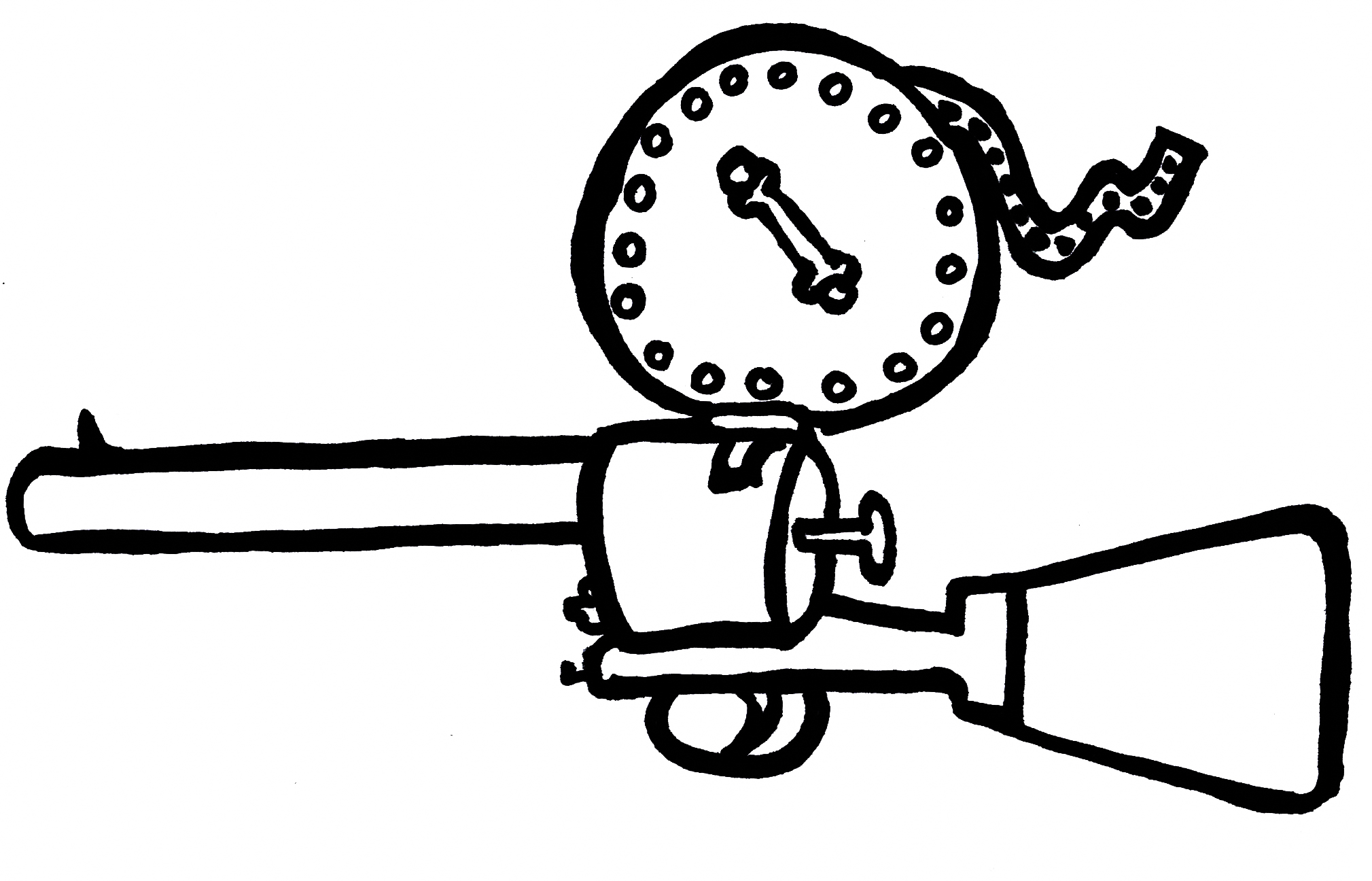
Where All Light, Everywhere excels is in connecting that modern weaponization of the motion picture camera back to its earliest uses & abuses. Early movie cameras were typified by designs like “the photographic rifle” and “the photographic revolver,” leaving behind a language where cameras still “shoot” their subjects. There’s a hypothetical version of this movie to be made where each new development in motion picture tech was used to further the art & distribution of pornography, but instead Anthony focuses on how they were used to afford the illusion of unbiased automation to morally bankrupt police & military systems. Police body cameras are just the next logical evolution in a long history of supposedly “objective” motion picture recordings reinforcing the biases of the inherently violent political institutions behind them.
If you’ve seen RatFilm, you know that Anthony does not lay out this political history of the weaponized movie camera in a linear, easily digestible argument. Instead, scientific explanations of the camera’s “blind spots”, the philosophy of its place in modern culture, its effect on human perception of the world, and the racial politics of Baltimore as a microcosm of the US at large are all loosely mixed in an open-ended visual essay that’s heavier on atmospheric dread than it is on declarative statements. Still, the movie leaves you disgusted with the motion picture as a medium, no matter how open its arguments are left for interpretation or how much Anthony strives to leave on a moment of hope in the epilogue. It turns out all movies really are bad. Bummer.
There’s a brilliant sequence in RoboCop 2 where a boardroom full of market testers discuss what a new & improved RobCop should look & act like. Their conflicting input confuses his already perfected programming & design, rendering the rebooted RoboCop 2.0 entirely useless. It’s a hilarious example of a movie sequel arguing against its own existence, mocking the concept of diluting a pure, original concept with a profit-obsessed aim for mass appeal. Given RoboCop 2‘s general reputation as an empty-headed misfire, I’m not surprised that The Matrix Resurrections is proving to be a divisive work among general audiences, since it expands that exact brand of self-loathing meta-humor into a feature-length screed against corporate franchise filmmaking at large. The Wachowskis reportedly did not want another Matrix film to happen, but Warner Brothers was going to reboot their iconic cyberpunk series with or without their input. Lana stepped in on her own to save their work from falling into the wrong creative hands, then used the opportunity to condemn the very idea of making a nostalgia-bait Matrix sequel in the first place. Using Neo as an avatar, she practically stares directly into the camera to declare, “This movie should not exist,” in open defiance of the IP-addicted movie industry that forced her hand. It’s as hilarious now as it was in RoboCop 2, and in this case the critique is drawn out to feature length.
The opening fifteen minutes of Resurrections plays like a worst-nightmare scenario of what a 2020s Matrix sequel could be. New, hip, young characters revisit and replay exact scenes from the original 1999 movie, trading quips about how totally awesome Neo & Trinity were in their time. It’s an escalation of the callbacks & Easter eggs that superhero nerds crave in each new big-budget fan-pleaser, turning those cheap nostalgia pops into full-on cosplay & highlight reels. Not only is that obsession with past triumphs a disappointing turn for a series that felt genuinely revolutionary when it premiered, but it’s also self-defeating in the way it draws comparisons between the original film’s exquisite fight choreography & cinematography and the blurry, incoherent mess of Resurrections’s own action sequences. Then, that disastrous opening sequence is revealed to be a video game simulation designed by a still-alive Neo himself (rotting at another miserable desk job in-Matrix under his deadname, Thomas Anderson), and Resurrections starts editorializing about those modern industry-standard shortcomings in soulless, movie-by-committee sequels. It turns out the film is not the worst-nightmare version of The Matrix 4; it’s Lana Wachowski’s New Nightmare: a platform for her to reflect on the core philosophy of her most iconic work while lashing out at a movie industry that seeks to dilute & pervert it for an easy cash-in. It’s an A+ prank, both on the audience and on the higher-ups at Warner Brothers.
It may be a stretch to assume that Resurrections‘ unwieldy 148min runtime was also a metatextual joke about the cumbersome length of modern Hollywood action franchises (or maybe not, considering that it taunts the audience with an ironic post-credits punchline after a 15-minute scroll). Either way, I appreciate that Wachowski never drops her searing industry commentary once she gets into the thick of the film’s actual plot. She approaches the ongoing philosophic & romantic conflicts of The Matrix‘s core players—Neo & Trinity—with full, open-hearted sincerity. She just frames the doomed revolutionary couple’s strive for a happy ending as a heist plot, where she (again, through Neo) has to infiltrate her movie studio’s evil lair to rescue their fairy-tale romance before it’s killed forever. Along the way, she continually cracks meme-culture jokes about bots, MILFs, Handsome Chads, “binary” code, and Arthur Read’s clenched fist – never letting up on her meta-commentary on the way movies and the Internet have changed in the two decades since Neo chose the red pill. Wachowski may open Resurrections arguing “This movie should not exist,” but she follows it up with a “But while we’re here . . .” addendum that allows her to sincerely grapple with the lives & loves of characters she’s obviously still emotionally & creatively invested in. It’s a volatile mix of sincere sentimentality and ironic shitposting, one that’s sure to alienate plenty of uptight nerds in one or both directions.
I was not this enthusiastic about The Matrix Reloaded or The Matrix Revolutionswhen James & I revisited them for the podcast last year. I really wanted to join the freaks on Film Twitter in reclaiming those back-to-back sequels as something that was wrongly dismissed in their time, but they really are exhaustingly dull – especially considering how vibrant the original film still feels. Some of the action in the earlier sequels is delightfully over-the-top, but for the most part they turn what started as a very simple, tactile sci-fi allegory into trivial superhero fluff. The Matrix Resurrections is their functional opposite. This time around, the action is underwhelming, but the ideas are explosively combative in a way that totally makes up for it. Fans who’ve swooned for every entry in this series are going to be over-the-moon for its epic Neo-Trinity romance plot no matter how they feel about the film’s self-critical meta-commentary. I’m here to report as a Matrix-sequel heretic that the film is a triumph no matter how invested you are in that emotional core; it’s the most I’ve appreciated a Wachowski movie since The Matrix ’99, entirely because of its cynicism over how the world (and the movie industry in particular) has gotten worse since 1999.
I got so wrapped up in reflecting on how Adam Sandler’s career & persona reshaped the Safdie Brothers’ usual schtick in Uncut Gems that I forgot to mention the true standout discovery among its many NYC-caricature performers: Julia Fox. As Sandler’s breathy, pouty mistress/employee, Fox softened Uncut Gems‘s acidity with a much-needed sweetness you won’t find elsewhere in the film. At the very least, she’s the only character who finds the continuous fuck-up anti-hero adorable instead of despicable, and it’s oddly cute watching her play moll to his delusions of mafioso grandeur. Fox felt refreshingly authentic & eccentric in the same way a lot of the Safdies’ NYC caricatures do, except with an unusual star power that had me leaning in for more, unsure that more would ever arrive.
2021 has been a pretty decent year for Julia Fox’s post-Uncut Gems career. Not only did she land a small role in Stephen Soderbergh’s star-studded neo-noir No Sudden Move, but she also found an opportunity to co-lead a feature film that plays directly into her strengths as a screen presence (and, thus, one that’s unavoidably reminiscent of the Safdies’ grimy NYC filmmaking style). PvtChat is a grim internet-age romance starring Fox as a camgirl dominatrix with the world’s wormiest fuckboy client (Peter Vack). She spends most of her screentime domming the porn & gambling addict from the safety of a webcam, taunting him, “spanking” him, and using his tongue as a virtual ashtray. Even when she’s playing mean in these exchanges, there’s a sweetness to her persona that leaks out of her patent leather armor. It’s a dangerous allure for her character, whose approachability inspires her online client to become her on-the-street stalker. It’s a huge benefit to her as an actress, though, proving that her radiant performance in Uncut Gems was not a one-time anomaly. Julia Fox is the real deal.
PvtChat is not so much a Safdies photocopy as it is pulling inspiration from the same independent NYC filmmaking subcultures that inspire them. It drags the late-night grime & mania of New York City livin’ up the fire-escape and onto the laptop computer, icing down the city’s up-all-night genre traditions with the cold isolation of life online. It’s classic No Wave filmmaking echoed in 1’s & 0’s; it’s Smithereens for the Pornhub commentariat. PvtChat declares itself to be “a romance about freedom, fantasy, death, friendship.” In truth, it’s more about how all modern relationships have been completely drained of their intimacy through our transactional, performative online interactions. It presents a world where intimacy is an illusion for purchase, not an authentic shared experience. Setting that crisis in a city overflowing with genuine, in-the-flesh people only makes it more tragic (and more perverse).
There are some instances in which PvtChat‘s nostalgia for independent NYC filmmaking of yesteryear gets in its own way. In particular, the way Julia Fox gradually falls for her sadboy crypto-bro client feels like the kind of pure masturbatory fantasy that would’ve been much more common on the 1980s & 90s film festival circuit than it is now. Imagine a boneheaded version of Taxi Driver where Cybil Shepphard & Robert DeNiro genuinely hit it off after their porno theatre date on 42nd Street. Personally, that romantic development didn’t ruin the film for me. It arrives after so many preposterous, manic decisions made by late-night lunatics that it felt oddly at home with the movie’s M.O. More importantly, even when the doomed lovers do physically connect, the movie does not abandon its themes of isolation & performance. It perverts the consummation of their shared desire in a way that still leaves them physically alone & unfulfilled. Maybe the movie is all in service of a delusional fuckboy fantasy, but it at least seems aware of how pathetic & grim that fantasy is.
Even if the unlikely central romance of Pvt Chat is a turn-off for most audiences, the movie is still a worthy vehicle for Julia Fox. She commands the screen (and the screen within the screen) with an infectious ease that still has me leaning in for more. It’s incredibly cool that her acting career wasn’t limited to a one-off novelty; she’s a goddamn star.
It’s that frivolous, needlessly contentious time of year when every movie I watch is being filtered through our annual listmaking process, prompting me to ask idiotic questions like “Sure, this movie is really good, but is it Best of the Year good?” I’m especially guilty of Listmaking Brain this year, since there were only five films released in 2021 that Iratedabove4stars, leaving the rest of my usual Top 20 list open to dozens of titles that I really liked but wouldn’t exactly call personal favs. Discerning which 4-star film is worthier of a slot on my Best of the Year list than another feels more arbitrary & meaningless than ever before, something that is not helped at all by my full knowledge that no one alive gives a shit about the final results except me. I love listmaking season as a diary recap of the year and as a movie recommendation machine, but I am fully aware that the “catching up” cram session portion of it is unfair to the (mostly) great movies I’m watching when there’s already no room left on the lifeboat. By this time of year, I’ve completely lost track of what qualifies a movie as “list-worthy”, and I’m mostly just looking forward to the genre-trash relief that January dumping season brings when it’s all over. That is when I shine.
While Jumbo is a very good movie on its own terms, I’m embarrassed to admit that I most appreciated the way it helped clear up some of grey areas in that listmaking struggle. It’s one of two French-language movies I’ve seen this year where an emotionally stunted young woman has sex with a machine, the other of which is currently my favorite new release I’ve seen all year. Julia DuCorneau’s Titaneis often referred to as a kind of novelty film where “a woman has sex with a car”, which feels insultingly reductive considering how much else is going on in that sprawling mind-fuck genre meltdown. Meanwhile, if you referred to Jumbo as “the film where a woman has sex with an amusement park ride,” I feel like that comfortably sums up everything that’s going on with it. It’s a very good movie where a woman has sex with an amusement park ride, drawing an oddly touching & genuine story out of a novelty premise that’s loosely “inspired by a true story.” Still, I found it most useful as an illustration of why Titane was smart to have more going on than a simple sex-machine premise. It’s pretty limiting at feature length, even when the emotions of that scenario are treated with full sincerity, which is why Jumbo is not the one that’s surviving the arbitrary cruelty of the listmaking process.
For some reason I assumed Jumbo was about a woman romantically falling for a Gravitron (totally understandable), but instead she falls for a Move It (an inferior ride, but to each their own). Noémie “Portrait of a Lady on Fire” Merlant stars as a sheltered mommy’s girl whose total lack of self-confidence prevents her from being properly socialized among adults outside her house. The amusement park rides she services as a seasonal job don’t seem to mind her awkward social tics, though, which allows her to vulnerably open up to the first gigantic inanimate object that makes a move on her. Jumbo makes no jokes at its lovestruck amusement park brat’s expense. It takes her first-crush romantic feelings as seriously as it can, reserving its judgement for the people in her life who make her feel like a freak for the transgression instead of just letting her be. Beyond the ups & downs of her amusement park romance, the dramatic core of the film is in begging her community to just let her have this one thing that makes her happy, whether or not it’s “real.” Life is lonely & cruel enough without the people closest to you shaming you for whatever small comforts get you through it – even if that small comfort happens to be fucking a Move It.
Jumbo delivers everything you’d want out of a great romance: a convincingly emotional performance from its star, some charming personality quirks from the object of her affection, a close-minded community who fails to keep them apart, etc. It even achieves some surprisingly striking visuals for an indie comedy on its budget level, especially in the glowing lights & otherworldly voids of its star’s ecstatic trysts with her gigantic fetish object. It just also limits itself to a relatively small, contained premise, which doesn’t really push through its initial novelty to explore anything bigger or unexpected. Had I discovered it during its film festival run instead of during Best of the Year catch-up season, that smallness in concept likely would not have bothered me, but here we are. This is when I’m on my worst behavior, shrugging off 4-star films for not being “good enough” because of some self-imposed bullshit metric that does not matter in the slightest.
Our current Movie of the Month, 1985’s Lifeforce, finds screenwriter Dan O’Bannon returning to the retro sci-fi horror he revived to great success in Ridley Scott’s Alien(and, less famously, in John Carpenter’s Dark Star). Just like in Alien, Lifeforce follows an unprepared crew of astronauts who are lured by a mysterious distress signal to a hostile alien landscape (in this case, on the surface of Halley’s Comet), where they’re hunted by the horrific creatures who inhabit it (in this case, soul-sucking nudist vampires). By the time those creatures become stowaways on the space crew’s return to Earth, it’s clear that O’Bannon was recalling a very specific subgenre of Atomic Age sci-fi from his youth in both films; what’s unclear is what exact retro sci-fi titles he was referencing.
After revisiting Alien and watching Lifeforce for the first time this year, I did find myself curious about what Atomic Age sci-fi cheapies had influenced their shared tropes. What I found was a group of cheap, quaint space travel pictures with a remarkable narrative overlap in O’Bannon’s screenplays. Alien & Lifeforce are both updated to the modern horror tastes of their times, but there were plenty of retro space travel cheapies that mapped out the future details of their shared plot structure. Here are a few recommended titles if you enjoyed our Movie of the Month and want to see the vintage prototypes for its distinctly 1980s mayhem.
It! The Terror from Beyond Space (1958)
You can’t ask for a much more straightforward, no-frills prototype for O’Bannon’s stowaway space alien invasions than It! The Terror from Beyond Space. Even though the film’s rubber-masked pig-man is more adorable than scary, the way it hides in the rafters & crawl spaces of its Earthling victims’ spaceship is pure Alien. It’s the kind of 1950s space travel thriller where the poster declares “$50,000 guaranteed by a renowned insurance company to the first person who can prove It is not on Mars now!” (despite the fact that It spends most of the runtime on a spaceship, not its Martian home planet). It also laid out a roadmap to the kinds of stowaway alien invasion movies that O’Bannon would later emulate in his two biggest productions.
It! The Terror Beyond Space even introduces its Earthling spaceship crew chatting around the dinner table, which is how audiences got familiar with the crew of Nostromo in Alien. The stark difference here is that the women onboard the ship are mostly around to serve the men coffee at that table, and to tend to their wounds after the Martian creature attacks. O’Bannon originally wrote Eleanor Ripley as a man, and his domineering nudist vampire villain in Lifeforce isn’t exactly the personification of Feminism, but you still have to credit him for giving his women characters something more to do than hang around as waitresses & cheerleaders.
Queen of Blood (1966)
In a lot of ways Queen of Blood is the least substantial of these Alien prototypes, if not only because it’s one of those AIP/Corman cheapies that were built out of Americanized scraps of better-funded, more imaginative Soviet sci-fi films — lurking among throwaway titles like Battle Beyond the Sun & Voyage to the Planet of Prehistoric Women. It’s the one that most closely resembles the plot of Lifeforce, though, in that its stowaway alien invader is a wordless, beautiful woman who feeds on the blood of men like a vampire. You’d think that of all the retro sci-fi films of this ilk this would be the one titled Planet of the Vampires—since Mario Bava’s own eerie Alien prototype doesn’t feature any actual vampires—but the title Queen of Blood is just as badass, so we’ll have to let that slide.
It’s hard to know exactly what to praise in Queen of Blood, since so much of its sci-fi spectacle is borrowed wholesale from the Soviet film Mechte Navstrechu, but its titular, green-skinned vampire queen is fabulous; she’s got a whole Juno Birch thing going on and it’s wonderful. Not for nothing, but the film’s space crew also include prominent female scientists who actively save the day as the horndog men around them fall victim to the vampire, which is more than you can say for either Lifeforce or It! The Terror Beyond Space.
The Green Slime (1968)
If you want to see the retro Alien prototype at its goofiest, you likely won’t do any better than 1968’s The Green Slime, a sci-fi creature feature collaboration between MGM and the Japanese studio Toei. From its funky psych-rock theme song to its adorable X from Outer Space-style miniatures, to its slimy rubber monster, The Green Slime is pure kitsch. Many of its plot details overlap with the specifics of Alien, though, despite that goofiness: its stowaway creatures’ lethally corrosive blood, its menacing stockpile of alien eggs, its doomed crew members’ refusal to adhere to proper quarantine protocol, etc. You can practically picture little baby O’Bannon propped in front of his cathode-ray TV scribbling notes on how to tell an alien invasion story.
The Green Slime was mocked on the pilot episode for Mystery Science Theatre 3000, and it’s easy to see why they thought it left enough dead air for the show’s riffing to fill. Its adorable old-school special effects work compensates for its lethargic pacing issues, though, and it’s the only film on this list that even vaguely resembles the batshit goofballery that O’Bannon would later indulge in Lifeforce. It’s a shame that Lifeforce didn’t have its own titular theme song, though, since the one for The Green Slime is such a delight: