Meet Maigret

Literary police detective Jules Maigret was featured in at least 75 mystery novels published from the 1930s to the 1970s. The Maigret series was such an immediate hit that the fictional detective was adapted to cinema starting in the first year of publication, and he’s such an enduring literary icon that he’s still being portrayed in prestige television series, most recently by Gerard Depardieu. There’s a statue erected in his honor in the Netherlands where the first Maigret novel was written, despite his fictional & cultural home base being Paris, France. Personally, I’ve never heard of the guy. Considering the near-century of continued circulation & celebration, I have to assume that Maigret is as popular of a literary figure as fellow mystery-novel icons Sam Spade, Philip Marlow, Miss Marple, and Hercule Poirot. However, the first time I ever saw his name in print was on the covers of used DVDs at a local Goodwill, where I recently picked up two 1950s adaptations of famous Maigret novels directed by Jean Delannoy. The completionist in me would normally be intimidated by a new movie-watching project like this, since getting the full scope of Maigret’s cinematic output would mean watching a half-dozen actors portray the character across at least a dozen films. I’m not doing all that. Delannoy only directed two of those Maigret features, though, and they both starred Jean Gabin in the titular role. That’s about as manageable of a crash course as possible for such a prolific film subject.

Unsurprisingly, Delannoy & Gabin’s Maigret collaborations aren’t especially interested in introducing new audiences to the already-long famous character. They are both self-contained mysteries that presume audience familiarity with the titular detective, the same way a modern adaptation of The Hounds of Baskervilles wouldn’t feel the need to explain the basic character traits of Sherlock Holmes. So, 1958’s Maigret Sets a Trap is not especially helpful as an introduction to Maigret’s whole deal, but its central murder mystery is shocking & compelling enough for that not to matter. If anything, Jules Maigret is protective of his identity, hiding his personal feelings behind a mask of strait-laced, middle-aged machismo, with Jean Gabin playing the detective as the French equivalent of George C. Scott. As buttoned-up & conservative as Maigret can be, however, the crimes he’s tasked to solve are shockingly salacious. In this first outing, he must scheme to trap a serial “killer of sluts,” a psychosexual freak who’s been stabbing anonymous women in Parisian alleyways as punishment for the alleged sins of their gender. As soon as the audience meets the killer halfway through the film, his guilt is obvious, shifting the “whodunnit” structure into a “whydunnit” story instead, with Maigret boiling to an angry intensity as he hammers the suspect during interrogation into a full confession. The remaining mystery is in discovering his motivation and accomplice, untangling an unseemly tale of cuckoldry, impotence, and homosexual repression covered up by his doting mother & frustrated wife. The shadowy alleyways and mood-setting jazz of the early killings promise the genre trappings of a 1950s noir, but the details of the case eventually lead to Maigret Sets a Trap operating as a French precursor to Psycho & Peeping Tom. Maigret may not have the expressive charisma of a Sam Spade or a Norman Bates, but he does walk the streets of their shared sordid world.

In Delannoy & Gabin’s second Maigret outing, the detective becomes a little more personable to the audience through some nostalgic soul-searching. 1959’s Maigret and the Saint Fiacre Case sends him back to the rural hometown he left as a teenager to pursue a law enforcement career in the big city. There, he fails to protect the heiress of the local estate who was his first boyhood crush, and must spend the rest of the film solving her murder after it’s committed before his very eyes. At this point, it’s still difficult to fully understand what makes Maigret special detective after getting to know him over two films, but he can at least be narrowed down to a few scattered attributes: middle-aged, pipe smoker, mostly quiet but shouts during interrogations, detests ninnies & “dilettantes”, etc. This second case is much more of a traditional whodunnit than the first, with a wide field of nervous, effeminate weirdos serving as possible suspects for the overly severe brute to expose. Will the killer be the countess’s playboy heir, the gigolo art critic, the sexually repressed priest, or the pipsqueak bank teller who rides into town on a Vespa scooter? I found the field of suspects to be a clearly distinguished type but the exact guilty party to be entirely unpredictable. In a way, their contrast against the more traditional, stoic masculinity of the detective on the case is the greater crime that must be solved, which opens up this duo of films to a range of strangely reactionary sexual politics. At the very least, it seems like the appeal of these Maigret stories is partly that the mysteries he gets wrapped up in are way more salacious & distinctive than the detective solving them. He’d much rather be at home having a cup of coffee with his adoring housewife than getting his hands dirty with the effete riff raff of modern urban life, but duty calls, and it calls often.

As soon as its opening credits sequence, Maigret Sets a Trap nails down the iconography of Maigret’s detective work. Maigret is introduced through the silhouette of his signature pipe, casting a massive shadow over a map of Paris – an image that is violently interrupted by the stab of a dagger onto the city streets. That visual stylishness continues throughout the picture, with Dellanoy constantly moving the camera to capture every inch of the mise-en-scène and even experimenting with some 1st-person POV cinematography while navigating Parisian alleyways. The details of the case get surprisingly gruesome for a mainstream 50s production too, with frank depictions of rape, bloodshed, and male sex work upending standards & expectations set by Hays Code-inhibited Hollywood productions of the era. for In contrast, The Saint Fiarce Case is much more generic detective-novel fodder, with only occasional excursions to modern strip clubs & printing presses breaking up what’s essentially a by-the-books Old Dark House story. It’s most interesting as an attempt to pick at the personal backstory & hang-ups of a character who’s protective of his privacy even to his audience, whereas Sets a Trap stands on its own as a great film regardless of its connections to other Maigret tales. Jean Gabin was so celebrated for his portrayal of the character that he was later invited to return to the role in 1963’s Maigret Sees Red, well after Jean Delannoy had moved on to direct other projects. Personally, I didn’t get to know Maigret well enough over these two films to be on the hook for his continued adventures unless, like Maigret Sets a Trap, the mysteries he’s tasked to solve in them sound especially shocking or prurient. It would take another chance meeting at the second-hand shop to spend more time with the detective, so it’s unlikely I’ll ever fully get to know the man behind the pipe.

-Brandon Ledet

I Know What You Did Last Summer (1997)

One of my most distinct moviegoing memories from my childhood was seeing the post-Scream teen slasher I Know What You Did Last Summer with my parents opening weekend. As an exclusive new track from my then-favorite band played over the end credits (“Proud,” by KoЯn), I was in 12-year-old nü-metal brat heaven, beaming in delight. That’s when my father leaned over and whispered in a firm, disappointed tone, “You never get to pick the movie again.” Three decades later, I’m older now than my father’s age was then, and I totally get it. This mildly violent teenage melodrama must be torturously tedious for any adult outside its very narrow target demographic (gloomy Millennials who were 12—and exactly 12—years old in 1997). In retrospect, I can’t believe that I dragged my parents to see it in a theater, regardless of how giddy it made me personally. Even more so, I can’t believe that some poor parent my age now is about to suffer the same fate via legacyquel. Must we forever be tormented by the sins of our mall-goth past? Can’t the world finally forgive & forget what we did that summer? Will there ever be peace in the suburbs?

All of your favorite late-90s teen stars are here: Sarah Michelle Gellar as a small-town beauty queen, Ryan Phillipe as her spoiled fuckboy sweetheart, Freddie Prinze Jr. as the townie interloper who’s desperate to earn his way into his friend group’s tax bracket, and Jennifer Love Hewitt as the only normal, well-adjusted youngster among them. The four bright young things get into trouble one night after partying on the beach outside their small fishing village, when they accidentally strike & kill a pedestrian crossing a dimly lit road and dump his body into a nearby bay to avoid hassle from the law. A year later, this act of semi-voluntary manslaughter haunts all four of the now-estranged kids involved, derailing their professional & educational ambitions as they quietly stew in the isolation of their own guilt & grief. The haunting becomes a lot more literal when a mysterious killer dressed in a fisherman slicker starts picking them off one by one via fish hook, seemingly avenging their hit-and-run victim from beyond the grave. If you’ve seen any formulaic teen slasher, you’ve seen it all before (doubly so if you’ve seen 1985’s The Mutilator); you just haven’t seen it performed by this era-specific cast.

I Know What You Did Last Summer splits the difference between an 80s teen slasher & a 50s road-to-ruin PSA about the perils of reckless driving, updated with a totally 90s cast & an astonishingly shitty 90s soundtrack (including, among other atrocities, covers of “Summer Breeze” by Type O Negative and “Hey Bulldog” by Toad the Wet Sprocket). It’s a little too squeamish about bloodshed to be an effective horror film, slaying most of its victims offscreen and keeping their corpses on ice like freshly caught fish so they don’t stink up the place. It is relatively compelling as an afterschool melodrama, however, with the two main girls’ increasingly grim home lives leading to a few memorable scenes that outperform the undead fisherman’s kills. Its lack of slasher-genre ingenuity is a little surprising given that the screenplay was written by Kevin Williamson one year after he penned the meta-horror hit Scream, which is much smarter about reshaping & reexamining the slasher formula from new angles. His trademark post-modernism enters the frame in an early scene where the teens in peril share campfire stories of the urban legend about a killer with a hook for a hand before suffering an updated version of it in real life, but the same idea was pushed much further in the next year’s Urban Legend, leaving this one effectively moot.

It’s easy to point out the ways in which I Know What You Did Last Summer falls short of 90s slasher greatness, but it’s by no means the worst of Kevin Williamson’s post-Scream teen horror scripts (that would be Teaching Mrs. Tingle). If nothing else, its coastal fishing village on the 4th of July setting affords it some occasional distinguishing novelty, not least of all in the multiple parade sequences featuring gigantic paper mâché fish on wheels. Thanks to Williamson’s previous commercial triumph, it was also made in a time when these teen bodycount movies were produced with robust Hollywood budgets behind them, so director Jim Gillespie (of Venom “fame”) gets to make frequent use of swooping crane shots to liven up the dialogue-heavy melodrama. Still, of all the 90s properties to continually get serialized & rebooted, it makes no sense that something this generic is still being kept alive as Horror Icon IP instead of, say, the more stylish & memorable Williamson-penned classic The Faculty. I pity the poor parents whose pre-teens are going to drag them to the theater for the latest legacyquel addition to the I Know What You Did franchise this summer because they have a crush on one of its famous-only-to-children stars. It’s a tradition that’s gone on for far too long, dragging on since the long-gone days of Soul Asylum, Our Lady Peace, and KoЯn.

-Brandon Ledet

Lagniappe Podcast: Scenes from the Class Struggle in Beverly Hills (1989)

For this lagniappe episode of The Swampflix Podcast, Boomer & Brandon discuss Paul Bartel’s entertainment-industry satire Scenes from the Class Struggle in Beverly Hills (1989).

00:00 Welcome

01:40 Spies (1928)
07:00 Buffalo ’66 (1998)
13:33 A Woman’s Torment (1977)
18:52 The Dinner Game (1988)
23:13 Maigret Sets a Trap (1958)
29:47 The Lodger (1927)
34:35 28 Weeks Later (2007)
40:00 28 Years Later (2025)
52:36 Materialists (2025)
58:30 Cape Fear (1991)
1:06:25 Wolf (1994)
1:13:00 Gwen and the Book of Sand (1985)

1:17:00 Scenes from the Class Struggle in Beverly Hills (1989)

You can stay up to date with our podcast through SoundCloudSpotifyiTunesTuneIn, or by following the links on this page.

– The Lagniappe Podcast Crew

The Dinner Game (1988)

The English-language remake is enough of a modern anomaly that I can only name a few casualties in recent memory: Speak No Evil, Force Majeure, Let the Right One In – each softened & diluted from their European source material to appeal to mainstream audiences in the US. There surely have been meetings to put festival darlings like Anatomy of a Fall, Parasite, and Toni Erdmann through that dumbing-down process, but thankfully the practice of sparing American audiences from complex themes and the burden of reading subtitles has mostly dried up, so none of those projects got off the ground. I do not wish to participate in any nostalgia for the glory days of the English-language remake, but I will admit they’re not all bad. A recent screening of The Birdcage‘s source text La Cage aux Folles at New Orleans French Film Fest had me picking apart the ways that the American version tweaked the original’s template to greater comedic success, if not only through the strength of its performances. Likewise, I spent much of my time watching La Cage aux Folles screenwriter Francis Verber’s single-location farce The Dinner Game imagining how well it would have translated across cultural lines for multi-language remakes. It’s the first time in my life I can remember wanting to see an English-language remake of a European film instead of finding the concept repugnant. One Wikipedia search later, I discovered that not only had The Dinner Game already been remade in America, but I saw that remake when it came out, and it was predictably bland, like the majority of films given that treatment.

The titular dinner game is a cruel ritual in which a group of bourgeois assholes compete to see who can bring the biggest “idiot” to the table as an unsuspecting guest, a perverse hobby the business-prick sickos perform every Wednesday night. They target lonely men with esoteric hobbies like collecting boomerangs or antique ladles, while not recognizing that their own hobby of collecting “idiots” is equally dorky. In France, the film’s title Le Dîner de Cons translates literally to “Dinner for Idiots”. In America, it was remade as Dinner for Schmucks. There are two glaring reasons why I did not recognize the premise from my one-time viewing of Dinner for Schmucks over a decade ago: 1. Outside the opening credits sequence that details the titular schmuck’s mockable hobby (Steve Carell, taxidermist), there’s absolutely nothing memorable about it, and 2. It diluted & reshaped the French source material so much that their resemblance is effectively obliterated. The American version of The Dinner Game feels compelled to deliver on the promise of the premise, making sure that a significant chunk of the narrative action takes place during the dinner. In the original, however, dinner is never served, and the maddening ways in which the “World Champion Idiot” constantly derails the plot’s progression towards that dinner are almost Buñuelian in their absurdity (recalling, specifically, The Discreet Charm of the Bourgeoise). It’s like a stage play where the audience is not allowed to escape Act 1, while the upper-class assholes are cosmically tortured for their crimes against the droll hobbyists of the world.

Jacques Villeret stars as a milquetoast tax auditor who staves off loneliness by making models of famous architecture using only matchsticks & glue. The square-jawed Thierry Lhermitte is excited to show off this breathtaking discovery of “idiocy” to his social circle of cads, but he never arrives to dinner with his World Champion Idiot in tow. Instead, Villeret unwittingly, systematically ruins Lermitte’s entire life one asset at a time – dissolving his marriage, driving his mistress to suicidal ideation, subjecting him to investigation for tax fraud, and effectively crippling him by tweaking his spasmatic back. None of these effects are the result of malicious intent, and most are achieved through mishandled phone calls made from Lermitte’s apartment. Alternating between the giddiness of a small child and the dead-eyed stare of a walking corpse, all the sweetheart imbecile Villeret can do is apologize by admitting, “I goofed,” after each social catastrophe. The audience is always on the pure-hearted idiot’s side, however, and any downfalls suffered by his straight-man victim register as just desserts for participating in the cruel ritual of the title. The fact that Villeret manages to make Lermitte’s plans backfire spectacularly before the game even starts is itself part of the cosmic torture. It’s a universally funny premise that translates well enough across cultural divides that every country could’ve staged its own Birdcage-style remake without deviating from the original script, each featuring its own National Champion Idiot: Roberto Benigni in Italy, Rowan Atkinson in the UK, Chris Farley in the US, etc. Instead, it got diluted & reshaped into Dinner for Schmucks, decades too late and mangled beyond recognition. Oh well. 

-Brandon Ledet

Buffalo ’66 (1998)

There was a brief time a couple decades or so ago when Vincent Gallo was an exciting creative voice. I was recently reminded of this when visiting the independent theater Cine Tonalá in Mexico City, which prominently displays a framed poster of his directorial debut Buffalo ’66 in the lobby. It’s still a beautiful object that conveys a kind of in-the-know, independent-cinema cool, and it was worth framing to preserve the layer eye-catching glitter in its title text (which reads more as television static in the 2D version I’m more familiar with). The young, mysterious Vincent Gallo who made Buffalo ’66 and Brown Bunny is long-dead, though, having since been replaced by a grimy right-wing demon who lashes out at anyone who dares to question his all-knowing, all-powerful genius. Audiences no longer have to wonder how Gallo channeled such a putrid, self-centered asshole of a character as the lead of his own 1998 debut. The remaining wonder of the film is that Gallo does seem to be fully, demonstrably aware of how unpleasant he is to be around. He starts Buffalo ’66 being released from jail into the winter snow, with no loved ones meeting him at the gate. Unable to impress his parents with a genuine girlfriend, he kidnaps a teenager at gunpoint and forces her to play house to make himself appear loveable. He then spends the rest of the film working up the courage to settle a one-sided vendetta with a single act of violence he doesn’t have the stomach for. He’s deeply, thoroughly uncool – a total loser.

Vincent Gallo put a lot of himself into the depressive loserdom Buffalo ’66, which is something he’d go on to brag about to the press. Every chance he gets, he takes sole credit for everything about the picture that earns positive critical feedback, downplaying all contributions from his creative collaborators. The teenage Christina Ricci gives an incredibly bratty, disaffected performance as Gallo’s kidnap victim, modeling a babydoll grunge dress & tap shoes combo that affords the movie most of its late-90s cool. According to Gallo, she was more of a “puppet” than an actor, with him operating her every move on camera as the omnipotent puppet master. Similarly, he’s taken sole credit for all the creative work in the screenplay, describing his credited co-writer Alison Bagnall as a glorified “typist.” He doesn’t just take credit away from women, though. He’s also claimed ownership of every creative choice in the cinematography, firing industry legend Dick Pope early in the production and replacing him with Lance Acord, whom Gallo describes as a hired “button pusher.” That by no means covers the full scope of “difficulties” Gallo had with his cast & crew (his public feud with a nearly-unrecognizable Anjelica Huston, playing his mother, is even more storied), but it does cover the three factors that make the movie stand out as remarkably great, each apparently attributable to Vincent Gallo’s singular genius in a world full of lifeless automatons that he has to manage in order to see his vision through. Poor guy.

The first time I saw Buffalo ’66, I was around the age & temperament of Christina Ricci’s character in the movie, by which I mean I was a gloomy teenage grump. She’s the only character who fully falls for Gallo’s bullshit, fawning over him as “the sweetest guy in the world, and the most handsome” while his more jaded & faded friends & family resent his lingering presence as if he were a pestering ghost. I was similarly smitten with Gallo’s artistic vision at that age, finding Buffalo ’66‘s unpredictable camera angles and segmented picture-in-picture frames to be an exciting new spin on the lone-wolf crime genre. Revisiting the film a couple decades later, the relentless, exhausting rhythm of Gallo’s dialogue fits right in with the general overwritten machismo of the post-Tarantino cokehead 90s, and you have to squint a little harder to pick up on its one-of-a-kind novelty. Undoubtedly, the movie still looks cool, approximating the same Polaroid-in-motion aesthetic achieved in Fiona Apple’s “Criminal” music video. The dialogue purposefully undercuts that cool at every turn, though, with Gallo’s explosively violent reaction to every minor setback in his go-nowhere missions to impress his parents and settle an old football betting vendetta making him look like the squirmiest of little worms. When I was a teenager, I understood this to be a cool movie for cool people; now I understand it to be a slickly-produced character study of a terminally uncool dipshit.

As relentlessly gabby as Gallo’s antihero is in Buffalo ’66, his self-edited cut of the trailer features no dialogue or moving images. It’s just a series of stills conveying how cool the movie looks as a collection of working-class-fringe aesthetics while avoiding how grating of a personality Gallo himself plays at the center. It’s the same smartly observed marketing approached that inspired the glitter on the poster, promising a kind of indie-cinema glamour that willfully ignores the rotten core just beneath that layer of glimmer. At no point in the film does any of this petty-bully characterization feel at all unintentional. Gallo seems to know exactly how queasily pathetic he’s coming across on camera, which only makes it odder that he seems unaware of how that small-minded narcissism is coming across behind the camera. Maybe his dwindling opportunities to follow through on the promise of Buffalo ’66 & Brown Bunny have cleared that up over the years as he’s burned professional bridge after bridge (at one point even getting into vicious public feuds with his critics, most infamously Roger Ebert). I don’t know that letting him out of director’s jail would do any good at this point, though. His late-90s moment is long gone, and now he’s just a pestering indie-cinema ghost haunting vintage posters & Goodwill DVD shelves.

-Brandon Ledet

Materialists (2025)

I’ve been seeing a lot of critical re-evaluation of Celine Song’s Past Lives in recent days, particularly as those who “saw through” its “mediocrity” from the beginning are feeling vindicated by the lukewarm reception of follow up feature Materialists. I couldn’t agree less about the quality of Past Lives, a movie I rated five stars and which was my third favorite film of 2023. On the other hand, that this movie is getting mixed to middling reviews isn’t a huge surprise to me, either. All the declarations that “the old-school romcom is back, baby!” that surrounded this film’s release may have been more of a threat than a promise. There’s also a tendency toward more drama than comedy, and there are moments where the slow burn that made Past Lives so powerful plays out here as more drawn out and tedious, but never so much that you’re ever truly bored. 

Lucy (Dakota Johnson) is a professional matchmaker living in NYC for an organization called Adore. As the film opens, she is celebrating her ninth match that has resulted in a marriage, and she’ll be attending the wedding solo. At the wedding, she runs into her ex-boyfriend, aspiring actor John (Chris Evans), with whom she interacts warmly and fondly; she also meets brother of the groom Harry (Pedro Pascal), a handsome, wealthy socialite. Although she encourages Harry to join Adore as a client, citing that he’s a perfect package for their clientele and the proverbial “unicorn,” he seems most interested in pursuing her. In a flashback, we see that she and John broke up after an argument that was the result of his meager financial situation and both her frustration with his barely making ends meet and her own self-hatred over her materialistic nature. Meanwhile, in spite of her overall success in her field, Lucy is having trouble finding a good match for her client Sophie (Zoë Winters), a lawyer in her 30s, and when she thinks she’s finally made a good match, something tragic happens that shakes her faith in herself and her foundations. 

Materialists is about two things: the stories that we tell ourselves about ourselves, and what gets lost when love is treated like capital – a measurable, tradable commodity. Early on, Lucy compares her work to that of a mortician or an insurance claims agent, in that she treats matchmaking as a mechanical enterprise. Boxes checked in Subject A’s columns match boxes checked in Subject B’s column, and we’ve got love. She gives the hard sell on Adore to several of the women at her client’s wedding, talking about love as an ineffable and beautiful thing, that matchmaking isn’t about finding someone to be with for the next ten years but a “nursing home partner” and a “grave buddy.” It’s hard to tell where the real Lucy is in all of this, how much of what we see is her putting on a show, but when we see her in a moment of vulnerability with her boss, Violet (Marin Ireland), she admits that she’s not interested in dating because she wants her next partner to be her husband, and that her ultimate goal at present is to marry a man who is wealthy enough to provide for her. At other times when it’s clear that the facade is slipping, she tells John that he shouldn’t want to be with her because she believes that, at her core, she’s a cold, unfeeling person who is only concerned with marrying rich. She wishes that she could be the kind of woman whose love for John would have kept them together despite his inability to take her to fancy restaurants instead of the corner Halal stand, but she isn’t, at least not until the story that she’s told herself about who she is professionally crumbles. When Sophie is assaulted by the man that Lucy matched her with, Lucy is confronted with the unfortunate truth that this is something that happens in their business because many terrible people are able to charm their way past attempts to gatekeep them. Lucy realizes that her narrative of being the girlboss of twenty-first century luxury courtship is both (a) not true, and (b) perhaps not that important, and that love is more than a series of compatibility tests. 

What’s fascinating about the way that people talk about love is how transactional it all is. When the bride from the beginning of the film has cold feet, Lucy is ushered in to see her; the woman asks why she’s even getting married in the first place, since her family doesn’t need a cow or to seal a political pact through ritual like previous generations. Lucy leads her to the truth, that the bride’s sister’s jealousy over how the groom was more handsome and taller than her own husband made the pride feel valuable, and that gets her up on her feet and down the aisle. We get a montage of several of Lucy’s clients, both men and women, and these segments lean a little bit more into the comedy than the mostly dramatic film. Although Sophie is the first one that Lucy interacts with on screen (over a phone call) and it makes her come across as shallow and unpleasable, but she pales in comparison to some of the people we meet later. There’s one client who clearly doesn’t know or doesn’t care how his requests come across, as he opens by talking about wanting to meet a woman who shares similar interests, who’s seen all the old classics and probably likes the same kind of music, but he also insists that his potential matches be in their twenties (he is forty-eight); when pressed, he says that even twenty-seven is “basically thirties.” Lucy has to put on a pleasant face with all of them, and it’s clear that she finds many of these people to be creepy and weird, but she also lives inside of their world insofar as she also treats love like, as she herself puts it, math, and the film is about her realization that there are some things that can’t be reduced to numbers and checklists. 

This one doesn’t have the same heart as Past Lives did, and I don’t think that it’s trying to. That film was much more introspective and thoughtful, and this one isn’t trying to recreate that tone so much as explore a different one. It’s also a more standard and formulaic one, but at least it’s been a while since there was such an earnest send-up of the canonical romantic comedy. It’s subversive in that there’s never a moment when the love triangle seems like it could ever possibly resolve with anything other than John and Lucy giving things another chance. Harry’s successful wining and dining of Lucy requires that we buy that our leading lady’s character arc will be accepting that she’s exactly as shallow and materialistic as she perceives (the persona she has created of) herself to be and she’ll be picking the rich guy? Be real. Within this paradigm of two love interests, one rich and one poor, for there to be a narrative at all requires that she not end up with the guy in whom she initially expresses a shallow interest. Where this breaks from the mould of the standard plot structure is that most of these films would have both love interests vying for Lucy at the same time, but the film is fairly well bifurcated right in the middle where she moves from one to the other, with the rejected partner disappearing from the plot after Lucy’s life is upended. 

A lot of whether this film will work for you depends on how you feel about Dakota Johnson and her acting style. Prior to her matchmaking career Lucy was, like John, attempting to make it as an actress, but she got a regular (well, sort of) job instead while he continued to pursue his artistic passions. This means that there is a conversation in which Lucy says things like “I decided acting wasn’t for me,” and “I was never a very good actor,” and I just know that the moment this movie hits video on demand, people are going to run wild with screenshots of these moments and attempt to use them to dunk on Dakota. In this house, we call those haters, and there’s not a hate campaign in this world strong enough to make me turn on my Madame Web. Before she was a director, Song was a playwright (and a matchmaker), and it’s in the scenes in which Lucy interacts with clients that the film feels the most like a stage play, with strong repartee, and it’s in these scenes that Johnson is the most believable. She’s as charming here to me as she was in Am I OK?, but while this film is much more well-made and richly photographed, it doesn’t connect with me on an emotional level. 

When I sat in the darkness staring up at Past Lives two years ago, it resonated with me deeply. Like Hae Sung, I had recently socially encountered an old … well, an old something let’s say, and the spark that still lingered there was such a powerful reminder of what that kind of interaction could feel like that I broke things off with someone I had been seeing casually for a couple of months because that electricity and chemistry wasn’t there. Circumstances with my old flame meant that, like Hae Sung and Nora, it could never be, no matter how much in-yun there may have been between us. There was a potency to the reality of it all that left an indelible imprint on me, and which simply is not a presence in Materialists. It may not be fair to judge this movie based on that criterion, especially since Materialists isn’t trying to be as deep as its author’s previous work, but it is nonetheless an area that it’s lacking. And before you jump to the conclusion that I may have overrated Past Lives as a result of my empathic rapport with its characters, you should know that I actually cried more during Materialists than I did Past Lives. The movie wasn’t connecting with me on the same emotional level as Hae Sung did, but the treatment of love as capital and the way that the film utilized that to find places in me that are still smarting from more recent misadventures and tribulations in the bottomless open sea that is contemporary love and dating … it did get to me. It didn’t get to me by resonance; it just happened to make me recall some misfires of late and then give me too much time to dwell on those before the film moved on to the next scene. When I watch Past Lives again, I will cry again. This one? Not so much. 

This is a cute movie. Serviceable, occasionally goofy, and mostly charming, I’m glad that it exists, even if I’m not sure it will have staying power. 

-Mark “Boomer” Redmond

The Lodger: A Story of the London Fog (1927)

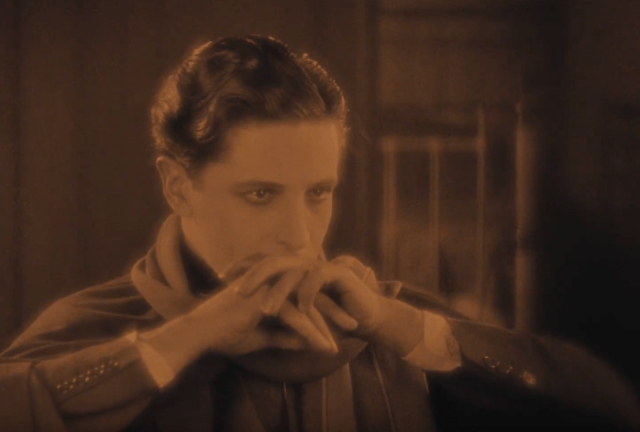
While attending a recent screening at my local arthouse, I pointed out to my companions that there was going to be several screenings of Rear Window the coming weekend and gave it my typical whole-hearted recommendation. These were two of my younger friends who mentioned that they’ve seen far too few of Alfred Hitchcock’s films, but one of them had been in a high school theater production of The Lodger, which was quite the coincidence as I had a library copy of the DVD at home at that very moment. It’s also available on the Criterion app and Tubi (at least at the time of this writing), which means it’s pretty accessible, for anyone who might be interested. I know that a silent film is a hard sell these days, but I liked this one quite a lot and loved its use of expressionistic composition and dark atmosphere and recommend checking it out. 

The Lodger (subtitled A Story of the London Fog) is a 1927 thriller from the Master of Suspense, his third film. It largely centers around one family’s experiences with a new lodger in their boarding house while the city at large quivers in fear at the actions of a serial killer leaving notes identifying themself as “The Avenger.” Mr. and Mrs. Bunting are caring and doting parents to their daughter, Daisy, a blonde young fashion model still living at home with them. Every Tuesday night for months, a blonde woman has been found murdered by the Avenger, and the police seem at a loss. The Buntings are friends with a detective named Joe Chandler, who is visiting them when news of the seventh victim arrives. That same night, a dark and imposing man appears at the Bunting home in response to their “room to let” sign. Joe is eventually put on the case to find the Avenger, and although he is able to discern a pattern from the location of the killings and estimate the general location of the next slaying, his jealousy over the growing attraction between the lodger and Daisy leads him to suspect the lodger of being the killer. When a search of the lodger’s, um, lodgings leads him to a map of the victims’ locations and clippings about the killings, the lodger is arrested, but Daisy helps him to escape, even though she (and we) still have no evidence of his innocence. 

There were moments during the course of the film that I was worried we were headed toward that easiest conclusion, but I should have known that even in this earliest part of his career, Hitchcock would already be working in a more subversive manner. In recent discussions on the podcast of Strangers on a Train, we talked about how Hitchcock never had much respect for the police, individually or institutionally, and there are already elements of this at play. Joe Chandler may manage to put together some clues about the real Avenger, but his personal failures of pettiness and jealousy lead him to pursue an innocent man, to the point that during his flight from the law the lodger is almost lynched by a mob while the real killer is elsewhere racking up yet another body. Hitchcock also loved to tell (and retell) the story of an innocent man being wrongly accused and pursued, from The 39 Steps to To Catch a Thief to North by Northwest to Frenzy, so it’s no surprise that it turned up as a plot point in this early work of his. I did expect there to be a bit more of a twist surrounding Joe, however. 

It’s never quite clear exactly what his relationship is to Daisy. Sometimes, she seems very receptive to his wooing, but at other times rejects his advances, although it’s a possible interpretation that her rejection largely occurs in scenes in which her parents are present. In their first scene together, he flirts with her by cutting a heart shape out of the dough that her mother is preparing and placing it in front of her, to which Daisy responds by tearing the heart in half and handing it back to him. To me, this established that his interest was unwelcome, but there are other scenes in which she welcomes his attention with enthusiasm. At the time of release, Joe’s actor Malcolm Keen was 40 years old, and he looks older. I’d probably attribute it to the technological limits of the time rather than to an intentional aesthetic choice, but Keen’s fair complexion and the make-up available at the time renders him, well, a bit ghastly-looking. In comparison, although Ivor Novello’s lodger character arrives at the Bunting house looking and behaving like a total weirdo, once he settles in, he reveals himself to be as beautiful as he is brooding. As a result, although I was willing to believe that the film was headed toward the revelation that the lodger was the Avenger as easily as it might have been headed toward his innocence, I also thought it might be revealed that Joe was the Avenger, but that might be my expectations being a little too close to modernity. The Avenger is apprehended entirely offscreen, his identity never revealed, but the audience of today looks at this rather small cast of characters and automatically assume that one of the characters has to be the killer. Through that lens, it could only be Joe, but that wasn’t really a trope of the medium yet.

-Mark “Boomer” Redmond

28 Weeks Later (2007)

I wasn’t expecting 28 Weeks Later to be as good as it was. It came out during a particularly academically rigorous (and financially unstable) year for me, and I’m not sure that I ever even saw any advertising for this one. Dismissal of the film by Alex Garland, who wrote both 28 Days Later and 28 Years Later, also never made me particularly interested in revisiting it, until I recently saw 28 Years and thoroughly enjoyed it. I’ve also always loved Robert Carlyle’s work as an actor, and his involvement also appealed to me. Although a friend let me know that this one is streaming on Tubi—just in time for the sequel’s release—I was able to find a DVD copy at my local video store, and I was pleasantly surprised, even if it isn’t as emotionally fulfilling as either of the films that precede or follow it. 

In the opening scene, Don Harris (Carlyle) is holed up in a rural farmhouse with his wife Alice and a few other survivors of the rage virus, sometime during the early days of the plague’s spread. An uninfected boy appears at the house and begs to be let in, and although they get him inside, the horde of infected who were chasing him then fall upon the house and kill/infect everyone inside. Only Don manages to escape, fleeing across the field to a small boat with an outboard motor and getting away, although not before he sees his wife at a window in the house, not yet dead or infected, as she pleads for help. Moments later, she’s gone from the window — too late. Some six or seven months (or 28 weeks, if you will) later, Don is now living in “District 1” of London, where British Isles residents who were out of the country when the outbreak occurred are being repatriated. The infected seem to have completely died out, having succumbed to starvation and exposure in the half a year since the Rage ravaged the population.

A NATO force overseen by Americans is assisting in the homecoming efforts and maintaining a military presence in order to protect the quarantine zone (epitomized in the form of Jeremy Renner’s sniper character, Doyle) and provide testing on the homebound travelers (represented by Scarlet, the chief medical officer played by Rose Byrne). Don’s two children, twelve-year-old Andy and teenaged Tammy (Imogen Poots) return home and are reunited with their father, who simplifies the story of their mother’s death by telling them only that she died. Their first night back, Andy confides in his sister that he worries he’ll forget his mother’s face, and the next morning the two of them slip through the NATO defenses and make their way to their old house to gather photos and other belongings. To their surprise, they find their mother there, albeit disoriented and confused, and she is immediately taken back to the base. Once there, Scarlet finds that Alice was bitten and that this means she is an asymptomatic carrier of the rage virus, and that her blood may even hold an answer to a potential vaccine or cure. Before she can convince General Stone (Idris Elba) of the potential, however, Alice has already Typhoid Mary-d the rage back into the safety zone, and it’s already too late to stop the spread. 

Despite Alex Garland’s less-than-enthusiastic position, 28 Weeks Later is quite good. It lacks a lot of the more humanistic elements of the first film, which followed Cillian Murphy’s Jim as he, having slept through the downfall of society and thus is awakened into a changed world without witnessing the staggering amount of violence and life-altering horror that made it so, manages to be the vessel that carries some manner of hope from the world that was into the world that is. Further, while 28 Days Later presaged what a modern urban center experiencing massive devastation might look like (according to legend, they were shooting Jim’s newly-awakened wanderings of deserted post-rage London when the news broke about the Twin Towers), 28 Weeks Later is heavily informed by contemporary events. The uselessness of the U.S. Army in a peacekeeping role seems clearly inspired by the handling of the so-called “War on Terror” in which the States were actively involved, and the choice of a stadium as an evacuation area and the overreaction of armed authority to refugees and evacuees is evocative of the aftermath of Hurricane Katrina. That doesn’t stop the film’s treatment of the military from being a little “hoo-rah” in certain places, with Scarlet acting as the reasonable authority figure and Doyle evacuating survivors despite orders to kill on site, playing into tropes about good soldiers vs. morally questionable generals. Their ability to protect the citizens within seems doomed to failure from the start, based on the ease with which a couple of teenagers managed to slip out of the quarantine zone, so the criticism of the industrial complex holds. It’s also clever in its plotting, first showing us Alice’s heterochromia in the opening scene and then having Scarlet comment upon Andy having the same mutation during his intake to the quarantine zone, establishing that genetic adaptations like theirs are often inherited, slyly foreshadowing that Andy may have the same ability to be an asymptomatic carrier just like his mother. It’s not a movie that was simply slapped together because someone thought “there should be another one;” it’s genuinely a worthy, if different, successor to the first film. 

-Mark “Boomer” Redmond

28 Years Later (2025)

It doesn’t seem like it was that long ago, but back in 2017 I attended a screening of 28 Days Later at Terror Tuesday at the now-defunct original “Ritz” location of the Alamo Drafthouse (what occupies that space now I dare not name). For weeks after, I listened to “In the House, In a Heartbeat” on repeat, dozens if not hundreds of times. It was a weird time, and I was going through it, but it’s also a certified banger. It was only my second viewing of the movie after a high school rental of the DVD from the Blockbuster in Natchitoches, and in the intro, the programmer at the time talked about how that very DVD was already out of print and that 28 Days Later was unavailable to stream anywhere. That appears to still be the case, despite the release of this relatively high profile sequel, and the ease of access to the 2007 sequel 28 Weeks Later on Tubi. (That Blockbuster is now a pawn shop, apparently, and they appear to have lots of DVDs in stock, so you might be able to find a copy of 28DL there, for what it’s worth.) That screening featured a rate 35MM print of the original film, large portions of which were shot on digital on the Canon XL1 and then were transferred to actual film stock, which resulted in 28DL’s novel visual qualities but also, I believe, makes it difficult to stream . . . or maybe too many people would think there was something wrong with the app rather than understand that the film’s supposed to look like that. 

It’s been 23 years since the Rage Virus broke out on screen and half a decade longer since then in-universe. As the opening crawl tells us, the outbreak was contained in continental Europe but that the British Isles were turned into a quarantine zone. After an opening sequence that occurs early in the original outbreak which sees a young boy escaping from his home after his community is slaughtered by rage zombies, including his pastor father, who allows himself to be overrun in a fit of mad religious ecstasy, we cut to … 28 years later. Spike (Alfie Williams) is a twelve-year-old boy living in an island community with his father Jamie (Aaron Taylor-Johnson) and his mother Isla (Jodie Comer), who is all but bedridden with an affliction that also affects her concentration and memory. The island is kept safe due to tides in the region making it impossible to swim to, but an easily defendable natural causeway emerges at low tide and allows the islanders to go to the mainland to forage for food and firewood. Most boys are taken to the mainland for a rite of passage zombie hunting trip at fourteen or fifteen, but Jamie insists that Spike is ready, and the two set out with their bows to bag a few undead. 

Spike is awed by the mainland, and he manages to get an impressive first kill on the hunt. Unfortunately, in the intervening years, the zombies have evolved, with slightly more intelligent and much more difficult to slay “alphas” emerging (one presumes that, without the internet, these folks never learned that the whole “alpha wolf” thing was bad science), who are strong enough to rip out the spinal column of its prey and also seem to be doing so almost ritualistically. Jamie and Spike are forced to take shelter in a dilapidated, abandoned farmhouse, where they also find the corpse of a man who was hung upside down and left for the zombies to find and feast upon, with the name “Jimmy” carved into his flesh. They manage to make it back to safety, barely, and Spike is celebrated at a ceremony that the town holds in his honor, but he finds his father’s tall tales of Spike’s supposed prowess dishonest and is even more disillusioned when he sees his drunken father sneak away from the party with a woman. When a family friend lets slip that a mysterious fire that Spike saw on the mainland may mark the home of a Dr. Kelson (Ralph Fiennes), which Jamie previously denied knowing anything about, Spike decides to sneak away with his mother and take her to find Kelson in the hope that he can diagnose and treat her. Along the way, they witness further changes to the infected and find themselves allied with shipwrecked Swedish sailor Erik (Edvin Ryding), the lone survivor of his downed quarantine patrol boat, who serves to give us insight into what the rest of the world is like. 

Erik adds a wrinkle here that’s quite a lot of fun. After the first film trafficked heavily in images of desolate urban areas as Jim wandered through the empty husk of London, this one follows its day one prologue with a cut to a somewhat idyllic present day, where a close knit community tends sheep and fashions arrows. It doesn’t initially have the feel of a post-apocalyptic hellscape, as having bacon with breakfast is a lavish anomaly but not completely unheard of. The island itself is lush and green but has a bit of the uncanny about it as well, with the recurring appearance of an unremarked upon creepy mask that multiple characters wear implying that they’ve gotten a little weird with it out there, and it’s a dangling thread left to, no doubt, be developed in the next sequel. Meanwhile, the rest of the world has completely moved on from the whole “zombie plague” thing. People work as delivery drivers, they order packages online, and they have smartphones, all of which are alien concepts to Spike, who has never seen a photograph less than three decades old. When Erik shows him a picture of his girlfriend making a duck face in the moments before his battery dies, Spike has no frame of reference for that social media beauty standard and compares her appearance to a girl in the village whose allergy to shellfish causes her to swell up. Back in that same village hangs a portrait of a fairly young Queen Elizabeth II, because these people aren’t even aware that she’s dead (presuming she died in 2022 in their world as in ours and wasn’t afflicted with the Rage Virus, which I didn’t realize I needed to see until this very moment). 

It’s almost unfathomable to think that the rest of the world could simply move on from locking down multiple nations and washing their hands of the whole situation while consigning the people living there to almost certain eventual violent death at the hands of sprinting, infected undead. But then again, we’re kind of living in that world, aren’t we? We’ve all lived through the rampant spread of a virus that killed millions of people, and once everybody got vaccinated (well…) and we reached a point of “well, most people won’t be at risk,” most of society simply did move on, and we’re still driving delivery trucks and ordering packages online and getting new smartphones. Disability advocates have talked for years about how our necropolitical  institutions have decided that the wheels of commerce must turn, even if they must be greased by the blood of the chronically ill or otherwise highly susceptible. We also live in a society where horrible, awful, genocidal things are happening “over there,” out of sight and, for many, out of mind; “It’s awful that children are being burned alive by phosphorus ammunition and that huge numbers of people have been abandoned to certain, horrifying death by the rest of the world, but I don’t see what that has to do with me or my need for a frappuccino.” Erik shows us something about the world beyond these quarantined islands; it’s obvious that Spike has grown up never knowing a world before the Rage, but if Erik is even approximately the same age as the actor portraying him, so has he. In Erick’s world, the long term, hands off approach to dealing with the infected is baked into society as something that happens over there and is a simple, sad fact of life, and the wheels just keep turning. 

Although he’s only a child and therefore gets billed in the credits after a man who’s on screen for mere moments, the MVP here is relative newcomer Alfie Williams. There’s a quiet resilience to him, and he carries a major, if understated, emotional journey that begins when he returns to the island from his hunting trip. He’s surrounded by the trappings of the village’s celebration of his hunt, including that weird mask thing, but as he watches his father carry on the time honored tradition of exaggerating their bravery and marksmanship, a crack in the foundation of his belief in both his father and his society begins to form. He already has his suspicions about his father’s denial of knowing what the fire in the hills on the mainland might be, and once he sees Jamie getting adulterous and learning that his father knows about Dr. Kelson (and then leaping to the conclusion that Jamie is refusing to get help for Isla from the mainlander), he resolves to put a seemingly doomed plan into motion. Williams pulls all of this off very well for a performer his age, and you never for a moment doubt that Spike is a kid who’s never seen a frisbee or an iPhone. That’s not to denigrate the performances of Comer, who is excellent as always, or Taylor-Johnson, who is very effective here as a husband and father maintaining a brave face despite the clearly imminent death of his ill wife while also living through the end of days. Fiennes is also great here as the broken Dr. Kelson, who makes a great deal out of what amounts to not much screen time. 

This film ends on such an overt tonal shift that I think it’s turning off some people. A couple of friends of mine to whom I had been recommending the film happened to be coming out of a screening of 28 Years just as I was headed into a screening of The Materialists. They found the film messy, and although we didn’t get much of a chance to talk about where they felt that it failed, they mentioned that the sudden genre shift was unexpected and jarring. I would also wager that the brief jumpcuts at the beginning of the film that serve to set some of the tone will be off-putting to some, although I rather enjoyed it as a shorthand for the myth-building within the community of the island. Set to the 1915 Taylor Holmes recording of Rudyard Kipling’s poem “Boots,” we get to see a little bit of the culture of the island: their use of archery as their primary method of hunting and anti-infected defense, their fortification of the island, and the training of their young to carry on, all of it interspliced with footage from monochrome war films, Technicolor Robins of Locksley, and other bits of film and video that pass by so quickly that some of the images are almost subliminal. The idea that these people have been reduced to a medieval level of technology in the modern era is an interesting one, and this gets it across in a great visual way but one that is definitely not going to be to everyone’s liking. That’s what makes Danny Boyle Danny Boyle, after all. 

-Mark “Boomer” Redmond

Dreamchild (1985)

Just one year after the classic fairy tale “Little Red Riding Hood” got a post-modern feminist reexamination in The Company of Wolves, the classic children’s novel Alice’s Adventures in Wonderland got the same treatment in the less-seen, less-discussed Dreamchild. Both films juxtapose real-life sexual predation against its warped fantasy-realm mirror reflections, picking at the gender politics of their selected works to find surprising, uncomfortable nuance. For its part, The Company of Wolves asks how much tales like “Little Red Riding Hood” were meant to protect young women from the sexual predation of older men vs. how much they were meant to scare them off from participating in their own sexual development & pleasure. Likewise, Dreamchild revisits the sexual predation behind the writing of Alice’s Adventures in Wonderland and Through the Looking Glass to question just how diabolical Lewis Carroll’s relationship with his young muse was, or if there’s room to find his fixation on her empathetically tragic. The main difference between these two literary autopsies is that “Little Red Riding Hood” is a stand-in for all young women everywhere, while “Alice” was a real-life victim with her own name and her own internal life, which makes for a much more delicate, dangerous balancing act.

Carol Browne stars as the real-life Alice Hargreaves in her twilight years, summoned to a Depression Era NYC to commemorate the 100th birthday of the deceased author who made her famous as a child. American journalists hound the prim & elderly English woman the second she hits the shore, desperate for whimsical pull-quotes from The Real Alice to fluff up their human-interest columns. The barrage of questions about her childhood family acquaintance Reverend Charles L. Dodgson (pen name Lewis Carroll) sends her into a tailspin of repressed memories & demented hallucinations, effectively re-traumatizing the poor woman for the sake of a disposable puff piece. Preparing for an upcoming Columbia University speech to celebrate Dodgson’s birthday, she becomes unmoored in time, reliving both traumatic moments as her childhood self and fantastic moments as her famous literary avatar. It quickly becomes apparent in flashback that Alice’s Adventures in Wonderland was written as an elaborate grooming tactic, with the middle-aged Dodgson hoping to woo the 10-year-old Hargreaves into being his eventual bride. That toxic dynamic has soured her lifelong relationship with the Wonderland books in a way that the American press is entirely uninterested in interrogating, so she has to work through it isolated in her own dreams & memories. The nuance of that discomfort arises in recalling her own active participation & manipulation of the author-muse dynamic as a child, something she does not care to remember.

A less thoughtful version of this story might’ve characterized Alice Hargreaves as a victim first and a victim only, but Dreamchild puts a lot of work into fleshing her out as a thorny, complicated human being. She’s a hard-ass social tyrant in both her 80s & her adolescence, and she was too sharp as a child not to notice the unseemly power she had over Dodgson as her much-older admirer. Ian Holm does an incredible job invoking both menace and pity as the lonely, nerdy Dodgson, pining after a child in a way even he knows is wrong. The young Alice pretends not to catch on, but plays games with the older man’s heart in a way that recalls the cruelty of a school-age bully. Meanwhile, the 1930s NYC segments draw a parallel between their delicate power imbalance and the normal, socially accepted rhythms of heterosexual courtship, with a fuckboy reporter (played by Peter Gallagher) hounding the elderly Hargreaves’s teenage assistant for romantic connection so he can exploit her access for personal profit. The fully grown men are fully aware how vulnerable the younger women they pursue are to their gendered power & privilege, and they choose to cross the line anyway. What seems to haunt Hargreaves in her final days is how aware she was of that one-sided romantic dynamic as a child, and the ways in which manipulated it for her own amusement. It’s a difficult topic to discuss without slipping into blaming victims or excusing abuse, but the movie pulls it off.

Dreamchild was the brainchild of screenwriter Dennis Potter, whose name is all over the credits as a producer who self-funded the project. All of the visual panache of the fantasy sequences arrive courtesy of the Jim Henson Creature Shop, who illustrate several key characters from the Wonderland & Looking Glass canon as nightmarish ghouls who haunt Alice Hargreaves in her old age. Those sequences are relatively sparse, though, and most of the runtime reflects Potter’s background as a journalist and television writer, staging lengthy exchanges of dialogue in hotel rooms & press offices. In those conversations, Potter pokes at the differences between American & British cultures’ respective relationships with money and, more bravely, the differences between 19th & 20th Century cultures’ respective relationships with age-gap courtship. As depicted in the film, Alice Hargreaves suffered self-conflicted feelings on both subjects and her own personal participation in them. She is, undoubtedly, Lewis Carroll’s victim, in that her entire life is unfairly shaped by his immoral yearning for her as a child. However, Potter finds enough grey-area nuance in her victimhood to allow her to appear onscreen as a fully realized human being instead of a historic symbol of trauma and abuse. Lewis Carroll himself is even extended that grace, regardless of whether he deserves it.

-Brandon Ledet